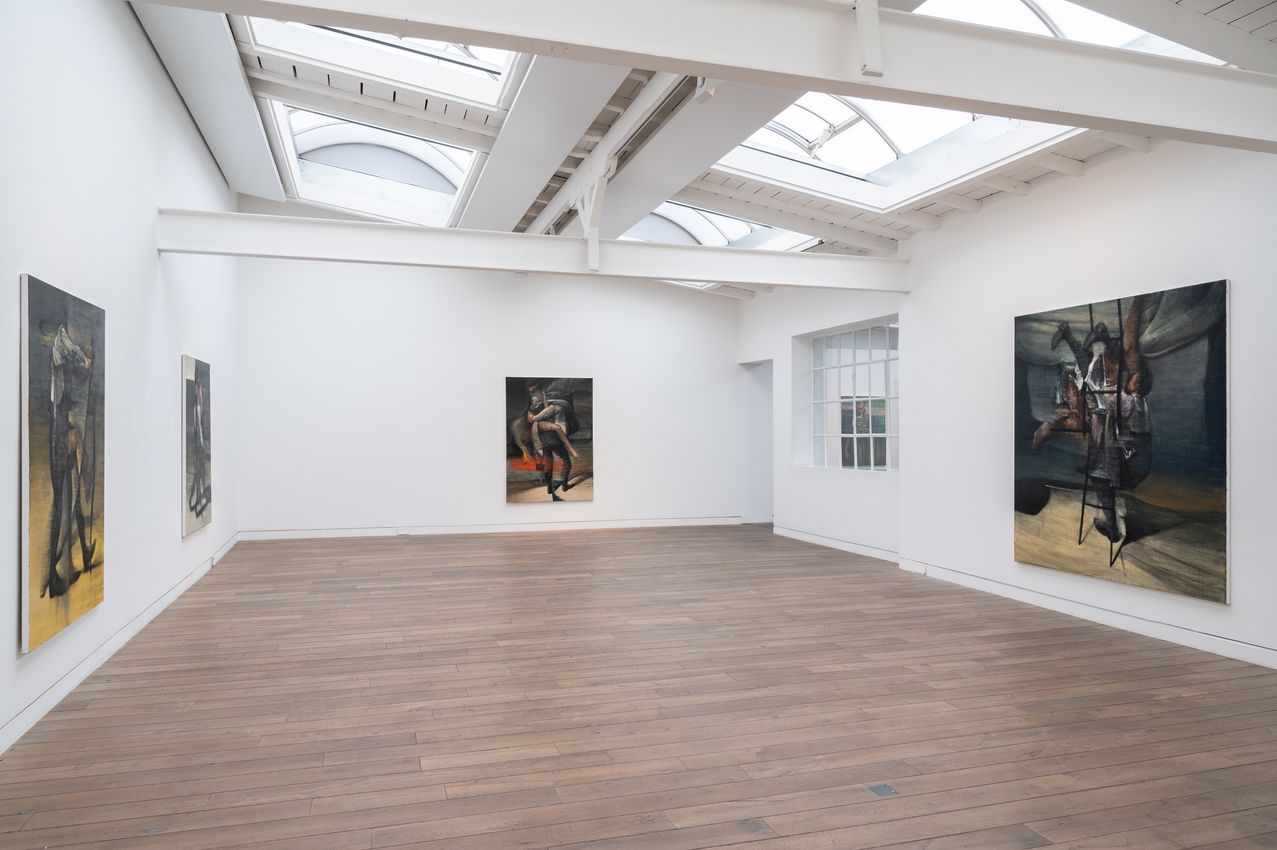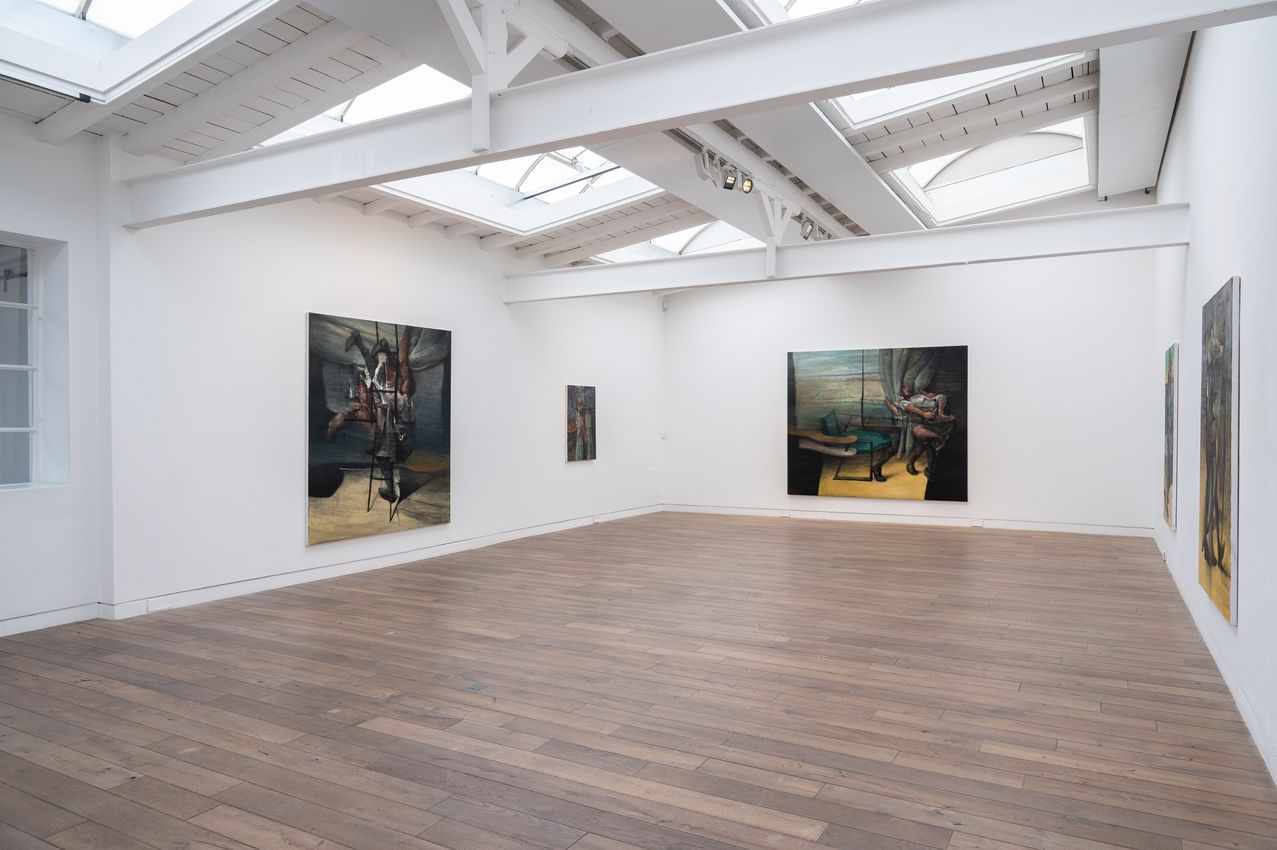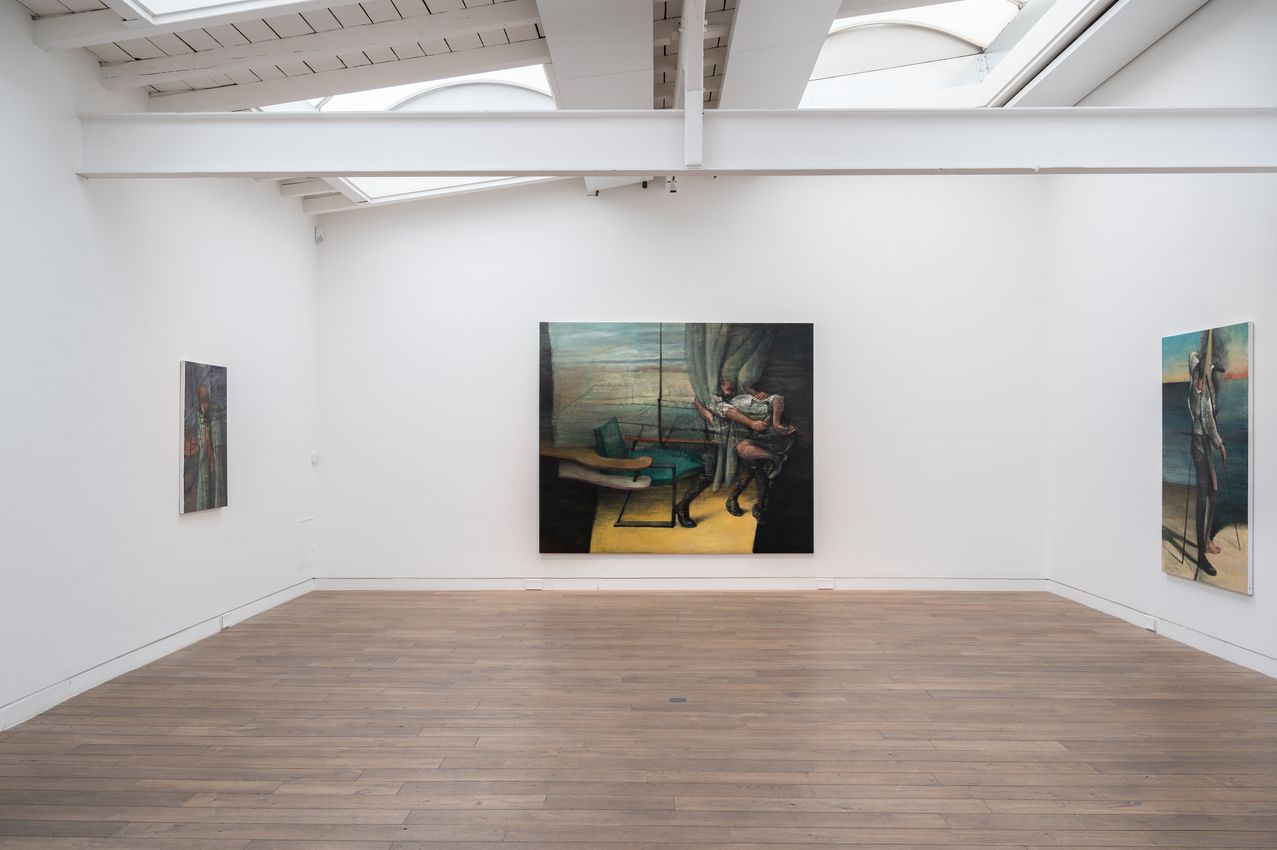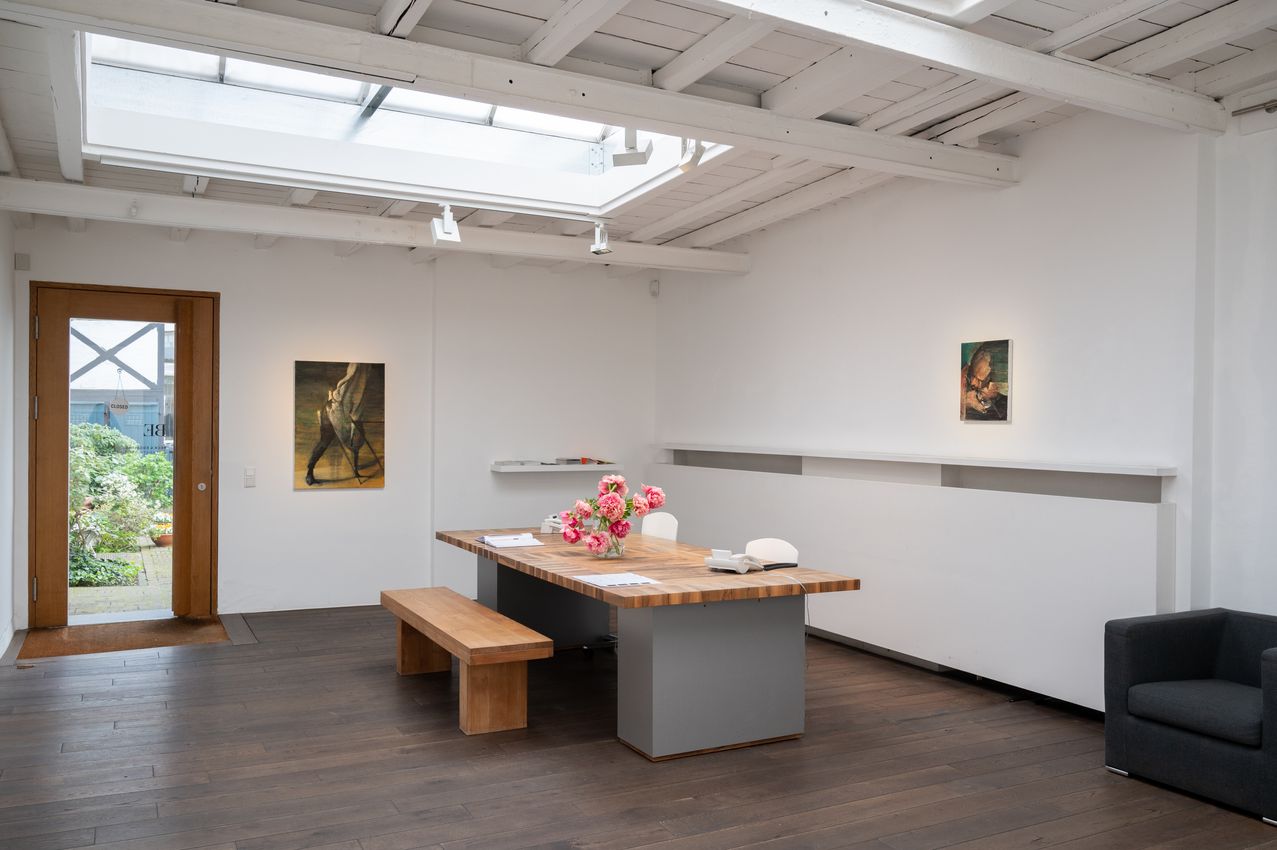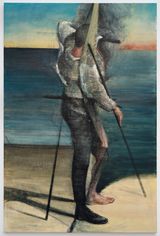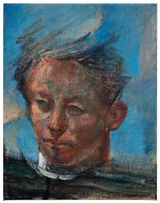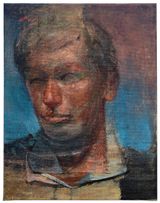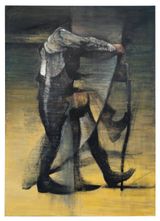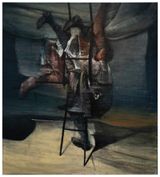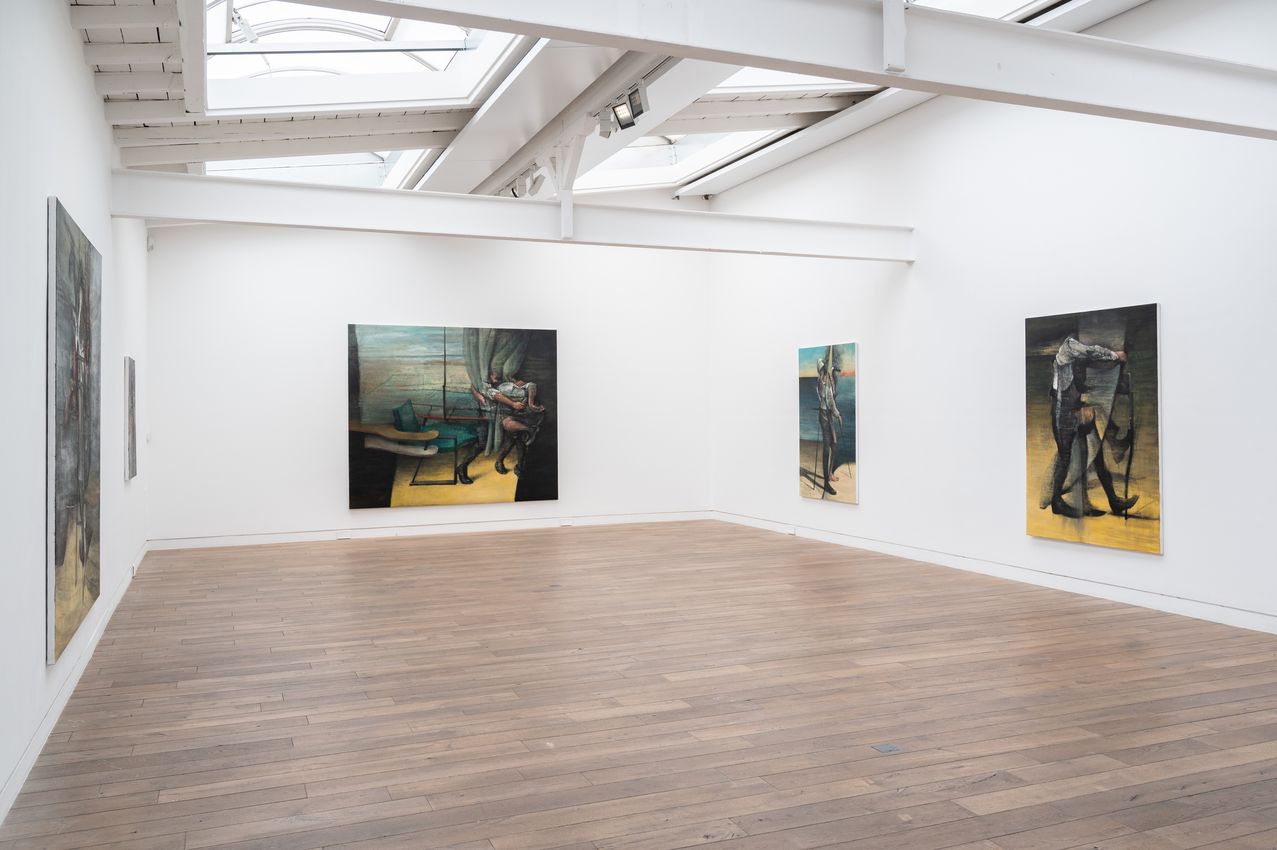
What paintings are these that are so distant and unsettling and at the same time touch one so closely?
Their darkness, the indefinable space in which the figures or individual faces appear in sharp light or blurred uncertainty, the details of their clothing – all this withdraws them from any assignable time. Nikos Aslanidis’s paintings are three hundred years old and yet new and wholly modern. They merit the name ‘oil painting’ rather more than do the works of many other contemporary artists who apply oil or acrylic colour to canvas. The immediacy to life and intense emotionality of his figures do not leave the viewer cold. The paintings have a powerful presence; their figures are statements of the human – which is surprising in view of the fact that they do not portray real people. The subjects of these paintings are imagined: paradoxically they are both individuals and types. What Nikos Aslanidis’s work so uncompromisingly presents is not a pre-existent reality – it is a profoundly human one.
It might help when looking at these paintings to read Samuel Beckett – I’m thinking especially of the late works, after Endgame – for example the 1960 Theater piece Rough for Theatre I. The characters in this short piece have no names, just the letters A und B. They are marked by life, impoverished, in some way or other disabled (blind, wheelchair-reliant), impaired in their mobility and activity. They speak in short staccato sentences or utter only single words. They have left everything conceivable behind them and have little remaining – no material things and little time – to live. They exist in an almost empty space. Yet paradoxically, the atmosphere of poverty and loss Beckett creates, reinforces the intensity of life in such circumstances – and this is also the case with the paintings of Nikos Aslanidis. His figures stand or sit for the most part in indecipherable emptiness, alone even when there are two of them.


In his oil paintings, Nikos Aslanidis works almost exclusively with the motif of the human figure. He transforms the classical genre of the portrait in all of its possible facets and formats. His situations are rarely clearly defined by a description of space or the suggestion of objects. Rather, the figures remain in a certain state of vagueness, giving the viewer a feeling of unease.
Founded in 1994 by Dr Ute Eggeling and Michael Beck—both from art history and gallery backgrounds—Beck & Eggeling International Fine Art is a leading international gallery. Based in Düsseldorf, it specialises in exhibiting art by European masters of the 19th and 20th centuries, embracing Impressionism, Expressionism, and post-War Modernism, as well as working to foster international contemporary art.

A respected voice in contemporary art discourse.
Focusing on ambitious storytelling and insightful art-world commentary. Ocula Magazine publishes in-depth interviews, critical essays and timely analysis on the artists, exhibitions and ideas driving the global art world.
Learn more about Ocula Magazine
Showcasing the best of the art world.
Ocula partners with galleries from around the world to highlight their artists, artworks and exhibitions. Gallery membership is by application and invitation, with each member vetted by an independent panel.
Learn more about Ocula Membership

Specialises in the sale of major artworks.
Led by a team with deep ties to the world’s leading auction houses, galleries and collectors. Ocula’s advisory team offers bespoke services to high-net-worth clients from around the world who are looking to acquire the best of contemporary and modern art.
Learn more about our team and services