




TACITA DEAN
b. 1965, United KingdomTacita Dean is a British contemporary artist best known for her meticulous 16mm and 35mm films, large-scale drawings, photography, and installations that dwell on time, memory, and the fate of analogue media. Since emerging in the 1990s, she has become a key figure in contemporary moving-image practice, with works such as Disappearance at Sea (1996), FILM (2011), Antigone (2018), and the diptych Paradise (2021) and Geography Biography (2023) shown at institutions including Tate Modern in London, Kunstmuseum Basel, the J. Paul Getty Museum in Los Angeles, and the Museum of Contemporary Art Australia. Dean lives and works between Berlin and Los Angeles and is represented by Marian Goodman Gallery and Frith Street Gallery, with her 2026 exhibition Trial of the Finger at Marian Goodman Gallery Los Angeles marking a significant moment in her West Coast presence.
Early life and Career
Tacita Dean was born in 1965 in Canterbury, England, and initially trained as a painter at Falmouth School of Art, graduating in 1988. She continued her studies at the Supreme School of Fine Art in Athens before completing an MA in painting at the Slade School of Fine Art in London in 1992, where she began working seriously with 16mm film and developed the durational, observational approach that would define her practice.
Dean first gained wider attention in the mid-1990s with films that weave documentary observation and unresolved narratives, often centred on maritime histories and figures on the edge of disappearance. A move to Berlin in the late 1990s, and later the establishment of a base in Los Angeles, expanded her access to film labs, archives, and print workshops, sharpening the international scope of her projects and collaborations across Europe and North America.
Works, Series, and Methods
Dean’s practice centres on analogue film but extends across drawing, photography, printmaking, and found images. Her films typically use static or slowly shifting shots, long takes, and ambient sound, favouring a measured pace that allows small changes in light, weather, or gesture to become meaningful events. This approach underpins her portraits of artists, her seascapes, and her more essayistic works, which often combine voice, text, and image in layered structures.
A landmark group of works looks to the sea as a site of ambition, risk, and loss. The 16mm films Disappearance at Sea (1996) and Disappearance at Sea II (1997), which focus on the doomed single-handed sailor Donald Crowhurst, dwell on lighthouses, horizons, and the slow fall of light rather than biographical drama, using duration and repetition to evoke uncertainty and the gap between recorded fact and imagined story.
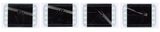
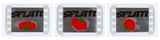
Dean is also known for work that probes the industrial and technical infrastructure of film at a moment of technological obsolescence. In Kodak and Noir et Blanc (both 2006), filmed at a Kodak plant in Chalon-sur-Saône shortly before its closure, she turns the factory floor into a kind of memorial to photochemical production, emphasising the materials, machinery, and labour that uphold film as a medium. Her Turbine Hall commission FILM (2011) at Tate Modern scaled up 35mm projection into a monumental vertical image, using masking, multiple exposures, and hand-edited splices to foreground film’s grain, colour, and surface as expressive, physical attributes.
Drawing, photography, and printmaking have grown increasingly central to her practice. Chalk-on-blackboard works such as Roaring Forties: Seven Boards in Seven Days (1997) combine stormy seas with written fragments that recall navigation notes or film scripts, treating the board as both image and notational field. Found photographs and printed ephemera appear in artist’s books like Floh (2001), while collaborations with BORCH Editions and Gemini G.E.L. have seen her translate film stills, postcards, and eclipse imagery into photogravures and screenprints that extend her interest in analogue processes onto paper.
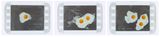
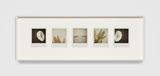
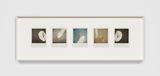
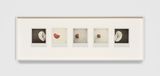
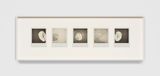
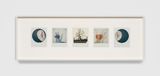
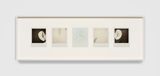
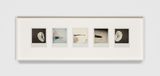
Polaroid has become a significant strand within this analogue ecology. Dean’s Polaroid works—such as the three-part piece oh god (2025), composed of small Polaroid prints—exploit the instant photograph as both image and object, with fingerprints, borders, and surface quirks treated as part of the work’s meaning. In dialogue with her film and slate works, these Polaroids underscore her commitment to tactile, camera-based image-making at a time when photography is more commonly understood as immaterial data.
Themes and Context
Across media, Dean returns to questions of time, duration, and what images can preserve or fail to hold. Obsolescence—of technologies, sites, and stories—is a recurring concern, but rather than treating it solely as loss, she frames ageing media and materials as a kind of inheritance that must be worked with, cared for, and passed on.
Her practice sits within broader currents of contemporary moving-image and research-based art, yet it retains a distinct emphasis on craft, touch, and analogue procedures. Whether working with film, slate, glass, Polaroid, or photogravure, Dean foregrounds the physical negotiation between hand, tool, and surface, positioning the human body—and the finger in particular—as a persistent measure in a world increasingly mediated by screens and virtual images.
‘Trial of the Finger’, Los Angeles
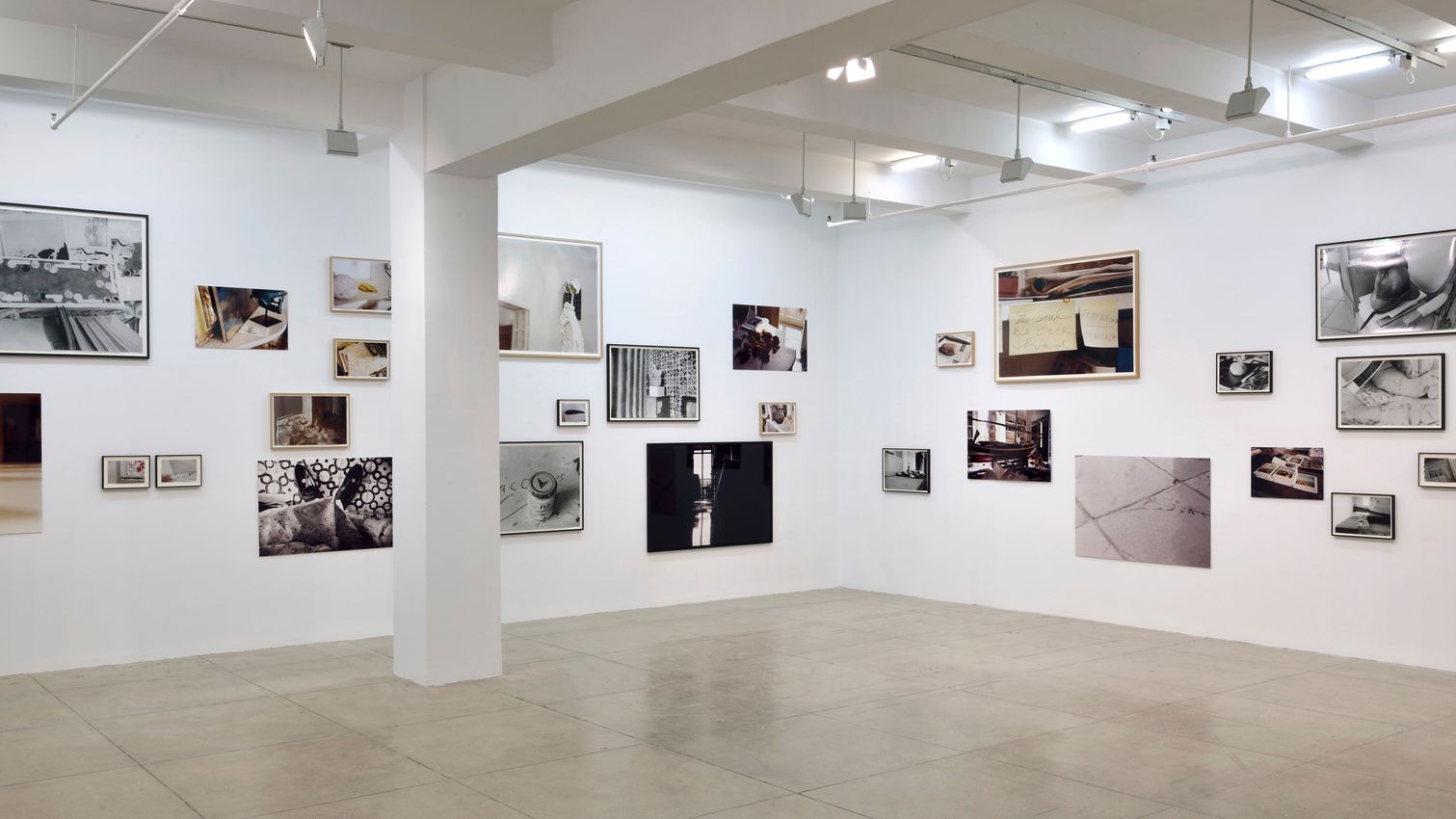
Trial of the Finger at Marian Goodman Gallery Los Angeles (21 February–25 April 2026) brings together new and recent works that reaffirm Dean’s commitment to the physical realities of image-making. The exhibition spans 16mm and 35mm film, slate drawings, enamel paintings on glass, Polaroids, and prints, positioning the finger and the ear as recurring motifs while reflecting on how the body remains a unit of measure in the age of the virtual.
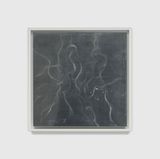
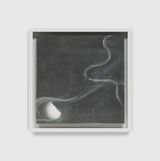
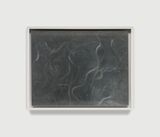
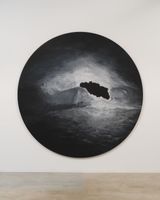
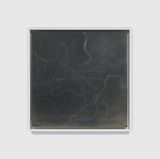
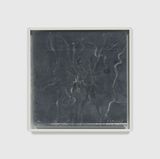
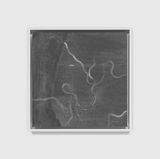
The title ‘Trial of the Finger’ refers both to literal depictions of fingers and to the way Dean constructs her drawings, particularly the new works on found school slates with oxidised green surfaces that demand a recalibrated touch. These slates connect to an eclipse Dean witnessed in Eagle Pass, Texas, in April 2024, where her decision not to document the event gave way to instinctive camera movements that produced looping solar streaks on film; those ‘photographic drawings’ of focused sunlight now underpin the marks that populate the green slates and a related series of prints with Gemini G.E.L.
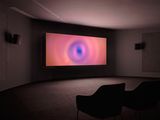
In parallel, Trial of the Finger features works on glass using antique 19th-century locomotive windows inherited from her father, painted in enamel using a reverse process developed with German artisans, so that the finished images emerge from behind the glass like afterimages. The exhibition also includes the film works Paradise (2021), originating in her collaboration on The Dante Project at the Royal Opera House with composer Thomas Adès, and Geography Biography (2023), described as an ‘accidental self-portrait’ that layers measuring gauges, postcards, and other ephemera into a fragile cinematic archive of memory.
Polaroid works play a visible role in this Los Angeles presentation, including oh god (2025), a triptych of Polaroids that anchors the show’s interest in the finger as a tool of touch, pointing, and counting. Across these pieces, Dean treats Polaroid surfaces as sites where exposure, chemistry, and handling converge, extending her long-standing defence of analogue photography and film into a medium historically associated with intimacy and immediacy. Overall, Trial of the Finger casts analogue image-making not as nostalgia but as a living practice that must be continually tested, adjusted, and handed on—putting the body back at the centre of how images are made and understood.
Exhibitions, Collections, and Recognition
Dean’s work has been the subject of major institutional exhibitions across Europe, North America, and the Asia-Pacific region. Recent highlights include Tacita Dean as part of the Sydney International Art Series at the Museum of Contemporary Art Australia in Sydney, surveys at Kunstmuseum Basel and EMMA – Espoo Museum of Modern Art, and focused shows at the J. Paul Getty Museum in Los Angeles and Museo Tamayo in Mexico City. In 2018, three coordinated exhibitions—Landscape at the Royal Academy of Arts, Portrait at the National Portrait Gallery, and Still Life at the National Gallery, all in London—mapped the breadth of her practice across genre and medium.
Her programme in the United States has expanded with projects such as Tacita Dean: Blind Folly at The Menil Collection in Houston (opening October 2025) and Trial of the Finger in Los Angeles, reinforcing her presence across multiple regions. She has participated in biennials including the 19th Biennale of Sydney and the 8th Berlin Biennale, and in thematic exhibitions at Centre Pompidou, Schirn Kunsthalle Frankfurt, and QAGOMA. Major honours include the Hugo Boss Prize (2006), the Kurt Schwitters Prize (2009), election to the Royal Academy of Arts (2008), and appointment as an Officer of the Order of the British Empire (2013), while her works are held in collections such as Tate, the Museum of Modern Art in New York, and Museo Reina Sofía in Madrid.royalacademy.
Tacita Dean FAQs
What is Tacita Dean best known for?
Tacita Dean is best known for her use of analogue film—particularly 16mm and 35mm—to create slow, contemplative works that examine time, memory, and the disappearance of people, places, and technologies. Key works such as Disappearance at Sea (1996), FILM (2011), and the film diptych Paradise (2021)/ Geography Biography (2023) have made her a central figure in contemporary moving-image art and debates about the survival of photochemical film.
How does Polaroid photography feature in Tacita Dean’s practice?
Polaroid photography has become an important strand of Tacita Dean’s analogue practice, allowing her to work with instant images as physical objects marked by chemistry, borders, and touch. Works like oh god (2025), a triptych of Polaroids shown in Trial of the Finger, connect the intimacy of instant photography with her broader interest in the finger as a tool for pointing, counting, and tracing light across surfaces.
What is the exhibition “Trial of the Finger” about?
Trial of the Finger at Marian Goodman Gallery Los Angeles (21 February–25 April 2026) presents new and recent works by Tacita Dean that foreground the physical labour of analogue image-making across film, slate, glass, Polaroid, and print. The exhibition links the motif of the finger to counting systems, drawing techniques, and the handling of fragile surfaces, while also incorporating eclipse-inspired slate drawings, enamel paintings on antique glass, Polaroid works, and the films Paradise and Geography Biography.
What themes does Tacita Dean explore in her work?
Tacita Dean’s work explores themes of duration, chance, maritime and landscape histories, obsolescence, and the tension between documentation and experience. She often uses specific stories—such as Donald Crowhurst’s voyage, Dante’s journey through the afterlife, or watching an eclipse in Texas—to reflect on how images mediate what we remember and how we understand time.
Where can I see Tacita Dean’s work?
Tacita Dean’s work can be seen in museum collections such as Tate in London, the Museum of Modern Art in New York, Museo Reina Sofía in Madrid, and The Menil Collection in Houston, as well as in exhibitions at venues like the Museum of Contemporary Art Australia and the J. Paul Getty Museum. In 2026, visitors to Los Angeles can see new and recent works in Trial of the Finger at Marian Goodman Gallery Los Angeles, while her films, drawings, and prints are also regularly shown with Marian Goodman Gallery and Frith Street Gallery internationally.
Ocula | 2026

View Tacita Dean's Artworks





















Explore Tacita Dean's Exhibitions











Explore and Follow Artists Shaping Contemporary Art
A respected voice in contemporary art discourse.
Focusing on ambitious storytelling and insightful art-world commentary. Ocula Magazine publishes in-depth interviews, critical essays and timely analysis on the artists, exhibitions and ideas driving the global art world.
Learn more about Ocula Magazine
Showcasing the best of the art world.
Ocula partners with galleries from around the world to highlight their artists, artworks and exhibitions. Gallery membership is by application and invitation, with each member vetted by an independent panel.
Learn more about Ocula Membership
Specialises in the sale of major artworks.
Led by a team with deep ties to the world’s leading auction houses, galleries and collectors. Ocula’s advisory team offers bespoke services to high-net-worth clients from around the world who are looking to acquire the best of contemporary and modern art.
Learn more about our team and services