




MARINA RHEINGANTZ
b. 1983, BrazilBrazilian artist Marina Rheingantz is known for her semi-abstract landscape paintings. Her intensely hued compositions depict imaginary spaces that flow between abstraction and figuration. Her multidisciplinary practice spans a variety of media including oil paint, watercolour, embroidery and tapestry. Rheingantz lives and works in São Paulo, Brazil.
Early Years
Marina Rheingantz was born in 1983 in Araraquara, Brazil.
She spent her formative years in the region of Araraquara, where her family owned land. Growing up around the rural landscape of her birthplace, Rheingantz observed how her surroundings transformed in response to the industrialisation consuming Brazil throughout the late 1980s.
Drawing attention to the polarised forces at play with Brazil’s tradition of rural landscape painting and the country’s rapid industrialisation, Rheingantz began to make paintings that reflect on her homeland’s race to modernity.
Artistic Practice
Rheingantz primarily works with oil paint on canvas to make large-format paintings. Within her landscapes, she often paints objects synonymous with contemporary life, such as wind turbines, utility poles and electricity pylons. The juxtaposition of urban details with naturalistic backdrops features heavily in the Brazilian artist’s practice.
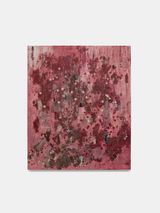
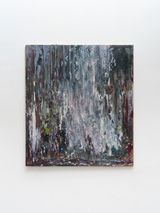
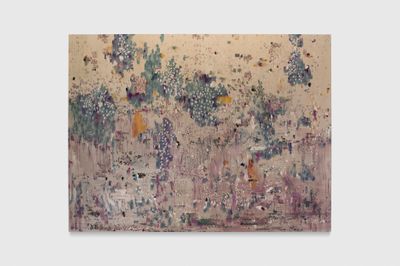
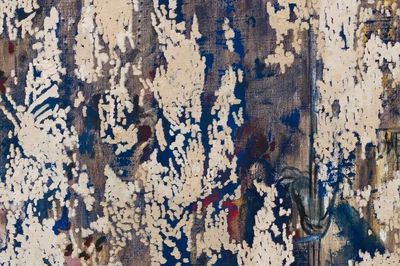
Rheingantz’s practice is process-focused. Her handling of oil paint is similar to that of clay – the material allows her to add depth and texture to her canvases. By moulding paint into raised grooves and cracks on the surface of the canvas, Rheingantz gives form to landscapes under constant change and development.
Artworks
2015–2020 Paintings
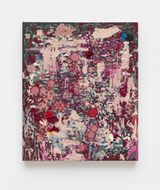
Recalling the work of American painter Cy Twombly, Rheingantz’s paintings are deeply visceral. In her 2015–2020 paintings, the São Paulo-based artist’s gestural brushwork and heavy contouring succinctly merges form and abstraction.
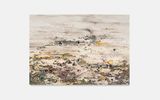
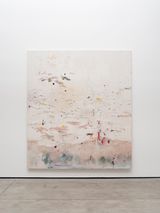
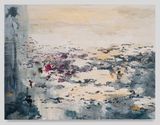
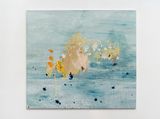
In her paintings Radio pirata (2017) and A Deriva (2019), Rheingantz’s landscapes are absent of a definitive horizon. Sky blends into land or sea, revealing an infinite mass of abstract landscape dotted with ambiguous forms and outlines.
Sedimentar Paintings (2022)
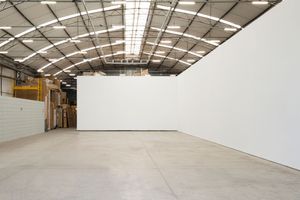
In 2022, Rheingantz made a series of new paintings for Sedimentar (29 October–21 December 2022), an exhibition presented by Fortes D’Aloia & Gabriel Gallery at Galpão, in São Paulo.
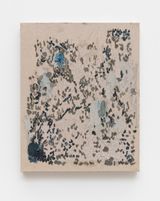
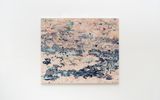
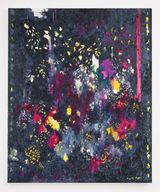
For this body of work, Rheingantz worked between small, medium and large-format canvases to create a variety of paintings, watercolours and embroideries. Using a multitude of techniques, including weaving and expressive painterly brushstrokes, Rheingantz’s compositions imagine generously embellished dystopian landscapes.
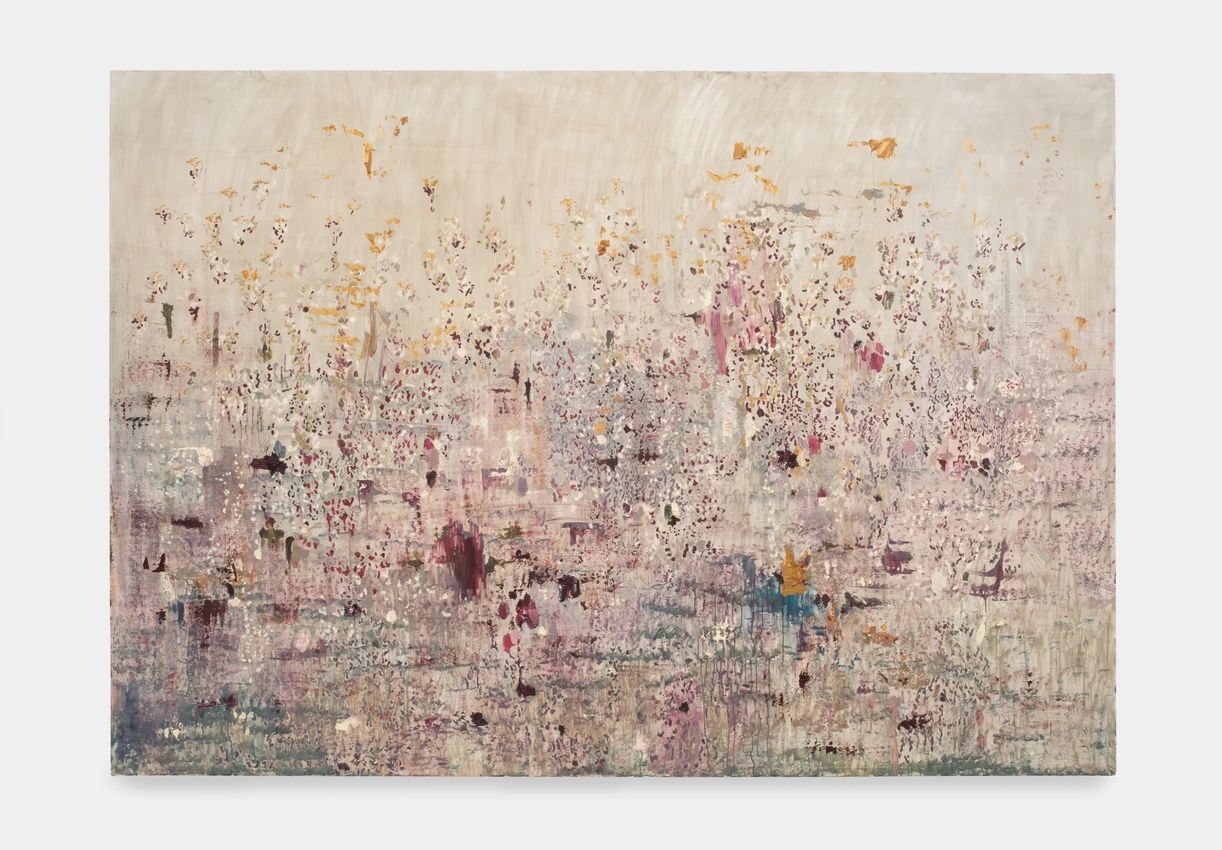
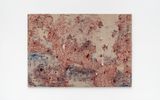
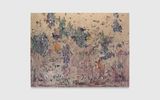
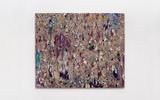
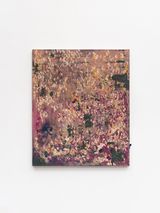
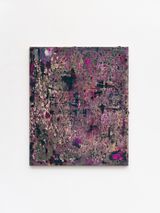
Rastro (2022) is the largest painting in the Sedimentar exhibition. Taking over seven months to make, the work reveals a vast landscape made up of muted, earthy tones. Upon a closer look, the painting features small bursts of intense purple and blue hues. Rheingantz made Rastro using thick swathes of impasto to stain the surface of her canvas, scattering the work with patches of detailed texture.
Awards and Accolades
In 2018, Rheingantz was the recipient of the Fundación Casa Wabi Award in Puerto Escondido, Mexico.
Rheingant’s work is included in the collections of several galleries and institutions.
Selected collections include the Centro Cultural São Paulo in São Paulo; the Dallas Museum of Art; the Lewben Art Foundation in Vilnius; the Museu de Arte Moderna in Rio de Janeiro; the Museu Serralves and Museu de Arte Contemporânea in Porto; the Pinault Collection in Paris; and the Taguchi Art Collection in Tokyo.
Exhibitions
Marina Rheingantz has exhibited in solo and group exhibitions.
Selected solo exhibitions include:
- Mirage, Musée des Beaux Arts de Nîmes, Nîmes (2025)
- Sedimentar, Fortes D’Aloia & Gabriel, São Paulo (2022)
- Suor, Bortolami Gallery, New York (2021); Marina Rheingantz, FRAC Auvergne, Clermont-Ferrand (2021)
- Madrigal, Zeno X Gallery, Antwerp (2021)
- Todo mar tem um rio, Fortes D’Aloia & Gabriel, Galpão, São Paulo (2021)
- Várzea, Bortolami Gallery, New York (2018)
- Galope, Zeno X Gallery, Antwerp (2017)
- Dot Line Line Dot, Nichido Contemporary Art, Tokyo (2016)
Selected group exhibitions include:
- 15th Gwangju Biennale, PANSORI: A Soundscape of the 21st Century (2024)
- Abrasive Paradise, KUNSTHAL KAdE, Amersfoort (2022)
- Nature Loves to Hide, Fortes D’Aloia & Gabriel and Lévy Gorvy, Palm Beach (2021)
- Casa Carioca, Museu de Arte do Rio, Rio de Janeiro (2020)
- Poetics of Landscape, Galería Elba Benitez, Madrid (2019)
- Mínimo, múltiplo, comum, Estação Pinacoteca, São Paulo (2018)
- All these beautiful ladies, LITEXPO, Vilnius (2017)
- Esforço - desempenho, Galeria Athena Contemporânea, Rio de Janeiro (2016)
Galleries
Marina Rheingantz is represented by Fortes D’Aloia & Gabriel Gallery and Zeno X Gallery.
Marina Rheingantz FAQs
Where can I view Marina Rheingantz’s artworks in person?
Marina Rheingantz’s works are held in major public and private collections worldwide. Notable institutions include the Dallas Museum of Art, the Instituto Inhotim in Brumadinho, Brazil, the Museu de Arte Moderna do Rio de Janeiro, the Museum Voorlinden in the Netherlands, and the Rubell Family Collection in Miami. Her works have been exhibited at prominent galleries such as, Bortolami, Zeno X Gallery, and Fortes D’Aloia & Gabriel.
What themes does Marina Rheingantz explore in her art?
Rheingantz’s work delves into the dynamics of memory, landscape, and abstraction. Her paintings often reference personal memories, historical events, and cultural imagery, creating moments suspended in time.
What materials and techniques does Marina Rheingantz use?
Rheingantz employs a variety of media, including oil on canvas, watercolour, embroidery, and tapestry. Her works range from abstract to figurative, often incorporating motifs drawn from personal memory and documentary images.
Ocula | 2025

View Marina Rheingantz's Artworks
























Explore and Follow Artists Shaping Contemporary Art
A respected voice in contemporary art discourse.
Focusing on ambitious storytelling and insightful art-world commentary. Ocula Magazine publishes in-depth interviews, critical essays and timely analysis on the artists, exhibitions and ideas driving the global art world.
Learn more about Ocula Magazine
Showcasing the best of the art world.
Ocula partners with galleries from around the world to highlight their artists, artworks and exhibitions. Gallery membership is by application and invitation, with each member vetted by an independent panel.
Learn more about Ocula Membership
Specialises in the sale of major artworks.
Led by a team with deep ties to the world’s leading auction houses, galleries and collectors. Ocula’s advisory team offers bespoke services to high-net-worth clients from around the world who are looking to acquire the best of contemporary and modern art.
Learn more about our team and services