The art world in focus
Subscribe to our newsletter for news and insights on artists, galleries and exhibitions.

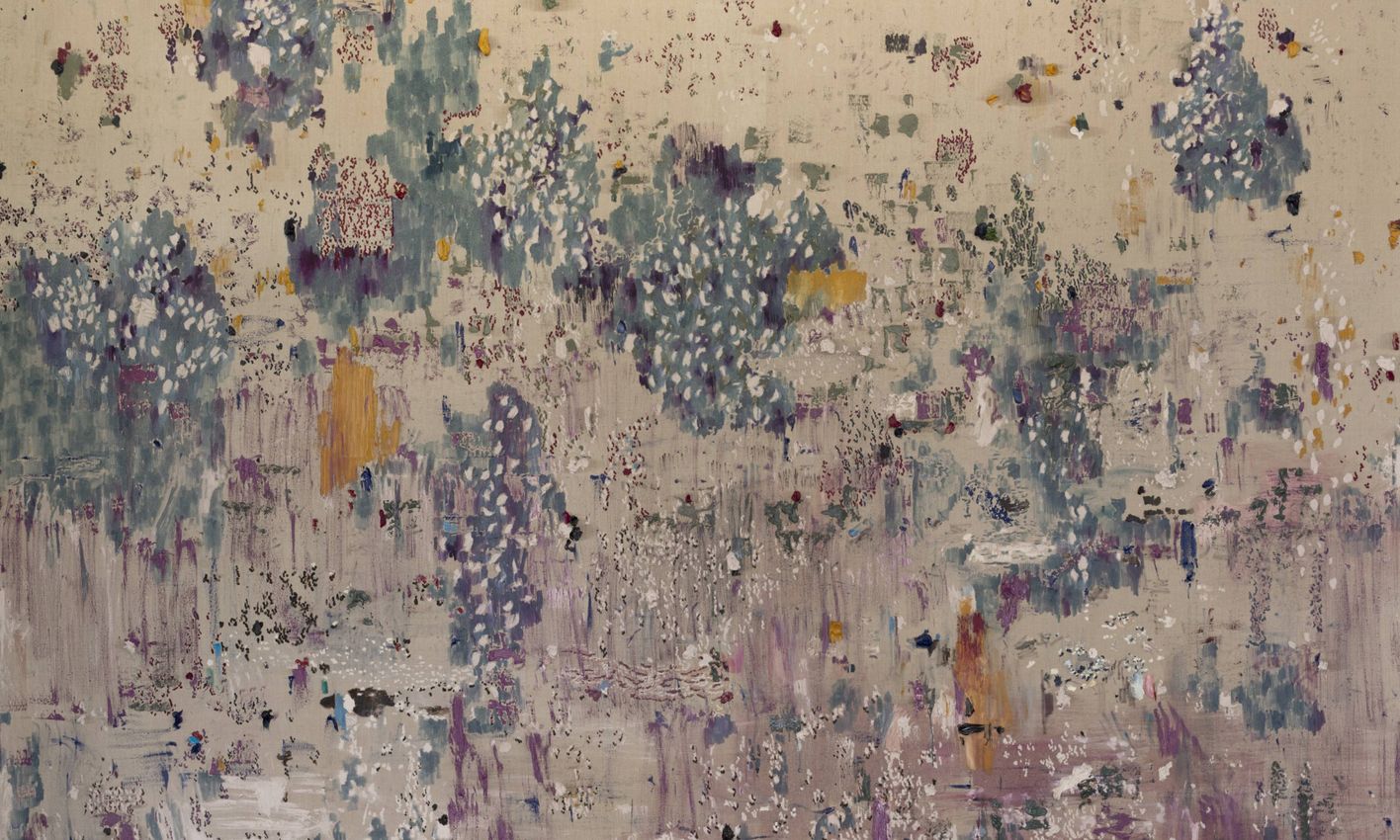
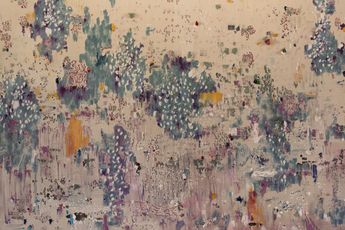
Marina Rheingantz‘s intensely hued compositions are alluring to behold. Imagining dystopian visions of eerie yet beautiful landscapes, she creates semi-abstract paintings rendered from her memory of real places.
Deeply process-focused, the Brazilian artist’s latest paintings give form to heavily textured naturalistic backdrops. On the occasion of her solo exhibition, Sedimentar at Fortes D’Aloia & Gabriel in São Paulo, Rheingantz discusses her upbringing in rural Araraquara, Brazil, and the latest developments in her practice, such as her collaborative exploration into embroidery and tapestry.
I was born in the countryside where my family owned a farm. Although I grew up between the city and the countryside, I spent a lot of time at the farm. It was a very special place where I used to ride horses alongside the men who worked on the land. I felt a deep sense of freedom growing up there.
When I started painting, my practice was very connected to the landscape I grew up in. I felt bound to the wilderness and the feeling of being free. Now, my paintings are not so connected to that time or place. Rather they are mixed with various references to different places, although vast rural landscapes and horizons still feature in my work.
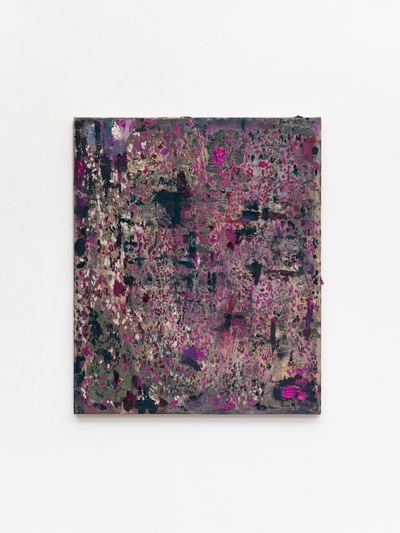
In Tupi, Araraquara translates to ‘where the sun lives’. The landscape consists of huge flats of land below vast skies of spectacular sunsets. I often reference those landscapes in my paintings, drawing from my memory and subconscious. I also find inspiration in what I see in day-to-day life
I normally go to the studio every day. Until last year, I used to work around ten hours a day at the studio. Now, I work between six and eight hours a day. Sometimes I wake up very early and go to the studio, particularly if there is a painting I am working on that I’m really excited about.
When I’m at the studio, I usually work on several different paintings at the same time and don’t think too much about the grouping of my paintings or how they’ll appear together in a show. I also spend time researching textiles, tapestries, and fabrics. Somehow, the textiles eventually become part of the landscape I am painting, creating an abstraction of texture.

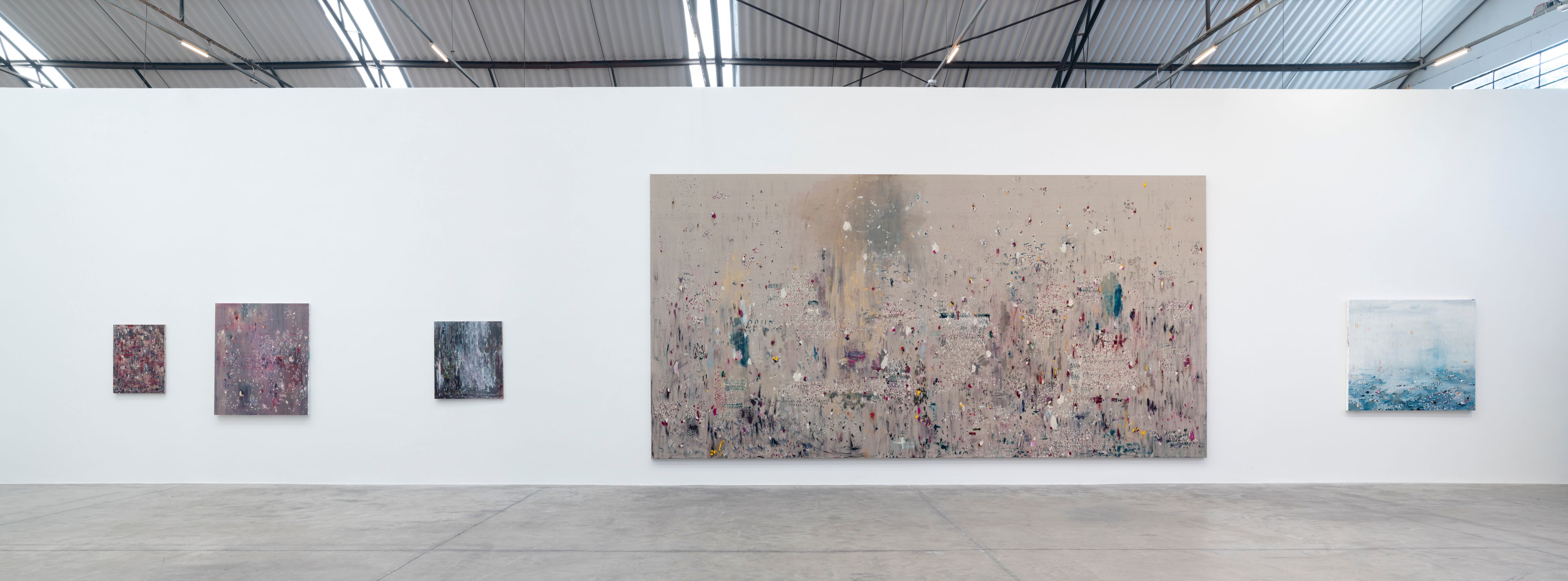
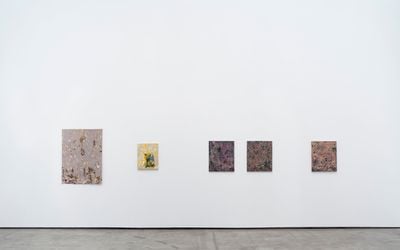
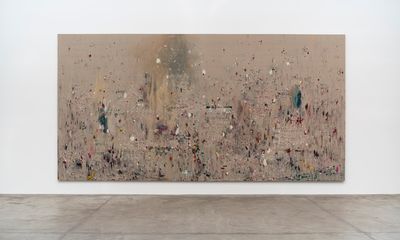
When working towards Sedimentar, I tried not to think too much about how the exhibition would look as a whole. Instead, I focused on the different processes of each individual painting and how they demonstrate an amalgamation of landscape and tapestry in one composition. Several of the paintings in the exhibition were made on a vast scale and are some of the biggest works I’ve ever made, so that was a really exciting experience.
It can be quite tough working at such a scale because you really work your body physically. Each painting has a different process to it. Sometimes it’s a very slow process that can take up to six months, especially when there are such intricate details on different sections of the painting. When you work on a painting for this long, like with Rastro, the work becomes a kind of visual diary of my time and progress in the studio.
Other works in the exhibition took as little as a month to complete, so the timeline of my painting process really depends on the work at hand.
Sometimes, I start very abstract and other times I begin with a particular reference to something. Often, my original idea exists as a starting point but eventually transforms into something else entirely. It becomes more of an experience than a figurative representation.
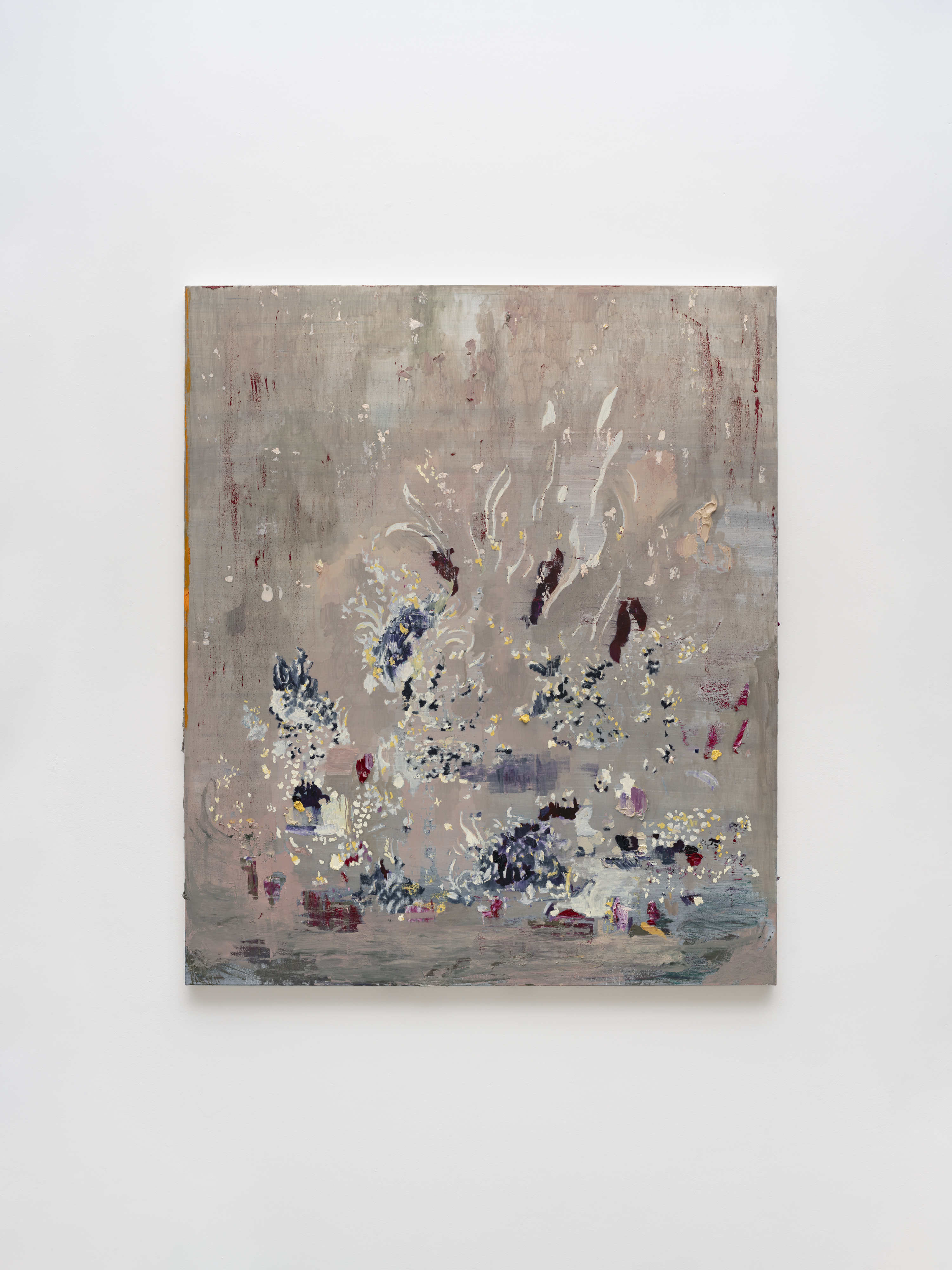
My painting process is instinctive in a way, it’s not controlled. When I am working on a painting, there is often an element of anger and frustration. It isn’t a particularly relaxed process.
The anger comes from a political standpoint. For my solo exhibition at Fortes D’Aloia & Gabriel’s São Paulo space in 2019, I made a large painting called Kalimba (2018). While I was working on it, I was focusing on a comfortable space to escape to in the middle of the chaotic Brazilian general election in 2018. During that turbulent period, I worked on several paintings which featured muddied fountains representing the corruption and darkness of the political explosion occurring throughout Brazil at the time.
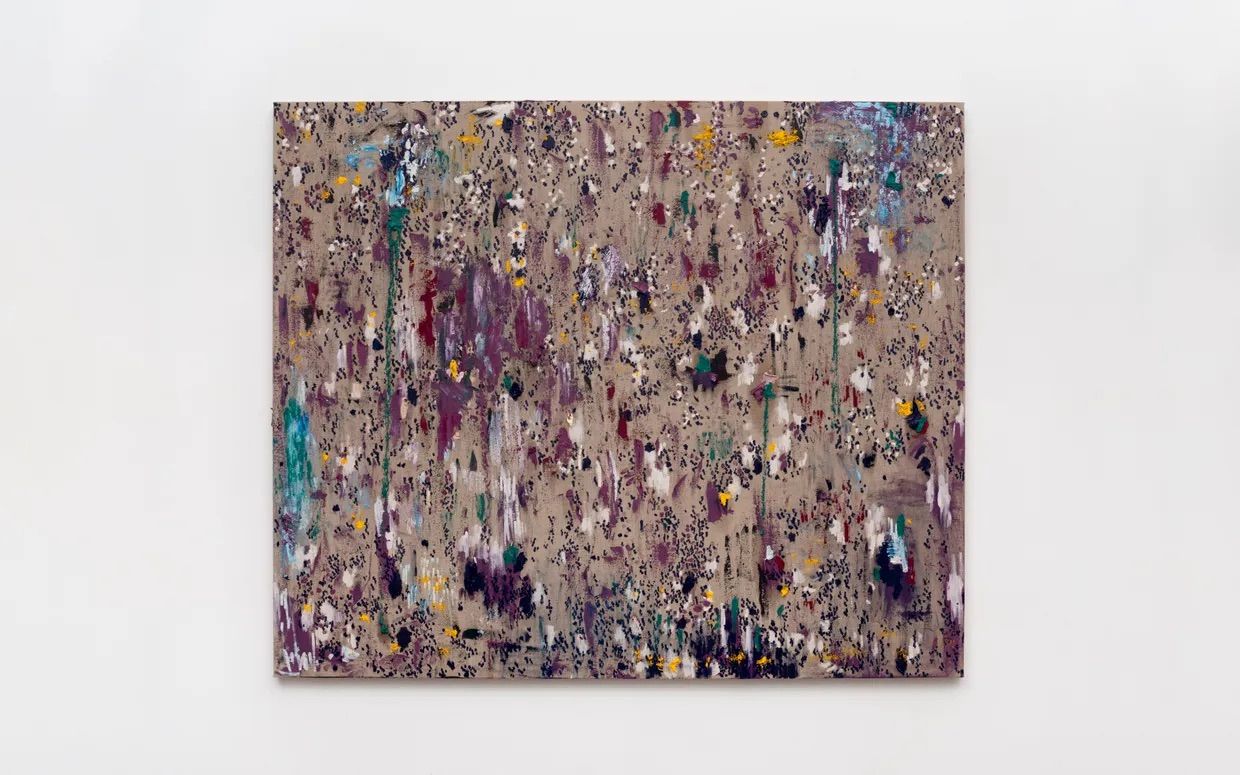
Using tapestry in my practice is a very recent thing for me, with the tapestry included in the exhibition at Fortes D’Aloia Gabriel being actually my first.
My mother has an interest in embroidery and used to make embroideries of tiny things like birds on bedsheets.
When I was in London in 2015, I took an interest in embroidery and textiles and began researching the craft. Shortly after, I made my first painting which looked like it could almost be a textile. When my mother saw the painting, she commented on how it would make a nice embroidery. Eventually, she transformed my work into a beautiful embroidery. We began to collaborate and have been making embroidery works together for over five years now.—[O]

A respected voice in contemporary art discourse.
Focusing on ambitious storytelling and insightful art-world commentary. Ocula Magazine publishes in-depth interviews, critical essays and timely analysis on the artists, exhibitions and ideas driving the global art world.
Learn more about Ocula Magazine
Showcasing the best of the art world.
Ocula partners with galleries from around the world to highlight their artists, artworks and exhibitions. Gallery membership is by application and invitation, with each member vetted by an independent panel.
Learn more about Ocula Membership
Specialises in the sale of major artworks.
Led by a team with deep ties to the world’s leading auction houses, galleries and collectors. Ocula’s advisory team offers bespoke services to high-net-worth clients from around the world who are looking to acquire the best of contemporary and modern art.
Learn more about our team and services