



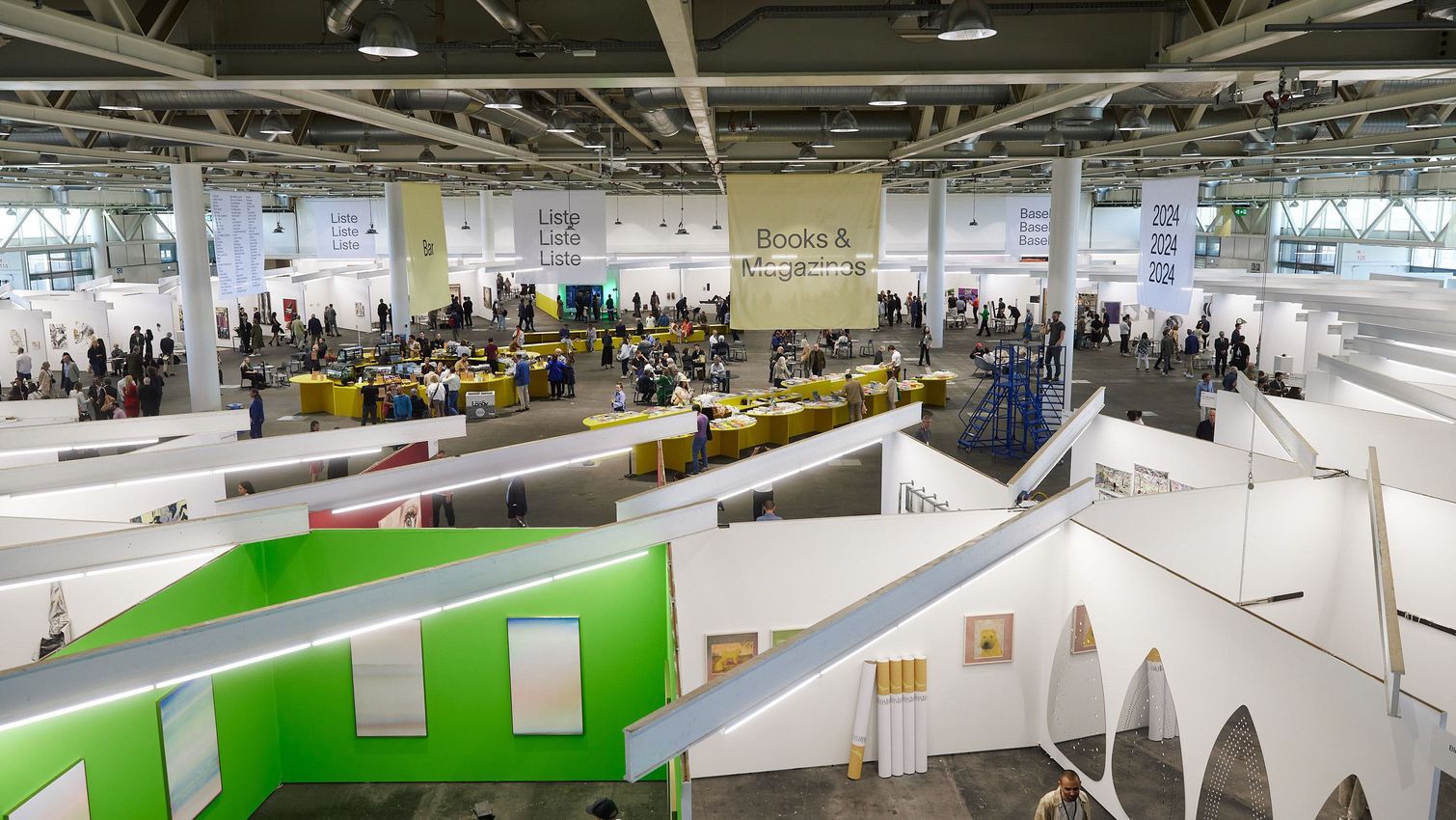
Capsule is pleased to present a three-person exhibition by artists Leelee Chan (b. 1984, Hong Kong),Chris Oh (b. 1982, Oregon) and Cai Zebin (b. 1988, Shantou) at Liste Art Fair Basel 2024. Inlaidwith objects and images from the history of art, nature and human society, the paintings andsculptures interwind transience and immortality to inspire an alternative perception of time, andweave a contemporary narrative through the lens of history.
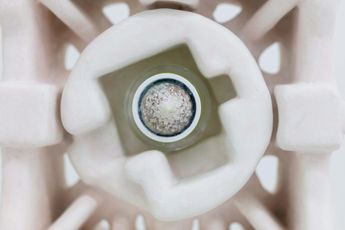
Leelee Chan’s latest wall-mounted sculpture, Ode to Hilma, is a tribute to Swedish painter Hilma afKlint (1862-1944), and a testament to the late artist’s inspiring courage in capturing the presentmoment by merging elements from the past through the future. Af Klint fused complex ideas andbelief systems - from nature, religion, and language, to folk, art, science, and the occult - into aradical visual vocabulary of symbols, geometric shapes, ambiguous life forms, and representationalmotifs. Inspired by Af Klint’s visionary paintings that have been described as “a form of time traveller”,Chan’s sculpture conveys an elasticity of temporality and an openness to connect by reincarnatingobjects with new meanings, purposes and value. Through her fusion of architectural and biomorphicforms, urban detritus and organic materials, natural and manipulated surfaces, she embarks on asearch on how to materialise life force through the process of making.
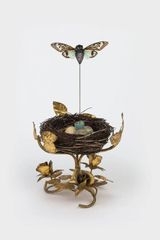
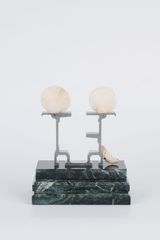
Chan’s small sculptures from her ongoing series “Present Relics” juxtapose organic materials andcontemporary readymade objects, with mingqi fragments (ancient Chinese burial objects) of potteryfigurines dating from the 4th to 10th centuries AD. Chan’s idiosyncratic assemblies take us on ajourney through time and her personal history, revisiting her childhood upbringing in her parents’antique shop in Hong Kong, where she observed and practiced the connoisseurship and restorationof historic debris. By integrating materials from ambiguous sources – from ancient artifacts made byunknown craftspeople and seashells scavenged by the artist to urban detritus and industrialmaterials spurned out from the global supply chain – Leelee Chan probes into the physicalcomposition of the world we live in and concocts the poetry underneath the material surface.Presented on an organic form multilevel plinth, the sculptures conjure a sense of wonderment andexploration like relics unearthed from land formations.
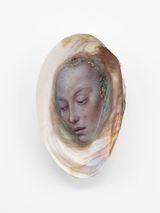
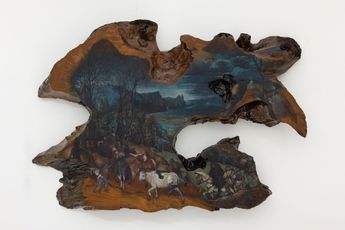
Adjacent to Chan’s tabletop sculptures, in the center of the booth sits another plinth that presentsthe delicate works by Chris Oh. Appropriating Northern Renaissance paintings on organic materialsthat each signifies a unique life cycle, such as seashells, emu eggs, geodes and burl slabs, Ohrevives figures and scenes from the past to rekindle sparks of human emotions that transcend timesand circumstances. The close-up of Archangel Gabriel in Ripples (2024) – originally depicted inFlemish master Jan van Eyck’s painting Annunciation (1434 – 1436) – emerges from the iridescentsurface of a seashell, commemorating the blissful moment when the Archangel announces to theVirgin Mary that she will bear the son of God. In Cella (2024), a geode cradles the figure of MaryMagdalen, originating from 15th-century Netherlandish painter Rogier van der Weyden’s paintingPietà (c. 1441). The spathic texture sprawls onto Mary Magdalene’s face; geological life cycle of theearth hereby overlaps with the history of human society, creating a timeless resonation of lamentation and compassion. In Oh’s work, the portrayed faces, gestures and landscapes emergefrom natural objects like totems imprinted on relics, shimmering in an aura of time and mystique.
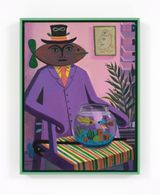
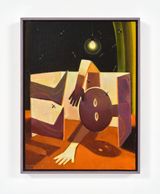
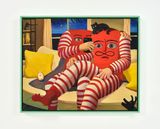
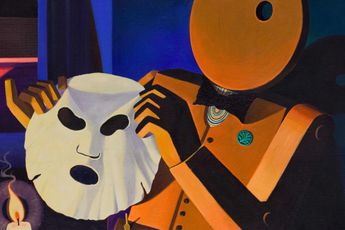
Echoing Chris Oh’s Renaissance phantoms, Cai Zebin’s painting harkens back to the lineage ofsurrealism, and delves into art history’s time honoured subjects to reveal Cai’s first-hand experienceof being a modern-day painter. Fictional Image - Ichthyic Magician (Manuscript) (2023) pays homageto Romanian artist Victor Brauner’s (1903 – 1966) and Swiss-German painter Paul Klee’s (1879 –1940) works that depict the motif of the fish while reflecting Cai’s contemplation on the subject of”the conjurer” amidst the seaside town where he lives. Confusion at Midnight 3 (Manuscript) (2023)is a whimsical reinterpretation of the Headless Horseman, whereas The Burned-Out Portrait(Manuscript) (2023) is a psychological portrait of us all who, at one point or another, felt powerlessin the face of life’s fragility, or simply collapsed at the end of the day, letting termites swarm throughan open window. The works offer a glimpse into the artist’s personal and professional lives, andopen dialogues between the contemporary painter and his great predecessors across time andspace.


A respected voice in contemporary art discourse.
Focusing on ambitious storytelling and insightful art-world commentary. Ocula Magazine publishes in-depth interviews, critical essays and timely analysis on the artists, exhibitions and ideas driving the global art world.
Learn more about Ocula Magazine
Showcasing the best of the art world.
Ocula partners with galleries from around the world to highlight their artists, artworks and exhibitions. Gallery membership is by application and invitation, with each member vetted by an independent panel.
Learn more about Ocula Membership

Specialises in the sale of major artworks.
Led by a team with deep ties to the world’s leading auction houses, galleries and collectors. Ocula’s advisory team offers bespoke services to high-net-worth clients from around the world who are looking to acquire the best of contemporary and modern art.
Learn more about our team and services