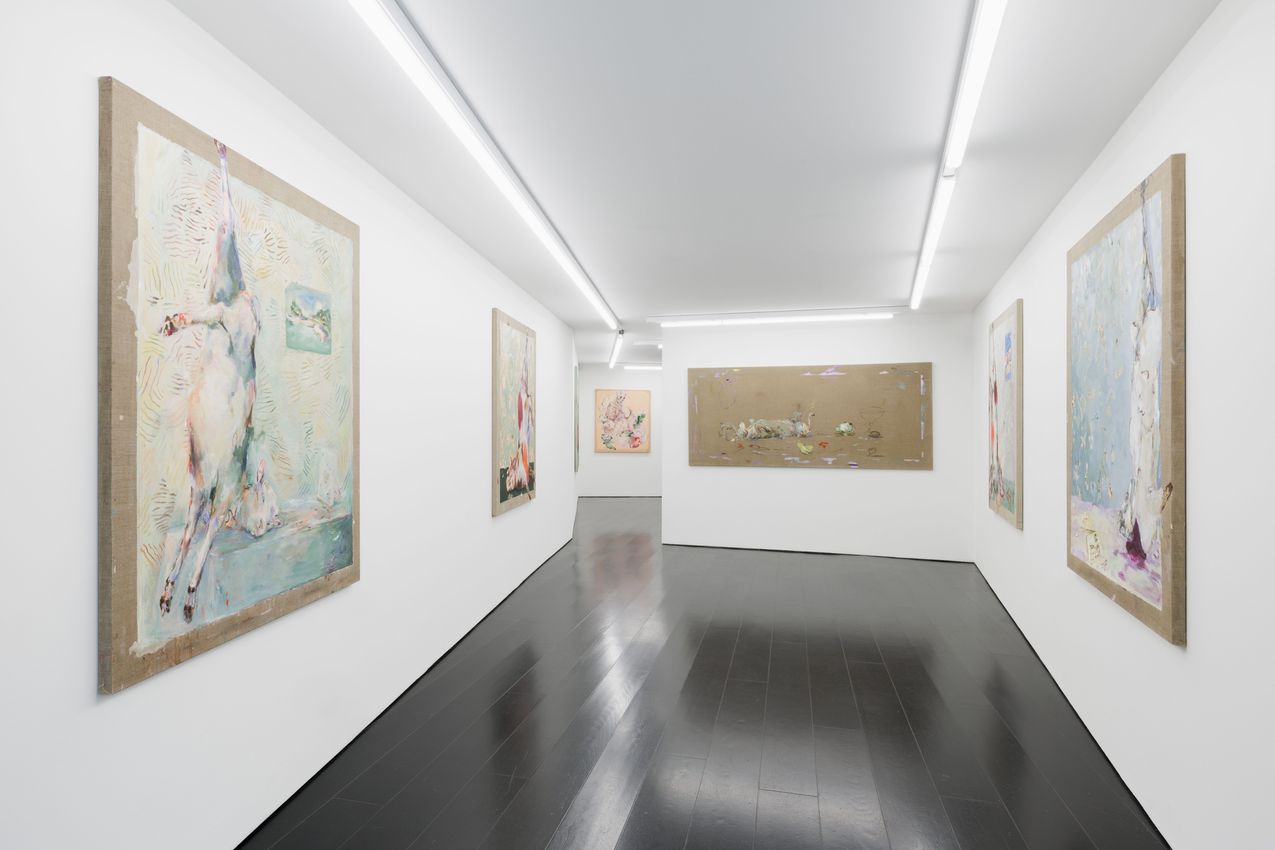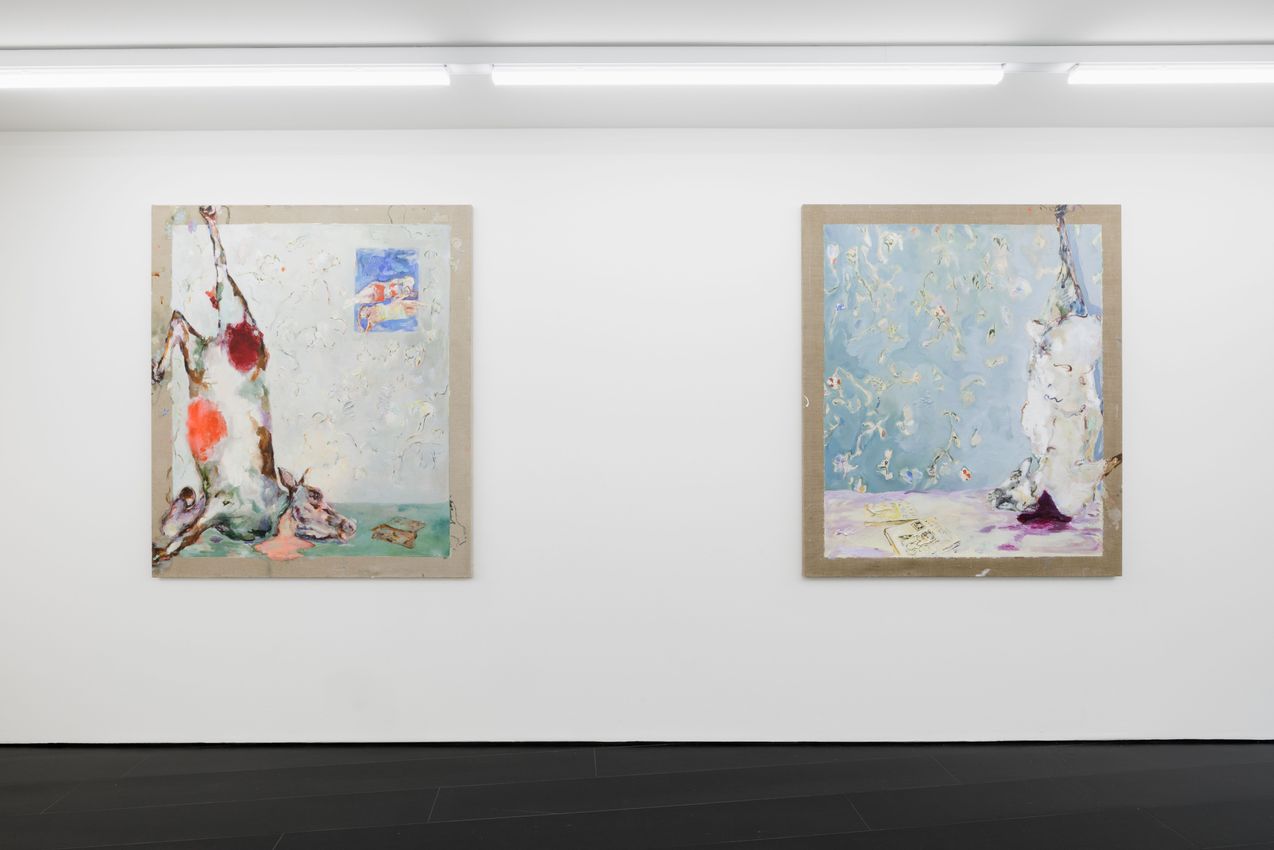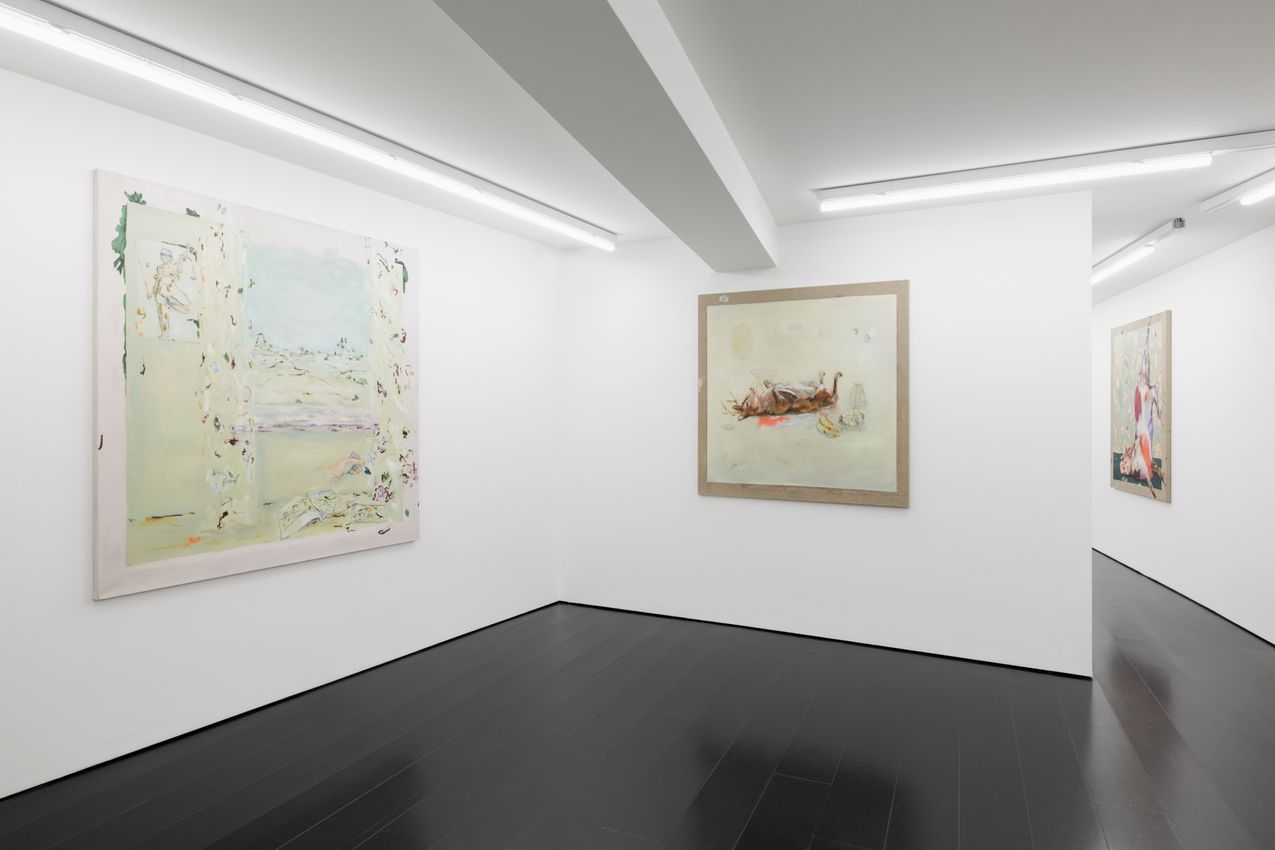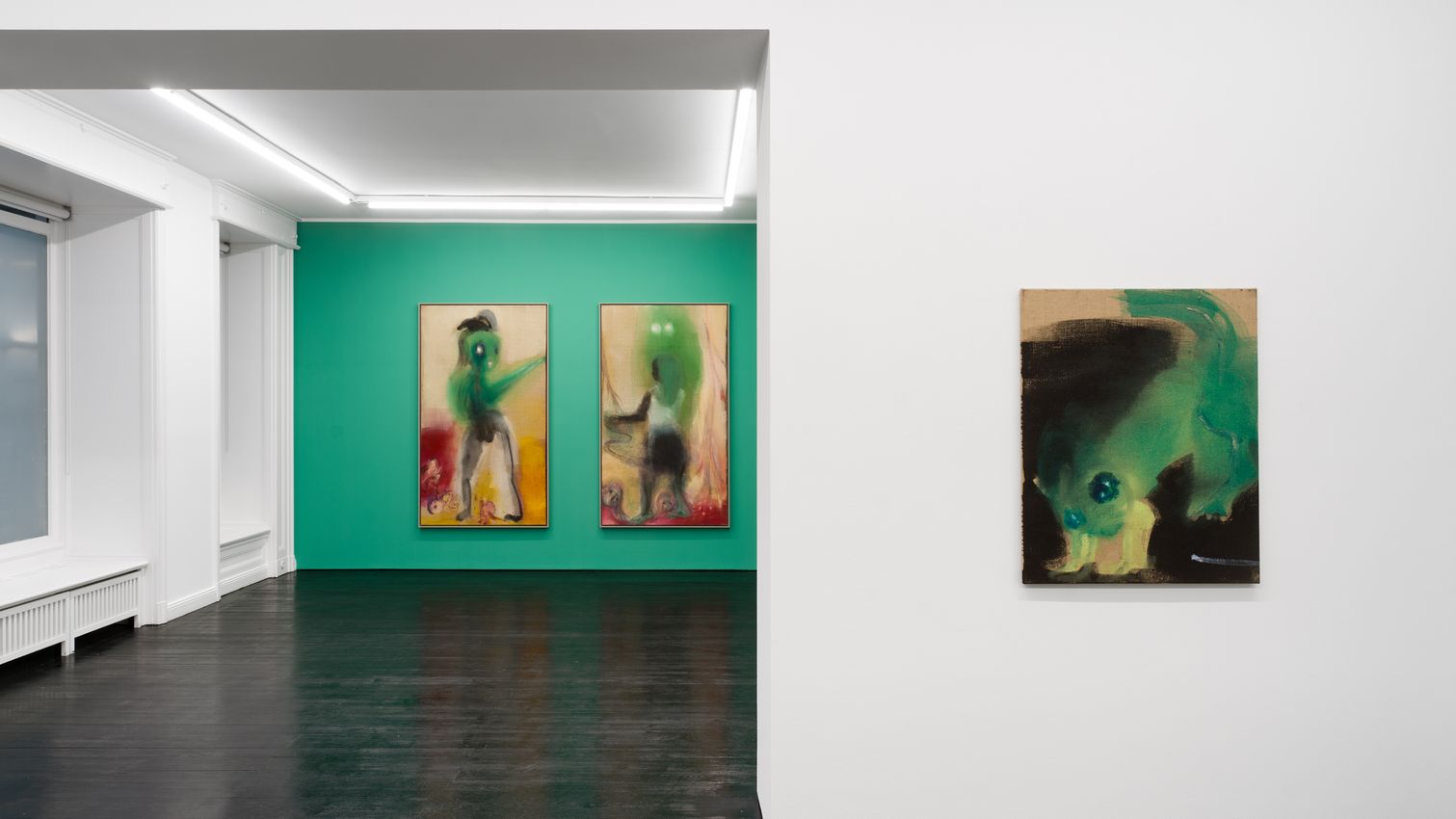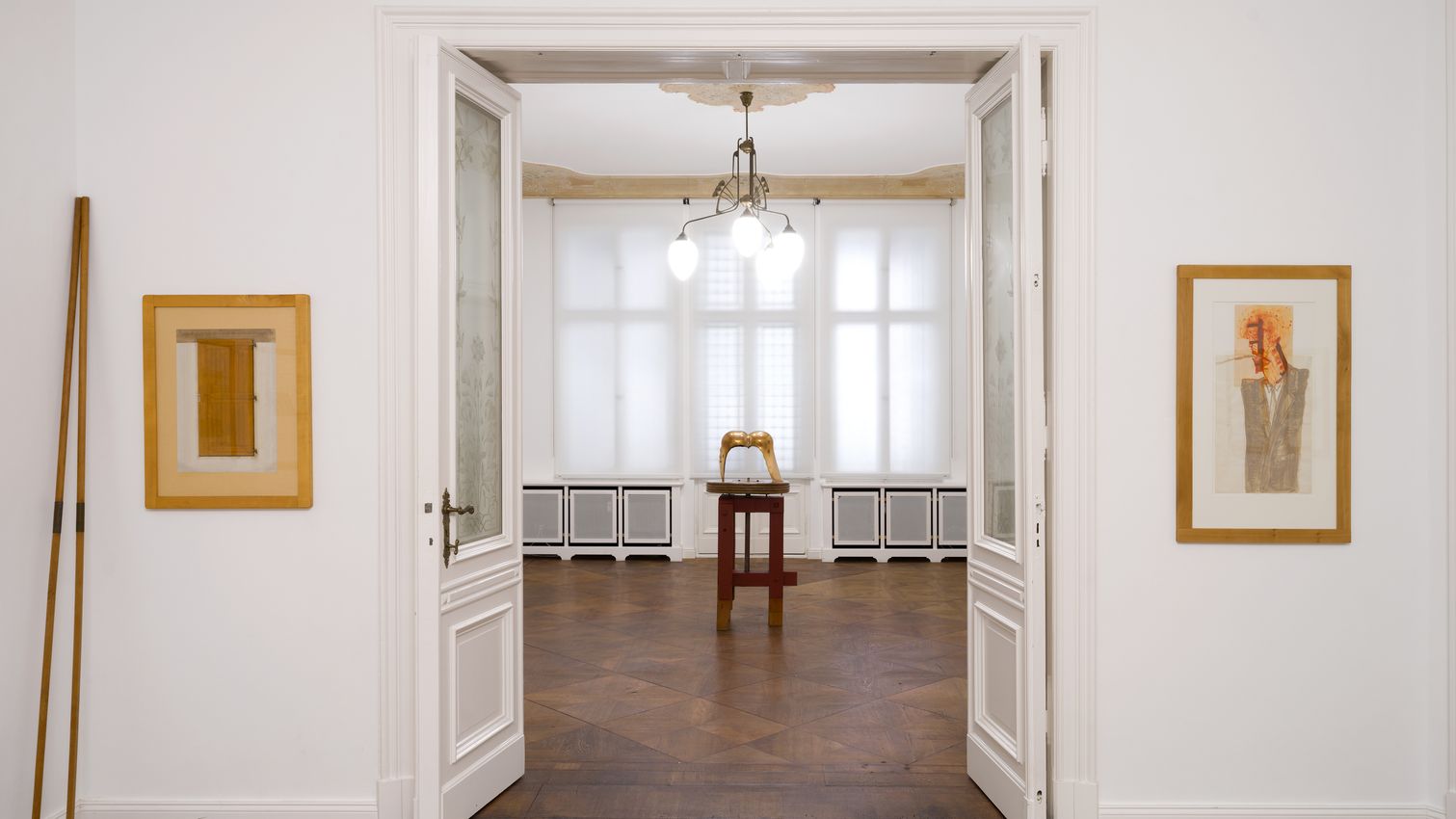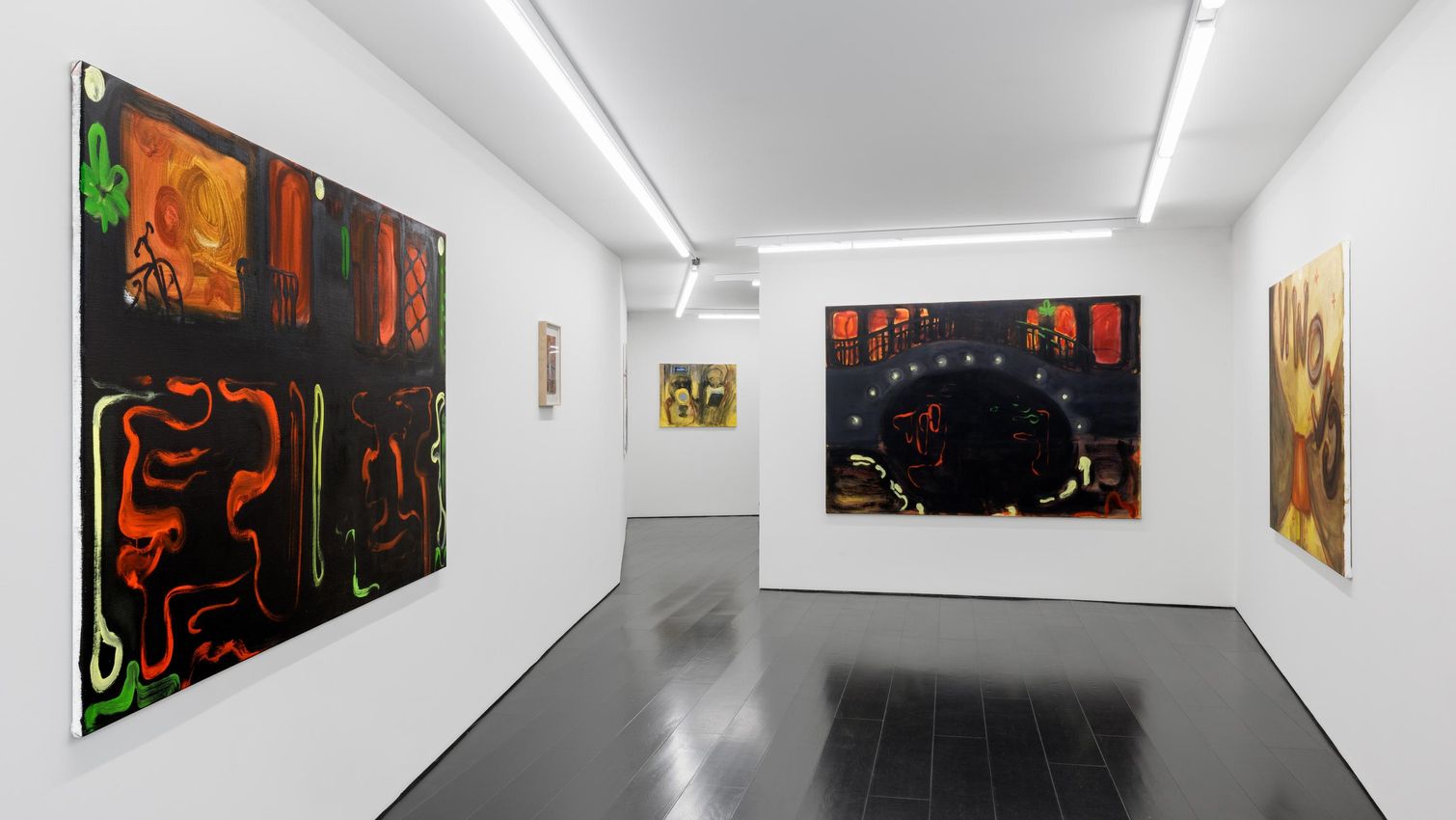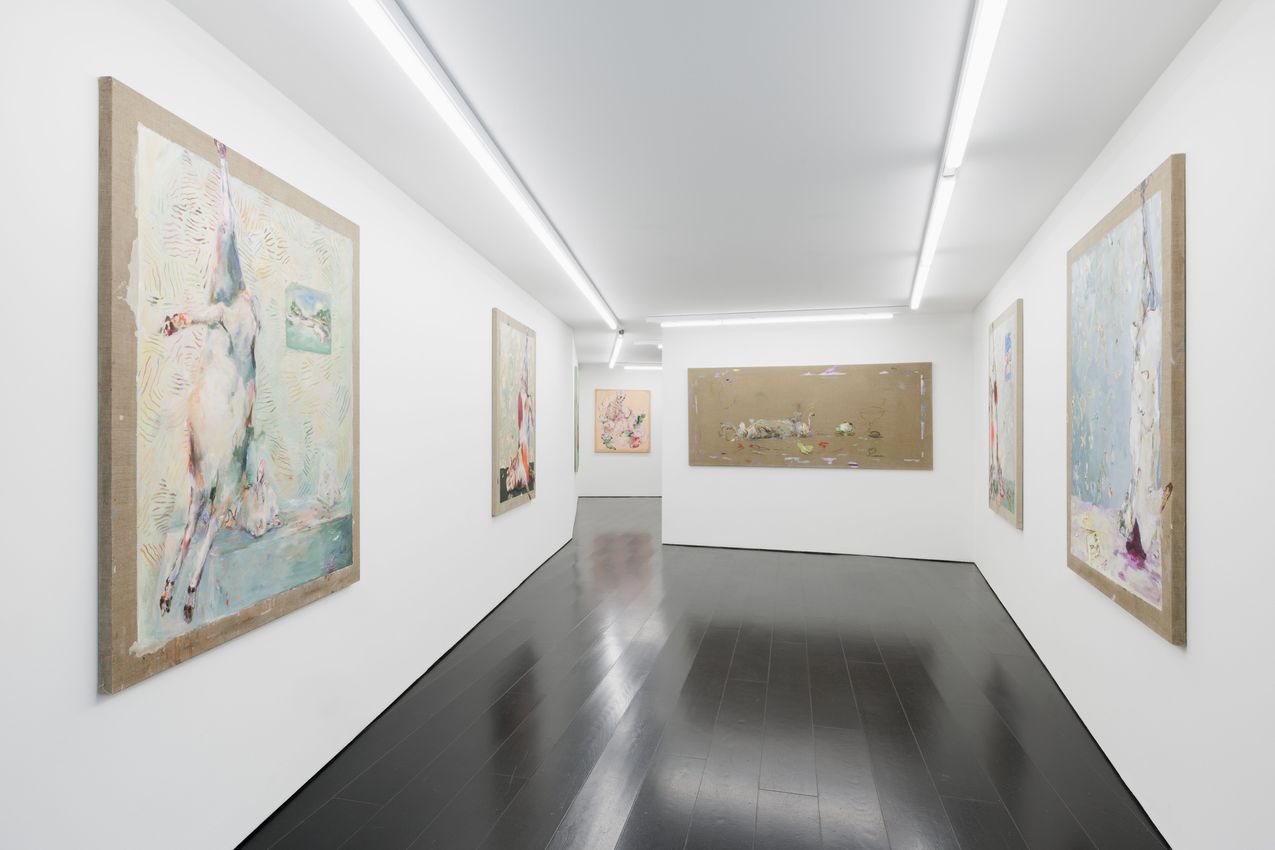
Contemporary Fine Arts presents Crimson and Clover, the first solo exhibition by Finnish artist Anna Tuori at the Basel gallery. Its title borrows from the 1968 song by Tommy James and the Shondells, carrying a note of sweetness touched by tension. That tone is close to Tuori’s practice, where warmth never comes without unease and beauty is often shadowed by disturbance.
Tuori’s work begins from the unstable texture of the present. She follows the news and absorbs what surrounds her, letting that pressure settle before it finds form. “The world is so absurd that it feels like fiction.” This sense of distance, where reality slips toward illusion, is not translated literally. It is the condition from which the image takes shape. Painting offers a way to hold conflict without resolving it too quickly. Wit, violence, intimacy, and fragility coexist without settling into a single meaning.
Her process begins with color and composition rather than with a statement. She approaches painting in a more abstract mode, allowing rhythm to guide the work before figures or objects come into view. Restlessness lingers, yet resists explanation. Colour sinks into the canvas, creating an immaterial depth, while thicker layers of oil push outward with tactile density. Each work emerges through a subtle negotiation: one movement withdraws, another insists.
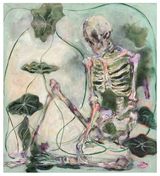
A dialogue with the history of painting runs through the exhibition. Tuori is attentive to still life, especially the memento mori, yet she does not construct direct vanitas quotations. Her relation to tradition is broader and more organic. It emerges through weight, atmosphere, and the emotional temperature of each scene. Her paintings ask how mortality inhabits ordinary life, and how one lives with that knowledge while surrounded by comfort. There is an existential undertow here, but also empathy. The works retain tenderness even when they address harsh subjects.
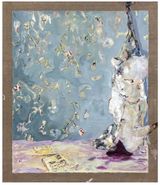
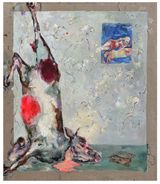
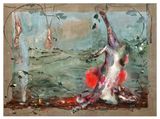
Animals such as cows, deer, and cats recur in these paintings. They stand in for the human body, though in a depersonalized way. Through them, vulnerability becomes easier to share. This leaves space for projection without directing us toward a fixed identity. The animals appear lifeless, suspended upside down. Their carcasses hang with full mass, making gravity visible. This arrangement recalls classical still life while intensifying the emotional charge.
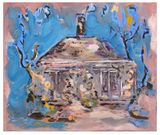
In Noble and Tragic (2025), the motif is brutal, but the surrounding palette and framing feel intimate, almost domestic. This tension is central to the artist’s vision. Horror sits within a setting of care. Other objects and decorative elements complete the staging, as if fragments of different times had gathered in one place. We follow these clues without being told what conclusion to reach. Even the bare borders mark a limit, reminding us that this is only one way of seeing.
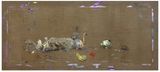
When It Happened Again (2025) shows a deer rendered through minimal brushstrokes, as if whispering across the linen. Its title suggests a loop in which the past returns because it was not fully learned. Finally, Simply Another Sunday Morning (2025) faces the world through a window. Nature seems to enter the room. A floating hand paints, while Lady Justice hovers between witness and hope. It is an image of longing, and of possibility.
Crimson and Clover invites reflection without closure. What matters here is not the isolated detail, but the larger constellation each work holds in play, where what can be named meets what still exceeds language.
Text by Nicolas Vamvouklis


Anna Tuori (born 1976 in Helsinki, Finland) lives and works in Helsinki. Her paintings move fluidly between abstraction and figuration, evoking a sense of intimacy intertwined with unease. Tuori’s work engages with contradiction, exploring surface and depth, and reflecting on the fragile ways in which we attempt to understand reality through imagination and fiction.

A respected voice in contemporary art discourse.
Focusing on ambitious storytelling and insightful art-world commentary. Ocula Magazine publishes in-depth interviews, critical essays and timely analysis on the artists, exhibitions and ideas driving the global art world.
Learn more about Ocula Magazine
Showcasing the best of the art world.
Ocula partners with galleries from around the world to highlight their artists, artworks and exhibitions. Gallery membership is by application and invitation, with each member vetted by an independent panel.
Learn more about Ocula Membership

Specialises in the sale of major artworks.
Led by a team with deep ties to the world’s leading auction houses, galleries and collectors. Ocula’s advisory team offers bespoke services to high-net-worth clients from around the world who are looking to acquire the best of contemporary and modern art.
Learn more about our team and services