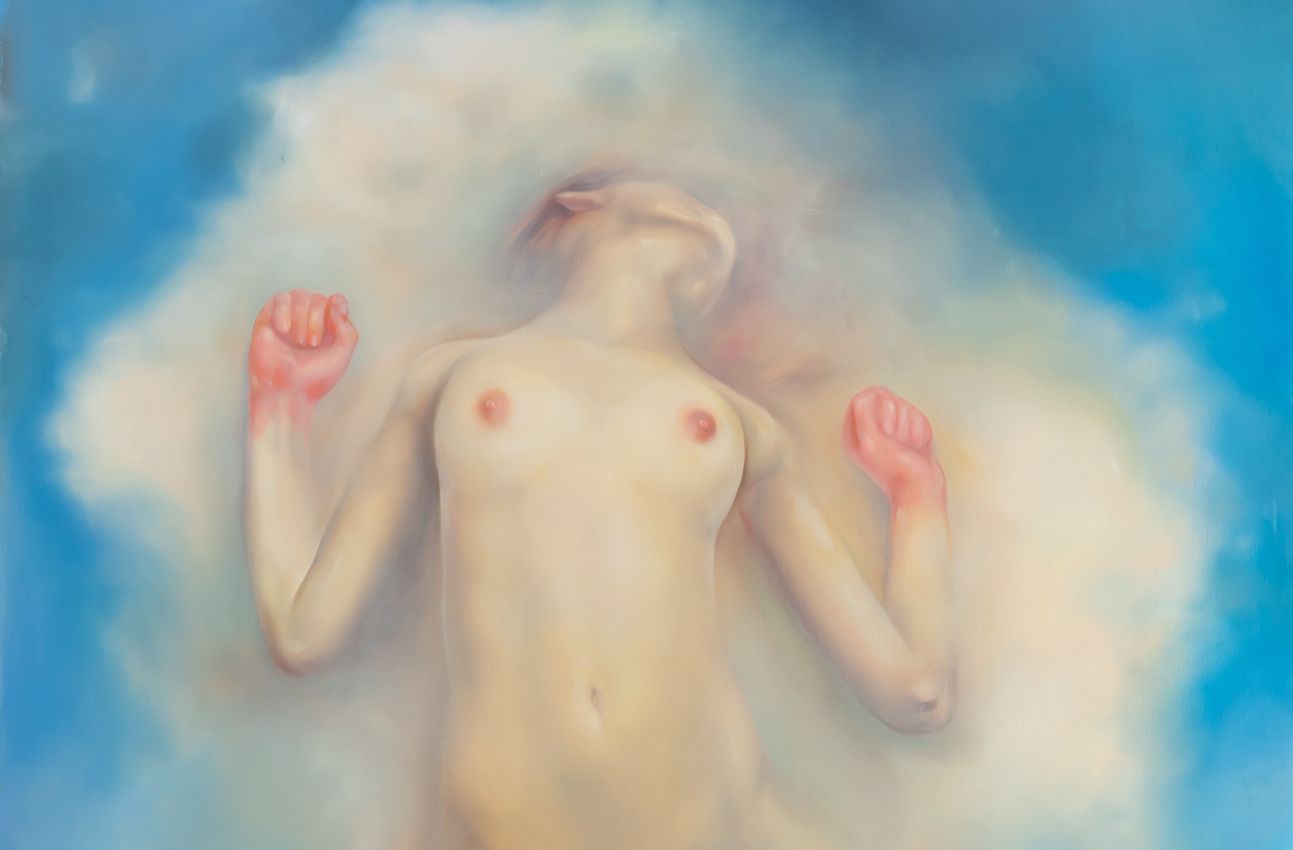
Galerie Templon is marking the arrival of spring with the first exhibition in Belgium of talented Iranian painter Nazanin Pouyandeh.
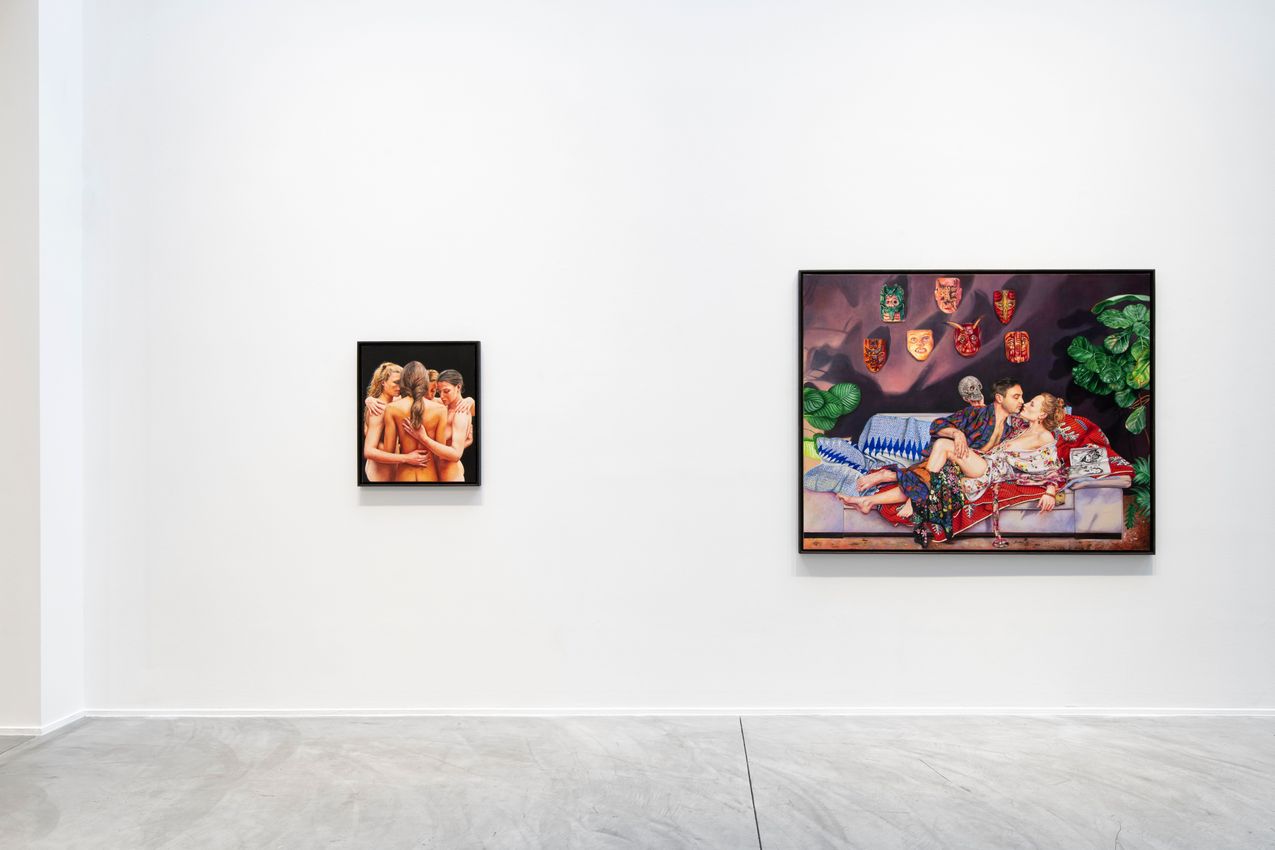
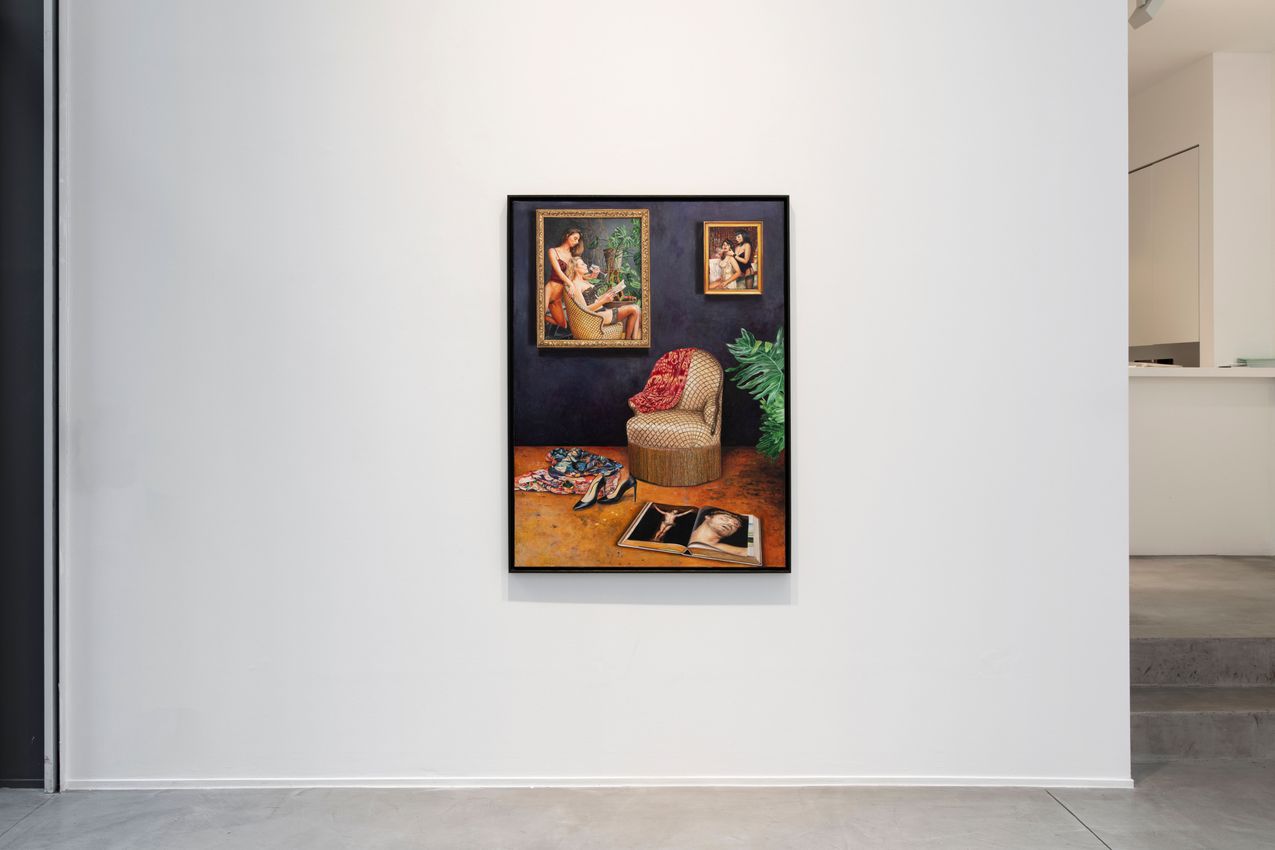
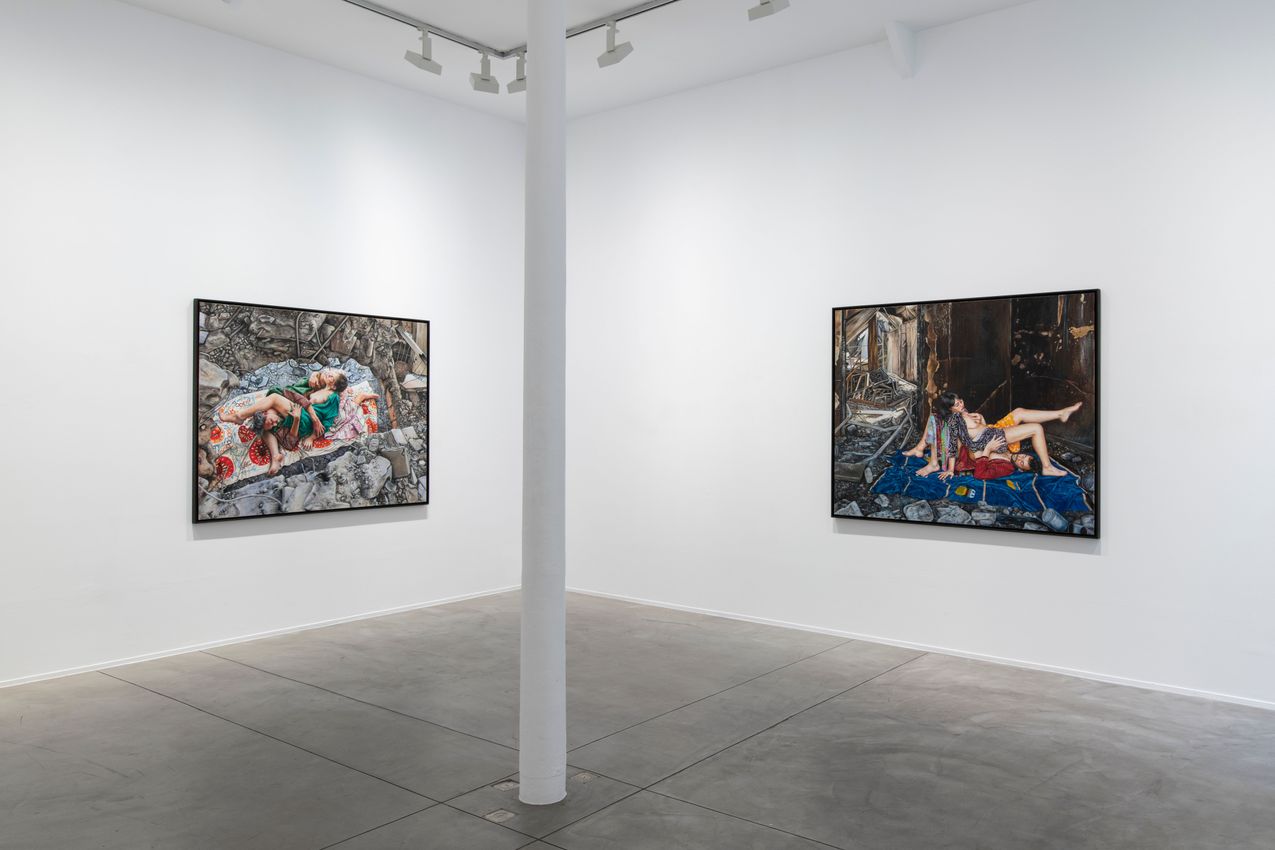
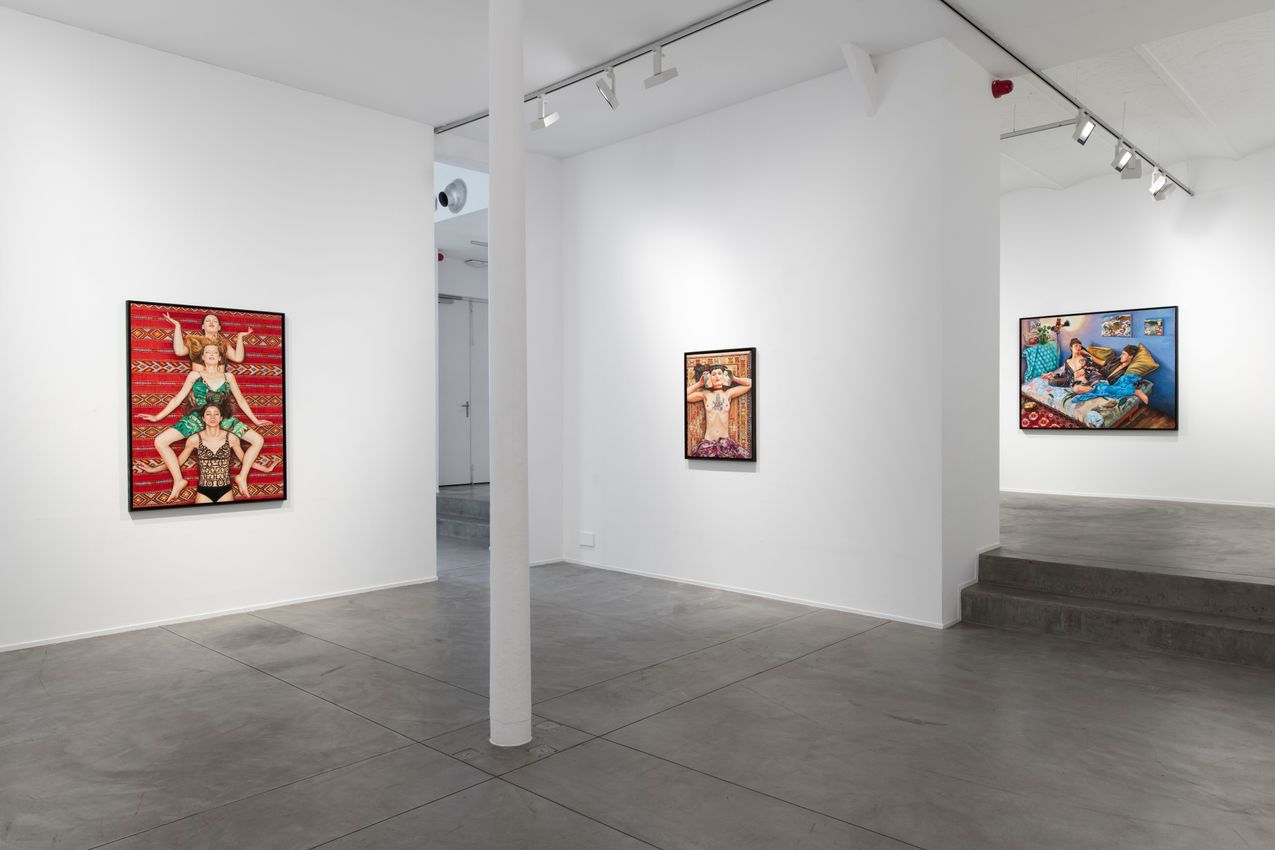
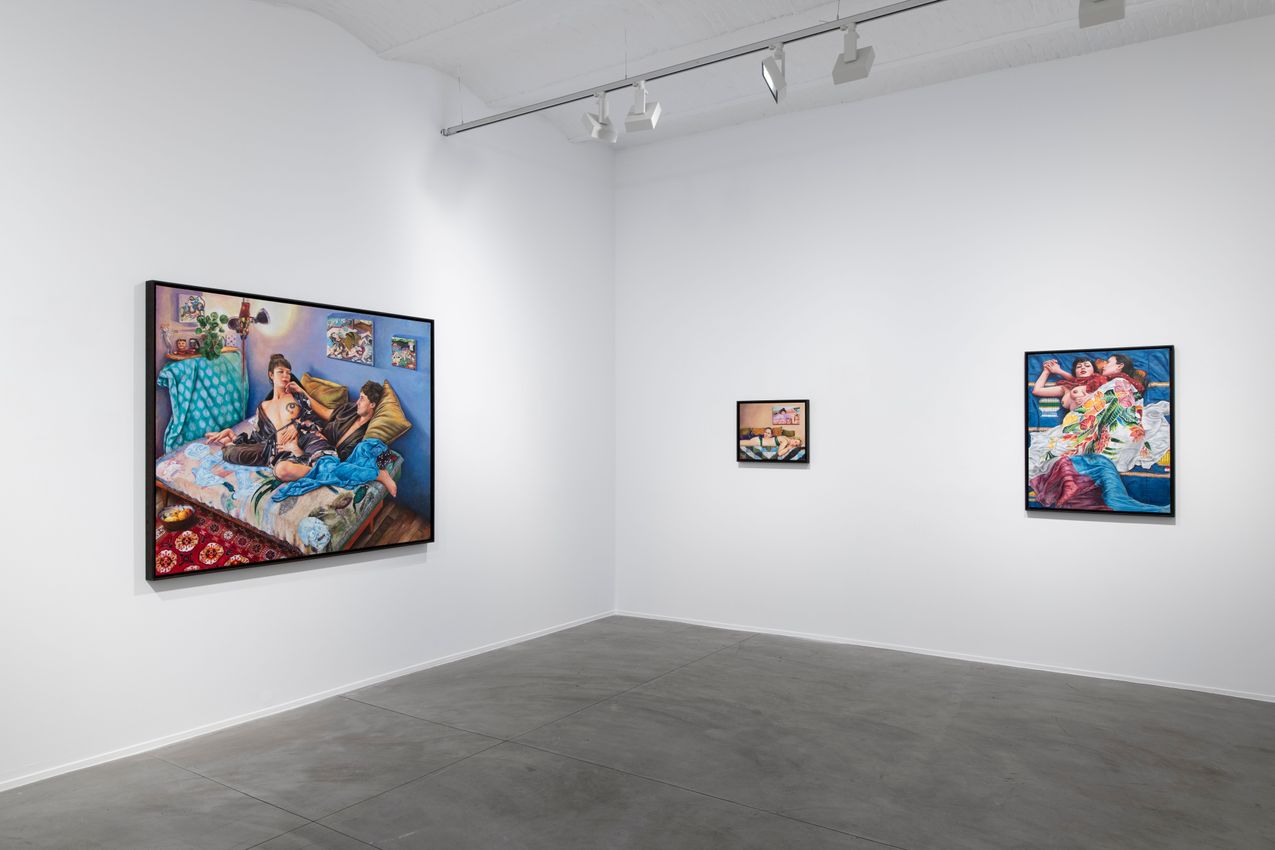
The show, a first foray into her creative universe, centres on fifteen canvases in varying formats primarily created between 2024 and 2025. All works engage with the central theme of her practice: painting as a means of expressing pleasure and emancipation.
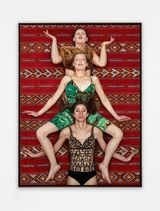
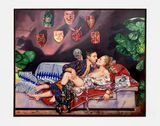
Reflecting the evolution of her work over time, the new series features a range of female figures, active participants in scenes that are as complex as they are ambiguous. Her characters emerge within carefully arranged settings, from ruined cities to painters’ studios and hushed living rooms. The compositions are market by a profusion of vibrant colours, with visually captivating motifs – floral, geometric or tribal. Unexpected symbols are juxtaposed as religious icons rub shoulders with African masks, the gleaming blades of daggers, human skulls and art books, their pages left carelessly open. Draped materials and rugs reveal a world full of meaning.
“Beneath the Fabric of the World” establishes a fascinating parallel between libido and creation, positioning painting as an act of fulfilment, liberation and, consequently, resistance. “Painting is the supreme act, an act of total and joyful freedom, an act that will outlive humanity, a means of combating the power of living beings by transcending them,” explains Nazanin Pouyandeh.
Her work is deeply rooted in her personal history – she was forced to flee Iran at the age of 18 after the politically motivated murder of her father – and inspired by the experience of living in exile as well as centuries of global art history. Influences that flourish in the form of the sort of remarkable mises en abyme reminiscent of the Flemish School and European surrealism. There are references to Shungas, the famous Japanese erotic prints, as well as the works of Matisse and Bonnard. The realistic scenes devised by the artist gradually move away from all tangible veracity. She takes the viewer on a dreamlike, sensory journey that functions as an exploration of the mechanisms of survival and resistance in these uncertain times.


The gallery was founded in 1966 by Daniel Templon, who was then only 21. It first opened rue Bonaparte, in Saint-Germain-des-Prés in Paris, before moving in 1972 to its current location, rue Beaubourg, in the Marais, close to the Pompidou Center, which opened in 1977. Daniel Templon first gained recognition by exhibiting conceptual and minimal artists such as Martin Barré, Christian Boltanski, Donald Judd, Joseph Kosuth, Richard Serra. In the seventies and eighties, Daniel Templon was one of the pioneers of the contemporary art and introduced many important American artists to the French public: Dan Flavin, Ellsworth Kelly, Willem de Kooning, Frank Stella, Andy Warhol. The gallery quickly became one of the references in contemporary art in France. In 1972, Daniel Templon and Catherine Millet co-founded the monthly art magazine ART PRESS.

A respected voice in contemporary art discourse.
Focusing on ambitious storytelling and insightful art-world commentary. Ocula Magazine publishes in-depth interviews, critical essays and timely analysis on the artists, exhibitions and ideas driving the global art world.
Learn more about Ocula Magazine
Showcasing the best of the art world.
Ocula partners with galleries from around the world to highlight their artists, artworks and exhibitions. Gallery membership is by application and invitation, with each member vetted by an independent panel.
Learn more about Ocula Membership

Specialises in the sale of major artworks.
Led by a team with deep ties to the world’s leading auction houses, galleries and collectors. Ocula’s advisory team offers bespoke services to high-net-worth clients from around the world who are looking to acquire the best of contemporary and modern art.
Learn more about our team and services