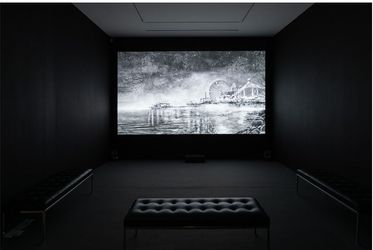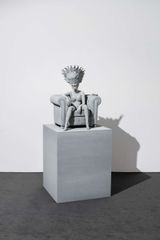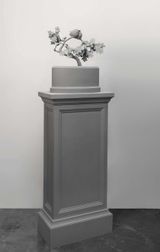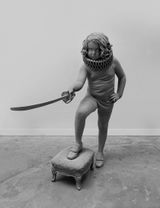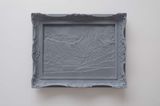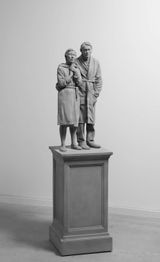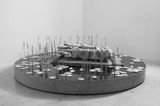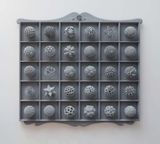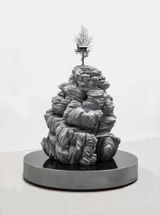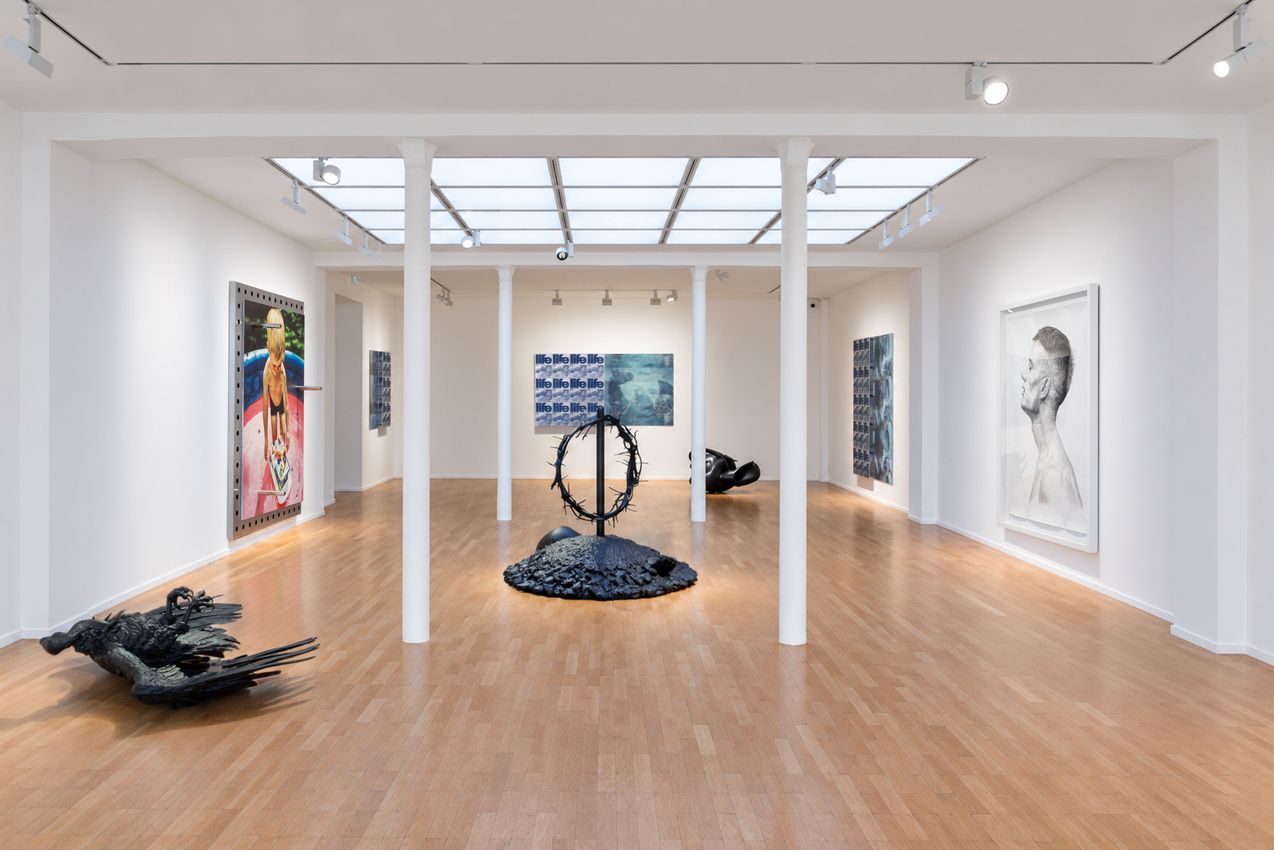
To inaugurate the new season, which in 2026 will mark its 60th anniversary, the Templon Gallery is presenting this autumn a unique project with Belgian artist Hans Op de Beeck. For the first time since the opening of its Grenier-Saint-Lazare space in 2018, the artist has been invited to take over both Paris locations, including the historic venue at 30 rue Beaubourg. Following the conclusion of Nocturnal Journey, Op de Beeck’s critically acclaimed institutional solo exhibition at the Royal Museum of Fine Arts in Antwerp, On Vanishing showcases a cohesive collection of recent and new sculptures, watercolors, and an animated film.
Echoing the ambiguous signification of ‘Vanishing’, with a linguistical meaning; ‘disappearing suddenly and completely’, or, in mathematical terms, ‘becoming zero’, Op de Beeck is fascinated by the moments in which human beings briefly become nothing or nobody, relinquishing a linguistic, logical, and rational understanding of the world and slipping into a state of self-loss and timelessness.
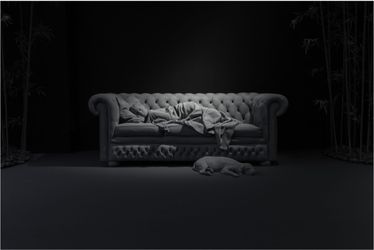
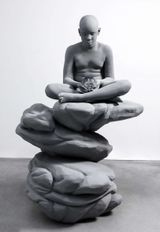
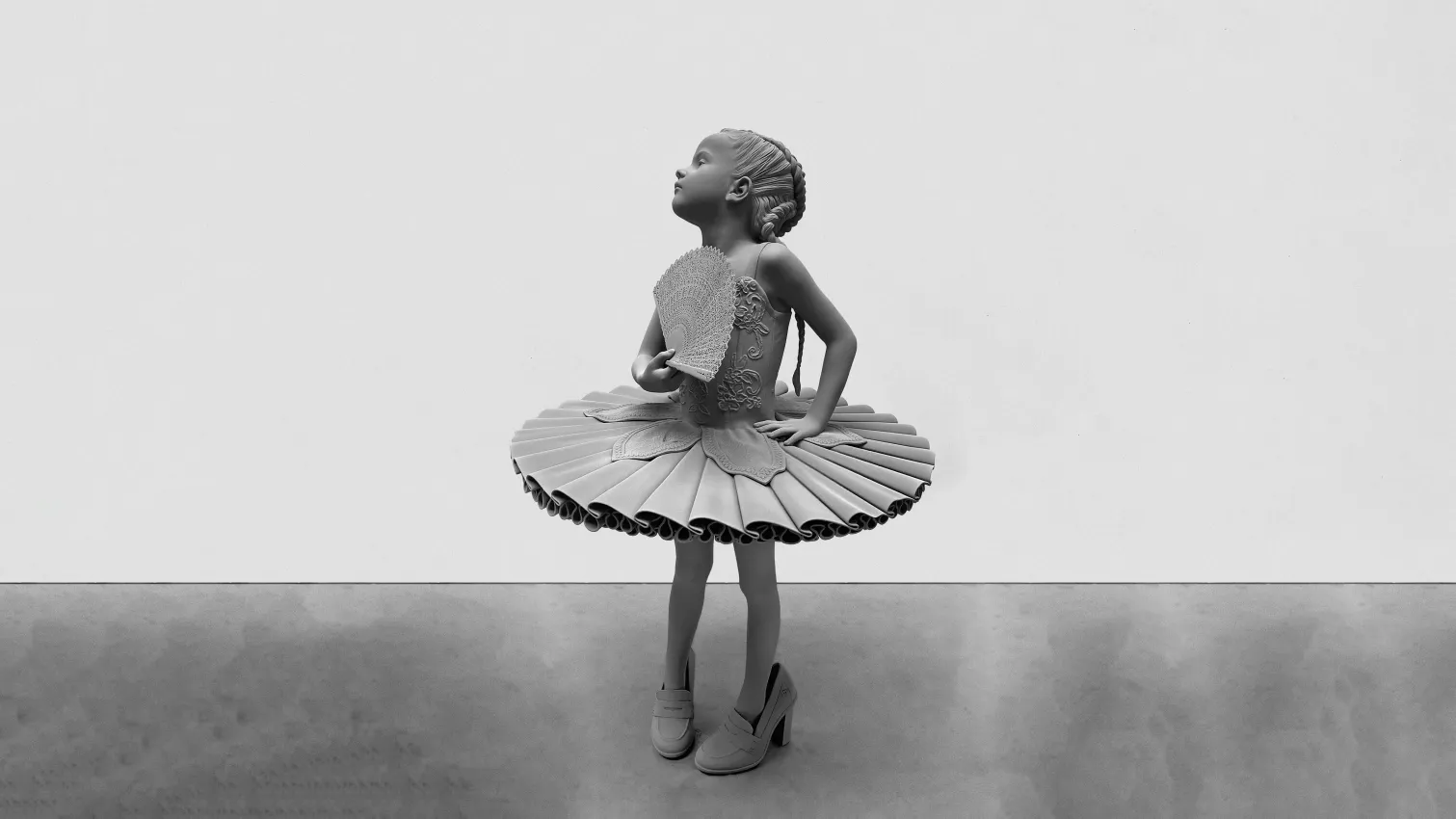
His renowned monumental, often monochrome, sculptural installations that plunge visitors into silent and introspective universe, explore temporality, memory and the human condition. Op de Beeck uses both minimalist as well as most ornate aesthetics to evoke scenes, equally familiar as mysterious, where the apparent simplicity of the form discreetly contains an emotional richness and a complexity of references. His fictitious interiors, outdoor scenes, still lives and human figures seemingly frozen in time Op de Beeck seeks to capture suspended moments, fragments of life, lying outside linear narrative. This approach along with its treatment of the human body and spaces embraces the legacy of both classical sculpture as well as cinematographic imagery, while distancing itself from that same legacy with forms of abstraction in its representations. In contrast to classical statuary and its glorification of the individual or divinity, Op de Beeck strives to express the fleeting nature of existence, opting for a form of universal melancholic anonymity.
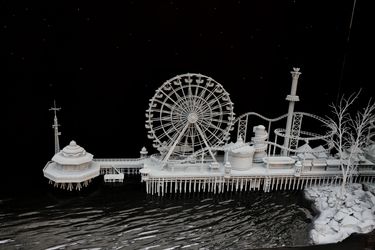
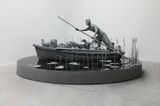
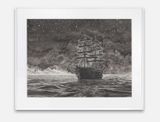
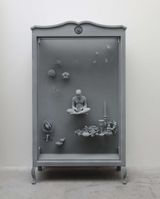
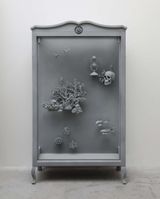
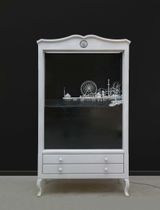
This double exhibition, designed as a Wunderkammer - a cabinet of curiosities -, is imbued with the subtle presence of the marvelous, rooted not in a sense of whimsy but rather in the sculptures’ capacity to interpret reality and create an enigmatic, dreamlike atmosphere. Op de Beeck’s sculptural works with their soft, velvety monochrome skin, alongside his new black and white animated film and watercolour paintings, amplify the sensation of worlds suspended in time and space. The viewer is invited to partake in a form of active contemplation, discovering in turn a seated little girl with angel’s wings lost in her thoughts, a classic display cabinet showing a nocturnal pier with a Ferris wheel under a starry sky, or a life size enigmatic horseman with a little monkey on his shoulder holding a parasol over his head.
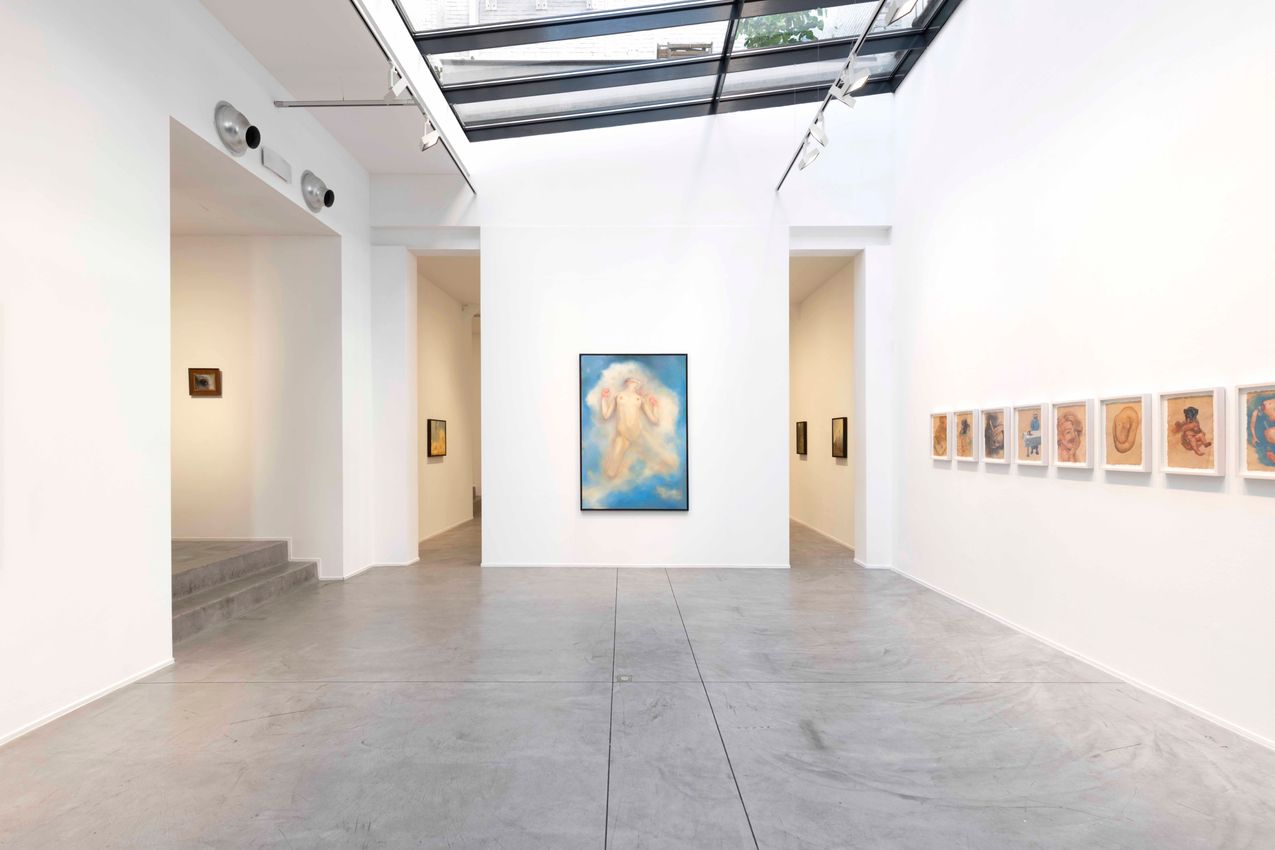
The way the artist plays with the perception of scale and atmosphere sparks a disconnect, a feeling of strangeness when confronted with scenes lifted out of the ordinary. Each work offers us the seed of yet another possible story. With his characteristic grey tones and carefully thought-out staging, Op de Beeck transforms the prosaic into an almost magical experience where simplicity creates the unexpected and a moment of wonder.
Courtesy Templon.


Hans Op de Beeck is a multidisciplinary artist celebrated for his immersive installations, monochrome sculptures, and evocative visual narratives. Based in Brussels and Ghent, Op de Beeck’s practice spans sculpture, installation, video, photography, drawing, watercolour, writing, and scenography.


The gallery was founded in 1966 by Daniel Templon, who was then only 21. It first opened rue Bonaparte, in Saint-Germain-des-Prés in Paris, before moving in 1972 to its current location, rue Beaubourg, in the Marais, close to the Pompidou Center, which opened in 1977. Daniel Templon first gained recognition by exhibiting conceptual and minimal artists such as Martin Barré, Christian Boltanski, Donald Judd, Joseph Kosuth, Richard Serra. In the seventies and eighties, Daniel Templon was one of the pioneers of the contemporary art and introduced many important American artists to the French public: Dan Flavin, Ellsworth Kelly, Willem de Kooning, Frank Stella, Andy Warhol. The gallery quickly became one of the references in contemporary art in France. In 1972, Daniel Templon and Catherine Millet co-founded the monthly art magazine ART PRESS.

A respected voice in contemporary art discourse.
Focusing on ambitious storytelling and insightful art-world commentary. Ocula Magazine publishes in-depth interviews, critical essays and timely analysis on the artists, exhibitions and ideas driving the global art world.
Learn more about Ocula Magazine
Showcasing the best of the art world.
Ocula partners with galleries from around the world to highlight their artists, artworks and exhibitions. Gallery membership is by application and invitation, with each member vetted by an independent panel.
Learn more about Ocula Membership

Specialises in the sale of major artworks.
Led by a team with deep ties to the world’s leading auction houses, galleries and collectors. Ocula’s advisory team offers bespoke services to high-net-worth clients from around the world who are looking to acquire the best of contemporary and modern art.
Learn more about our team and services