





HANS OP DE BEECK
b. 1969, BelgiumHans Op de Beeck is a multidisciplinary artist celebrated for his immersive installations, monochrome sculptures, and evocative visual narratives. Based in Brussels and Ghent, Op de Beeck’s practice spans sculpture, installation, video, photography, drawing, watercolour, writing, and scenography.
Since winning the Young Belgian Painting Prize in 2001, Op de Beeck has exhibited internationally, with works held in major public and private collections. He holds a master’s degree in visual arts from Sint-Lukas Brussels and has participated in post-graduate residencies at the Higher Institute for Fine Arts (Antwerp), the Rijksakademie (Amsterdam), and MoMA PS1 (New York).
Practice and Process
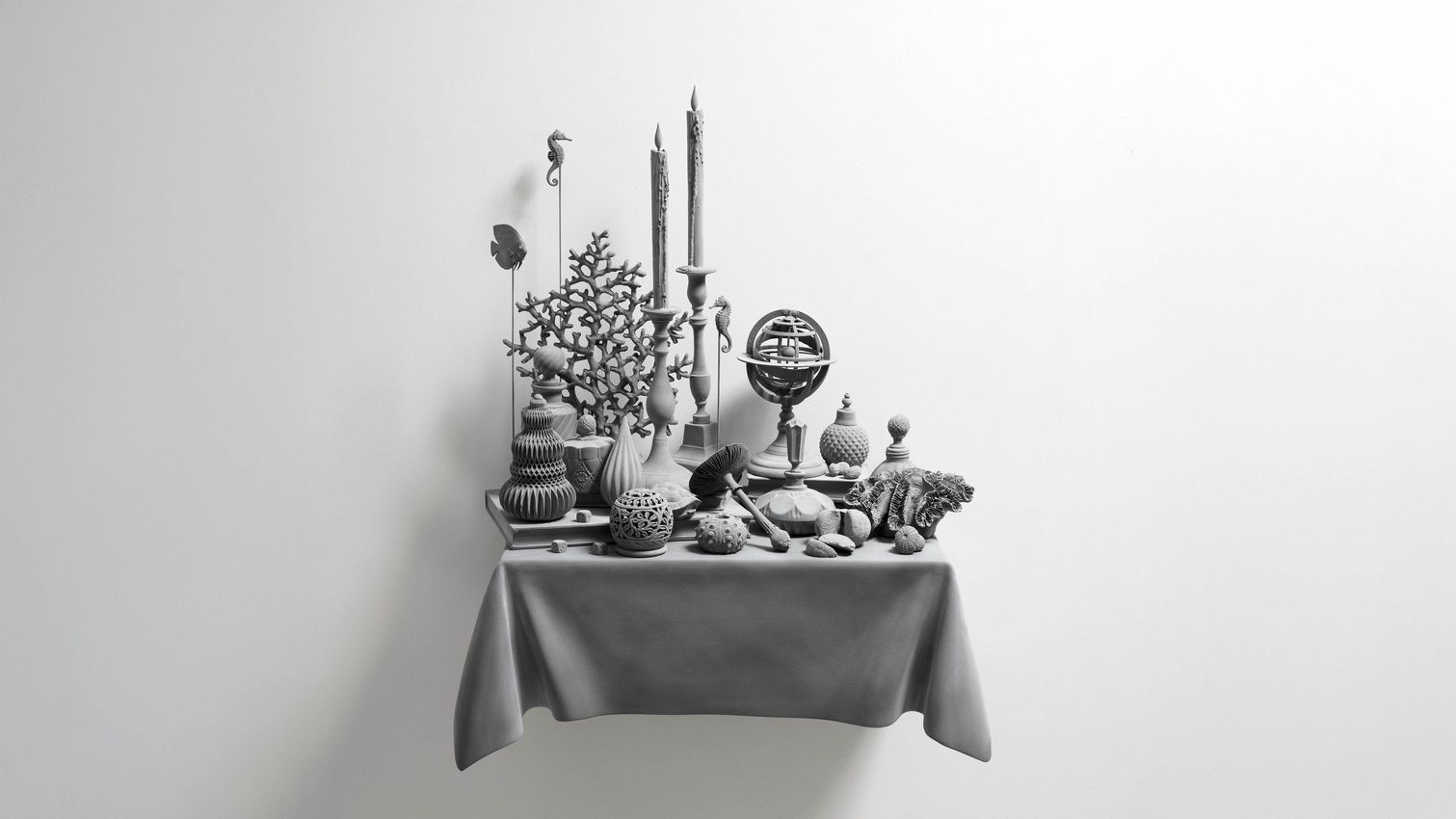
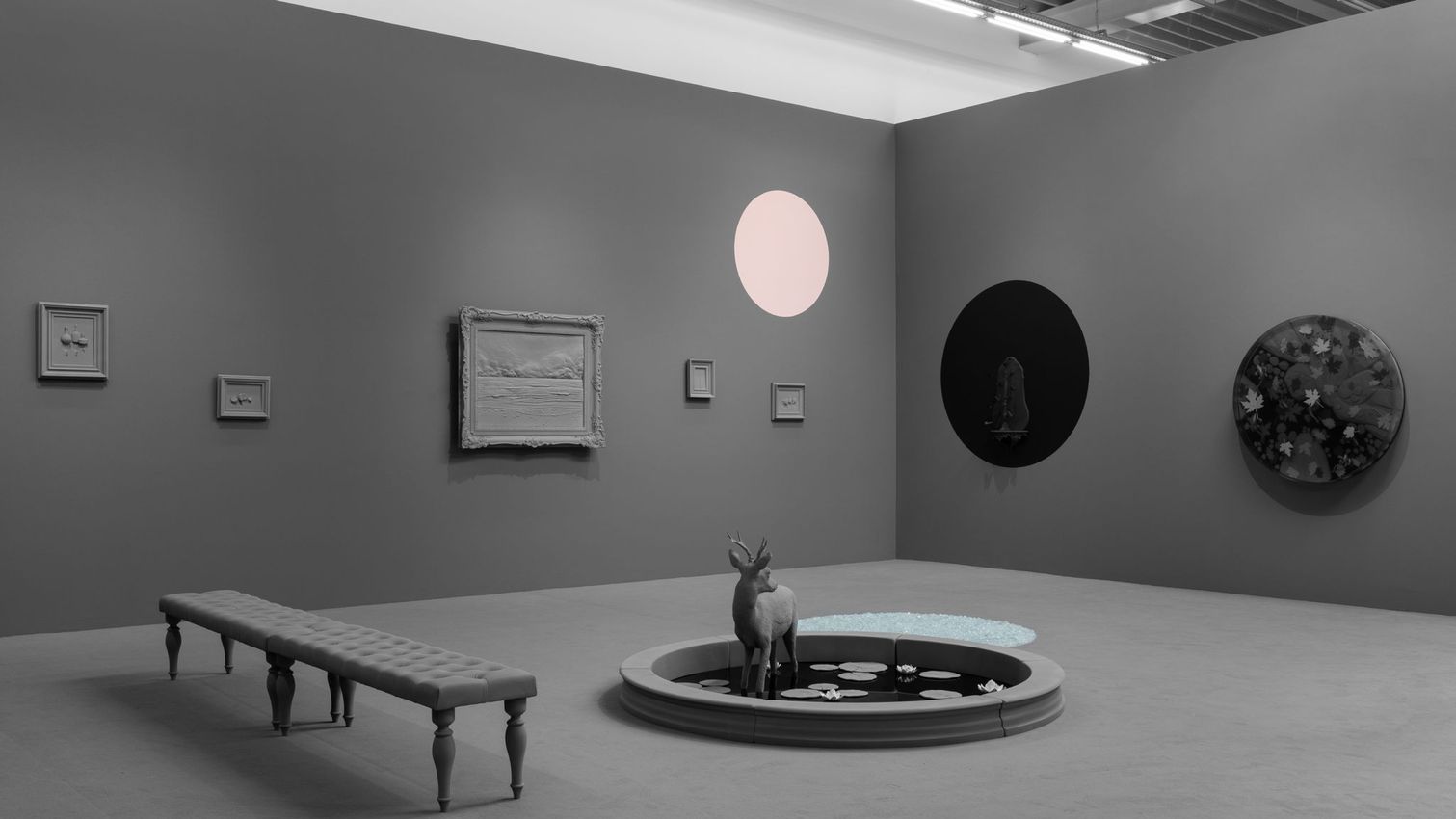
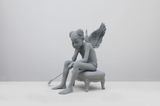
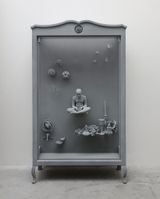
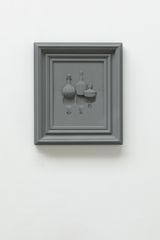
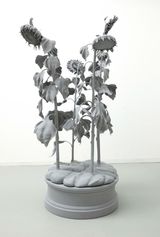
Op de Beeck’s multidisciplinary approach is defined by his ability to traverse media and scale—from intimate watercolours to monumental installations occupying hundreds of square meters. His signature is the creation of achromatic, immersive environments, often rendered in a uniform, powdery grey. This chromatic restraint neutralises distractions, inviting viewers to experience the work’s emotional and psychological dimensions without the mediation of colour.
His process is both theatrical and meticulous: Op de Beeck often begins with a mental image, stages scenes with live models and personal objects, documents them photographically, and then translates these studies into sculpture or installation. Materials such as coated wood, polyester, and pigmented plaster are carefully chosen for their transformative potential, allowing the artist to ‘petrify’ everyday moments and objects, suspending them between reality and fiction.
A recurring theme in his work is the exploration of memory, mortality, and the human condition. Op de Beeck’s installations, such as Danse Macabre (2021), use familiar yet estranged motifs—carousels, domestic furniture, blackberries—to evoke a sense of timelessness, melancholy, and wonder. He describes his art as ‘visual fiction’, aiming to create moments of silence and introspection, where viewers are invited to suspend disbelief and enter a parallel world.
Early Years
Hans Op de Beeck was born in Turnhout, Belgium, in 1969 and grew up in a family environment that fostered creativity. As a child, he describes himself as shy and introverted, preferring to stay indoors making drawings and comics alongside his brother, both immersed in their own imaginative worlds. His parents always assumed he would pursue something creative, and this early encouragement, combined with his natural inclination toward drawing and graphic novels, laid the foundation for his later evolution into the visual arts.
Education
Hans Op de Beeck studied art at several notable institutions, each playing a significant role in shaping his multidisciplinary approach. He first attended the Vrije Kunsten (Fine Arts) program at the Higher Institute Sint-Lukas in Brussels, where he earned his master’s degree in visual arts in 1996. During his studies, he initially focused on painting but later switched to the Experimental Studio, where he was encouraged to experiment with a wide range of media, laying the groundwork for his later practice that spans sculpture, installation, video, and more.
After graduating, Op de Beeck continued his education with a post-master’s year at the Higher Institute for Fine Arts in Antwerp (1996–1997), followed by a two-year residency at the prestigious Rijksakademie in Amsterdam (1998–1999). The Rijksakademie experience was especially formative, as it provided hands-on training in practical skills such as woodworking, mold-making, and video editing, and fostered a ‘learning by doing’ mentality that remains central to his practice. In 2002–2003, he further broadened his perspective as an artist-in-residence at the MoMA PS1 Studio Program in New York, exposing him to the international art scene and further encouraging his interdisciplinary outlook.
Influences
Op de Beeck draws inspiration from everyday life, filtering ordinary environments and situations through a poetic, sociological, and reflective lens. His Flemish heritage informs the strangeness and ambiguity that permeate his work, echoing vanitas traditions and the melancholic humor of Belgian art history. He freely mingles references from ‘high’ and ‘low’ culture, classical sculpture, cinema, and literature, citing influences as diverse as the Coen Brothers, Raymond Carver, Arthur Miller, and Peter Doig.
Personal memory also plays a vital role: objects like blackberries serve as symbolic anchors, connecting the artist’s childhood nostalgia to universal themes of loss and longing. This blend of the personal and the universal, the mundane and the mystical, is central to Op de Beeck’s enduring appeal.
Influence
Hans Op de Beeck has significantly shaped contemporary installation and sculptural practice, particularly through his immersive environments that merge narrative, theatre, and visual art. His works are noted for their ability to evoke emotional resonance and introspection, offering viewers a space to contemplate life’s transience, absurdity, and beauty.
Selected Works, Projects and Exhibitions
The following list of works highlight Hans Op de Beeck’s international presence and his signature approach of creating immersive, contemplative environments that probe universal human experiences:
- Sea of Tranquillity (2010–2011): An immersive installation centered on a fictional, futuristic cruise liner, combining film, sculpture, and set pieces to explore themes of luxury, mortality, and the absurdity of modern life. The work has been exhibited at Argos, Brussels, Belgium (2011); Kunstmuseum Thun, Thun, Switzerland (2011); Centro de Arte Caja de Burgos, Burgos, Spain (2011); and Frac Paca, Marseille, France (2013). It was also shown at the National Maritime Museum, Amsterdam, Netherlands (2019).
- ‘Staging Silence’ (2009, 2013, 2019): A poetic video series in which anonymous hands construct and dismantle monochrome model landscapes, evoking fleeting memories and the impermanence of experience. The series has been exhibited at the Harn Museum of Art, Gainesville, Florida, USA (2013–2014); MOCA Cleveland, Cleveland, USA (2014); Galleria Continua, Beijing, China (2014); and at the Screen Festival, Art Palacio, São Paulo, Brazil (2013).
- The Quiet Parade (2022): A large-scale, immersive installation of life-sized figures and objects, creating a silent, dreamlike parade that invites viewers into a contemplative, surreal environment. Exhibited at Amos Rex, Helsinki, Finland (2022).
- The Horseman (2020): A monumental, hyperrealistic sculpture in Op de Beeck’s signature grey tones, blending the fantastical and the everyday. Exhibited at the State Hermitage Museum, St. Petersburg, Russia (2021).
- Carousel (2021): A large, frozen carousel sculpture featuring both traditional horses and skeletons, serving as a memento mori and meditation on mortality. Exhibited at the Bruges Triennial, Bruges, Belgium (2021).
- Nocturnal Journey (2025): An immersive installation that invites visitors on a meditative journey through time and space, blending darkness, silence, and latent tension. Exhibited at KMSKA (Royal Museum of Fine Arts Antwerp), Antwerp, Belgium (2025).
- Personnages (2014): A series of life-sized, hyperrealistic sculptures depicting anonymous figures in everyday poses, exploring solitude and introspection. Exhibited at Domaine de Chamarande, Chamarande, France (2014–2015).
- The Drawing Room (2014): An installation blending drawing, sculpture, and set design to create an atmospheric, contemplative environment reminiscent of a 19th-century salon. Exhibited at Le Botanique, Brussels, Belgium (2014–2015).
- Vanishing Point (2024): An installation exploring perception and the boundaries between reality and illusion, using watercolor and sculptural elements. Exhibited at The Nordic Watercolour Museum, Skärhamn, Sweden (2024).
- Drifting (2024): A museum exhibition including an animated film, sculptures, and watercolors, reflecting on the themes of transience and the passage of time. Exhibited at Powerlong Museum, Shanghai, China (2024).
Hans Op De Beeck FAQs
What is Hans Op de Beeck best known for?
He is best known for his large-scale, monochromatic installations and sculptures that create immersive, contemplative environments, often rendered in a signature shade of grey.
What materials does Hans Op de Beeck use?
Op de Beeck employs materials such as coated wood, polyester, pigmented plaster, steel, glass fiber, and polyamide. His works are unified by a powdery grey surface that neutralises color and emphasizes form.
What themes does Hans Op de Beeck’s work explore?
His art explores themes of memory, mortality, the passage of time, and the human condition, often using everyday objects and environments to evoke universal emotions and questions.
How does Hans Op de Beeck create his sculptures and installations?
He begins with a conceptual image, stages scenes with live models and objects, documents them photographically, and then meticulously translates these studies into three-dimensional works, often involving a team for large-scale projects.
What are Hans Op de Beeck’s influences?
Op de Beeck is influenced by Flemish art traditions, vanitas painting, literature, cinema, and personal memory. He cites artists and creators such as Peter Doig, the Coen Brothers, Raymond Carver, and Arthur Miller as figures he admires.
Where can I see Hans Op de Beeck’s work?
Op de Beeck’s work is exhibited internationally in museums, galleries, and public spaces. Notable recent projects include Danse Macabre at the Triennial Bruges and permanent installations in Belgium.
Does Hans Op de Beeck work in other disciplines?
Yes, Op de Beeck is active in theatre, opera, and film, contributing as a playwright, director, scenographer, and costume designer, often bringing a sense of Gesamtkunstwerk (total artwork) to his projects.
Ocula | 2025


View Hans Op De Beeck's Artworks



























Explore and Follow Artists Shaping Contemporary Art
A respected voice in contemporary art discourse.
Focusing on ambitious storytelling and insightful art-world commentary. Ocula Magazine publishes in-depth interviews, critical essays and timely analysis on the artists, exhibitions and ideas driving the global art world.
Learn more about Ocula Magazine
Showcasing the best of the art world.
Ocula partners with galleries from around the world to highlight their artists, artworks and exhibitions. Gallery membership is by application and invitation, with each member vetted by an independent panel.
Learn more about Ocula Membership
Specialises in the sale of major artworks.
Led by a team with deep ties to the world’s leading auction houses, galleries and collectors. Ocula’s advisory team offers bespoke services to high-net-worth clients from around the world who are looking to acquire the best of contemporary and modern art.
Learn more about our team and services