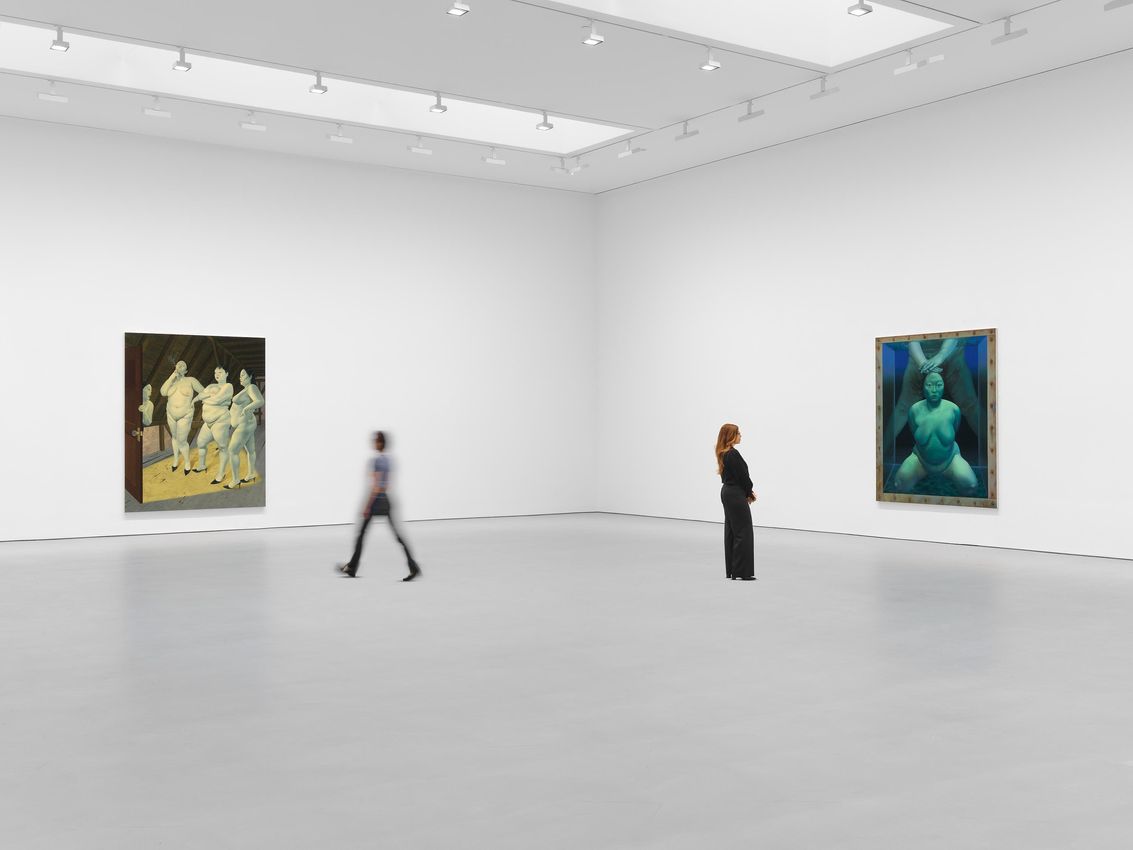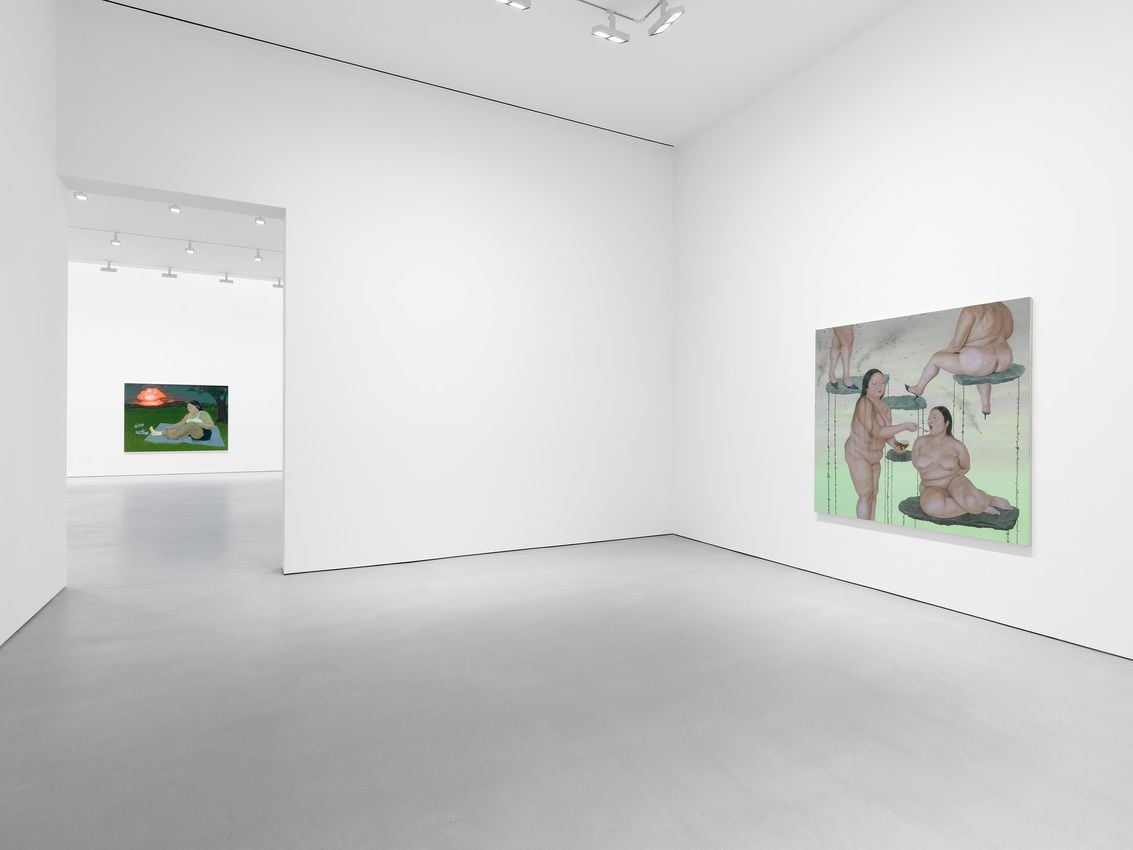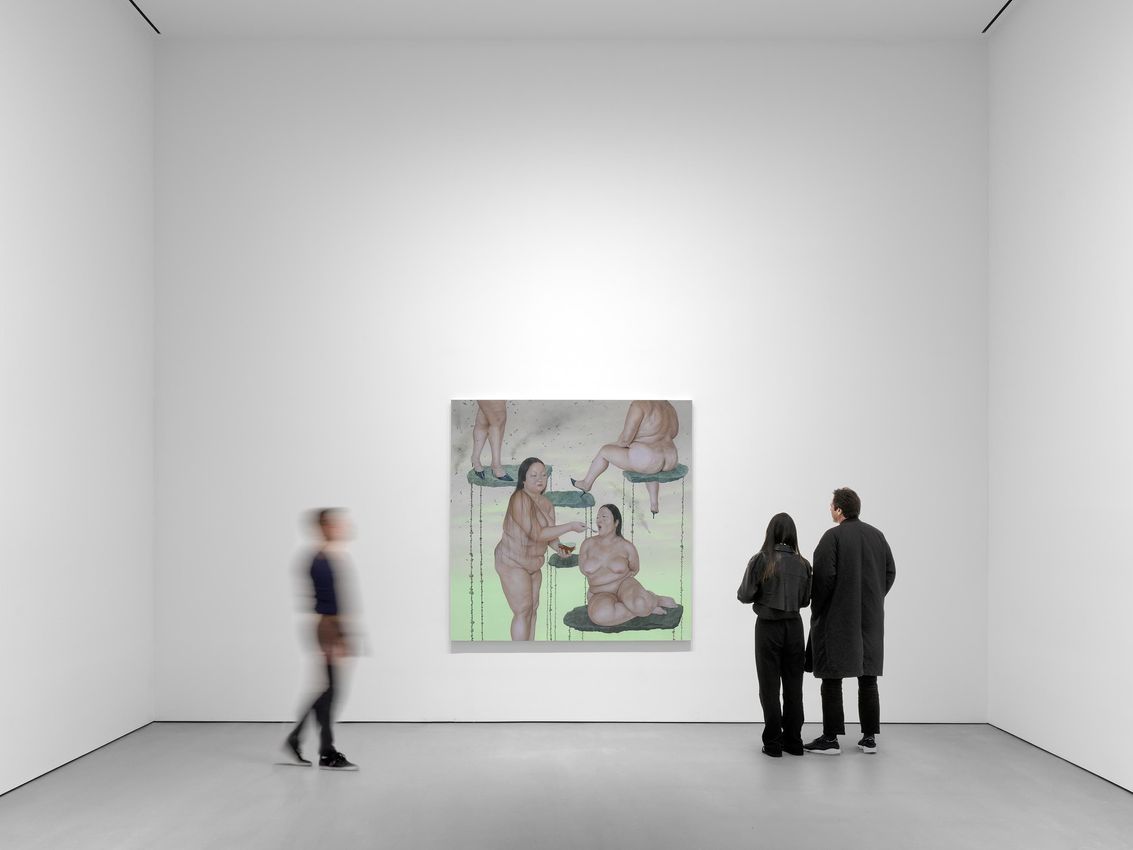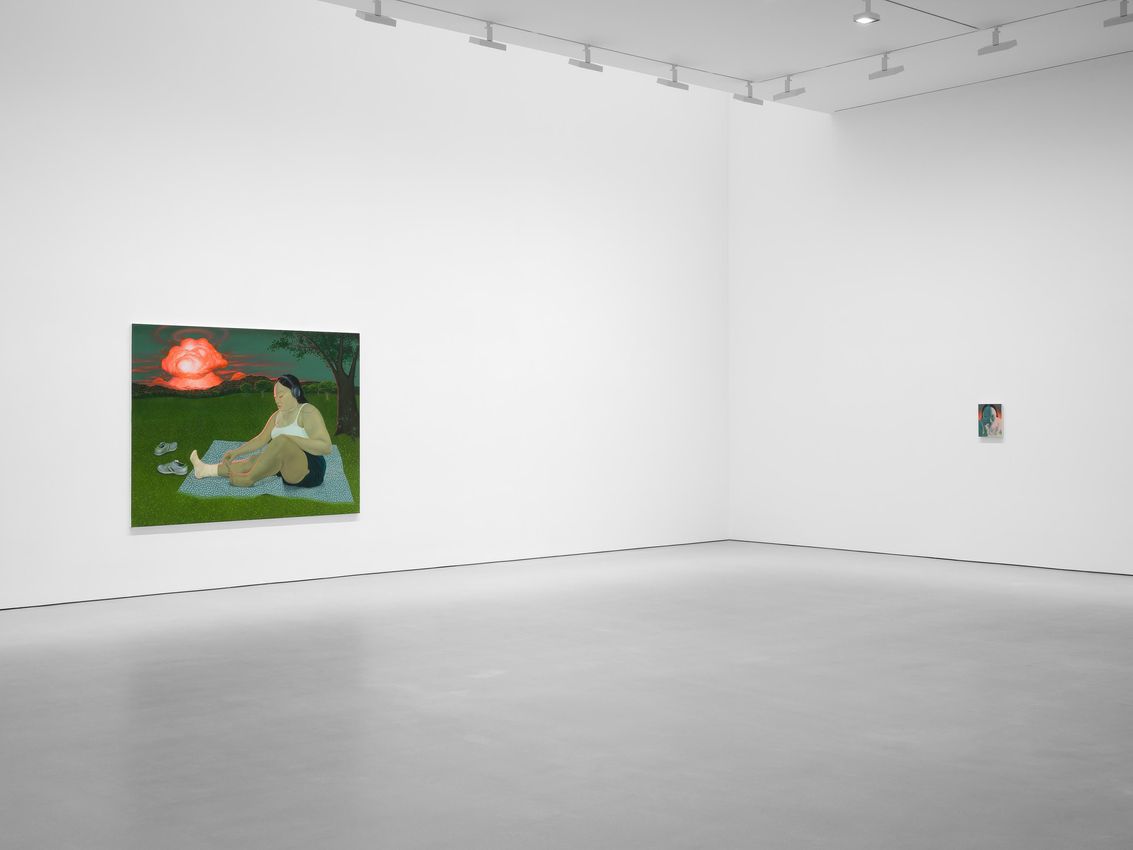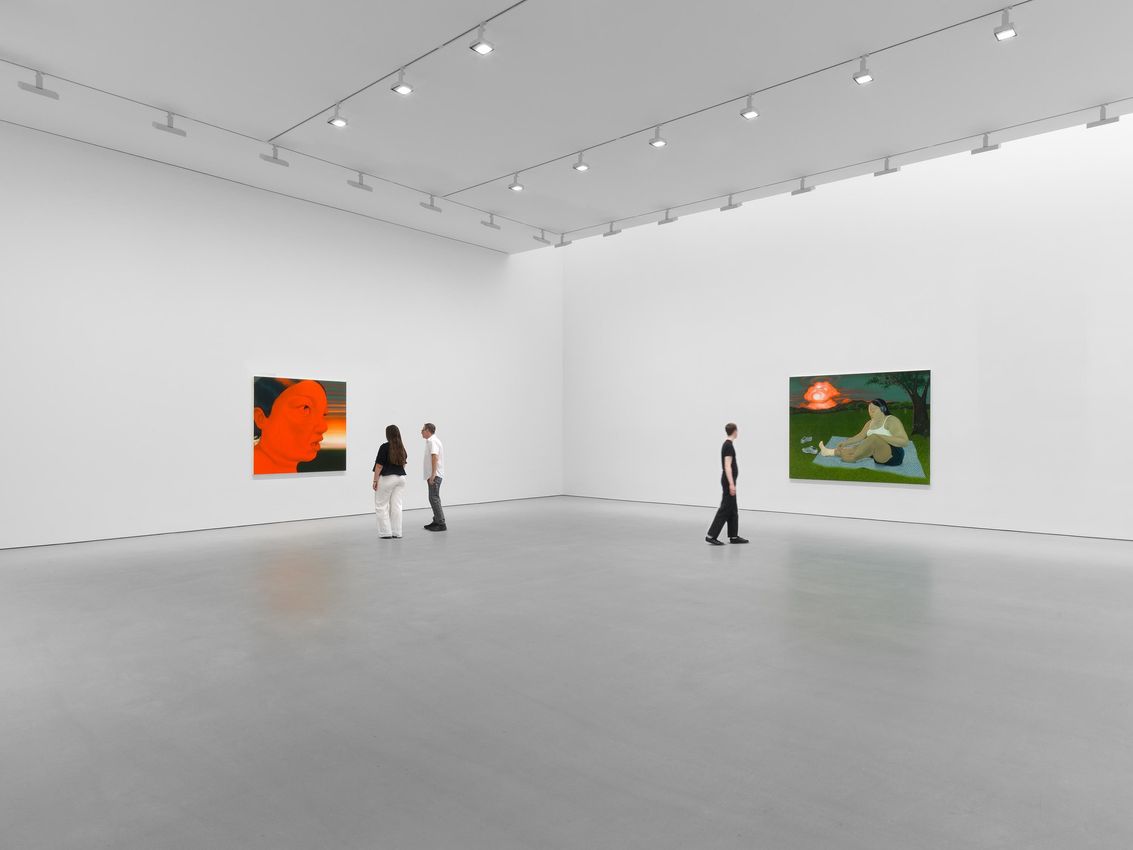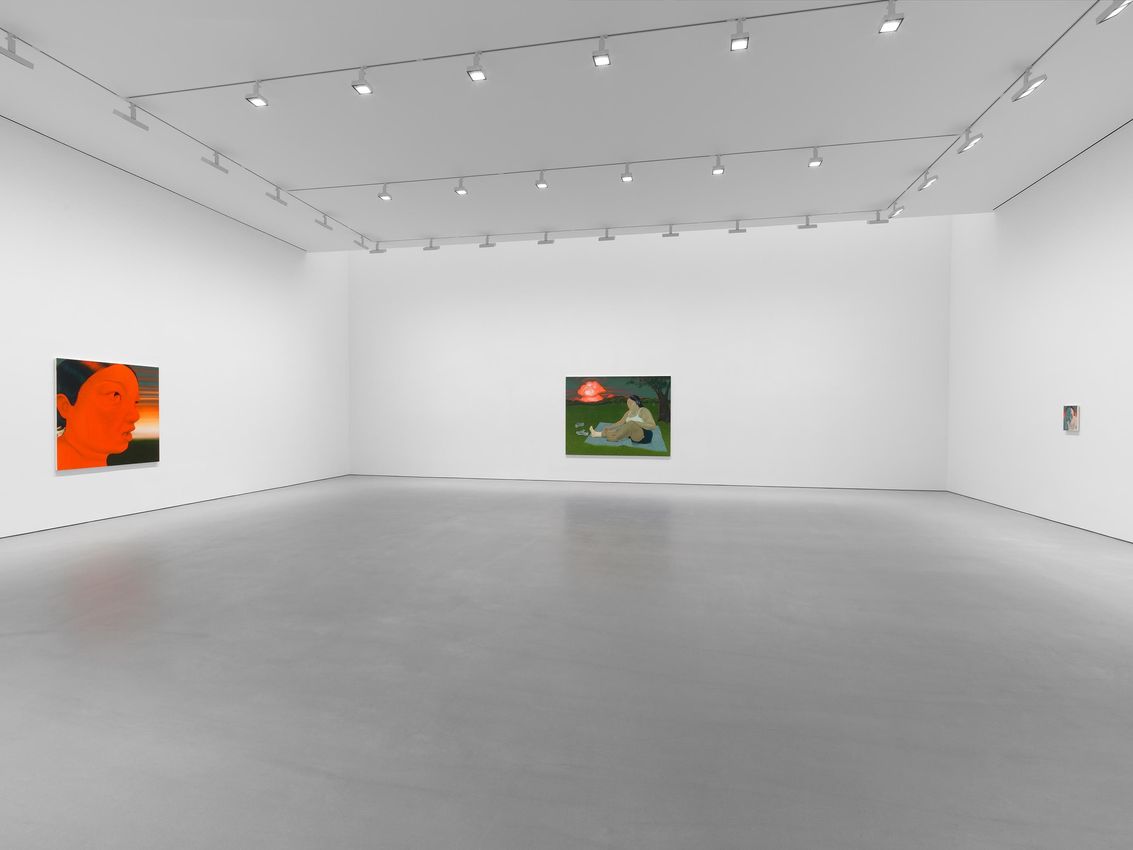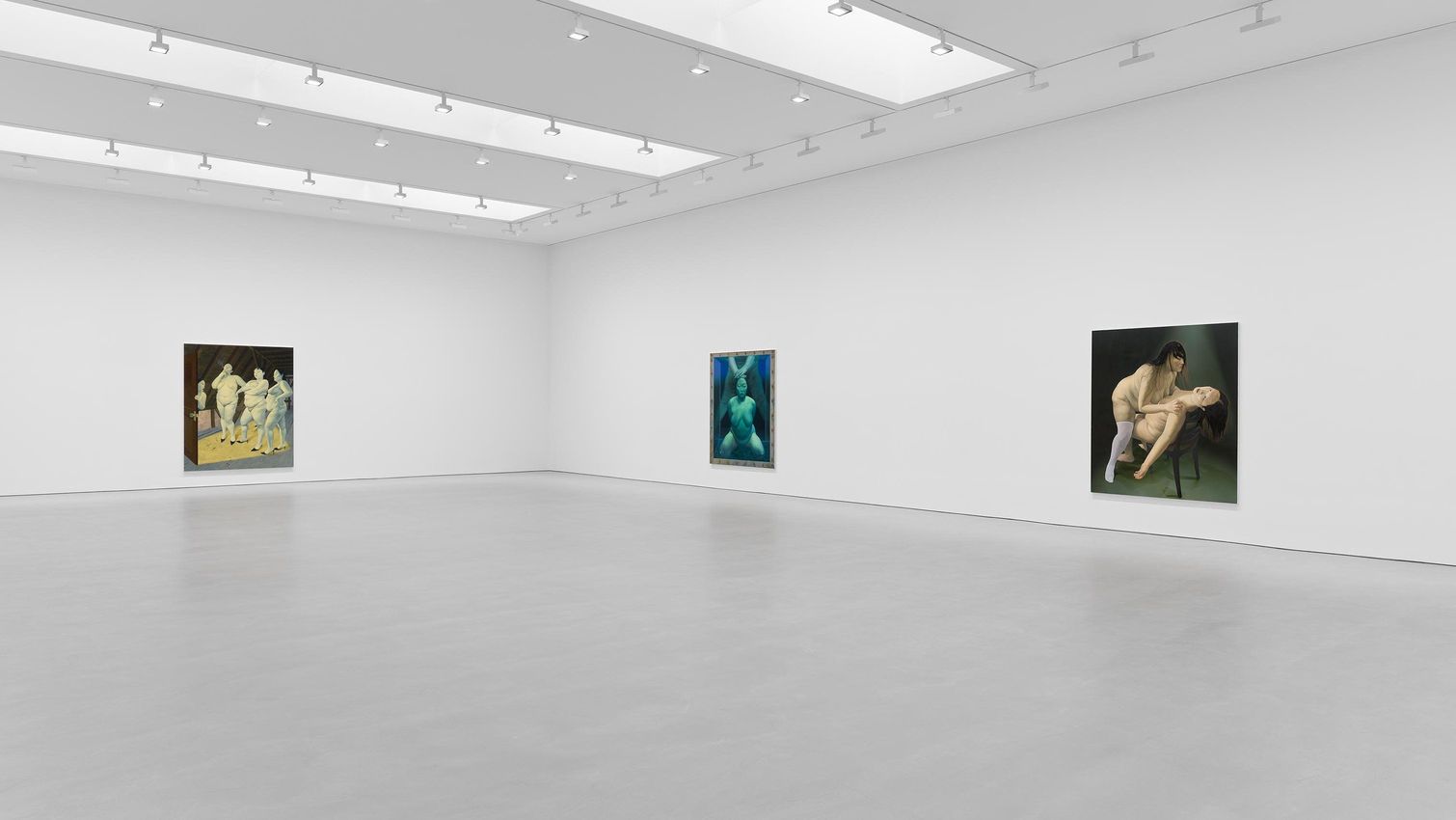
David Zwirner is pleased to present Haze, the gallery’s first solo exhibition with New York–based artist Sasha Gordon since the announcement of her co-representation with Matthew Brown last year. Opening at the gallery’s 533 West 19th Street location in New York, this exhibition debuts a cycle of new paintings by Gordon that experiment with storytelling as they uncover the origin myth of her narrative worlds.
In her hyperrealistic paintings, Gordon often renders her own likeness, conveying the self and its many guises through translucent layers of oils in electric hues. Executed with technical precision, the artist’s visceral compositions treat her own corporeal form as an unorthodox avatar that communicates subjective, psychological experience. Gordon lets her surreal narratives unfold intuitively on the canvas, depicting bodies in sometimes absurd scenarios or disorienting spatial compositions and portraying faces that translate a range of feelings. In illuminating detail, she reimagines fragments extracted from her inner life while boldly envisioning worlds within worlds that bear uncanny resemblance to our own. Complicating the genre of self-portraiture and engaging the canon of art history, her work expresses multiple psychic registers at once, addressing viewers with a candour that is both familiar and unsettling in its intimacy.
Encompassing a full narrative, the paintings in Haze pit Gordon’s alter ego against three antagonists in a horror plot that uncovers the artist’s disparate yet interlocking personas. The exhibition title communicates ambiguity and confusion—themes that are woven throughout Gordon’s compositions—and suggests the complex nature of reconciling one’s many selves. This chronicle is gleaned from classical mythology, contemporary East Asian cinema, and the artist’s own stirring visions and memories, evincing timeworn notions of how one grapples with the self and unknown, as well as with the lingering residue of past lives.
Reflecting these influences, the works on view chart the protagonist’s dreamlike voyage with bouts of terror and humour. The cycle opens with It Was Still Far Away (2024), in which an inexplicable explosion illuminates the sky orange-red behind the main character who embodies the ‘final girl’ trope of horror films. Later, amid the chaos, she discovers a cabal of antagonists who look like her and subsequently torture her in increasingly frightening tableaux that take place in a nondescript upstate New York locale.
Throughout this body of work, Gordon deftly pictures bodies in violent motion and renders minute details with precision, foregrounding the ornamental and the grotesque. The protagonist is force-fed in Husbandry Heaven (2025), her captor’s expression hesitant as fine particles of ash from the explosion shower their wrinkled, waxen skin. The story reaches its denouement in Pruning (2025): As the main character is trapped in an aquarium and held underwater by an antagonist, her knees press up against the surface of the tank and crack the fragile glass. Her eyes are wide open and fearful as she confronts the imminent possibility of death. Among these large-scale paintings, Gordon intersperses small portraits that likewise probe the emotional facets of her characters, both hinting at and obscuring their motivations.
In these works, the familiar is transformed ever so slightly, creating uncanny scenes that vibrate with the latent anxieties of our moment. The ordinary is made strange, and the strange is made ordinary. Juxtaposing narrative scenes with moments of interiority, Gordon endeavours to acknowledge how we take in the world around us, in all its darkness and mystery, while simultaneously engaging the oneiric qualities of everyday life.


Sasha Gordon was born in Somers, New York, in 1998. She received a BA from the Rhode Island School of Design, Providence, in 2020. In her luminous and hyperrealistic paintings, Gordon often renders her own likeness, conveying the self and its many guises through translucent layers of oils in electric hues. Executed with technical precision and rigor, the artist’s visceral compositions treat her own corporeal form as a kind of unorthodox avatar that communicates subjective, psychological experience. Gordon lets her surreal narratives unfold intuitively on the canvas, depicting bodies in sometimes absurd, darkly humorous scenarios or disorienting spatial compositions and portraying faces that translate a range of feelings. In illuminating detail, she reimagines fragments extracted from her inner life while boldly envisioning worlds within worlds that bear uncanny resemblance to our own. Complicating the genre of self-portraiture and engaging the canon of art history, her work expresses multiple psychic registers at once, addressing viewers with a candor that is both familiar and unsettling in its intimacy.


A respected voice in contemporary art discourse.
Focusing on ambitious storytelling and insightful art-world commentary. Ocula Magazine publishes in-depth interviews, critical essays and timely analysis on the artists, exhibitions and ideas driving the global art world.
Learn more about Ocula Magazine
Showcasing the best of the art world.
Ocula partners with galleries from around the world to highlight their artists, artworks and exhibitions. Gallery membership is by application and invitation, with each member vetted by an independent panel.
Learn more about Ocula Membership

Specialises in the sale of major artworks.
Led by a team with deep ties to the world’s leading auction houses, galleries and collectors. Ocula’s advisory team offers bespoke services to high-net-worth clients from around the world who are looking to acquire the best of contemporary and modern art.
Learn more about our team and services