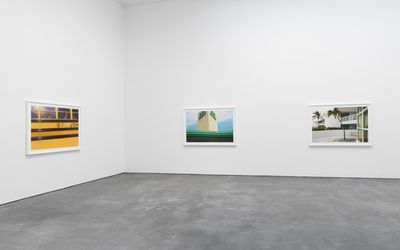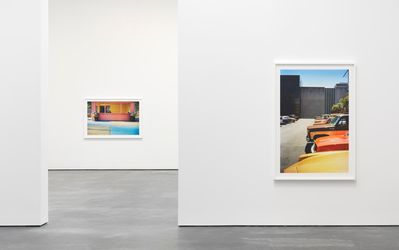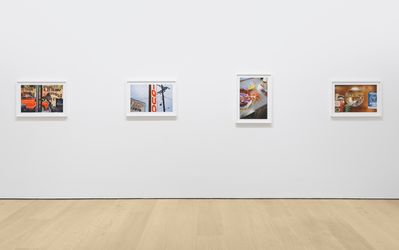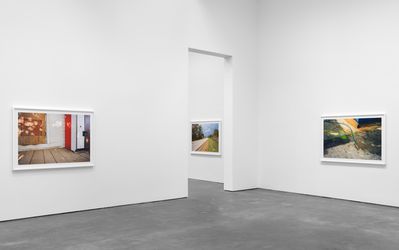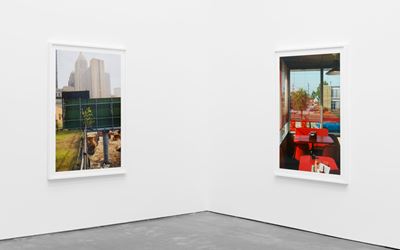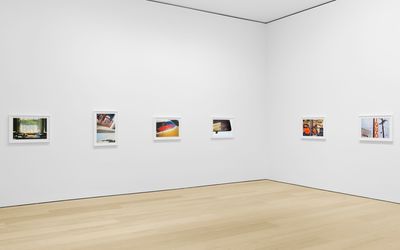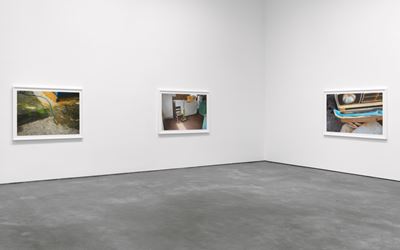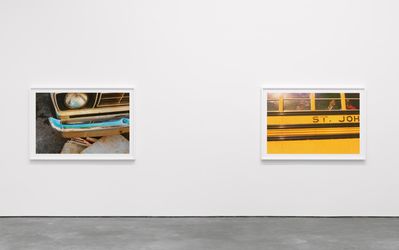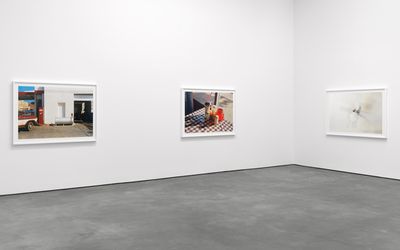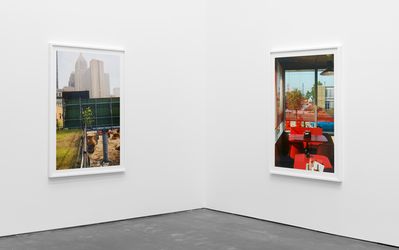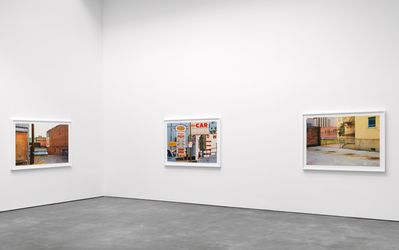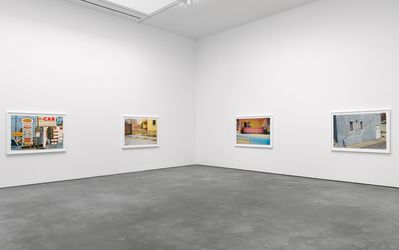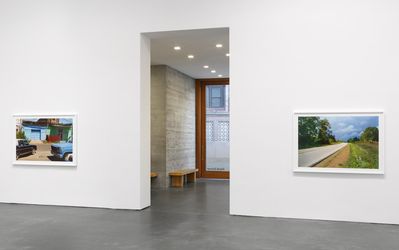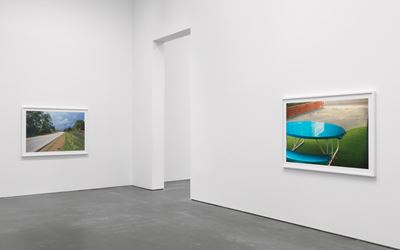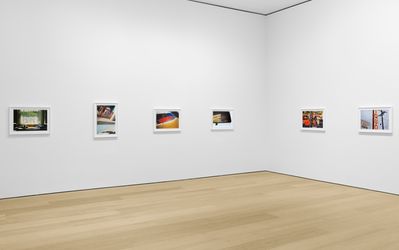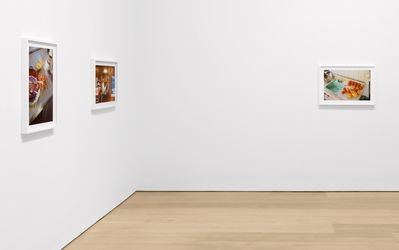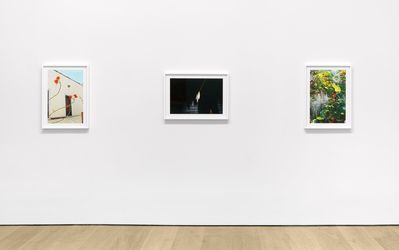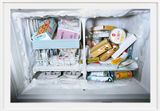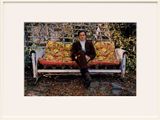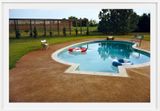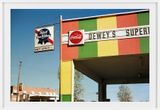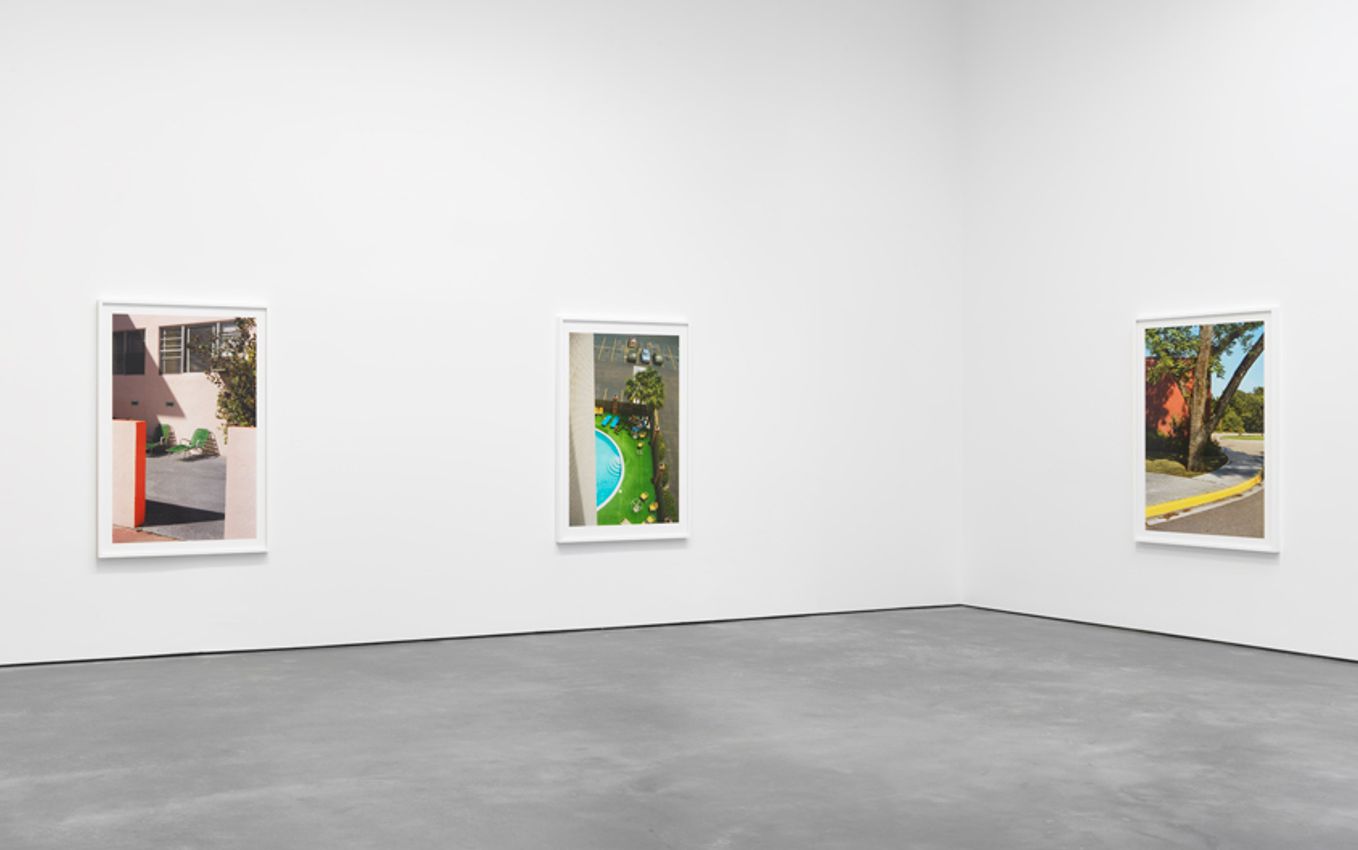
David Zwirner is pleased to present its first exhibition with William Eggleston since having announced the gallery’s exclusive worldwide representation of the artist. On view at 537 West 20th Street in New York will be works from Eggleston’s monumental project The Democratic Forest.
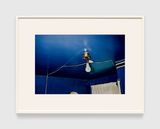
Over the course of nearly six decades, Eggleston has established a singular pictorial style that deftly combines vernacular subject matter with an innate and sophisticated understanding of colour, form, and composition. His photographs transform the ordinary into distinctive, poetic images that eschew fixed meaning. His 1976 solo exhibition at The Museum of Modern Art, New York, curated by John Szarkowski, marked the first presentation of colour photography at the museum. Although initially criticised for its unfamiliar approach, the show and its accompanying catalogue, William Eggleston’s Guide, heralded an important moment in the medium’s acceptance within the art historical canon, and it solidified the artist’s position as one of its foremost practitioners to this date. Eggleston’s work continues to exert an influence on contemporary visual culture at large.
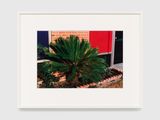
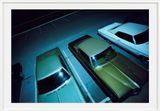
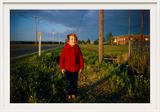
The Democratic Forest is among Eggleston’s most ambitious projects and a prime example of his uniquely recognisable aesthetic. Likened to an epic journey or an enduring narrative, it comprises a careful selection of works from over ten thousand negatives he took in the mid–1980s across the southern and eastern parts of America and in several European countries. These photographs of rural back roads, industrial and residential environs, architectural details, restaurant interiors, and parking lots, among other locales, eluded the conventions of both reportage and the black–and–white art photography practiced by many of the artist’s peers at the time, and instead shaped their own definition of what a photographic image could be–intuitive and charged with imaginative possibilities. Collectively, the project echoes Eggleston’s predilection for the ‘democratic’ vision of the camera, able to render equally what is in front of the lens.
The show will include over forty works from The Democratic Forest, the majority of which have not been exhibited previously. Although taken thirty years ago, the photographs appear to cast their subjects in a timeless light. As the art historian Alexander Nemerov writes in a new catalogue published by David Zwirner Books/Steidl on the occasion of the show, ‘Eggleston’s work–the great flow of it–feels...impelled by the world. It feels, to put it another way, pulled along by the world, by things outside the artist, rather than compelled by something inside him....One feels him being borne along by a current... The current he rides along is simply the proliferation of scenes–the great panoramic film strip of it, never ending in its flow of gas stations and horse buggies and parking lots and roadside trees and filigreed urns stamped in tin. But more than that...there is the feeling that the infiniteness of the world, the sheer extent of it, is its own kind of eternity._1
William Eggleston was born in 1939 in Memphis, Tennessee, where he continues to live today. Raised in Sumner, Mississippi, he attended Vanderbilt University, Nashville, Tennessee; Delta State College, Cleveland, Mississippi; and University of Mississippi, Oxford.
Since the 1970s, Eggleston’s work has been the subject of solo exhibitions at prominent institutions worldwide, beginning with his above–mentioned 1976 show at The Museum of Modern Art, New York (traveled to Seattle Art Museum; Santa Barbara Museum of Art; Fredrick Wright Art Galleries, University of California at Los Angeles; Reed College, Portland, Oregon; and University of Maryland Art Gallery, College Park). Subsequent important solo presentations were held at the Corcoran Gallery of Art, Washington, D.C. in 1990; the Barbican Gallery, London in 1992 (traveled to Louisiana Museum of Modern Art, Humlebæk, Denmark; Folkwang Museum, Essen; and Fotomuseum Winterthur); documenta IX, Kassel, Germany in 2002; Museum Ludwig, Cologne in 2003 (traveled to Museu Serralves, Porto; Nasjonalmuseet — Museet for samstidkunst, Oslo; Louisiana Museum of Modern Art, Humlebæk, Denmark; San Francisco Museum of Modern Art; Albertina, Vienna; and Dallas Museum of Art). In 2008, a major career-spanning survey, William Eggleston: Democratic Camera, Photographs and Videos 1961–2008 was organised by the Whitney Museum of American Art in New York and Haus der Kunst in Munich; it subsequently travelled to the Corcoran Gallery of Art, Washington, D.C.; the Art Institute of Chicago; and the Los Angeles County Museum of Art.
More recent exhibitions have included those held at The Metropolitan Museum of Art, New York; Tate Modern, London, both 2013; Fondation Cartier pour l’art contemporain, Paris, 2009 (traveled to Hara Museum of Contemporary Art, Tokyo; and Hasselblad Foundation, Gothenburg, Sweden, both 2010). Currently on view at the National Portrait Gallery in London is a comprehensive survey of Eggleston’s portraits (through October 23, 2016).
Eggleston received a National Endowment for the Arts Fellowship in 1975 and has been the recipient of numerous notable awards, including the University of Memphis Distinguished Achievement Award (1996); Hasselblad Foundation International Award in Photography (1998); International Center of Photography Infinity Award for Lifetime Achievement (2004); the Getty Images Lifetime Achievement Award (2004); and the Chevalier de l’Ordre des Arts et des Lettres, Ministère de la Culture et de la Communication, République Française (Order of Arts and Letters of the French Republic) (2016), among others. The Aperture Foundation will honour Eggleston in October 2016. Work by the artist is held in major international museum collections.
Founded in 1992, the Eggleston Artistic Trust is dedicated to the representation and preservation of the work of William Eggleston and is directed by his sons Winston Eggleston and William Eggleston III.
Mark Holborn is an editor, writer, and curator who has worked with a wide selection of artists, especially photographers, over the last three decades. These include Richard Avedon, Lucian Freud, Lee Friedlander, Irving Penn, Nan Goldin, and many others. He first met William Eggleston in the mid-1980s when he edited the original volume of The Democratic Forest (1989), with an introduction by Eudora Welty, and later worked with Eggleston’s son, William Eggleston III, on a 10–volume box set, published by Steidl (2015).
1 Alexander Nemerov, ‘This Pretty World: William Eggleston’s Photographs,’ in William Eggleston: The Democratic Forest. Selected Works. Exh. cat. (New York and Gottingen: David Zwirner and Steidl, 2016), n.p.


Over the course of nearly six decades, American artist William Eggleston has established a singular pictorial style that deftly combines vernacular subject matter with an innate and sophisticated understanding of color, form, and composition. Eggleston’s vividly saturated photographs transform the ordinary into distinctive, poetic images that eschew fixed meaning. His 1976 solo exhibition Color Photographs by William Eggleston, curated by John Szarkowski at The Museum of Modern Art, New York—the first presentation of color photography at the museum—heralded an important moment in the medium’s acceptance within the art-historical canon and solidified Eggleston’s position as one of its foremost practitioners, and throughout his prolific career, he has consistently developed his own uniquely recognizable and influential aesthetic.


A respected voice in contemporary art discourse.
Focusing on ambitious storytelling and insightful art-world commentary. Ocula Magazine publishes in-depth interviews, critical essays and timely analysis on the artists, exhibitions and ideas driving the global art world.
Learn more about Ocula Magazine
Showcasing the best of the art world.
Ocula partners with galleries from around the world to highlight their artists, artworks and exhibitions. Gallery membership is by application and invitation, with each member vetted by an independent panel.
Learn more about Ocula Membership

Specialises in the sale of major artworks.
Led by a team with deep ties to the world’s leading auction houses, galleries and collectors. Ocula’s advisory team offers bespoke services to high-net-worth clients from around the world who are looking to acquire the best of contemporary and modern art.
Learn more about our team and services