“The autumn harvest was less an end than an anxious beginning, the moment when labor turned to foresight, when survival was sealed in brine and vinegar.”
—Maria Dembińska, Food and Drink in Medieval Poland (1999)
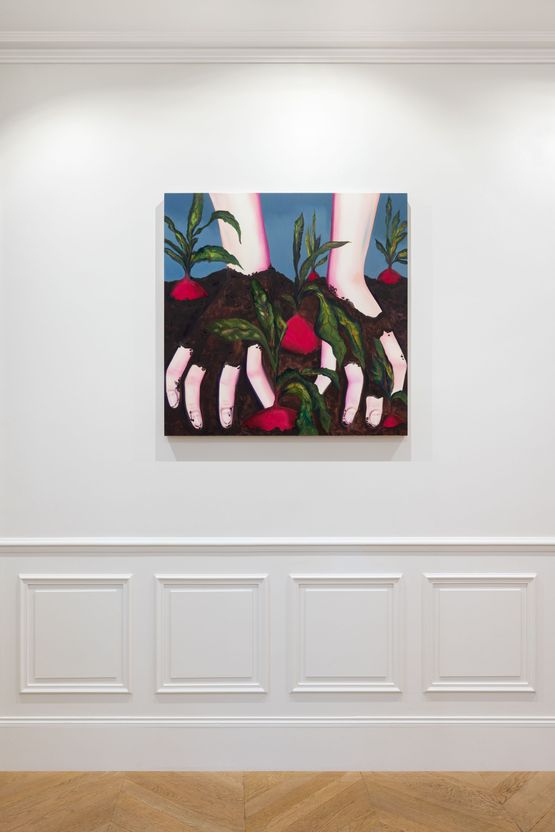
In Jarred Kitchen, 21 stages encounters with food preparation: cutting, storing, displaying. Her new series explores the paradoxes of preservation, turning the kitchen into a stage where humor, memory, and the female body and labor converge.
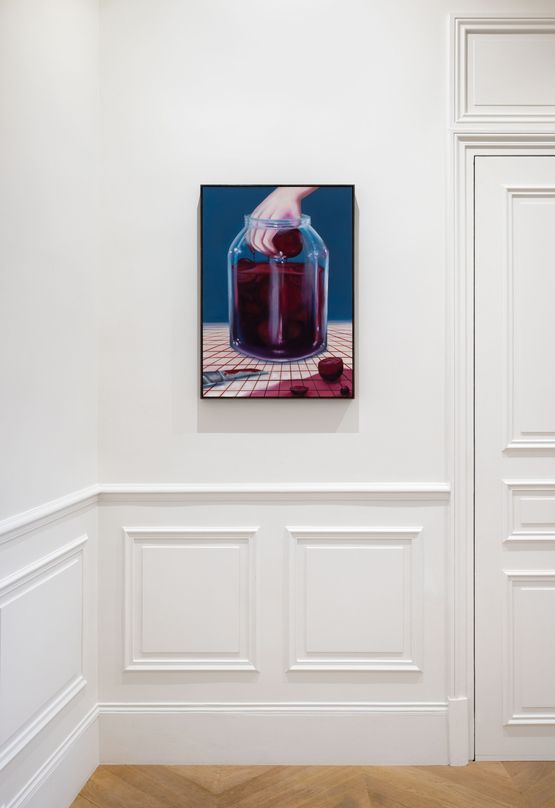
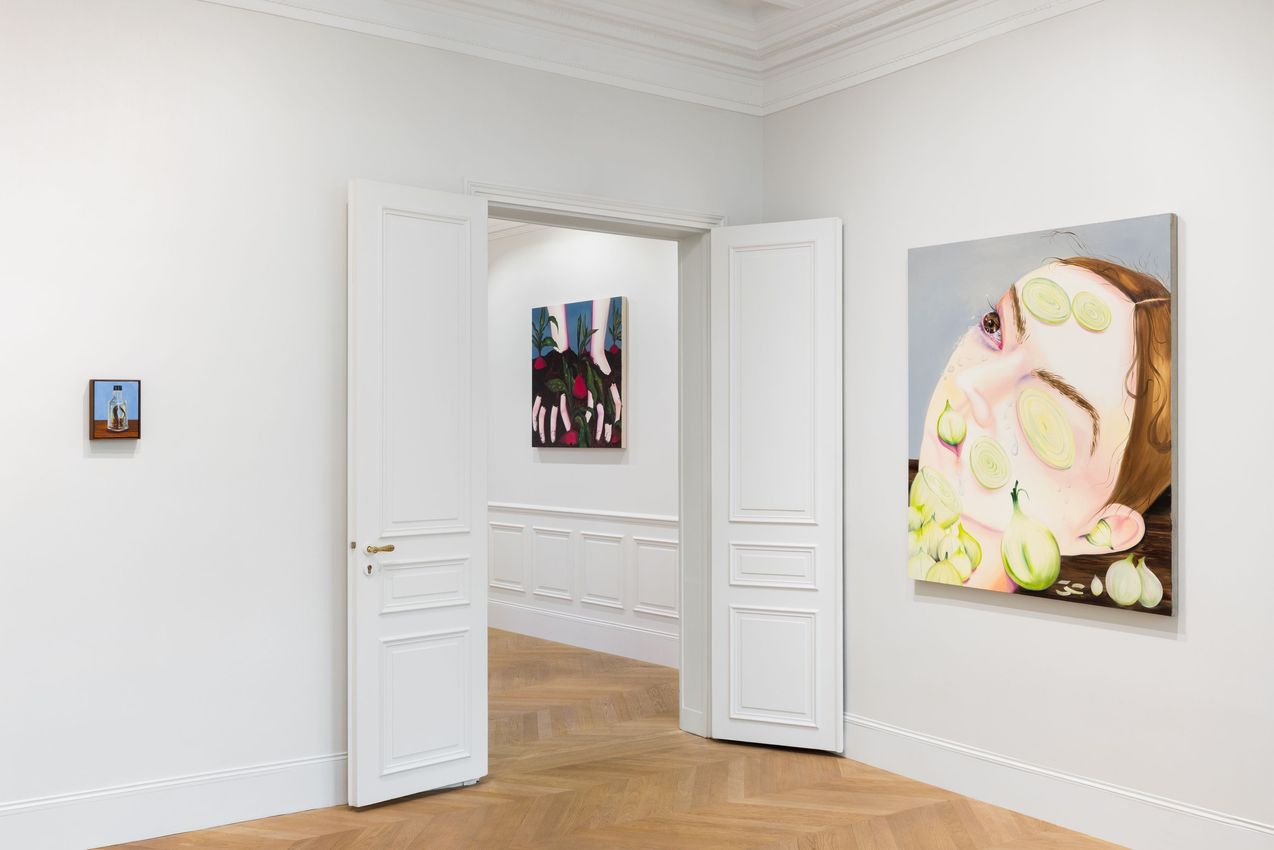
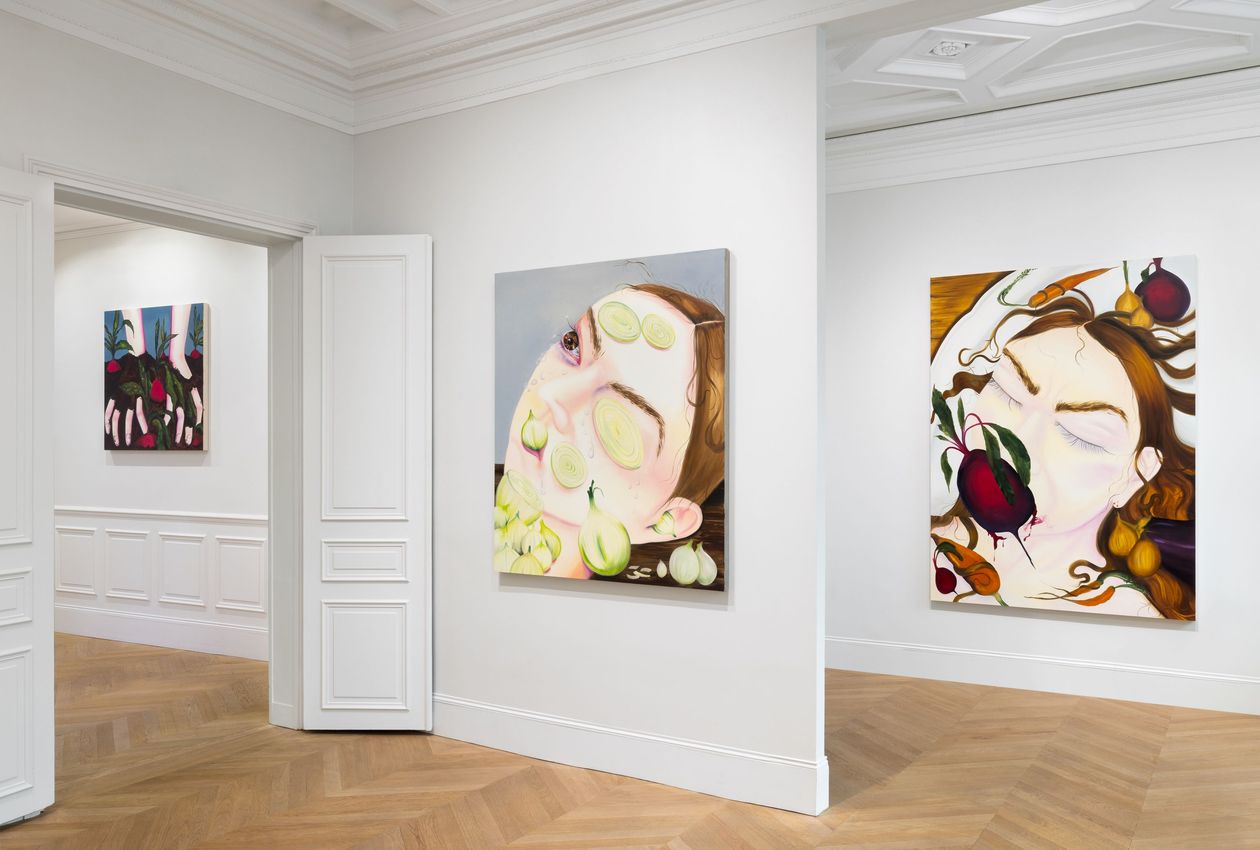
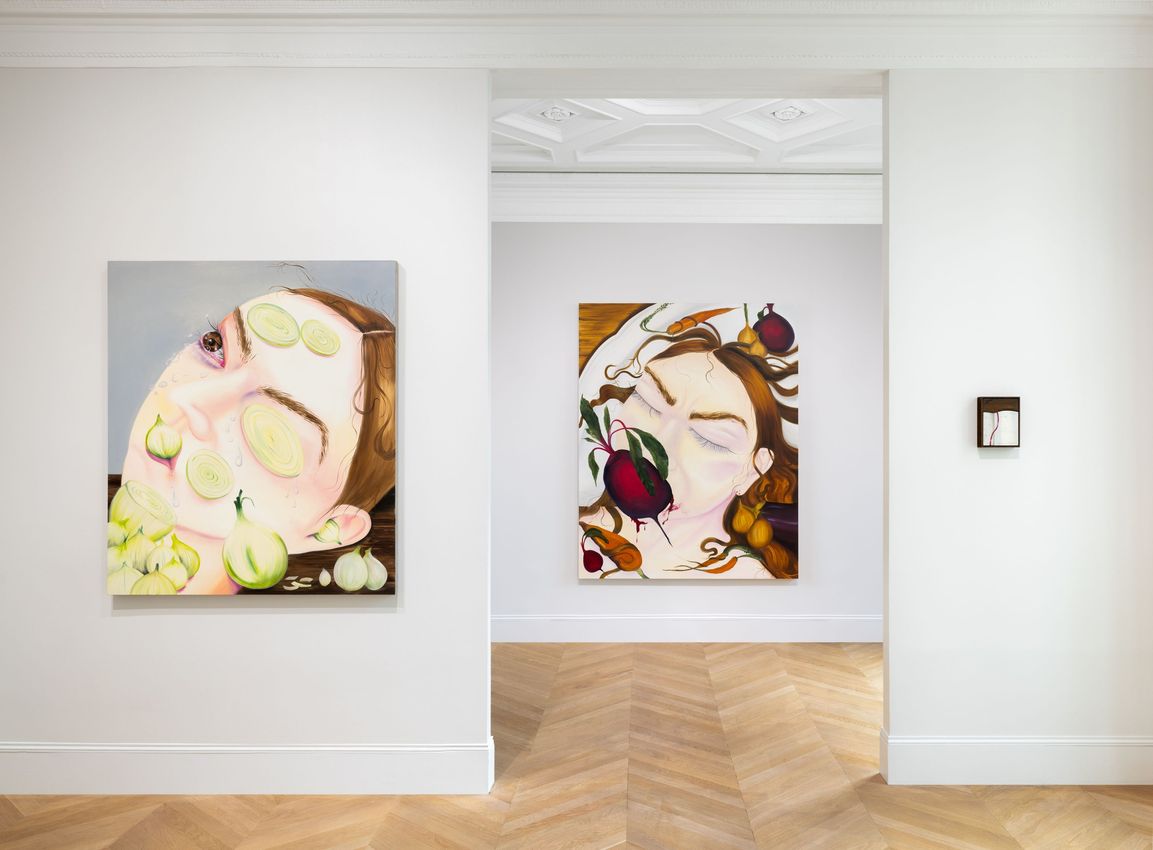
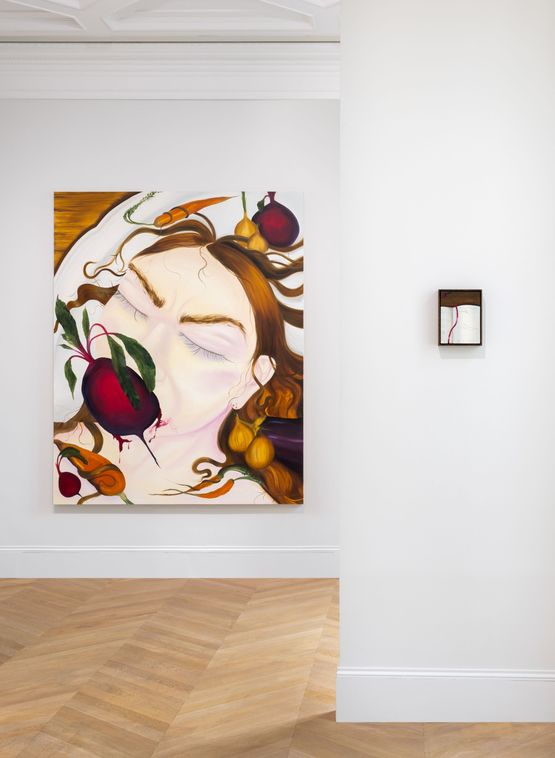
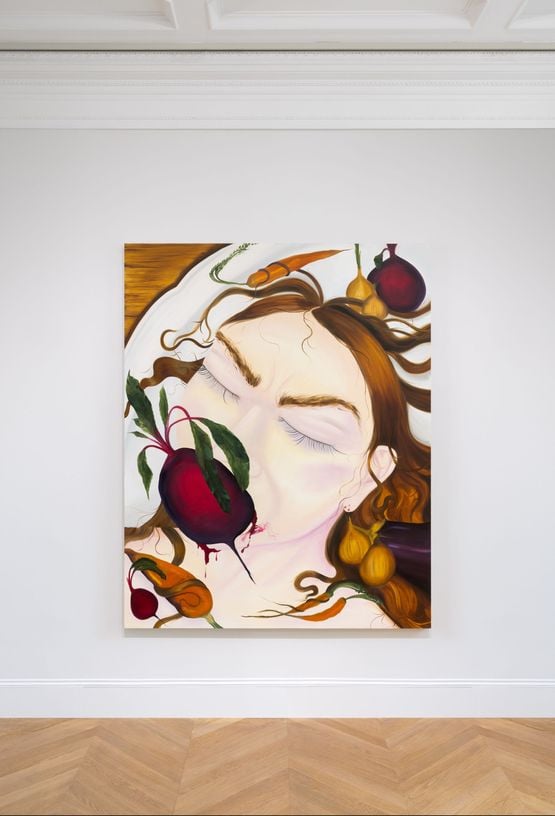
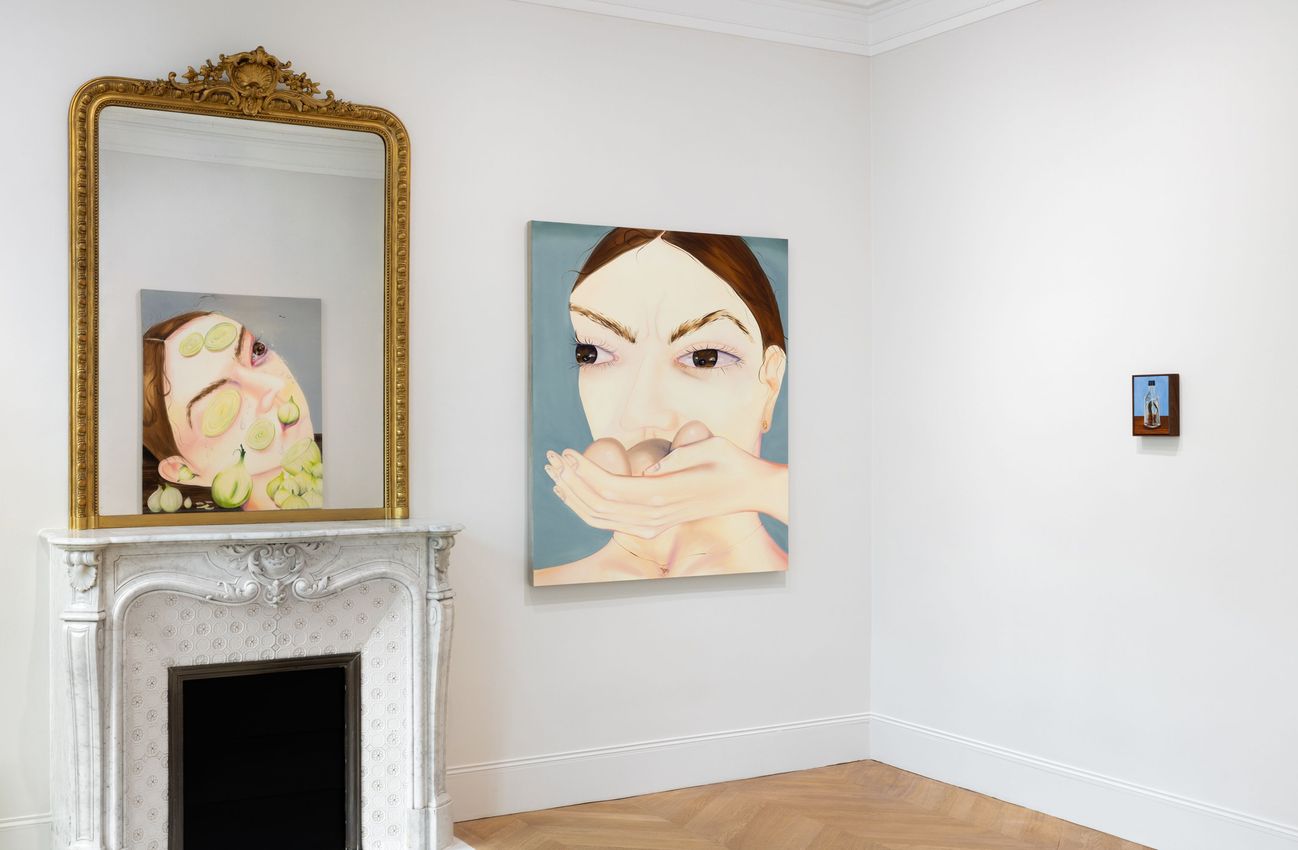
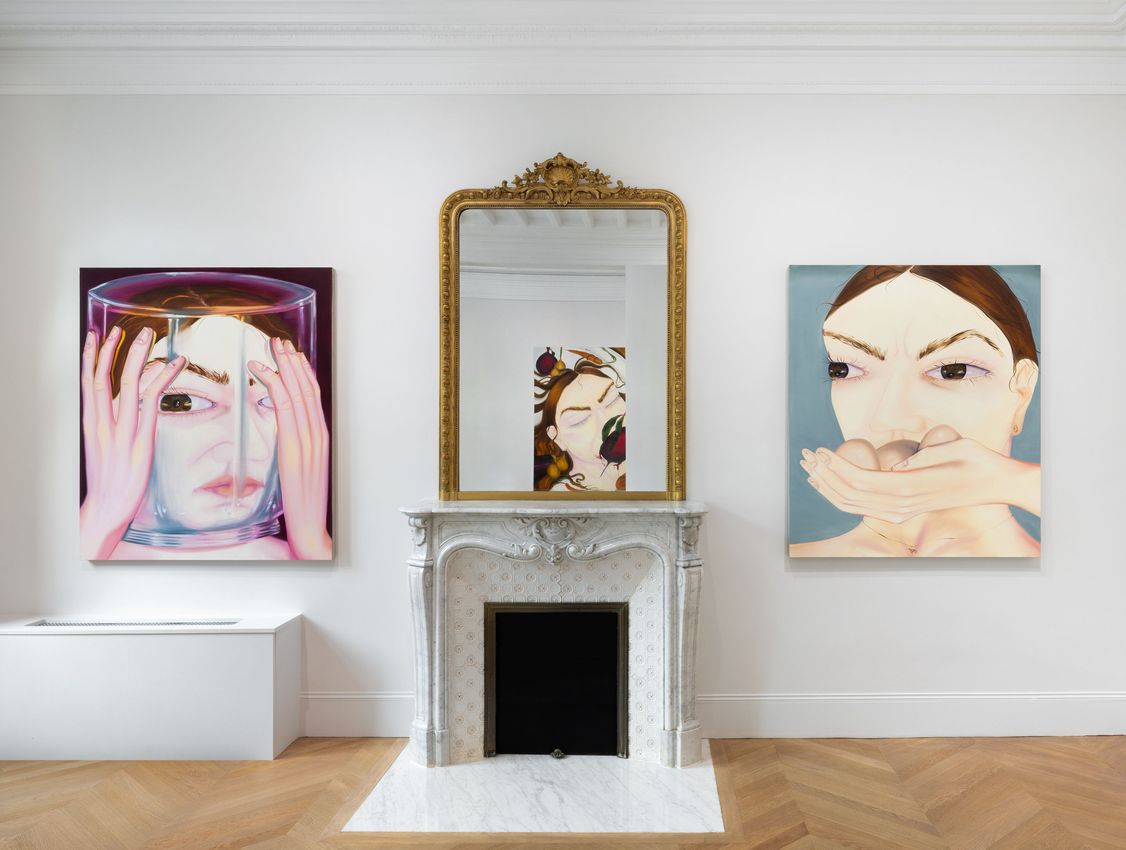
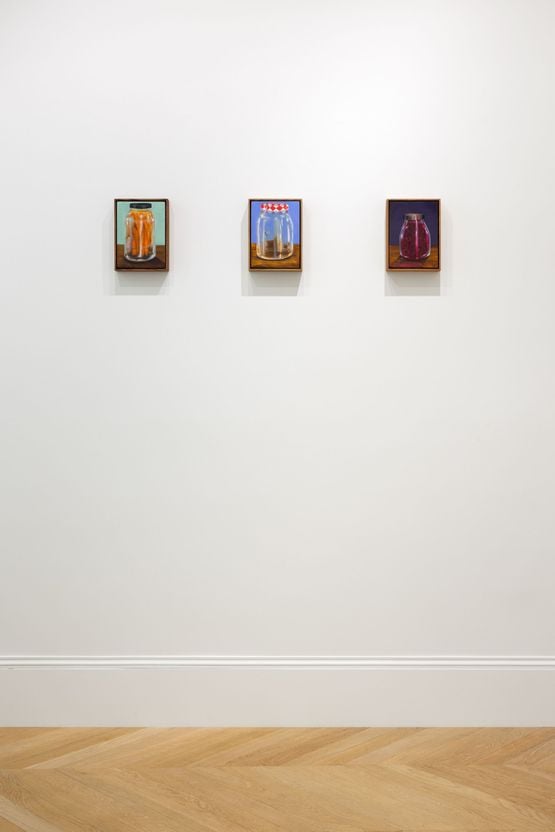
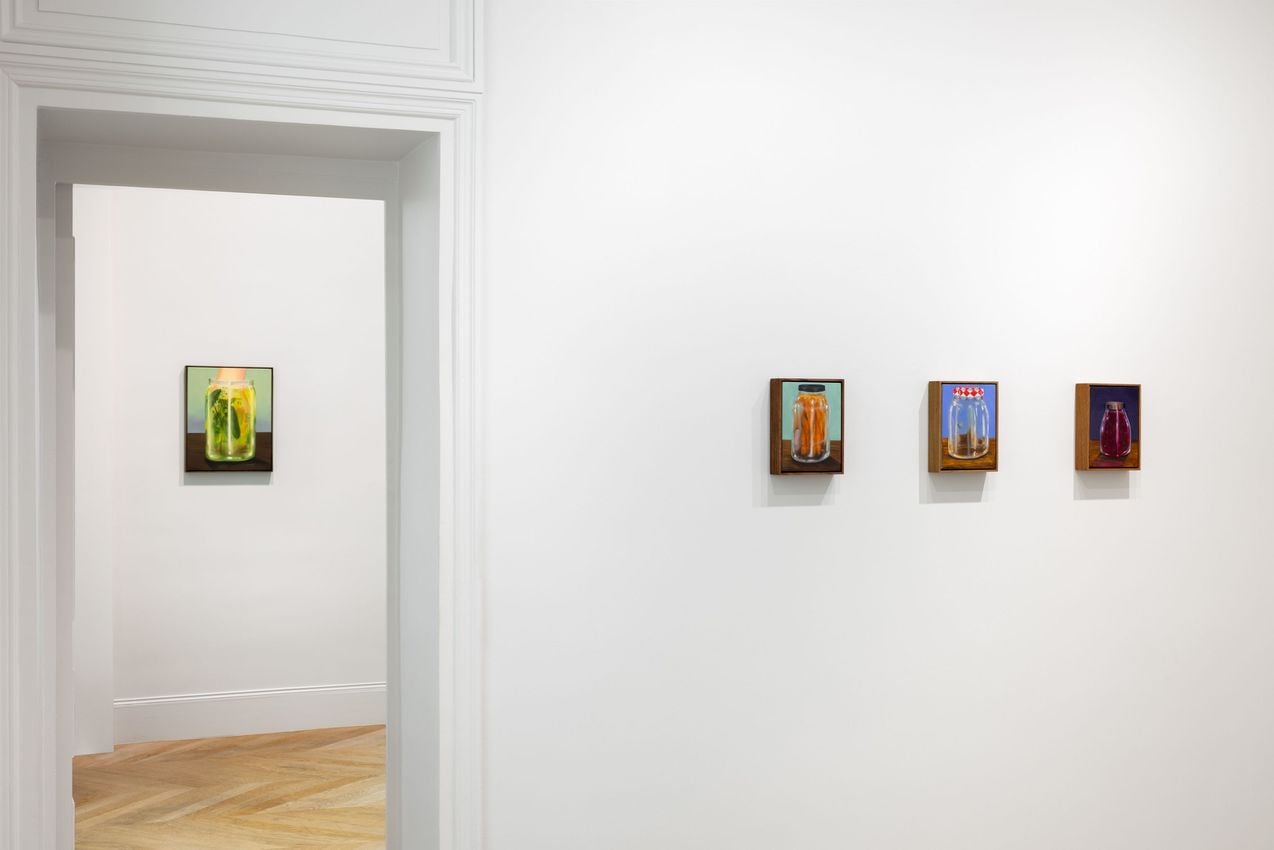
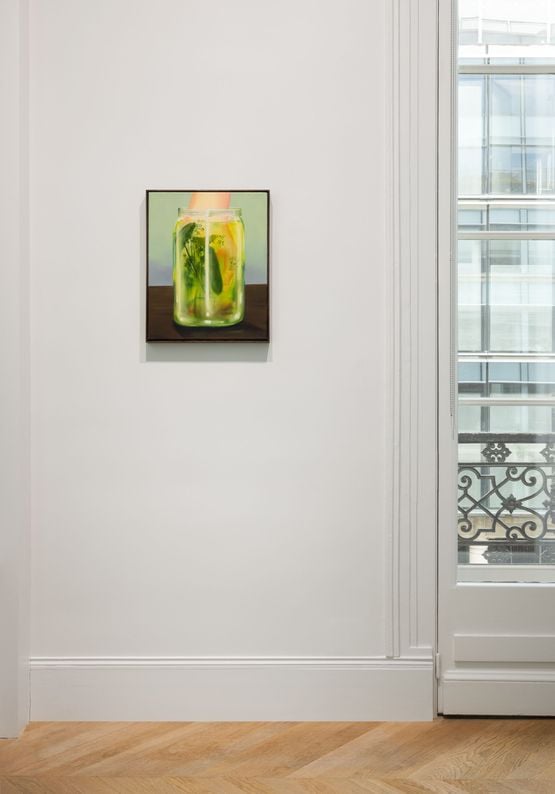
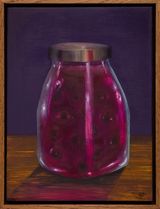
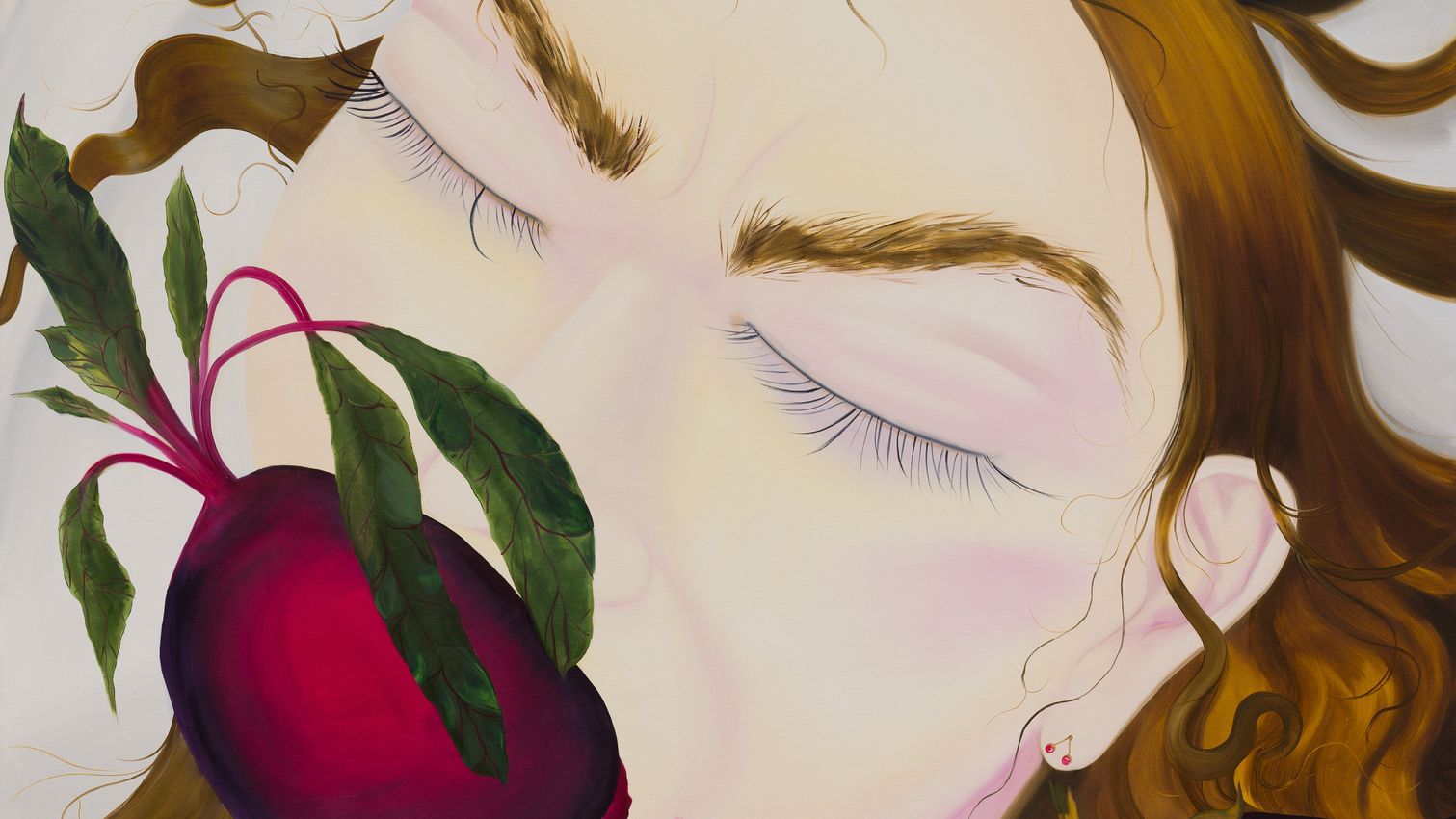
The large canvases submerge the viewer: monumental female heads, painted on two-meters supports, draw one into a world of giantesses. When their eyes are not closed, their gazes are watchful, yet distant, as if estranged from their domestic surroundings. The smaller works lead viewers into the intimacy of a pantry. Glass jars are filled with pickled cucumbers, beetroots, and red berries. But amid them float fragments of human bodies: a finger drifts among carrots and eyes glimmer in a reddish liquid.
Preservation in Jabłońska’s work is never neutral. It is a ritual of care that requires time and patience, but it is also inseparable from the violence of cutting, separating, and containing. Mutilation happens in an instant, but preservation takes time. Was there a horrible accident? Or are we exposed to anatomical specimens that have been carefully conserved for study? Does it matter?
Ambiguity is deliberate in Jabłońska’s work. Her dark humor turns domestic scenes into sites of tension and estrangement. Is the red liquid on the knife the juice of pickled beets or the blood of a cut finger? Is the ribbon in How to Cut a bookmark or a vein? Thus, the viewer oscillates between intimacy and unease.
Size and scale fascinate Jabłońska. Reproduced in exhibition catalogues or visible online, her paintings act as images and carriers of a message. When visitors encounter them in an exhibition space, they become real things and demand careful inspection. The works in small formats must almost be held in one’s hand. While the paintings in Jarred Kitchen that feature a female head are executed on large linen canvases, the smaller works are painted on wooden panels. Measuring barely twenty by fifteen centimeters, they are only slightly larger than a human hand, comparable to the surface of a dinner plate. Their smooth surfaces demand particular attention from the viewer.
When Jabłońska paints them, she needs to be physically close and her gestures change considerably. She began working on small wooden supports when she was first searching for a way to archive motifs from her larger paintings once they left the studio. Acquiring panels originally used for icon painting and priming and polishing them meticulously herself, she found pleasure in the slow, devotional process. Some of her panels present a jar placed on a wooden surface, rendered with the stillness of a Cézanne-like portrait of things.
At first glance, these jars filled with pickled vegetables – beetroots, cucumbers, carrots – appear as simple storage devices. But an attentive eye will notice parts of fragmented bodies: fingers, eyes, and hands floating in vinegar. The act of preserving summer abundance for winter survival has deep roots in Polish and Eastern European domestic culture. In Jabłońska’s works these jars, known in Poland as słoiki, become not only containers of food, but also transparent vessels of memory: memories of survival in uncertain times, of foresight, and of invisible female labor. Before a jar can be filled with goods, the food must be grown, washed, cut, and the containers must be cleaned. The processes are slow and require time and commitment. Likewise, Jabłońska’s practice alternates between the energy with which she paints her large canvases and the concentration of her smaller pieces.
The motif of the head recurs throughout Jabłońska’s work. The artist describes it as a “container for ideas, the source of all images [...] but also of memories, traumas and emotions.” Modeled on her own features, it is a face she once learned to draw quickly and now reintroduces as needed, almost as a ready-made image.
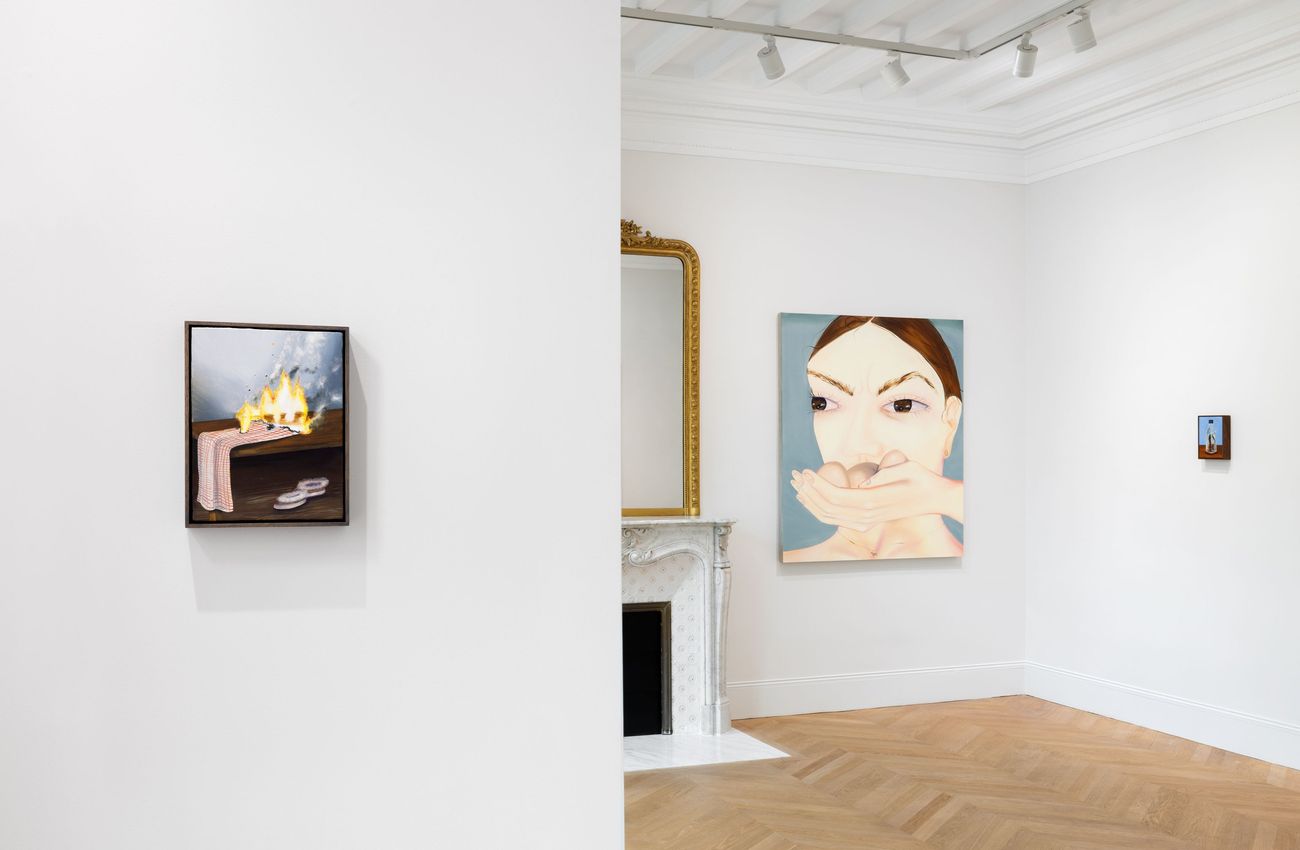
This recognizable female face with thick eyebrows and almond-shaped eyes appears across several large canvases in the new series. In The Egg Maker, a pale face fills the whole surface, but is unexpectedly muzzled by a hand resting beneath its softly curved nose and covering its mouth. This palm is also a nest and carries three eggs. Is the woman smelling them, protecting them – or rather preparing to devour and thus destroy them? Around her neck hangs a delicate gold chain with a tiny chicken pendant. Is she the egg maker, or are they both? Jabłońska recalls her grandmother slaughtering chickens on the farm where she grew up, one of the many memories in which the care and cruelty of everyday life are inseparable. The Egg Maker oscillates between tenderness and menace, offering a meditation on both reproduction, and destruction. As Jabłońska herself notes, the painting also evokes the sensation of a “lump in the throat,” a moment of tension between release and containment, where the egg, rather than symbolizing new life, becomes an image of inner struggle. Painted on a 140-centimeter canvas, the head is much larger than life: were the figure to step out of the picture, the giantess would stand ten meters tall.
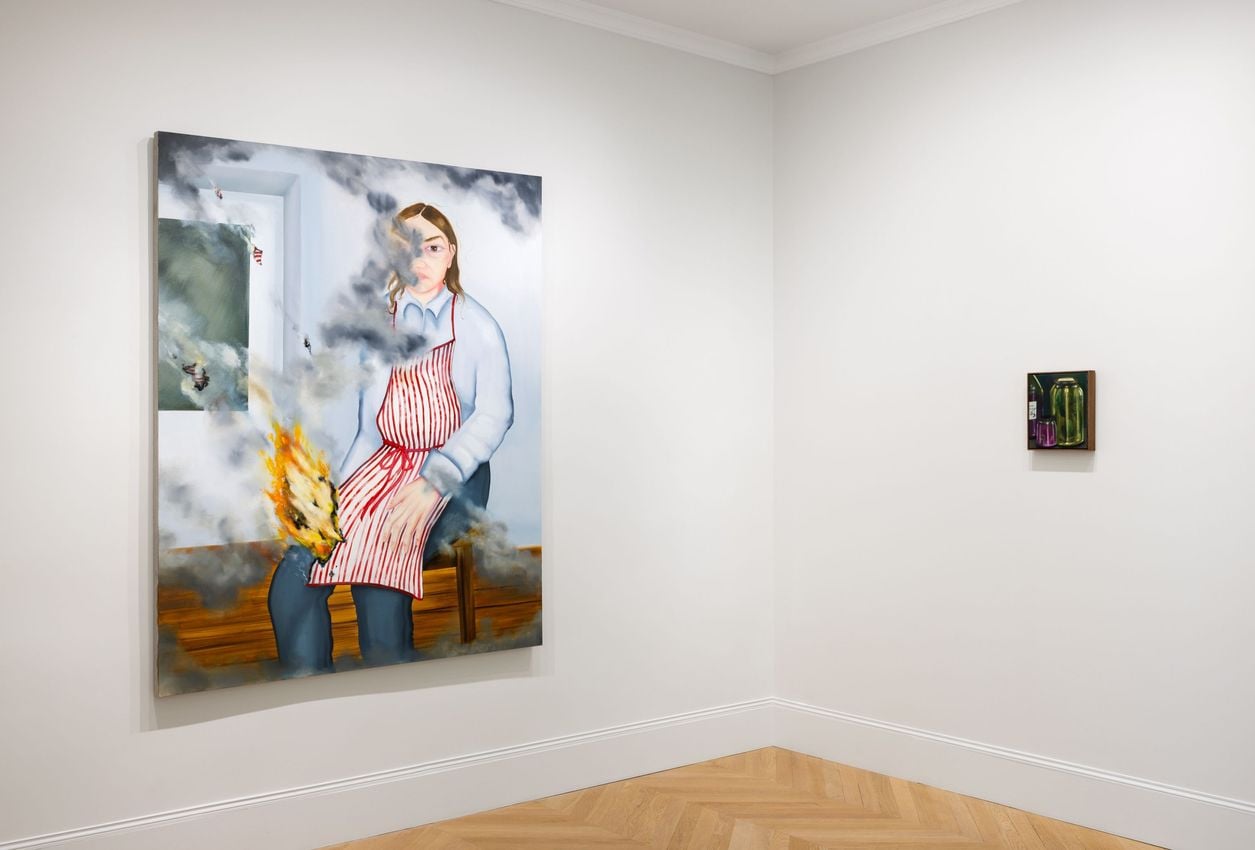
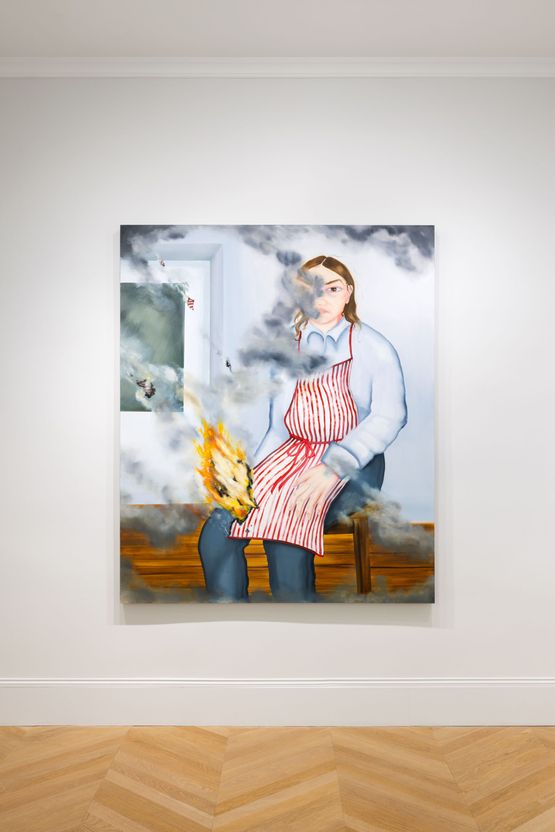
Another canvas, Woman on Fire, features the same recognisable face set upon a whole figure seated calmly while her apron engulfed in flames. The scene is both serene and dramatic. “The woman [...] reminds me of female independence, strength, and the idea of rebirth through destruction,“Jabłońska notes, “however, the woman in this painting [...] is passive, sitting still, resigned to what is happening around her.” The image turns the kitchen into a space of quiet destruction and transformation. The fire consumes, yet it also purifies.
Born in rural Poland and later educated at the Academy of Fine Arts in Kraków, Jabłońska grew up in a world where preservation was both tradition and necessity. Her Jarred Kitchen transforms those memories into allegory. The kitchen becomes a theater of awkward gestures, the jars reliquaries of domestic labor. Jarred Kitchen is a pantry of personal mythology, where humor and horror coexist.
― Mėta Valiušaitytė
Courtesy Esther Schipper.


Deeply felt and keenly observed, Karolina Jabłońska’s paintings often depict everyday situations that capture the awkwardness of certain common activities. As the artist has put it, ‘the paintings come from small sensory and emotional impressions.’ Yet, the personal is also political: metaphors for emotional states, inherent in these paintings are references to the role of women, the existential threat to their bodies and restrictions imposed by political realities.


A respected voice in contemporary art discourse.
Focusing on ambitious storytelling and insightful art-world commentary. Ocula Magazine publishes in-depth interviews, critical essays and timely analysis on the artists, exhibitions and ideas driving the global art world.
Learn more about Ocula Magazine
Showcasing the best of the art world.
Ocula partners with galleries from around the world to highlight their artists, artworks and exhibitions. Gallery membership is by application and invitation, with each member vetted by an independent panel.
Learn more about Ocula Membership

Specialises in the sale of major artworks.
Led by a team with deep ties to the world’s leading auction houses, galleries and collectors. Ocula’s advisory team offers bespoke services to high-net-worth clients from around the world who are looking to acquire the best of contemporary and modern art.
Learn more about our team and services