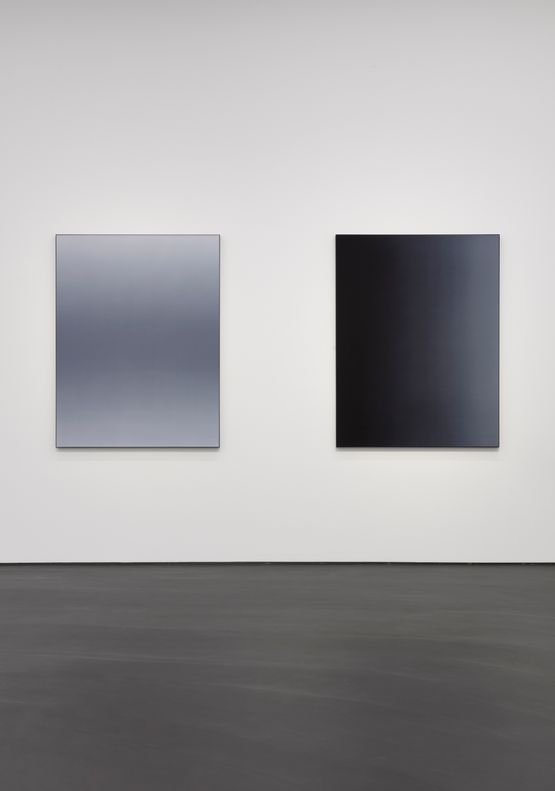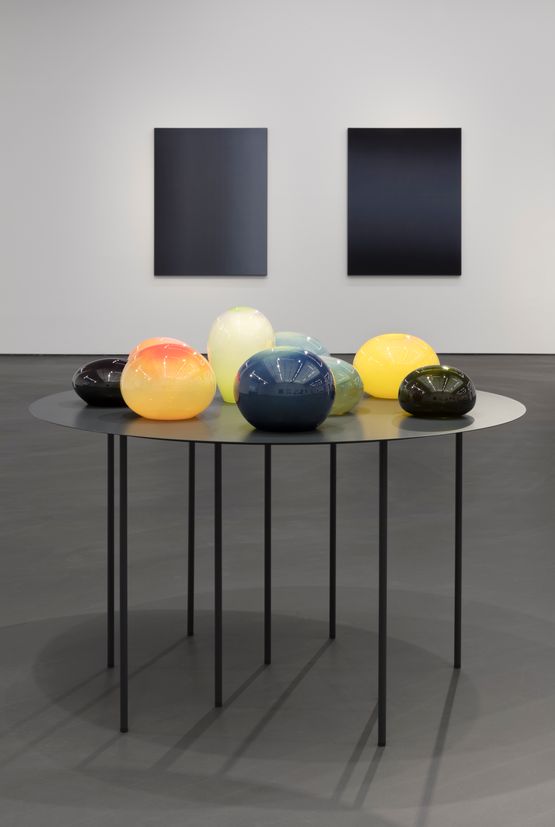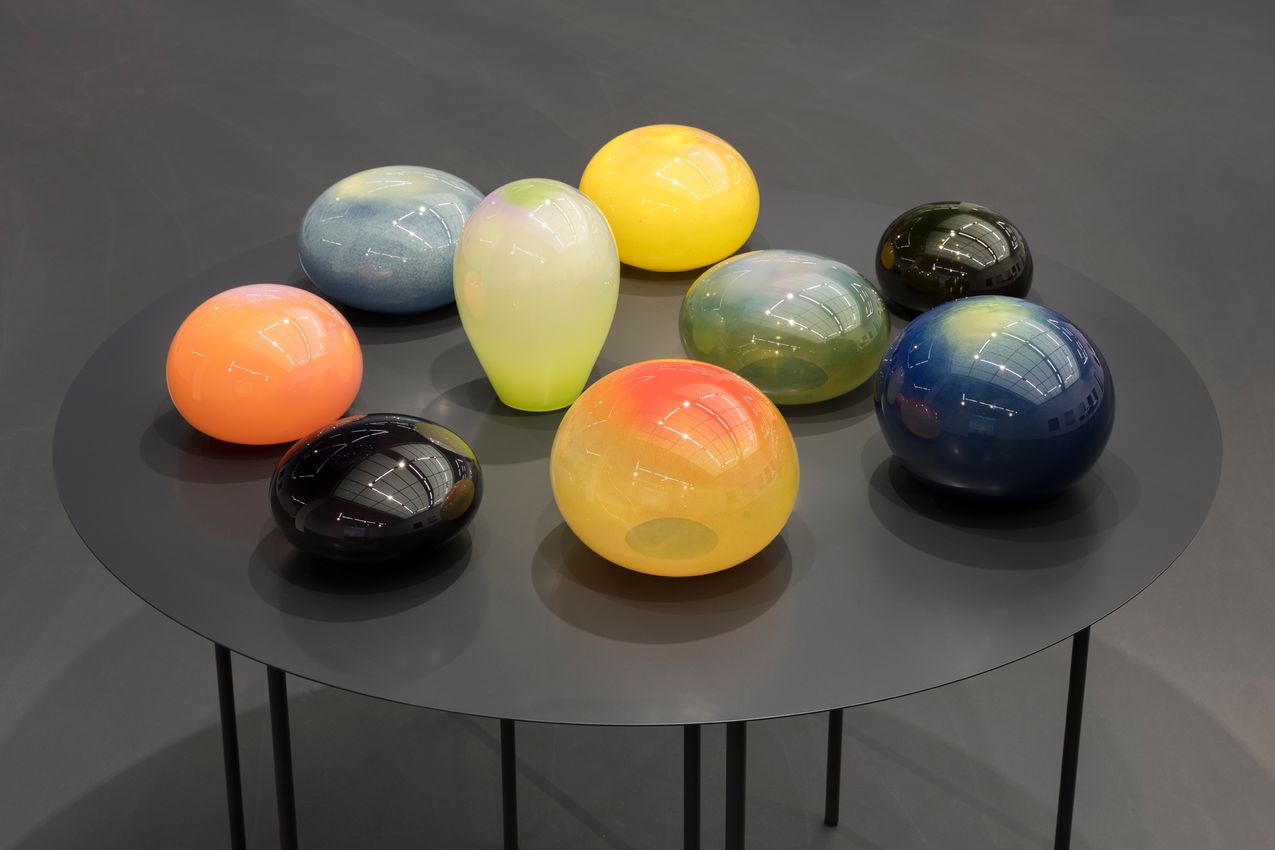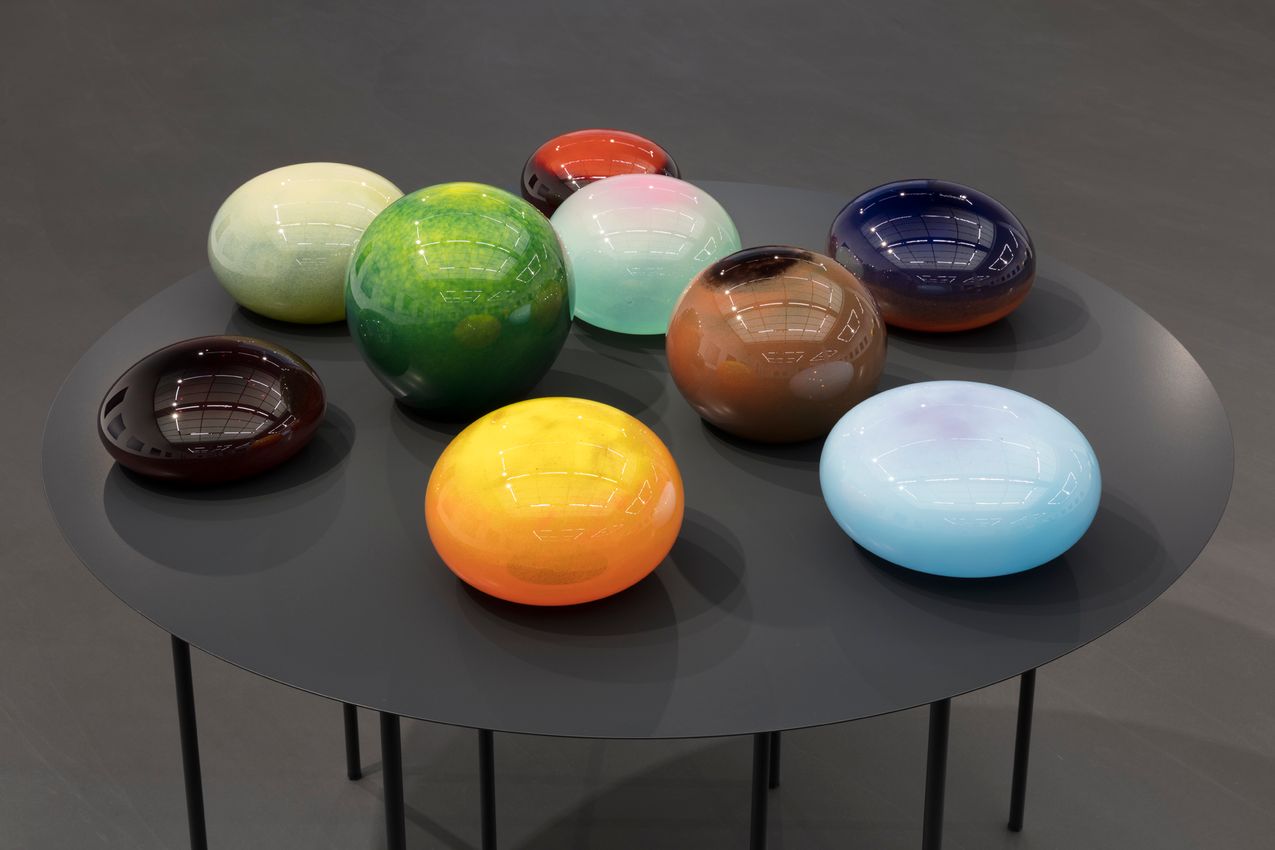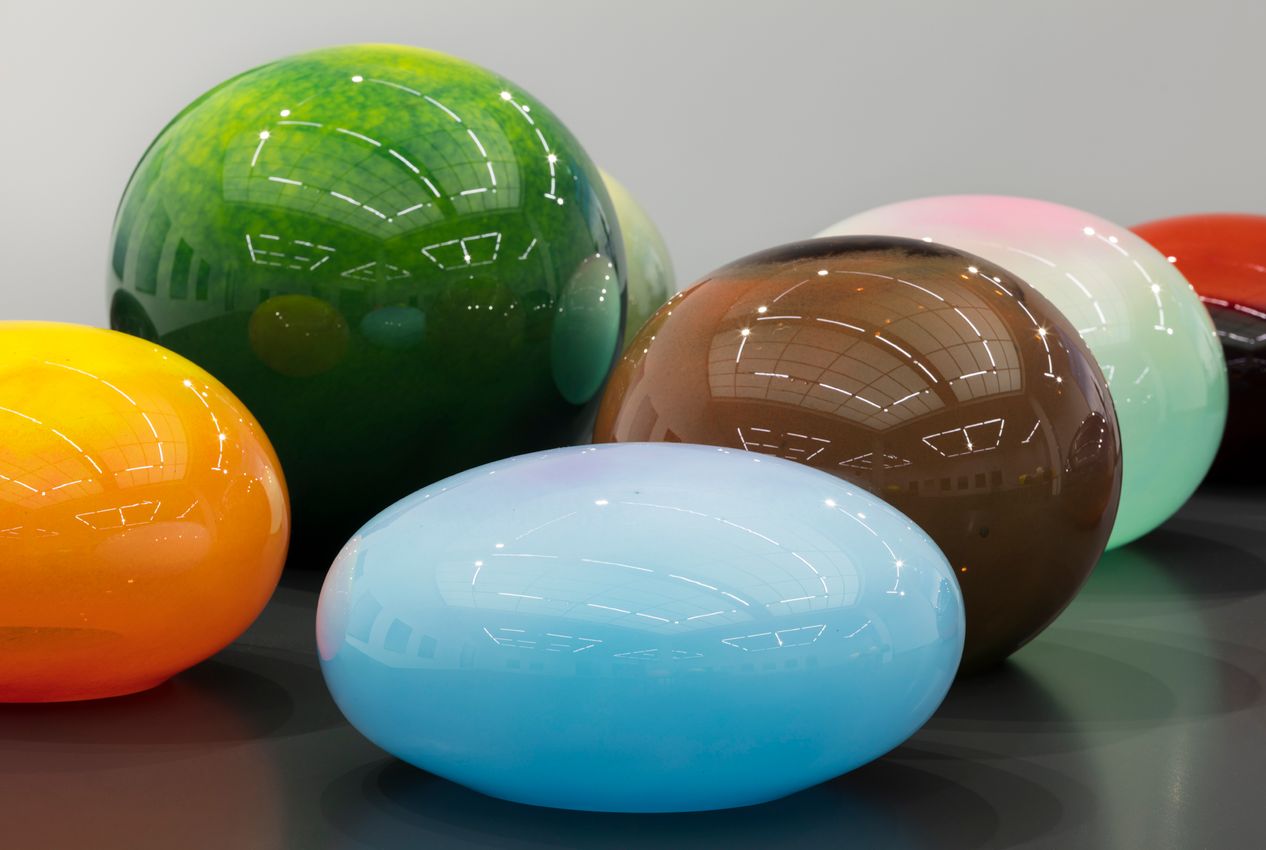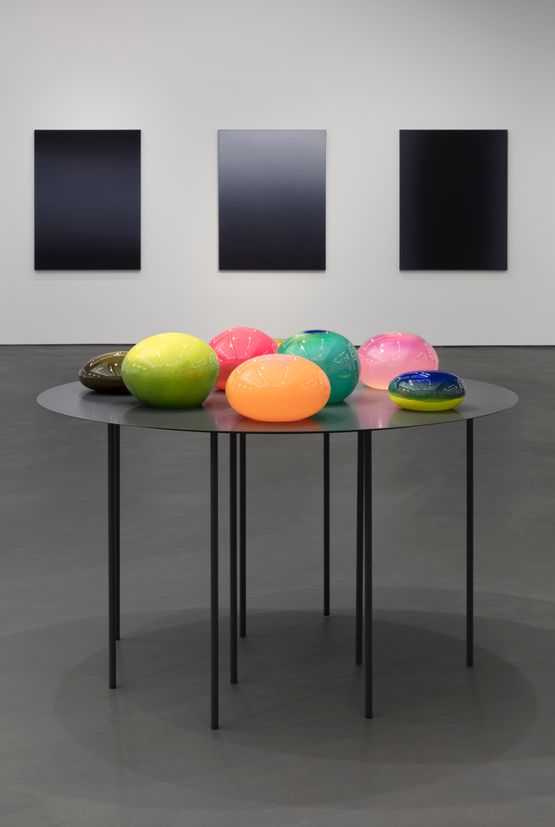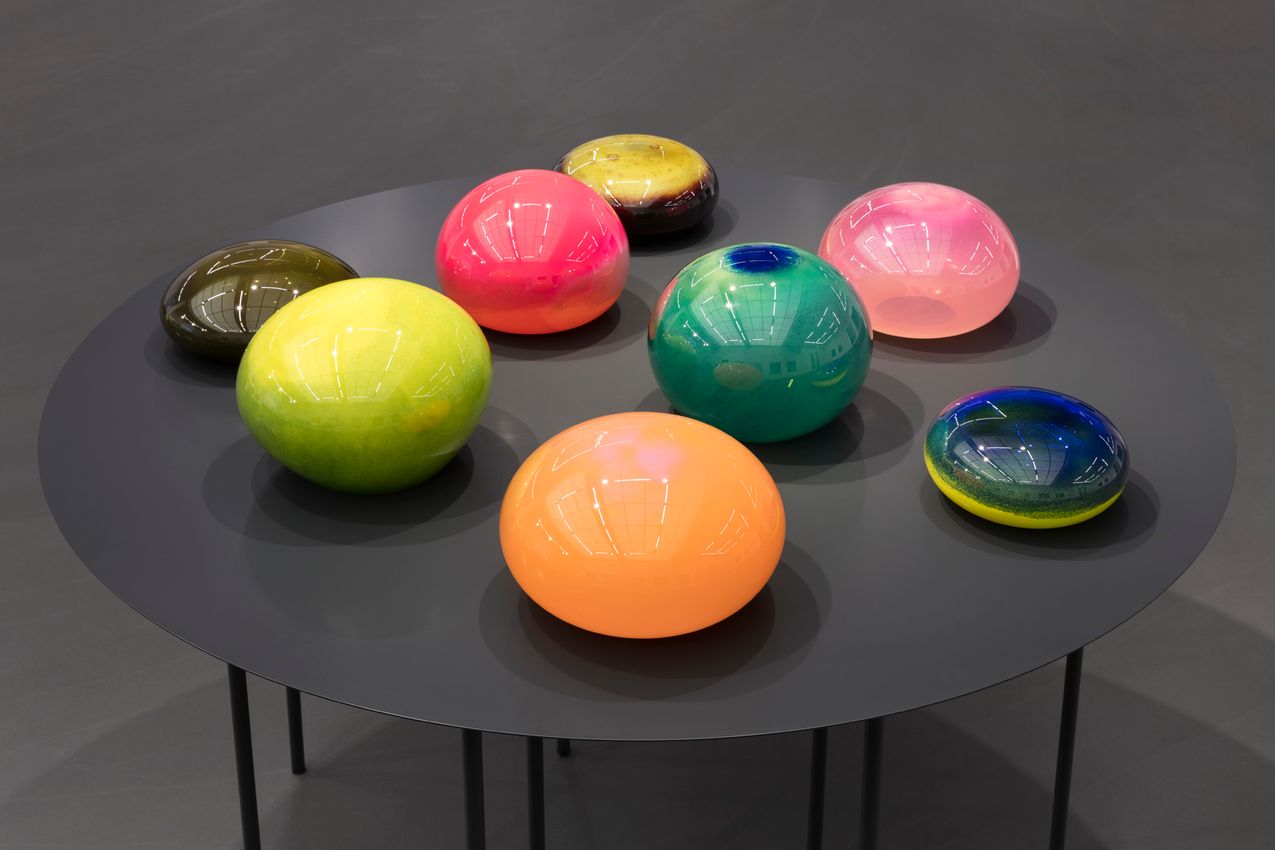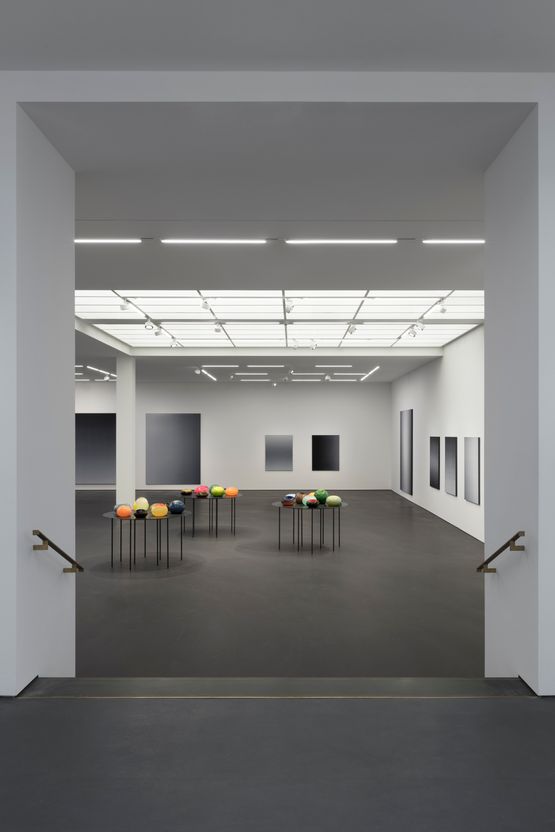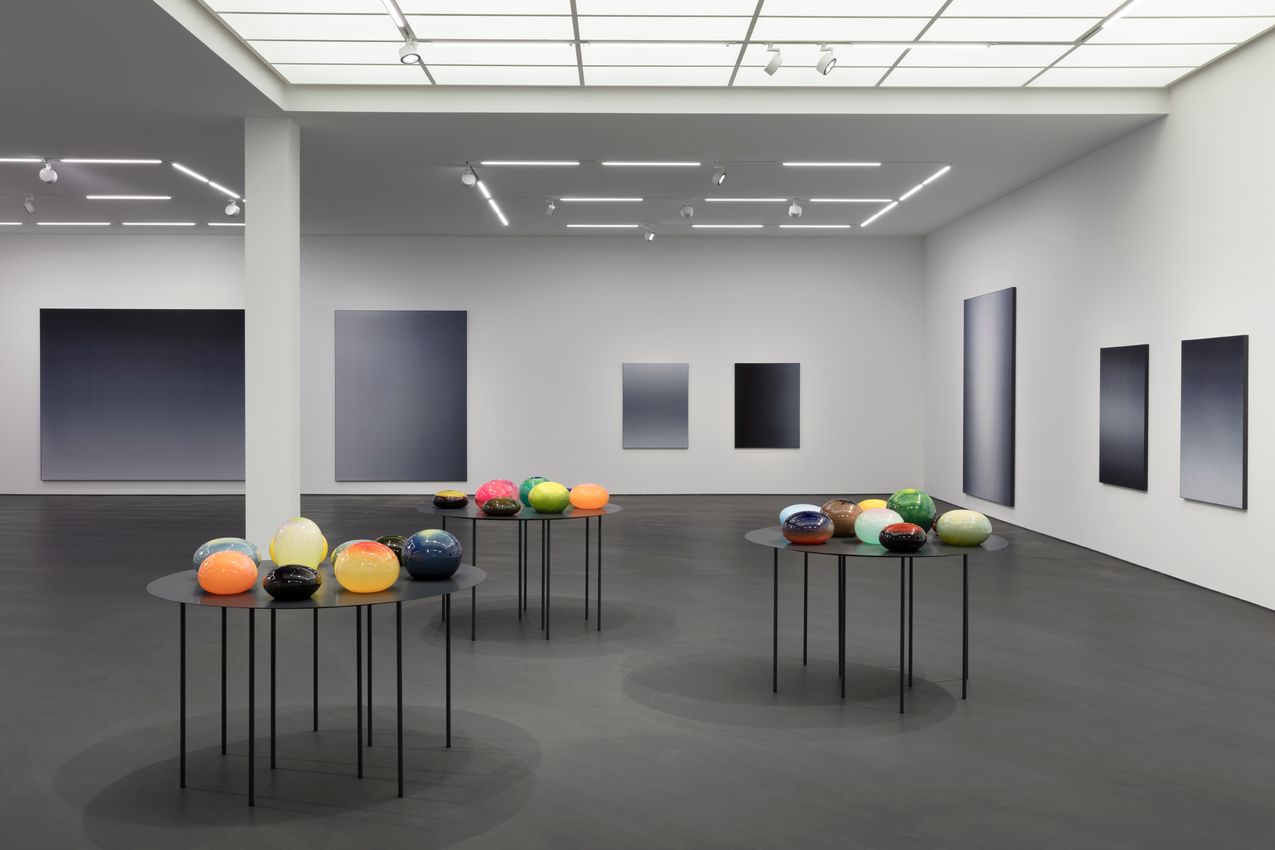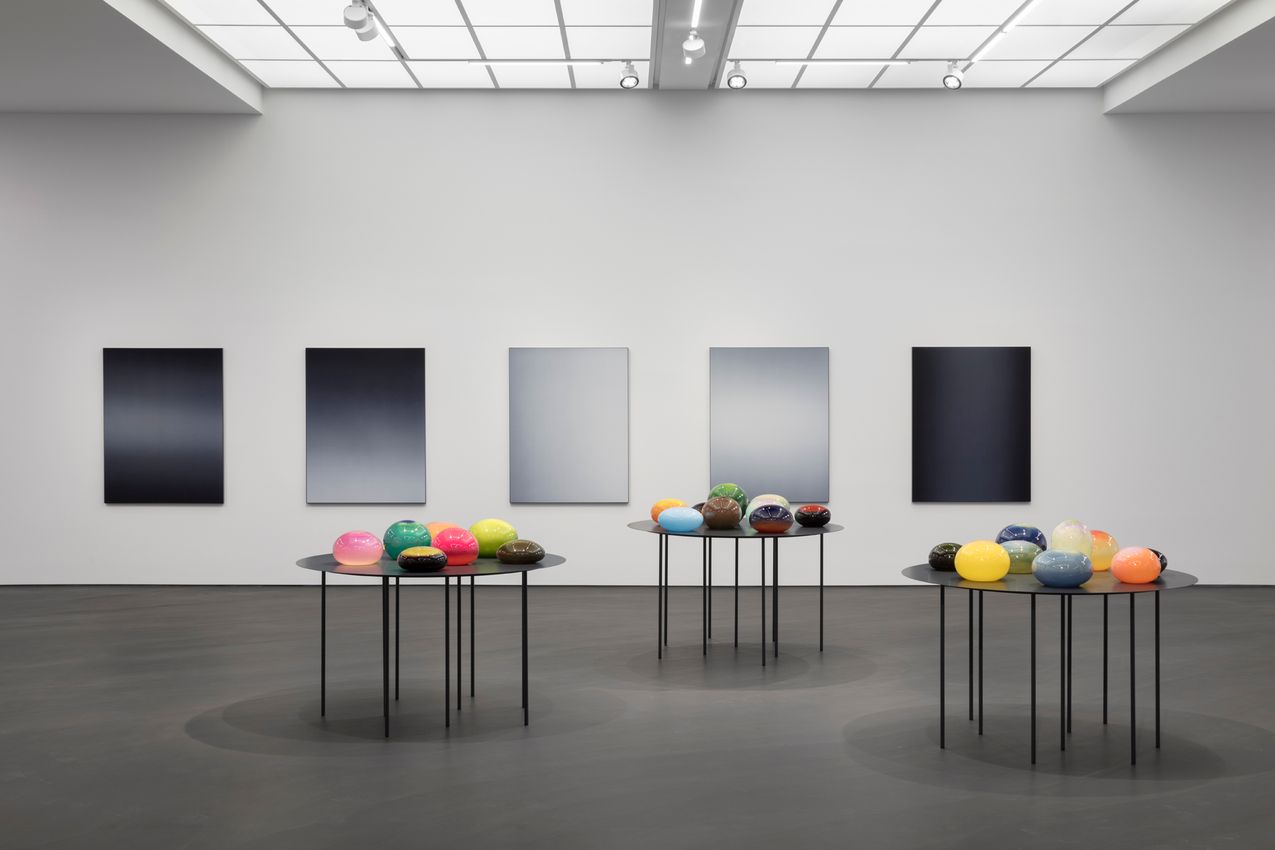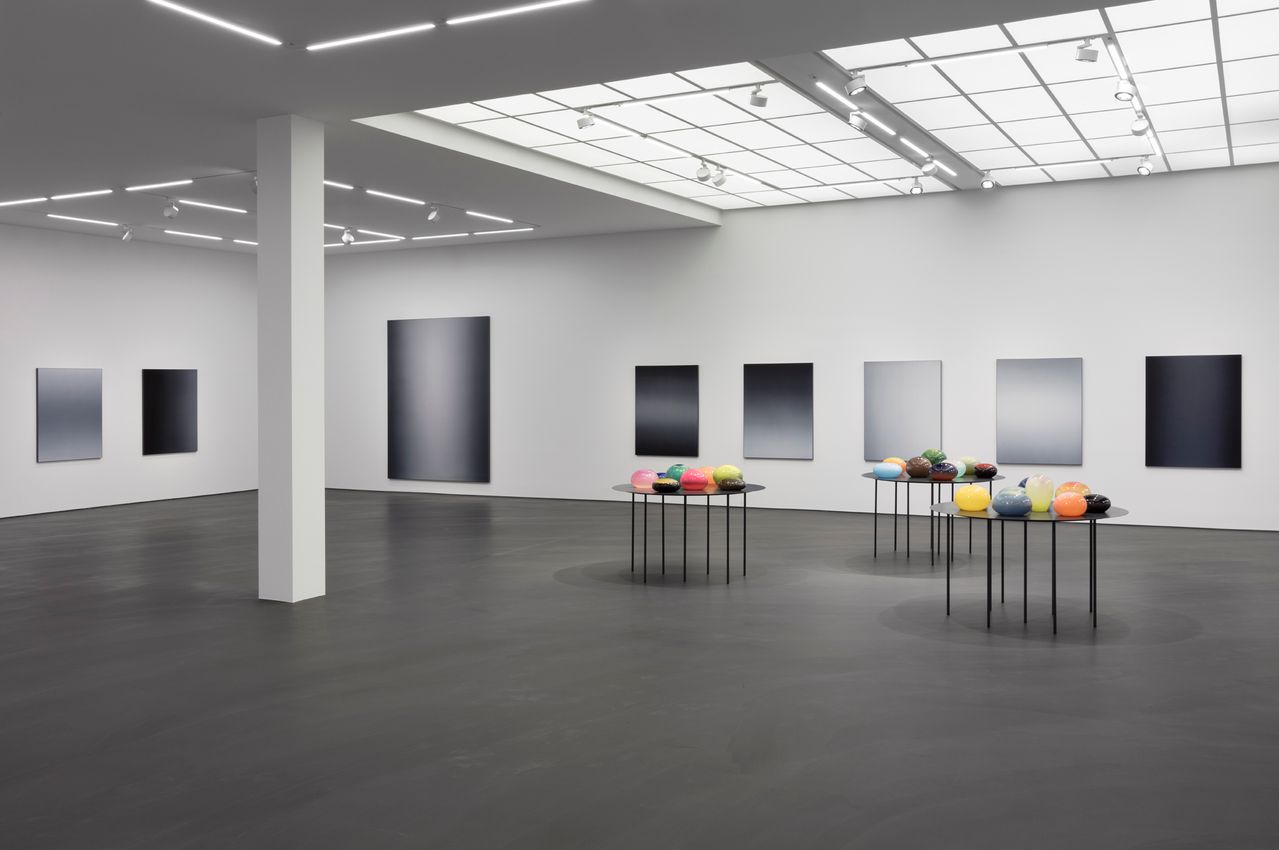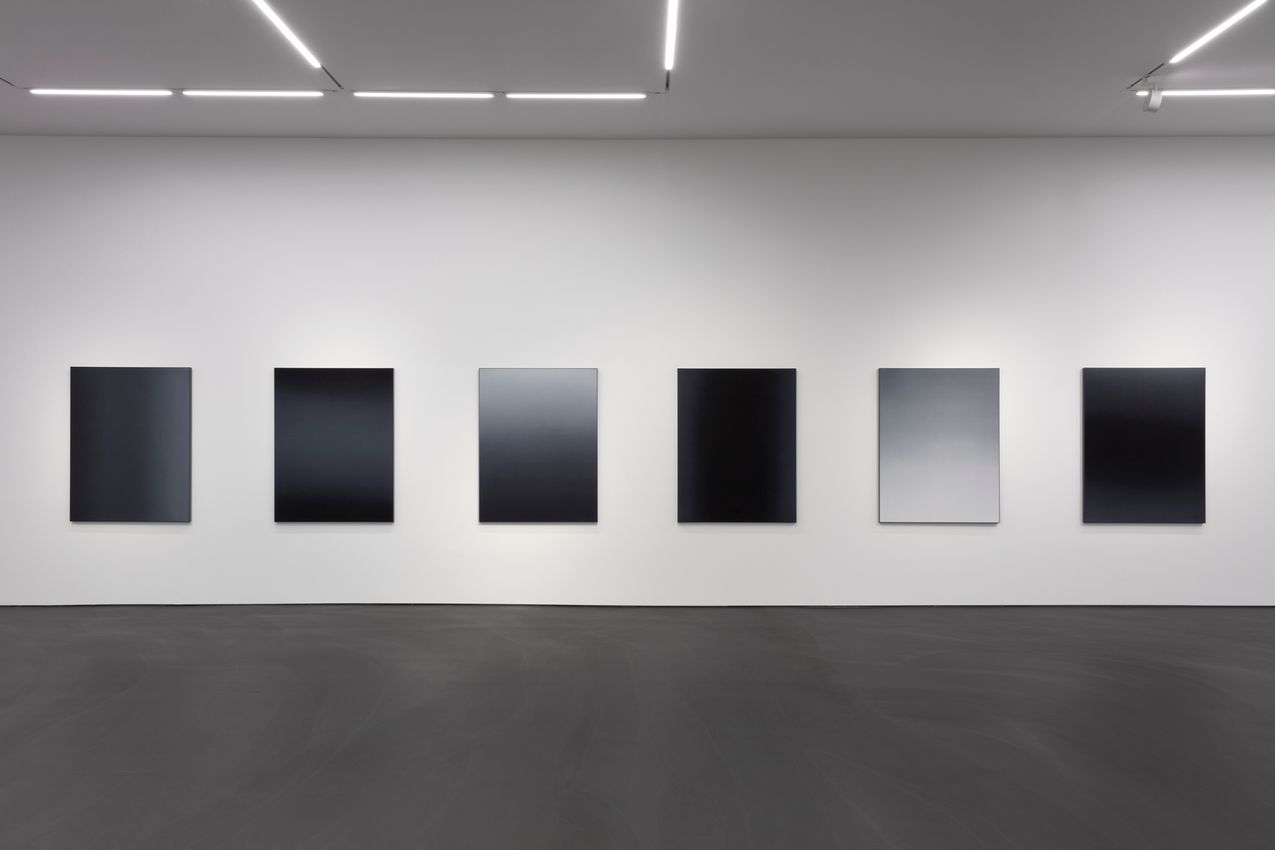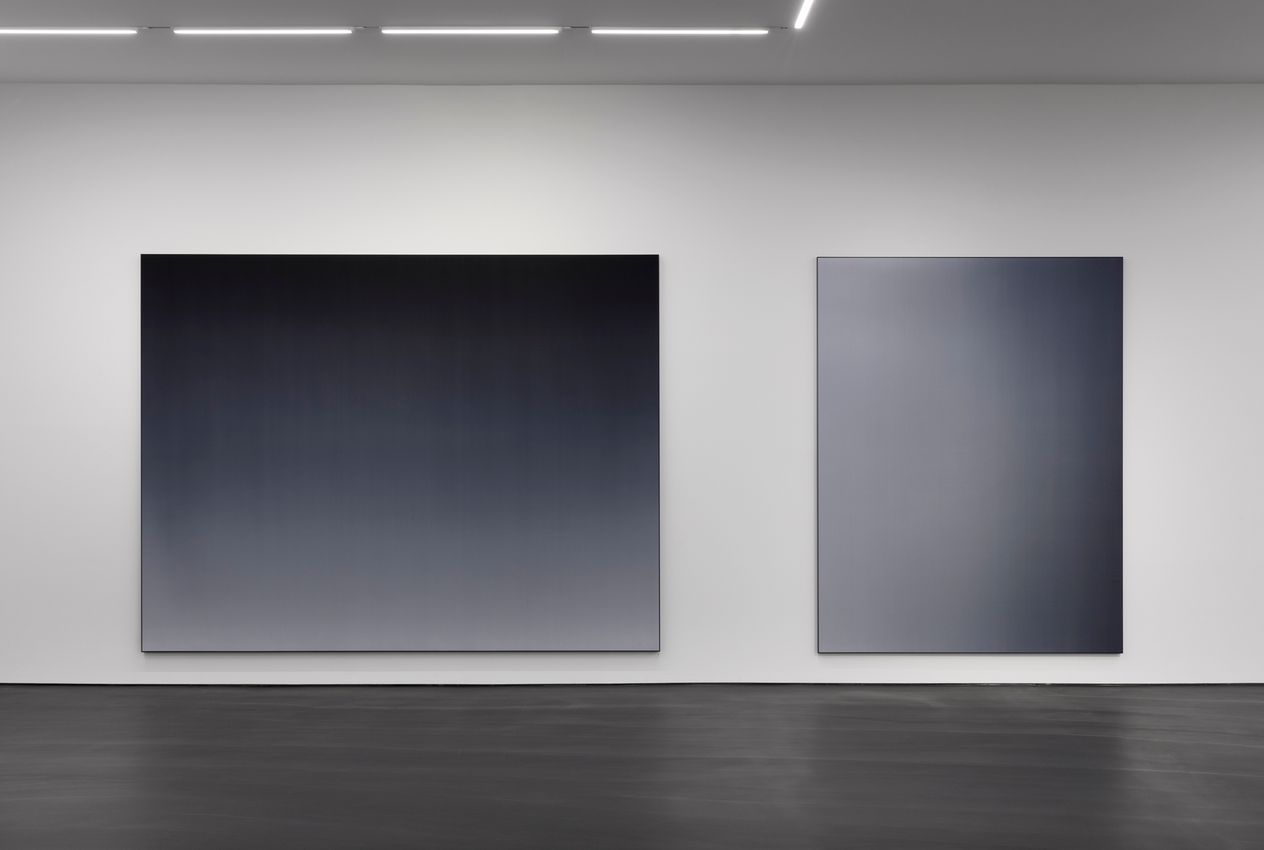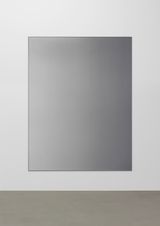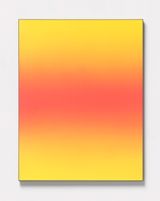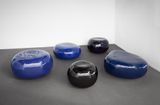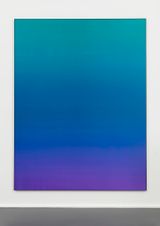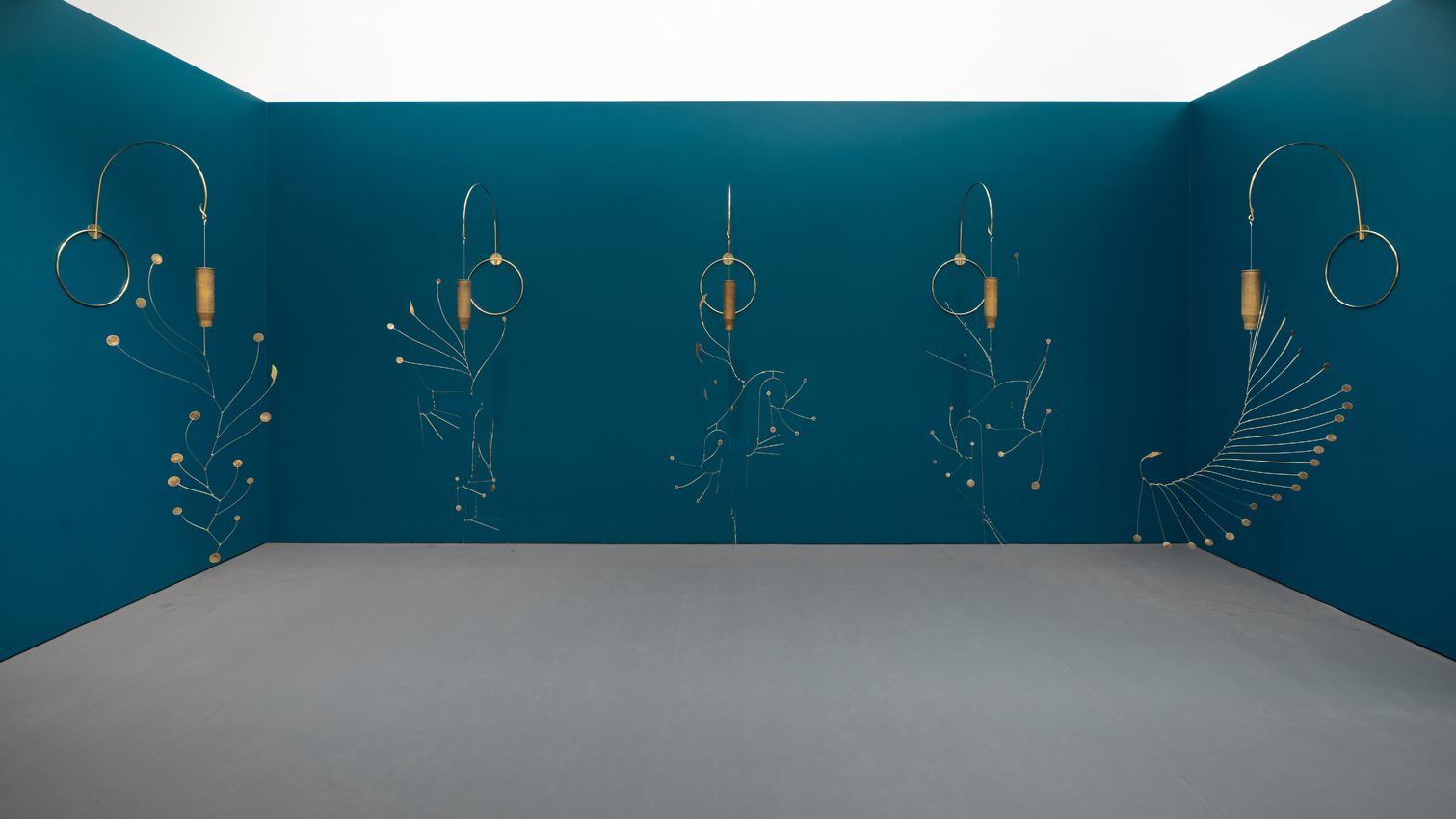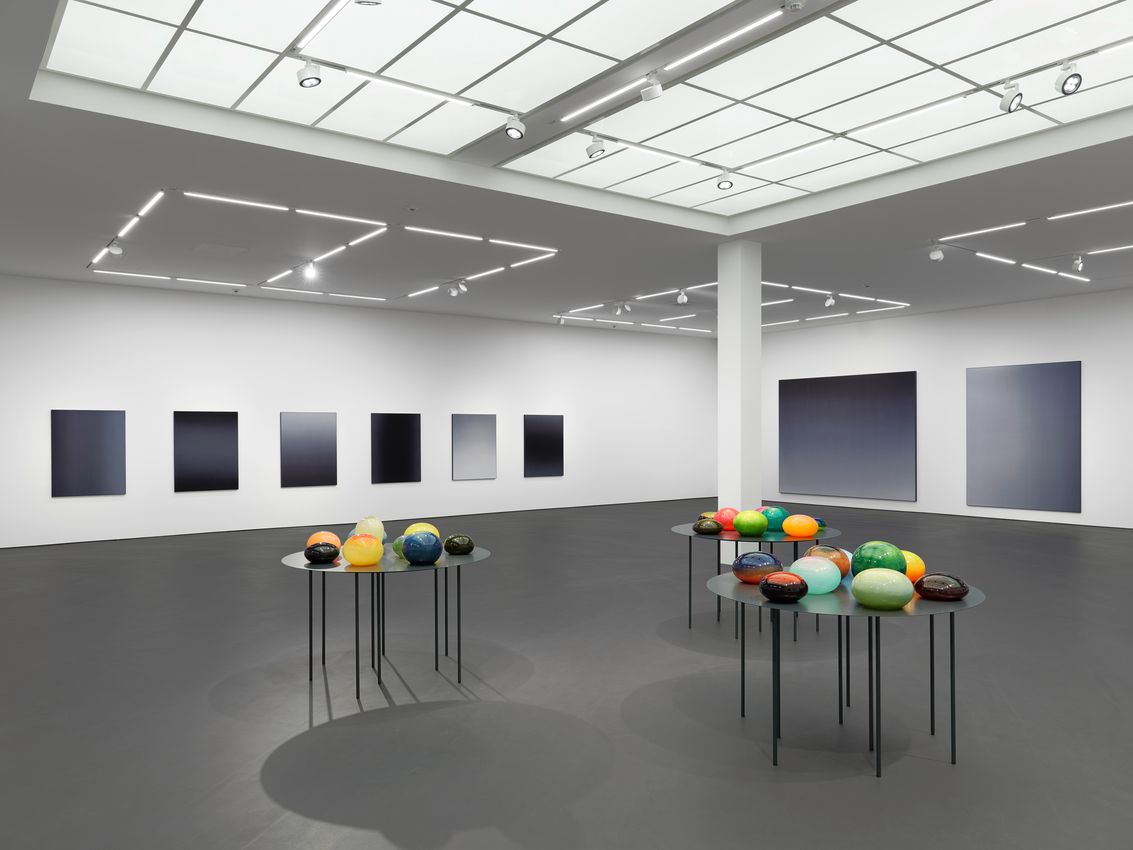
Esther Schipper is pleased to announce Ku Lak, Matti Braun‘s sixth solo exhibition with the gallery. The exhibition will include 16 works from a new series of silk paintings and approximately 25 new glass works, the latter presented on three circular plinths designed by the artist.
Matti Braun’s practice is characterised by a constant negotiation between concrete references and general allusions, between poetic ephemerality and an uncanny sense of visceral immediacy. His work investigates the unexpected, often little known, effects of cross-cultural dynamics, making visible patterns of artistic migrations and cultural misrecognitions.
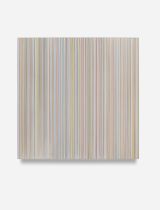
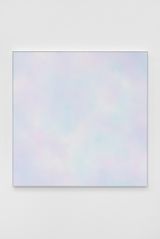
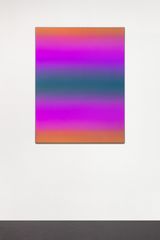
Since 2014 Matti Braun has developed silk works of seamless colour gradations in brilliant pastels and subsequently in deeply saturated bright colour combinations. The new silks—with their progressions of light and dark greys—constitute a culmination of this series. Braun returns to the limitations of a black and white colour scheme explored in his early batiks but with the luxuriance of his recent series on smooth, finely woven silk.
The dye process used for Braun’s paintings has its roots in the artist’s investigation and appropriation of traditional techniques of textile production often used for religious or ritualistic purposes. While his earlier patola or batik series included references to the iconographic traces of their sources, later paintings do not. Initially executed on raw silk, these series included brightly coloured passages or circular splashes that appear almost painterly and overtly reminiscent of post-painterly abstraction. The gradient silk paintings, now on smooth, finely woven silk panels used either a very reduced or an extremely saturated palette.
At the same time, the greyscale of this new series also obliquely refers to Braun’s interest in concrete which he has incorporated in individual works and also in his exhibition architecture. In addition, the grey modulations may recall the colouring of black and white found photographs which have played an important role in the artist’s practice.
While the reduced colour scheme explored in Ku Lak highlights the tension between seriality and uniqueness, the works’ apparent effortlessness and formal simplicity betray a process that seeks to exert a great amount of control but still entails uncontrollable outcomes. This dichotomy is further explored in the new series of glass works. The mouth-blown glass objects, produced in traditional glass foundries under the artist’s supervision, play with their hybrid status as sculpture and product of craftsmanship and with the tension that has traditionally existed between these two areas of production—that of art and of crafts. The translucent objects recall eyes, and especially the protruding ‘bug’ eyes found in popular representations of the exaggerated physiognomy of alien creatures. Each work is determined by unique properties of materiality and execution, with its final form, exact physical traits, and specific colour only fully manifest once the glass has sufficiently cooled.
At the same time, Matti Braun’s glass works also draw on a tightly woven web of references and associations characteristic of the artist’s practice: an early glass work was used as prop in his staging of his play The Alien (based on the unrealised film project by Satyajit Ray, said to have inspired Steven Spielberg’s film E.T.). On a material level, glass in effect is made from sand, another recurring element of Braun’s exhibitions, and its colour remains true: the colour of a glass shard from thousands of years ago will not fade or discolour, just as the colour of these sculptures by Matti Braun will last into the distant future, akin to time travelling visitors, out of the artist’s control to determine their interpretation and fate.
Matti Braun’s projects are often organised around a specific example of appropriation, taking an elaborate web of interdisciplinary associations as point of departure. His new monograph, forthcoming from Snoeck in February 2020 and encompassing his artistic production of the last ten years, is paradigmatic of this approach, focusing on his ongoing engagement with the myriad interconnections of the work of Rabindranath Tagore, Vikram Sarabhai, Satyajit Ray, and Indian and Bengali science fiction. The underlying narrative logic of such conflations of historical, cultural and biographical references is not intended to explain the significance of individual art works but instead to demonstrate their polysemy. Braun’s work is about the inability of objects to contain the meaning with which we burden them, drawing attention to the multiplicity of interpretations with which our personal and cultural histories imbue perception. The references are never illustrative or didactic but make visible an object’s cultural trajectory and the mechanisms of cultural cross-pollination.
Matti Braun was born in 1968 in Berlin, Germany. He studied at the Städelschule, Frankfurt and at the Braunschweig University of Art (HBK). The artist lives and works in Cologne. In 1994, Braun was awarded the Bonner Kunstverein’s Peter Mertes Award and in 2004, the Förderpreis des Landes Nordrhein-Westfalen für Bildende Kunst.
Institutional solo exhibitions include: A Lost Future: Matti Braun, The Rubin Museum of Art, New York (2018—2019); Lak Sol, Kunstverein Heilbronn, Heilbronn (2016); Gost Log, Arnolfini, Bristol (2012); Salo, Kunstverein Braunschweig, Braunschweig and La Galerie - Contemporary Art Center, Noisy-le-Sec (2010); Kola, Kunstmuseum Liechtenstein, Vaduz (2009); Özurfa, Museum Ludwig, Cologne and Museion - Museum of Modern and Contemporary Art, Bolzano (2008).
Braun’s work is represented in the collections of Sammlung zeitgenössischer Kunst der Bundesrepublik Deutschland, Berlin; Finnish National Gallery, Helsinki; Kunstmuseum Liechtenstein, Liechtenstein; Ludwig Forum für Internationale Kunst, Aachen; Museion - Museum of Modern and Contemporary Art, Bolzano, among others.
Matti Braun’s work investigates the unexpected, often little-known effects of cross-cultural dynamics, making visible patterns of artistic migrations and cultural misrecognitions. The artist’s exhibitions have often been organised around a specific example of such appropriation, taking, for instance, an elaborate web of interdisciplinary associations spun around the Indian physicist Vikran Sarabhai that include Mahatma Gandhi, Le Corbusier, the development of the Indian space program, the Ulm School of Design and Lynda Benglis as point of departure for displays that included textile works, objects, photographs and large-scale installations.


Esther Schipper founded the gallery in 1989 in Cologne. In 1997 the gallery relocated to Berlin. Through more than three decades of continuous exhibition practice, the gallery has established itself as a major force not only in Germany but in an international context, with offices in Paris and Seoul and representatives in France, Spain, the United States, Latin America, South Korea, Taiwan and China. The gallery holds up to ten gallery exhibitions as well as multiple off-site projects each year and participates in leading art fairs across the globe.

A respected voice in contemporary art discourse.
Focusing on ambitious storytelling and insightful art-world commentary. Ocula Magazine publishes in-depth interviews, critical essays and timely analysis on the artists, exhibitions and ideas driving the global art world.
Learn more about Ocula Magazine
Showcasing the best of the art world.
Ocula partners with galleries from around the world to highlight their artists, artworks and exhibitions. Gallery membership is by application and invitation, with each member vetted by an independent panel.
Learn more about Ocula Membership

Specialises in the sale of major artworks.
Led by a team with deep ties to the world’s leading auction houses, galleries and collectors. Ocula’s advisory team offers bespoke services to high-net-worth clients from around the world who are looking to acquire the best of contemporary and modern art.
Learn more about our team and services