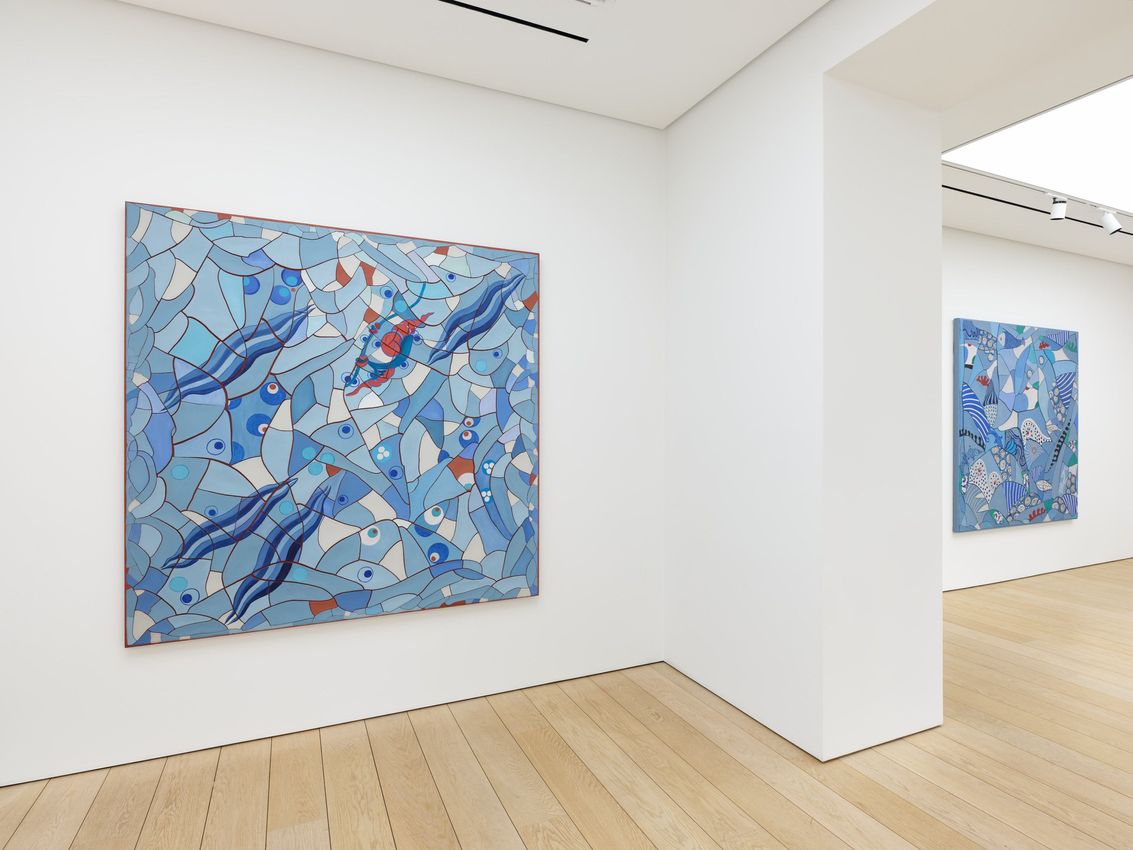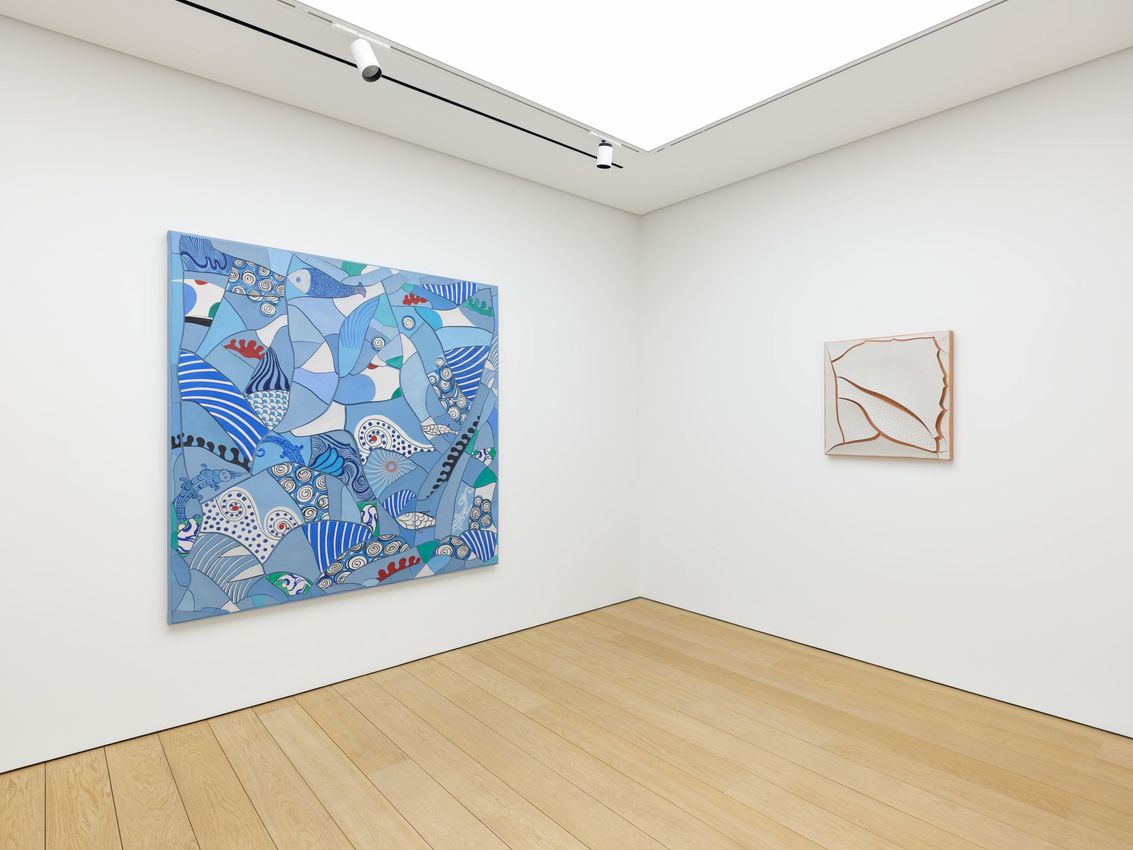
Gagosian is pleased to present Histórias Moldadas, an exhibition of new paintings by Adriana Varejão. Opening in Athens on May 15, this marks her first exhibition in Greece, and her fourth with the gallery.Histórias Moldadas features four new bodies of painting from Varejão’s Tile series, inspired by Brazilian, Greek, Turkish, and Chinese ceramic traditions.
Embracing Baroque elements of parody, paradox, tension, and excess, Varejão creates sculptural paintings that rupture the surface and painterly sculptures imbued with vibrant drama. Her works challenge our understanding of artistic mediums while subverting established histories of art and culture.
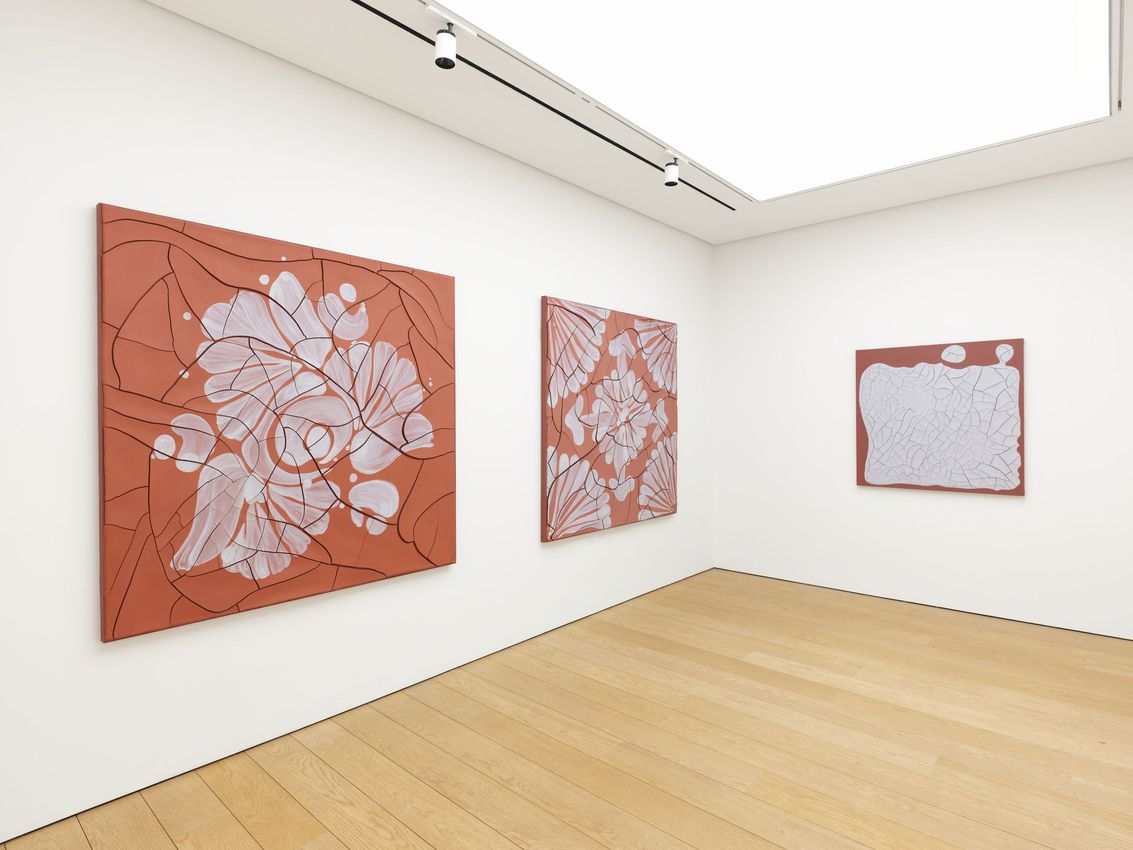
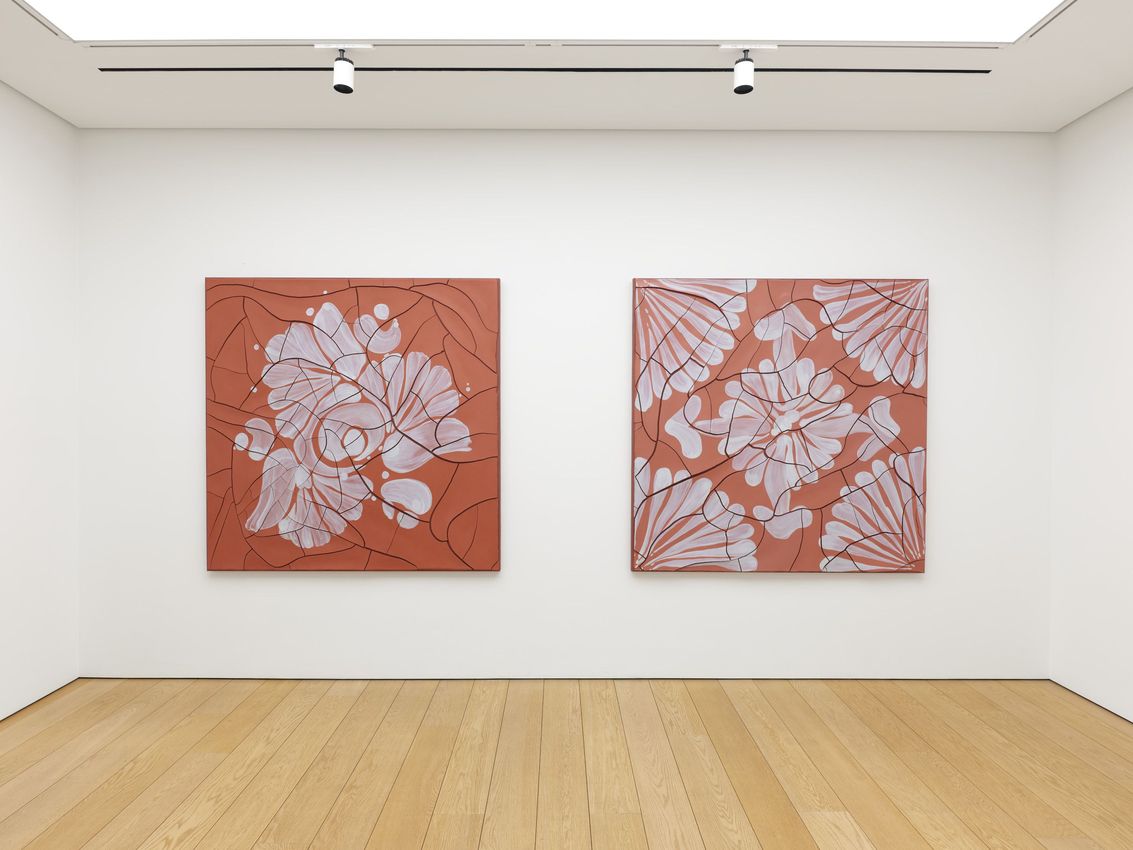
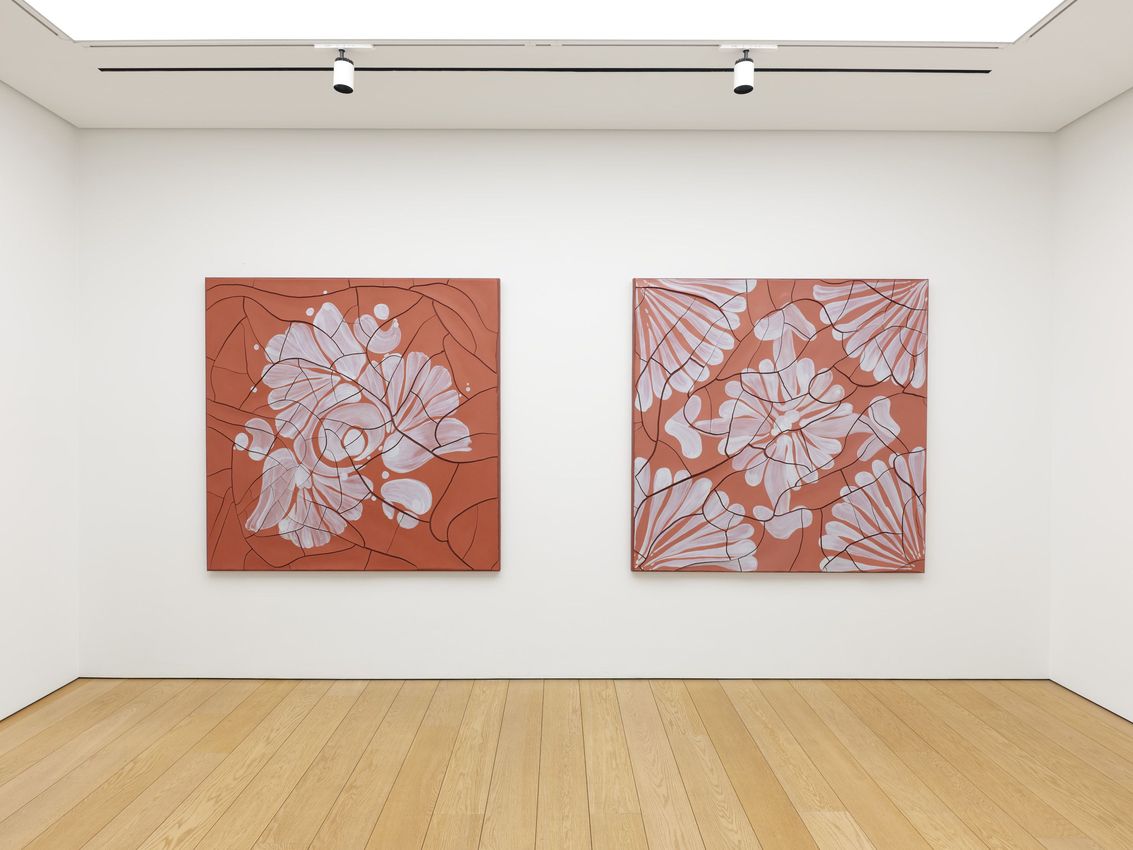
Her signature craquelure draws from the crackle-glazed ceramics of China’s Song dynasty (960–1279). Mixing plaster by hand, applying it to canvas, and allowing it to dry naturally, she engages in a delicate interplay between control and chance. The resulting fissures form an expressive calligraphy, echoing ruins, parched earth, and the material weight of time itself.
The Tile paintings (1988–) simulate the weight, luster, and materiality of ceramics, connecting the cracked surfaces of Chinese porcelain to azulejos—the painted tiles that link Latin America to Europe, the Middle East, and Asia. Introduced to Brazil during its colonial inception, azulejos reflect a confluence of Baroque influences—from Islamic art to the Italian Renaissance, Dutch decor to Chinese ceramics.
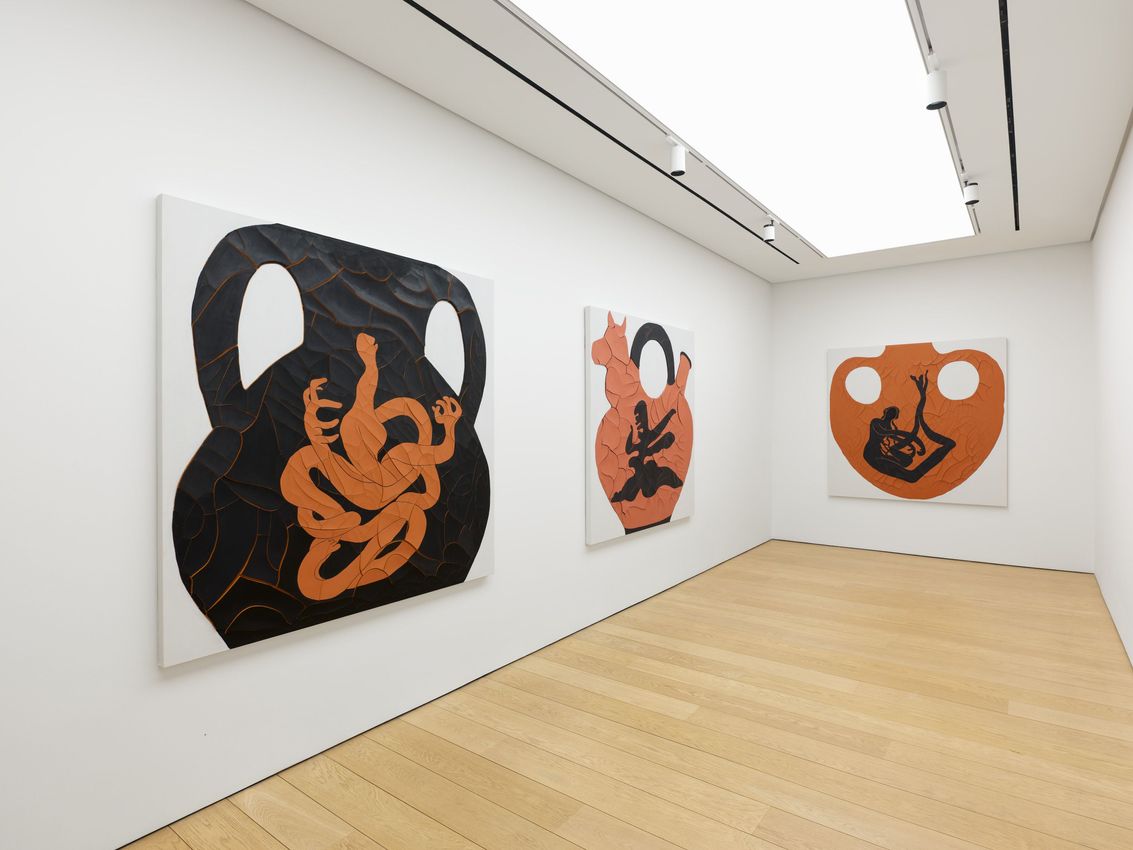
On the gallery’s ground floor, two rooms radiate warmth with terra-cotta paintings in various scales and hues, rooted in rich earthen tones. The first presents reddish clay works overlaid with translucent white motifs inspired by pottery from Maragogipinho, a center of ceramics handicraft in Bahia, Brazil. Their exuberant imagery—at once organic and geometric, zoomorphic and anthropomorphic—reflects humanity’s connection to land.
The adjacent room transfigures these references through cracked plaster forms shaped by Brazilian art and craft, while also drawing connections to ancient Greek pottery and mythology. One painting takes the form of a bull-shaped vessel, overlaid with a voluptuous female figure referencing the serpentine sculptures of Brazilian modernist Maria Martins. Rendered in amber and black, the work also recalls ancient Greek amphoras and alludes to the myth of Zeus and Europa.
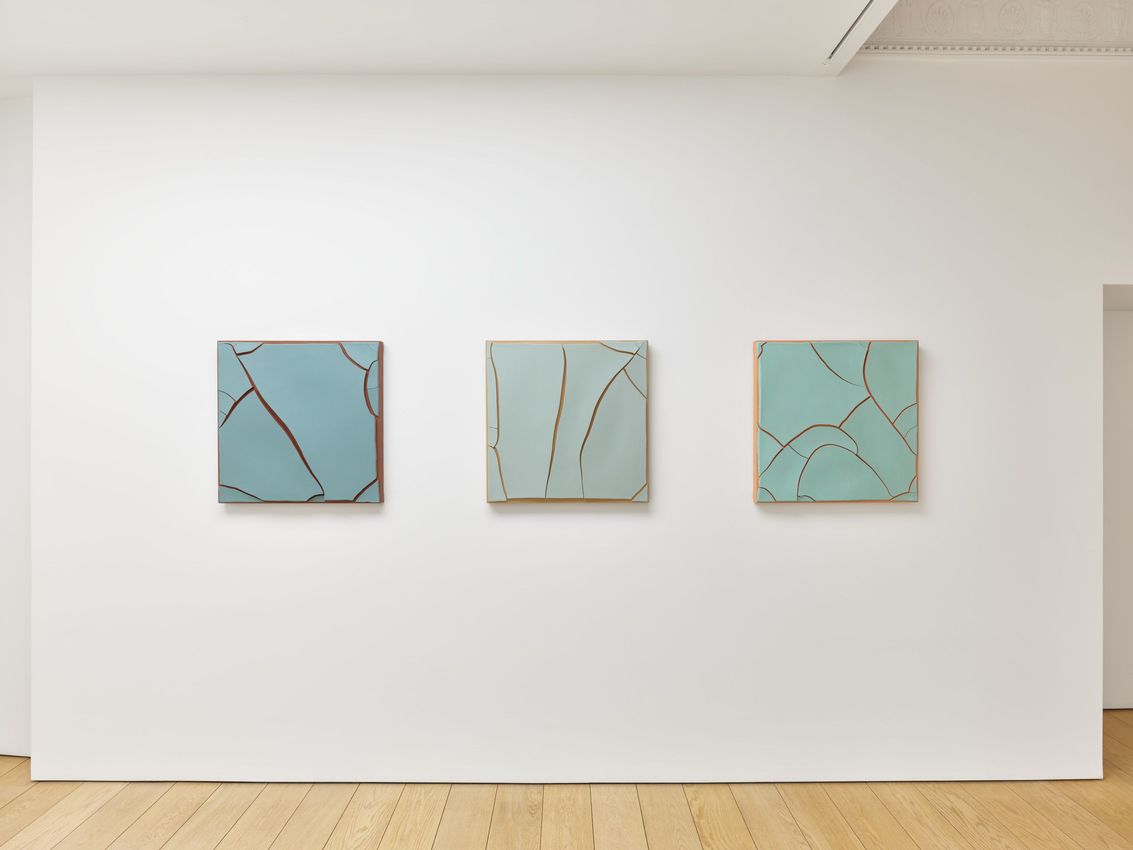
Upstairs are monochrome paintings inspired by Chinese imperial porcelain, particularly those glazed in celadon_,_ or Qing Ci. This hue is described in a poem from the Song dynasty, “After the rain, the sky is blue and the clouds open. And this is the color of becoming. Celadon, Qing Ci.”
The final room is awash in blue and white works reflecting Turkish Iznik ceramics, shaped by the maritime cultures of the Ottoman Empire. The network of cracks across the surface fragments into a shifting mosaic of oceanic blues. Waves undulate alongside Turkish evil eyes and underwater creatures, their rippling forms conjuring the hypnotic pull of the sea.
The exhibition in Athens coincides with Adriana Varejão: Don’t Forget, We Come From the Tropics, on view through June 22 at the Hispanic Society Museum & Library, New York, and Paula Rego e Adriana Varejão: Entre os vossos dentes, on view through September 22 at Centro de Arte Moderna Gulbenkian, Lisbon.


Through her vastly evocative works and materially diverse artistic practice, Adriana Varejão presents incisive reflections on the multiplex nature of Brazilian history, memory, and culture. Her oeuvre encompasses painting, sculpture, photography, and video installation. Reflected in her hybridisation of mediums in manifold forms—including sculptural paintings and floor-based sculptural works—is the syncretism immanent to Brazil’s postcolonial identity. Varejão draws upon aesthetic traditions and a visual legacy resulting from transnational exchange, imperial and otherwise, to create a confluence of forms that she ultimately conceives as a metaphor for the modern world.


A respected voice in contemporary art discourse.
Focusing on ambitious storytelling and insightful art-world commentary. Ocula Magazine publishes in-depth interviews, critical essays and timely analysis on the artists, exhibitions and ideas driving the global art world.
Learn more about Ocula Magazine
Showcasing the best of the art world.
Ocula partners with galleries from around the world to highlight their artists, artworks and exhibitions. Gallery membership is by application and invitation, with each member vetted by an independent panel.
Learn more about Ocula Membership

Specialises in the sale of major artworks.
Led by a team with deep ties to the world’s leading auction houses, galleries and collectors. Ocula’s advisory team offers bespoke services to high-net-worth clients from around the world who are looking to acquire the best of contemporary and modern art.
Learn more about our team and services