


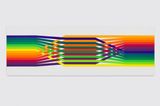
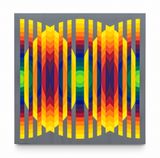
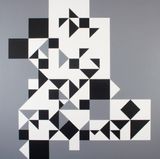
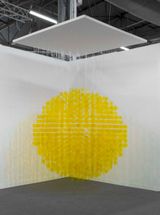
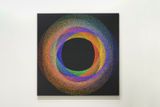
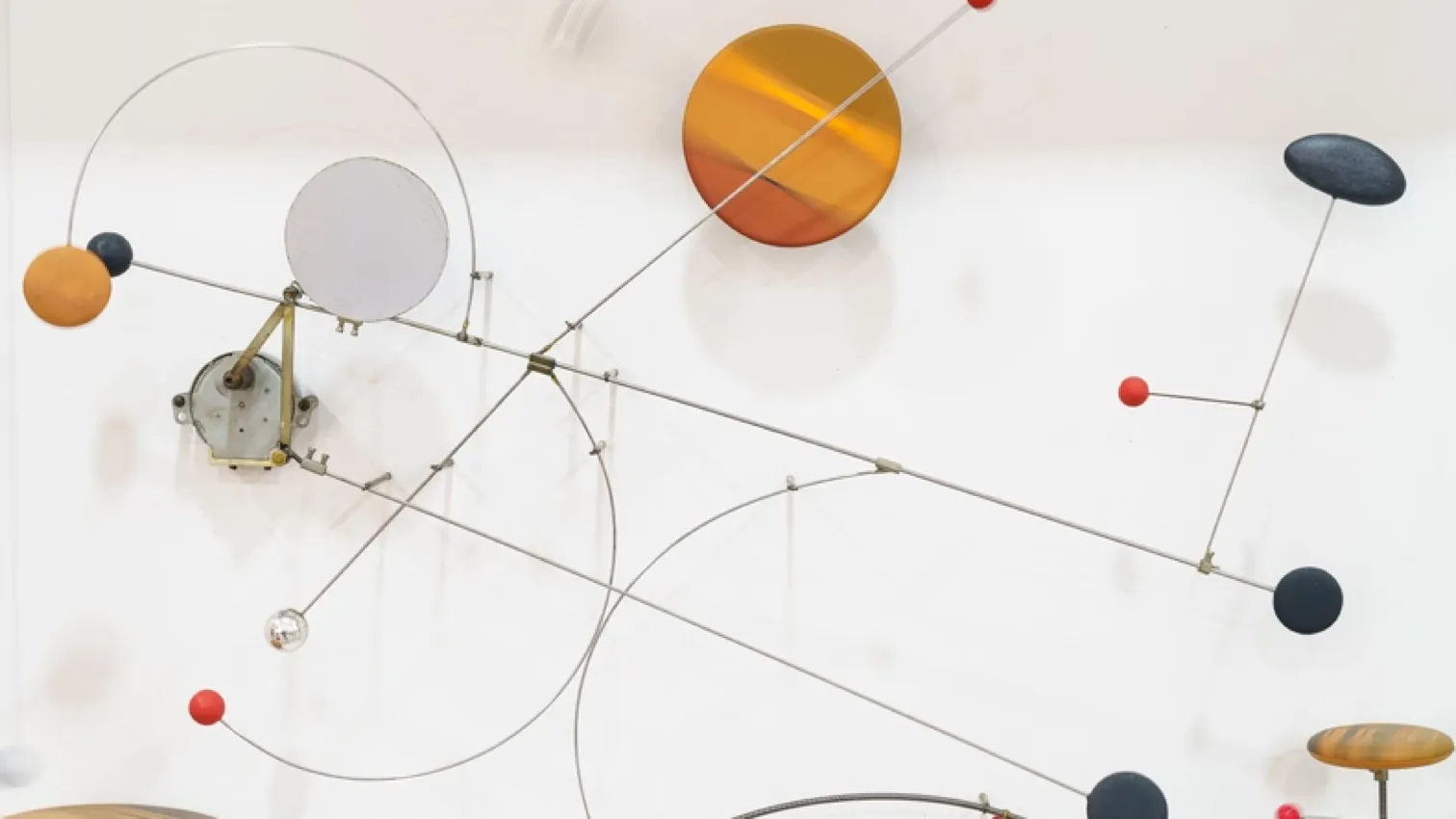
An artist of historical importance and an influential figure in contemporary art, Julio Le Parc's work is presented for the first time in France in such a large exhibition. His socially committed art is an immersive art, in which, through Le Parc's study of light and movement, the visitor is invited to discover new ways of interacting with the world. We discover a practice that rejects psychologism, an art that participates in a social utopia and which, following an industrial model, participates in the constant reconstruction of our environment. Spread over 2,000 square meters, this exhibition at the Palais de Tokyo allows us to apprehend all facets of an oeuvre constituted of paintings, sculptures and monumental installations.
Julio Le Parc (b. 1928, Mendoza, Argentina) lives and works in Paris, France. Le Parc attended the Escuela de Bellas Artes in Buenos Aires in 1943 where he became interested in Arte Concreto-Invencion and the Spaziliasmo movement. In 1958, Le Parc went to Paris on a French government scholarship and settled there working on works of art related to research into three dimensions, movement and light as it pertains to the kinetic arts. Victor Vasarely’s 1958 exhibition in Buenos Aires became an important catalyst for Le Parc’s career, while in Paris Le Parc pursued collaborative work with fellow artist friends of Vasarely and studied the writings of Mondrian, evolving his practice to reflect on the tradition of Constructivism. Le Parc represented Argentina at the 1966 Venice Biennale, he won the Grand International Prize for Painting as an individual artist. Le Parc had begun working on two-dimensional compositions in colour and black and white as early as 1953, while he was still an art teacher in Buenos Aires. From 1960, however, he began to develop a series of distinctive works that made use of ‘skimming’ light: these objects, usually constructed with a lateral source of white light which was reflected and broken up by polished metal surfaces, combined a high degree of intensity with a subtle expression of continuous movement.
Founded in São Paulo in 1989, Galeria Nara Roesler is a leading Brazilian gallery dedicated to showing the work of contemporary Brazilian and international artists. The gallery established another branch in Rio de Janeiro in 2014, followed by its first international outpost in New York City in 2015.

A respected voice in contemporary art discourse.
Focusing on ambitious storytelling and insightful art-world commentary. Ocula Magazine publishes in-depth interviews, critical essays and timely analysis on the artists, exhibitions and ideas driving the global art world.
Learn more about Ocula Magazine
Showcasing the best of the art world.
Ocula partners with galleries from around the world to highlight their artists, artworks and exhibitions. Gallery membership is by application and invitation, with each member vetted by an independent panel.
Learn more about Ocula Membership

Specialises in the sale of major artworks.
Led by a team with deep ties to the world’s leading auction houses, galleries and collectors. Ocula’s advisory team offers bespoke services to high-net-worth clients from around the world who are looking to acquire the best of contemporary and modern art.
Learn more about our team and services