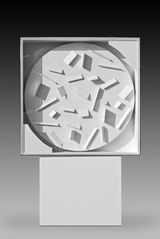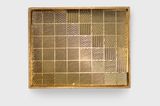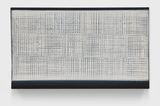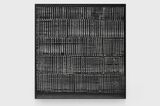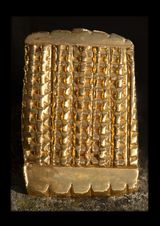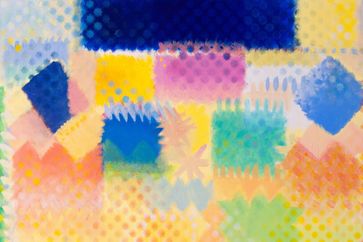
Nara Roesler São Paulo is proud to announce Paragold, a solo exhibition by Heinz Mack (b. 1931, Lollar, Germany) marking the artist’s first solo presentation in Brazil and with the gallery. The exhibition is curated by Matthieu Poirier, and showcases a selection of works, sculptures, paintings, and works on paper, ranging from 1955 to 2020, offering the opportunity to discover the artist’s historical and recent productions. Paragold inaugurates on 2 September, remaining on view through 30 October, 2021, and is accompanied by a critical essay written by Poirier for the occasion.
Throughout his trajectory, Heinz Mack has continuously carved a pioneering artistic production marked by investigations on light, colour, temporality and movement. Mack began his career in the 1950s, famously founding the Group ZERO (1957–1966) alongside Otto Piene in 1957, later also joining forces with Gunther Uecker in 1961, with the aim of creating a space devoid of pre-existing structures—a place of silence—for new possibilities and beginnings to emerge. Mack was also in close contact with artist Yves Klein, with whom he developed a great friendship and collaborated on numerous occasions, and who introduced him to Jean Tinguely, discovering a universe of experimentations that informed his own search for aesthetic purity, striving for an essential, unmediated work.
Mack notably wrote, ‘The goal is to achieve pure, grand, objective clarity, free of romantic, arbitrarily individual expression. In my work I explore and strive for structural phenomena, whose strict logic I interrupt or expand by means of aleatoric interventions, that is, chance events.’
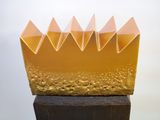
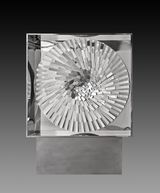
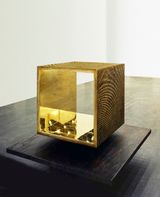
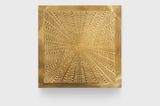
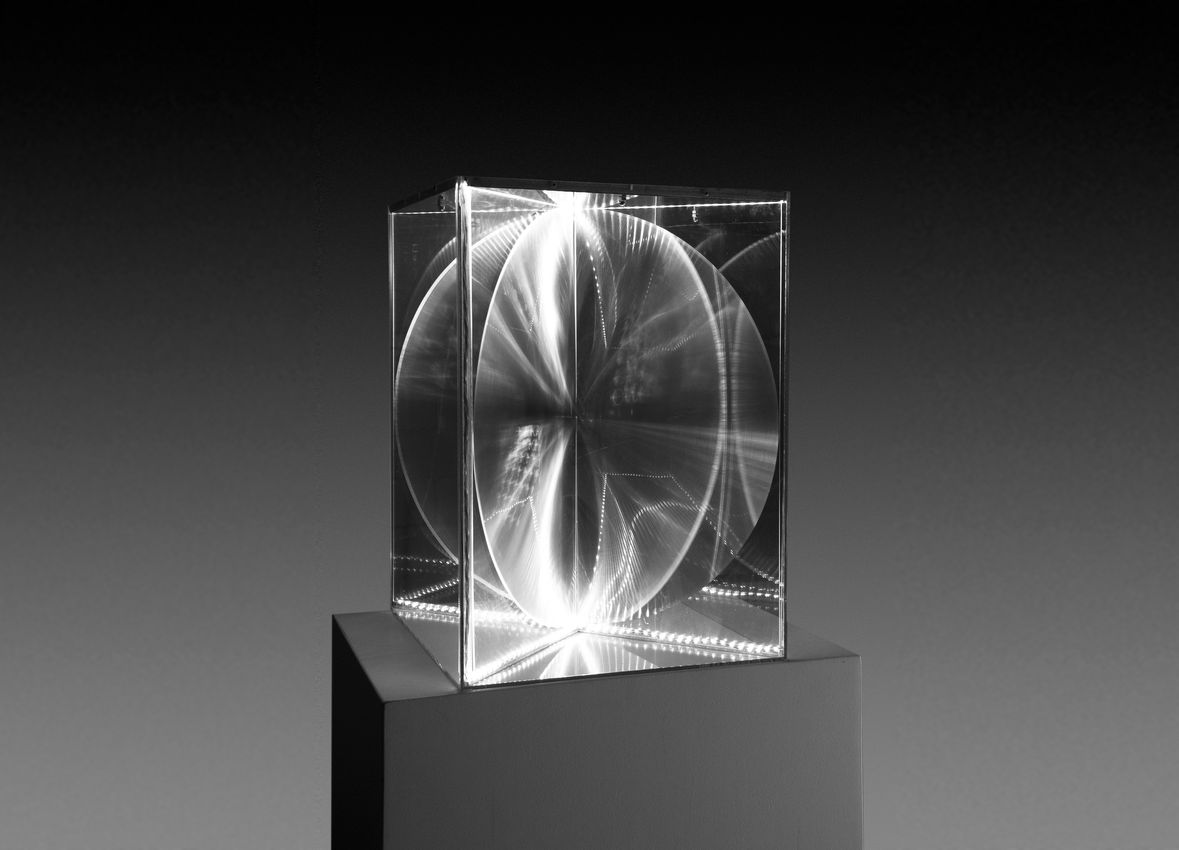
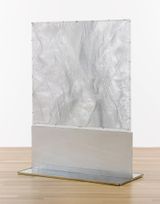
In line with this, Mack’s practice has come to rest on three main pillars—light, movement and colour—, which he has explored through a varied production that ranges from kinetic sculptures, metal or mirror steles, to Land Art, while also including paintings characterised by chromatic modulations. The exhibition proposes a selection of works from different fundamental stages of the artist’s investigations, including his kinetic production with early non-mechanical sculptures made of carved metal that elicit movement through the reflection of natural variations in light, as well as his iconic Rotors, which mechanically engender light refractions that shimmer and transform through almost imperceptible movement, occasionally amplified by built-in artificial light. In addition, the selection presents Mack’s emblematic Steles, or columns, which manipulate light in relation to space, mirroring, altering, and integrating its surroundings into its surfaces, while also offering an overview of the artist’s engagement with painting, which is anchored in the alternation of chromatic modulations, executed as a means of achieving what he defines as colour vibration. The varied and meticulous selection of works presented in Paragold, will enable the audience to delve into a retrospective cutout of Heinz Mack’s oeuvre, with punctuations from specific phases in his career, that illustrate the foundation of his practice.
Ultimately, the exhibition foregrounds the seminal nature of the artist’s long-standing, and groundbreaking practice, through a selection of works that converge on the artist’s guiding interest for the matters of light, movement and colour. The presentation demonstrates how Mack has worked to understand these elements, and subsequently enhance them in relation to each other, in an intransigent pursuit for what he understands as aesthetic clarity.
Throughout his career, Heinz Mack (Lollar, Germany, 1931) has continuously carved a pioneering artistic production marked by investigations on light, temporality and movement, which have taken the form of major installations, as well as sculptures, paintings and works on paper. Mack began his career in the 1950s, famously founding the Group ZERO (1957–1966) alongside Otto Piene in 1957, later also joining forces with Gunther Uecker in 1961, with the aim of creating a space devoid of pre-existing structures for new possibilities and beginnings to emerge. Mack was also in close contact with artist Yves Klein, with whom he developed a great friendship and collaborated on numerous occasions, and who introduced him to Jean Tinguely, discovering a universe of experimentations that informed his own search for aesthetic purity, striving for an essential, unmediated work. Since the beginning of his career, Heinz Mack has continuously participated in major international exhibitions including Documenta II (1959) and Documenta III (1966) in Kassel, later also representing the Federal Republic of Germany at the 35th Venice Biennale (1970). Mack has been also been honoured with major awards, including the Premio Marzotto (1963), the 1st Prix Arts Plastiques at the 4th Paris Biennale (1965) and the Grand Federal Cross of Merit with Star of the Federal Republic of Germany (2011).
Throughout his career, Heinz Mack (Lollar, Germany, 1931) has continuously carved a pioneering artistic production marked by investigations on light, temporality and movement, which have taken the form of major installations, as well as sculptures, paintings and works on paper. Mack began his career in the 1950s, famously founding the Group ZERO (1957–1966) alongside Otto Piene in 1957, later also joining forces with Gunther Uecker in 1961, with the aim of creating a space devoid of pre-existing structures for new possibilities and beginnings to emerge. Mack was also in close contact with artist Yves Klein, with whom he developed a great friendship and collaborated on numerous occasions, and who introduced him to Jean Tinguely, discovering a universe of experimentations that informed his own search for aesthetic purity, striving for an essential, unmediated work. Mack notably wrote, ‘The goal is to achieve pure, grand, objective clarity, free of romantic, arbitrarily individual expression. In my work I explore and strive for structural phenomena, whose strict logic I interrupt or expand by means of aleatoric interventions, that is, chance events.’


Founded in São Paulo in 1989, Galeria Nara Roesler is a leading Brazilian gallery dedicated to showing the work of contemporary Brazilian and international artists. The gallery established another branch in Rio de Janeiro in 2014, followed by its first international outpost in New York City in 2015.
A respected voice in contemporary art discourse.
Focusing on ambitious storytelling and insightful art-world commentary. Ocula Magazine publishes in-depth interviews, critical essays and timely analysis on the artists, exhibitions and ideas driving the global art world.
Learn more about Ocula Magazine
Showcasing the best of the art world.
Ocula partners with galleries from around the world to highlight their artists, artworks and exhibitions. Gallery membership is by application and invitation, with each member vetted by an independent panel.
Learn more about Ocula Membership

Specialises in the sale of major artworks.
Led by a team with deep ties to the world’s leading auction houses, galleries and collectors. Ocula’s advisory team offers bespoke services to high-net-worth clients from around the world who are looking to acquire the best of contemporary and modern art.
Learn more about our team and services