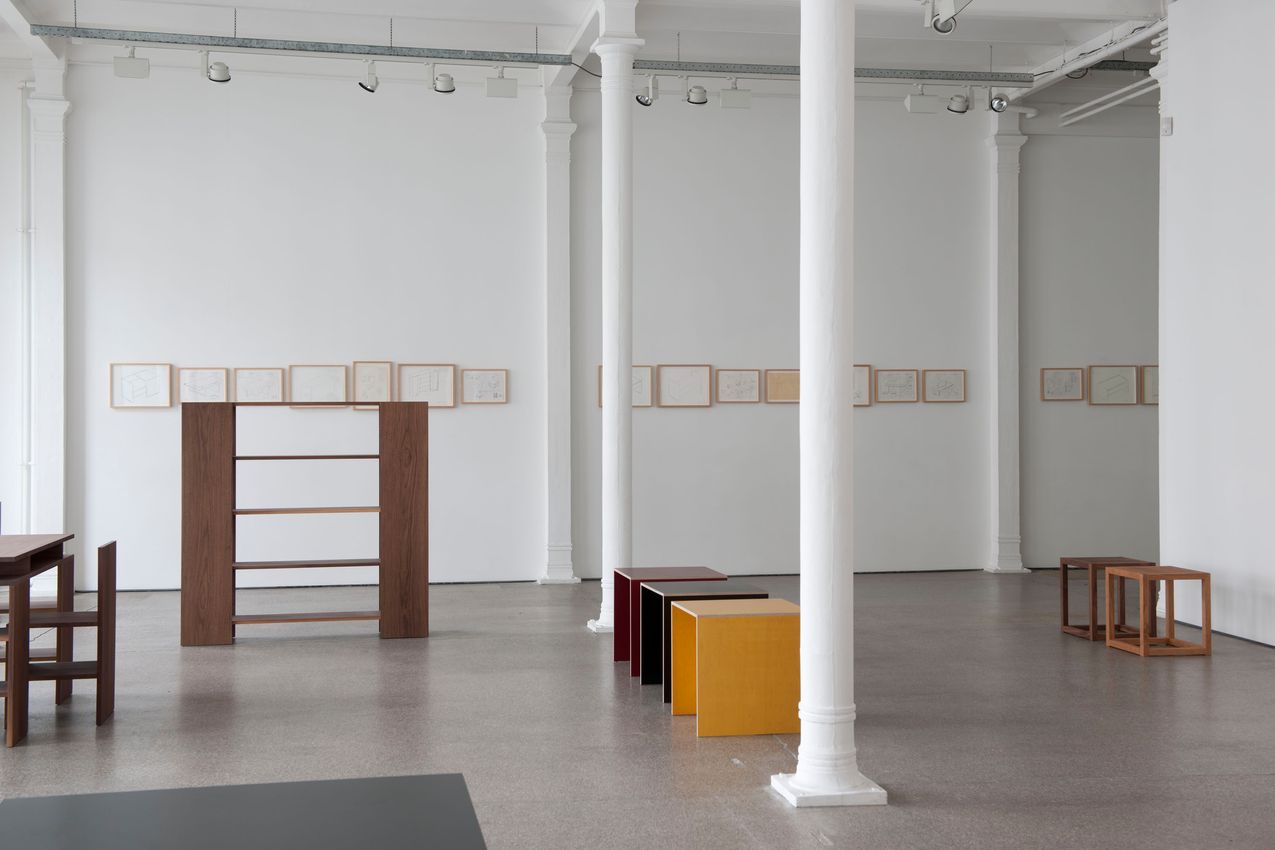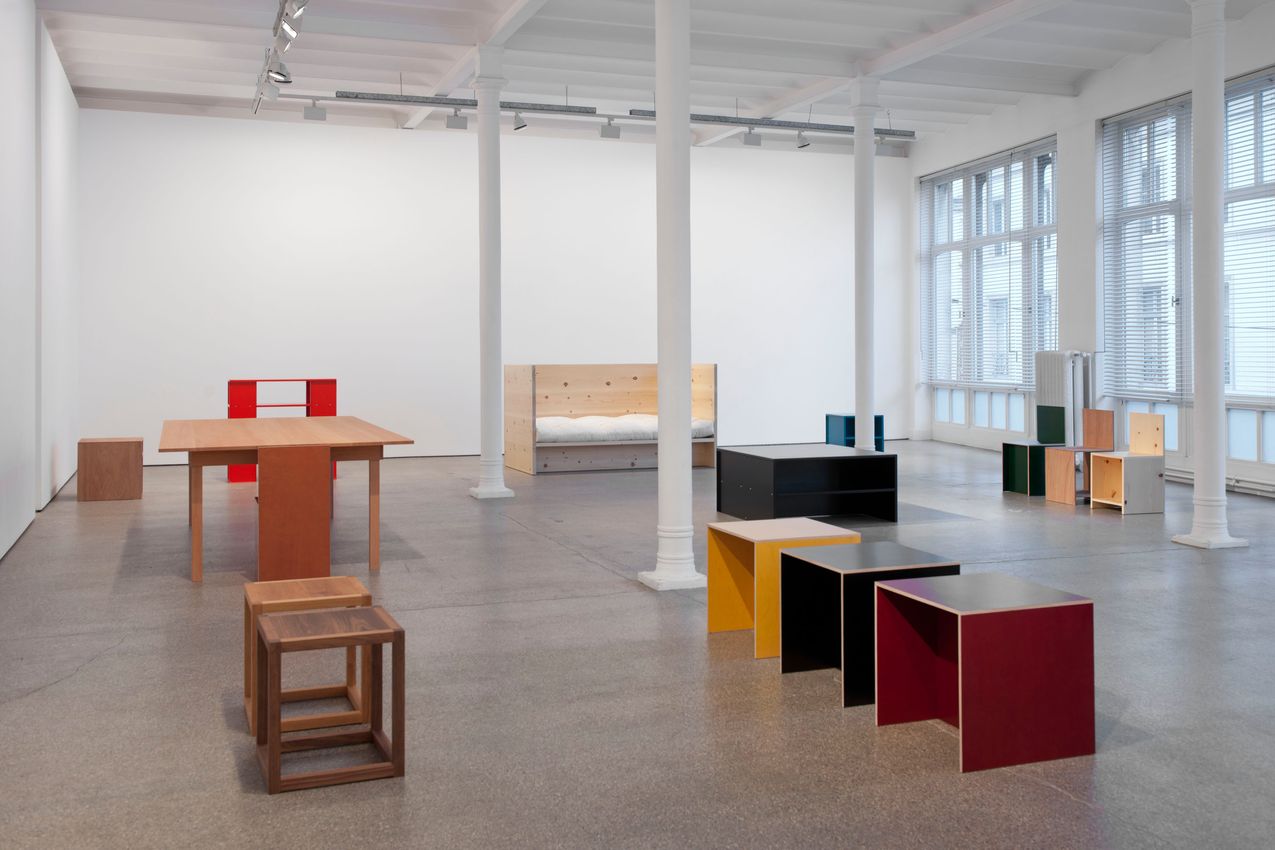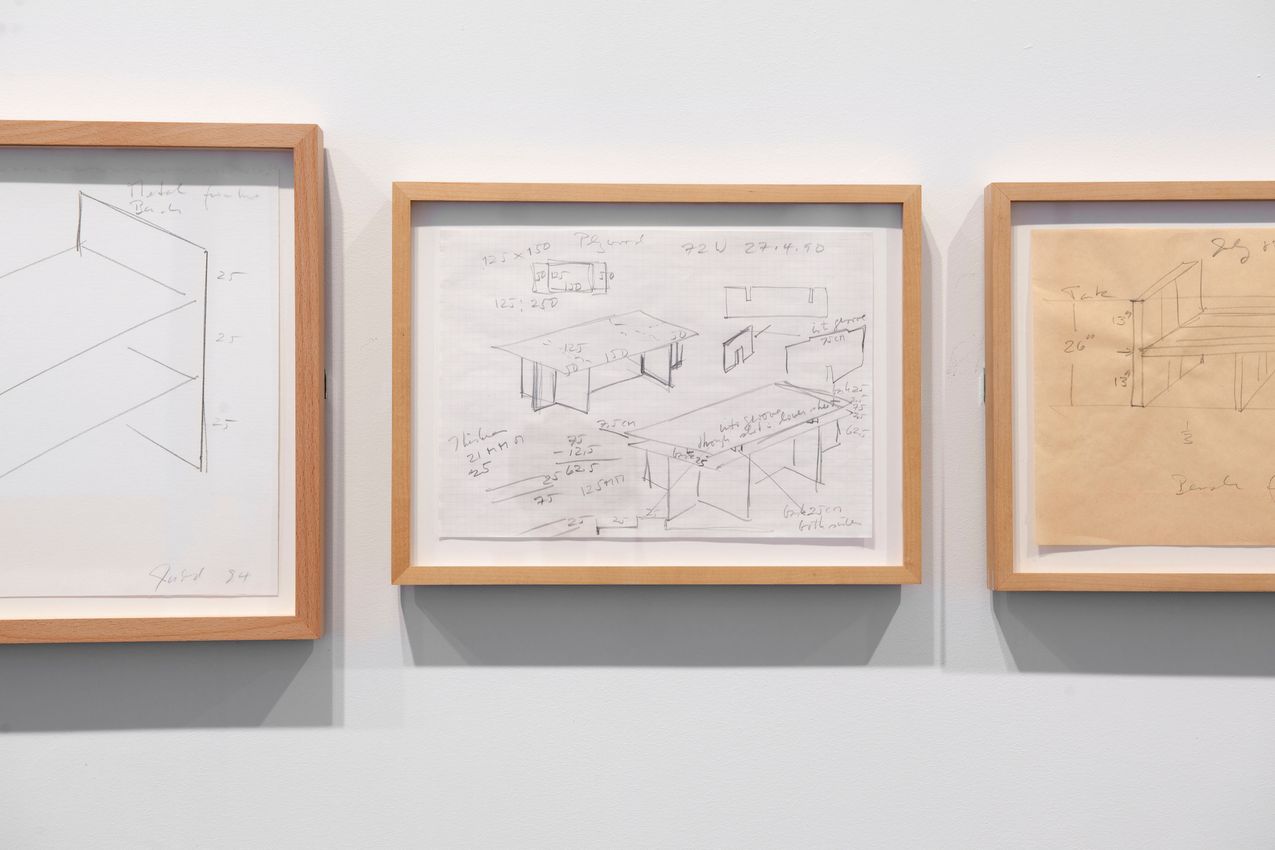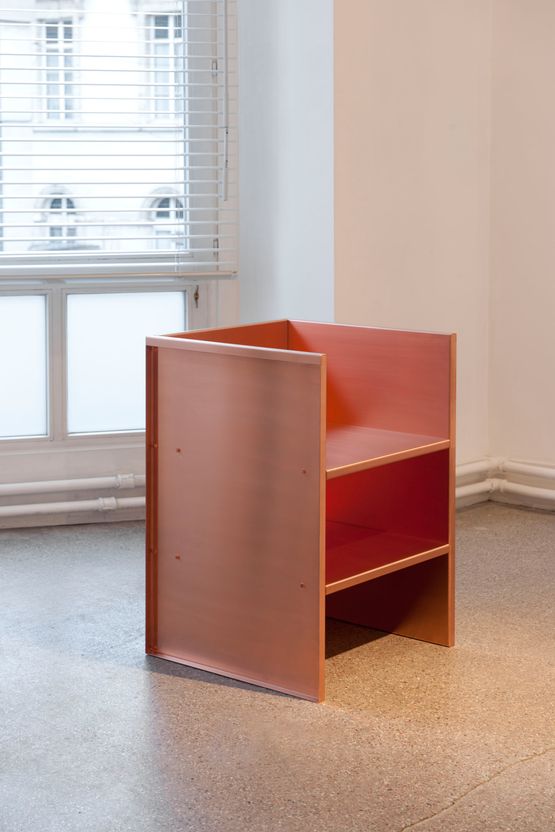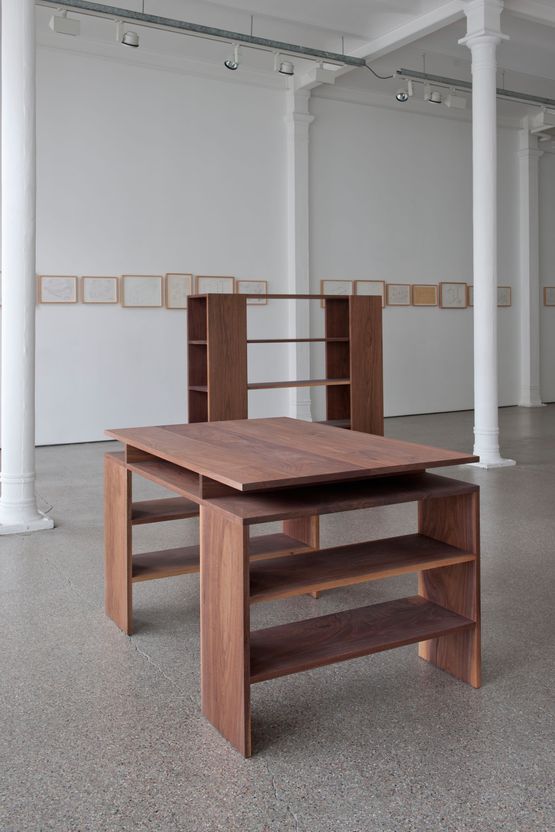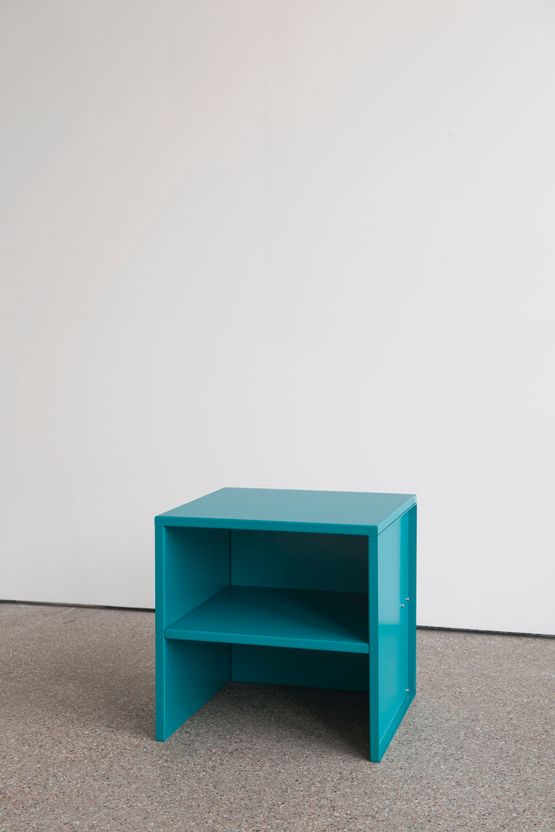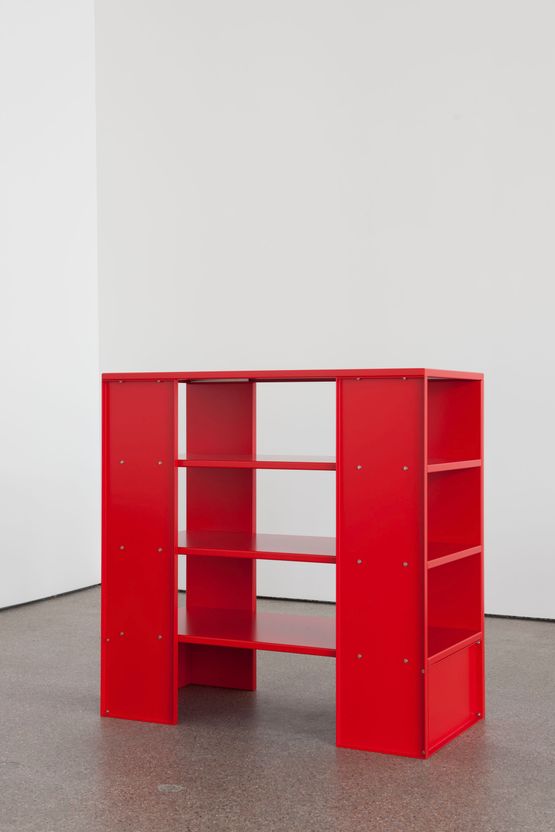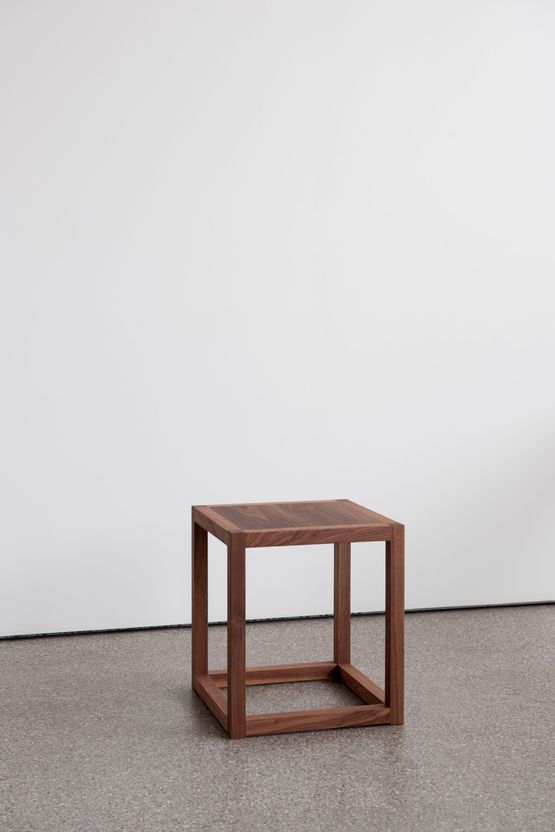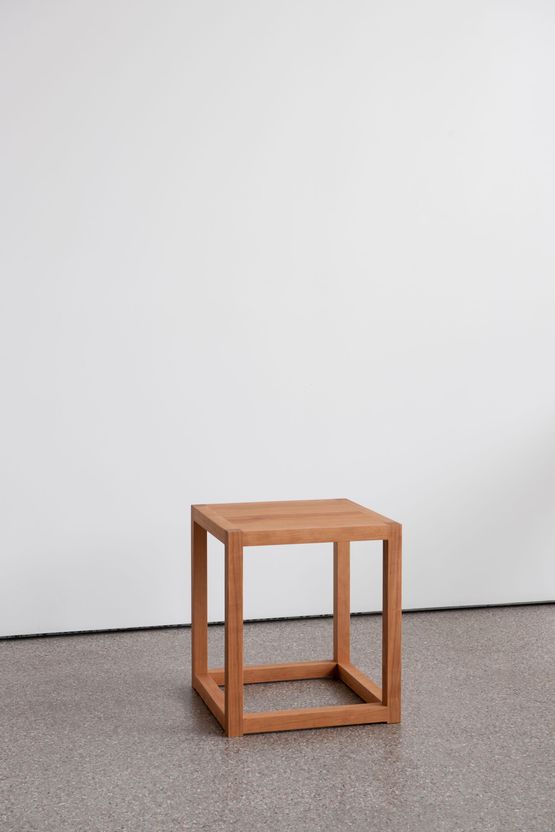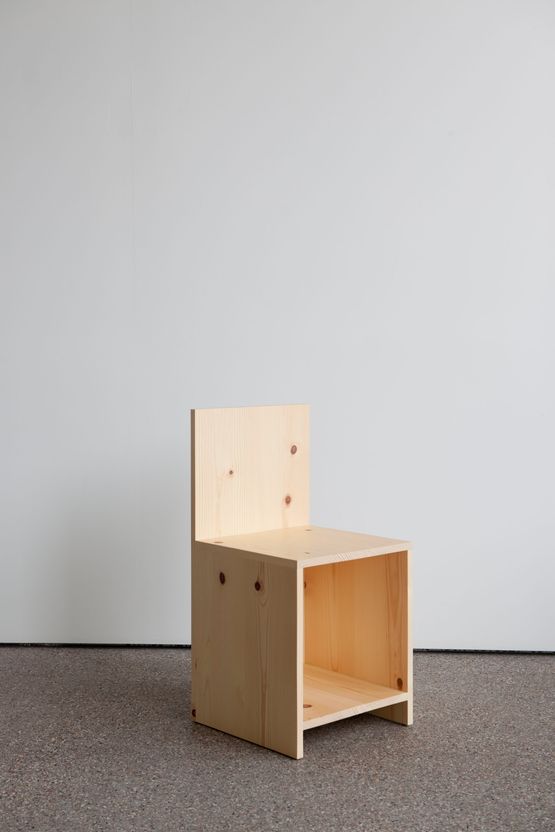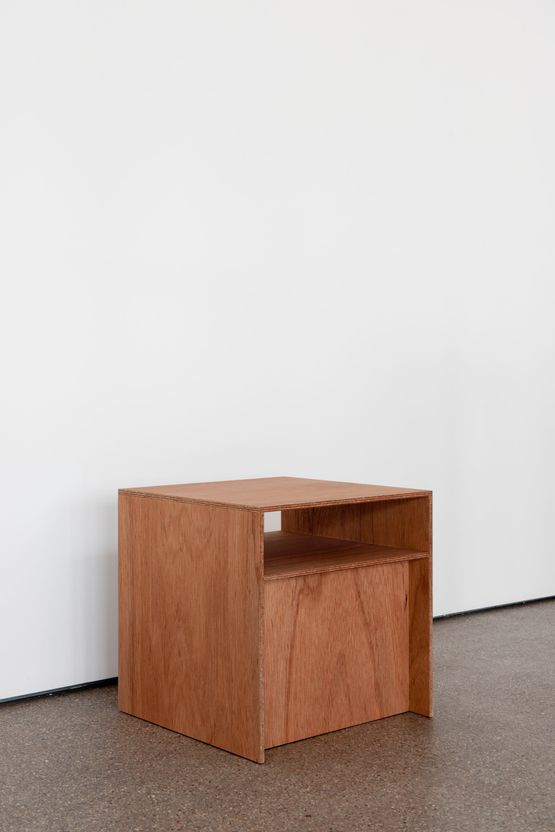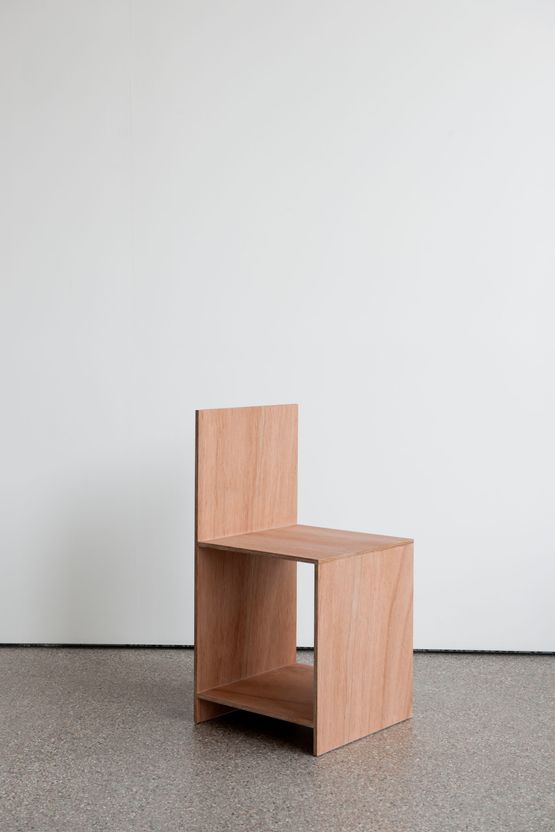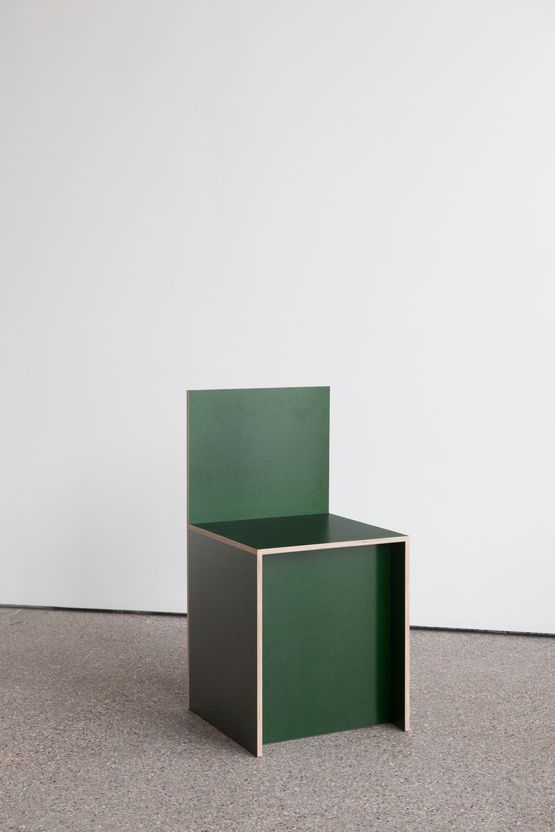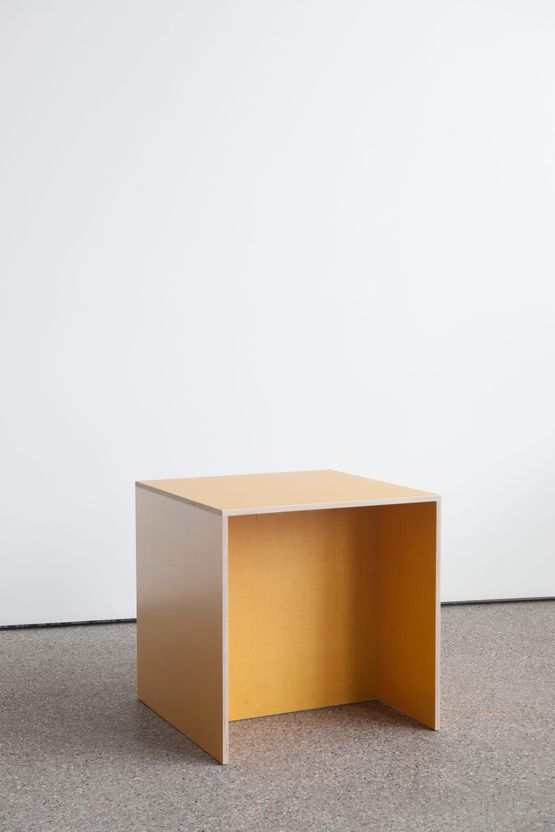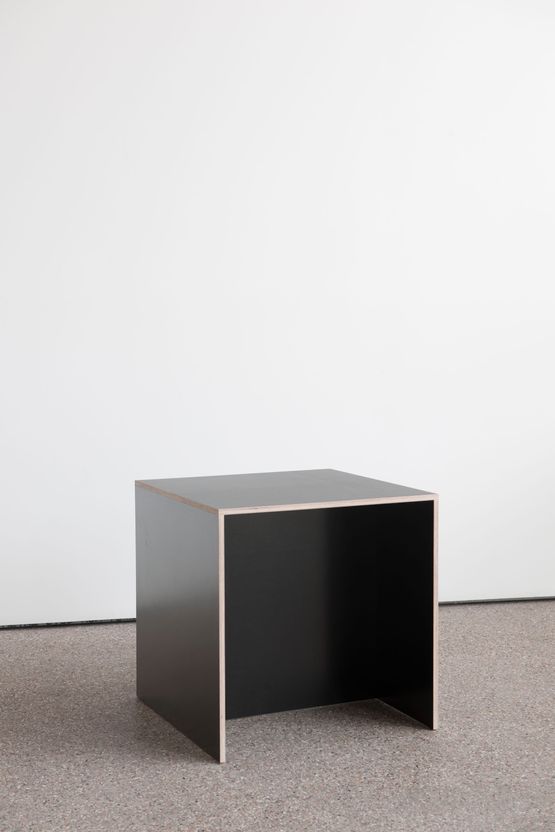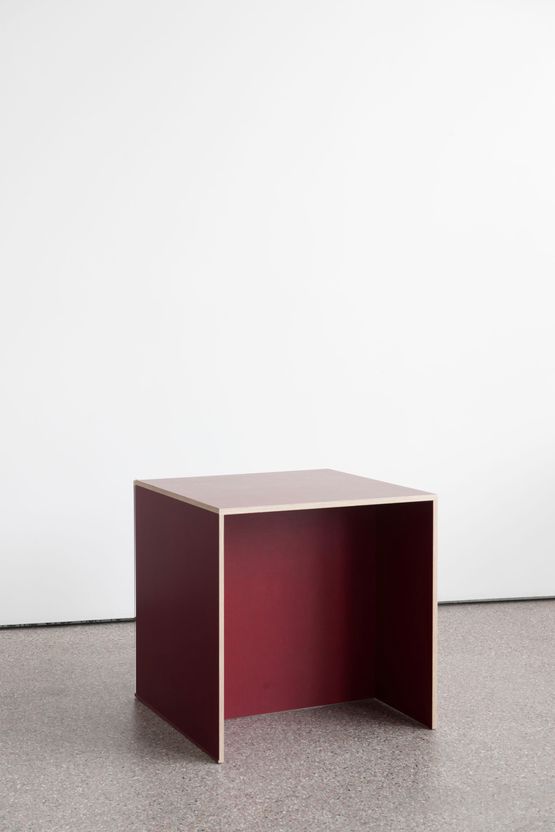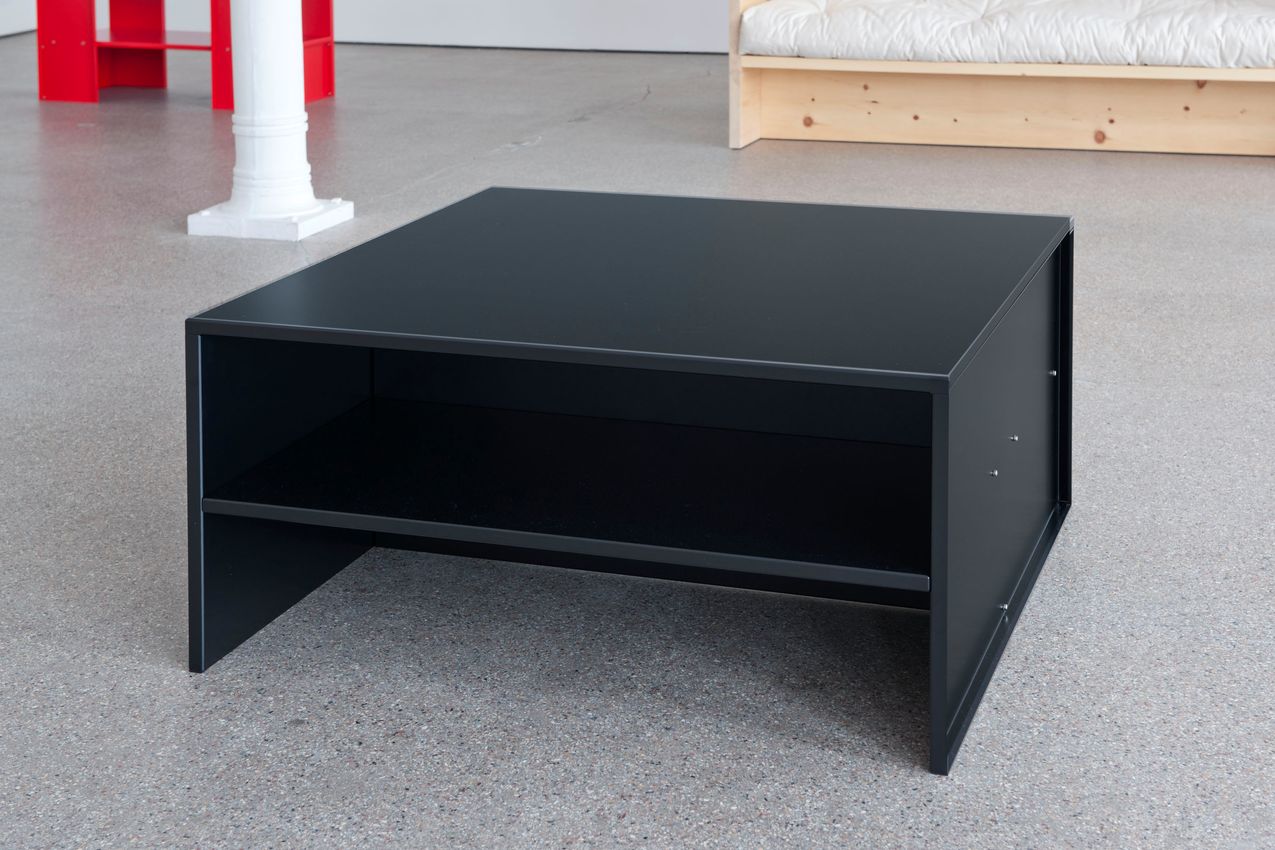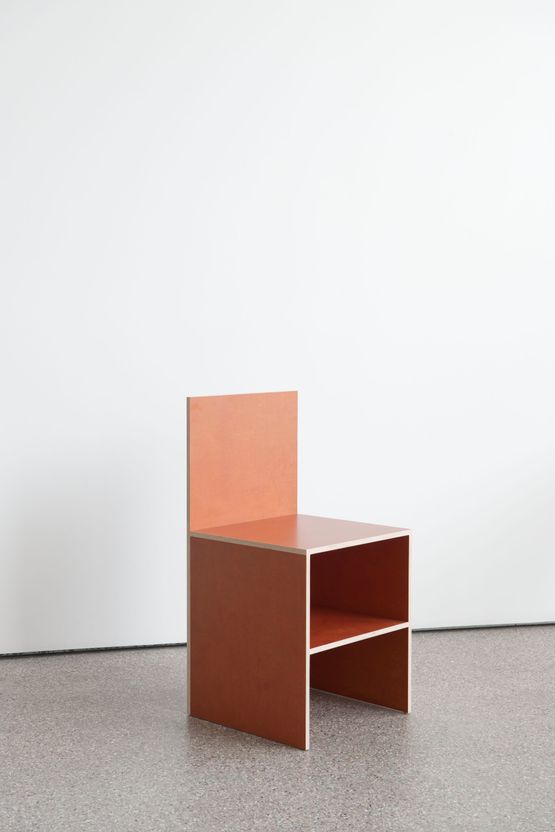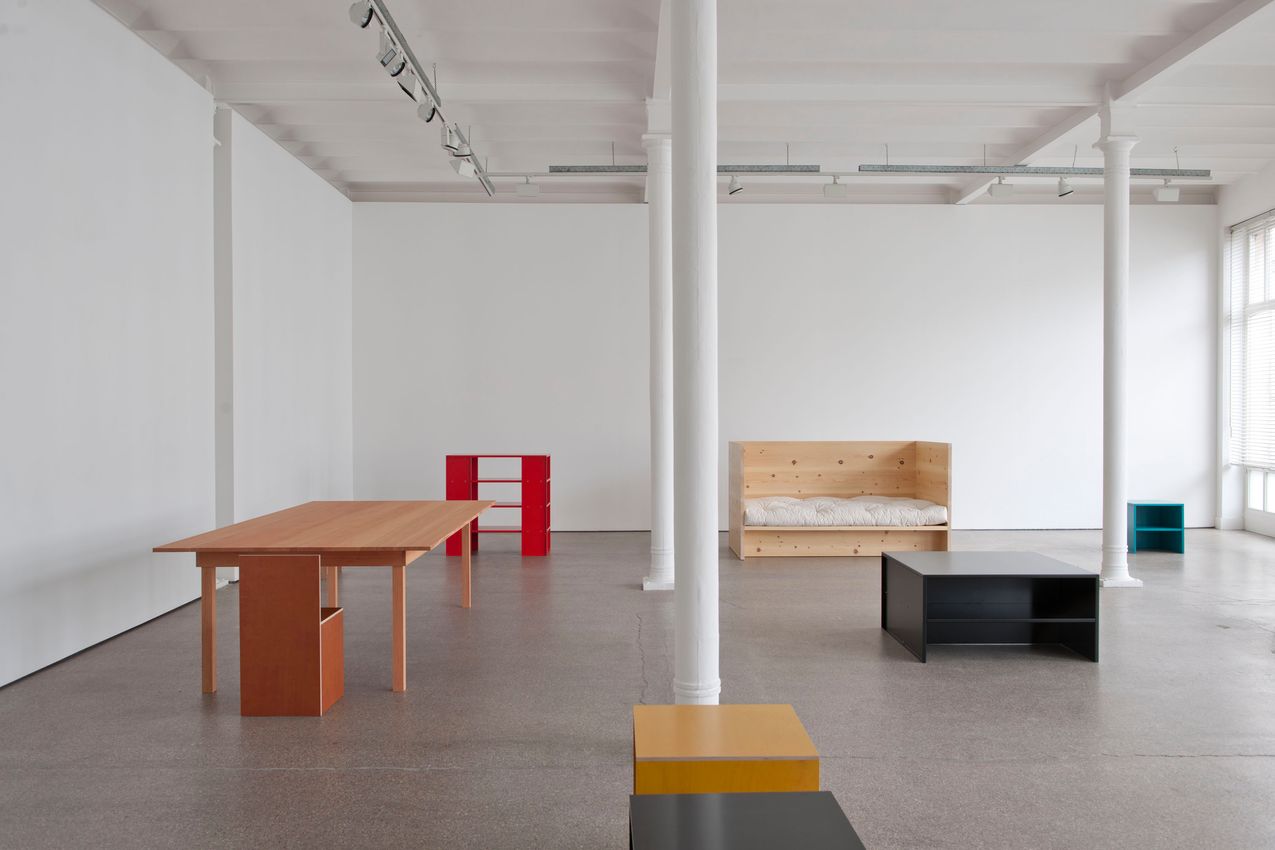
After solo exhibitions in 1991 and 1993, Galerie Greta Meert presents a furniture show by the American artist, critic, architect and designer Donald Judd (Missouri, 1928–New York, 1994), one of the most prominent postwar artists and a pioneer of Minimal Art.
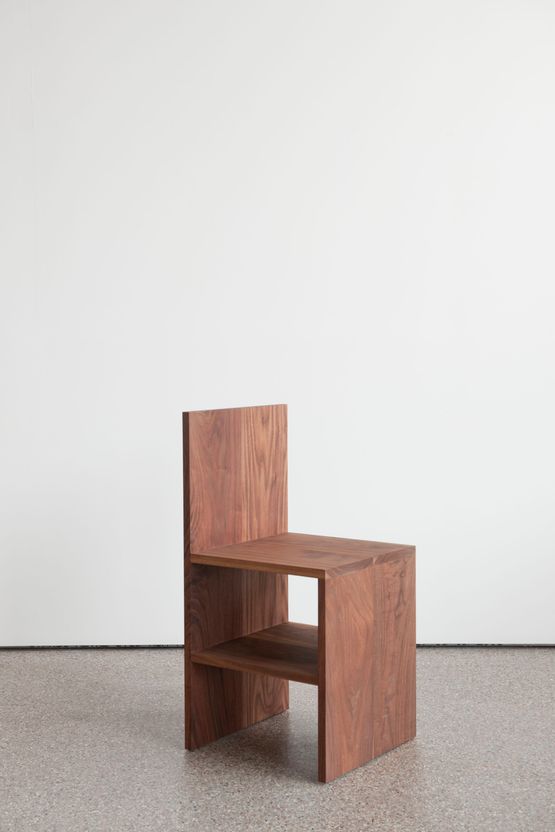
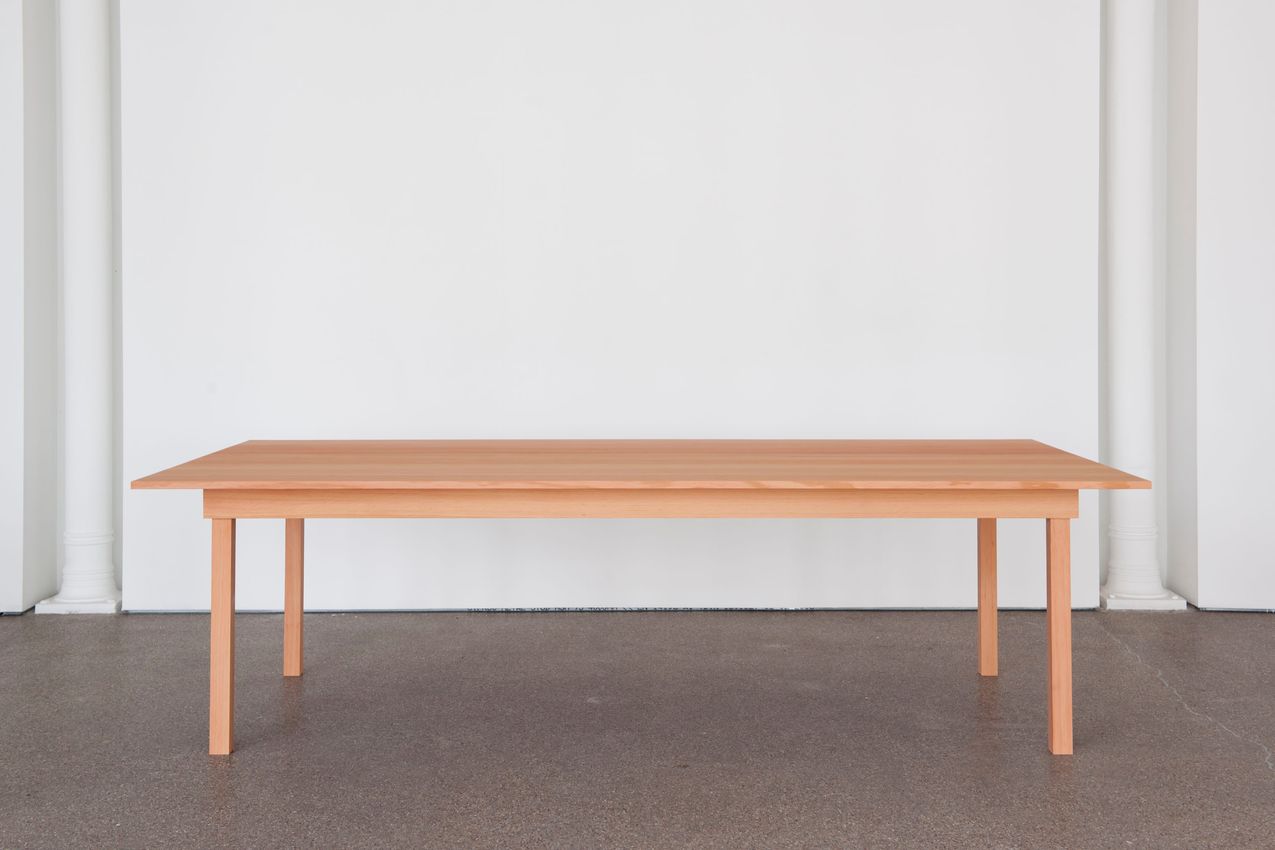
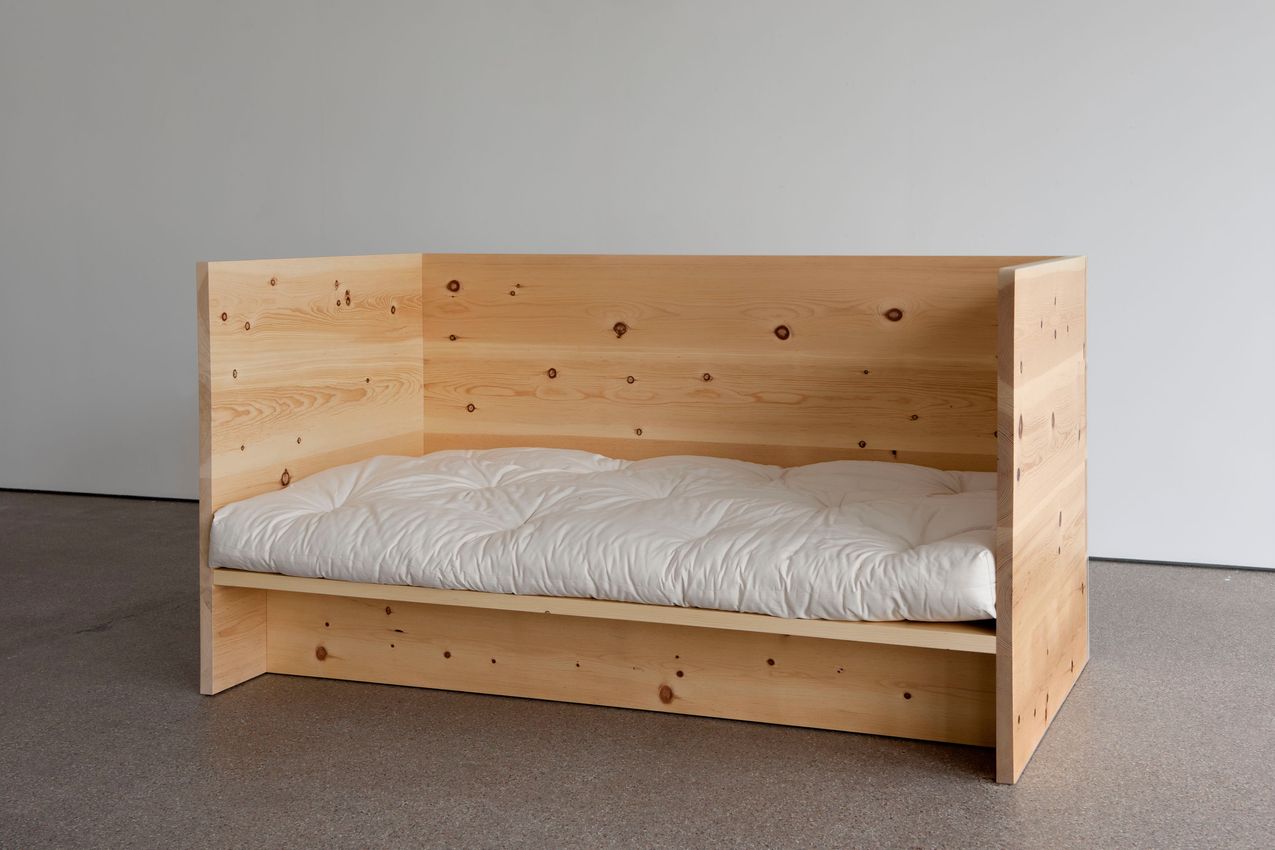
Judd’s first pieces of furniture date from the mid-1970s, shortly after the artist moved from 101 Springstreet, Soho, New York, to Marfa, Texas, where he renovated and reconverted several buildings to a studio, living and exhibition spaces. Suited to the industrial architecture, Judd created his works, for want of local alternatives. Of these, the gallery presents a new edition with the work Children’s desk and chairs (1977) en Bed (1978).
These early works are hardly more than a few rough boards that have been assembled to create a minimal, functional shape. Yet they anticipate the radical and innovative character of Judd’s uncompromising ideas about designing. Over 30 years later his furniture is synonymous with timeless and lasting design.
Judd was interested in a certain ‘quality’, which he found in sober but solid materials and technical precision. Perfection was achieved in the finishing–complex fixations and extremely even surfaces. The production process is legible in an open structure (absence of drawers and doors) which corresponds to Judd’s premisses of visual transparency.
Perfection was achieved in the finishing–complex fixations and extremely even surfaces. The production process is legible in an open structure (absence of drawers and doors) which corresponds to Judd’s premisses of visual transparency.
The initial presence of practical and functional demands also had a significant impact on the development of Judd’s formal purism. An aesthetics that is extremely subtile, as it is not explicitly visual: rigorous geometry, mathematical proportions and highly polished surfaces. The dared simplicity is however of great elegance and clarity.
The pieces of furniture at the exhibition are made in plywood, hardwood (cypress, fir, Douglas fir, cherry, mahogany, walnut) and metal (aluminum, copper) and epitomise Judd’s understanding of shape and texture with regard to the material used. In everything the works reveal a great respect for the natural (and social) surroundings. From the onset, Judd worked with local craftsmen in Marfa, trusting them the execution of his designs. Marfa Voices, the documentary Rainer Judd made in 2010, shows how the presence of her father influenced life in the desolate desert town.
This exhibition was realised in collaboration with the Donald Judd Foundation, which manages the artist’s estate since his death 1994, which is spread over his studio, Springstreet 101, New York, several buildings in Marfa and few ranches in its surroundings. Concerned with the presentation and installation of art, few of these buildings permanently host the works of Donald Judd and others, among which Carl Andre (1935) John Chamberlain (1927), Dan Flavin (1933–1996), etc.
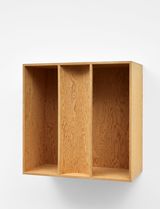
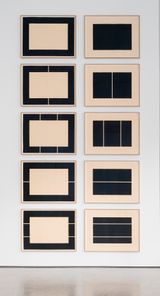
Donald Judd is one of the pioneers of American Minimal Art. With his ‘Specific Objects’ Donald Judd gave shape to the minimalist objective to create autonomous and non-referential works of art. These objects belong to a vast and Original vocabulary of forms, including stacks, blocks and progressions that challenge existing categories such as sculpture and painting.
Over the past 30 years, Galerie Greta Meert established itself as one of Brussels’ leading contemporary art galleries. Founded in 1988 as Galerie Meert Rihoux, it was subsequently renamed after its founding director Greta Meert in 2006. Located in the center of Brussels, the gallery occupies a five-story Art Nouveau building designed by Louis Bral and renovated for the gallery by renowned Belgian architects Hilde Daem and Paul Robbrecht. Since 2012 three floors of the building are dedicated to exhibitions, making it possible to maintain an expanded exhibition schedule.

A respected voice in contemporary art discourse.
Focusing on ambitious storytelling and insightful art-world commentary. Ocula Magazine publishes in-depth interviews, critical essays and timely analysis on the artists, exhibitions and ideas driving the global art world.
Learn more about Ocula Magazine
Showcasing the best of the art world.
Ocula partners with galleries from around the world to highlight their artists, artworks and exhibitions. Gallery membership is by application and invitation, with each member vetted by an independent panel.
Learn more about Ocula Membership

Specialises in the sale of major artworks.
Led by a team with deep ties to the world’s leading auction houses, galleries and collectors. Ocula’s advisory team offers bespoke services to high-net-worth clients from around the world who are looking to acquire the best of contemporary and modern art.
Learn more about our team and services