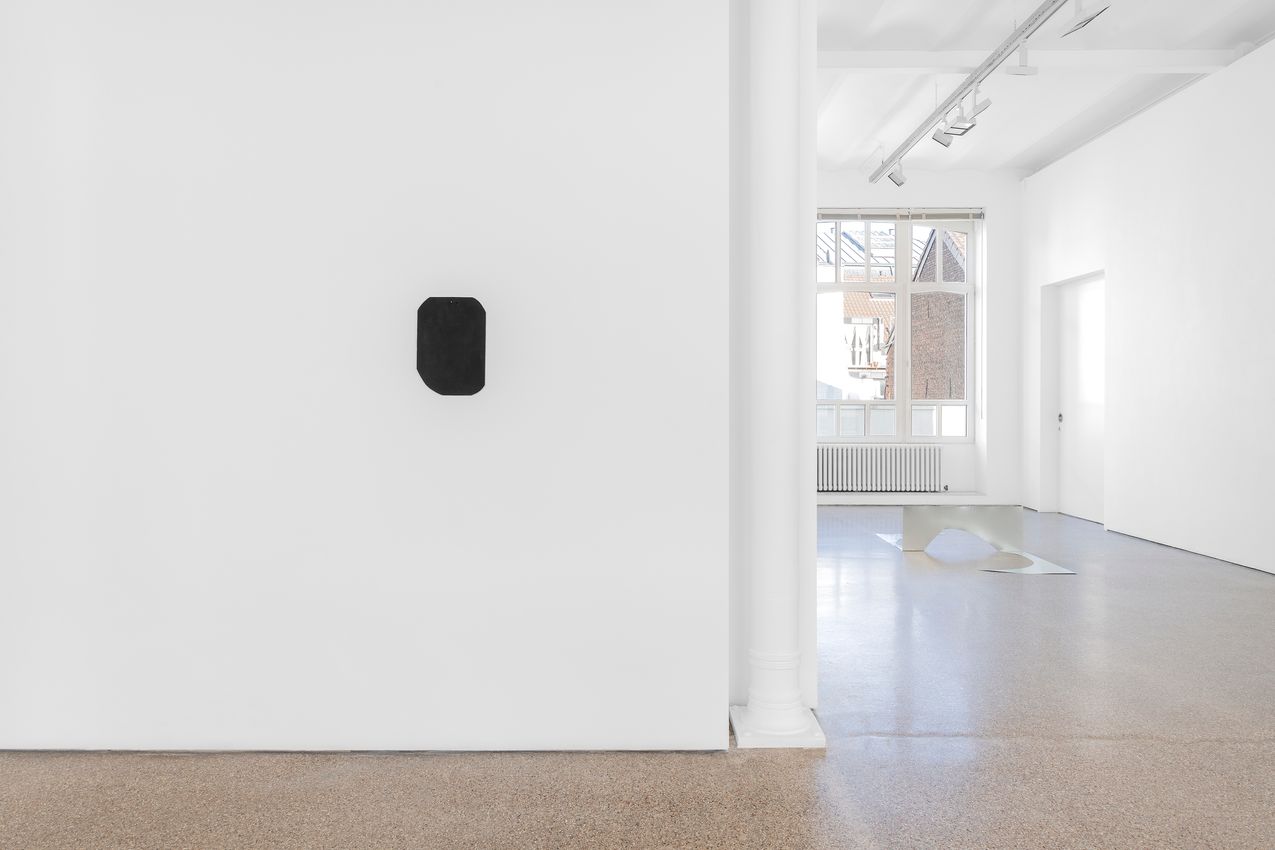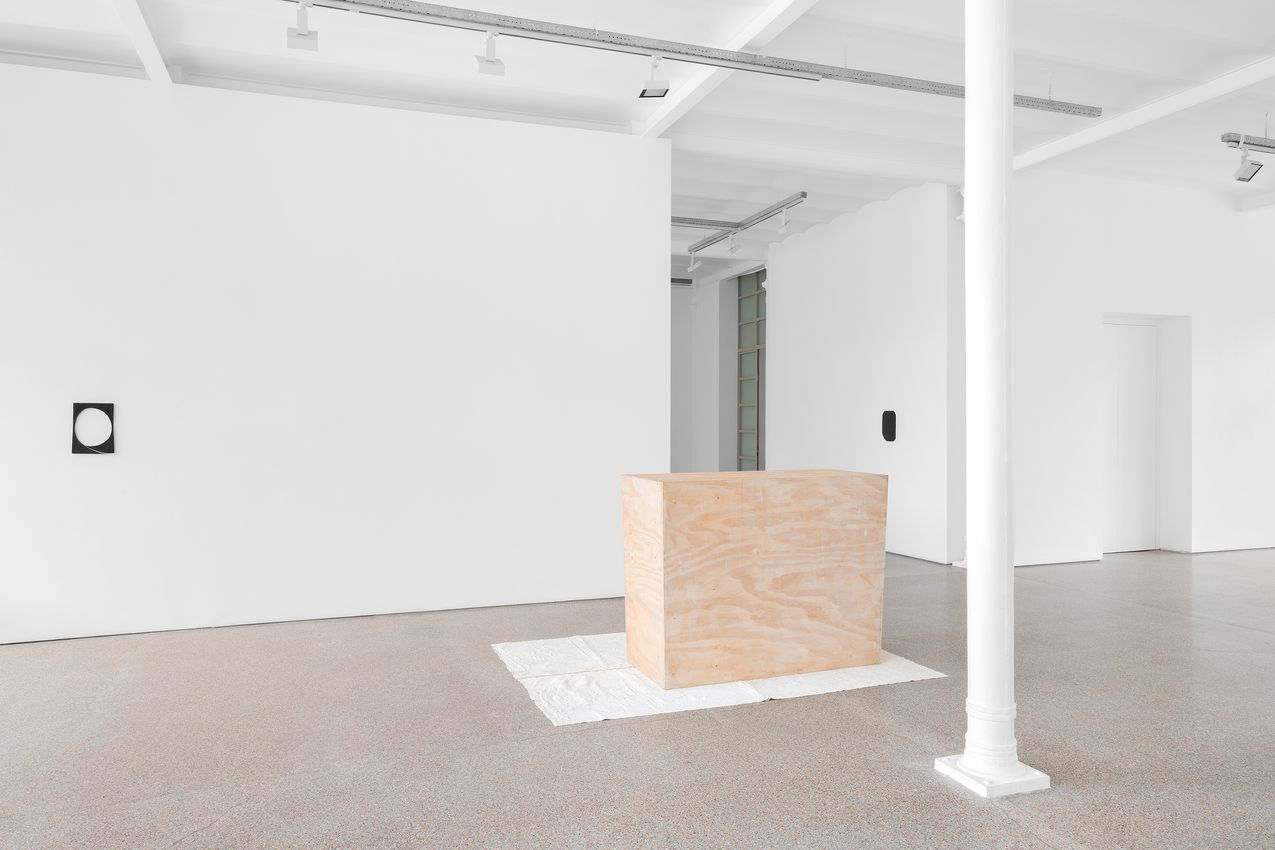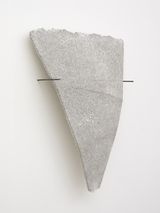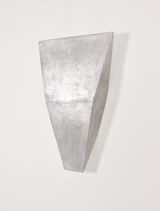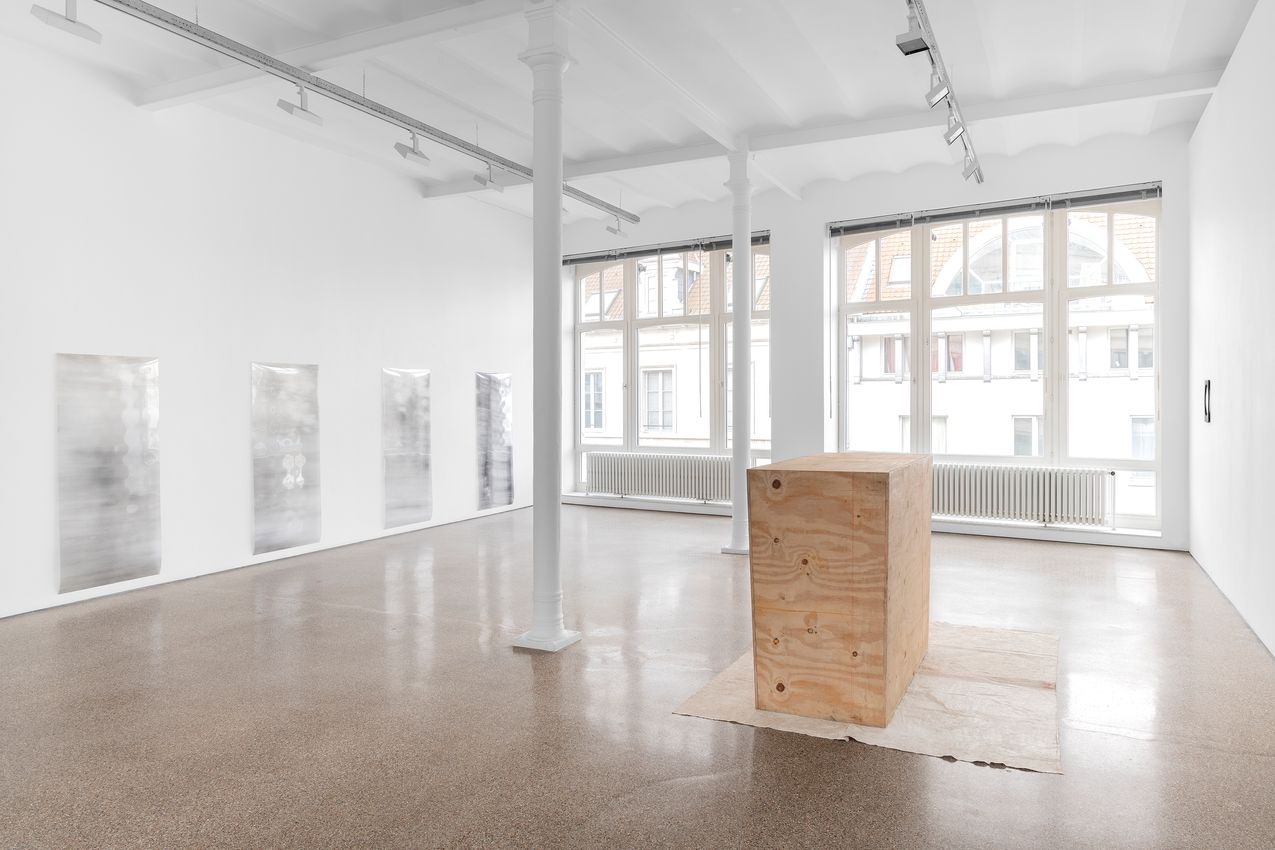
For her third exhibition at Galerie Greta Meert, German artist Valerie Krause devised an ensemble of sculptural and photographic elements occupying the second floor of the gallery. Defined in terms of volumes, areas, and locations these works play out a constant back and fourth between absence and presence. Like the white spot on a map indicating a lack of knowledge, or the bias blind spot in psychology referring to one’s inability to account for their biased judgment, these works are equally defined by the physical space they occupy as by the blank spots and necessary absences of material that are intrinsically part of their condition.
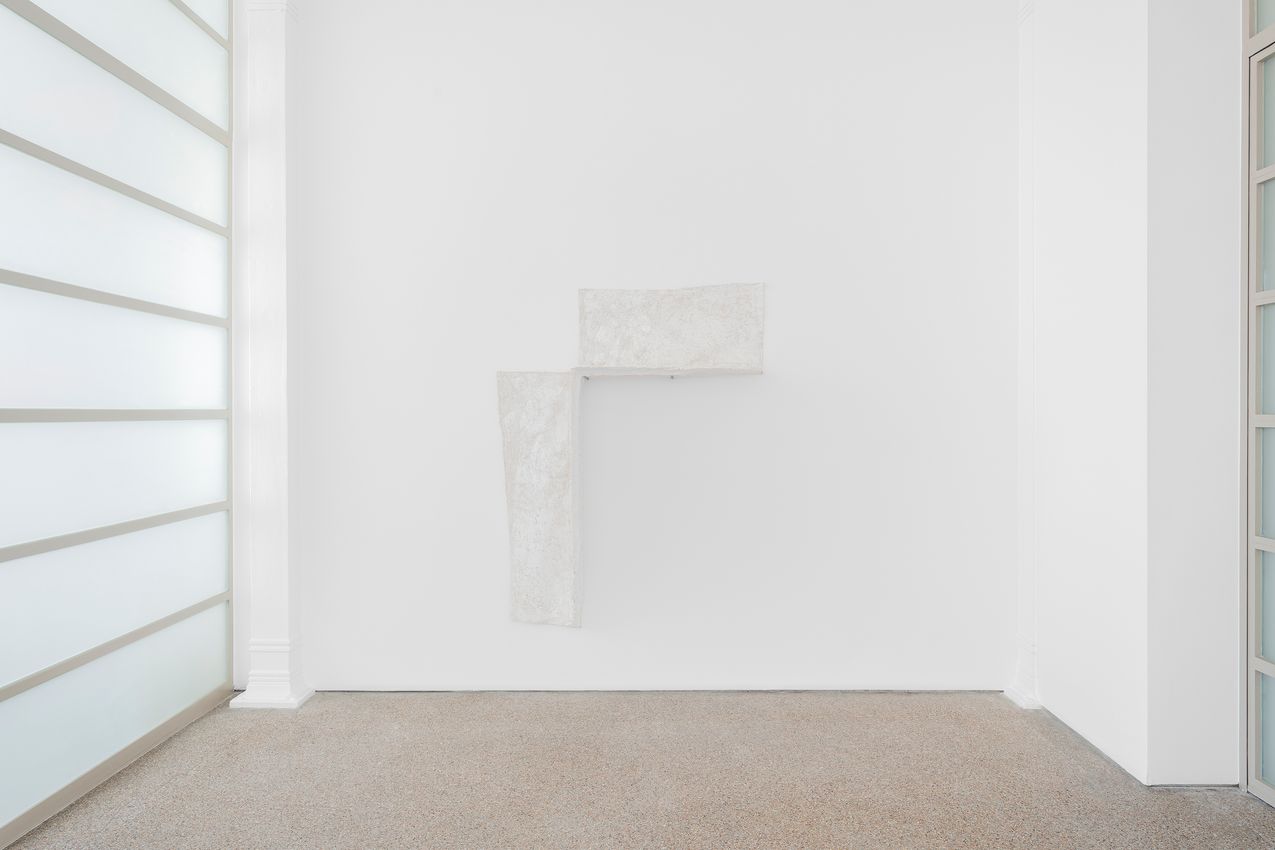
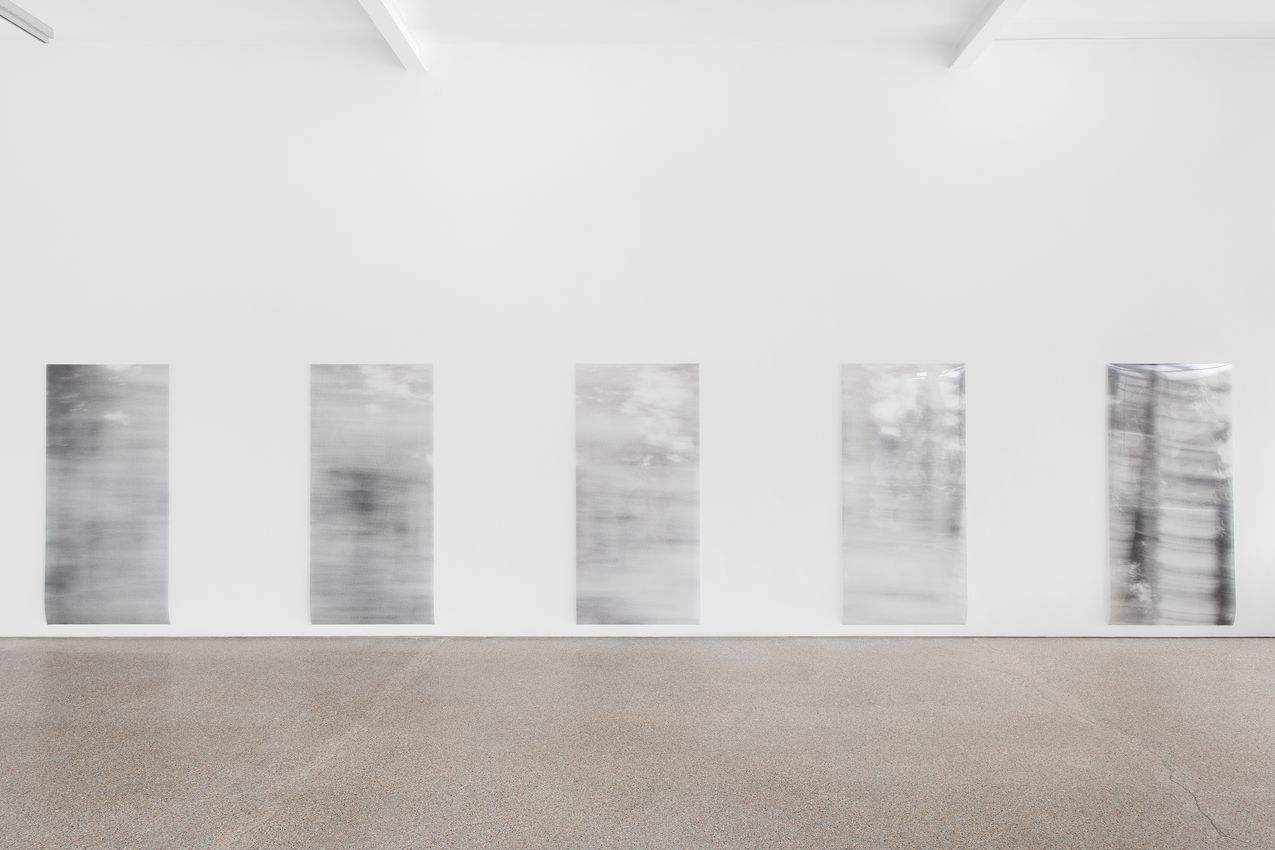
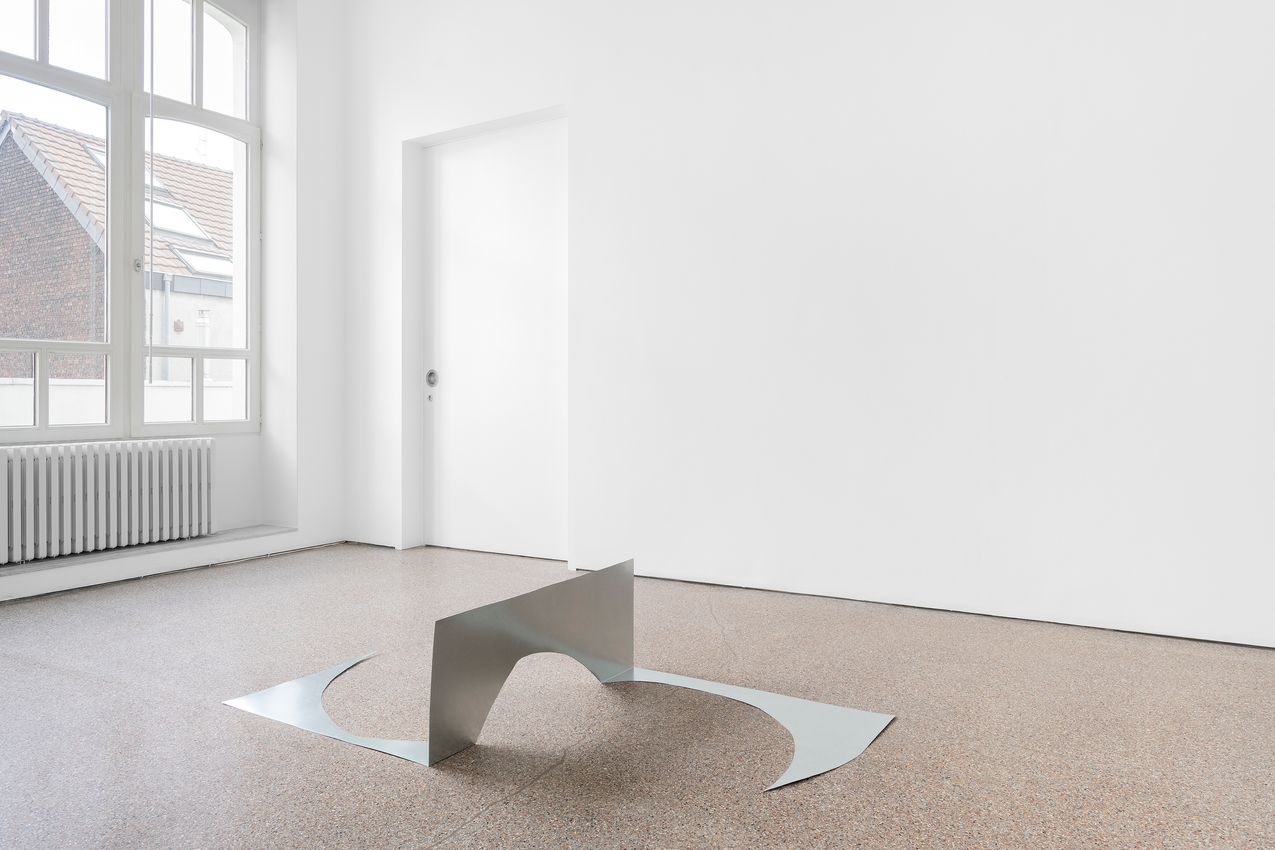
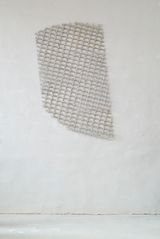
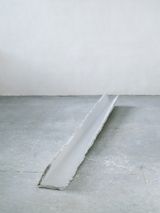
A conical wood plinth is placed on plastered jute with two intersecting red threads that form a vertical axis to the ground where all lines converge towards a point outside the base area. A reversed L-shaped body-sized plaster and jute wall piece forms a shelf-like angle on the wall between surface and space. The two works further amplify the idea of unseen sculptural segments that lie beyond the tangible space they inhabit. A series of narrow cropped photographs taken from the window of a moving train going through the Polish landscape and printed on transparent foil are placed at regular intervals, seemingly mimicking the pace of a train and the transparency of a windowpane. Converted to halftone screen, their tenuous presence occurs through the repetition of black dots and transparent space only. A galvanised steel sheet directly arranged on the floor with a circular cutout unfolding in opposite directions defines a flat area while creating a three dimensional shape.
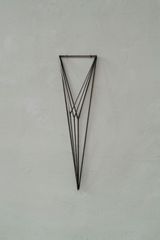
Although this principle of positive/negative, which is so familiar to both sculpture and photography could seem like a guiding principle, Valerie Kraus’s works also tend to develop out of one another in an organic manner. Throughout the exhibition, this casual link is at once made obvious and complex, as is the case with the two small-scale ceramic works hanging on the wall. Their kinship is impossible to ignore yet there remains a refined sense of uncertainty.


Valerie Krause’s (b. 1976, Herdeke, Germany) work is concerned with movement, posture and gesture. She uses everyday materials, which she transforms to a point of transition to explore a sculptural space between solid and fluid, between balance and gravitation. She lives and works in Düsseldorf, Germany.
Over the past 30 years, Galerie Greta Meert established itself as one of Brussels’ leading contemporary art galleries. Founded in 1988 as Galerie Meert Rihoux, it was subsequently renamed after its founding director Greta Meert in 2006. Located in the center of Brussels, the gallery occupies a five-story Art Nouveau building designed by Louis Bral and renovated for the gallery by renowned Belgian architects Hilde Daem and Paul Robbrecht. Since 2012 three floors of the building are dedicated to exhibitions, making it possible to maintain an expanded exhibition schedule.

A respected voice in contemporary art discourse.
Focusing on ambitious storytelling and insightful art-world commentary. Ocula Magazine publishes in-depth interviews, critical essays and timely analysis on the artists, exhibitions and ideas driving the global art world.
Learn more about Ocula Magazine
Showcasing the best of the art world.
Ocula partners with galleries from around the world to highlight their artists, artworks and exhibitions. Gallery membership is by application and invitation, with each member vetted by an independent panel.
Learn more about Ocula Membership

Specialises in the sale of major artworks.
Led by a team with deep ties to the world’s leading auction houses, galleries and collectors. Ocula’s advisory team offers bespoke services to high-net-worth clients from around the world who are looking to acquire the best of contemporary and modern art.
Learn more about our team and services