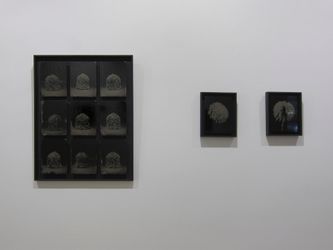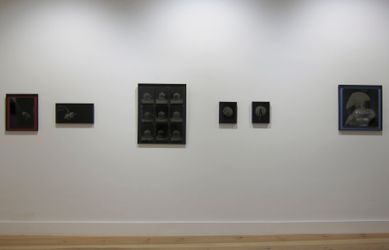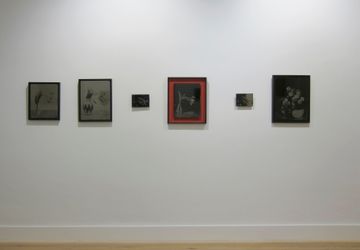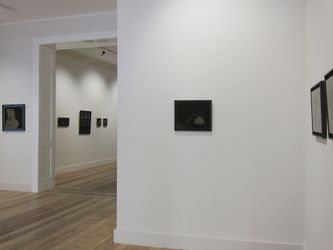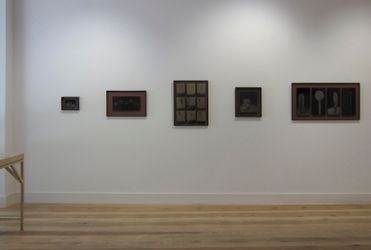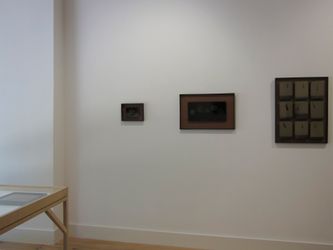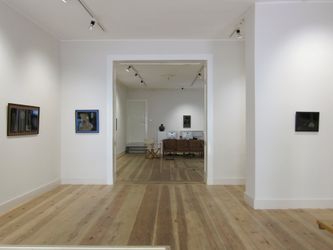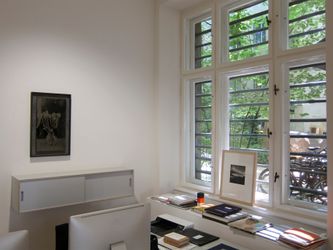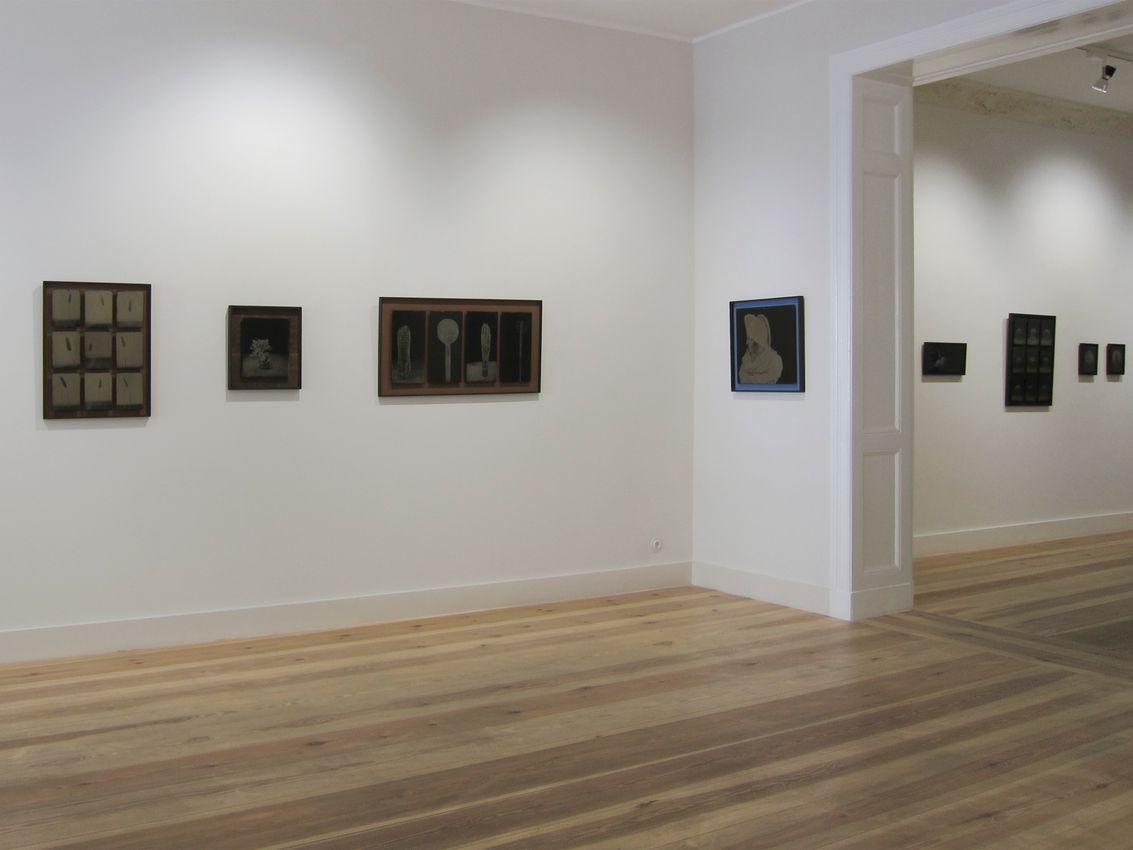
As a photographer, Steffen Diemer is an autodidact. There was nobody in the family that would have inspired the boy for the medium at that time. What Diemer remembers is the gardening shop of his uncle. That is where his mother worked. She rogued, which means she transferred seedlings. Steffen Diemer also put his hands into the soil, took a finger bath in turf, smelled the humus. He still smells it today, which might explain his affinity for nature, his love for the plants. Certainly, it is not only plants, fruits, and plant components that attract his attention. In principle, everything, almost everything, is worthy of presentation for him, as long as it fits into his little world narrative. Diemer’s photography is not great theatre, but chamber plays in black and white. For him, the event lies in the uneventfulness, the sensation in the emphasised simplicity of the representation as well as of the represented person. Diemer’s imagery is a counterpart to the excitement of the digital age, a visual antithesis to a colourfully glimmering iconography, that is almost impossible to escape from.
Long times, the famous fashion photographer Paolo Roversi once said, ‘give the soul a chance to settle in’. Steffen Diemer needs an average of one and a half minutes to give his images something like a soul. That sounds like metaphysics. But Diemer’s recourse to a historical process is not a muscle play of craftsmanship, but rather a medium of generating pictures of a different kind: ‘Large silent images’ to quote a term by the media scientist Nobert Bolz. Diemer’s creations are like a glimpse through the keyhole into another world, a world that rests within itself in an astounding manner. If you ask him about influences, he names the Czech Josef Sudek. If you drill deeper, he mentions Japan, where Diemer lived and worked for several years. The experience that he gained there has undoubtedly left its marks. Especially the acquaintance with the ink painting of Hasegawa Tōhaku did not remain without impact. Reduction, plainness, the search for the essential are precepts that Steffen Diemer also submits in his work. What Steffen Diemer delivers is not excessive prose, but poetry brought to the point, in their simplicity they are haiku with artistic means. Formally, he relies on partial focus, tests extreme vertical and horizontal formats, plays with contrasts, deliberately arranges his objects in space. He also repeatedly adds picture sequences to form almost cinematic tableaus. ‘Photographs have always had a specific weight’, says Günter Karl Bose. At least in the analogue age, the print still possessed a grammage, a haptic, a surface, an edge: The last one, in the case of Diemer, is of a special impression due to the process. In the digital age, the picture mutates to a dematerialised data set. In contrast, the object-like creations of Steffen Diemer weigh heavily. In the double sense. Carefully framed and occasionally assembled in front of selected textiles, they have weight. And they have depth, surprise in their historical otherness, they make us think by consistently touching on fundamental questions of our existence. Doesn’t the tulip represent blossoming and fading? Doesn’t the egg represent a formed ideal? And the profane chocolate marshmallows? Are they not happiness—a small piece of happiness for little money?
Hans-Michael Koetzle: One could possibly speak of an aura (excerpt). From: Steffen Diemer: haruka ushiro – far beyond. Exhibition catalogue Galerie Albrecht, Berlin 2021.
Funded by Stiftung Kunstfonds and NEUSTART KULTUR-Program.


Steffen Diemer (b.1966) worked for the magazine Der Spiegel, for the FAZ or The Guardian as a foreign reporter. Through his work he lived for a long time in South Africa, Japan and India, Iraq and Afghanistan, where he works as photo journalist in war and crisis areas.

Established by Susanne Albrecht in 1986 off the heels of her studies in philosophy, art history, and Italian philology at Freie Universität Berlin and Ludwig-Maximilians-Universität München, Galerie Albrecht represents young European and Asian artists as well as influential established European and American post-War and contemporary artists.
Galerie Albrecht
Bleibtreustr. 48
Berlin, 10623
Germany
galeriesusannealbrecht.de
+49 302 060 5442
Tues - Sat, 11am - 6pm

A respected voice in contemporary art discourse.
Focusing on ambitious storytelling and insightful art-world commentary. Ocula Magazine publishes in-depth interviews, critical essays and timely analysis on the artists, exhibitions and ideas driving the global art world.
Learn more about Ocula Magazine
Showcasing the best of the art world.
Ocula partners with galleries from around the world to highlight their artists, artworks and exhibitions. Gallery membership is by application and invitation, with each member vetted by an independent panel.
Learn more about Ocula Membership

Specialises in the sale of major artworks.
Led by a team with deep ties to the world’s leading auction houses, galleries and collectors. Ocula’s advisory team offers bespoke services to high-net-worth clients from around the world who are looking to acquire the best of contemporary and modern art.
Learn more about our team and services