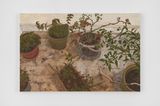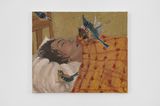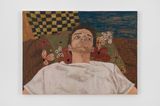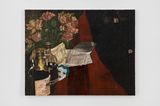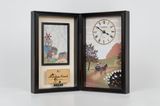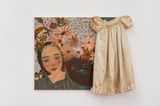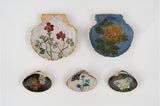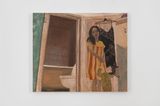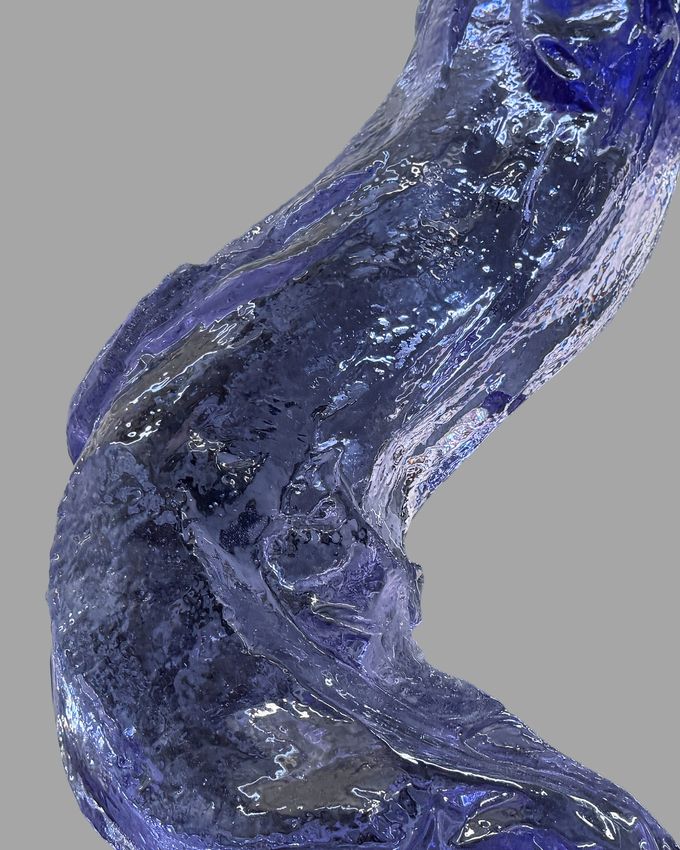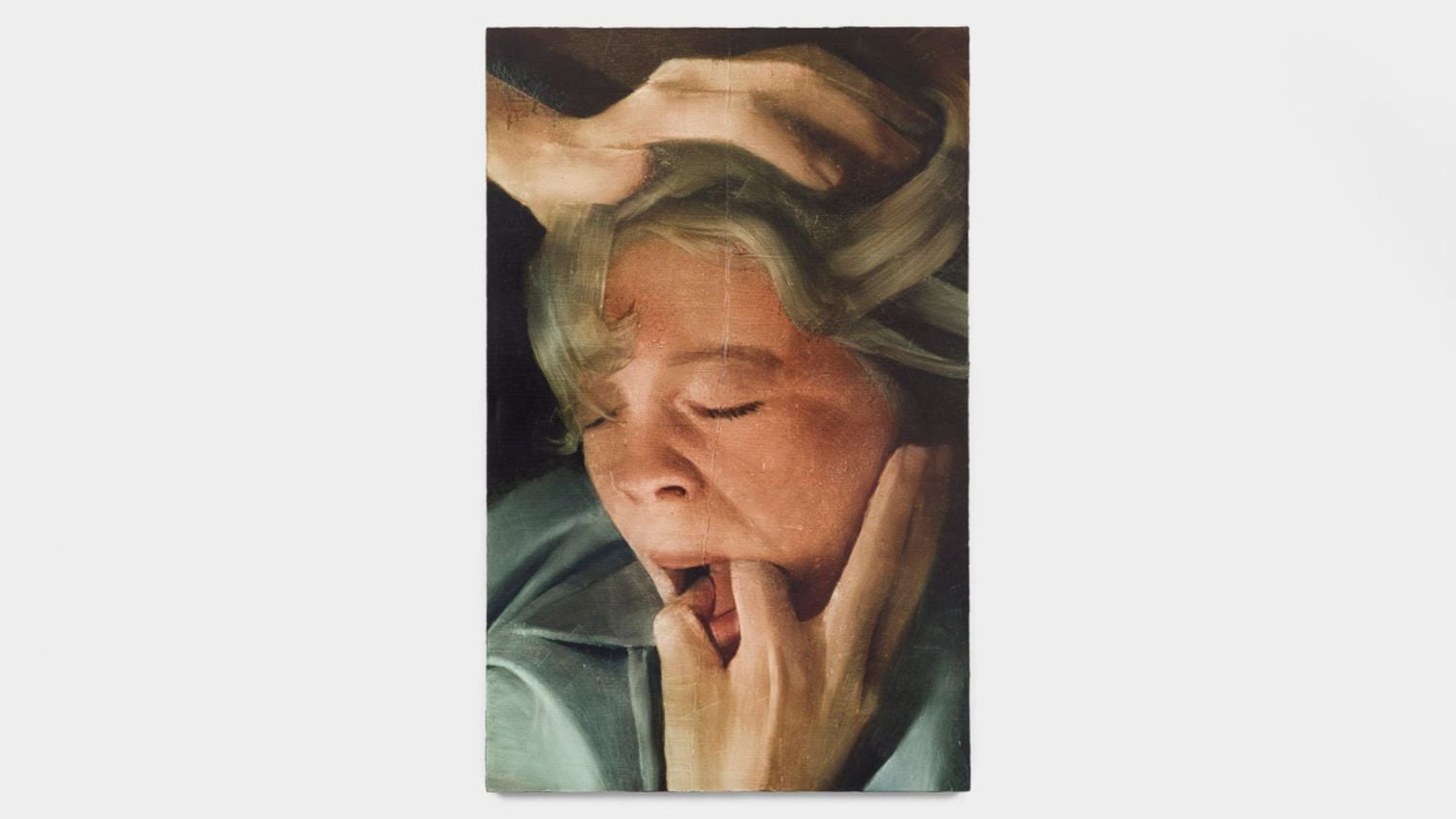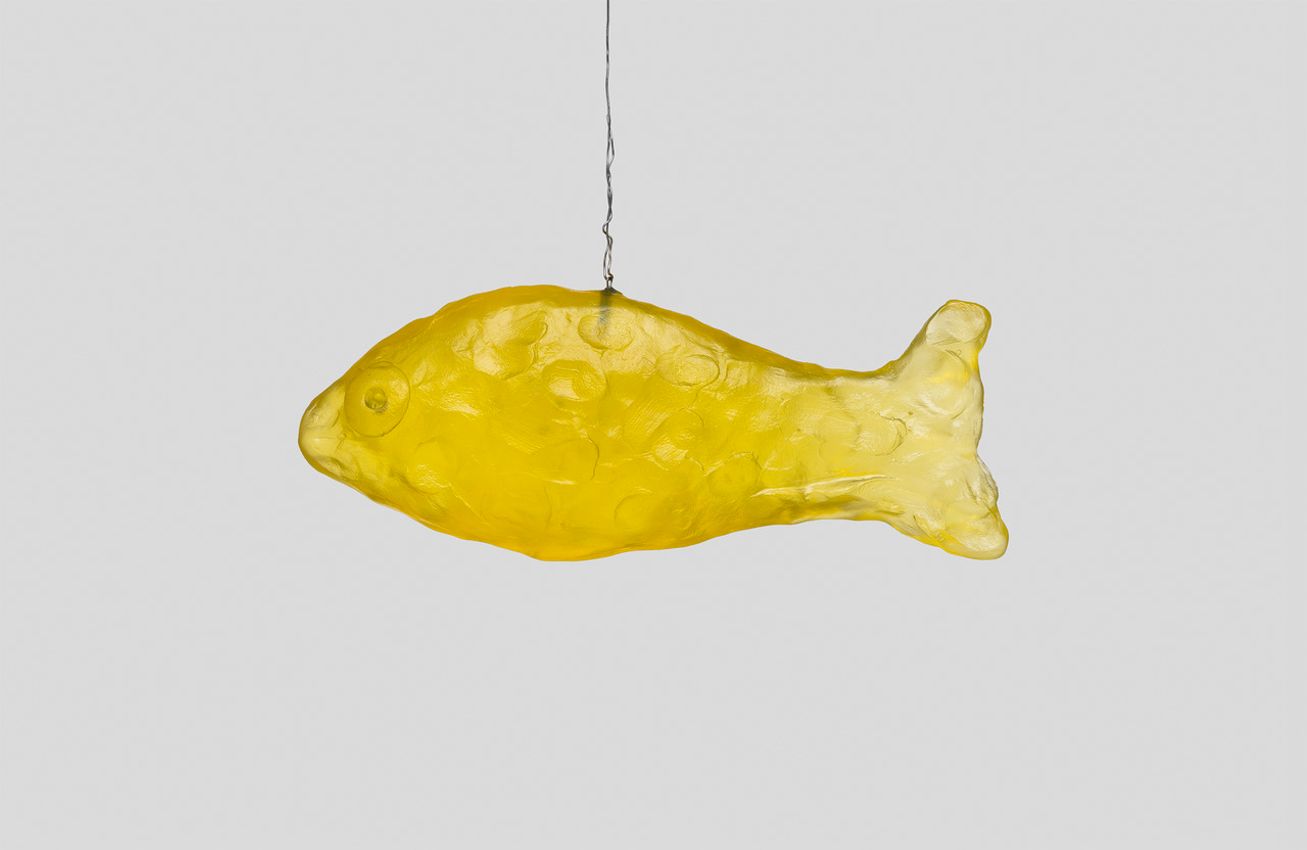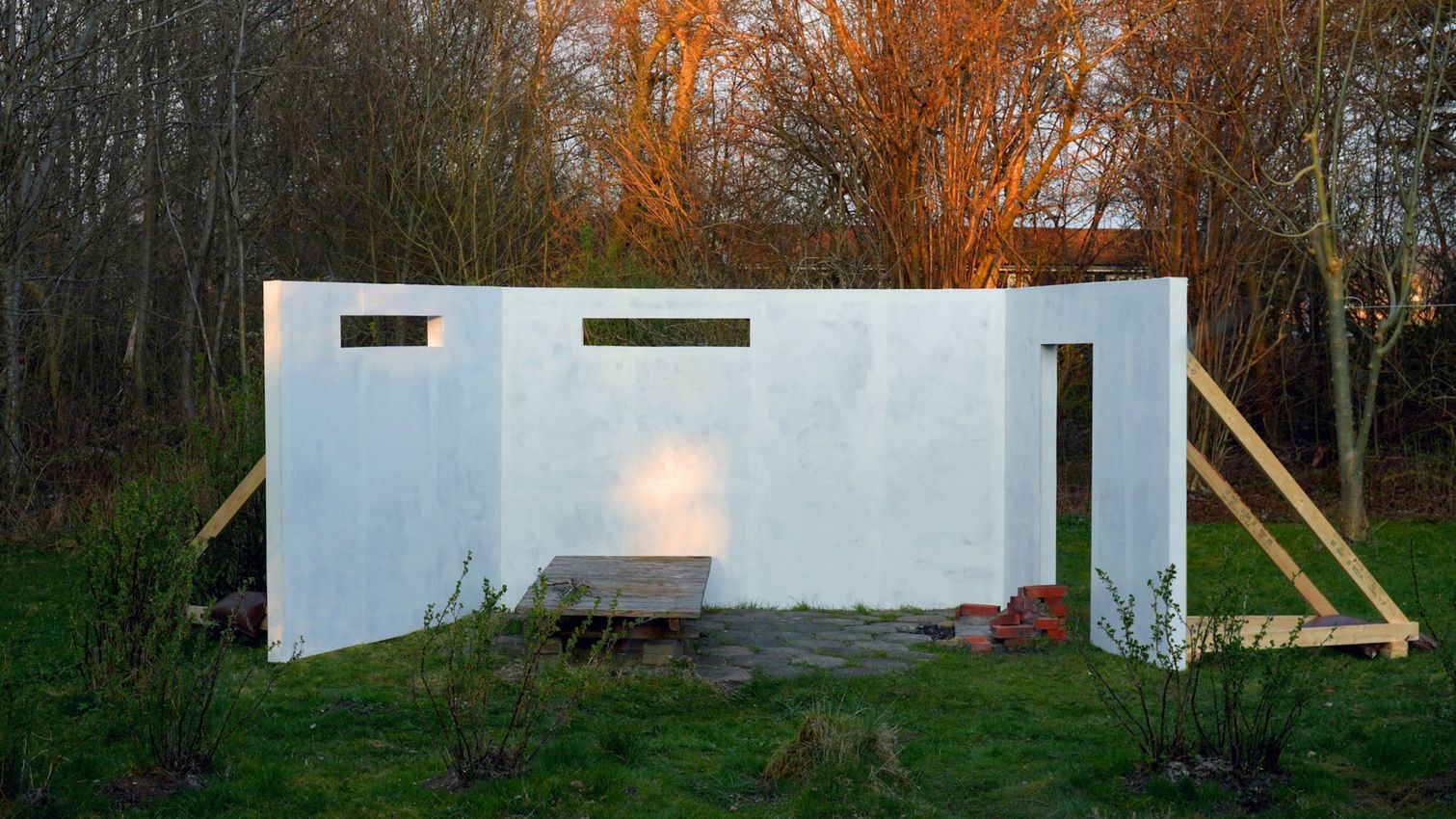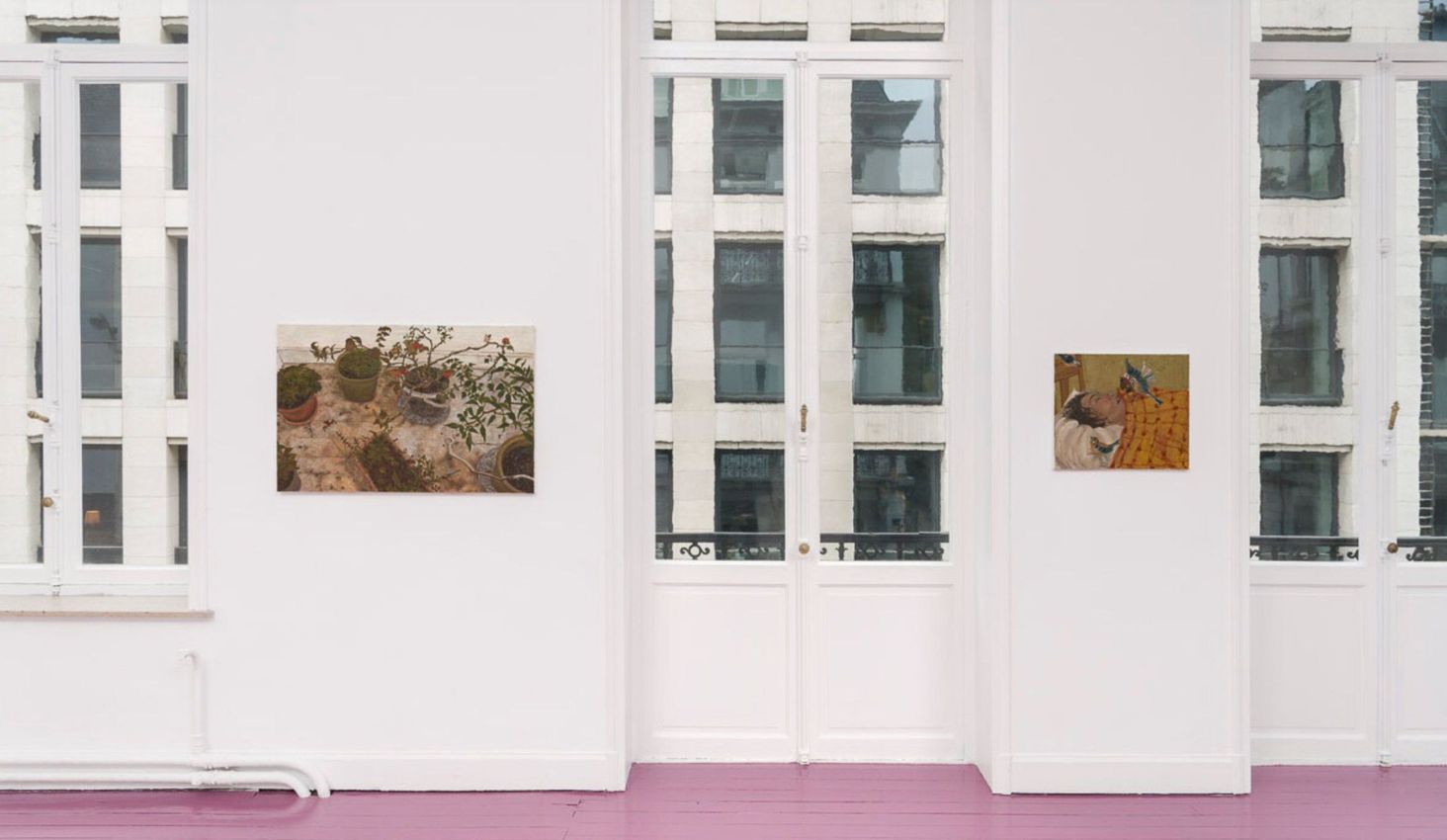
Gladstone is pleased to present When It Was Dark I Called and You Came, an exhibition of new work by Japanese-Mongolian artist Arisa Yoshioka. Drawing formally upon still life, portraiture, and landscape painting while occasionally incorporating elements of assemblage, Yoshioka’s narrative tableaux interrogate the narrow distance that differentiates the material world from the limitlessness of our dreams. Imbuing the familiar with what Yoshioka calls ‘esoteric beauty of everyday magic’, she proposes a universe in which personal history cohabitates with wishes come to fruition, the edges of the past sharpened and refined by kindness, and the inherent joy of memory.
Often beginning with photographic source materials but never confined by a strict fidelity to their imagery, Yoshioka’s painterly process reimagines both perspective and form, liberating her compositions from the rigidity of the past and resituating them in the realm of possibility. Stylistically hovering between extreme detail and looseness of gesture, these works employ multiple layers of oil paint, resulting in paintings that are alternately muted or effulgent, their surfaces determined by the artist’s preference for coarse-pored canvases. Animals, insects, plants, and flowers—all artefacts from the natural world— are repeatedly woven in or over the picture plane, discretely camouflaging any suggestions of disruption or dislocation that the viewer might otherwise intuit. Just as minor word changes can dramatically alter the meaning of a sentence, these small gestures function as modes of visual punctuation, syntactical shifts that derail and reconfigure our immediate interpretations.
The artist’s capacity to bridge intimacy with remoteness, the present with the past, is disarming in the way it seems to indicate a full sensory spectrum, giving aroma and shape to encounters, relationships, and a world that exists outside of our contemporary cultural moment. This is a quality her work shares with the late American painter Andrew Wyeth, an artist whose suggestive and ambiguous realism was strictly guided by emotion, precision, and stubbornness: “I paint my life,” he often said, which is precisely the sentiment that seems to undergird Yoshioka’s practice.
Yoshioka is, at least in part, a product of time and milieu. The first half of the artist’s bifurcated childhood was spent in present day Mongolia, which invites us to remember the country’s shared past with the Soviet Union and its insistence upon Social-Realism, a style that continues to co-exist with more traditional forms of ornament and pattern reflecting the spiritual and social aspects of ordinary life. While one is tempted to discover echoes of these aspects in Yoshioka’s paintings, one must also account that the latter years of her childhood and adolescence were spent in Japan, a country where experience and identity are balanced between a conflation of traditional and progressive cultural forms. If life starts with both seeing and with words, Arisa cannot differentiate which language symbolizes home, and so has allowed the visual to give shape to the nebulousness of memory.
Yoshioka’s life experiences include moments of geographic placelessness, cultural plurality, and a porosity of biographical experience, a seemingly disparate set of circumstances that are united under the mantle of her imagery. Whereas the particular conditions that have played a part in bringing this work to being seem to be dislocated from familiar coordinates, it is her strong sense for universalisms which remains the uniting factor. Like countless artists before her, Yoshioka’s work often originates with the perspective of a child, resulting in imagery that enjoys the rare capacity to reconcile art and the world. Her work speaks neither from the East nor the West, from periphery or centre, ethnics or class, but rather from flashes of divine intervention that collapse the remote with the intimate.
— Martin German


A respected voice in contemporary art discourse.
Focusing on ambitious storytelling and insightful art-world commentary. Ocula Magazine publishes in-depth interviews, critical essays and timely analysis on the artists, exhibitions and ideas driving the global art world.
Learn more about Ocula Magazine
Showcasing the best of the art world.
Ocula partners with galleries from around the world to highlight their artists, artworks and exhibitions. Gallery membership is by application and invitation, with each member vetted by an independent panel.
Learn more about Ocula Membership

Specialises in the sale of major artworks.
Led by a team with deep ties to the world’s leading auction houses, galleries and collectors. Ocula’s advisory team offers bespoke services to high-net-worth clients from around the world who are looking to acquire the best of contemporary and modern art.
Learn more about our team and services