




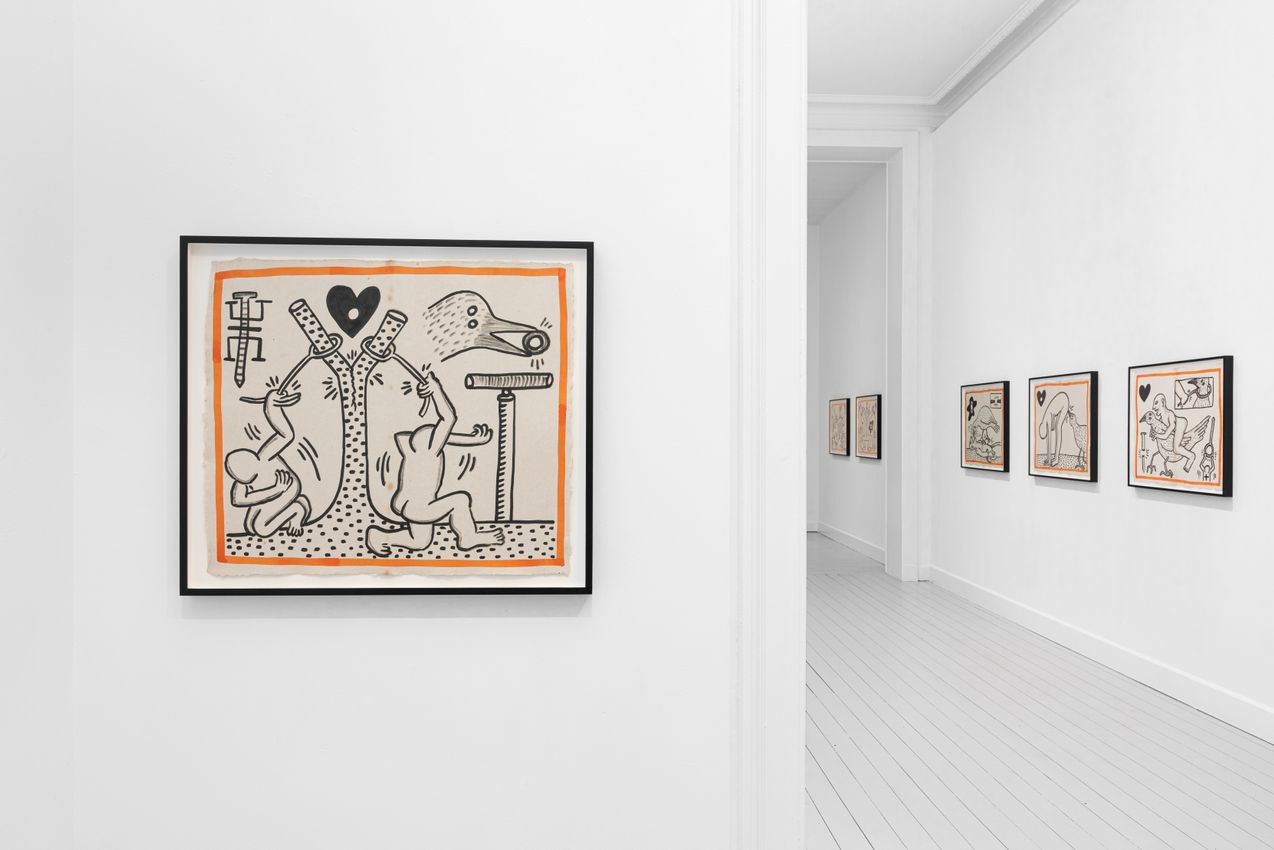
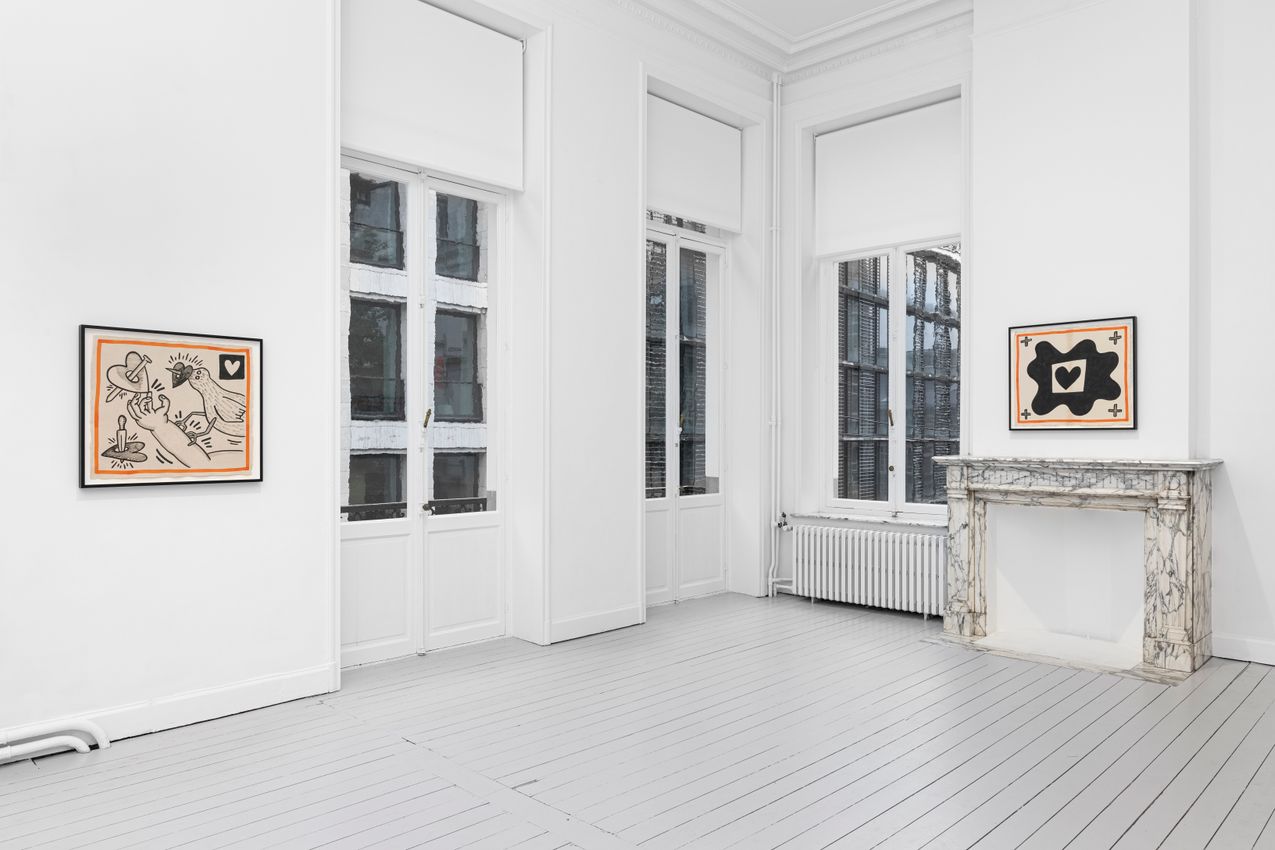
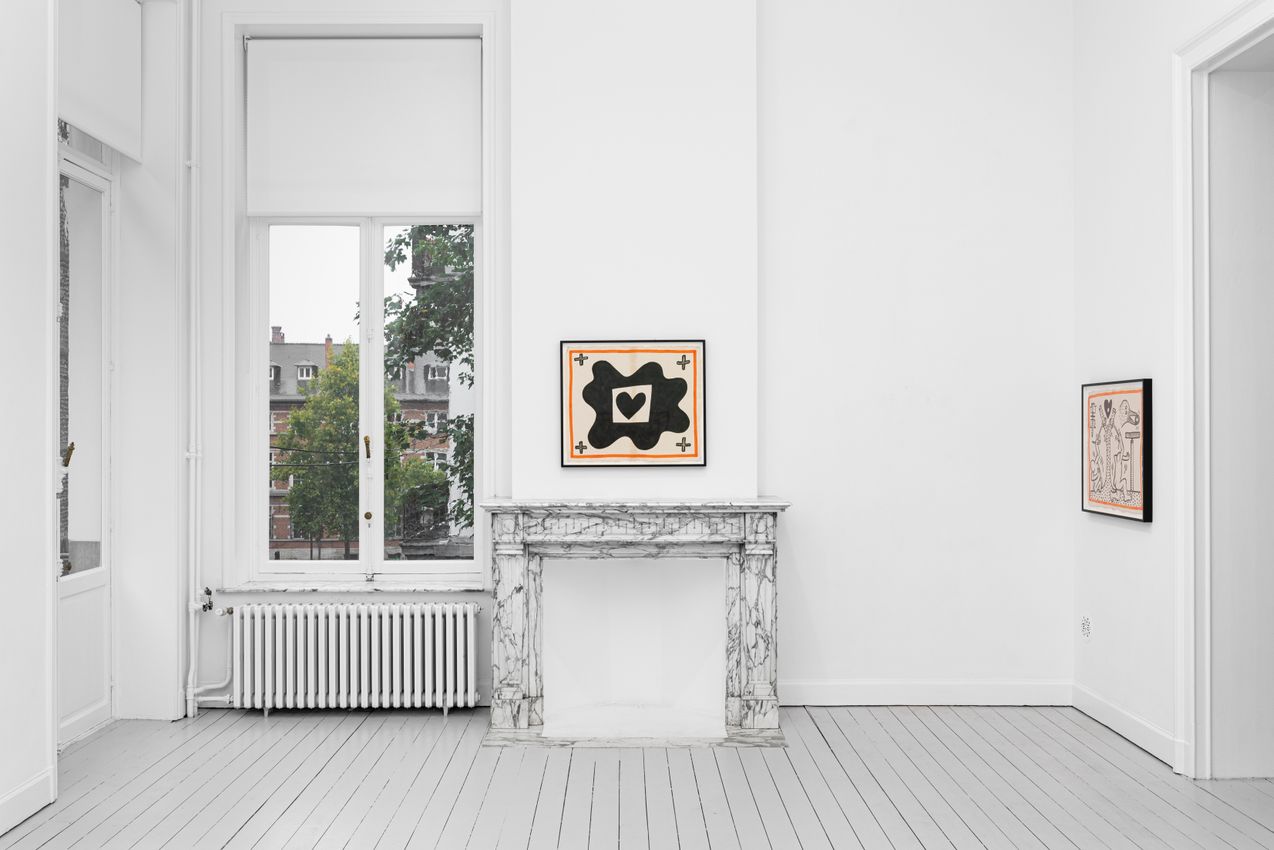
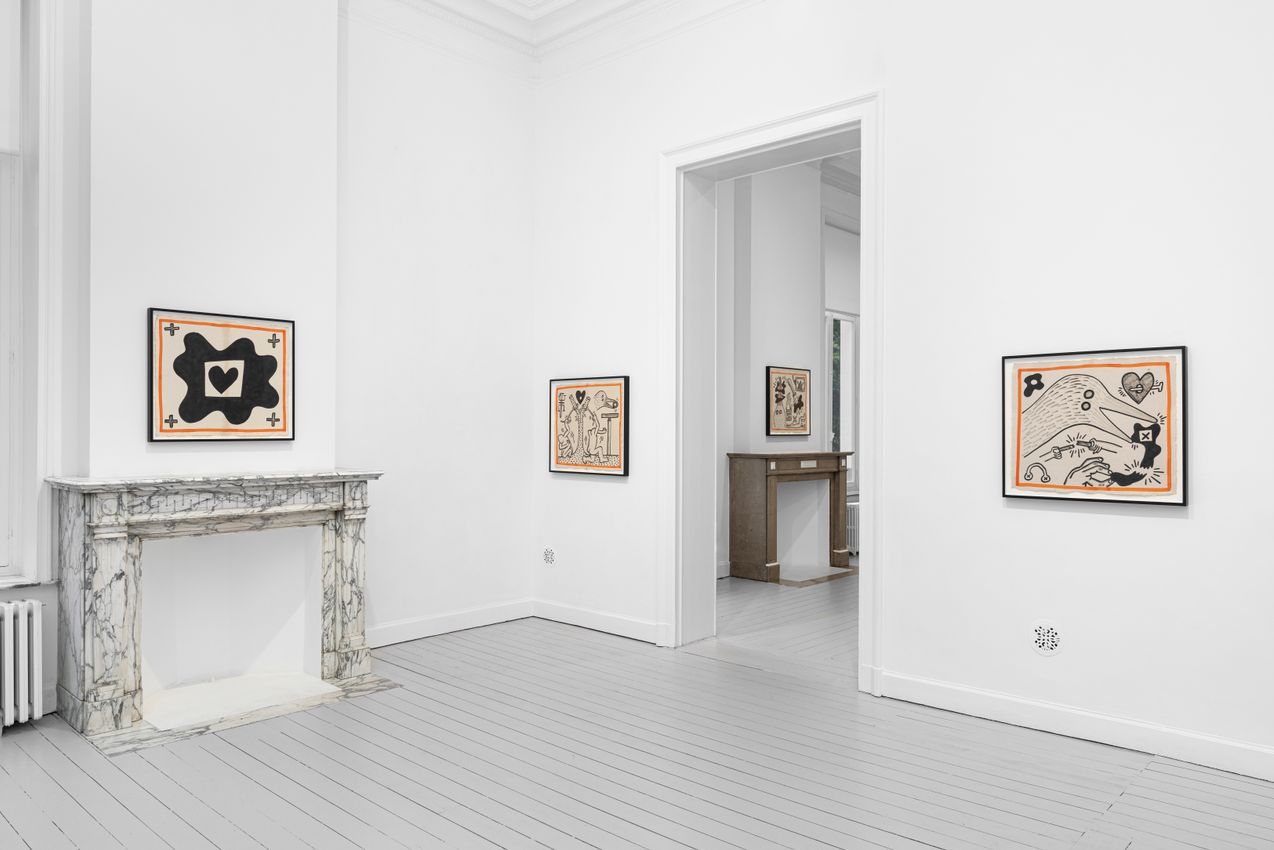
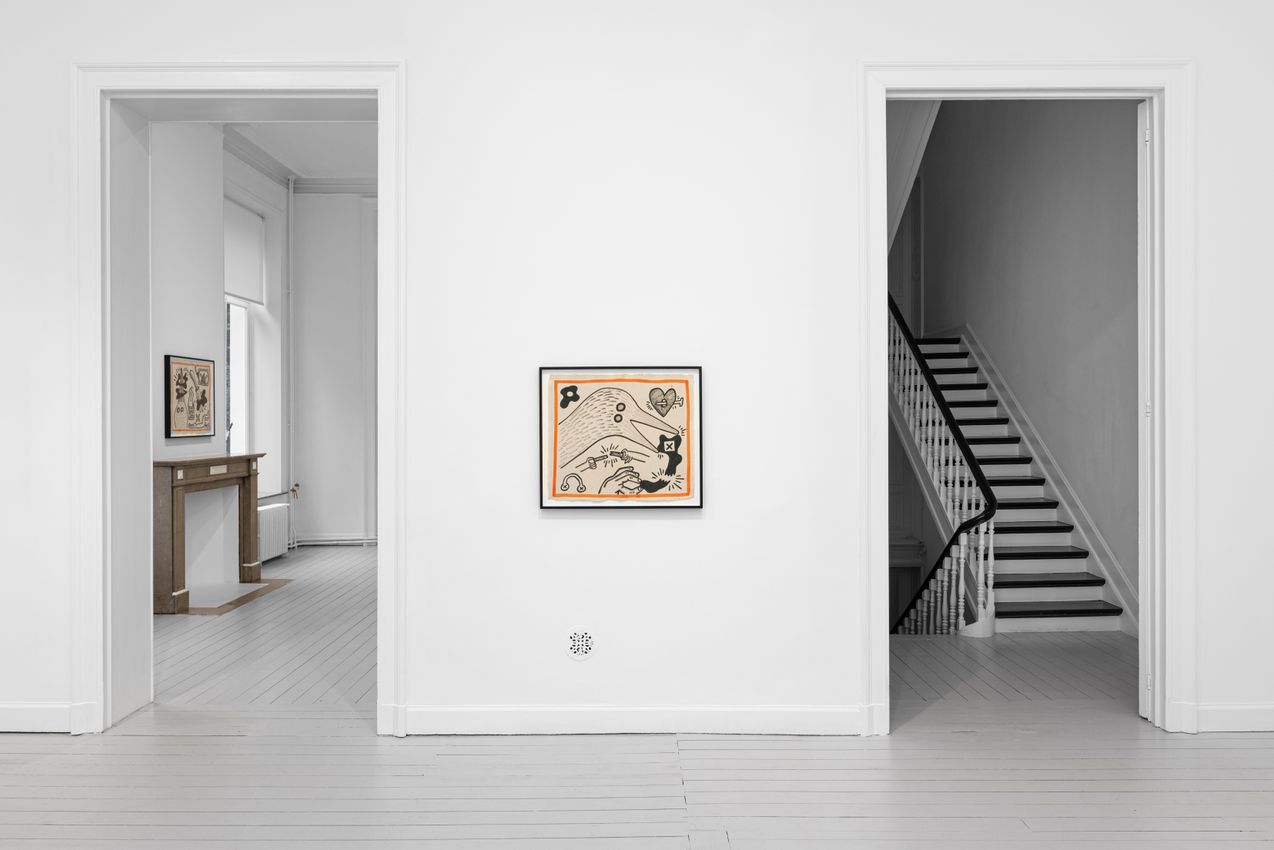
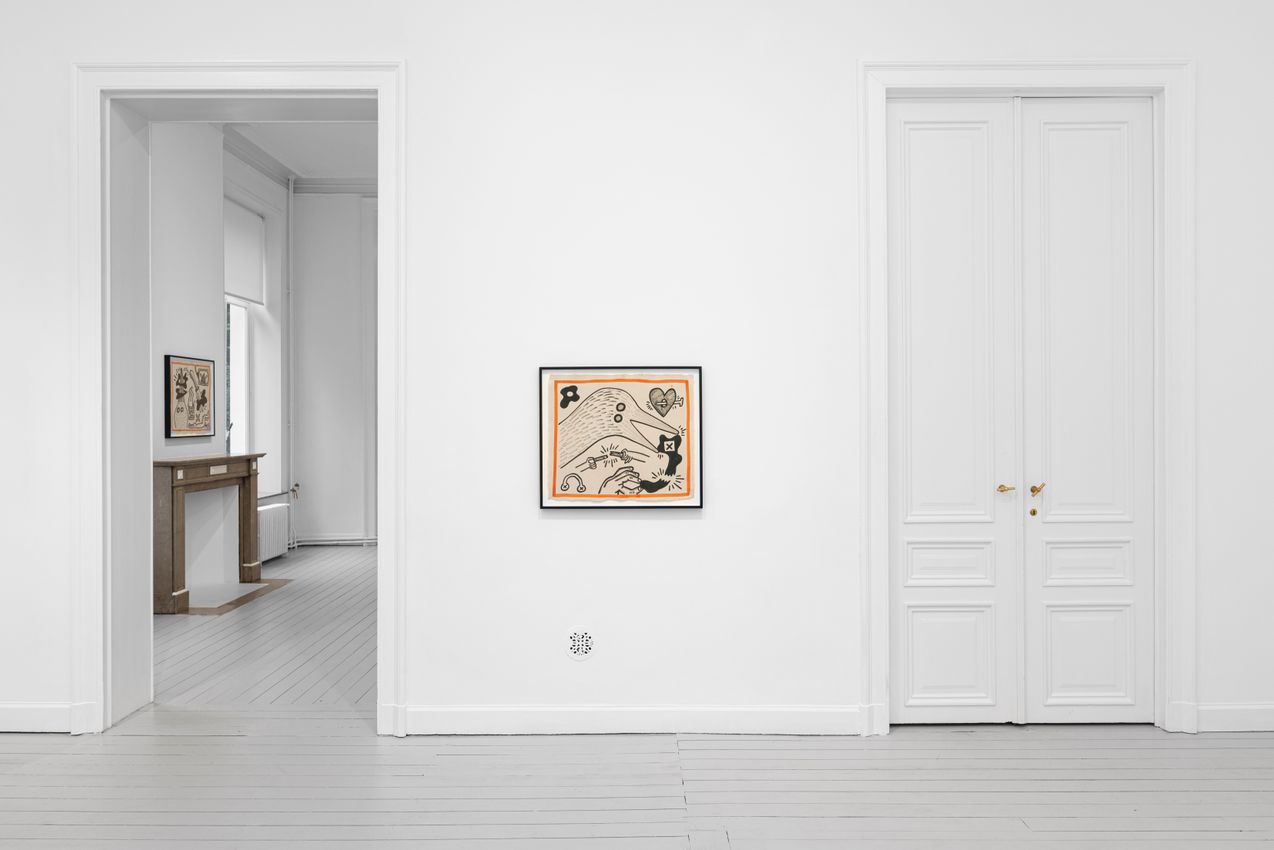
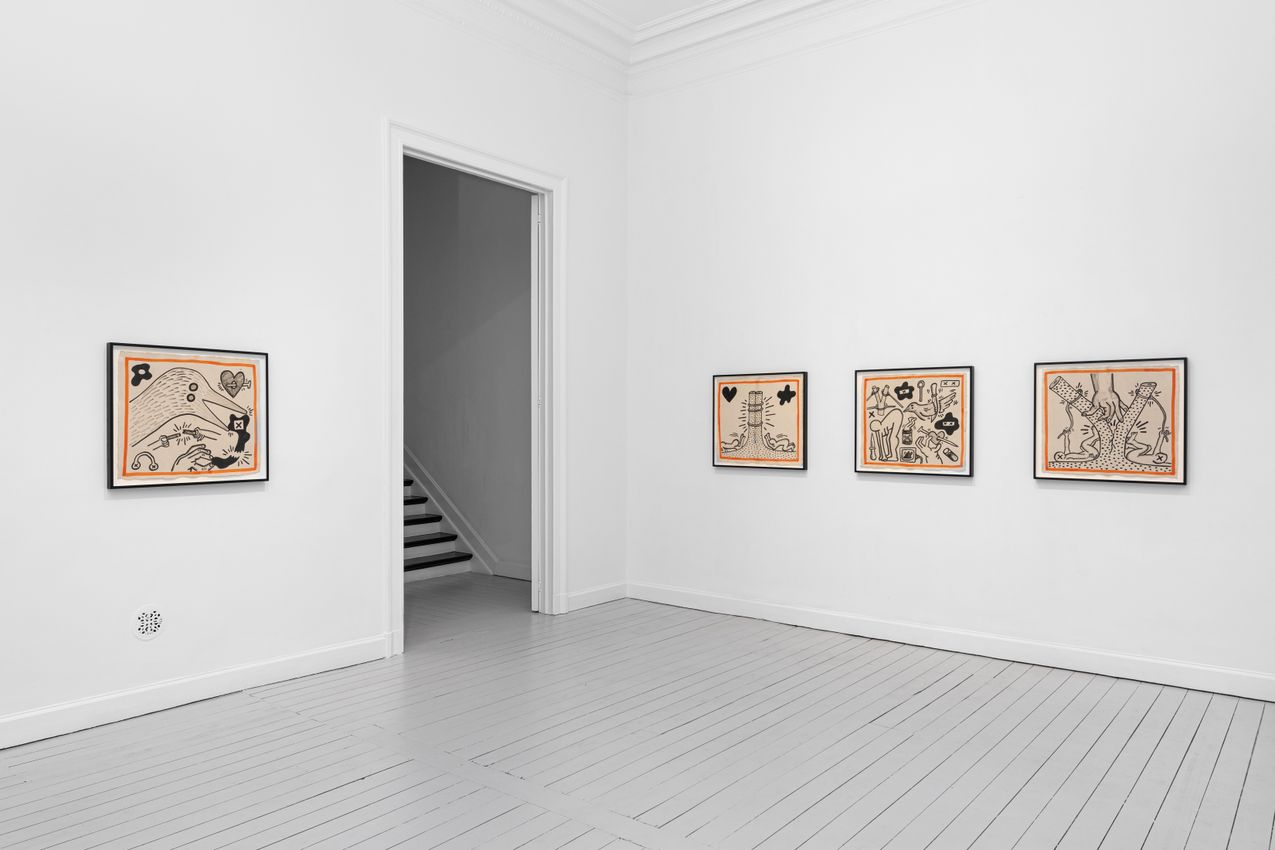
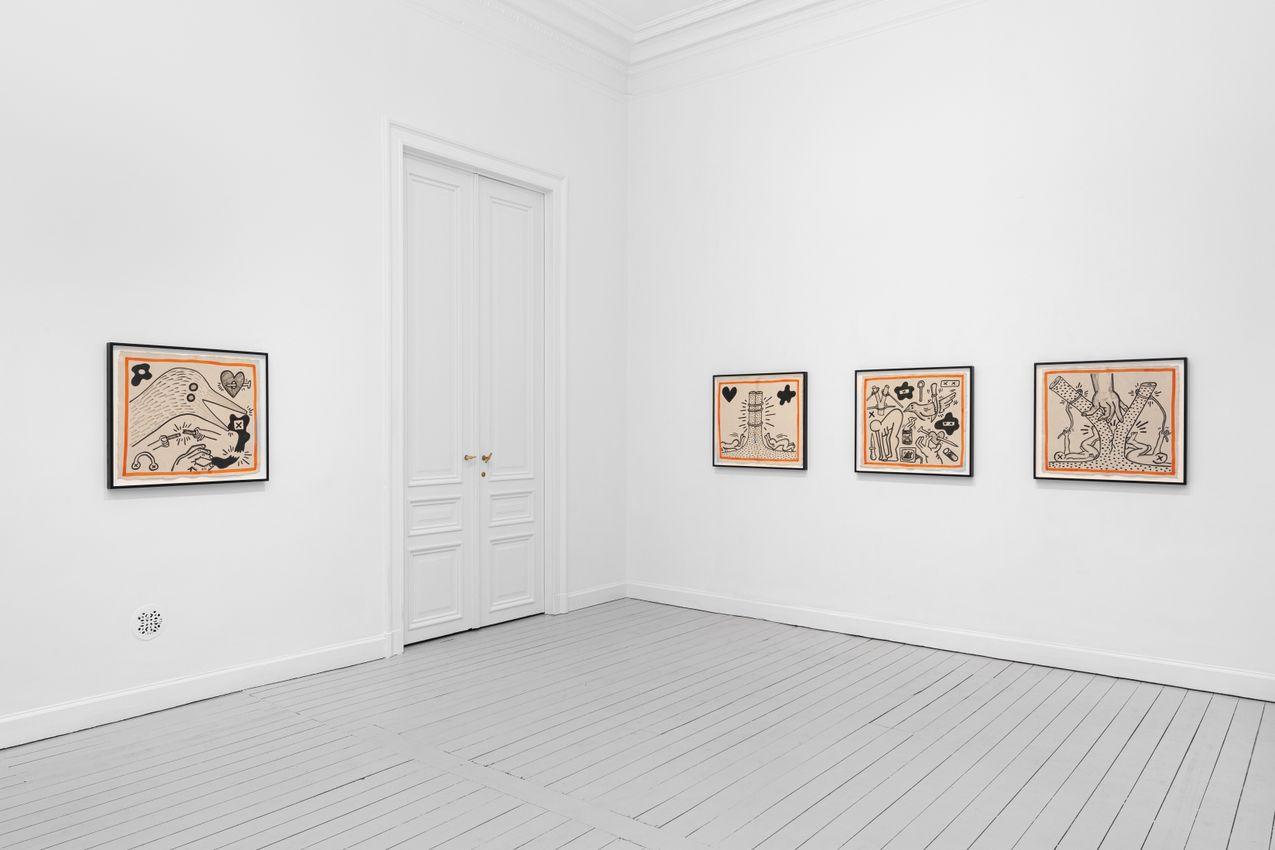
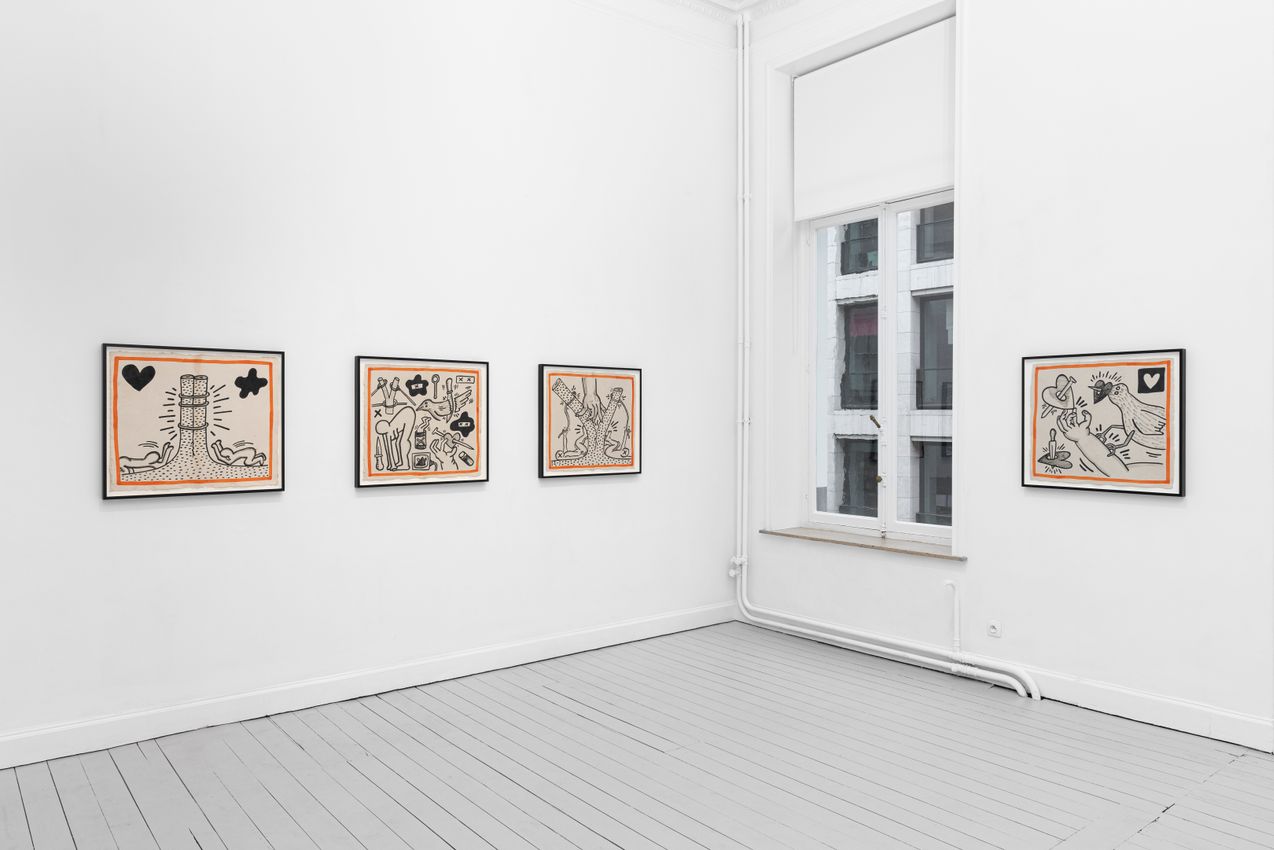
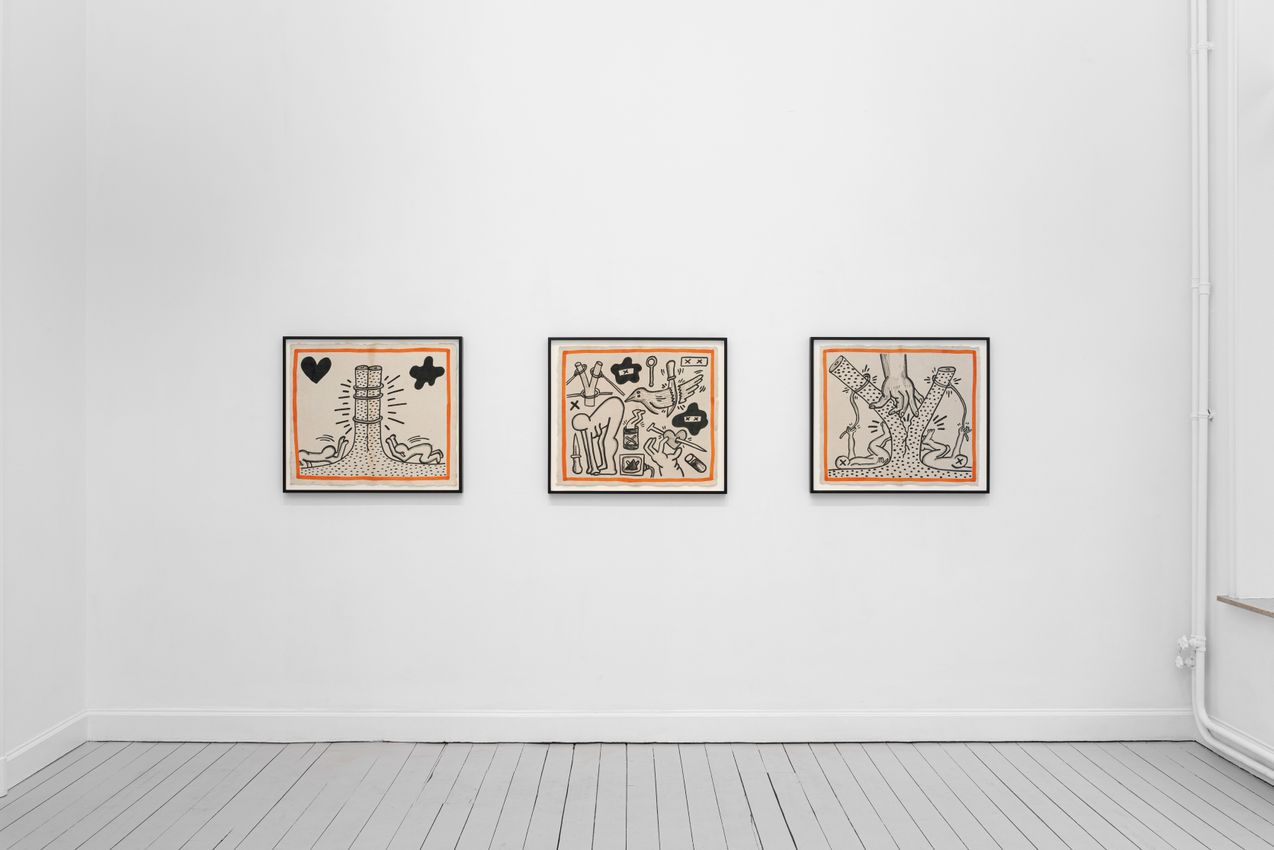
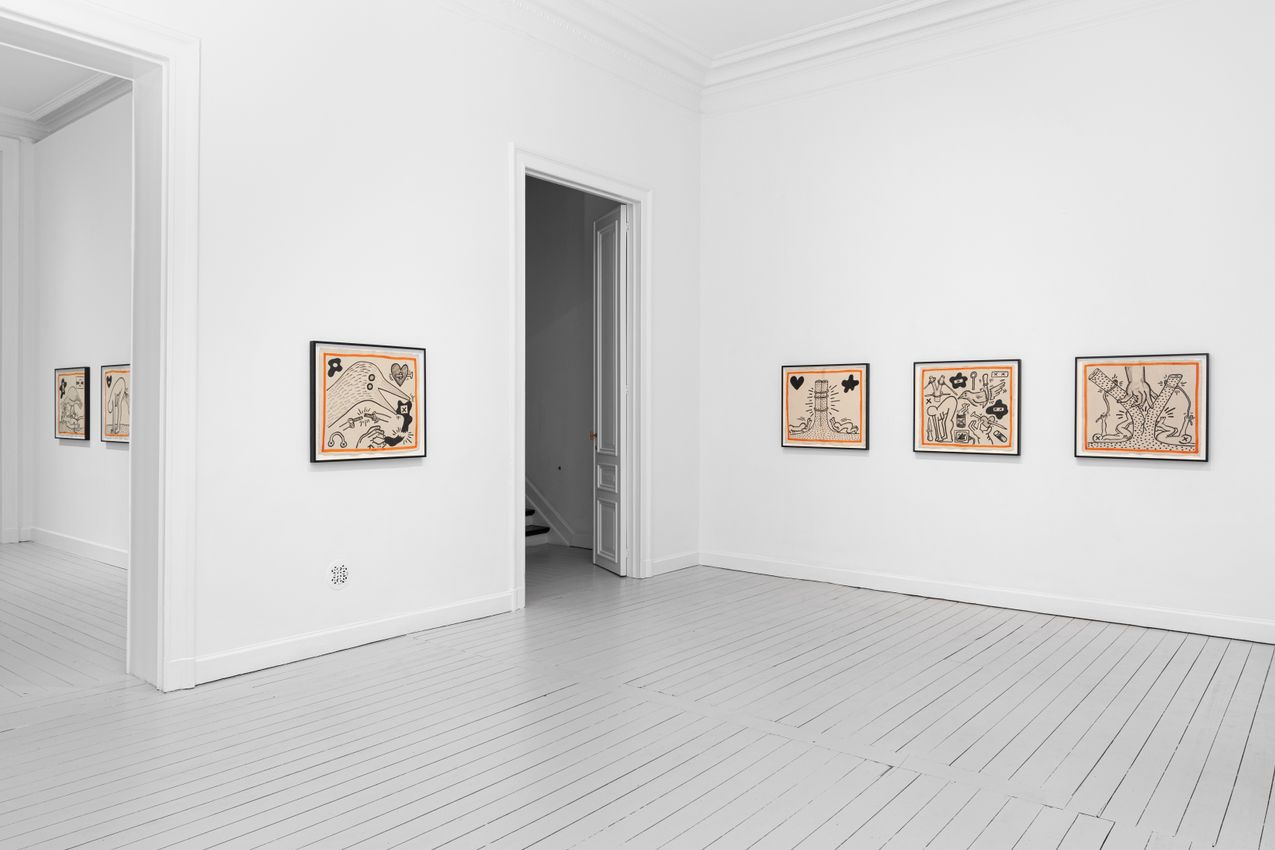
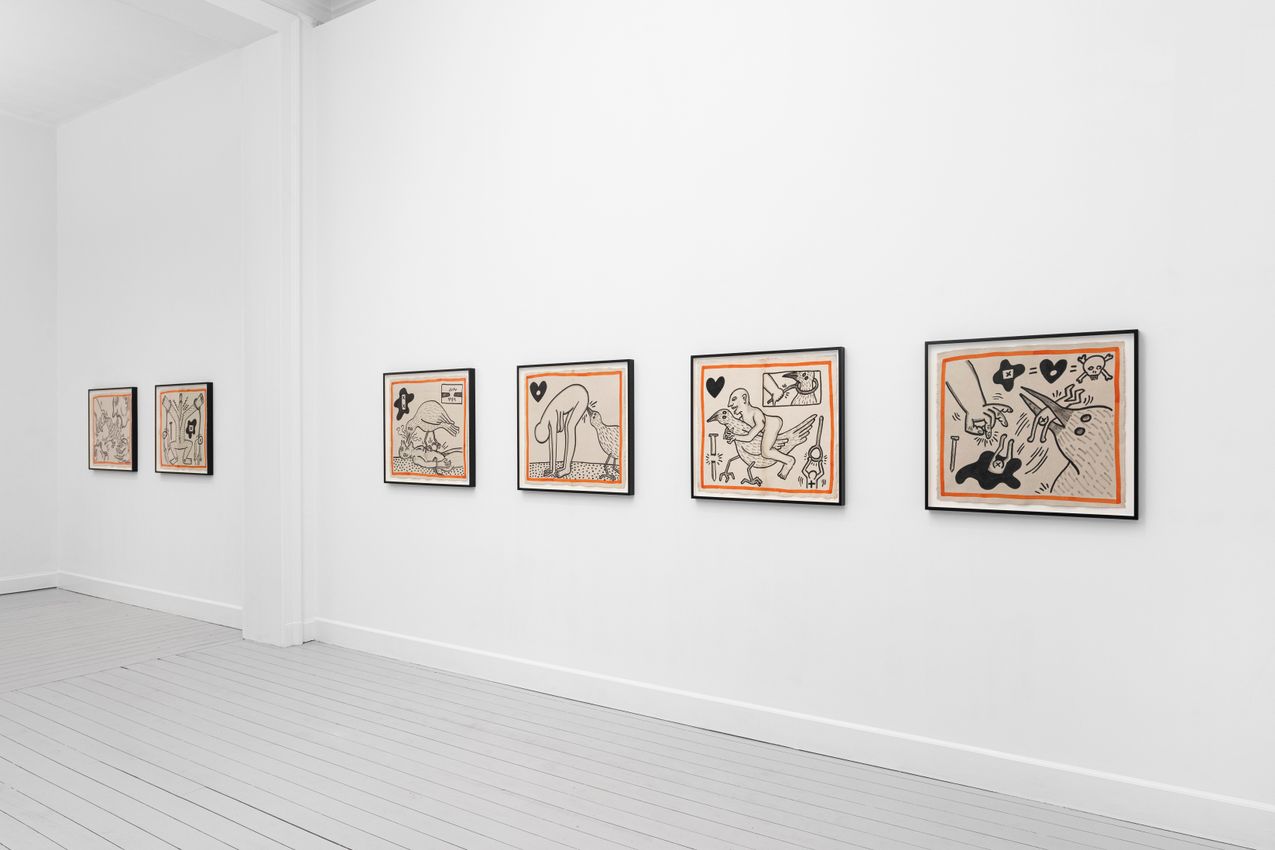
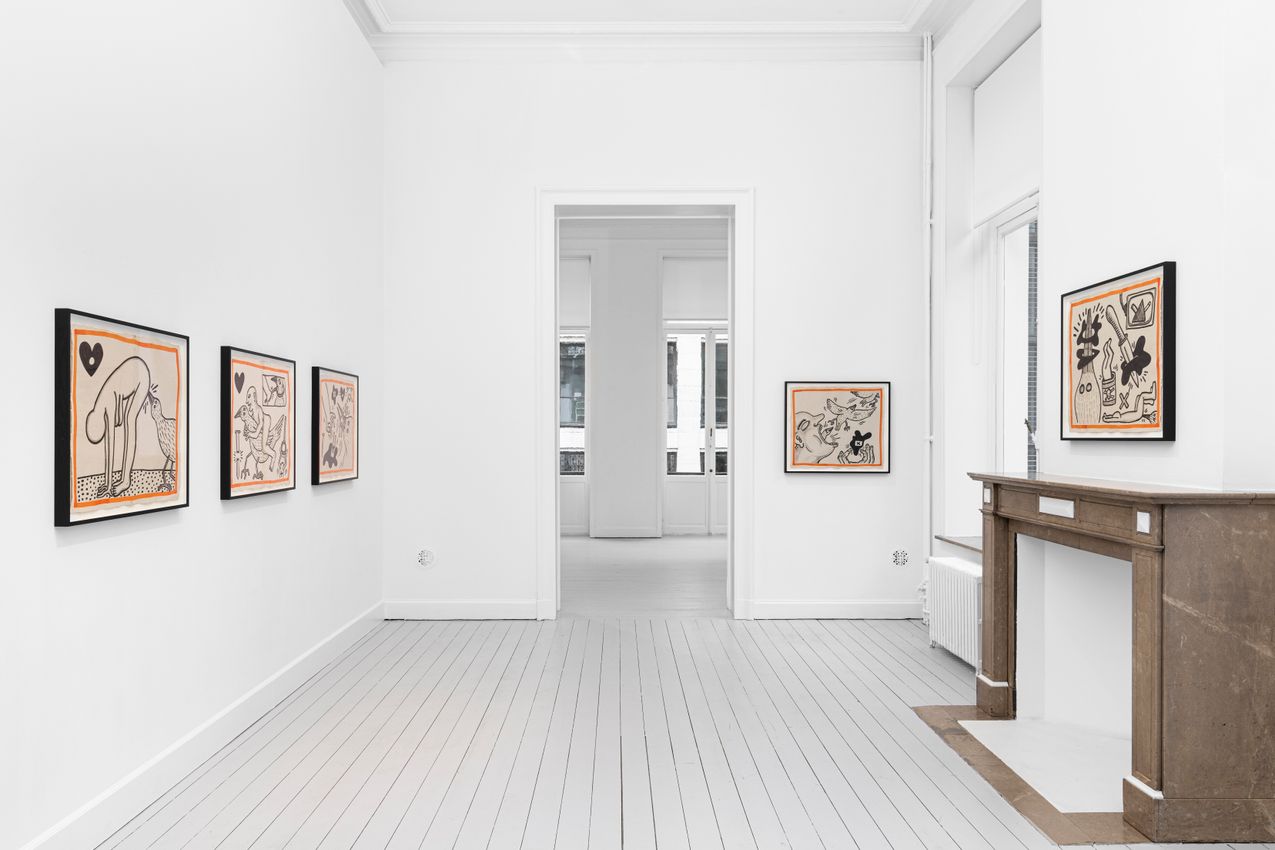
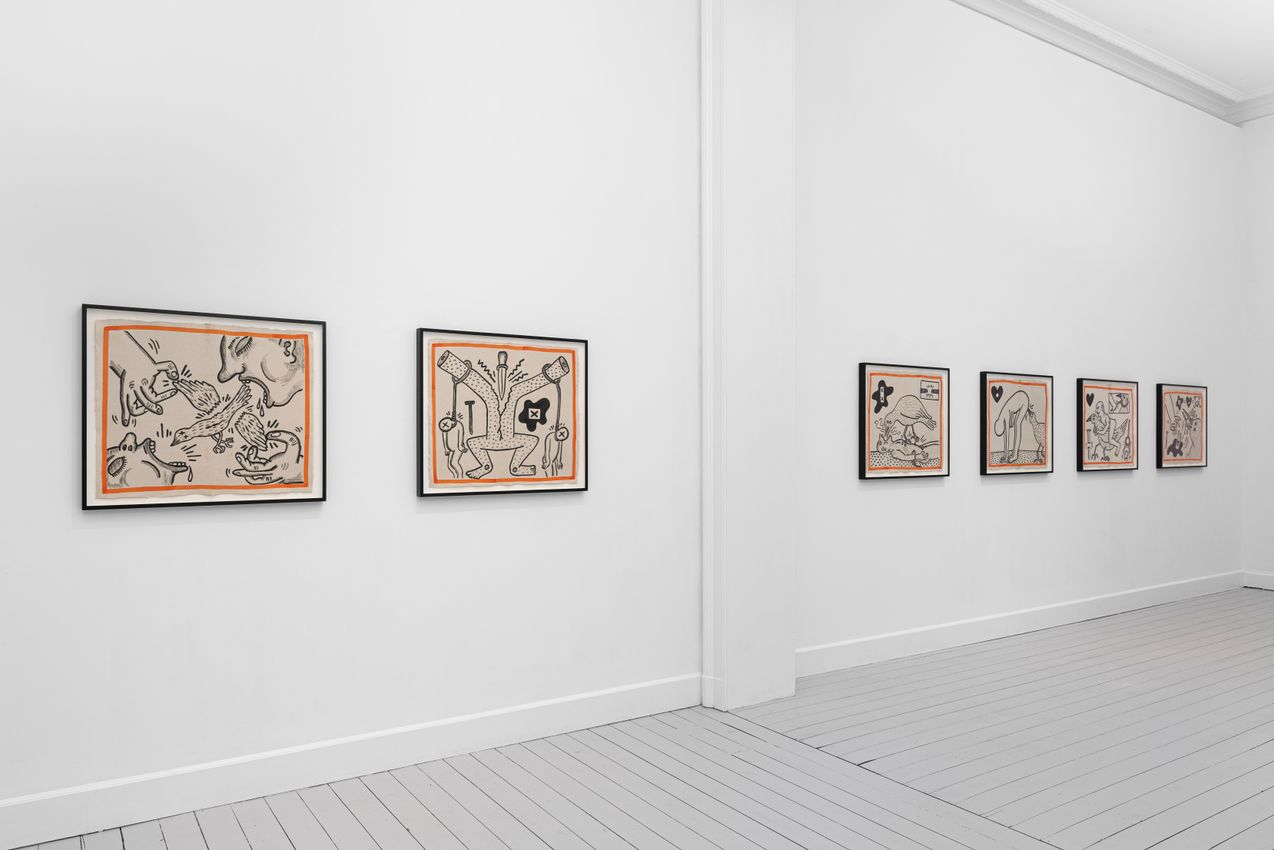
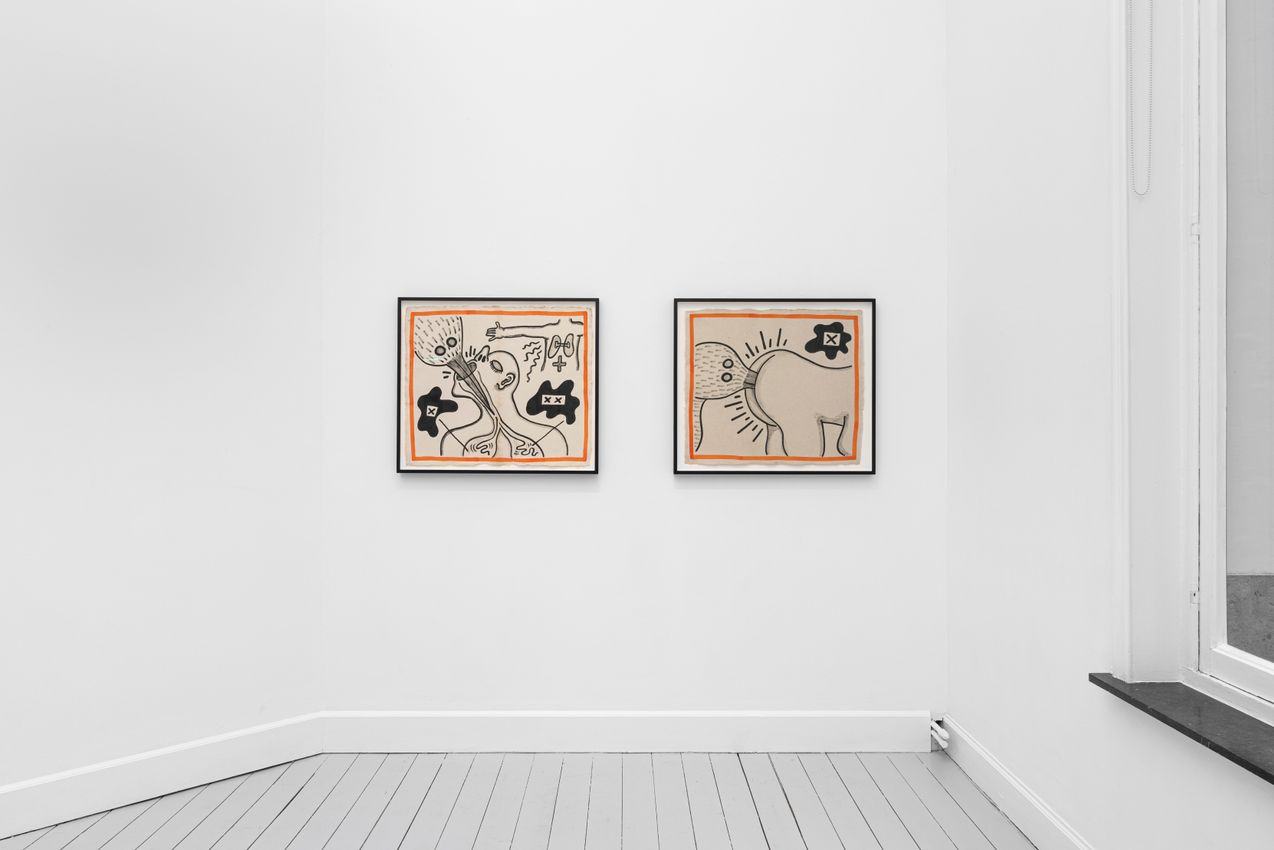
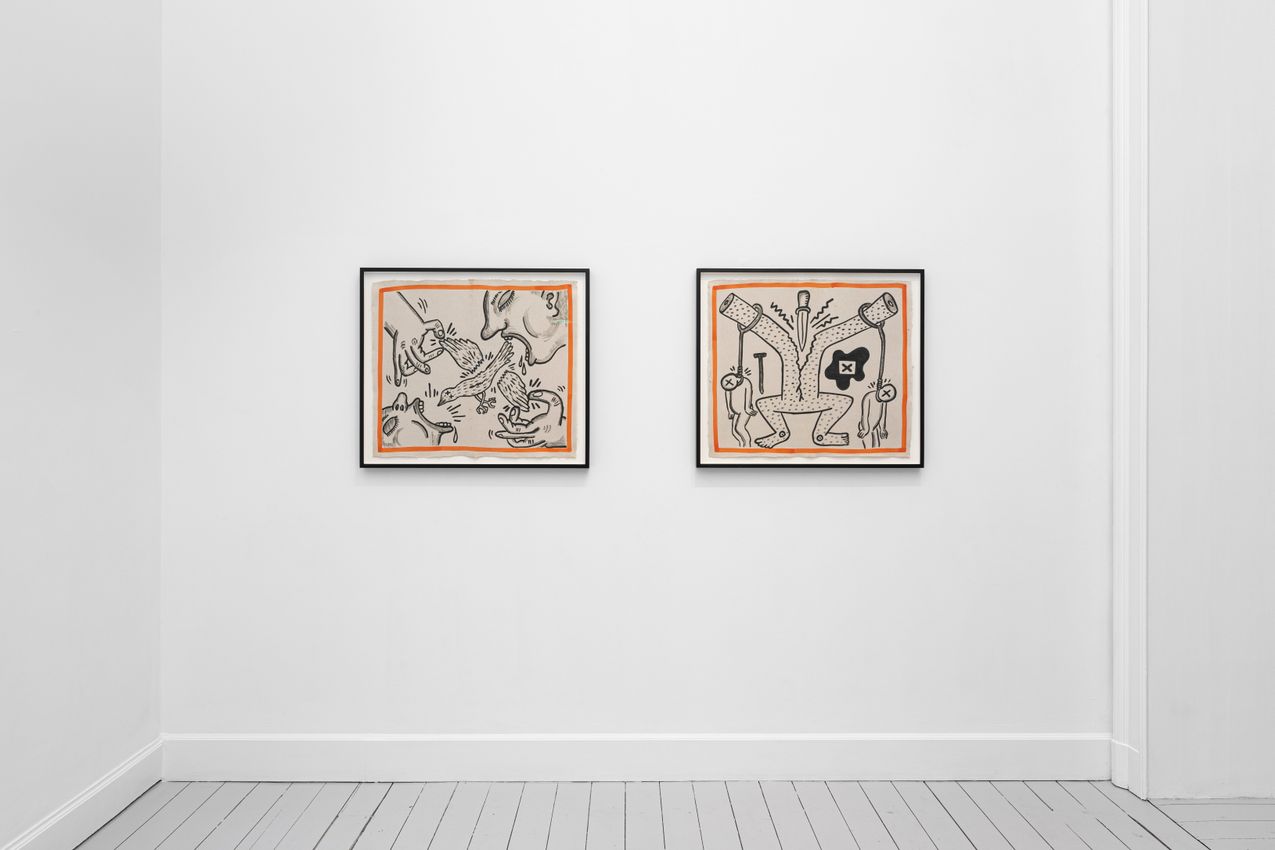
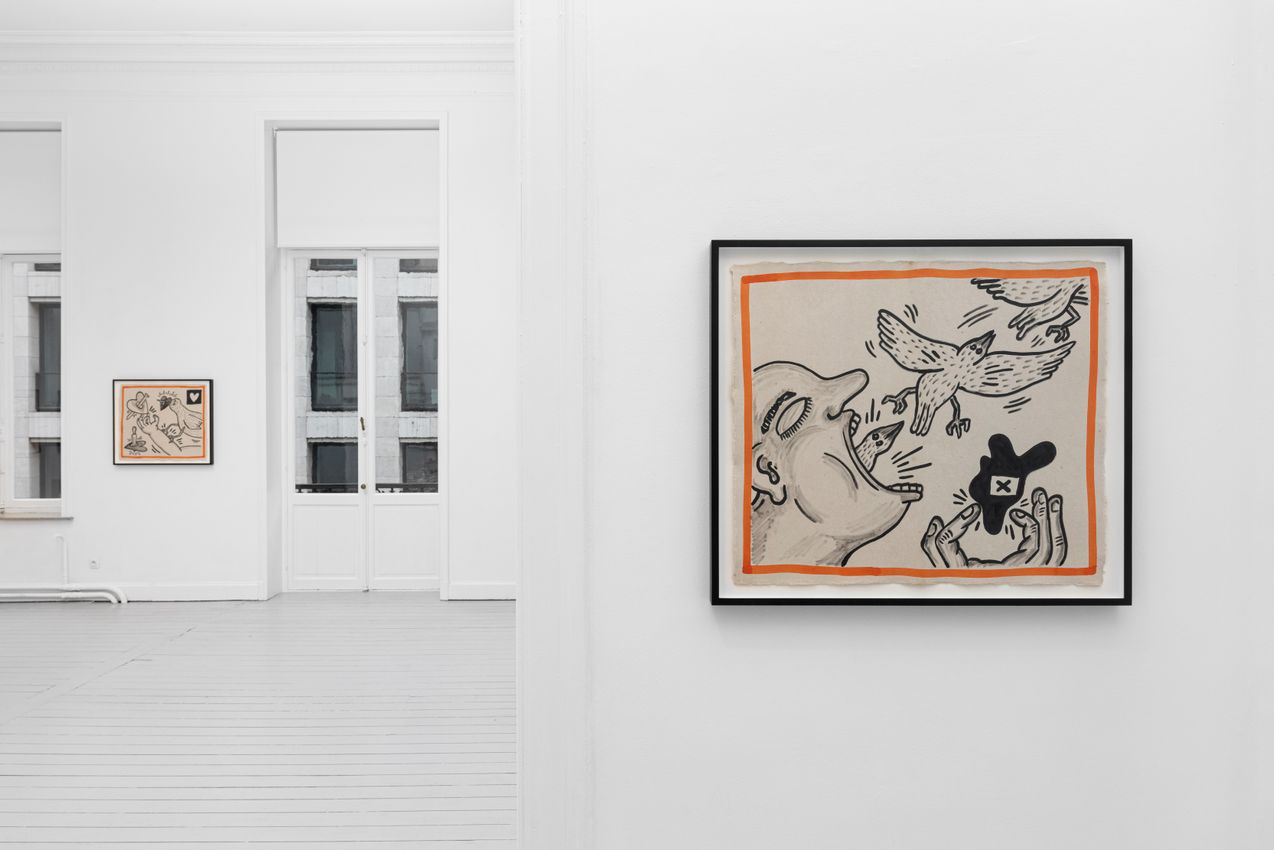
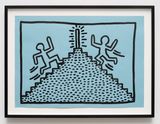
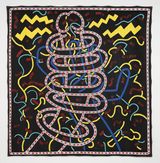
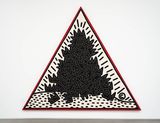
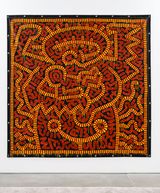
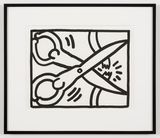

Gladstone Gallery is pleased to present an exhibition of works on paper by Keith Haring. All created on December 9, 1989, weeks before his untimely death from AIDS, this series celebrates Haring’s constantevolution as an artist and career-long determination to push the boundaries of his practice up until hispassing. Through the artist’s uncanny ability to constantly reinvent himself and bring forth complexnarratives to life through his singular approach to artmaking, this late series is a revelatory body of workthat highlights Haring’s strength and inquisitive nature as an artist, which continues to influencecontemporary artists working today.
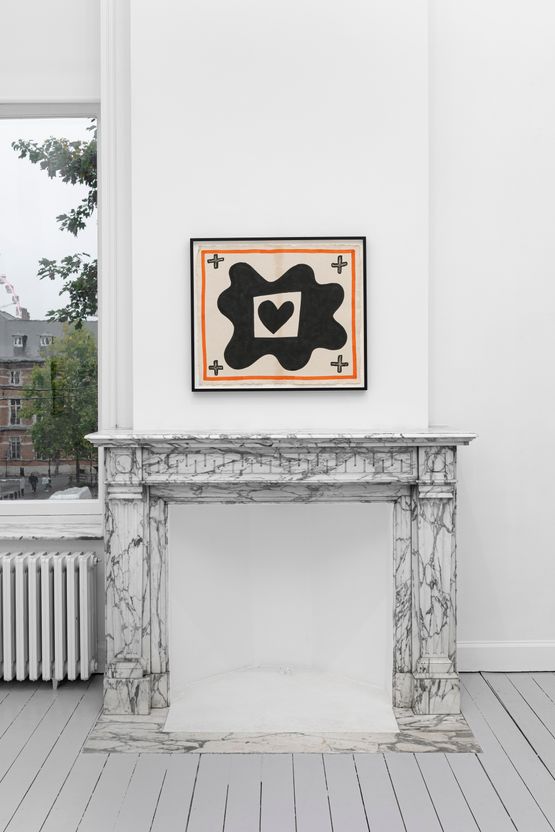
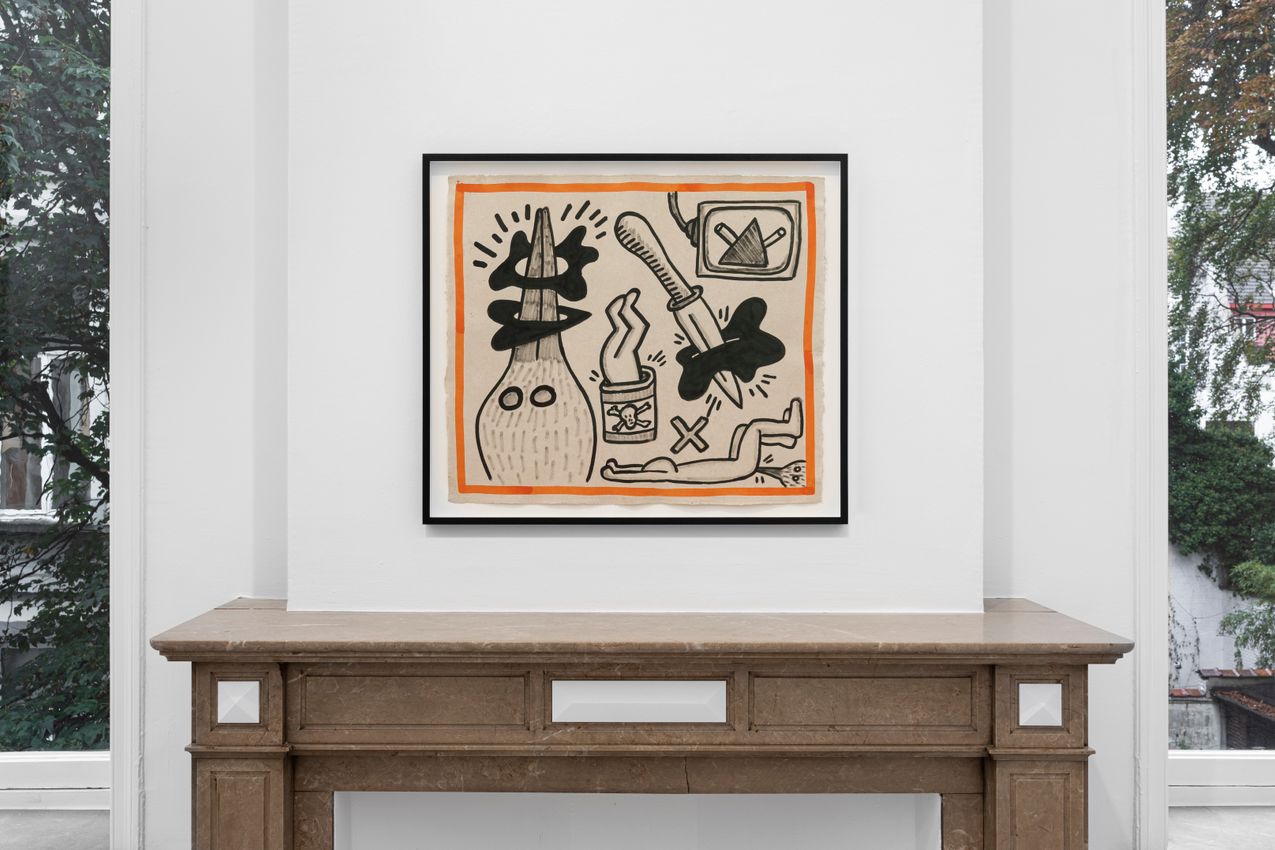
This group of 17 drawings made with gouache and black ink on Japanese paper presents an indecipherable, layered narrative created with both familiar and less prominent characters and symbolsfrom the artist’s oeuvre. Birds peck at nude bodies and orifices, black hearts and amorphous blobs floatin space and are stabbed by knives and beaks, and log-like elements grow from the earth or are violentlysplit apart. There is struggle, there is acceptance, and life continues to evolve and repeat itself over spaceand time. Without any specific information left behind by the artist about the meaning behind thesecompositions, the viewer is left to examine each work to posit what these vignettes might be sayingwithout a set framework. While there is a variety of familiar figures present in these works, there are somenew protagonists, like birds covered in wispy feather-like markings. Each element is approached with aremarkable technical maturity and clarity that signifies both a beginning and an end for Haring: his ongoingboundary-pushing exploration of his practice and a reckoning with his own mortality and the work he willeventually leave behind.
Beyond the subject matter depicted, materiality also plays a significant role in these drawings. From the earliest moments in his career, Haring worked with and painted on unconventional and found materials,like bedheads, doors, tarps, and subway platforms. Acutely aware of how his paint, gouache, ink, and chalkwould look and feel on any given surface, Haring’s technique was influenced by what he had access to.Towards the end of his life, Haring was able to afford a different set of materials to work with, includingshaped canvases, expensive inks, and specialty paper. Haring was particularly excited to work with thishandmade paper with rough edges, and was mesmerised with how it felt on his brush. This materialspecificity enabled him to create these wildly imaginative, singular, and detailed works, which haveremained relatively unseen and unstudied until now.
Keith Haring was born on May 4, 1958 in Reading, Pennsylvania and died at the age of thirty-one of AIDS-related illnesses in New York City in 1990. Since his death, his work has been the subject of majorsolo exhibitions around the world, including BOZAR, Brussels, Belgium; Museum Folkwang, EssenGermany; Tate Liverpool; Musée d’Art Moderne de la Ville de Paris; the de Young Museum, San Francisco;the Kunsthalle der Hypo-Kulturstiftung, Munich Contemporary Arts Center, Cincinnati; Whitney Museumof American Art; Castello di Rivoli, Italy; Kunsthalle Wien, Vienna; and the Brooklyn Museum of Art.Haring’s work is included in major private and public collections, including The Museum of Modern Art,New York; The Whitney Museum of American Art, New York; Los Angeles County Museum of Art, LosAngeles; The Art Institute of Chicago, Chicago; The Bass Museum, Miami; Centre Georges Pompidou,Paris; Ludwig Museum, Cologne; and Stedelijk Museum, Amsterdam.
Keith Haring was an influential American Pop artist known for cartoon-like paintings, drawings, and murals typified by bold lines and direct messages. His short-lived career spanned just the 1980s but has a far-reaching legacy.


A respected voice in contemporary art discourse.
Focusing on ambitious storytelling and insightful art-world commentary. Ocula Magazine publishes in-depth interviews, critical essays and timely analysis on the artists, exhibitions and ideas driving the global art world.
Learn more about Ocula Magazine
Showcasing the best of the art world.
Ocula partners with galleries from around the world to highlight their artists, artworks and exhibitions. Gallery membership is by application and invitation, with each member vetted by an independent panel.
Learn more about Ocula Membership

Specialises in the sale of major artworks.
Led by a team with deep ties to the world’s leading auction houses, galleries and collectors. Ocula’s advisory team offers bespoke services to high-net-worth clients from around the world who are looking to acquire the best of contemporary and modern art.
Learn more about our team and services