Press Release

Goodman Gallery is pleased to present Short Stories in a Longer Tale, a solo show by Sue Williamson, marking thirty years since her first solo show at Goodman Gallery Johannesburg in 1994, an exhibition which won her the Vita Art Now Award for best exhibition in South Africa that year.

Since then, Williamson has continued to exhibit all over the world, and last year had solo shows at The Box Museum in Plymouth, UK, titled Between Memory and Forgetting; at the Centro Atlantico de Arte Moderno in Las Palmas, titled Other Voices, Other Cities and a two- person exhibition with Lebohang Kganye, at the Barnes Foundation in Philadelphia, US, titled Tell Me What You Remember. A major retrospective of her five-decades long career will open at Iziko South African National Gallery on 19 February 2025, titled There’s something I must tell you: a retrospective.

In Short Stories in a Longer Tale, Williamson sources news media and archival references to unpack six key moments in South and West Africa’s complex and layered history, using printmaking, photography, drawing, video, embroidery and installation in her incisive work.

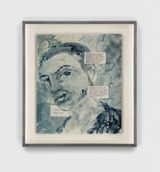
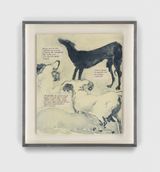
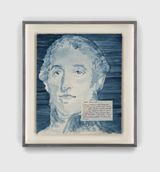
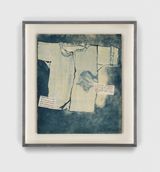
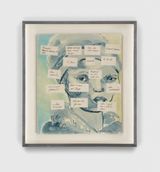
The Diaries of Lady Anne B delve into the personal papers of Lady Anne Barnard, wife of the first British Colonial Secretary to govern the Cape from 1797–1799. A watercolourist of note herself, Lady Anne comments caustically on domestic matters: a hangman who does his job just outside her drawing room windows, a mutiny at sea, distinguished visitors to the Cape, thus giving a unique view of life at the time. For this series, Williamson collaged monoprints with calligraphic notes from the diaries to tell these lively anecdotes.

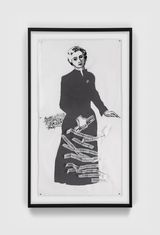
In 1900–1902, Britain once more tried to regain control over her old colony, sending 400, 000 soldiers to quell the Boer republics. The embroideries in the Stories for Children series are based on the illustrations in My Anglo-Boereoorlog Storie-Inkleurboek, a colouring book bought in the gift shop at the Anglo-Boer War Museum (now referred to as the South African War) in Bloemfontein in the late 1980s. The pictures and text in the book attempt to explain the horrors of that war to a child. Echoing the pictures in the colouring book, the images are hand-embroidered in black cotton on to white organdie; a labour relating to the handmade toys made by the women in the British concentration camps.

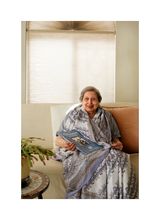
The brave activism of women in the apartheid years, 1948–1999, has been a key focus for Williamson. Taken from her All Our Mothers series is a photographic portrait of struggle stalwart, Ray Alexander, known for her lifelong fight in support of the rights of workers. This is echoed by the installation, A chair for Ray Alexander that pays homage to Alexander’s reputation for always listening to others. Sitting with her chin on hand in a listening position, Ray seems to be inviting the viewer to sit down and tell her their troubles. Six unique colour laser printed portraits form a backdrop to the chair. A second activist, Nyameka Goniwe, widow of the assassinated leader Matthew Goniwe, is the focus of Cradock: Caught in the Flood.

With the onset of the Truth and Reconciliation Commission, long hidden truths emerged: Cold Turkey: Stories of Truth and Reconciliation, a forerunner to the artist’s Truth Games series, tells the story of the horrific experiments Eugene de Kock carried out to test a cassette player that was also a bomb. Untitled (St James Massacre) records in low res a TRC hearing filmed on a Sony Handycam from an ancient TV set in New York.

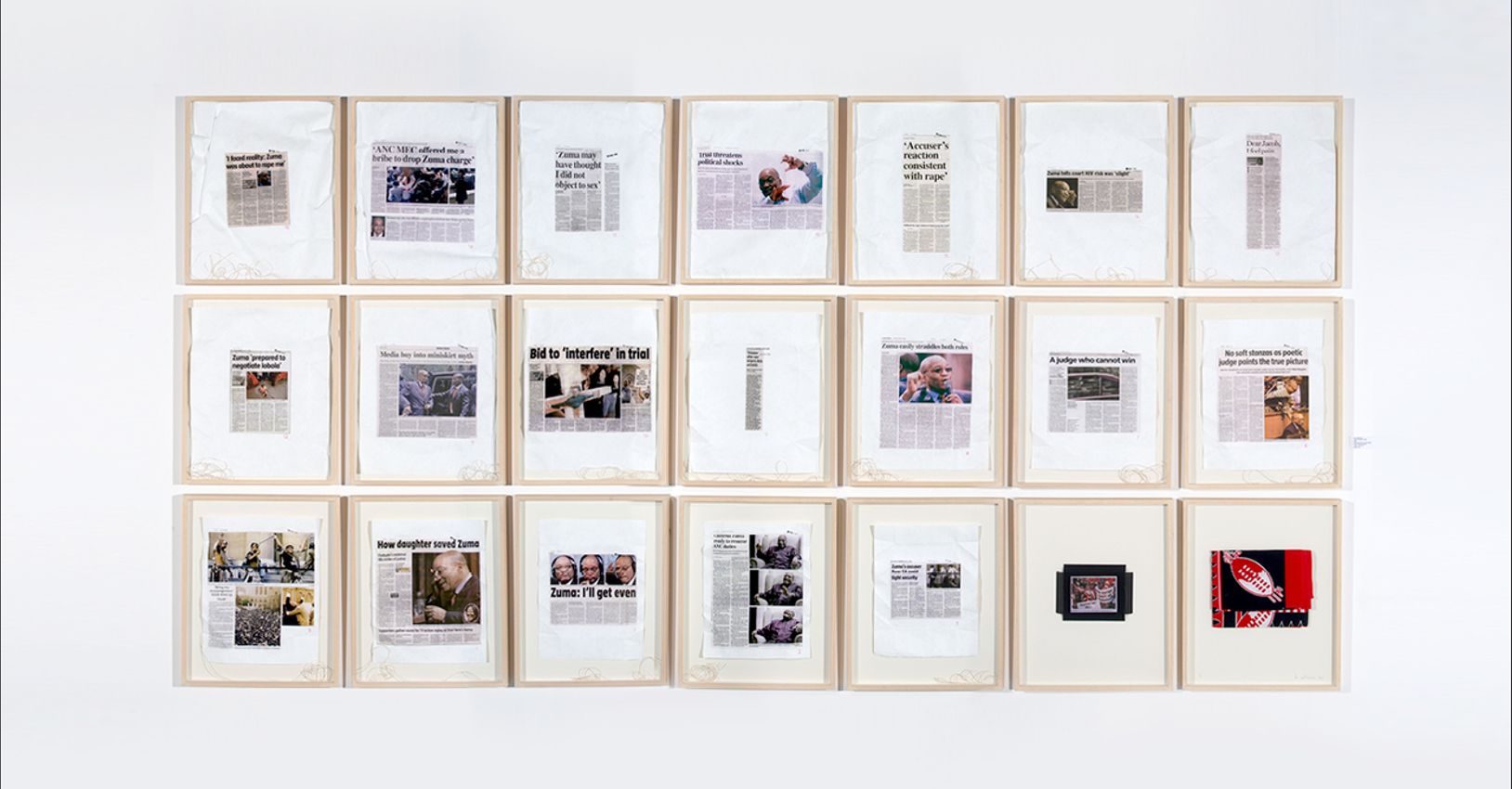
The sudden re-emergence of Jacob Zuma on the national arena is marked by showing again Williamson’s 2014 work, Pass the Parcel, Jacob which followed the story of his rape trial through a series of newspaper cuttings highlighting the uneven power dynamics between Zuma and his accuser.

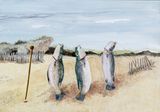
Looking further back on the continent’s timeline, the ink drawings series Postcards from Africa is based on photographic postcards sent in an era of colonial expansion. Here the artist redraws the landscapes and situations imaged in these old photographs, but the people who once stood so stiffly in many of them are no longer required to be present.

Press release courtesy Goodman Gallery

Read More
About the Artist

Sue Williamson (b. Lichfield, UK, 1941) emigrated with her family to South Africa in 1948. Trained as a printmaker, Williamson also works in installation, photography and video. In the 1970s, she started to make work which addressed social change during apartheid and by the 1980s Williamson was well known for her series of portraits of women involved in the country’s political struggle. A Few South Africans is one such a series where she celebrates women who had played roles in the fight for freedom.

View Artist Profile

Also Exhibiting at Goodman Gallery

About the Gallery

Goodman Gallery is an international contemporary art gallery with locations in Johannesburg, Cape Town and London. The gallery represents artists whose work confronts entrenched power structures and inspires social change.

View Gallery Profile
Address
163 Jan Smuts Avenue
Parkwood
Johannesburg
South Africa
Opening Hours
Tuesday - Friday
9am - 5pm

Saturday
9am - 2pm
(1)
Johannesburg 163 Jan Smuts Avenue, Parkwood
Goodman Gallery
163 Jan Smuts Avenue, Parkwood, Johannesburg, South Africa

Opening hours
Tuesday - Friday
9am - 5pm

Saturday
9am - 2pm
The art world in focus