



Press Release

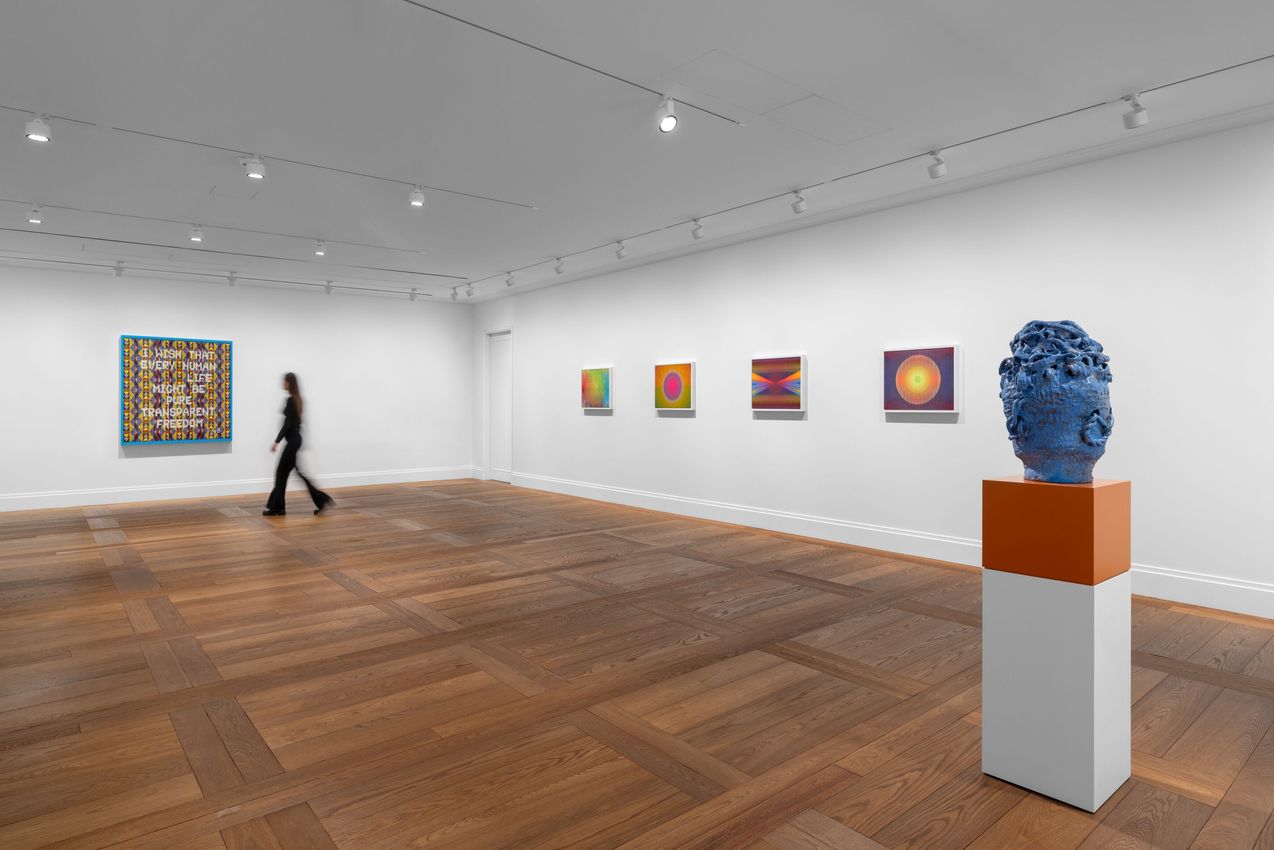
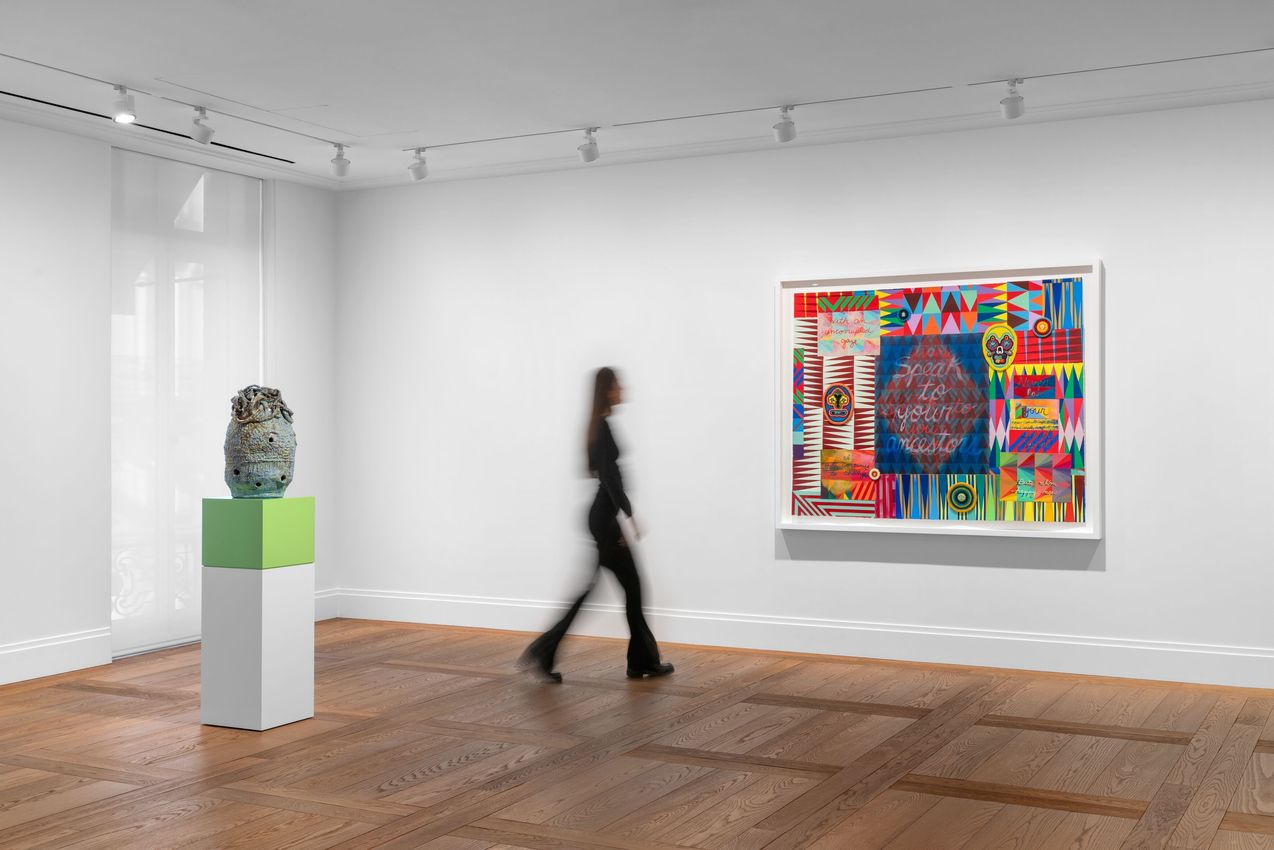
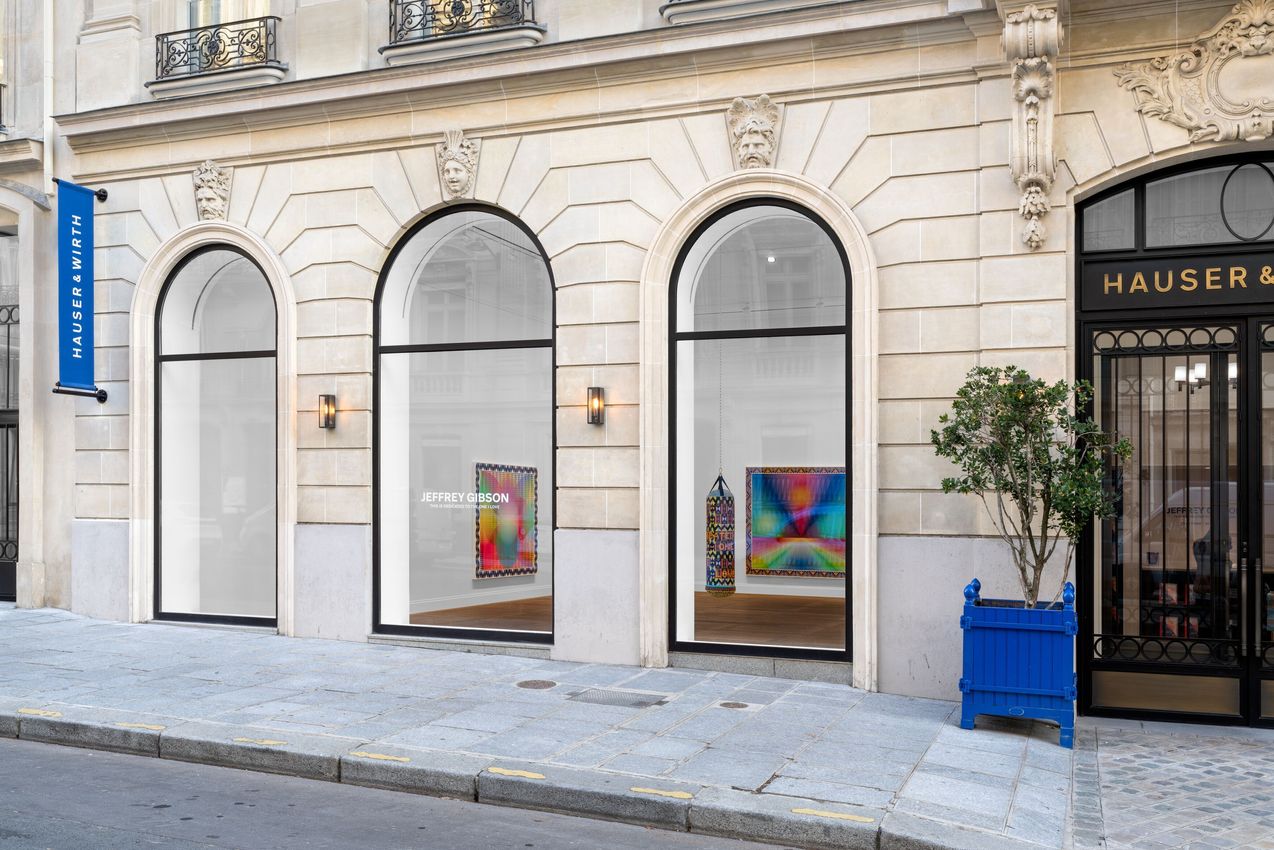
Jeffrey Gibson’s first solo exhibition with the gallery and in France will take place at Hauser & Wirth’s Parisian outpost this Autumn. Celebrating the breadth of Gibson’s output, the exhibition features three new groups of paintings, ranging from large to intimate in scale, alongside new works from Gibson’s series of celebrated punching bags, hanging cloaks, paintings on paper, canvas and beaded panel, as well as a new body of free-standing ceramic head sculptures. The title of the show, ‘This is dedicated to the one I love,’ is a pause for empathy and a meditation on how we act and make in times of crisis.

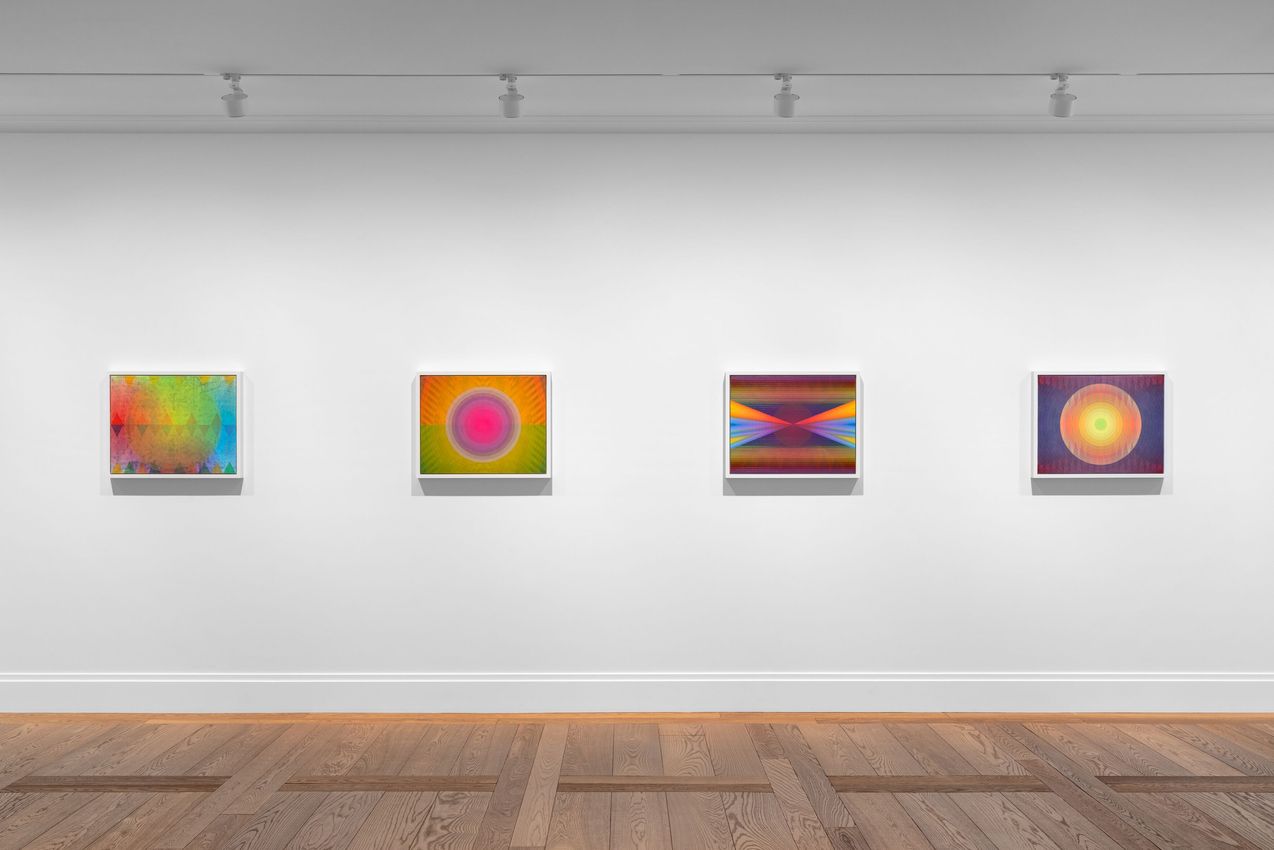
Over the past three decades, Gibson has developed a rich interdisciplinary practice that draws from American, Indigenous and queer histories as well as references to popular music, literature and art historical narratives. The artist’s distinctive visual language embraces a broad spectrum of cultural expressions and collaged identities in a way that is simultaneously intimate and radically expansive. The works on show are characterized by Gibson’s bold chromatic sensibility and emphasis on pattern and abstraction, whilst also drawing on histories of color studies and the concept of the psycho-prismatic, how color, light and prisms allow us to see multiple things at once.

Jeffrey Gibson is the sixth artist selected for the 2025 Genesis Facade Commission for the Metropolitan Museum of Art in New York, NY, and has created four works for the museum’s historic exterior that will be on display from 12 September 2025 – 9 June 2026. Other current and forthcoming solo projects include an immersive installation at MASS MoCA in North Adams, MA, until August 2026; and an installation at Kunsthaus Zürich, Switzerland, through December 2026, which marks Gibson’s first presentation in a European museum following his solo exhibition for the U.S. Pavilion at the 60th Venice Biennale in Italy.

About the exhibition

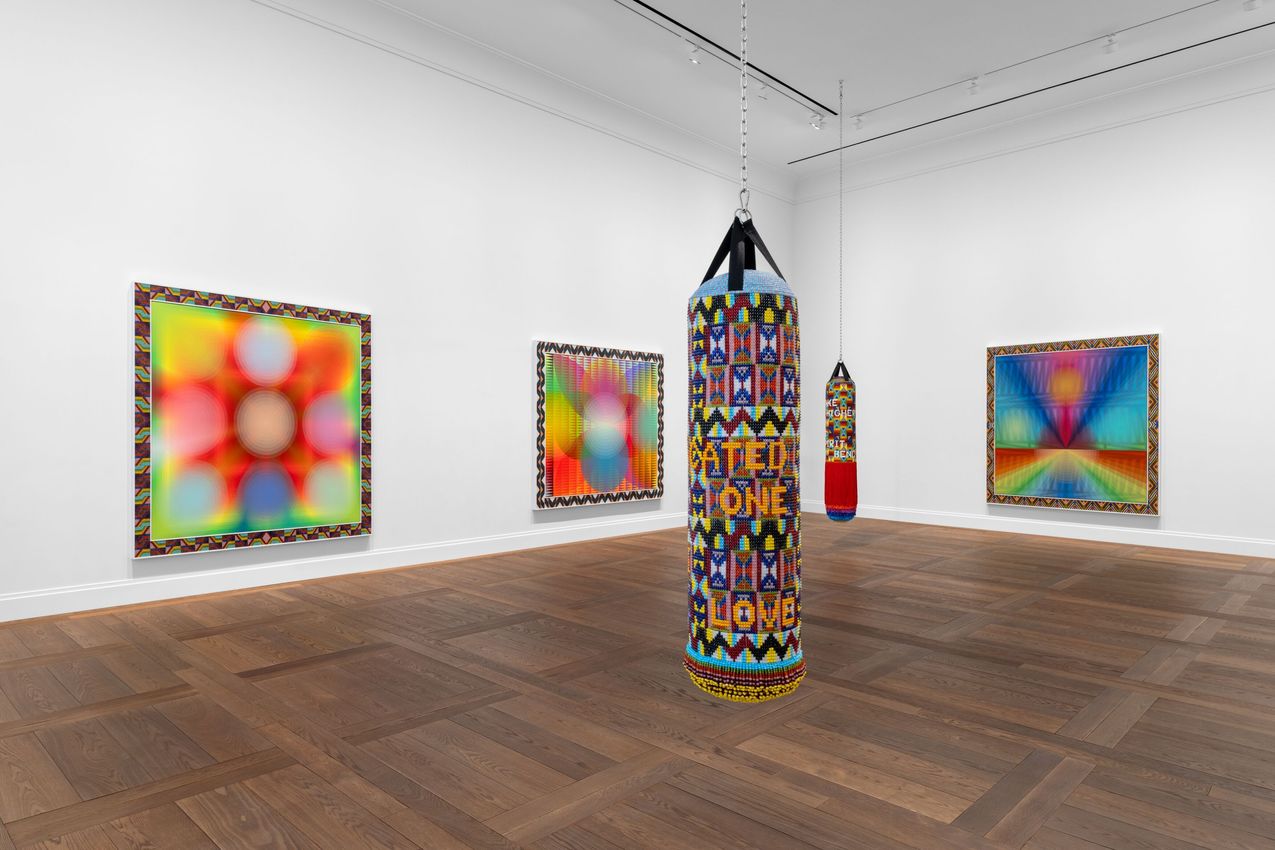
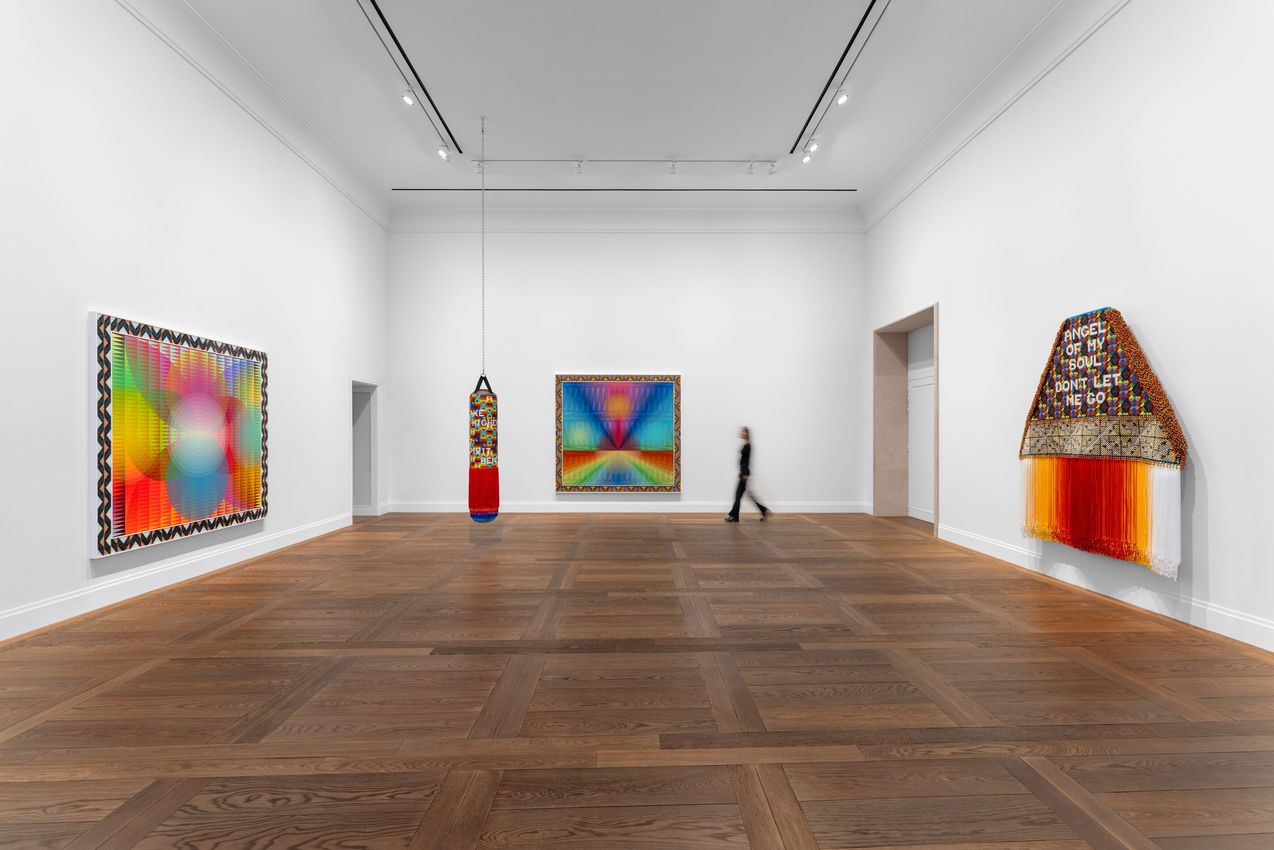
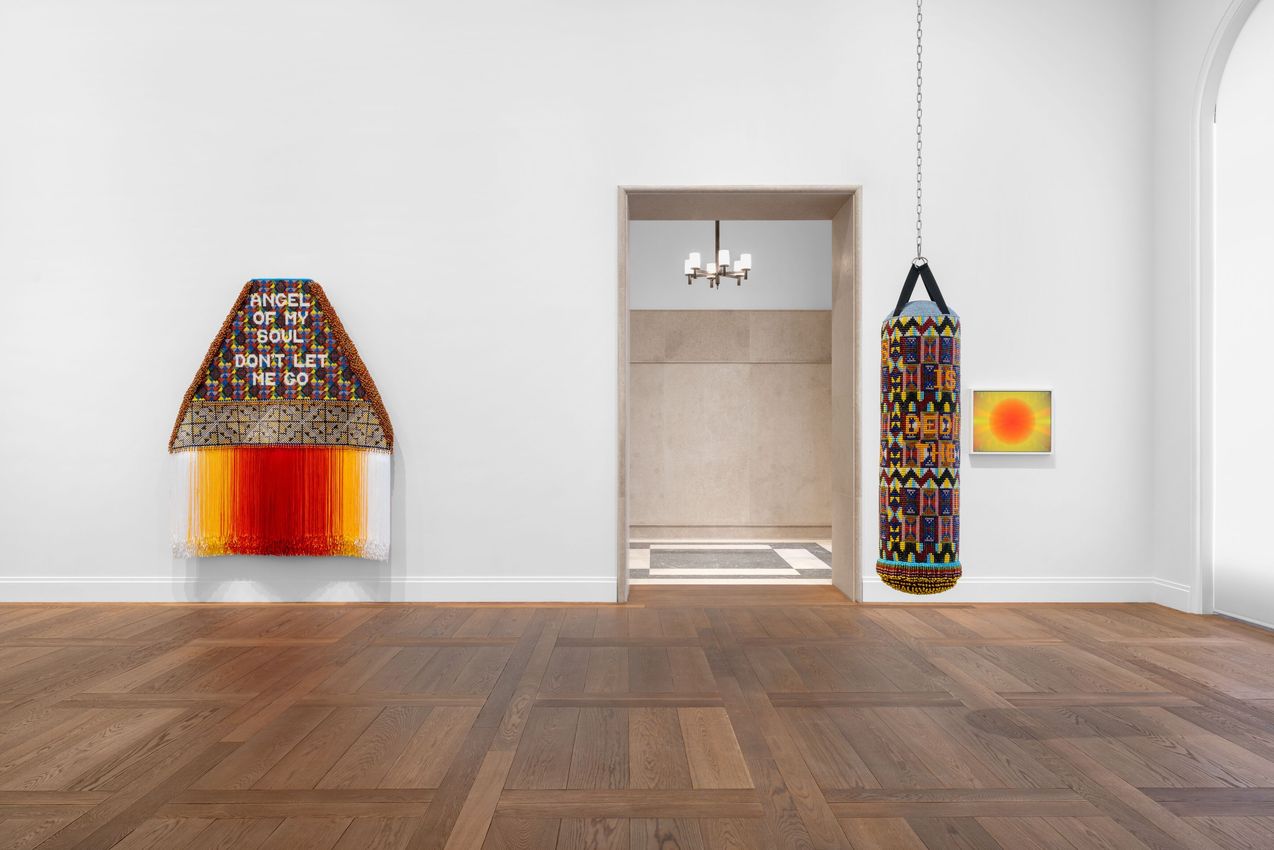
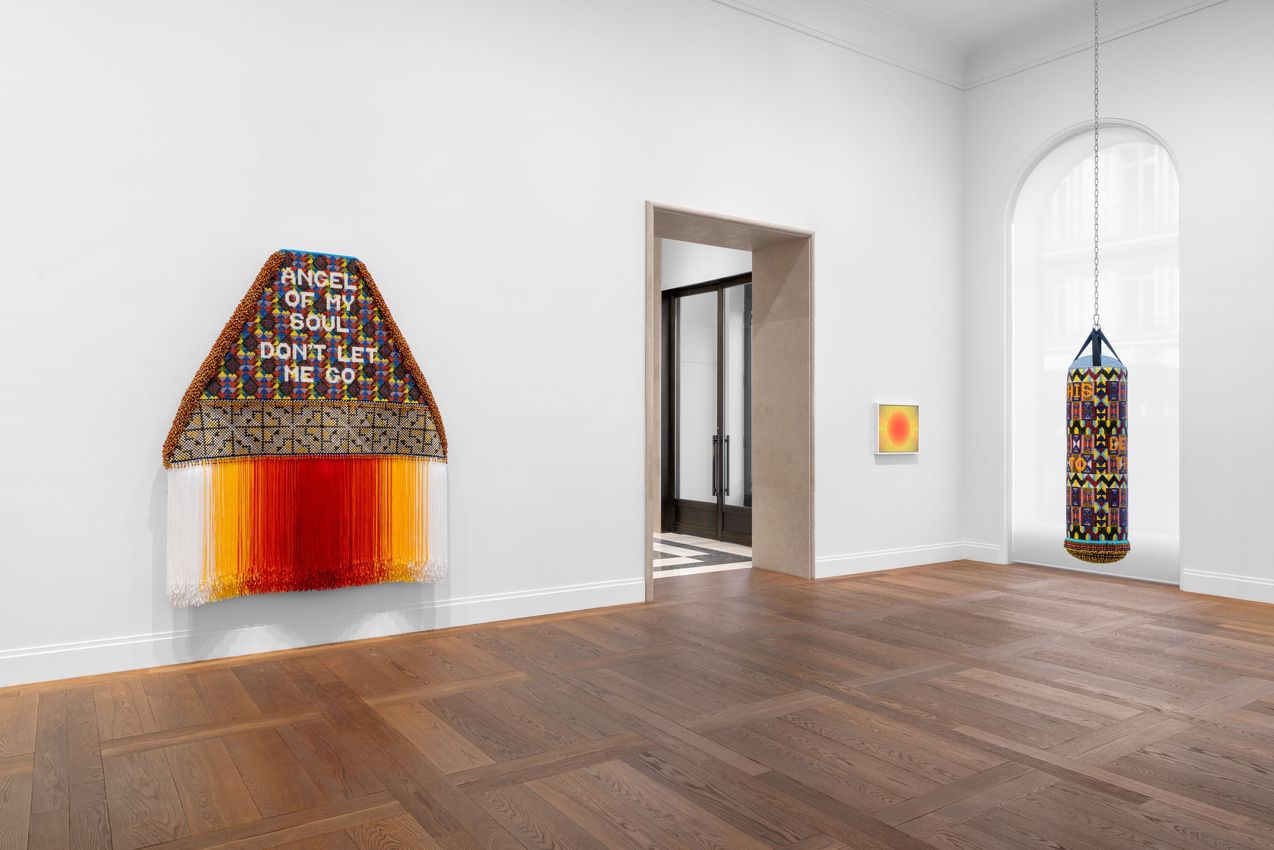
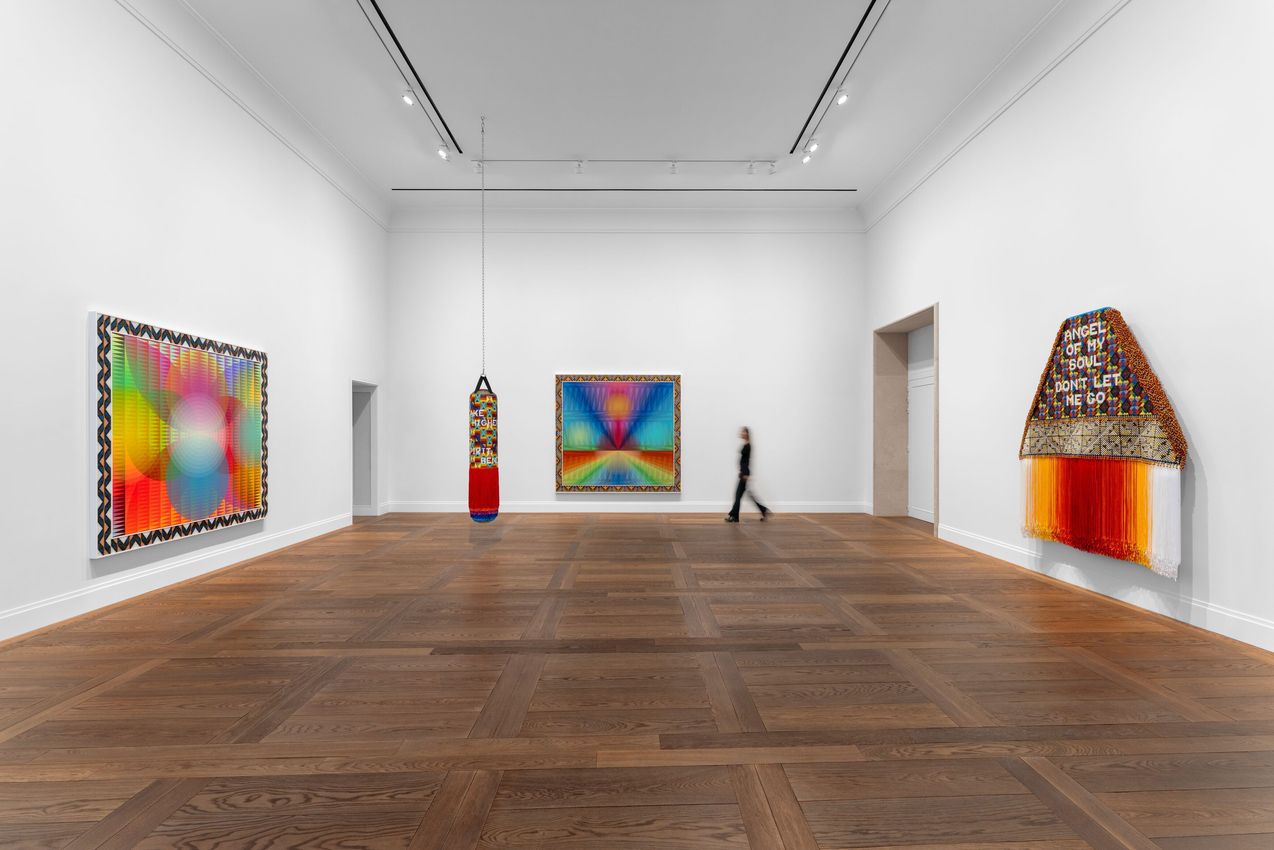
The genesis of this new body of work is a series of small, jewel-like paintings rooted in Gibson’s investigation into astral projections and psycho-prismatism. The works draw on histories of color studies from the 17th century to the present, with a particular focus on those created in the 19th century. The formal compositions of these works integrate diagrammatic color studies while also recalling Indigenous and modern histories of abstraction. Gibson’s exploration of the psycho-prismatic inspired a group of mid-size ‘horizon’ paintings, in which the artist utilizes overlapping circular motifs and patterns to create polychromatic compositions operating somewhere between landscapes and timescapes. Also on view, a selection of large beaded-frame paintings that are ecstatic in color and enveloping in scale. While the complex layers of pigment on the canvas are almost indecipherable, the subtle gradients of color soften the graphic contrasts within the composition, allowing the viewer to see every layer at once.

Trained as a painter, Gibson is driven by process and materiality; he frequently incorporates elements and techniques drawn from various traditions of making. Applying intricate beadwork, leatherwork, and quilting to quotidian and vernacular objects, he combines cultural aesthetics and strategies of production into playful and evocative hybrid forms that resist easy categorization. This approach is embodied in the beaded and fringed hanging wall cloaks and punching bags featured alongside the paintings. Referencing Indigenous regalia, the cloaks are used as a conceptual tool for reflection on the transformative power of what is worn. Through the cloaks, Gibson examines how the garments activate the body and vice versa, resulting in works that Gibson considers figurative sculptures.

The double-height ground floor of the gallery will display beaded punching bags emblazoned with phrases such as ‘NEVER LET YOUR SPIRIT BEND’ or ‘I WANT TO TAKE YOU HIGHER.’ Much like the cloak works, the punching bags represent Gibson’s subversion of a functional object into an assisted readymade. The employment of language remains central to Gibson’s oeuvre, signalling references to popular culture, expressions of self, and reflections on human histories. For the first time, Gibson will also display new freestanding ceramic head sculptures that evolve from the artist’s interest in Mississippian head pots, a unique form of pre-Columbian North American Indigenous pottery.

Courtesy Hauser & Wirth.

Read More

Installation Views

About the Artist

In 2024, Jeffrey Gibson became the first Indigenous artist to represent the United States with a solo exhibition at the Venice Biennale. Drawing on his Cherokee and Choctaw heritage, Gibson fuses pop culture, queer iconography, commercial objects, and Indigenous motifs to examine identity and cultural hybridity. His works frequently transform everyday items—such as punching bags—through the formal languages of modernism, recontextualising familiar forms to challenge the boundaries of modern art. This approach, combined with intricate beadwork and vibrant references to both tradition and contemporary culture, allows Gibson to offer a powerful reflection on individual and collective narratives in a global context.

View Artist Profile

Also Exhibiting at Hauser & Wirth

Address
26 bis rue François 1er
Paris
France
(1)
Paris 26 bis rue François 1er
Hauser & Wirth
26 bis rue François 1er, Paris, France
The art world in focus