



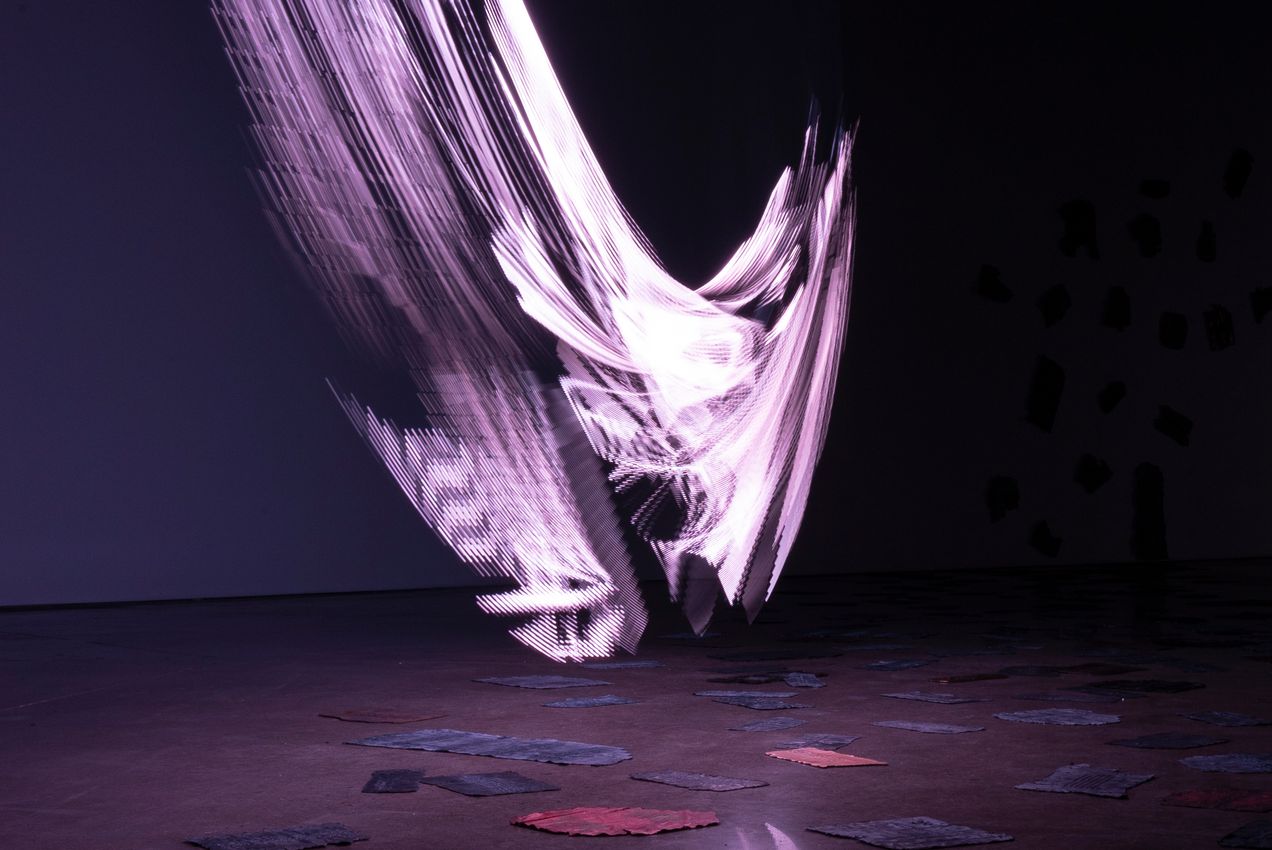
Los Angeles...Since the 1970s, Jenny Holzer has deployed language as her medium, mobilising poetic, politicaland personal texts to speak to our experiences of power, violence, joy, despair and idealism. Beginning 1September, the renowned American artist will present new and recent paintings and robotic LEDs at Hauser &Wirth’s West Hollywood location, marking her first major exhibition in Los Angeles since 2012 and the first timeshe has employed artificial intelligence (AI) technologies in her text-based practice. Through her timely reflectionson the American experience over the last four decades—including the country’s current shift into the latest phaseof the Information Age, the burgeoning era of AI—Holzer has always pushed the frontiers of contemporary art andlanguage, and this new group of works is no exception.
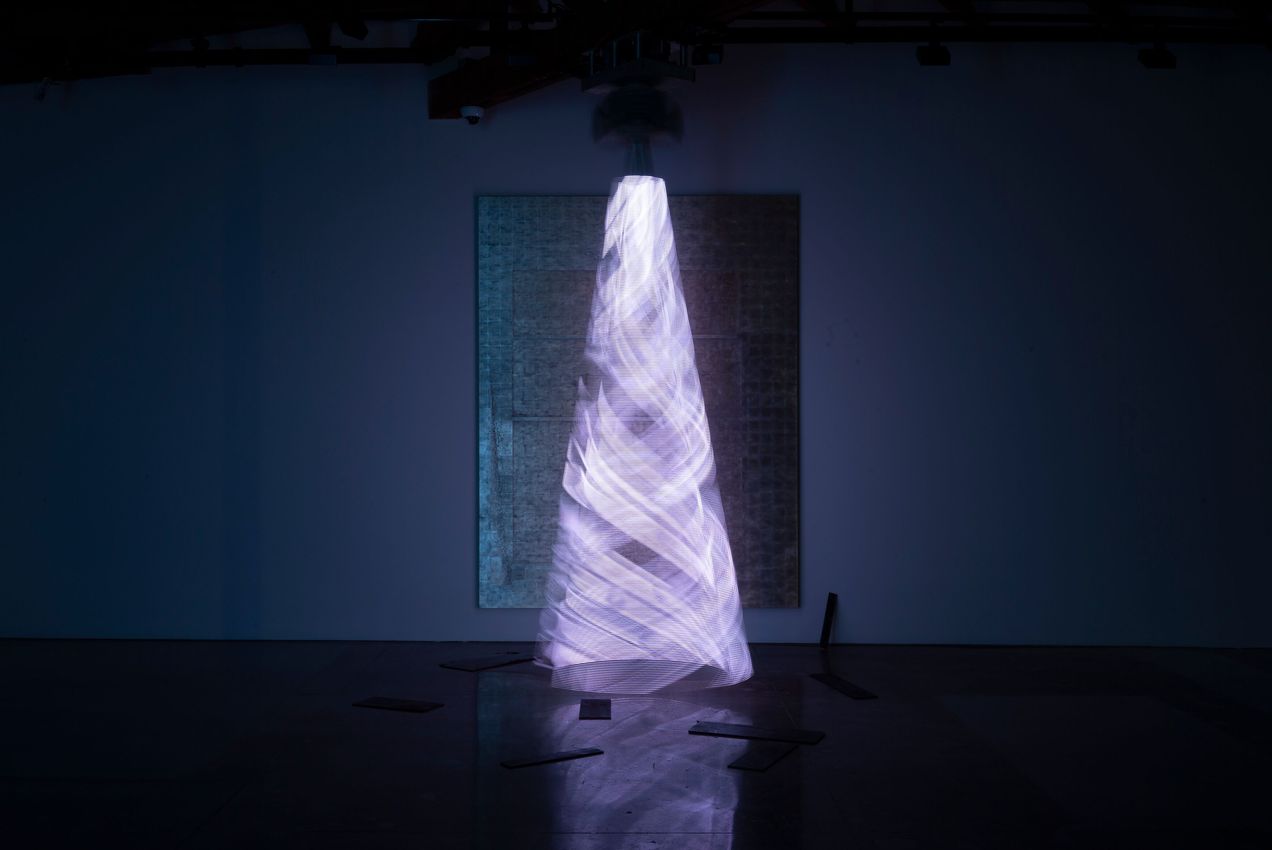
Among the new works Holzer has created for the exhibition are two robotic vertical LEDs installed side by side,each displaying AI-generated texts. The latest development in a career-long conceptual exploration of both originaland borrowed language, the artist’s experiments with AI pose new questions of authorship prompted by the re/degenerate nature of new technology. In the LED titled GOOD (2023), an AI tool was instructed to describerapturous experiences—human and nonhuman, physical and immaterial. Its responses were poetic descriptionsof emotional sensations and natural phenomena, as well as nonhuman experiences and entities such as machinesounds and extraterrestrials. Selected texts were programmed to rise along the four sides of the work in pastelhues. In BAD (2023), extremist political content was fed to the generator, which was then asked to composeshort statements and cryptic poems evocative of the far right and alt-right. These passages flash, spin andpulsate across the LED in shades of gray and bursts of red. The texts activate all sides of both LED columns whileanimating the space through their individually choreographed robotic movements. The works are presented notas adversarial counterparts, but as a complete sensorial depiction of complex parallel experiences, both humanand artificial. From joyful and contemplative to aggressive and chaotic, the LEDs evoke the unpredictability andunknowability of AI’s current reach and future potential.
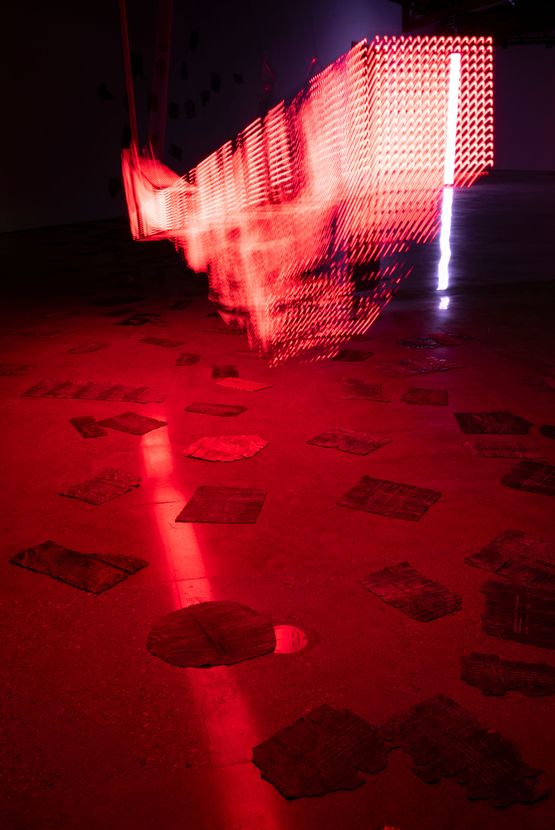
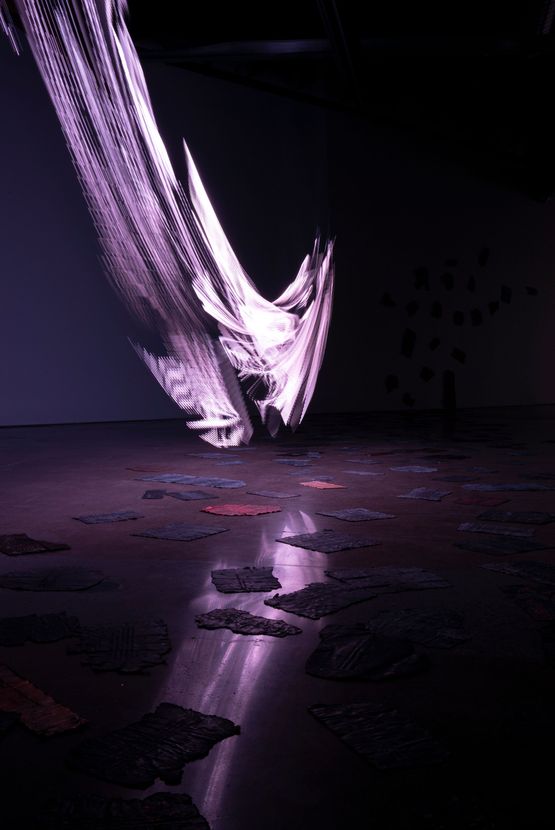
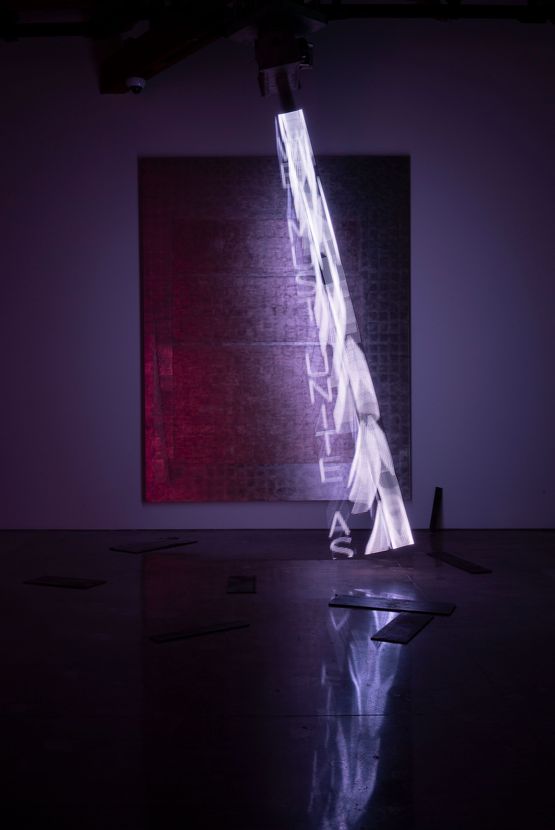
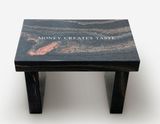
Also on view is WTF (2022), a swinging LED beam that displays tweets posted by Donald Trump during hispresidency and posts by Q, the eponymous leader of the QAnon conspiracy movement. WTF slides along atrack in an unpredictable cadence, echoing the erratic rhythm with which these messages first appeared online.The flashing and scrolling texts illuminate nearly 300 ‘curse tablets’ scattered across the floor. Inspired by thecurse tablets of the Greco-Roman world, which were inscribed with citizens’ wishes for vengeance and cursesupon their foes, Holzer’s tablets feature tweets by Trump, echoing the LED above them. They were created bystamping the tweets onto cast metal, then distressing and aging the objects through crumpling, folding, piercingand chemical baths. Like deformed or molten iterations of the artist’s previous evocations of public plaques, thesedamaged tablets suggest refuse, wreckage and devastation. Together, these works form a time capsule of therecent past while signaling the possible near future, both recording and reflecting the hyperbolic, enraged rhetoricthat characterizes the contemporary political and media landscape.
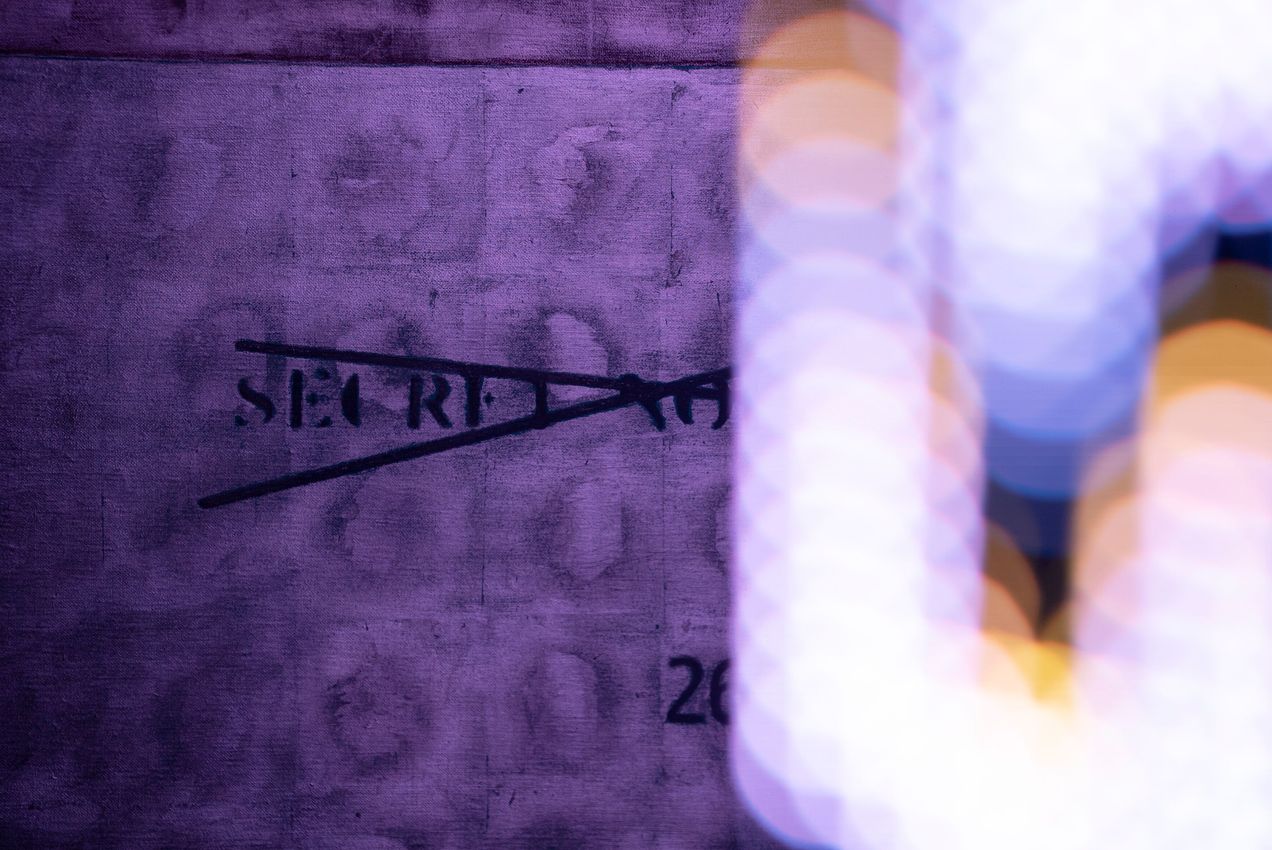
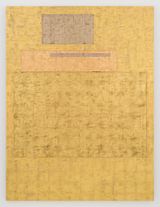
The gallery walls are lined with Holzer’s latest works from her ongoing series of Redaction Paintings, which arebased on her decades-long research into declassified government documents. Holzer has taken pages fromthese sources and transferred them to linen by hand, meticulously layering their contents and censored revisionswith oil paint and metal leaf. The paintings include references from FBI records concerning the Patriot Act, Trump-era briefs, and a 2021 report from the US National Security Commission on Artificial Intelligence that analyses therapid advancement of AI technology. The luminous and richly textured surfaces of these new works explore bothreal and perceived dangers to democracy through the ongoing and interconnected tumults of current-day politics.
Jenny Holzer is an American conceptual and installation artist whose work deploys text in public spaces across an array of media, including electronic and LED signs, carved stone, billboards, and printed materials. Closely aligned with the feminist art movement, Holzer’s oeuvre provokes public debate and illuminates social and political injustice. Celebrated for her inimitable use of language and interventions in the public sphere, Holzer creates a powerful tension between the realms of feeling and knowledge, with a practice that encompasses both individual and collective experiences of power and violence, vulnerability and tenderness.


A respected voice in contemporary art discourse.
Focusing on ambitious storytelling and insightful art-world commentary. Ocula Magazine publishes in-depth interviews, critical essays and timely analysis on the artists, exhibitions and ideas driving the global art world.
Learn more about Ocula Magazine
Showcasing the best of the art world.
Ocula partners with galleries from around the world to highlight their artists, artworks and exhibitions. Gallery membership is by application and invitation, with each member vetted by an independent panel.
Learn more about Ocula Membership

Specialises in the sale of major artworks.
Led by a team with deep ties to the world’s leading auction houses, galleries and collectors. Ocula’s advisory team offers bespoke services to high-net-worth clients from around the world who are looking to acquire the best of contemporary and modern art.
Learn more about our team and services