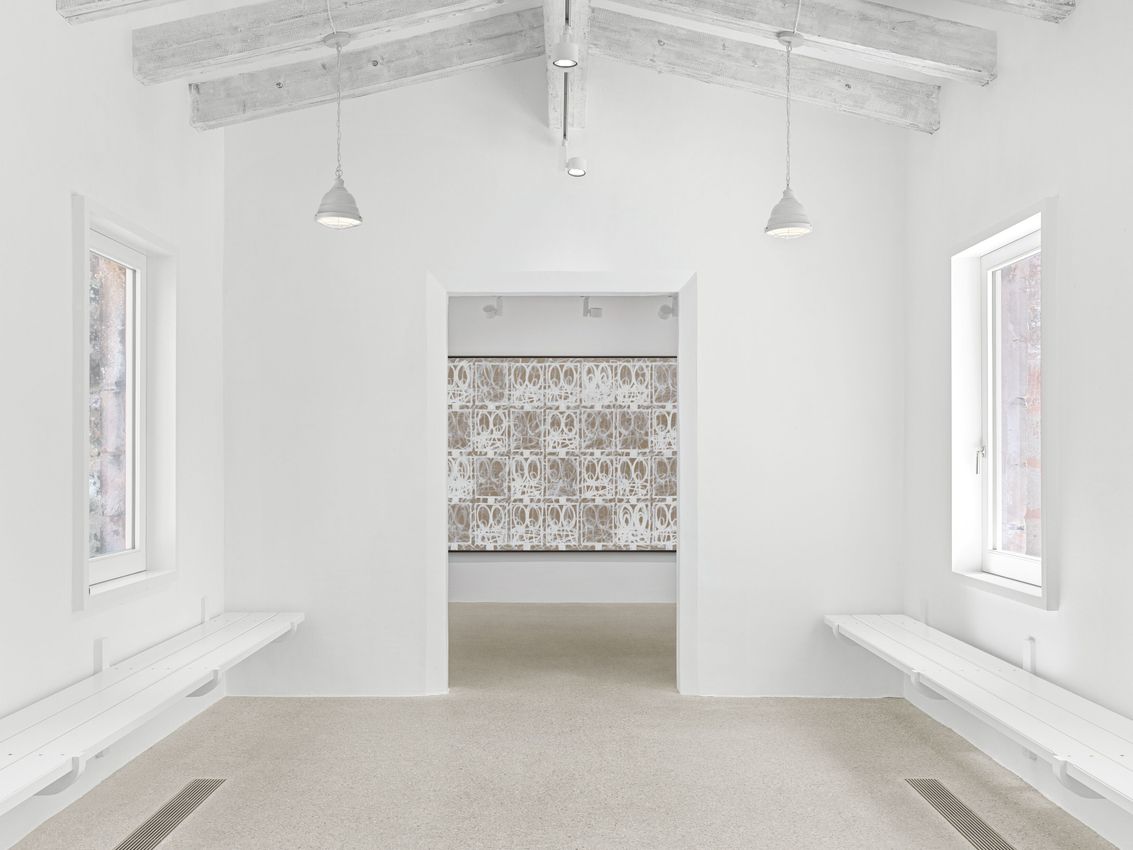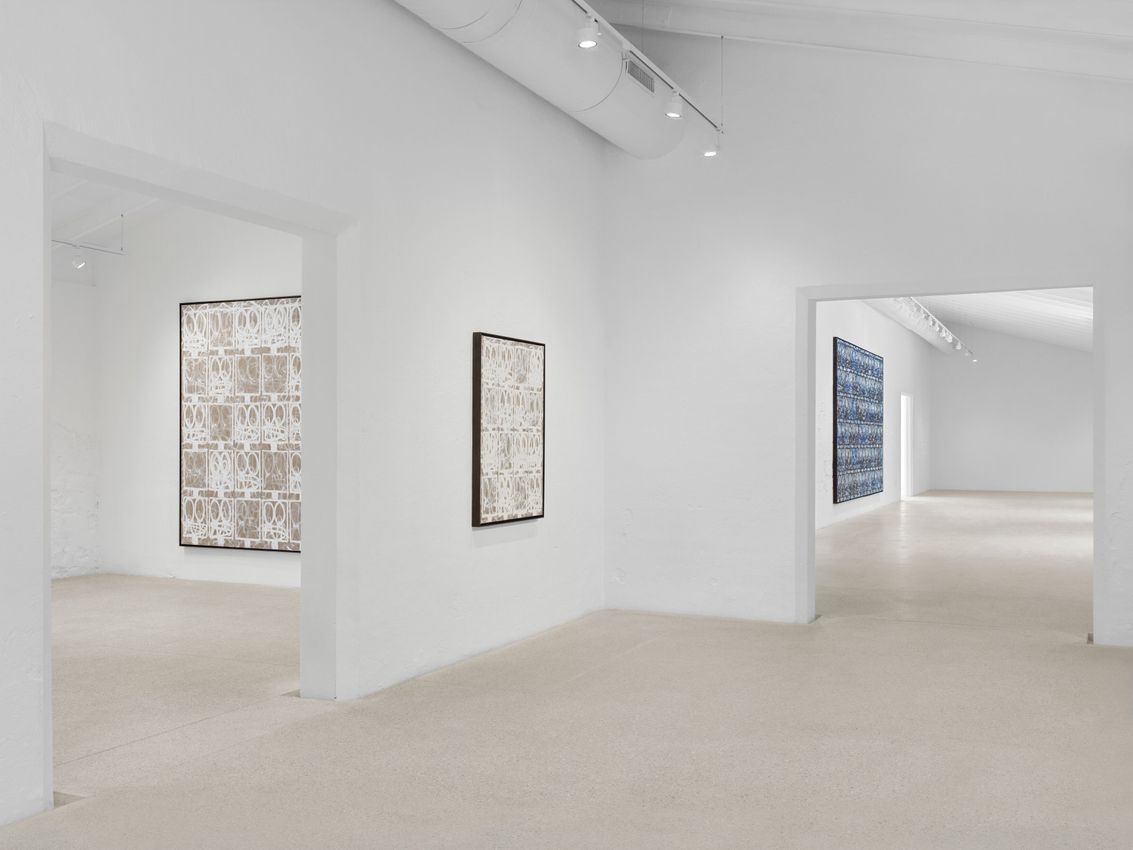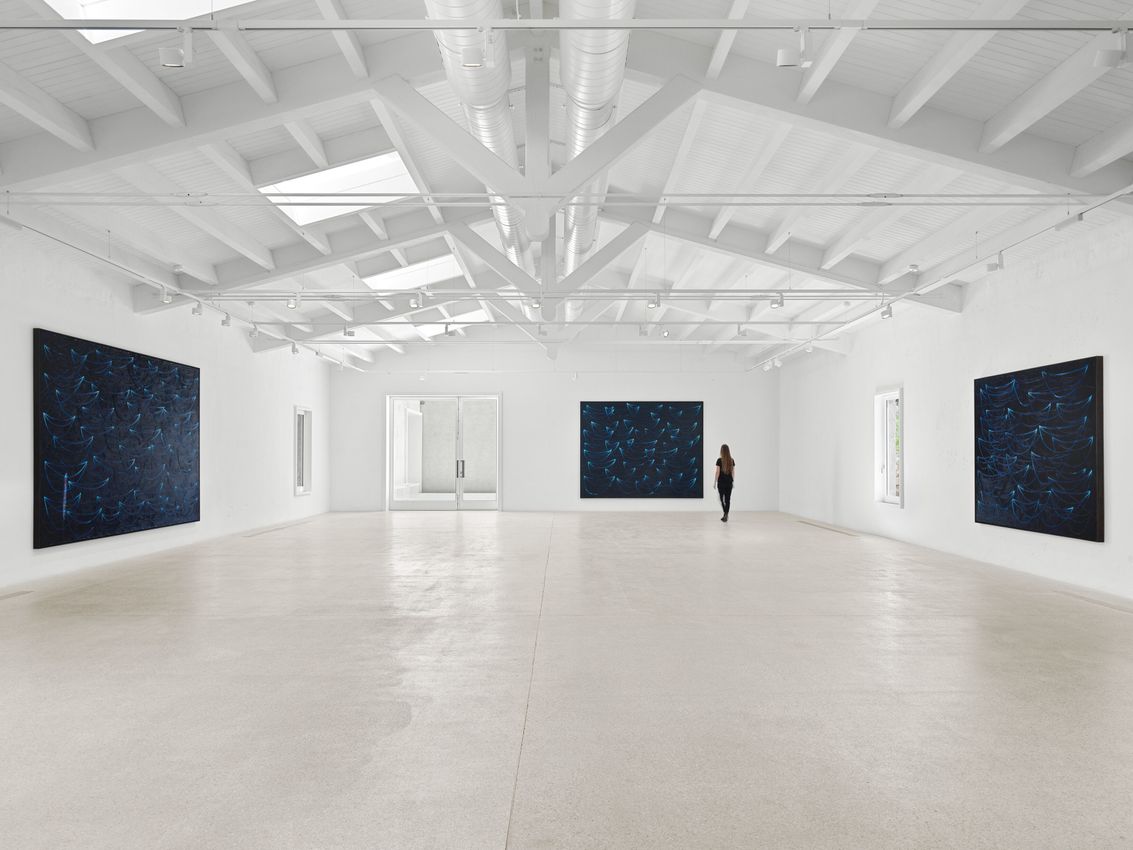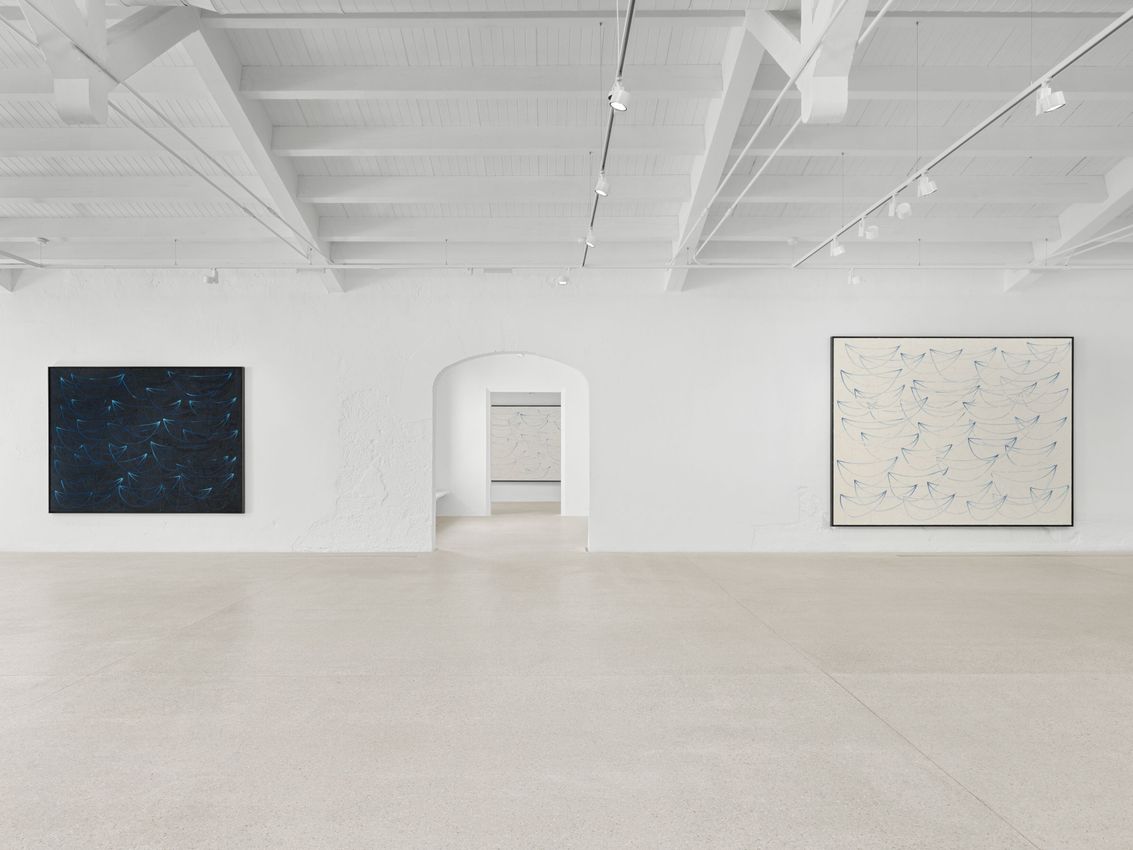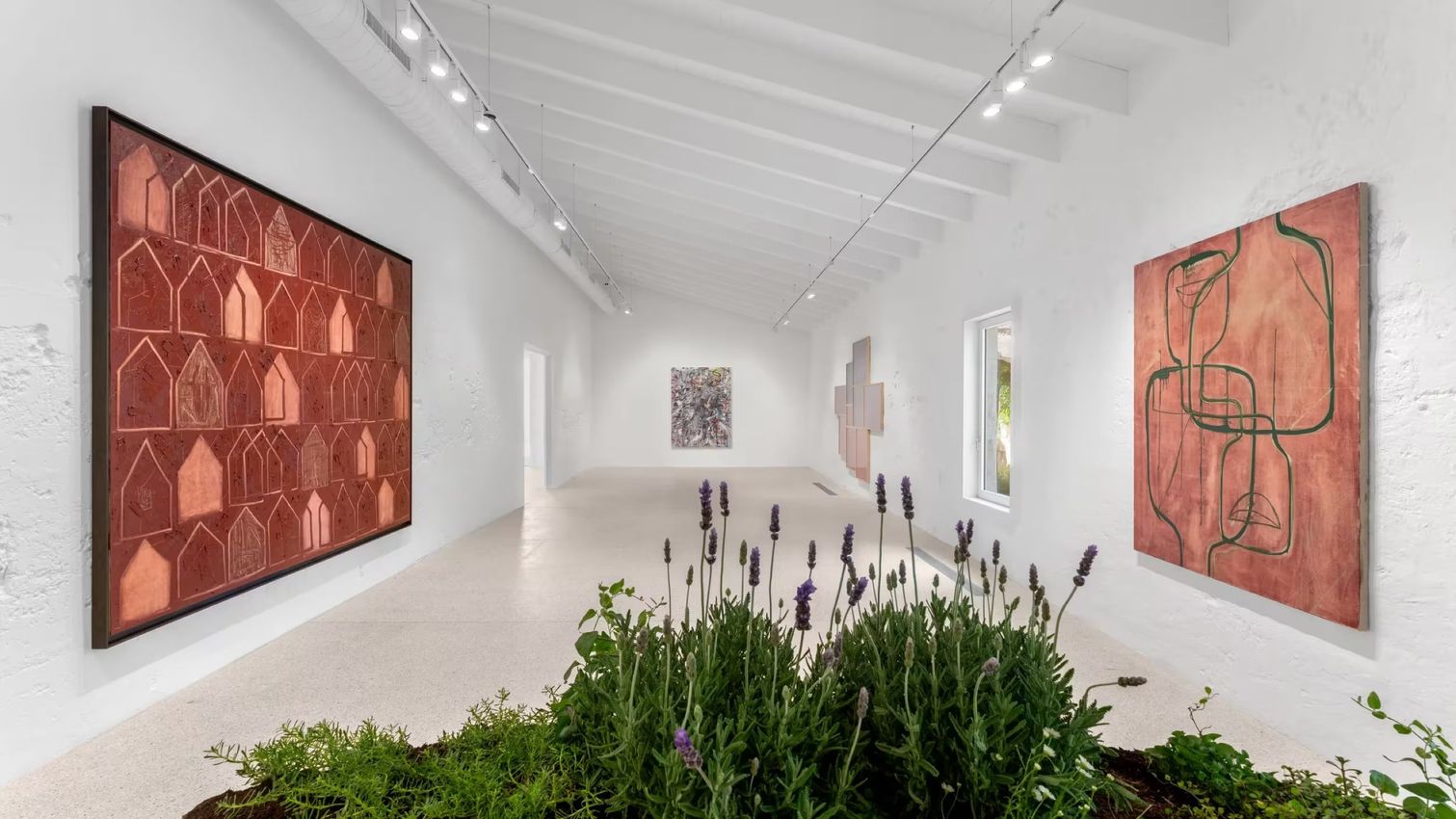




Rashid Johnson’s exhibition Sodade takes over the entire exhibition galleries at Hauser & Wirth Menorca in the sensitively repurposed outbuildings of an 18th century naval hospital. For his first solo exhibition in Spain, the renowned contemporary American artist continues to work with a complex range of iconographies to explore collective and historical expressions of longing and displacement, while speaking to the times we live in.
Sodade is the title of a Cape Verdean song from 1950s, popularised by Cesária Évora, that narrates a profound emotional state of longing on ‘the long way’ to São Tomé. Originating in the Portuguese ‘saudade’, the term suggests a feeling of melancholy and missing, and becomes hybridised in the Cape Verdean use with a shift in the spelling. In Sodade, Johnson continues to draw from critical history and narratives around migration and journeys, with a similar gesture of hybridisation.
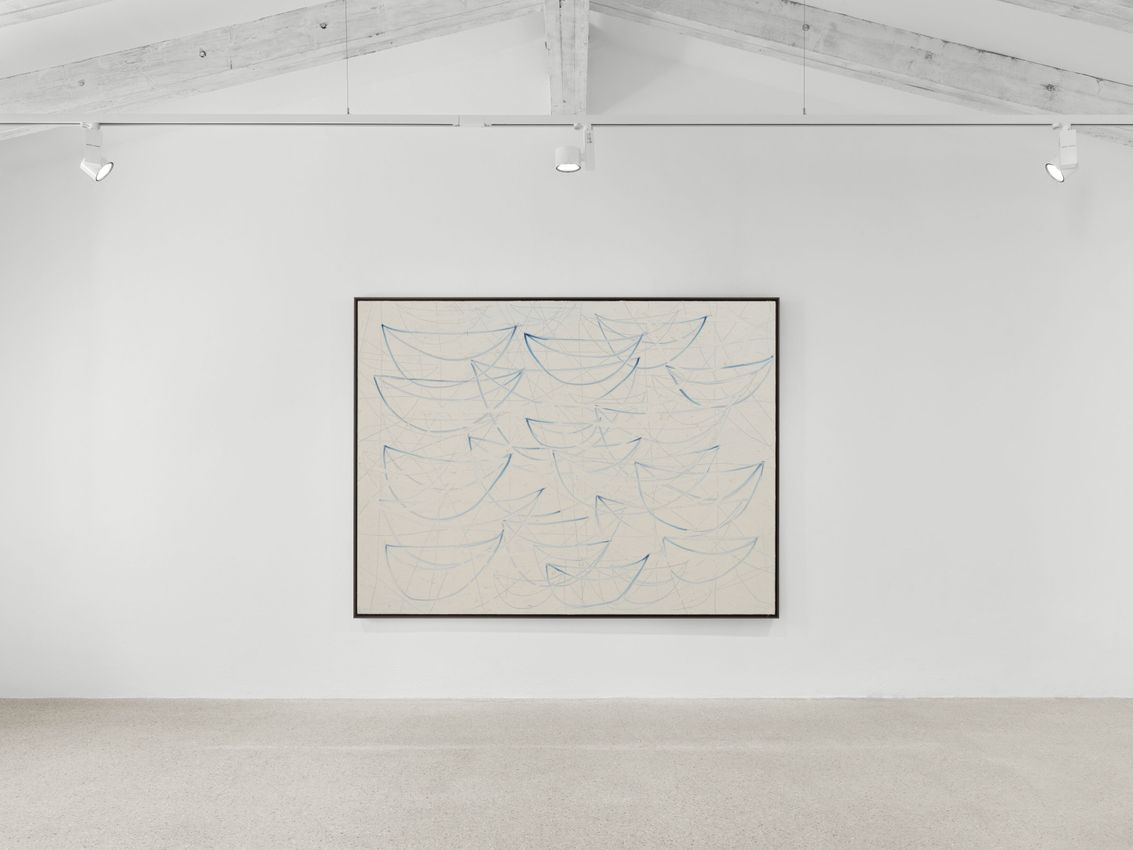
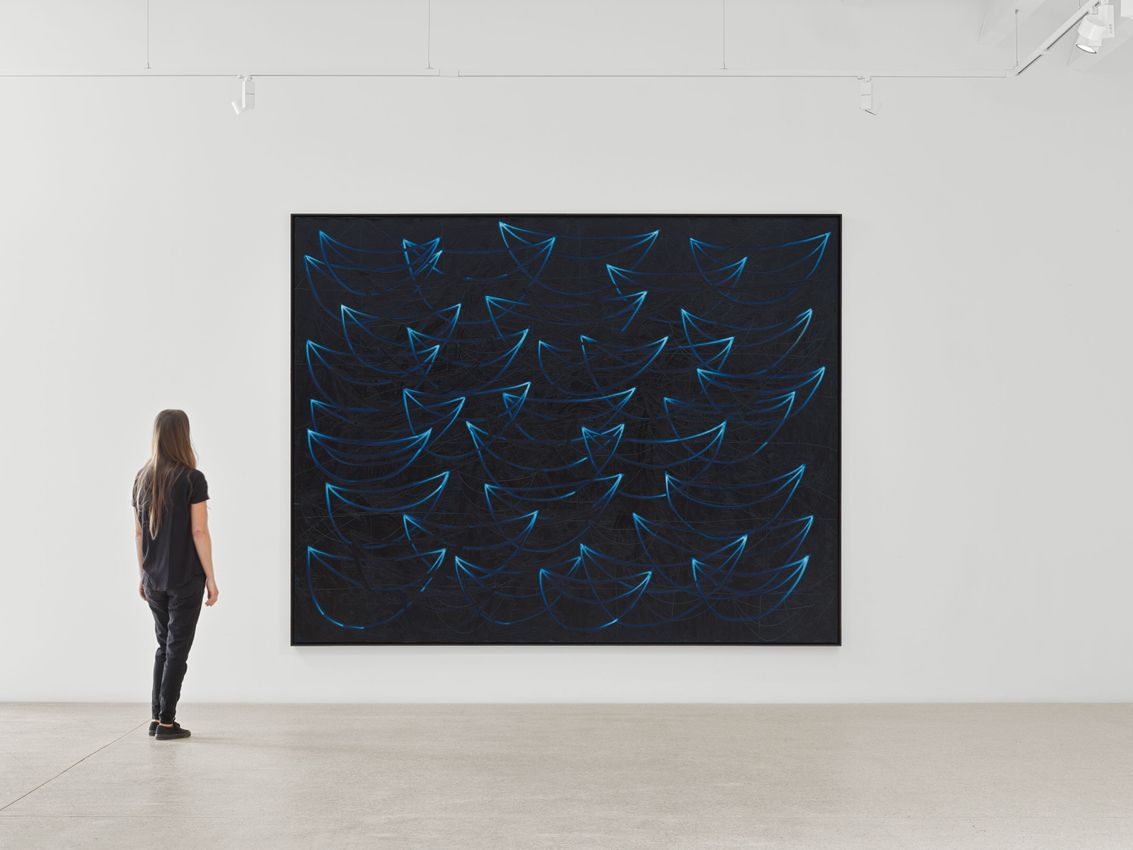
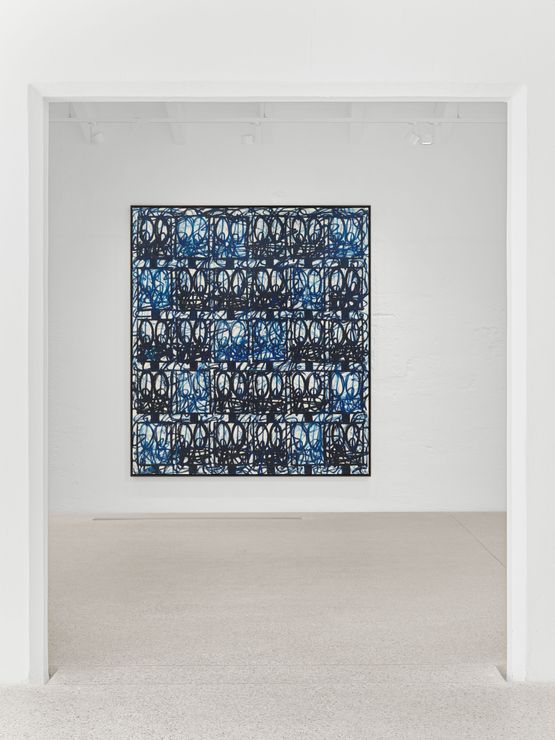
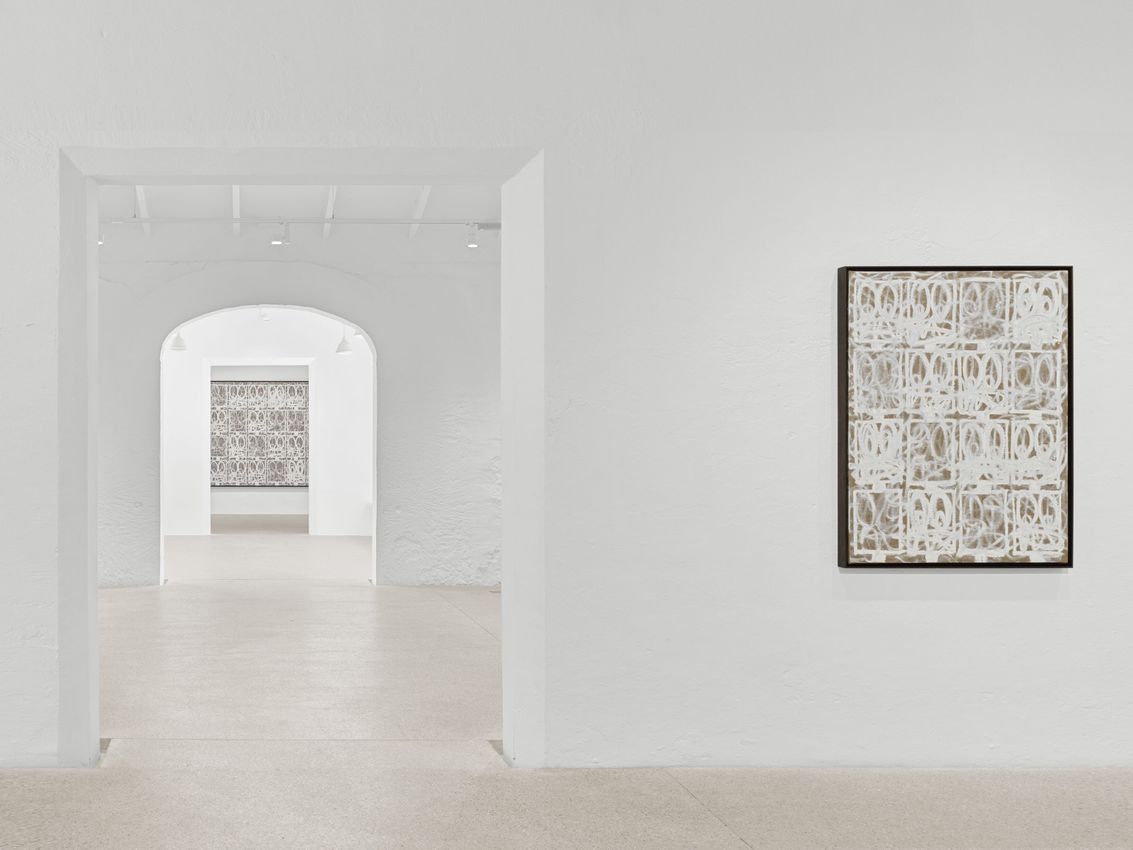
The exhibition presents a newly developed series of bronze sculptures and Seascape Paintings, alongside Bruise Paintings and Surrender Paintings, the latter of which is the latest offering to evolve from the iconography of his long-established Anxious Men series. The works are accompanied by the Education Lab, which provides a creative learning program for diverse audiences throughout the duration of the exhibition.
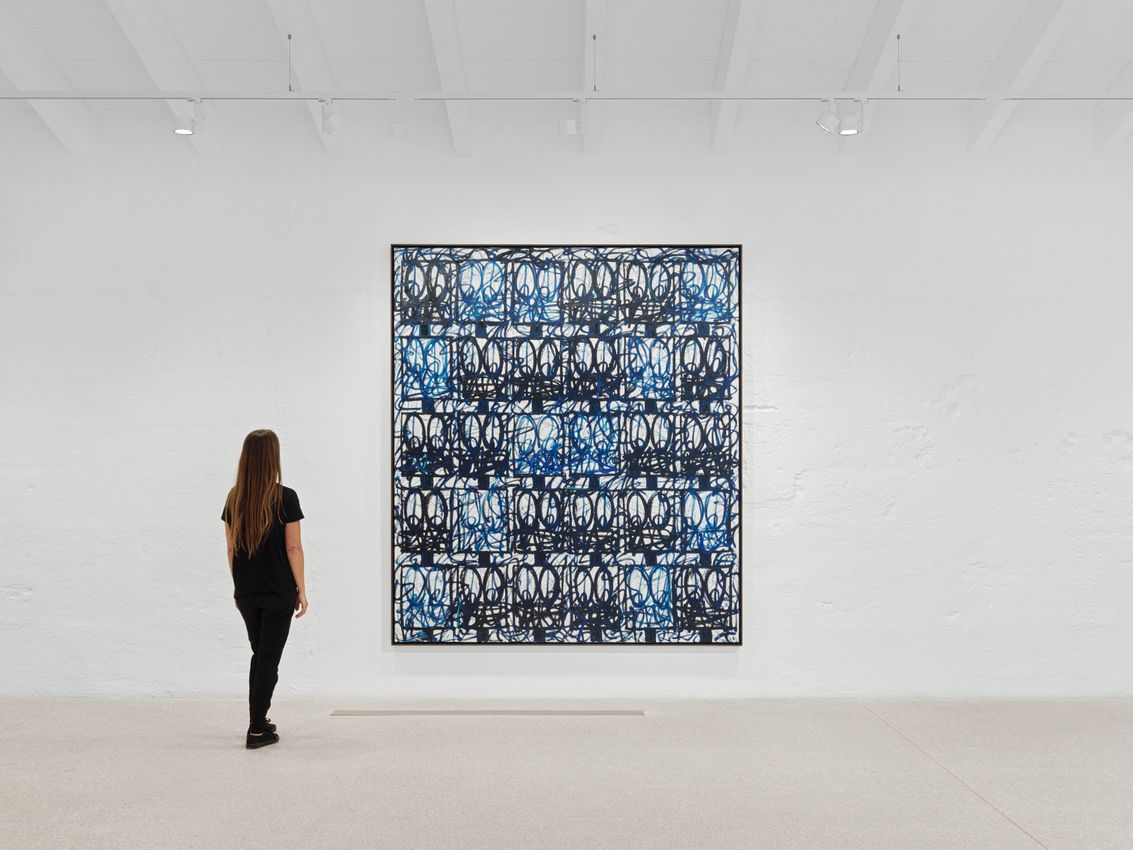
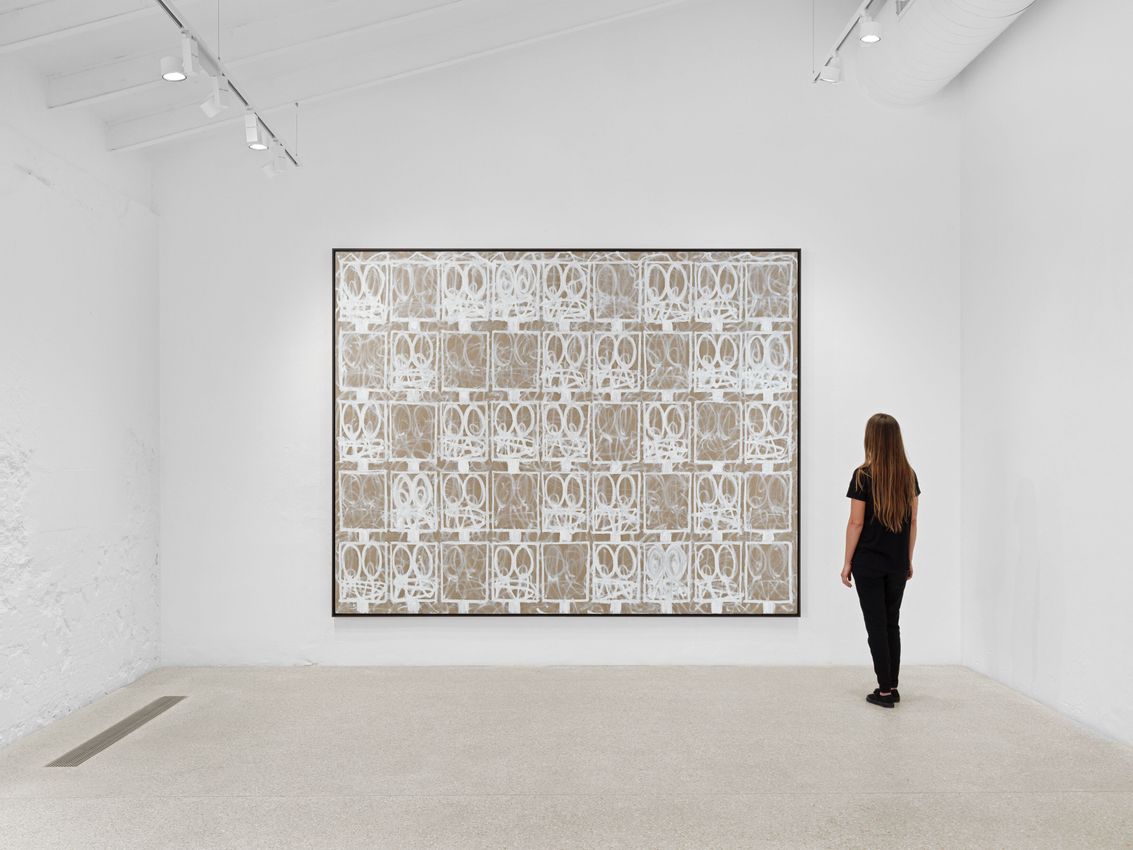
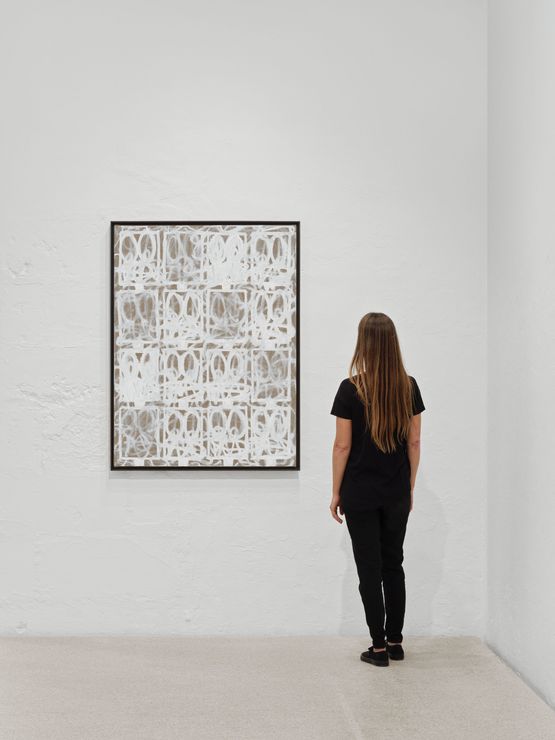
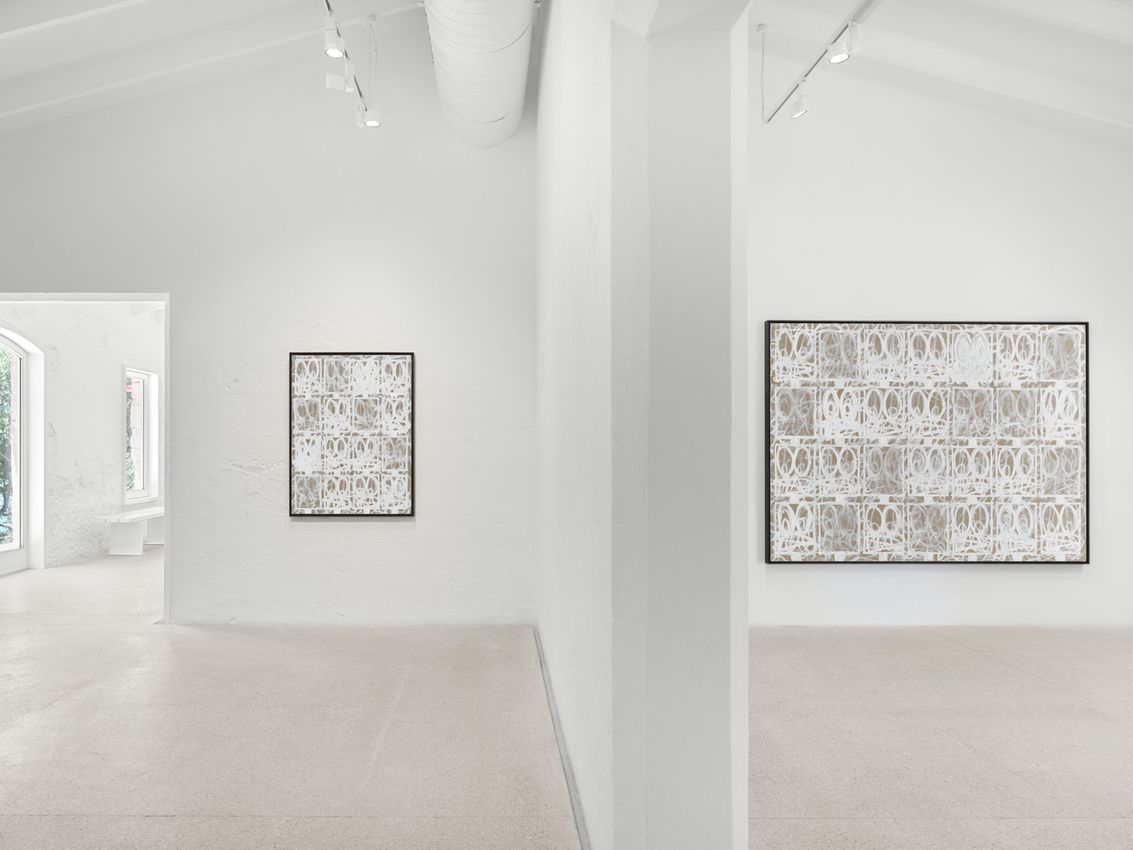
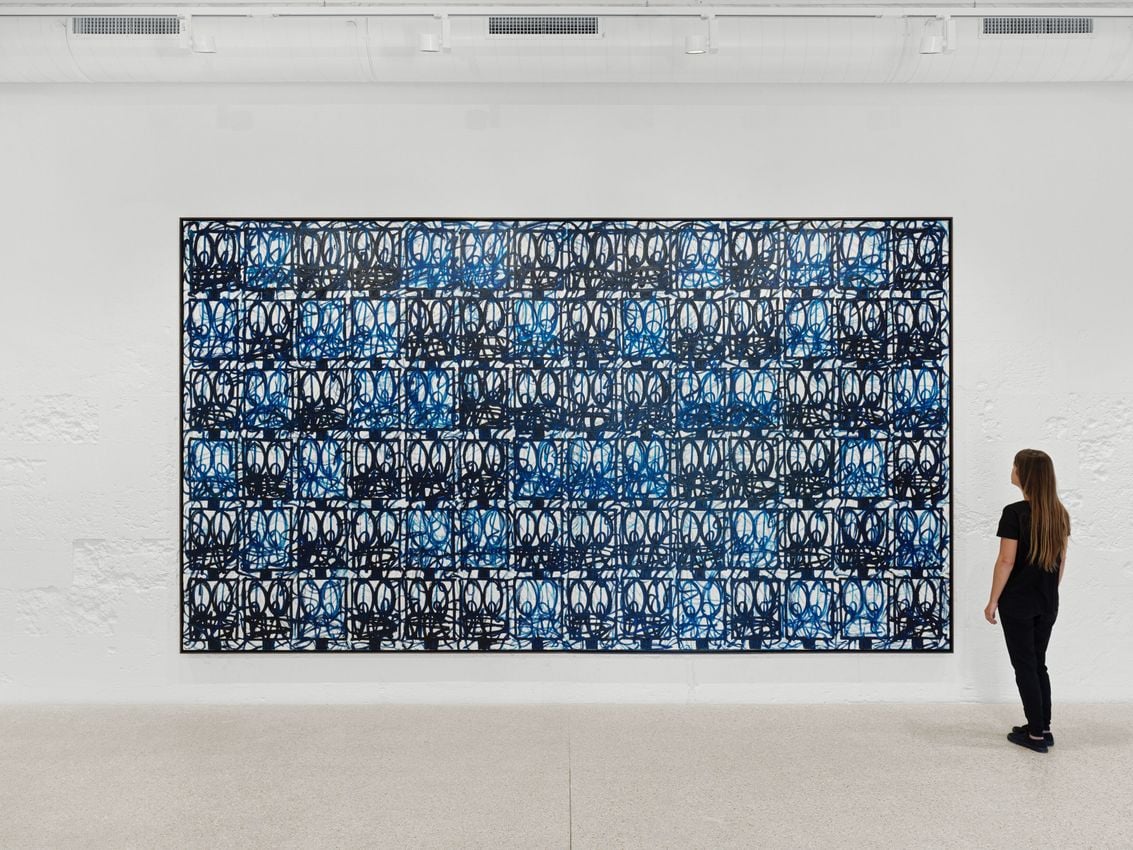
Capturing both subjective and collective historical states in real time, the artist has pivoted the Anxious Red paintings iconography, which portrayed crowds of bright red faces, to Bruise Paintings and Surrender Paintings in hues of blues and whites. Johnson selects his typical materials and tools – such as shea butter and black soap – for the importance of their historical narratives. Here he has chosen to use the canonically significant, and universally recognisable, medium of oil paint in order to communicate his message all the more urgently.
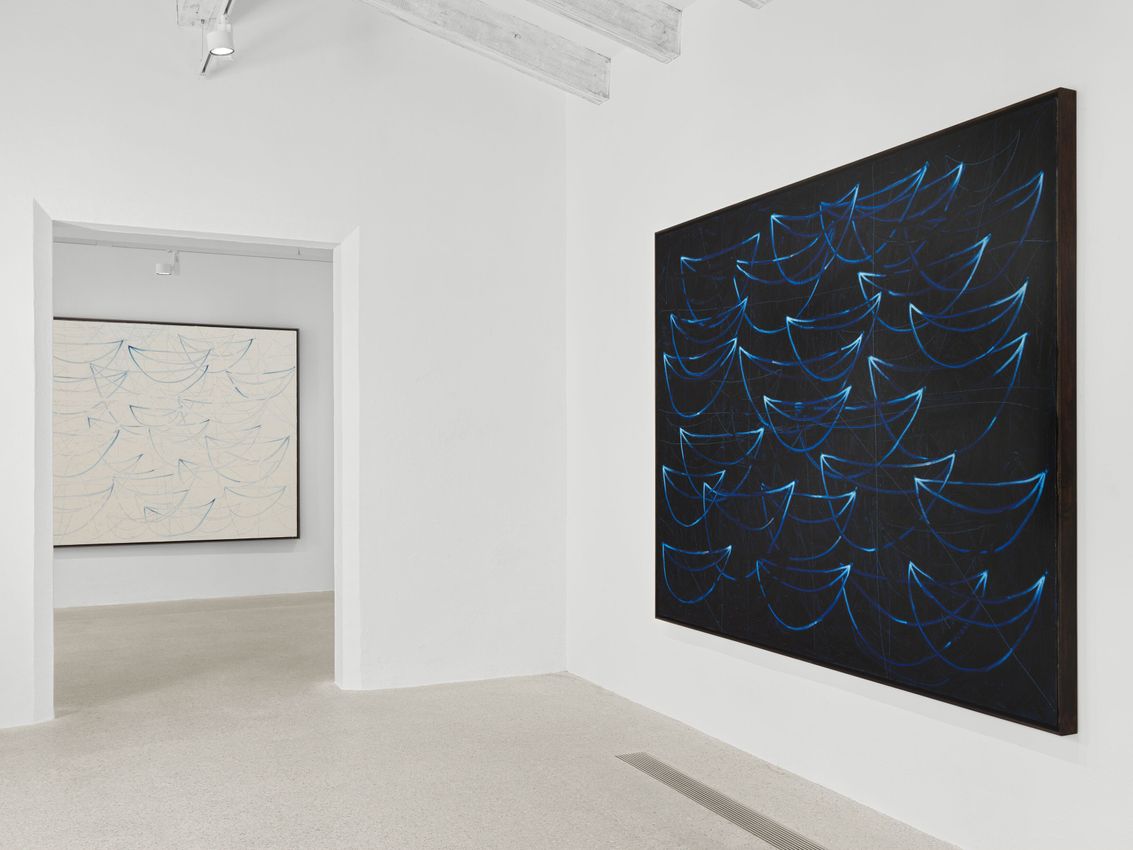
For the Bruise Paintings, Johnson has created the colour Black&Blue in collaboration with R&F paints, which he layers and stretches across the canvas giving the impression of a wider range of colours from a single hue. The repetition and expressiveness of the blue figures bring mobility to the works, a nod to the importance of gesture in Johnson’s oeuvre. With a lyrical sense of melancholy, the Bruise Paintings speak to the times we live in and create a liminal space where healing has begun but the reminisce of trauma is still evident.
Continuing to pivot the Anxious Men iconography, Johnson applies Titanium White oil paint on raw linen in the series of Surrender Paintings, depicting ghostly faces to suggest acceptance and reconciliation. As the artist explains, ‘Emptied out of colour, the Surrender Paintings feature white application only on raw linen canvases, conjuring a feeling of redemption and recognition. There’s a simplicity and quiet nature in how these new series relate to collective experiences of the last months.’
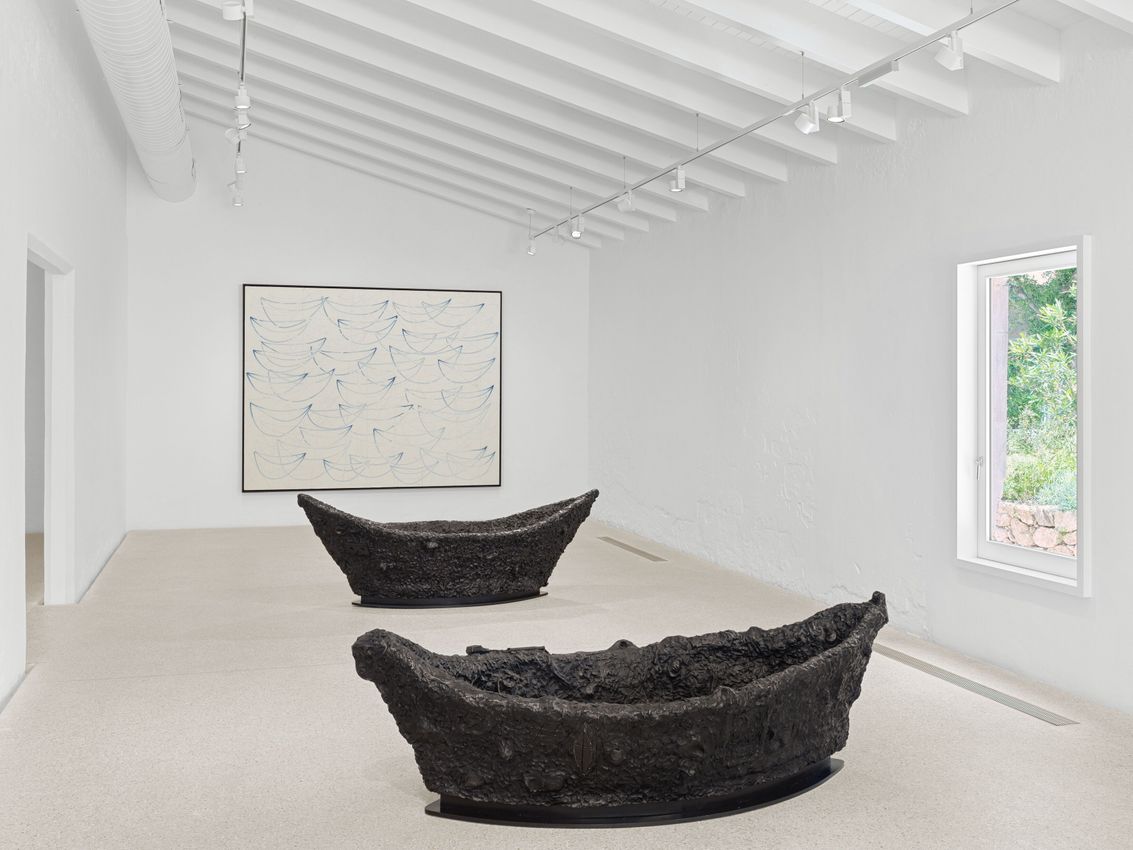
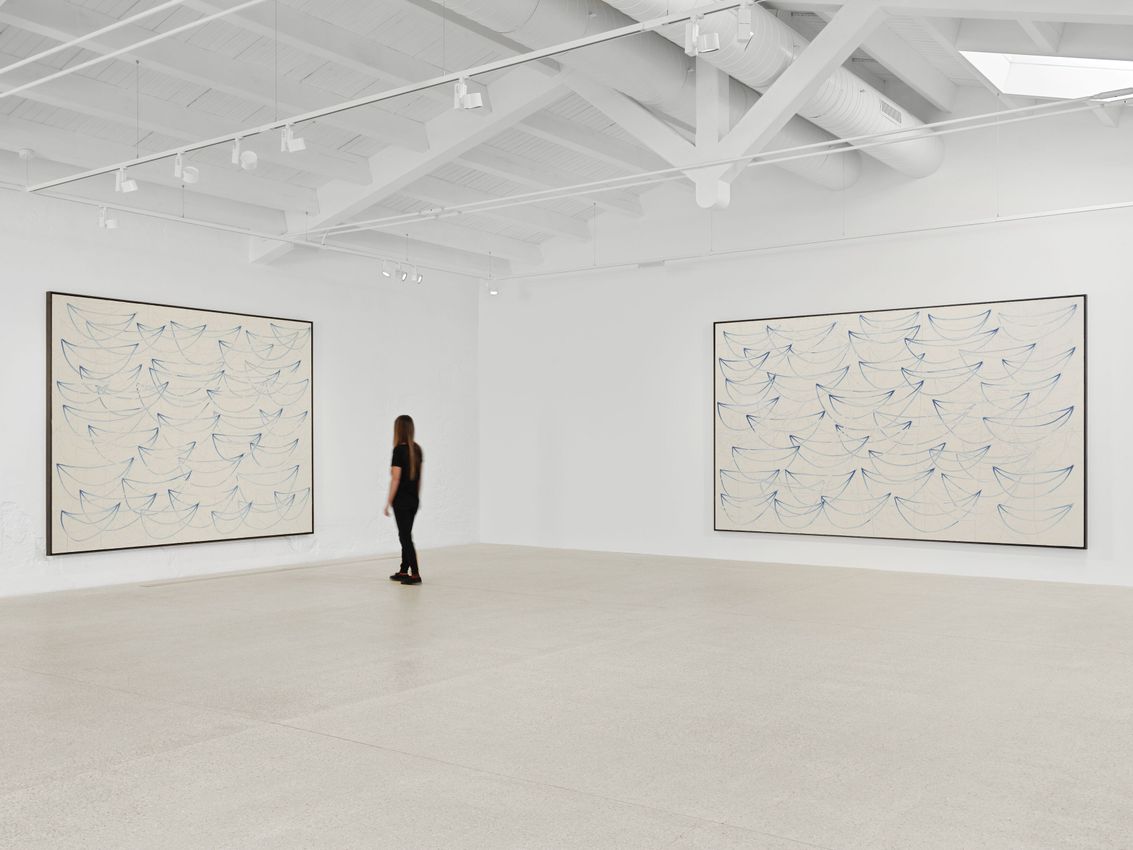
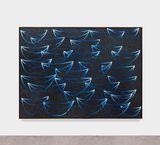
The newly developed series of ‘Seascape Paintings’ and boat sculptures draw from historical narratives of migration and journeys. The artist radically engages with the surface of the canvases with a process of removal similar to that of early works such as Cosmic Slops, in which Johnson carved marks into black soap and wax. For the Seascape Paintings, painted canvases are coated completely with Neutral White or Prussian Blue oil paint which Johnson wipes away and scratches with shapes reminiscent of individual rowboats. The repetition of the motif and their scale suggest the possibility to escape, as well as of isolation, longing and drifting at sea.
A group of sculptures cast in bronze continue Johnson’s exploration of vessels and act as funerary pyres. Drawing from historical traditions from cultures across the globe in which the boat is a symbol of redemption and rebirth, the boats are cast from clay forms to which the artist has buried an array of objects of symbolic significance. VHS tapes, a CB radio, books and oyster shells are found in the carved sculptures, the latter referencing Zora Neale Hurston’s essay How it Feels to be Colored Me. ‘I do not weep at the world, I am too busy sharpening my oyster knife’, Hurston writes, ambiguously recalling the opulence of oyster eating and the aggressiveness of the knife.
In Sodade, Rashid Johnson continues to incorporate diverse materials rich with symbolism and personal history, exploring collective narratives of longing and migration while providing a poignant sense of history now.

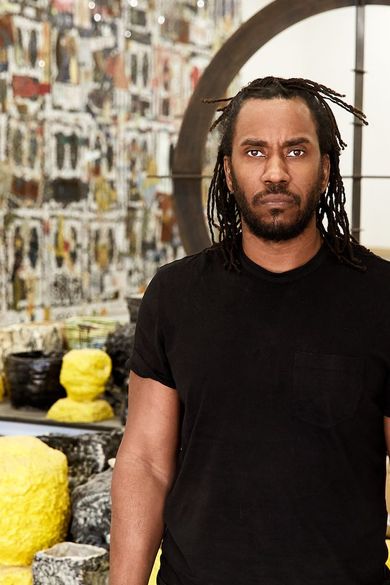
Born in Chicago in 1977, Rashid Johnson is among an influential cadre of contemporary American artists whose work employs a wide range of media to explore themes of art history, individual and shared cultural identities, personal narratives, literature, philosophy, materiality, and critical history. After studying in the photography department of the Art Institute of Chicago, Johnson’s practice quickly expanded to embrace a wide range of media – including sculpture, painting, drawing, filmmaking, and installation – yielding a complex multidisciplinary practice that incorporates diverse materials rich with symbolism and personal history.
Hauser & Wirth was founded in 1992 in Zurich by Iwan Wirth, Manuela Wirth and Ursula Hauser, who were joined in 2000 by Partner and Vice President Marc Payot. A family business with a global outlook, Hauser & Wirth has expanded over the past 26 years to include outposts in Hong Kong, London, New York, Los Angeles, Somerset and Gstaad. The gallery represents over 70 artists and estates who have been instrumental in shaping its identity over the past quarter century, and who are the inspiration for Hauser & Wirth’s diverse range of activities that engage with art, education, conservation and sustainability.

A respected voice in contemporary art discourse.
Focusing on ambitious storytelling and insightful art-world commentary. Ocula Magazine publishes in-depth interviews, critical essays and timely analysis on the artists, exhibitions and ideas driving the global art world.
Learn more about Ocula Magazine
Showcasing the best of the art world.
Ocula partners with galleries from around the world to highlight their artists, artworks and exhibitions. Gallery membership is by application and invitation, with each member vetted by an independent panel.
Learn more about Ocula Membership

Specialises in the sale of major artworks.
Led by a team with deep ties to the world’s leading auction houses, galleries and collectors. Ocula’s advisory team offers bespoke services to high-net-worth clients from around the world who are looking to acquire the best of contemporary and modern art.
Learn more about our team and services