














India’s Contemporary Art Scene
India’s rich history of art continues in the modern day with growing contemporary art scenes centred in Mumbai and New Delhi.
For thousands of years, the Indian subcontinent has birthed a diverse range of art, from ancient cave paintings and rock-cut temples to woven textiles and Mughal miniatures. In the 18th century, British settlers introduced Western styles of painting, which Indian artists merged with local techniques and subjects. In response to growing British influence, the Bengal School of Art led a revival of traditional Indian artwork, drawing from the extensive history and mythology of the country.
Following Indian Independence in the mid-19th century, the Bombay Progressive Artist’s Group was established, its artists exploring new ways of expression in a post-colonial environment and influencing the modern Indian art scene. Some of the most well-known Indian artists associated with the Group include M. F. Husain, S. H. Raza, F. N. Souza, Ram Kumar, and Tyeb Mehta.
Economic liberalisation in the 1990s saw the growth of contemporary Indian art, and rapid globalisation, its presence in the international arts scene. This newer generation of contemporary creators expanded beyond the themes of national identity that were so prominent among the post-independence artists before, reflecting the changing social discourse of modern India.
Today, a new generation of Indian artists present diverse artworks that blend the traditional with the contemporary, the local with the global. Key creators include <Ocula to add examples>. Visitors can discover the works of these modern masters at museums, galleries, alternate art spaces, and art fairs, such as the India Art Fair, the Kochi-Muziris Biennale, and the Serendipity Art Festival.
Cultural Institutions Leading the Charge
With branches in New Delhi, Mumbai, and Bengaluru, the National Gallery of Modern Art (NGMA) is the premier institution for traditional and contemporary Indian art. Its New Delhi museum houses over 17,000 works within the former palace of the Maharaja of Jaipur. Spanning 12,000 square metres of exhibition space, it is one of the largest modern art museums in the world.
India’s first private museum dedicated to contemporary art is the Kiran Nadar Museum of Art (KNMA) in New Delhi. Founded by philanthropist Kiran Nadar, it regularly holds exhibitions and live happenings that expand artistic conversations beyond the canvas. Also in New Delhi is the National Museum of India, which features over 2,00,000 objects from over 5000 years for a complete overview of Indian craftsmanship.
In Mumbai, the Dr. Bhau Daji Lad Museum is the country’s oldest museum. In addition to showcasing contemporary artworks through ever-changing exhibitions, it holds extensive courses to increase the understanding of art history. Chhatrapati Shivaji Maharaj Vastu Sangrahalaya (CSMVS) features an extensive modern art collection in its Jehangir Nicholson Art Gallery gallery, highlighting the unique development of Indian art over the years.
Yet Mumbai and New Delhi are not the only destinations worth exploring for contemporary Indian art. The Museum of Art & Photography Bengaluru (MAP Bengaluru) showcases India’s culture through digital medium and photo, while the Museum of Goa (MOG) showcases Goa as a living cultural dialogue. These famous art galleries in India represent the diverse visions of the contemporary generation of Indian artists beyond the biggest cities.
Premier Art Galleries and Districts in India
Patronage is at the heart of the contemporary Indian art scene—many of the country’s most prominent commercial galleries were established by patrons who worked alongside artists in the late 20th century. In New Delhi, these long-standing galleries include the Kumar Gallery, Art Heritage, Vadehra Art Gallery, and Gallery Espace. In Mumbai, Chemould Prescott Road and Pundole Art Gallery are prime examples.
As one of the most famous Indian art galleries, Nature Morte was the first in the country to be featured in important international art fairs. It was originally founded in New York’s East Village by Peter Nagy, and since its establishment in New Delhi and Mumbai in the 1990s, has become a pioneering gallery within the South Asian art scene.
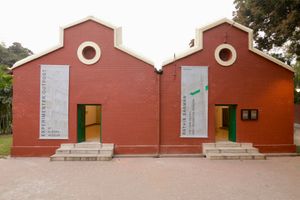
More recently, Experimenter has captured the Indian art world with its three locations across Kolkata and Mumbai. Its founders’ approach to fine art is less commercial and more focused on developing the full spectrum of Indian art, offering grants for artists starting research or producing art.
Jhaveri Contemporary, based in Mumbai, explores the visions of Indian artists across different generations and nationalities. Nearby is Galerie Mirchandani + Steinruecke, which showcases works from young contemporary talent.
Art lovers can visit these galleries across the country’s prime art districts, including Defence Colony and Hauz Khas Village in New Delhi, Colaba and Fort in Mumbai, and Indiranagar in Bengaluru.
Experimental Spaces Pushing Boundaries
Recent years have seen the emergence of more innovative and artist-run platforms where artists can initiate new conversations without the limitations of commercial and institutional art spaces. These groups are often supported by organisations such as the India Foundation for the Arts (IFA) and the Foundation for Indian Contemporary Art (FICA), which fill in the gap left by governmental funding.
Based in New Delhi, the not-for-profit Khoj International Artists’ Association has grown from an annual artists workshop to a dedicated residency aiming to foster emerging and experimental artists in South Asia. HH Art Spaces, another artist residency based in Goa, focuses on nurturing live performance and installation artists in India. The St+art India Foundation supports street art all across the country, enlivening walls with vibrant and thought-provoking public art.
From New Delhi and Mumbai to Kolkata and Bengaluru, India’s art scene offers a vast range of works for art collectors and enthusiasts to love.