Press Release

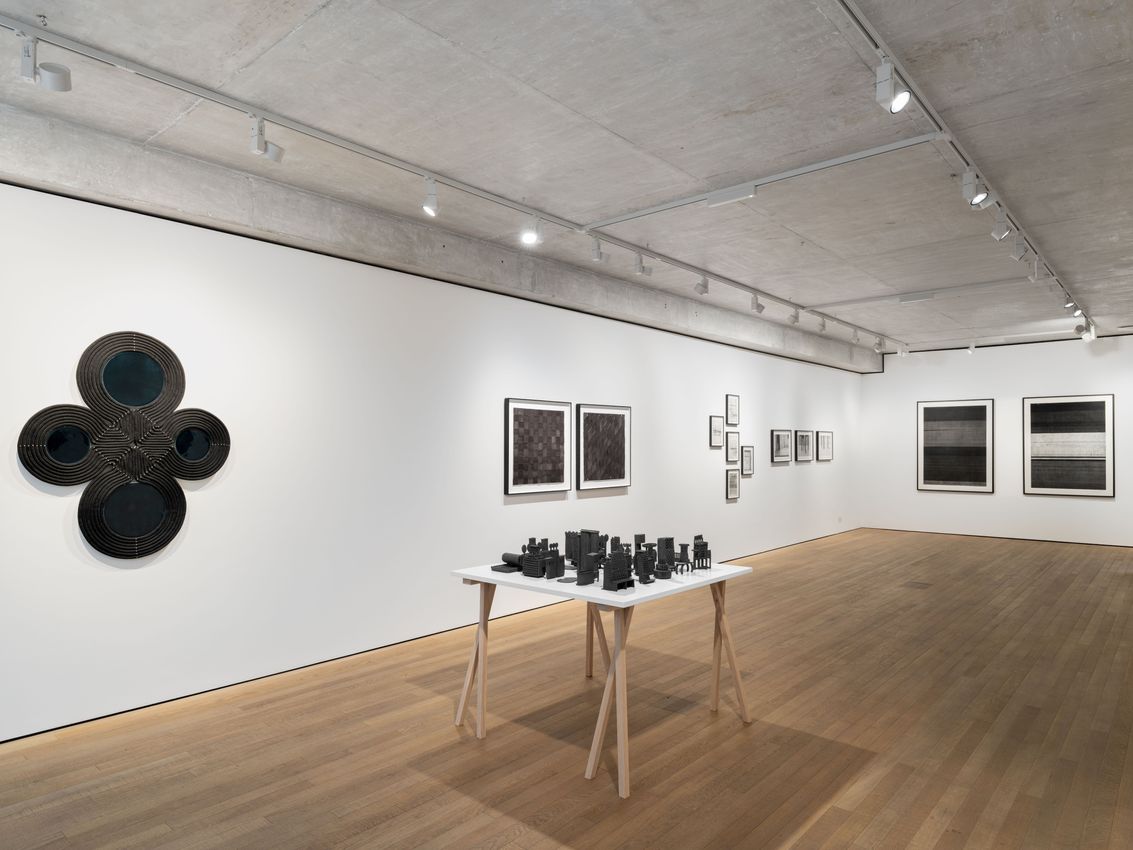
In the exhibition Horizons, Muhanned Cader, Lubna Chowdhary, and Seher Shah explore variations of line, landscape, and the built environment. With distinctive individual practices, the three artists share a commitment to making, relying on the intimacy of hand and an engagement with materials and process. Together they approach the idea of horizons metaphorically, as boundary and threshold, probing the limits of knowledge as well as notions of interconnection and interdependence.

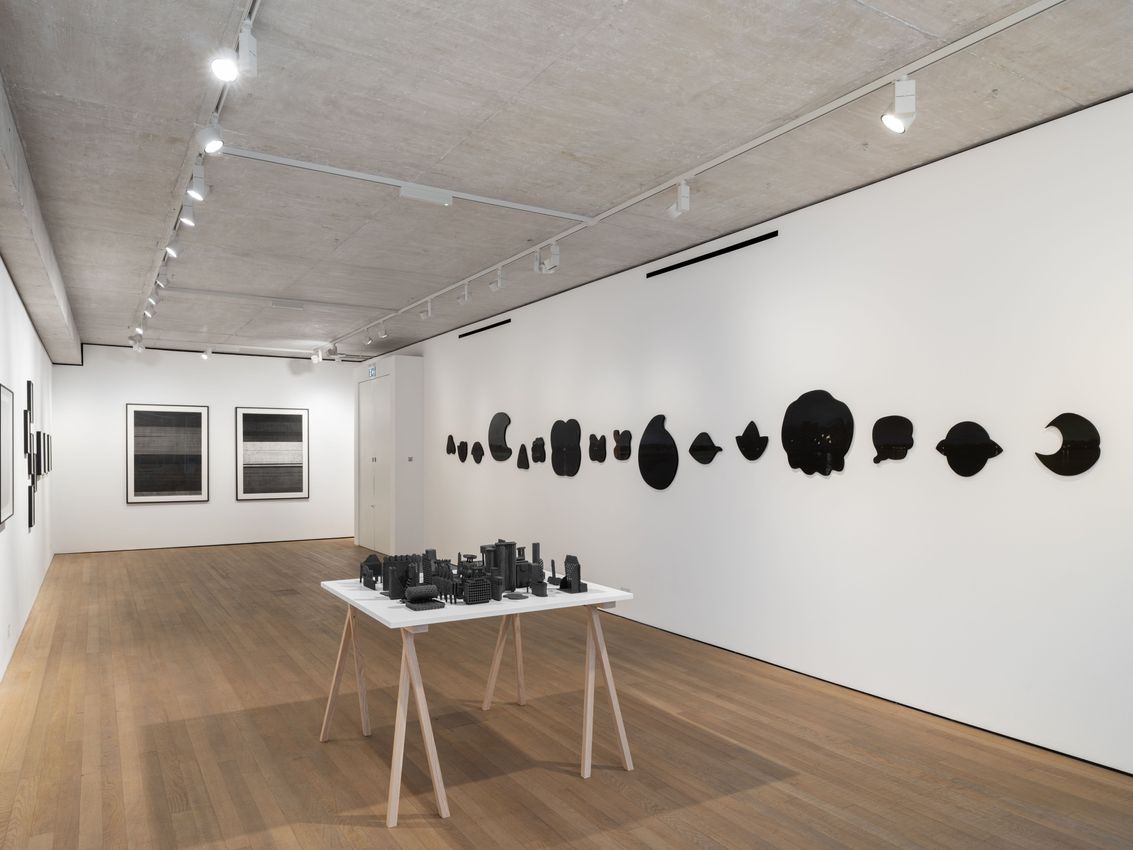
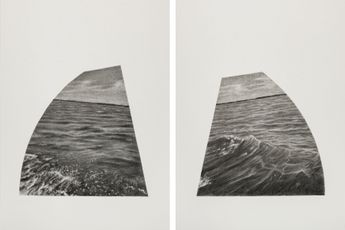
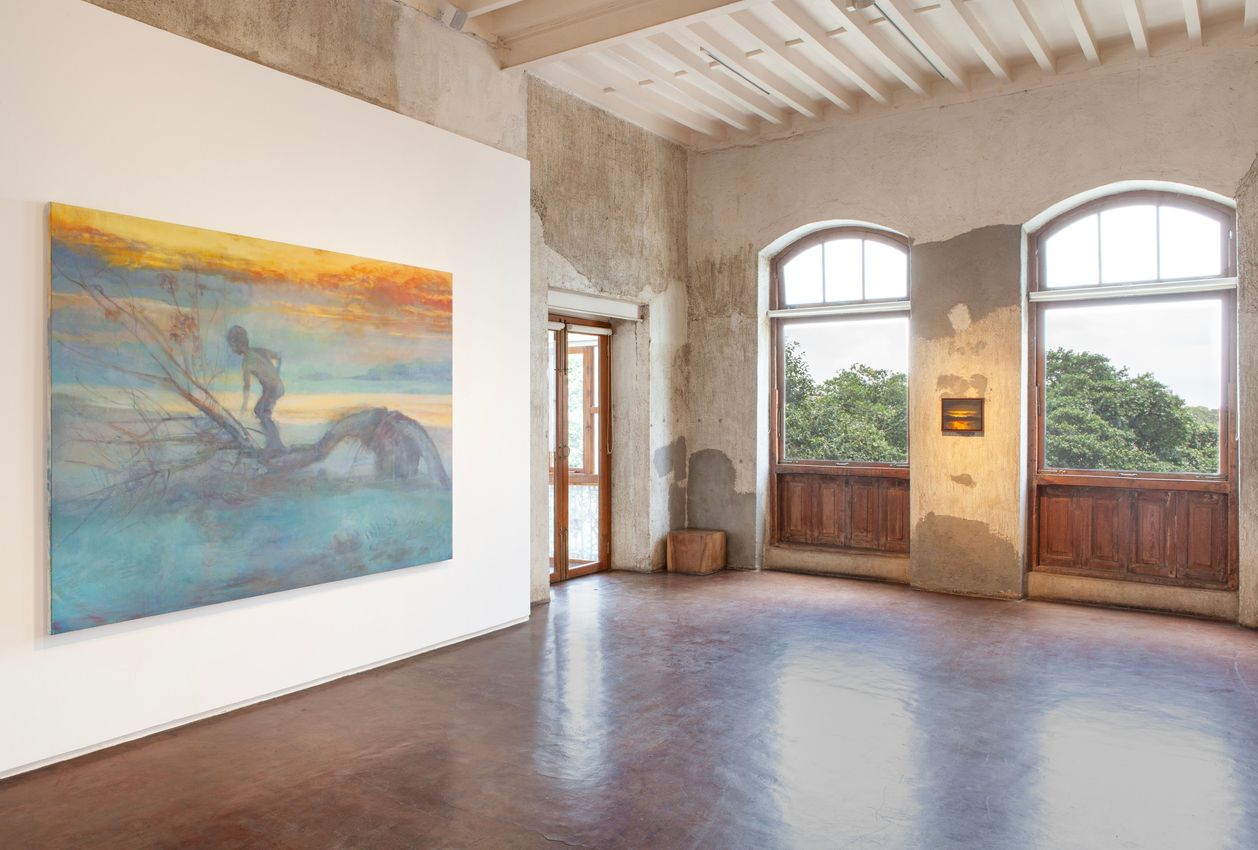
Muhanned Cader’s Nightscapes (1999) belong to a series of haunting oil paintings of a river at dusk during one of the darkest years of Sri Lanka’s civil war (1983–2009). Cader used the vantage point of his studio by the Bolgoda River, painting repeated views of dark skies and still water with the eerie glow of light in the distance. Across these works, a single horizon is interrupted by the organic, sinuous forms of the paintings. ‘I was not very into the daytime... There was something about those Koralawella nights that was perfect and mysterious, which made me want to paint it. And it worked perfectly with the politics of the time.’1

Cader uses wood, fashioned into striking shapes with curved edges, as his canvas in a way that disrupts the traditionally rectangular format of landscape painting. Each painting’s title is annotated by a specific date and time, a convention related to monitoring and scientific observation. Presenting the images like data suggests a relationship with the landscape ‘akin to surveillance where each painting in the series offers a slightly different view from the same vantage point, mirroring how a turning camera or a person’s eye might move across a panorama, patrolling rather than purveying the landscape in the distance.‘2 The paintings allude to what cannot be witnessed or identified in times of conflict; with frequent news of extra judicial killings, victims were often discovered in bodies of water such as the one depicted in this series.

Seher Shah works with the foundations of drawing and architecture to speak to states of absence, memory, and fractured histories. Her work explores how we view the landscape through architectural perspective drawing traditions; contested relationships between history, objects, and time; and the relationship between poetry and abstraction. Born in Karachi, and having lived in New York, New Delhi and now Barcelona, she works with paper as a site for memory and mark-making.

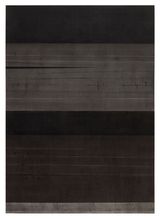
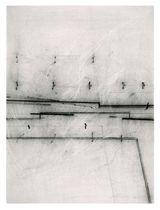
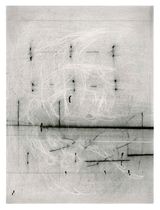
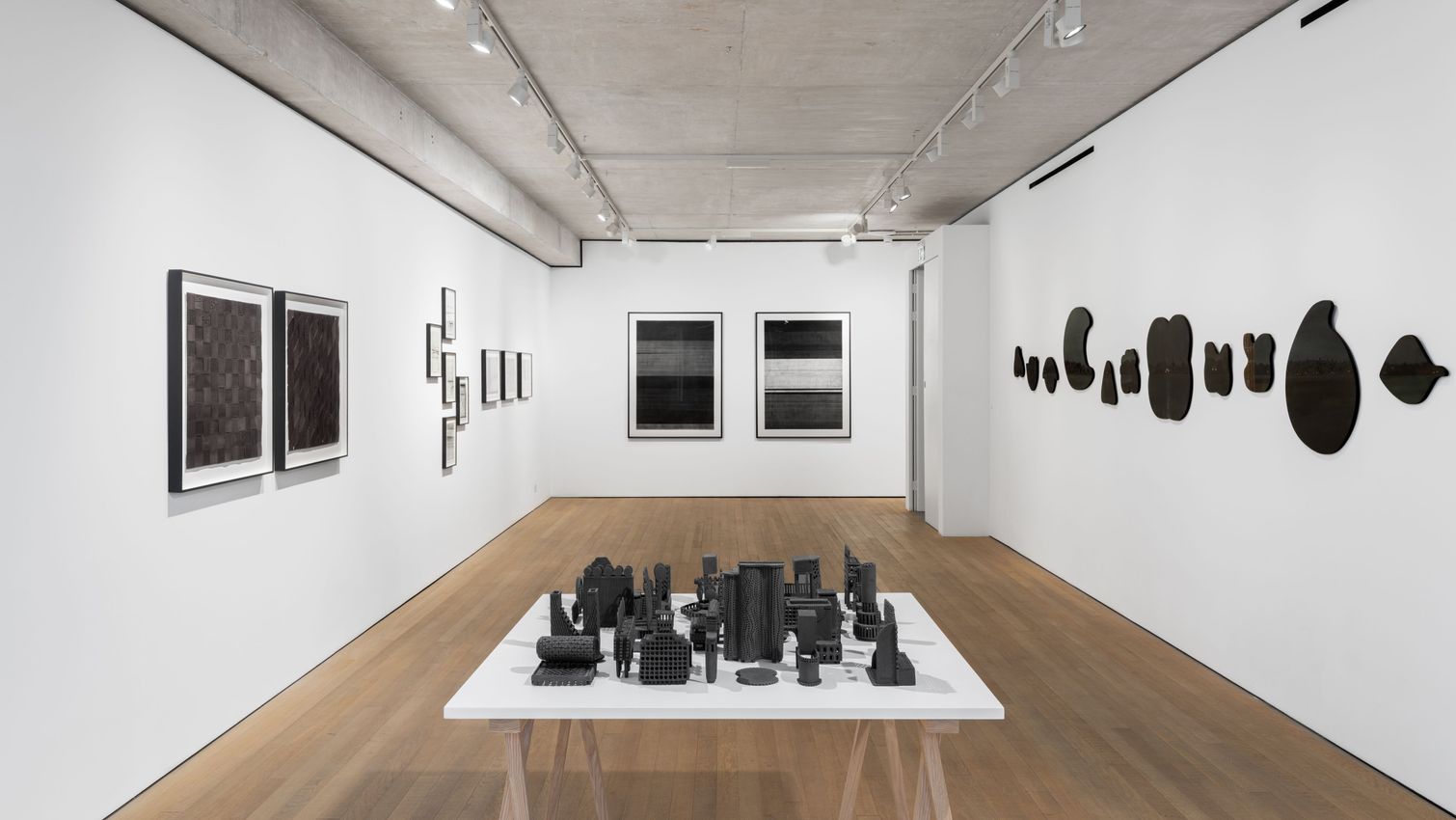
A series of unique ‘dust’ drawings, made of a finely ground graphite powder, charcoal, and ink, are punctuated by calligraphic gestures and musical notations. The Weight of Dust (2024- 2025), Incomplete Measures (2022) and Variations in Grey (2020-2023) ruminate on the space between architectural drawing and musical notation but communicate neither language in its entirety. The pieces are equally concerned with processes and the fragility of her chosen materials.. ‘Drawings reveal the hidden within ourselves.’ Shah has said. ‘A concealment or sharing of thoughts on paper. Between infinite depth and absolute flatness, disturbing the historical and political through the intimacy of the hand.‘3

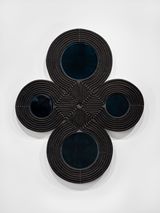
Lubna Chowdhary deploys diverse materials and processes to create bold works that draw on wide-ranging cultural influences to question aesthetic value systems. Her probing of the transformations brought about when cultures intersect has become a way to navigate her own position as a member of the Asian diaspora in the UK. Chowdhary’s practice is, as a result, multifaceted and her interests in both hand-made and industrial production along with the development of abstraction and geometry across the world, manifest in various combinations throughout her work.

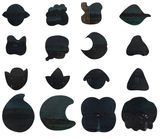
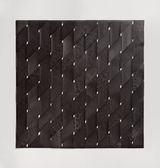
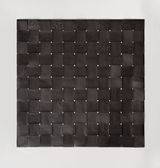
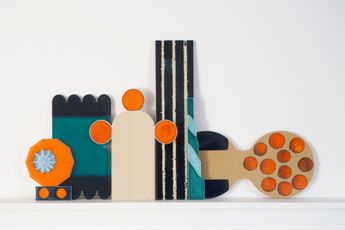
Disobedient Typologies (2021), a gathering of black miniature architectural maquettes, acts as a middle ground and meeting point between opposing trajectories of architectural and design histories. Each structure elaborates on typical features of modernist buildings whilst also supporting unexpected geometrical shapes and ornamentation. Sol Weave I and II (2023), created in Sol Lewitt’s studio during a residency at the Mahler and Lewitt Foundation, respond to Lewitt’s legacy of minimalism and expand on modernist notions of the grid as an ideological and formal device. The woven formations, made from thermal paper, become a subversive exploration of the grid as ornament while exposing its connections to both the secular and sacred.

With thanks to Qamoos Bukhari for his collaboration on this exhibition.

1 Sharmini Pereira, ‘This Island: The Idea of Landscape in Contemporary Sri Lankan Art’ in Sri Lanka: Connected Art Histories, ed. Sujatha Arundhati Meegama (Mumbai: Marg Foundation, 2017).

2 ibid

3 Seher Shah: Of Absence and Weight (New York: Rizzoli, 2023).

4 Priyesh Mistry, Entering the Pluriverse: Lubna Chowdhary’s Worldly Objects, Graves Gallery Sheffield, 2024.

Read More

Installation Views

Selected Works

Loading...

Artists Exhibiting

About the Gallery

Jhaveri Contemporary was formed in 2010 by sisters Amrita and Priya with an eye towards representing artists, across generations and nationalities, whose work is informed by South Asian connections and traditions. The gallery’s dedication to original scholarship, engendered through its carefully crafted shows, is one of the many ways it distinguishes itself. Entwined with this philosophy is another guiding principle: showcasing the heterogeneous practices of long-celebrated luminaries as well as emerging talents, often in generously interrogative conversations. With a focus on mining lesser-known art histories, Jhaveri Contemporary facilitates dialogue between artists, curators and historians to add to the wider field of art. Estates served by the gallery include Mrinalini Mukherjee and Anwar Jalal Shemza.

View Gallery Profile
Address
Frieze

9 Cork St,
London
W1S 3LL

(1)
Mumbai 3rd Floor Devidas Mansion, 4 Mereweather road
Jhaveri Contemporary
3rd Floor Devidas Mansion, 4 Mereweather road, Apollo Bandar Colaba, Mumbai, India

Opening hours
Tuesday – Saturday
11am – 6:30pm
The art world in focus