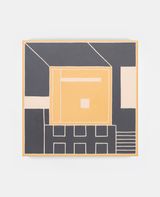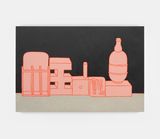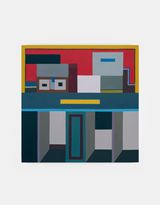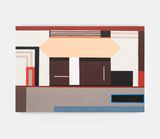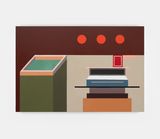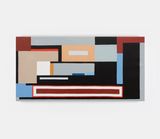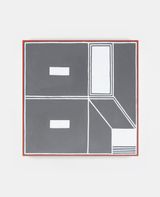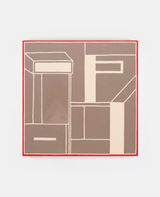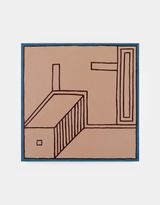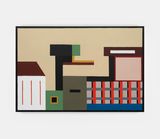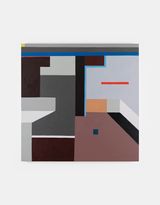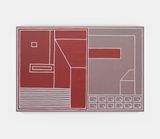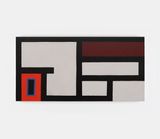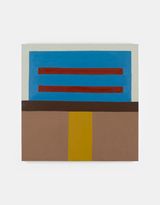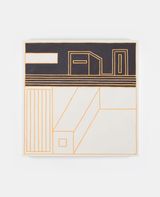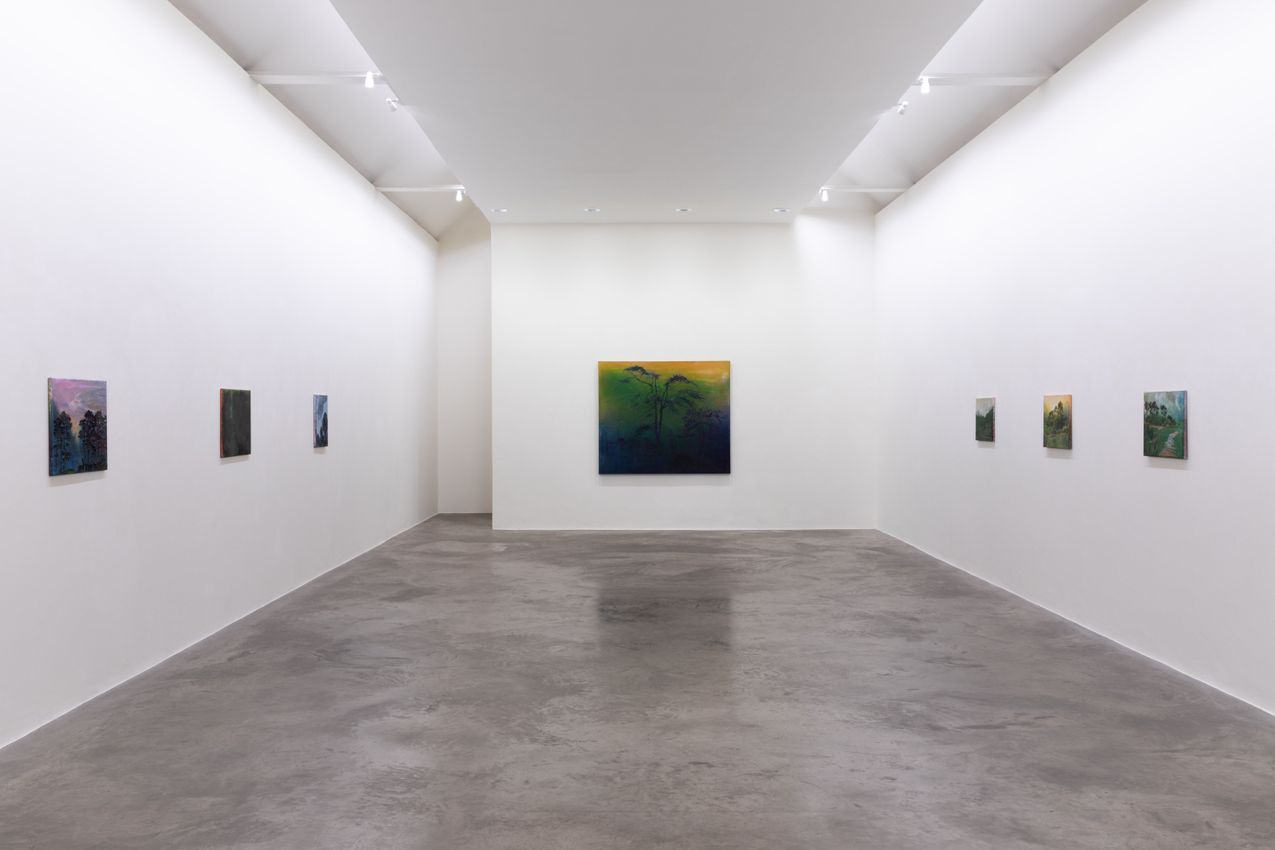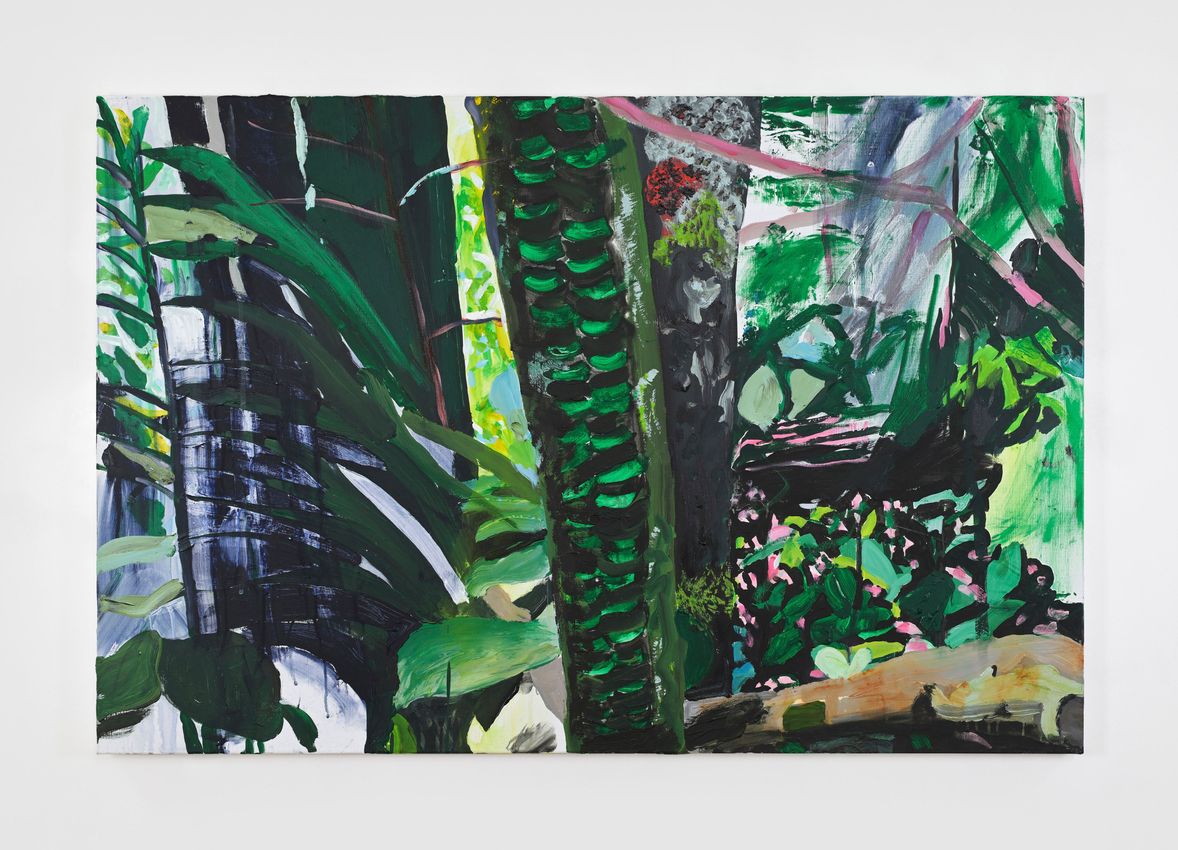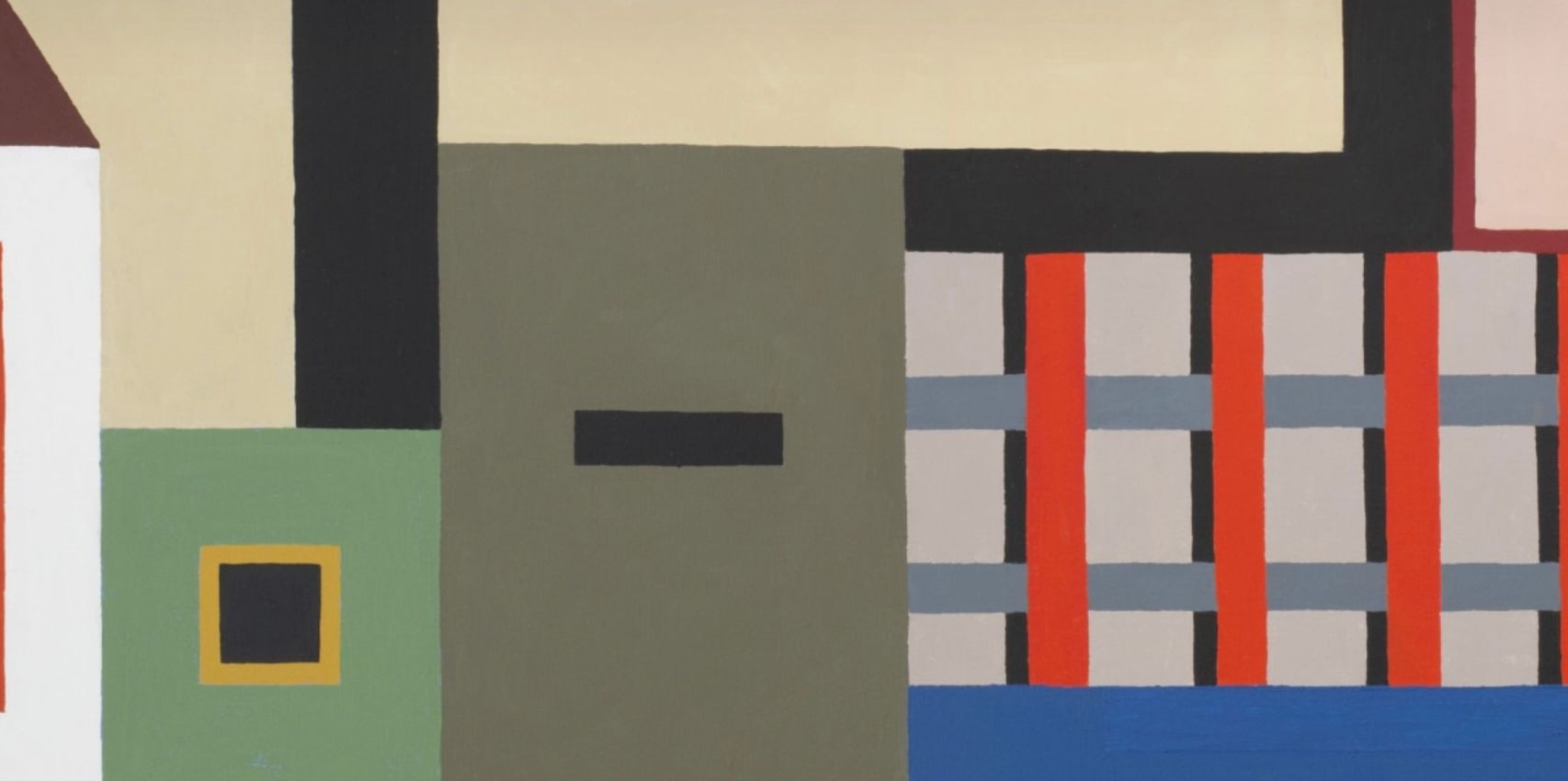
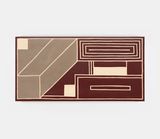
For Saint Fairy Anne, Nathalie Du Pasquier presents recent paintings within her custom exhibition design. Bold shapes and linear motifs create dynamic compositional arrangements, extending from the canvases into the installation that houses them, blending still life with architectural forms and flat planes of colour. Taking a fluid and porous approach to traditional distinctions between ‘fine’ and ‘decorative’ arts, Du Pasquier is interested in “how display changes perception, how coloured walls influence the paintings, [and] how the viewer enters a mood”.
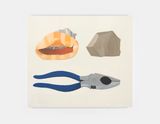
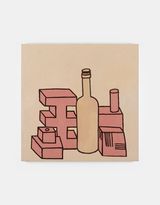
Complimenting these recent works, Saint Fairy Anne includes a 1998 still life, natural things and a plyer. Here, objects appear oversized and floating in space, bestowing an almost talismanic charge to the flotsam of an artist’s studio. Chosen intuitively for this presentation, the work demonstrates the broad shifts that have taken place in Du Pasquier’s practice over the past two decades. We move from “paintings of things”, in which three-dimensional objects are arranged in two-dimensional space, towards “paintings as objects”, where form and perspective are broken down and reconfigured, generating a more fluid relationship between colour, form and spatial dynamics. Even when returning to still life paintings, as in two 2024 paintings exhibited here, the focus is on outline, with radically simplified forms echoing the artist’s shift towards abstraction.
The exhibition’s title,Saint Fairy Anne, offers a play on words: a phonetic Anglicisation of “ça ne fait rien”, or “it doesn’t matter”. Along with the artist’s irreverent ink drawing on which these words appear, it offers an injection of humour, playfulness and experimentation in art-making. Though often using graphic forms, Du Pasquier’s paintings maintain a distinctly analogue feel – the artist’s hand leaving a painterly finish and off-kilter verve.
Nathalie Du Pasquier is a French-born, Milan-based artist whose pioneering work bridges the worlds of contemporary art and design. As a founding member of the influential Memphis Group, Du Pasquier helped redefine the visual language of the 1980s with her bold patterns and playful forms. Since 1987, she has devoted herself primarily to painting, developing a practice that explores the relationship between objects, space, and perception.
Kerlin Gallery was founded in Dublin in 1988. It has built an international reputation for its dedicated, meaningful representation of leading contemporary artists through its exhibition, publishing and art fair programmes. Its current site was designed by the minimalist architect John Pawson in 1994 and offers 3,600 square feet of exhibition space over two floors in the heart of Dublin City Centre.
A respected voice in contemporary art discourse.
Focusing on ambitious storytelling and insightful art-world commentary. Ocula Magazine publishes in-depth interviews, critical essays and timely analysis on the artists, exhibitions and ideas driving the global art world.
Learn more about Ocula Magazine
Showcasing the best of the art world.
Ocula partners with galleries from around the world to highlight their artists, artworks and exhibitions. Gallery membership is by application and invitation, with each member vetted by an independent panel.
Learn more about Ocula Membership

Specialises in the sale of major artworks.
Led by a team with deep ties to the world’s leading auction houses, galleries and collectors. Ocula’s advisory team offers bespoke services to high-net-worth clients from around the world who are looking to acquire the best of contemporary and modern art.
Learn more about our team and services