



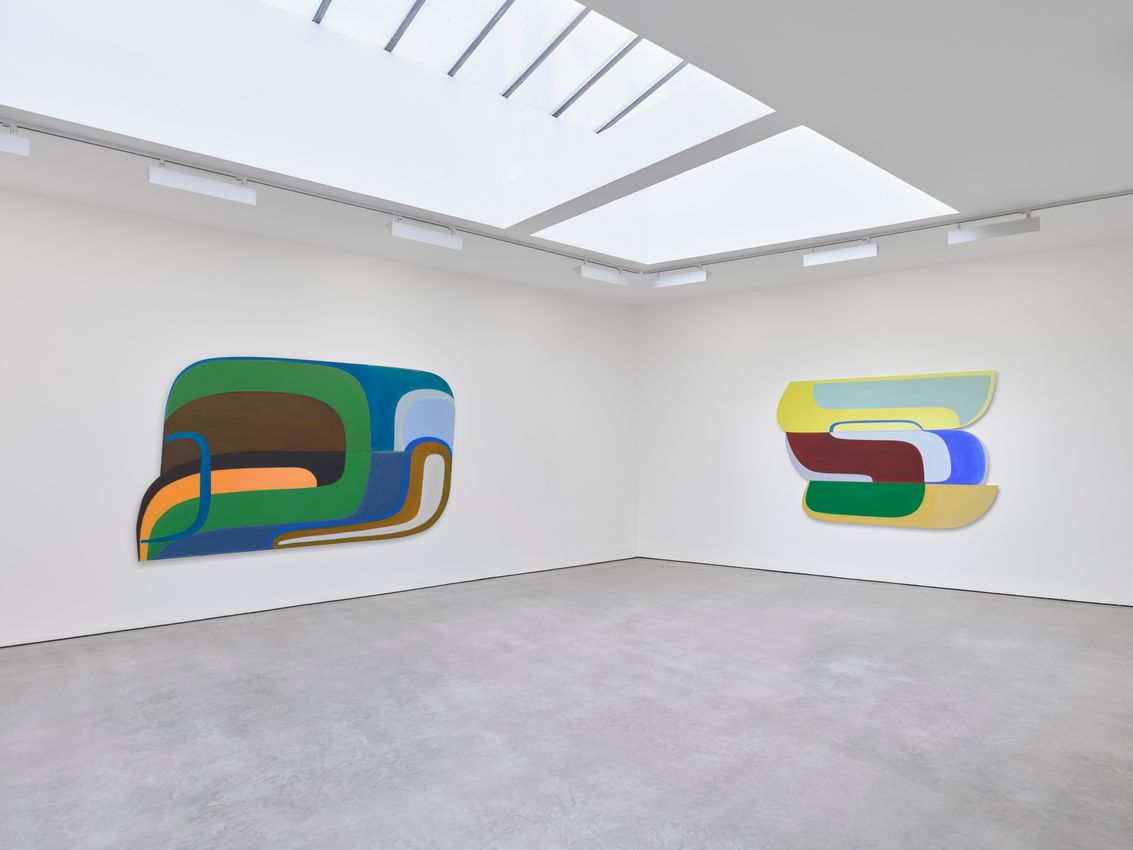
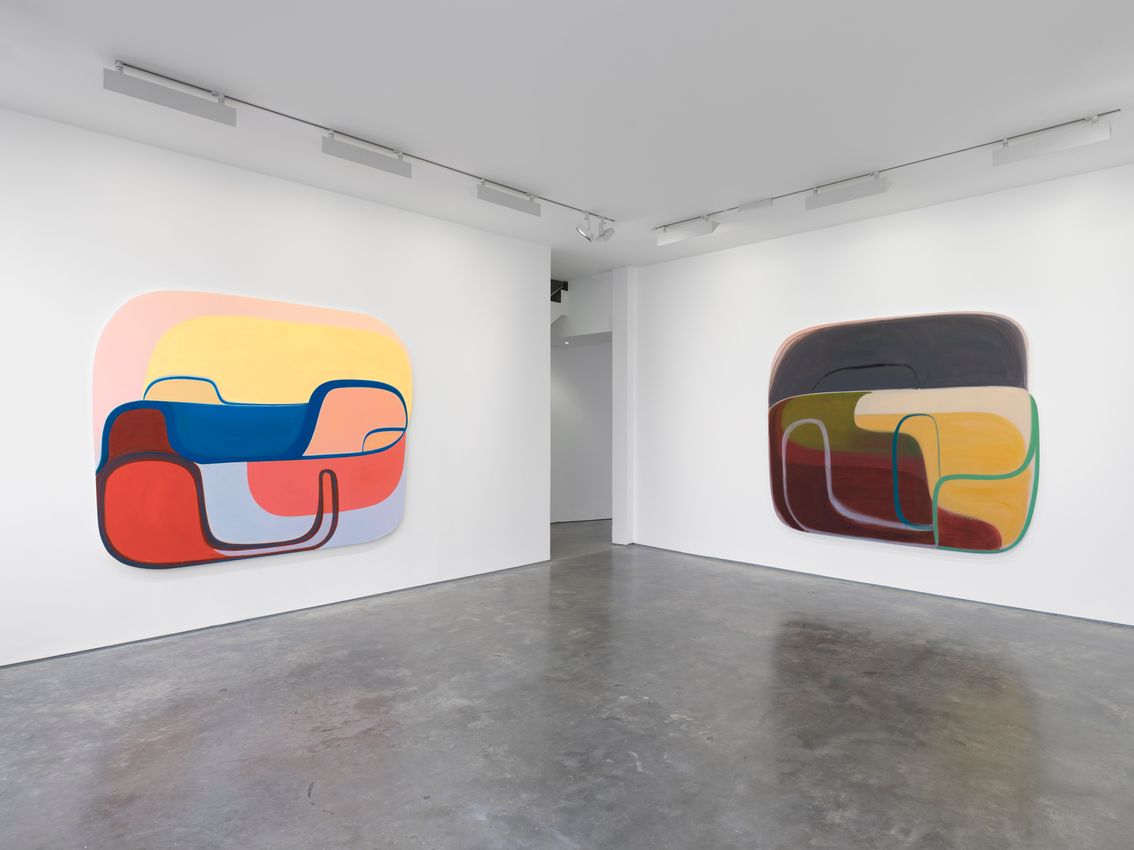
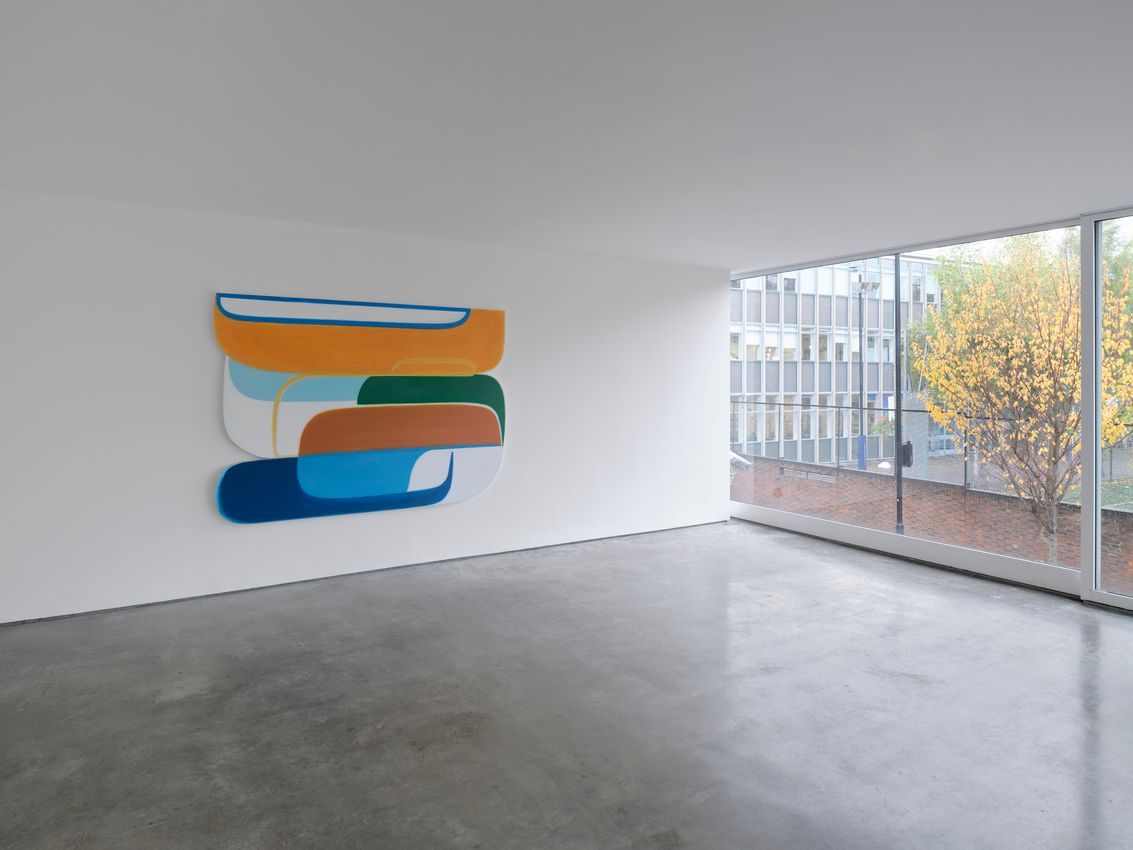
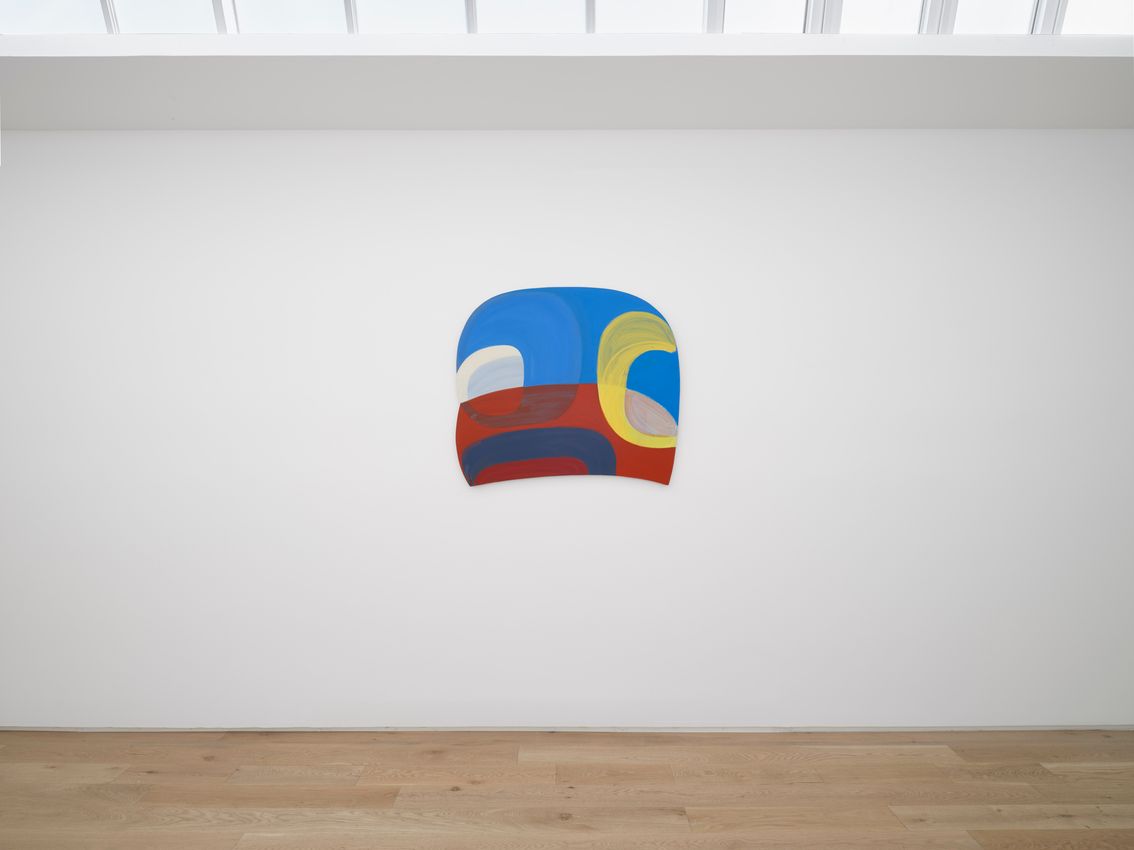
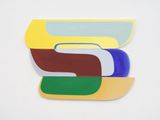
For her first exhibition in London, New York-based artist Joanna Pousette-Dart will present a selection of recent paintings. Rendered in her signature format of multi-panel curved canvases, these dynamic compositions incorporate a myriad of influences, fusing together the beauty and power of light and shape to offer a poetic illusion to the experience of place, nature and one’s surrounding space.
Born in New York, the daughter of Richard Pousette-Dart, a founding member of the New York School of painting, Pousette-Dart attended Bennington College in Vermont and studied with Color Field painters Kenneth Noland and Larry Poons, among others. Never at home with a formalist concept of painting, she has pursued a more poetic approach to format and image throughout her career.
Pousette-Dart’s work with shaped panels began in the 1990s while working in the Southwestern desert of the United States. Feeling confined by the limitations of the rectangle, she began searching for a way to create a pictorial space that would more accurately reflect her perceptions. The resulting configurations of curvilinear panels are an active and organically-evolving alternative, at once evoking the curvature of the earth and one’s field of vision. Pousette-Dart has described her work as a sort of ‘visceral interchange with nature’, meant to transport the viewer. With light and place as her originating impulse, her paintings suggest a sense of being present within a constantly shifting space-light continuum.
In each of Pousette-Dart’s paintings, all elements dynamically interlock. The panels’ edges are bevelled, mitigating their physicality and allowing the shapes to float on the wall. At the same time, the interior drawing is in constant dialogue with the outer edges, sometimes echoing and sometimes contradicting them, creating a sense of motion and rebalancing in space. Calligraphic lines and suggestive forms interweave the panels as if joining different realms. Areas of colour are built up in thin layers creating glowing undertones and overtones, while tonal shifts within the works subtly move from light to dark or warm to cool resulting in a quality of light that feels ambient, constantly adjusting and readjusting as one experiences the work.
Pousette-Dart sites numerous sources of inspiration for her work—Mozarabic and Catalonian art, Chinese landscape painting and calligraphy, Mayan and Native American art, Etruscan tomb paintings, numerous Byzantine and Romanesque fresco cycles and the landscape itself, to name a few. But rather than elicit literal references or depictions, her works explore the nature of consciousness and perception itself.
On the occasion of the exhibition, Lisson Gallery will publish a fully-illustrated catalogue featuring essays by American art historians and writers Nancy Princenthal and Pepe Karmel, available for purchase in early 2022.
Born in New York to abstract expressionist painter and founding member of the New York School of painting, Richard Pousette-Dart, and having studied painting at Bennington College in Vermont amongst the likes of Greenbergian Formalists Kenneth Noland and Jules Olitski, Joanna Pousette-Dart’s experience as a painter rises from rich tradition. However, despite this traditional modernist background, her paintings remain anything but conventional. Pousette-Dart’s shaped paintings are unique in their melding of formal and poetic concerns, and take their inspiration from many sources: Islamic, Mozarabic and Catalonian art, Chinese landscape paintings and calligraphy, Mayan and American Indian art, as well as the landscape itself, to name a few. In the early 1970s, Pousette-Dart began living and working intermittently in New Mexico. Her perceptions of the place deeply influenced her paintings, ultimately resulting in the abandonment of a rectangular format in the 1990s for works composed of curved panels. The dynamic configurations of these works evoke the constantly shifting light and form, the vastness of the spaces, and the sense of the earth’s curvature that she experienced there. Her paintings take many forms, each with its own dynamic sense of expansion and compression, buoyancy and gravity. The painted contours of the interior shapes create an added complexity, sometimes echoing the contours of the canvas, and at other times challenging them. Her use of colour suffuses all elements with a sense of light which feels redolent of the natural world.


Established in 1967 in London, Lisson Gallery is one of the most well-known galleries operating globally. Boasting an influential and continuing legacy, including playing a pivotal role in the careers of many pioneers of historically important art movements, the gallery works with some of the most significant contemporary artists today.

A respected voice in contemporary art discourse.
Focusing on ambitious storytelling and insightful art-world commentary. Ocula Magazine publishes in-depth interviews, critical essays and timely analysis on the artists, exhibitions and ideas driving the global art world.
Learn more about Ocula Magazine
Showcasing the best of the art world.
Ocula partners with galleries from around the world to highlight their artists, artworks and exhibitions. Gallery membership is by application and invitation, with each member vetted by an independent panel.
Learn more about Ocula Membership

Specialises in the sale of major artworks.
Led by a team with deep ties to the world’s leading auction houses, galleries and collectors. Ocula’s advisory team offers bespoke services to high-net-worth clients from around the world who are looking to acquire the best of contemporary and modern art.
Learn more about our team and services
