Press Release

Lucy Raven: Depositions

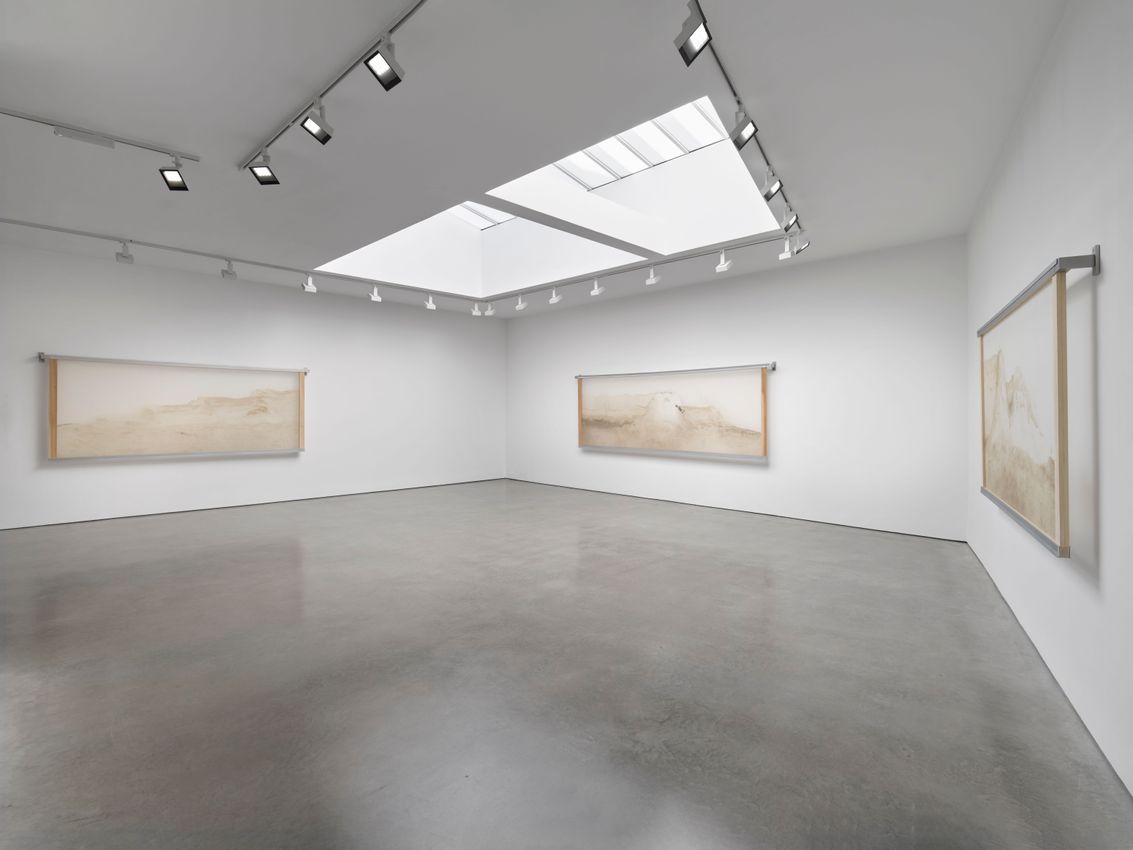
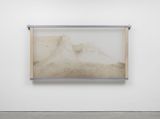
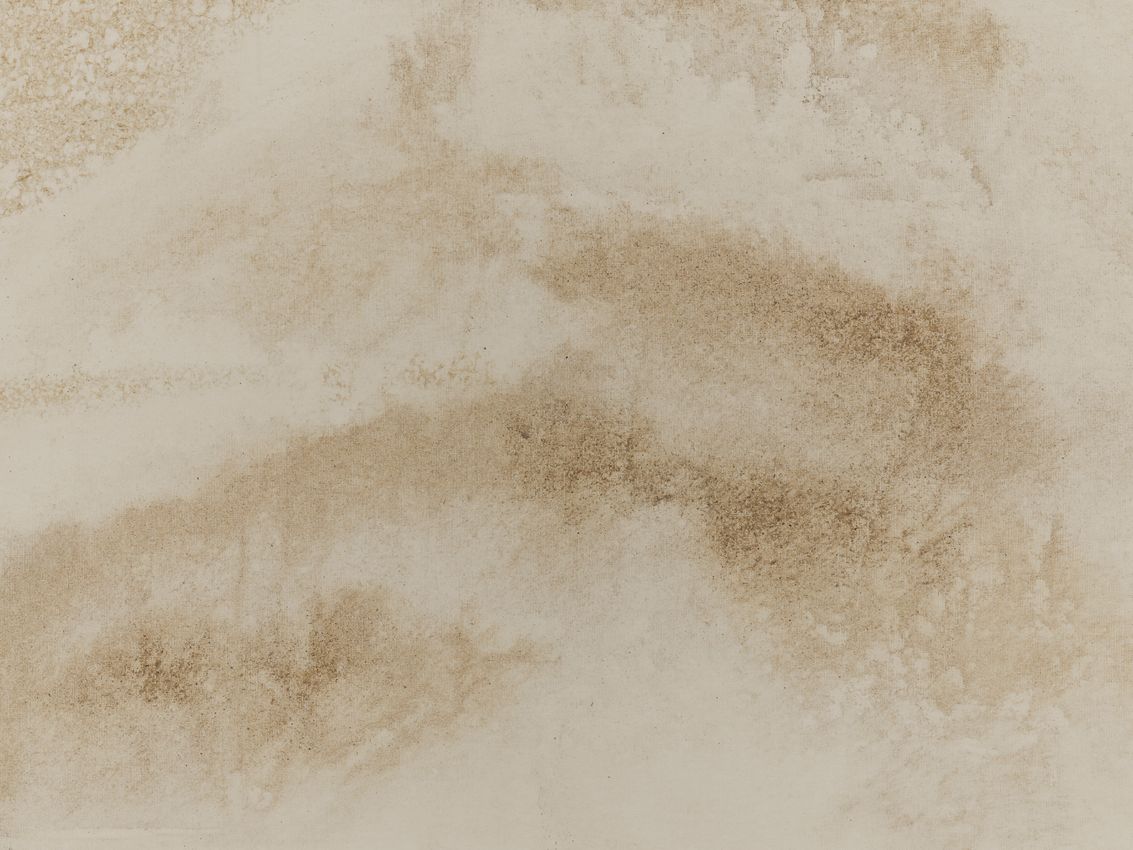
To coincide with a monumental museum exhibition by Lucy Raven in The Curve space at the Barbican (until 4 January) – including her film Murderers Bar (2025), exploring the largest dam removal project in North American history – the American artist shows a new body of related works called Depositions at Lisson Street. These ethereal, translucent panels resemble fluid cross-sections of the mountainsides or panoramic views of the same valleys she shot in California and are physically created from the same material – sand, mud, cement, salt water and other debris – through an intense process of pressure and release. By constructing a large steel and wooden channel lined with expanses of silk, Raven staged smaller-scale floods and dam breaches in a studio environment, before revealing the aftermath, traced as sedimentary imprints or chance echoes on fabric sidewalls.

Partly made as testbeds for the underwater sections of the film’s journey downstream once the dam had been dynamited, the Depositions are themselves records of dramatic geological change, created by the dynamic forces of these semi-controlled dam breaches. The varying weights of water, soil, gravity and the inevitable slippages and landslides, have all been recorded as archaeological layers of stratified riverbed material, seemingly through natural processes and without human interference. The resulting forms might be read as landscape paintings, drawings or likened to performance documentation, but could also obliquely refer to the proto-photographic images supposedly left on funerary or burial cloths by dead bodies, such as the much-discussed Turin Shroud, as well as to art historical depictions of the deposition of the body of Christ from the cross.

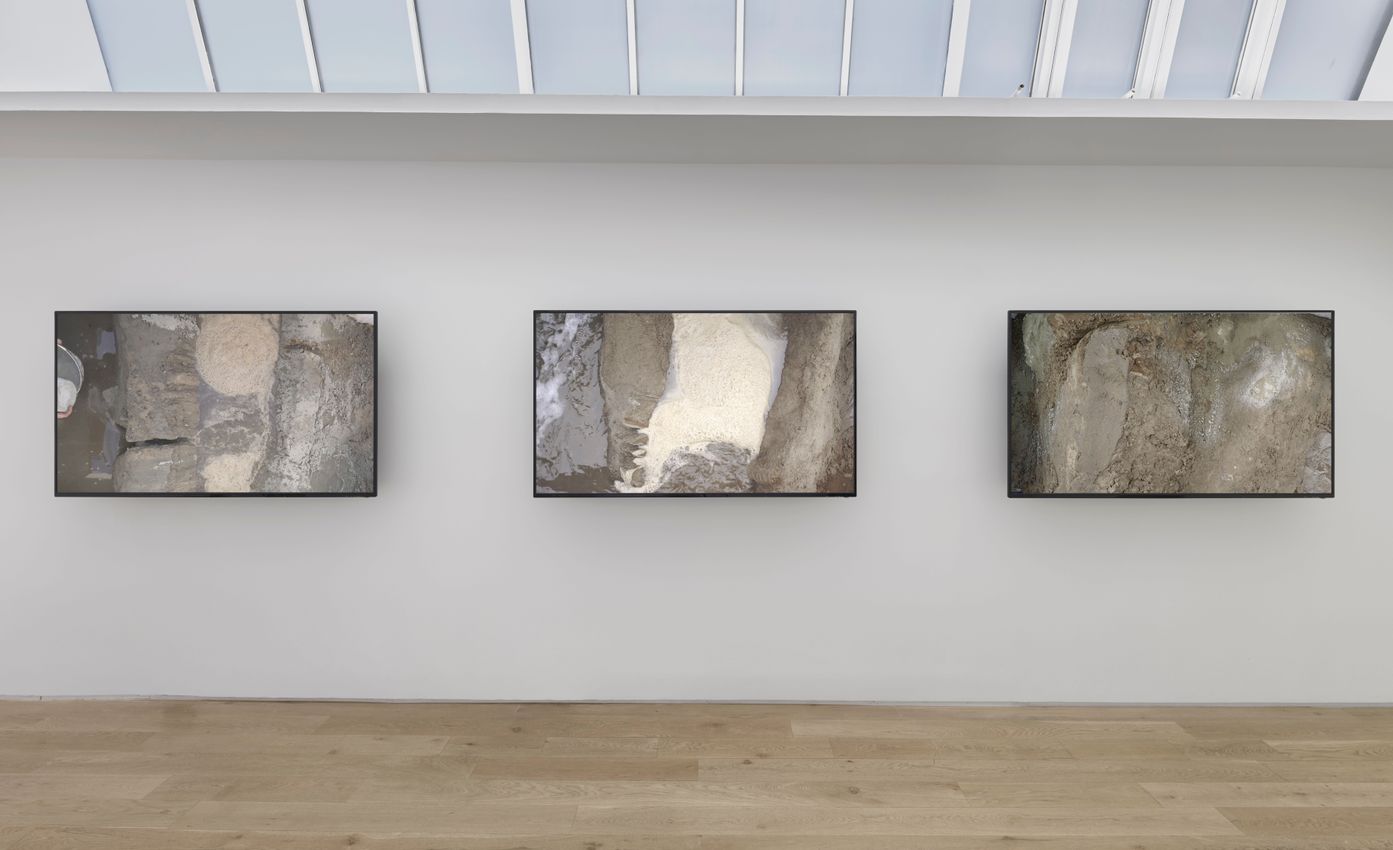
Upstairs, a three-screen video, Dam Breach LIC (2024), captures glimpses of the apparatus Raven constructed around the Depositions and the material transformations of mud and water that eventually left their marks on the gauzy fabric, before being stretched and mounted onto metallic armatures that allow them to hang both on and off the walls. After the Barbican, Lucy Raven: Rounds will travel to the Institute of Contemporary Art/Boston in May 2026. Murderers Bar is on show at The Power Plant Gallery, Toronto (until 22 March 2026).

Richard Long

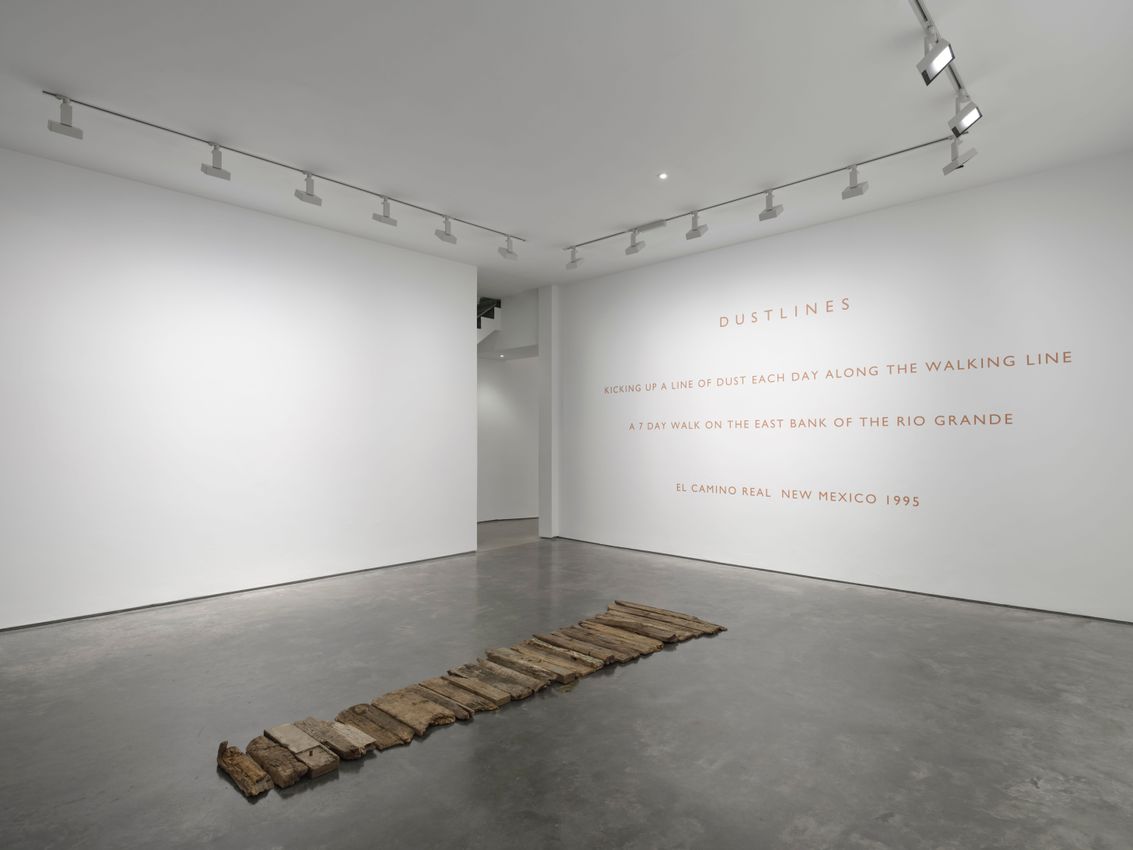
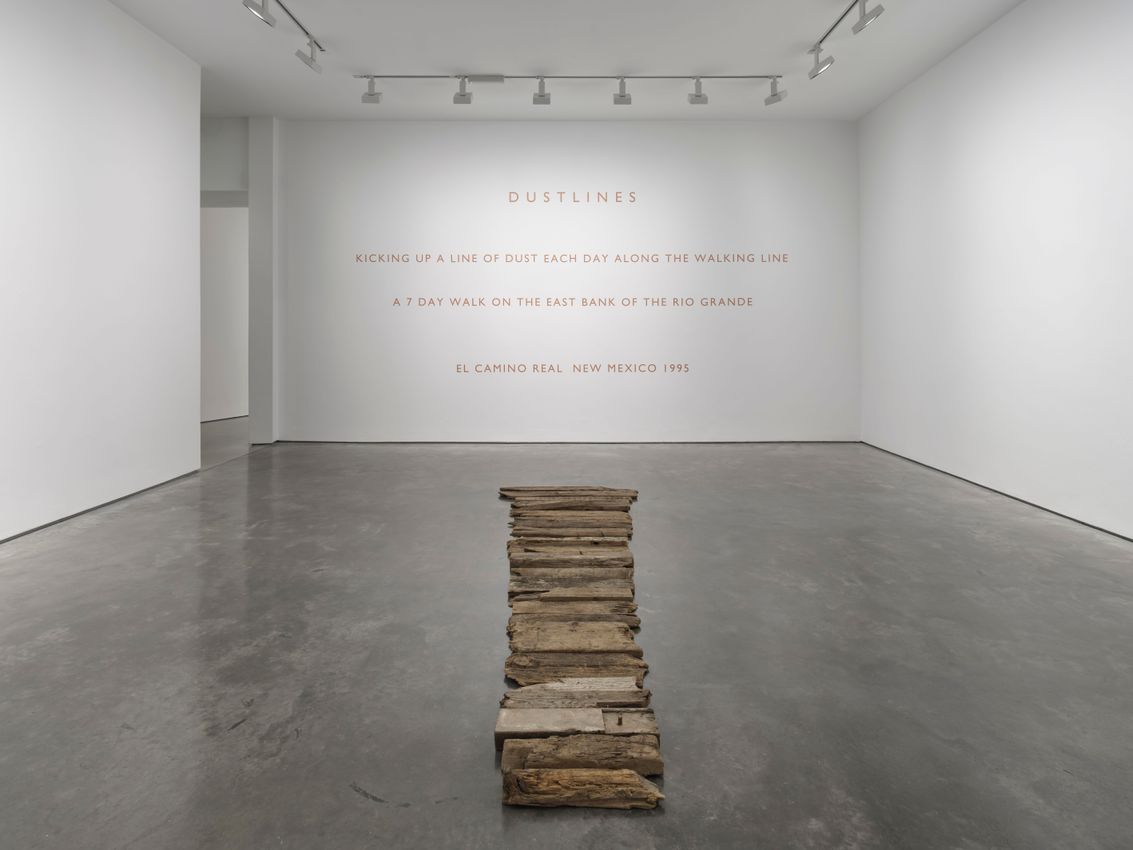
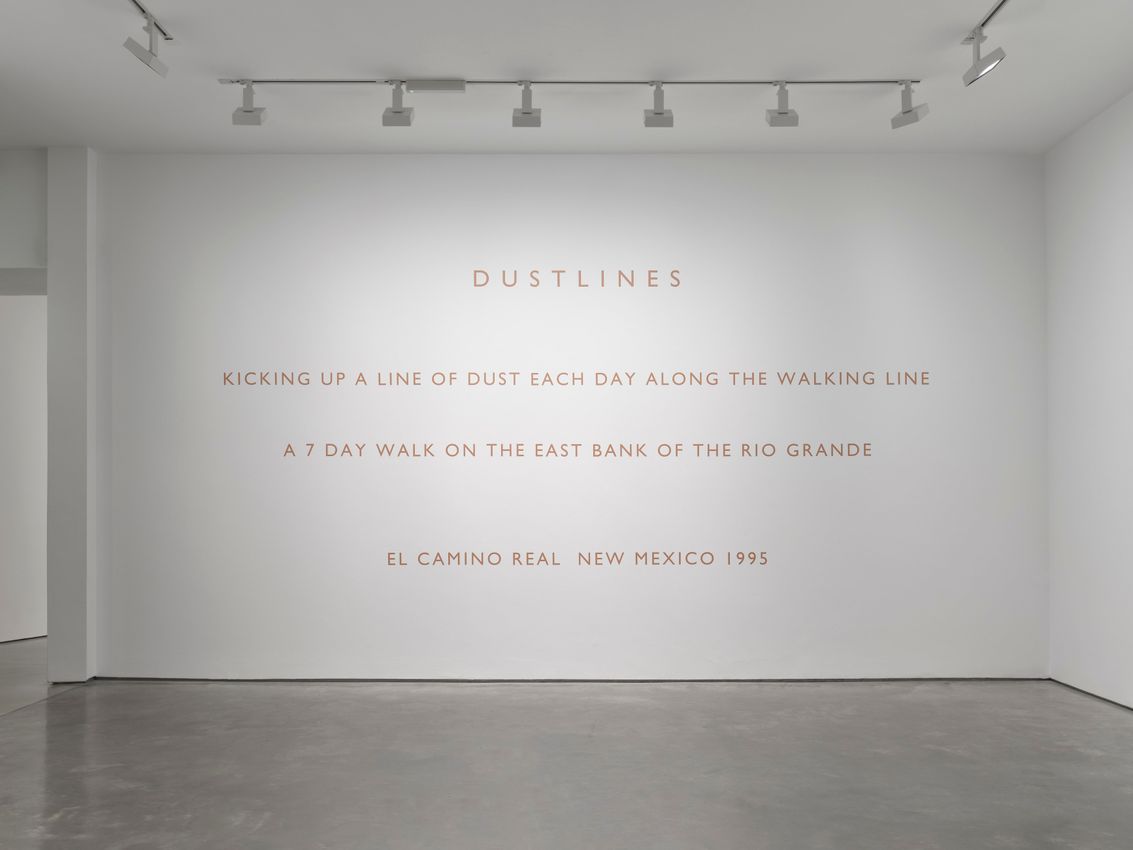
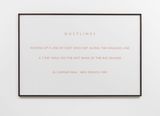
Having first made work in the natural world over 50 years ago, Richard Long has since documented his very personal and physical encounters with landscape through varied materials and means. For this presentation a wallbased text work Dustlines (1995) accompanies a sculpture of found timber, Driftwood Line (1983). The words describe one of Long’s ritualistic wilderness walks, along the old trade route of the Camino Real, which once linked Mexico City to New Mexico. Only the mind’s eye can now delineate the dust path he made by dragging and scuffing his boots alongside the Rio Grande over the course of a week, as this inherently auto-destructive work also contains and collapses around itself historical ideas linked to conceptual art, land art and performance art, all subsumed into one simple act of walking in a landscape. In addition to sharing the experience of his walks through text, here Long brings raw matter from outside in the form of driftwood washed up by the River Avon.

John Latham

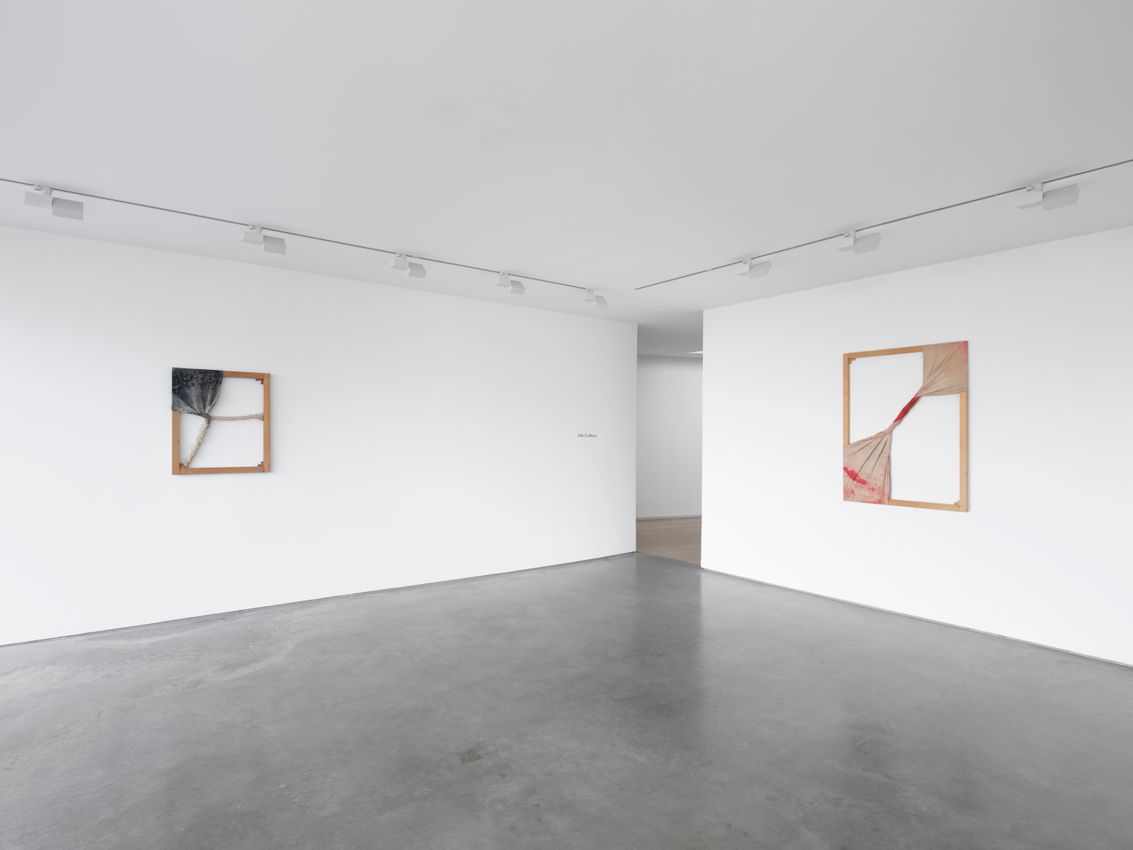
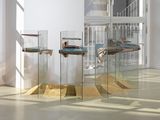
Beginning in the 1970s until his final works in 2005, conceptual British artist John Latham was deeply inspired by the physical form of the red peaks, some isolated, some grouped, rising out of the lowland plains near Edinburgh in Scotland. These were actually waste heaps of shale left behind after mining and extraction of hydrocarbons at the surface. Latham likened one group of these human-made mounds to a giant, reclining female form and considered it a monumental work of ‘Derelict Land art’, which he dubbed the Niddrie Woman. This series of glass, sand and book sculptures titled The N-U Niddrie Heart (1991) constitute the ‘heart’ of this prone figure. Originally incorporating 37 elements, the installation is both a metaphor for the survival of Mother Earth (the embedded books include The Pregnancy Survival Manual and Vanished Species) as well as a metaphorical tribute to Latham’s efforts to preserve Niddrie Woman, with each material representing a different timescale of decay, erosion or permanence. The two stretched and strangulated paintings, Canvas Events (1994-95), were Latham’s attempts at capturing not only the immediacy and shortest possible time period of creation, using spray paint, but also the infinity of the cosmos and the unknowable portions of the canvases, held forever mid-twist.

Read More

Installation Views

Artists Exhibiting

Also Exhibiting at Lisson Gallery

About the Gallery

Established in 1967 in London, Lisson Gallery is one of the most well-known galleries operating globally. Boasting an influential and continuing legacy, including playing a pivotal role in the careers of many pioneers of historically important art movements, the gallery works with some of the most significant contemporary artists today.

View Gallery Profile
Address
67 Lisson Street
London
United Kingdom
Opening Hours
Tuesday – Saturday
11am – 6pm
(1)
London 67 Lisson Street
Lisson Gallery
67 Lisson Street, London, United Kingdom
+ 44 207 724 2739
http://www.lissongallery.com

Opening hours
Tuesday – Saturday
11am – 6pm
The art world in focus