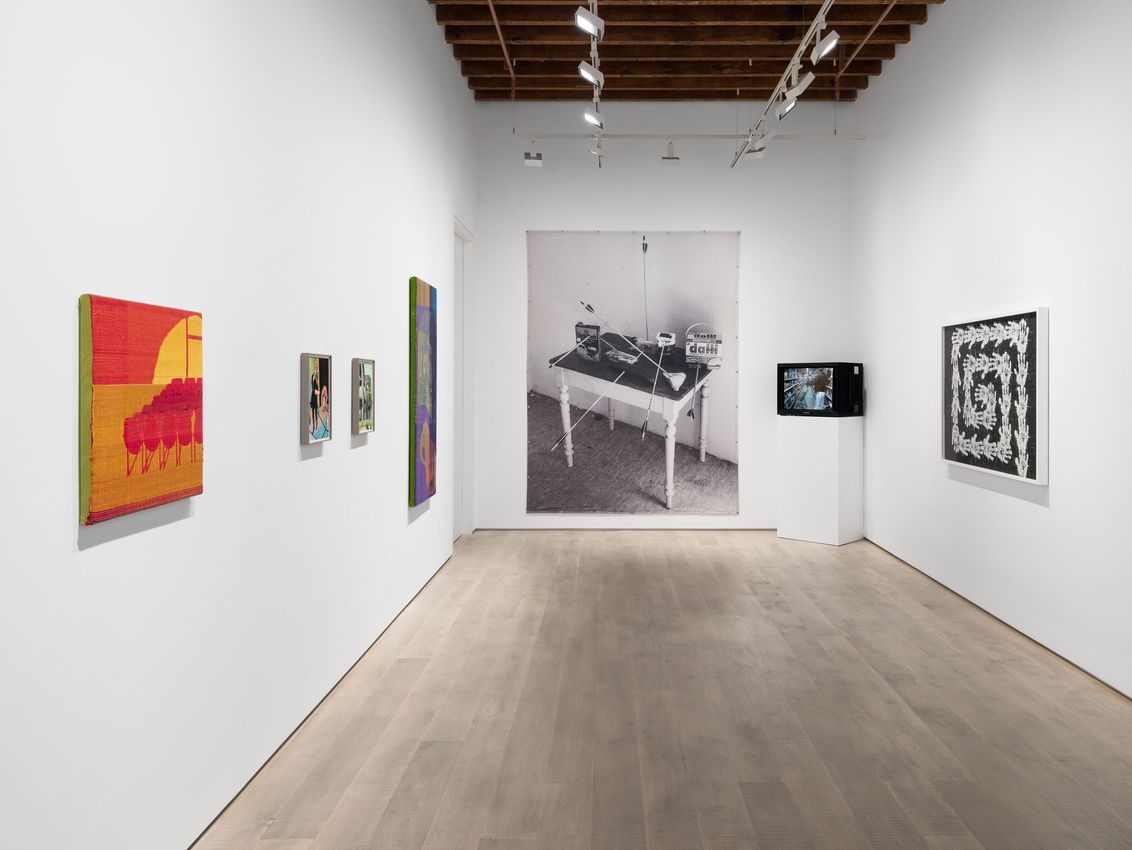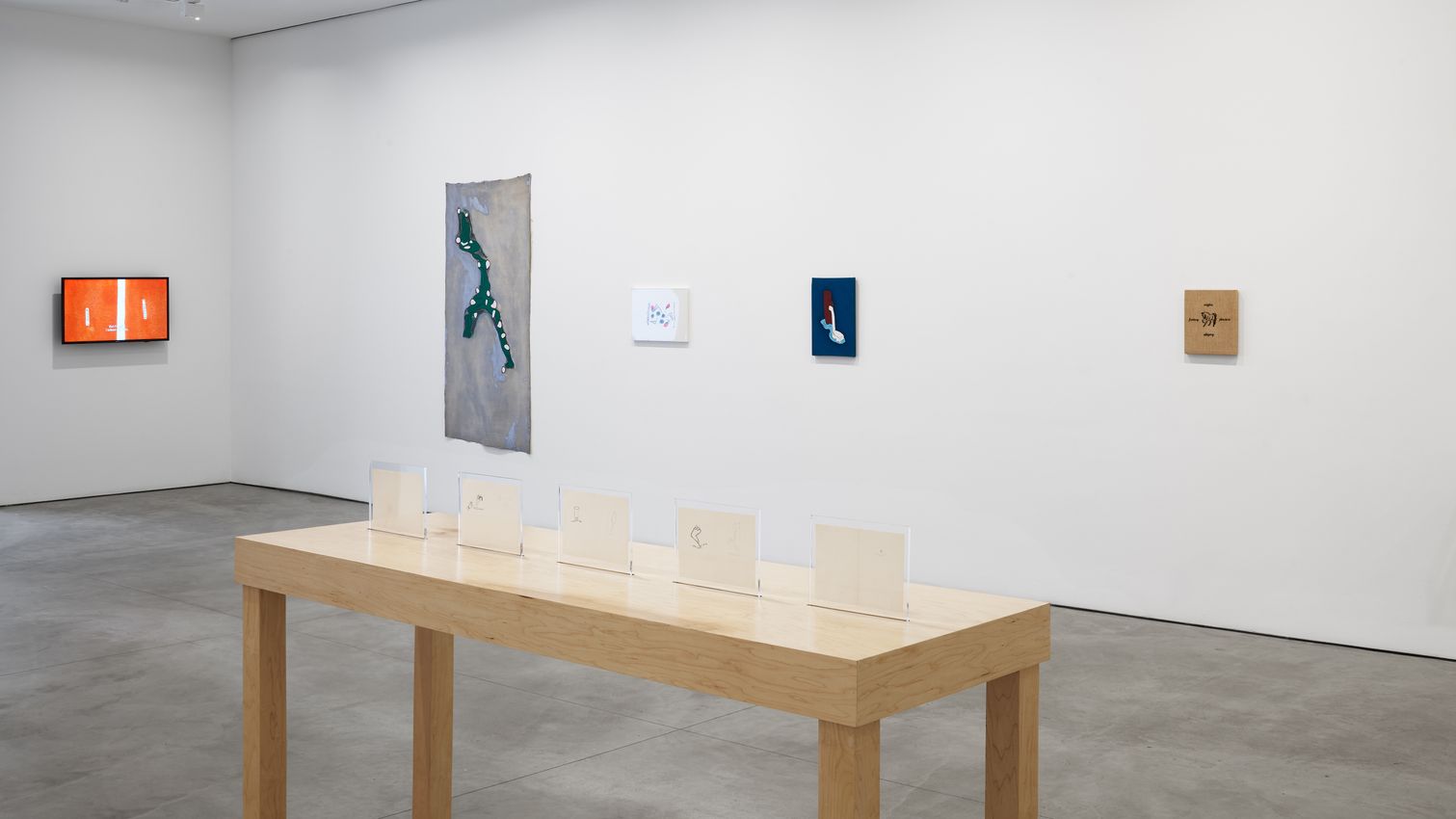




_“Assuming that the global art industry, which revolves around everything from creation to collection, is a maze,__then are the practitioners the ones setting it up or the ones finding a way out? Are we able to choose? How do we__navigate through the tangled paths in this maze?”_– Meng Xianhui, writer, art critic and curator of _Patternmaker’s Maze_
Taking its name from the labyrinth in the fantasy novel series A Song of Ice and Fire by George R. R. Martin, thegroup exhibition Patternmaker’s Maze attests to the complexity with which art and the artists engage in realityand the spiritual world. Extending beyond their physical existence, the artworks in this exhibition are recognisedas both receivers and active contributors within a maze of socio-political, economic, and natural forces. Theyinteract with the existing world of signs, visuality, and materiality while simultaneously questioning its structuresand boundaries, breaking new grounds for interpreting the past, experiencing the present, and shaping the future.
In A Song of Ice and Fire, it is said that “only those who learn to walk [the maze] properly will find wisdom.“Presented in two chapters, ‘Maze’ and ‘Patternmakers’, this exhibition brings together a group of artists whospeak to the challenges and inspirations in the process of navigating and transforming the art world, utilising andbeing subject to the power dynamics within and across distinct social fields. The artworks presented in Lisson’sShanghai gallery share a space of conversation, interweaving into a larger collective narrative while preservingtheir unique perspectives of being in the world.
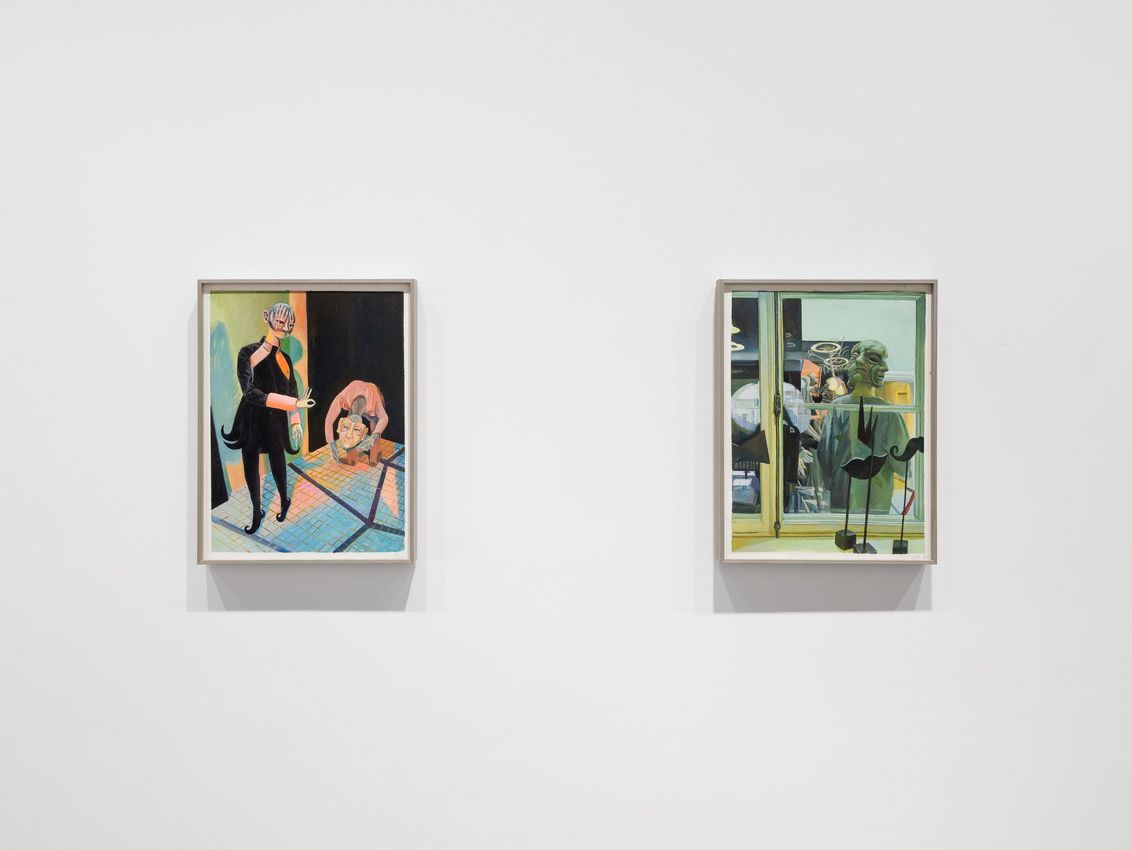
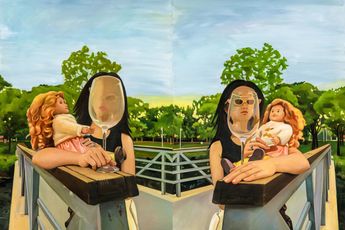
Ding Hongdan’s personal encounters in Estonia have informed the creation of the Toy Museum series, whichpoints to the possibility of different choices made in distinct situations through figures wearing masks withmultiple faces. Dressing Mirror (2024) examines human beings’ imagination for fortune and status via thestereotype perfect female image and the multi-dimensional worlds – the physical world, the world of fantasy anddesire – divided by the mirror frame depicted in the composition and the frame of this painting.
Ryan Gander’s practice follows an associative process that bridges the mundane with the mysterious,challenging established notions of language and knowledge while reimagining the presentation and creation ofartworks. In recent pieces he approaches “small things that may seem forgettable and insignificant but commandour attention without requesting it, etching themselves into our memories.” In Natural Sign / Time Management(Solemn estranged moon) (2021), the artist depicts a full moon witnessed during the pandemic, a period when heexperienced a drought of difference and inspiration; while the bold and colourful painting Irresistible ForceParadox (LY1A) (2023) is inspired by the cartoon Tintin – a childhood obsession and longstanding reference forGander. Here, expressions of energy are visualised in a circle of instinctively comprehensible ‘action marks’ thatsignify movement, emotions and interactions between characters.
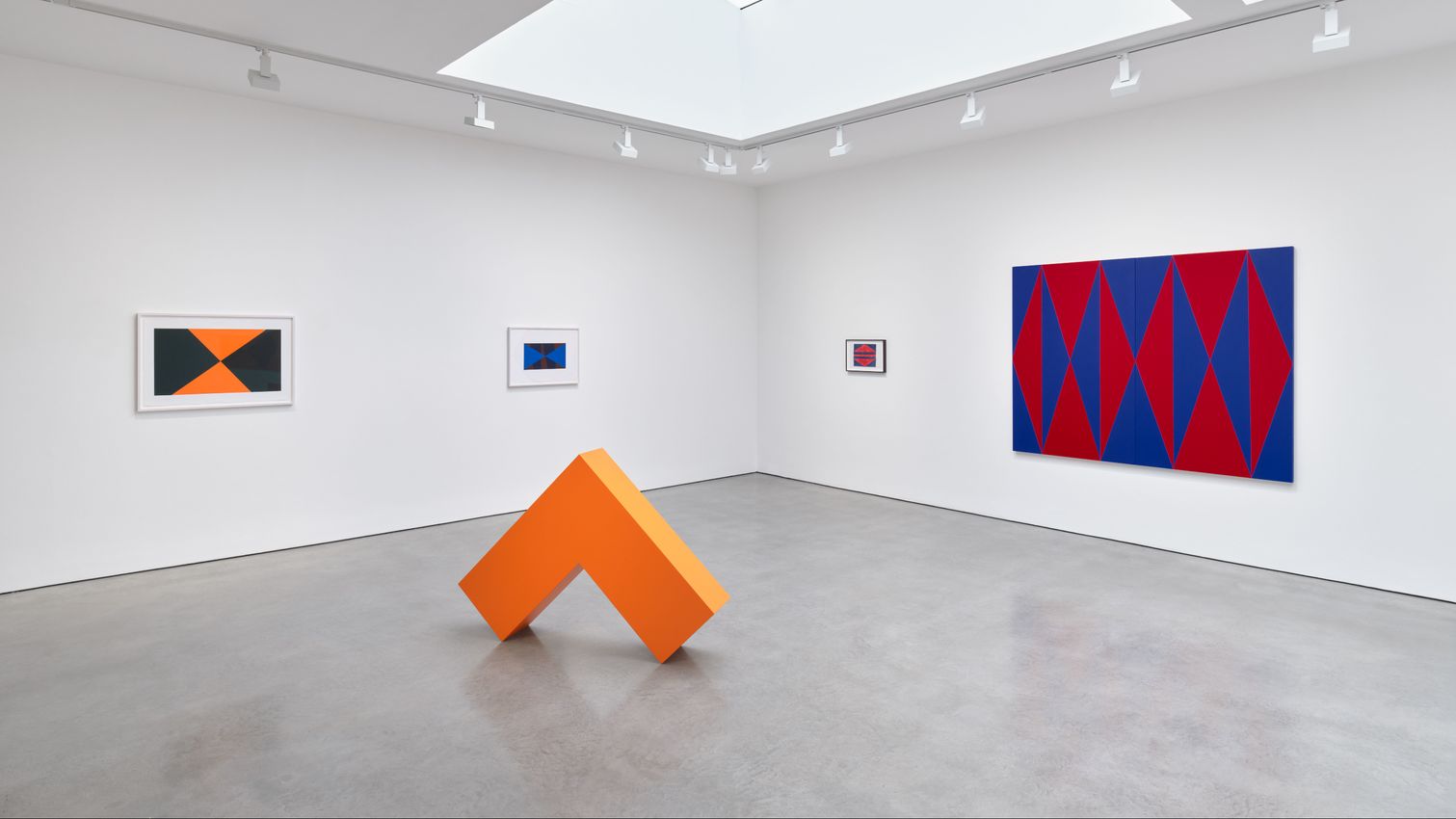
Channa Horwitz’s Rhythm of Lines, 6-7 (1988) highlights the artist’s rigorous conceptual structures and self-determined rules to capture space, movement and time with numerical sequence and lines. Each work fromthe Rhythm of Lines series is composed of a pairing of two sets of angled lines, creating intricate moiré patterns.
The areas where the sets of lines cross are filled in with twenty-three-karat gold leaf. While the work may appearto be machine-generated, it was entirely hand-made.
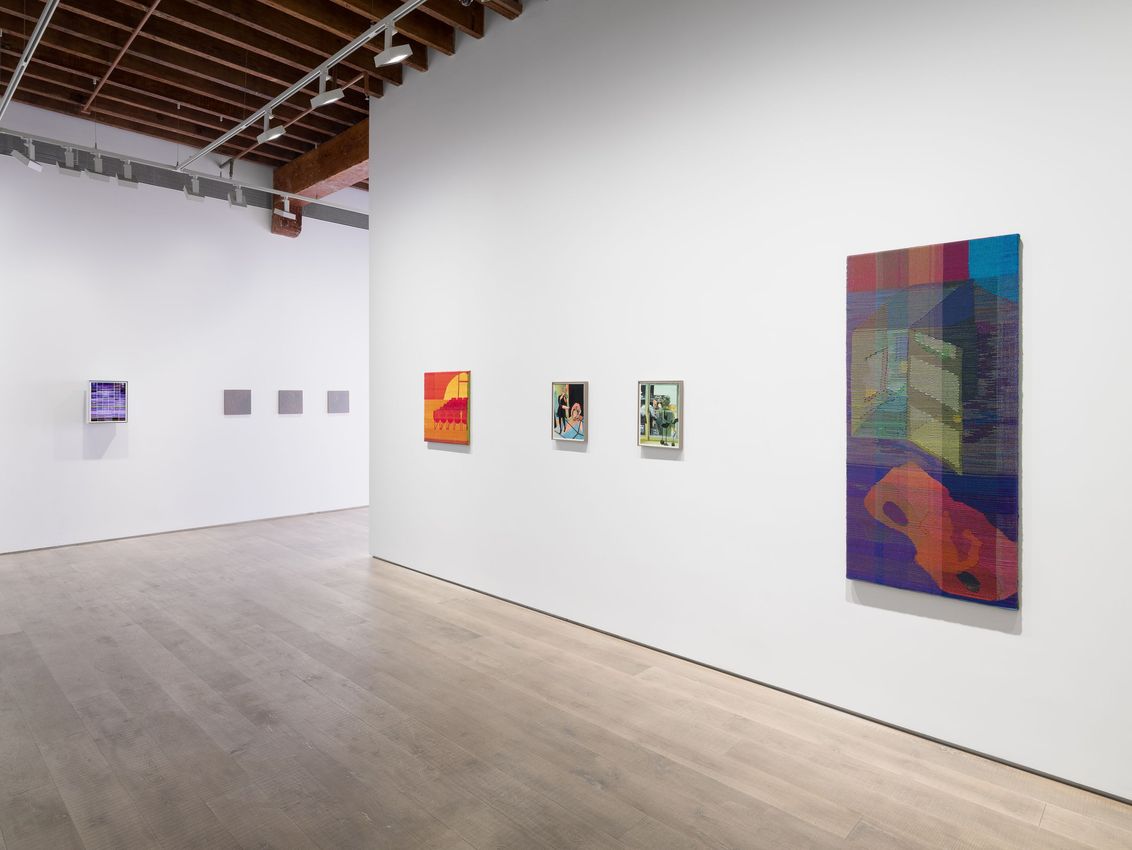
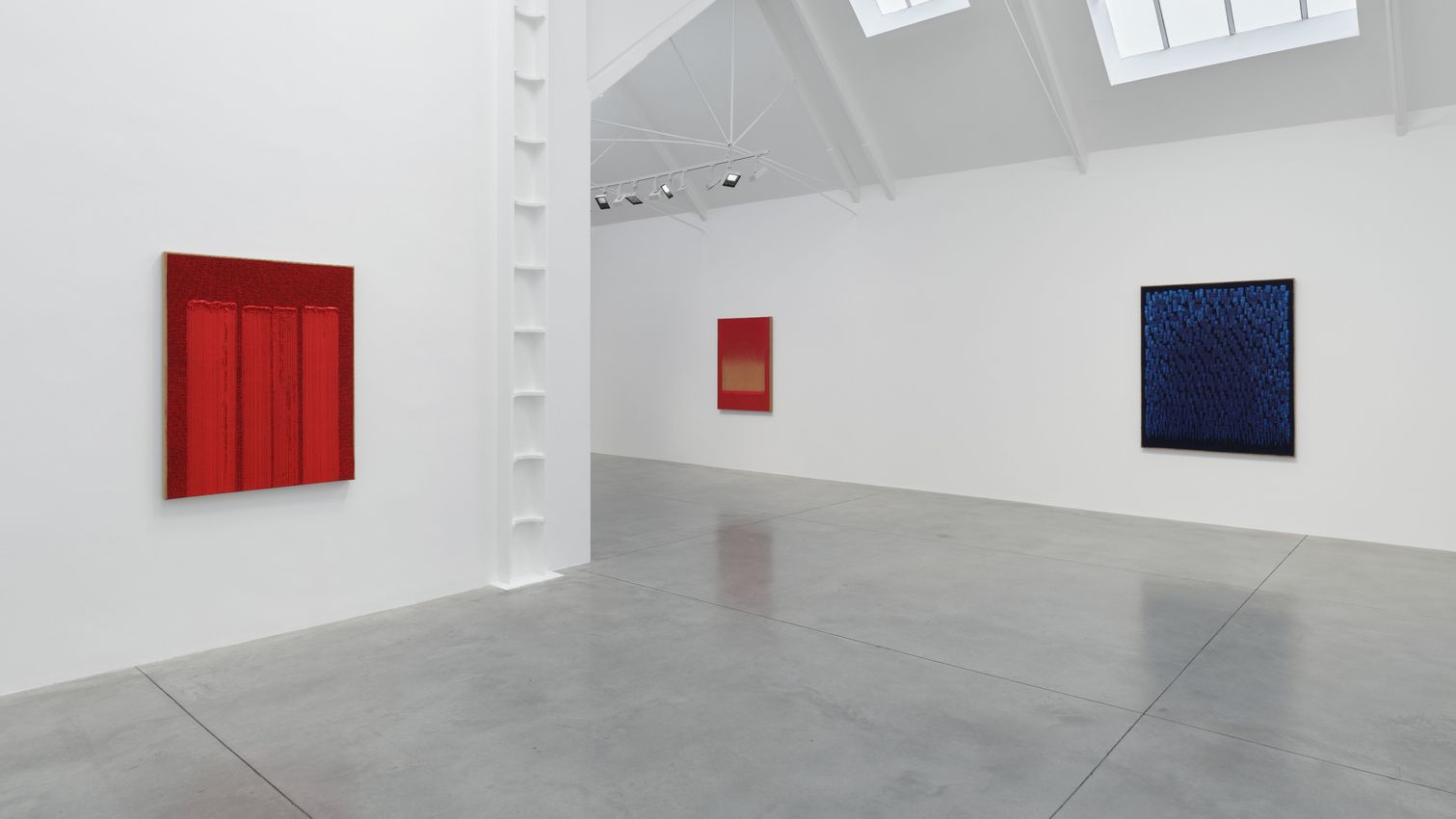
Huang Tinglan’s practice centres around different scenes in daily life. The concept of “boxes”, to which shecompares spaces, appears throughout her textile works. Characterised by two distinctive dominant colours, Place,Non-place 1 (2022) and The Exit (2022) depict her experience living in New York. The multiple textile layersresulting from the double-weave technique allude to compacted and enfolding spaces. Elsewhere, Behind theReflection (2024) is inspired by Huang’s experiences of travel since returning to China. The boundary of “boxes”no longer exists, which is evidenced by the vibrant colour palette, the motifs of scenery and dancelike humanbodies.
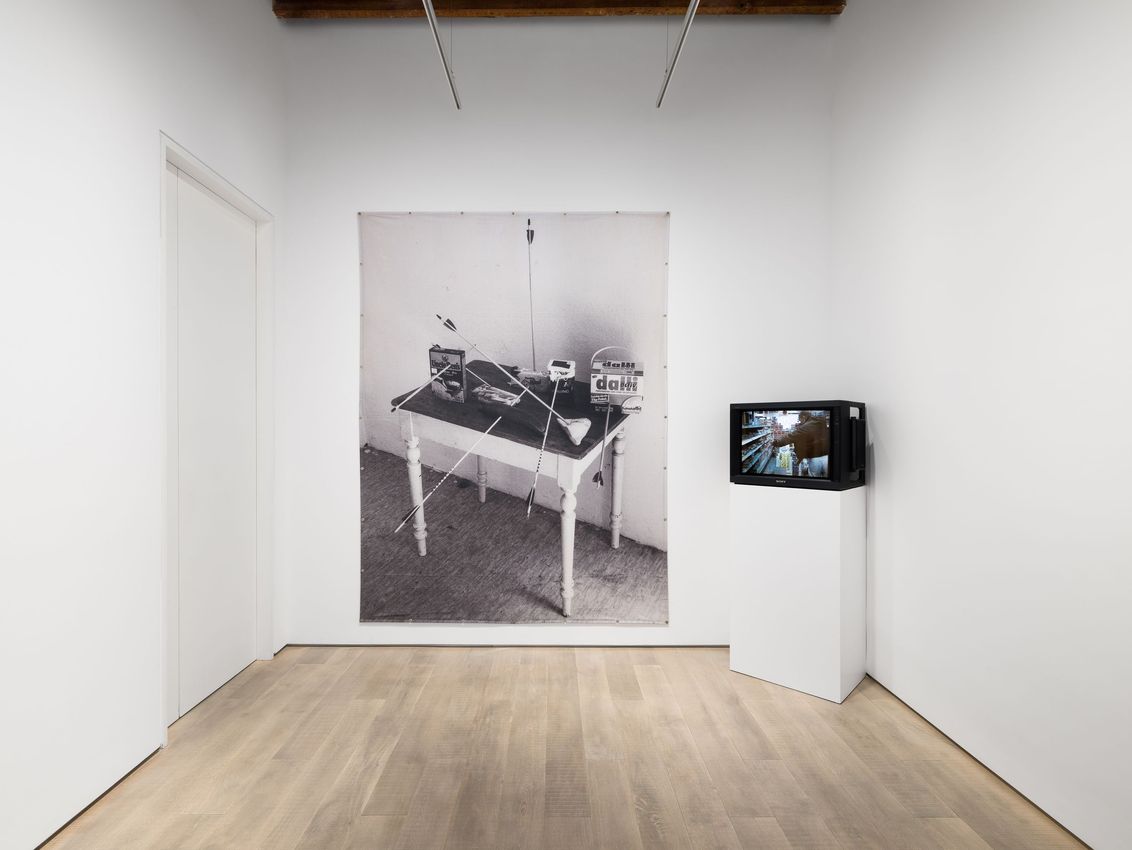
Christian Jankowski presents The Hunt (1992/1997), one of his earliest video works. This piece shows theartist’s one-week supermarket shopping experience during which, with an intention to rebel against modernsociety and to return to nature, he ‘hunts down’ groceries, shooting each item with a bow and arrow. Throughcomic incongruities, Jankowski humorously suggests that ‘natural ways’, such as the act of hunting, and capitalistcirculation, are not necessarily mutually exclusive.
Richard Long makes a striking image in Untitled (2010) using white China Clay and the most elemental ofmeans, his own hands, demonstrating his primeval fascination with mark-making. “All my work is simple. I likethe primal energy of just handprints or fingerprints. It’s like cave painting.” Known for creating works that tracehis physical movement through space, Untitled (2010) emphasises Long’s preoccupation with the physicalengagement of the body in his work.
Otobong Nkanga’s Silent Anchor I (2023) presents a circuitry of hand-dyed rope and biomorphic glass forms,conceived as a spatial cleanser or talisman. A shallow well on the surface of the glass holds an offering oflavender oil, a substance believed to have healing, soothing and anti-inflammatory properties. The sculptureamplifies and extends the concept of energetic intervention beyond the body and into the spatial realm, suggestinga permeable boundary between the two domains.
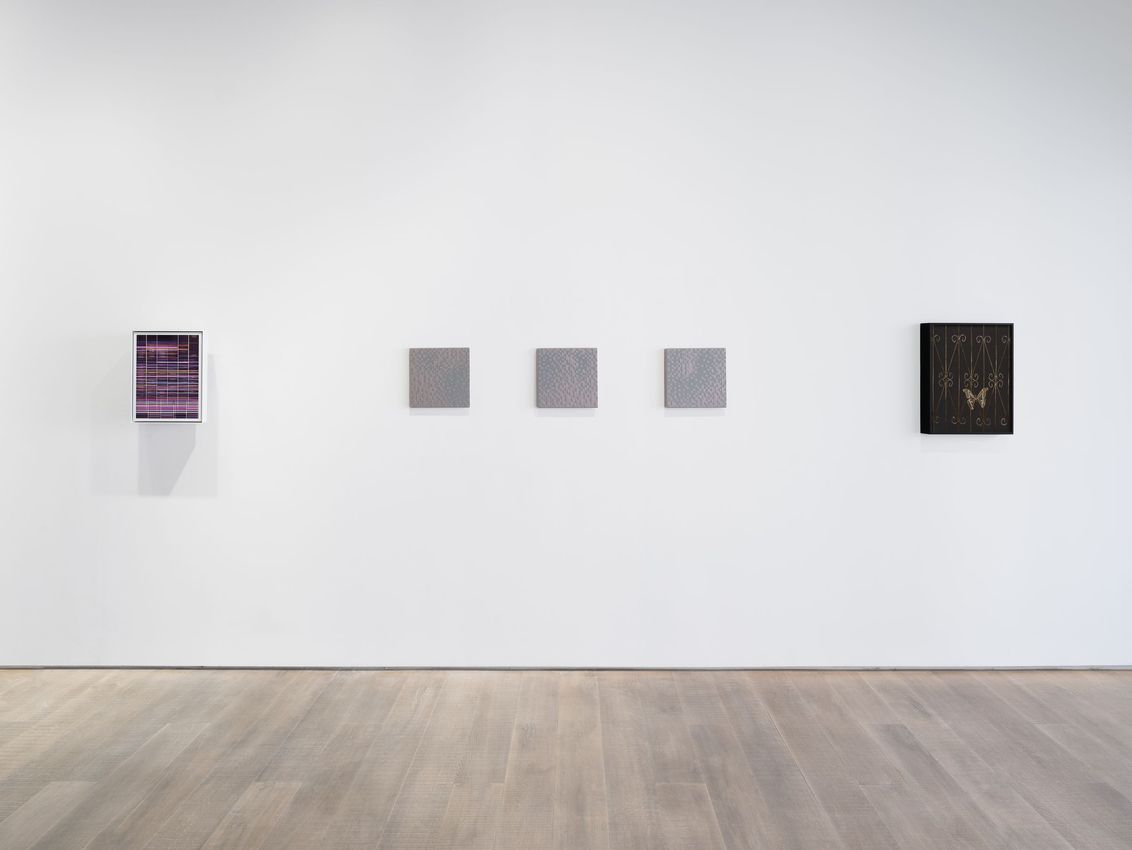
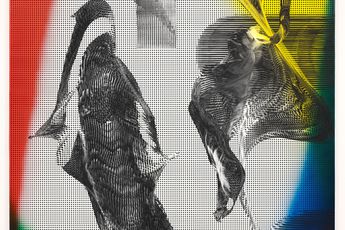
Ren Jie’s Night Watch series coalesces materials, everyday images as well as visual and physical experiences ofcontemporary life through the lens of the entanglement between textile techniques and modern computertechnology. This series invites viewers to engage with the dialogue between space and materiality in a worlddominated by fleeting digital viewing experiences, generating new interpretations on the subjects of labour andgender and unleashing the imagination around these topics from a literature perspective.
Shen Ruijun’s mixed media installation Swan Lake (2016) depicts a state of multi-dimensionality, change, andunity of opposites. The piece’s utilisation of one-way mirror glass leads to different images appearing fromdifferent viewing angles. Referencing the duality and underlying, multi-faceted nature of the female characters inits namesake ballet masterpiece, the work highlights the perpetual change and repetition in time, places andcontexts.
Shi Zheng removes the images and texts from the front page of The New York Times, then trains an ArtificialNeural Network to learn the data set consisting of lines between the columns. In the resulting single-channel videoBINE (2019), the shifting and orderly lines appear and diminish to compose a body that continuously grows. Onceacting as “the silhouette” that divided information, event, and time, the work explores “latent space” anddelineates time by tracing its varying boundaries and framework.
Cheyney Thompson started creating his Caning paintings series in 2004. In Caning [4, interval] made in 2023,the artist continues his exploration of structure through a weaving motif. Living in a highly structured world,Thompson considers the notion that structures are themselves built on contradictions. If a motif carries with it atrace of motivation, then these paintings are concerned with what can happen when structures are strained to apoint of failure.
Wang Ye develops his narratives by using traditional, hand-made embroidery techniques, originated in Hunan inthe artist’s Embroidernity series. Moth (2022) was inspired by a giant moth he saw on a rusty window in hischildhood. Having never seen the same type of moth again, he questioned whether such an experience was adream or a missing memory. Subsequently, Wang identified the potential species by remembrance. Through thisrepresentation, the artist furthers his explorations of Chinese folk art technique and aesthetics.


Established in 1967 in London, Lisson Gallery is one of the most well-known galleries operating globally. Boasting an influential and continuing legacy, including playing a pivotal role in the careers of many pioneers of historically important art movements, the gallery works with some of the most significant contemporary artists today.

A respected voice in contemporary art discourse.
Focusing on ambitious storytelling and insightful art-world commentary. Ocula Magazine publishes in-depth interviews, critical essays and timely analysis on the artists, exhibitions and ideas driving the global art world.
Learn more about Ocula Magazine
Showcasing the best of the art world.
Ocula partners with galleries from around the world to highlight their artists, artworks and exhibitions. Gallery membership is by application and invitation, with each member vetted by an independent panel.
Learn more about Ocula Membership

Specialises in the sale of major artworks.
Led by a team with deep ties to the world’s leading auction houses, galleries and collectors. Ocula’s advisory team offers bespoke services to high-net-worth clients from around the world who are looking to acquire the best of contemporary and modern art.
Learn more about our team and services