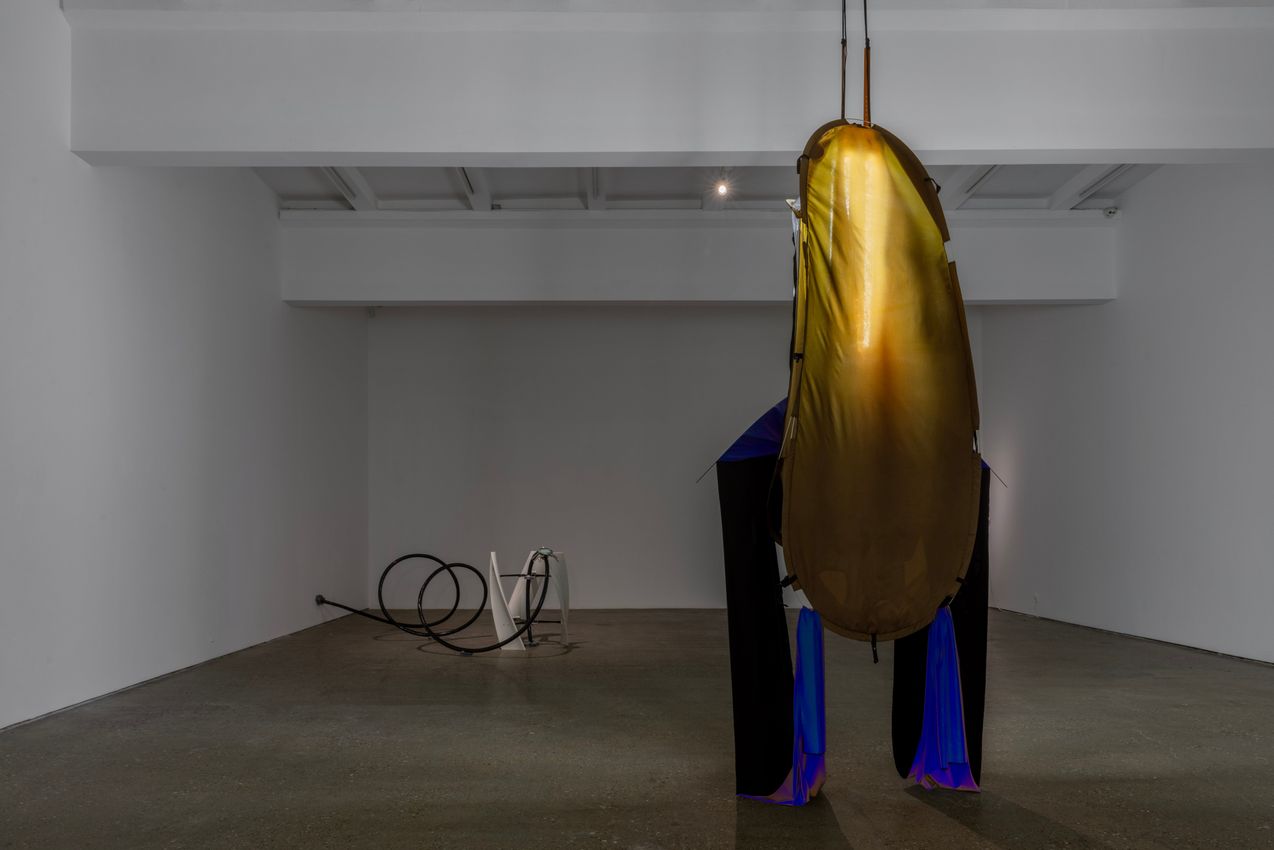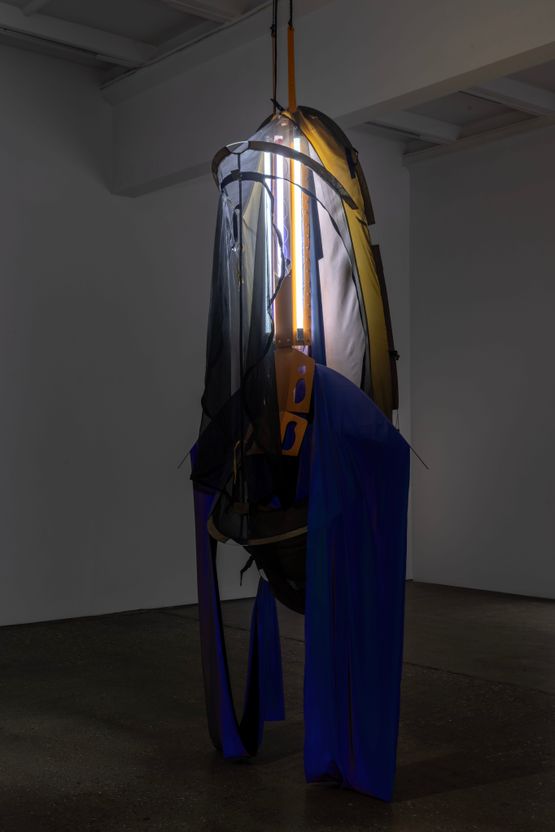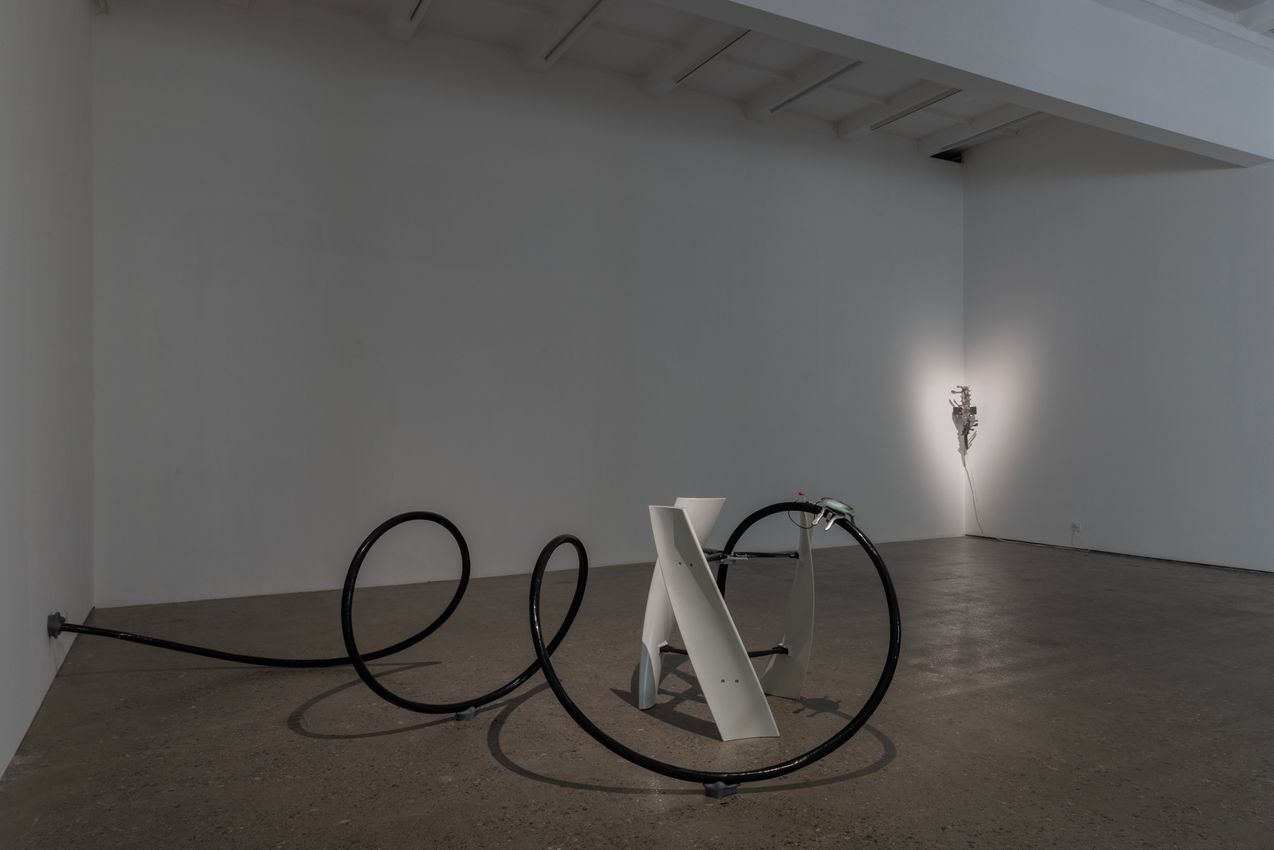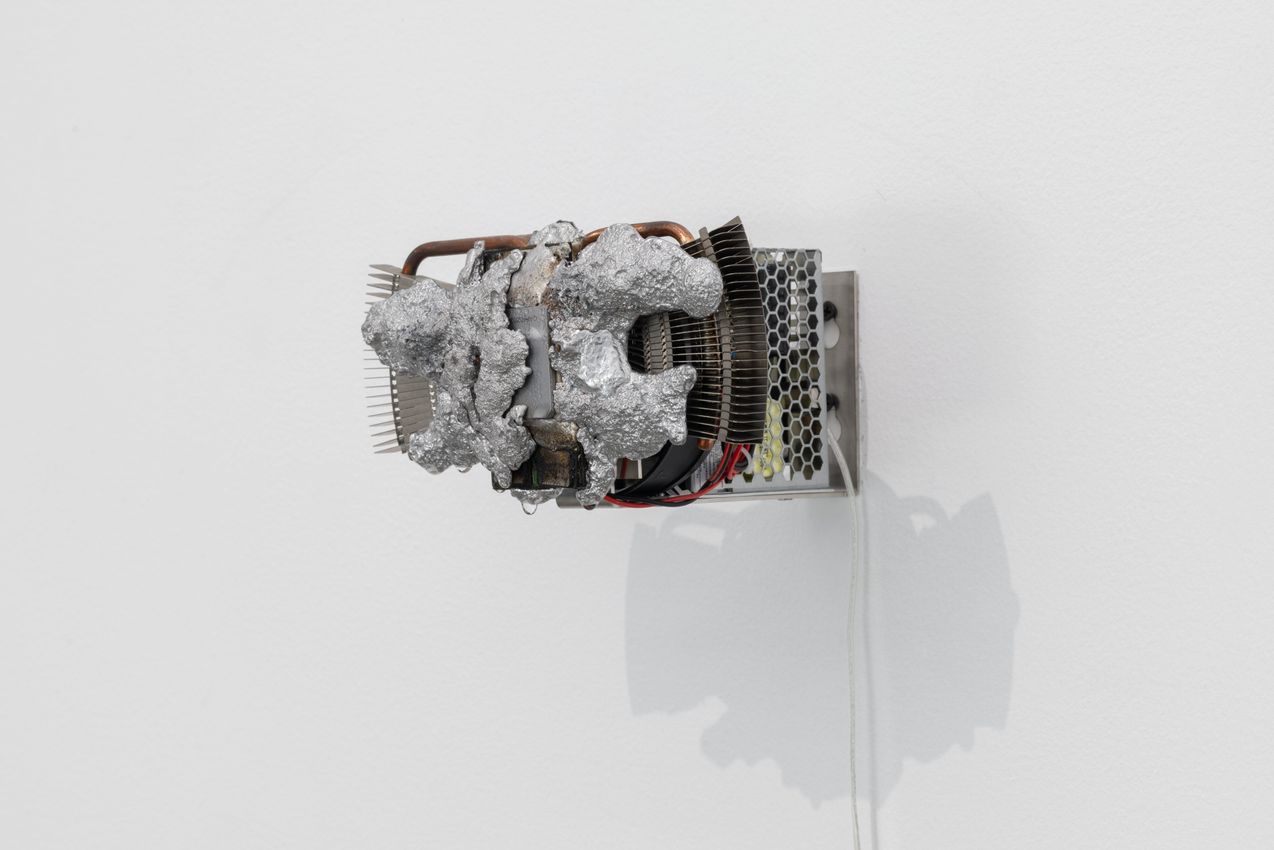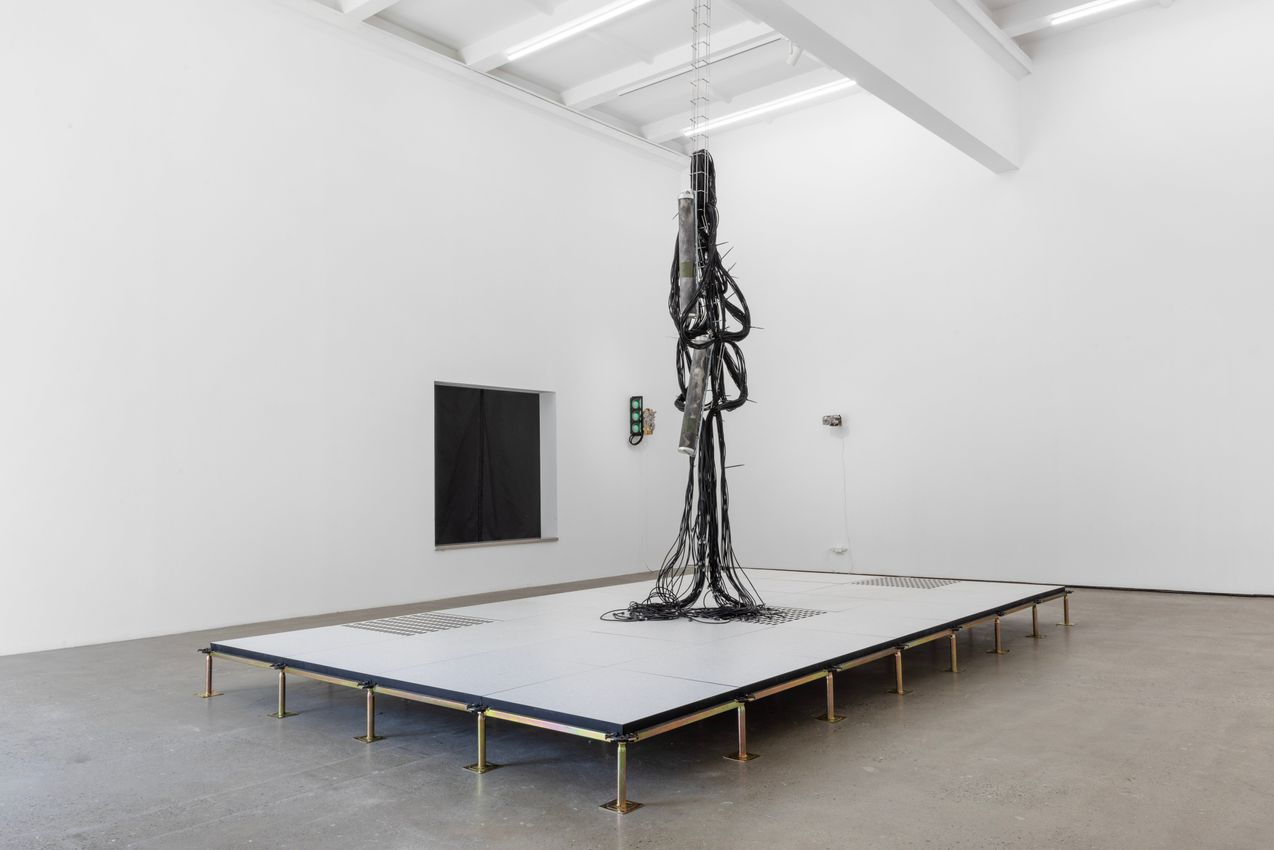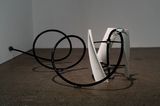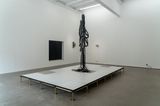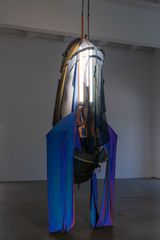
In 1947, operators discovered a moth trapped between the relays of the Harvard Mark II computer during a system malfunction. This incident is remembered as the most famous “bug” in early computing history. This accidental collision between ecological and technological realms marks the beginning of a series of events from the 20th to the 21st century, including Guo Cheng’s exhibition titled “Bug.”
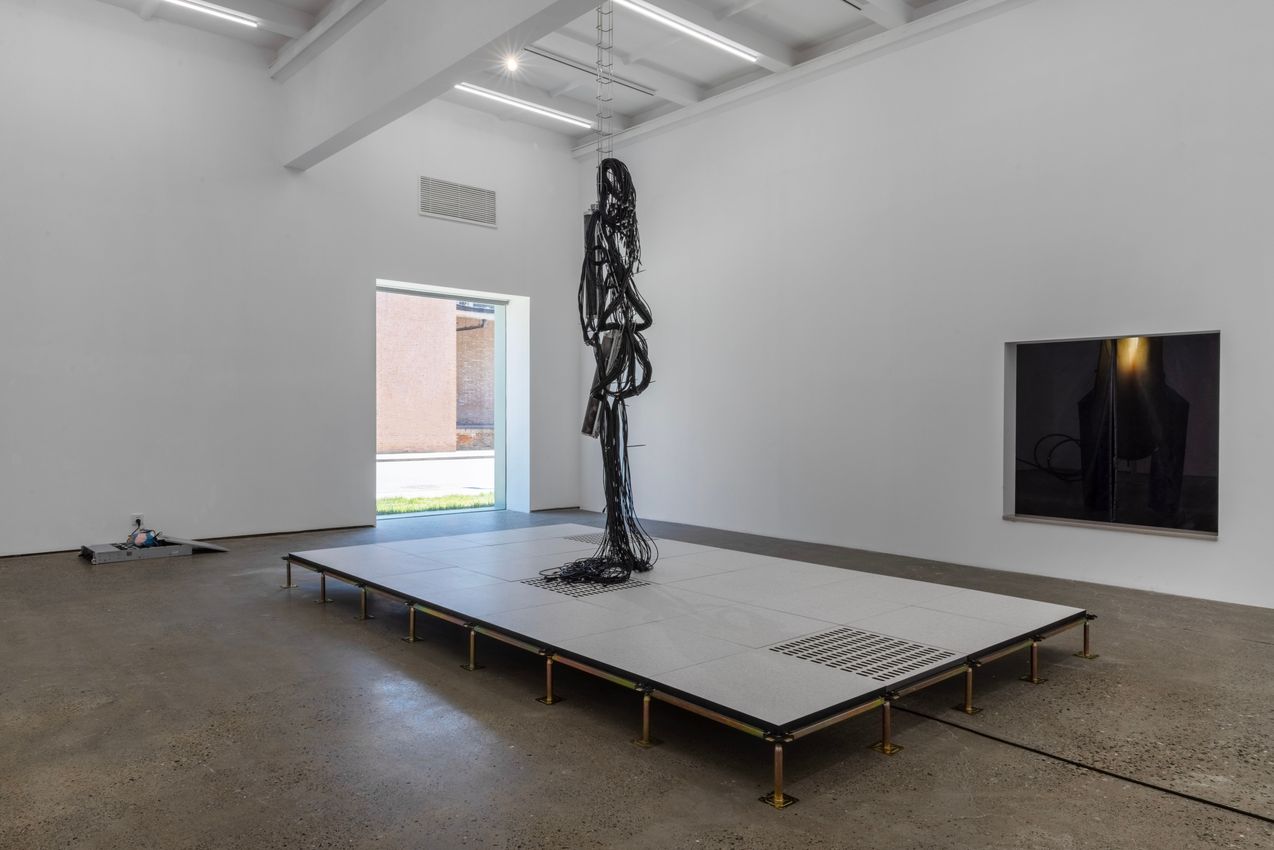
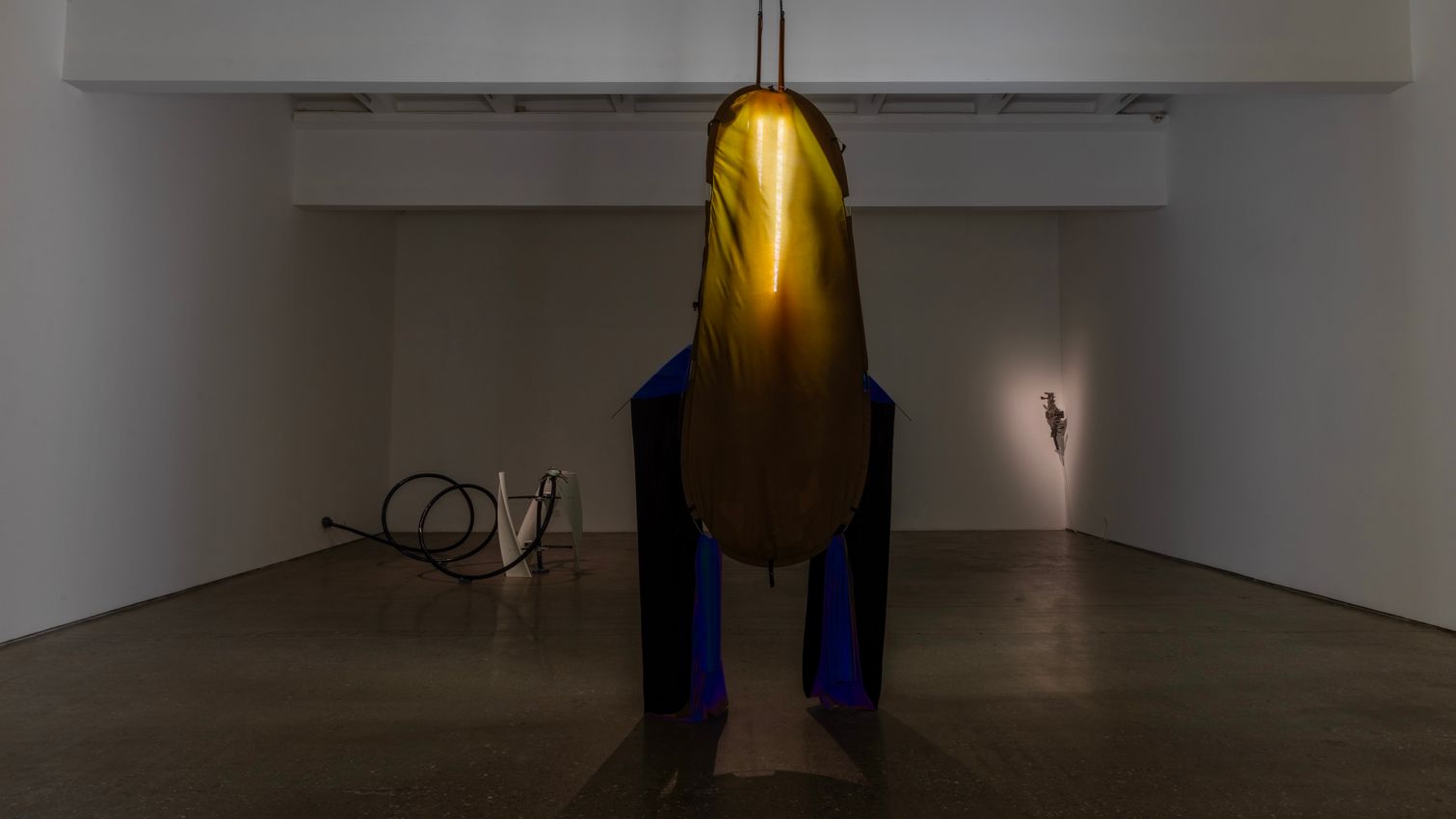
The exhibition space is divided into two distinct yet interconnected scenarios: an uncanny data centre and a peculiar outdoor field. Separated by a partition wall yet linked by a window, creatures passing between these two spaces may experience a blurring and dislocation of subjectivity.
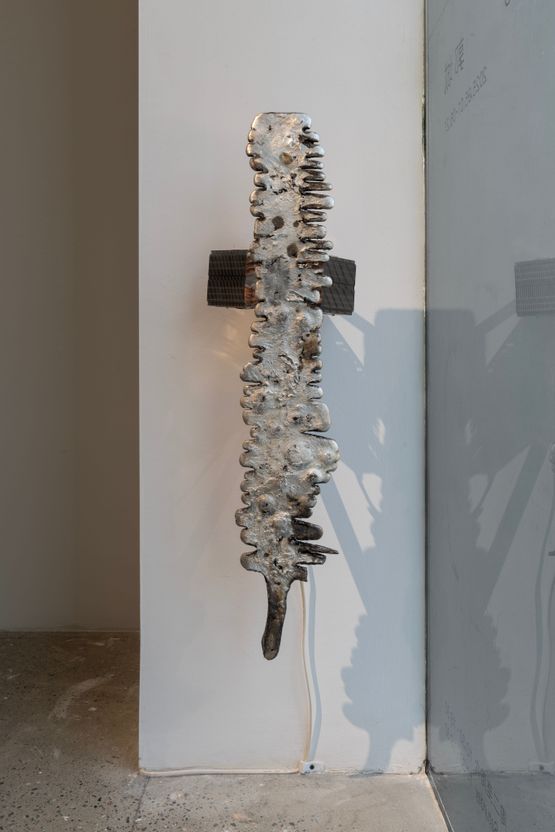
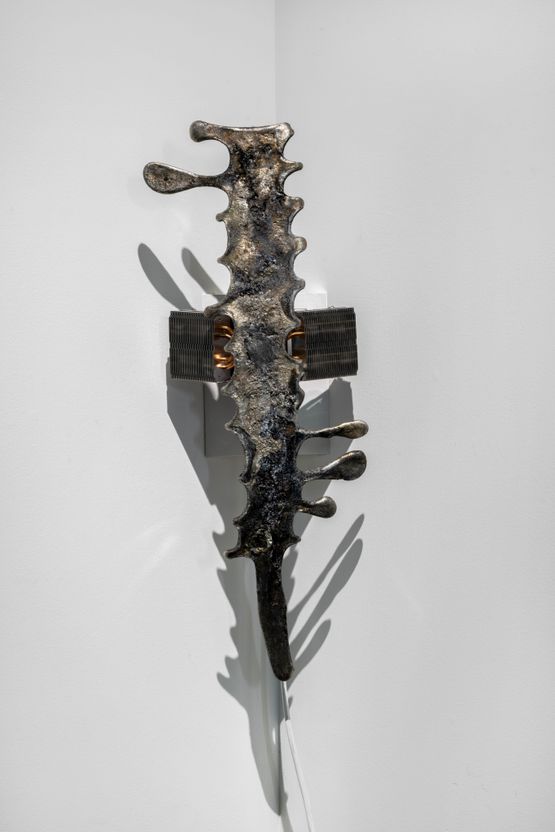
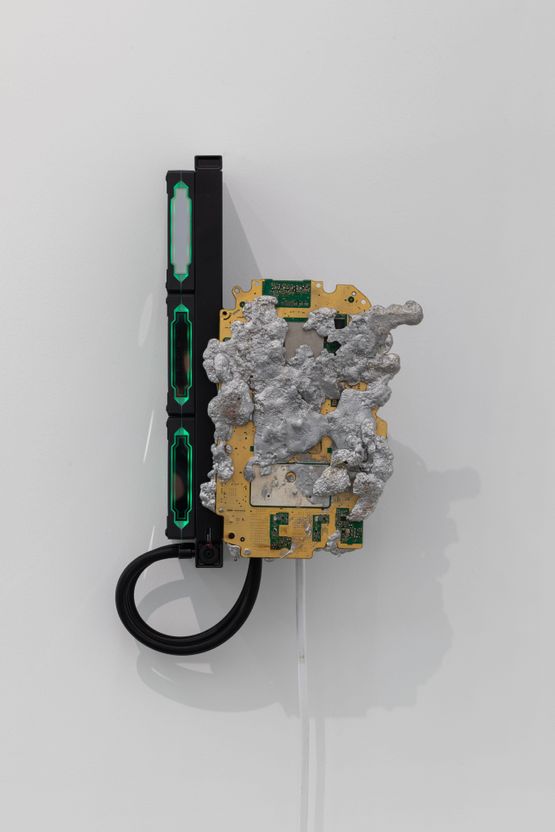
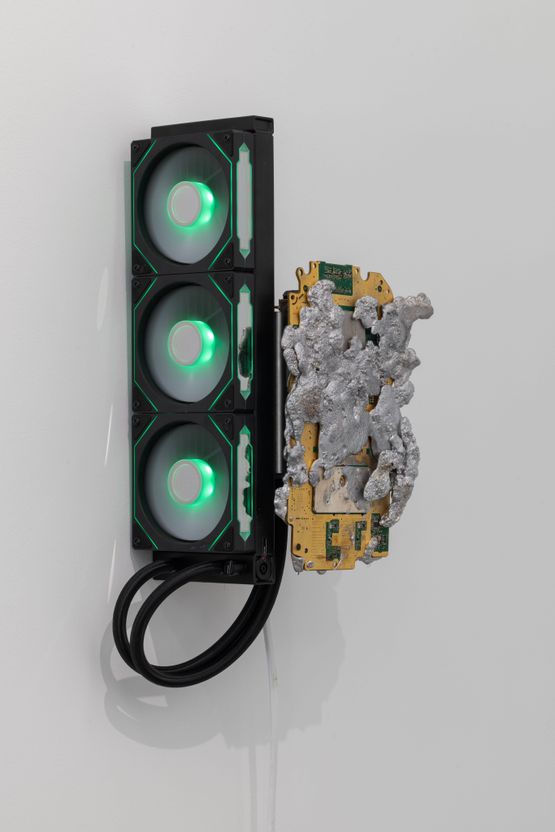
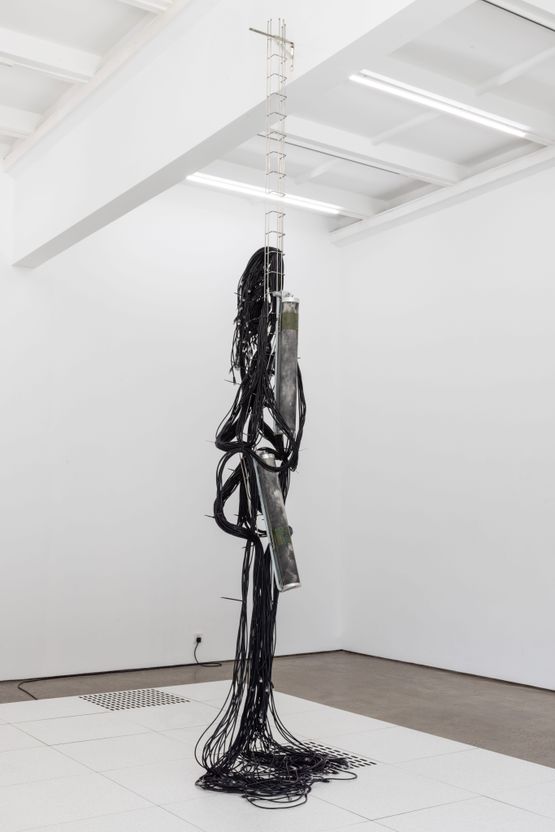
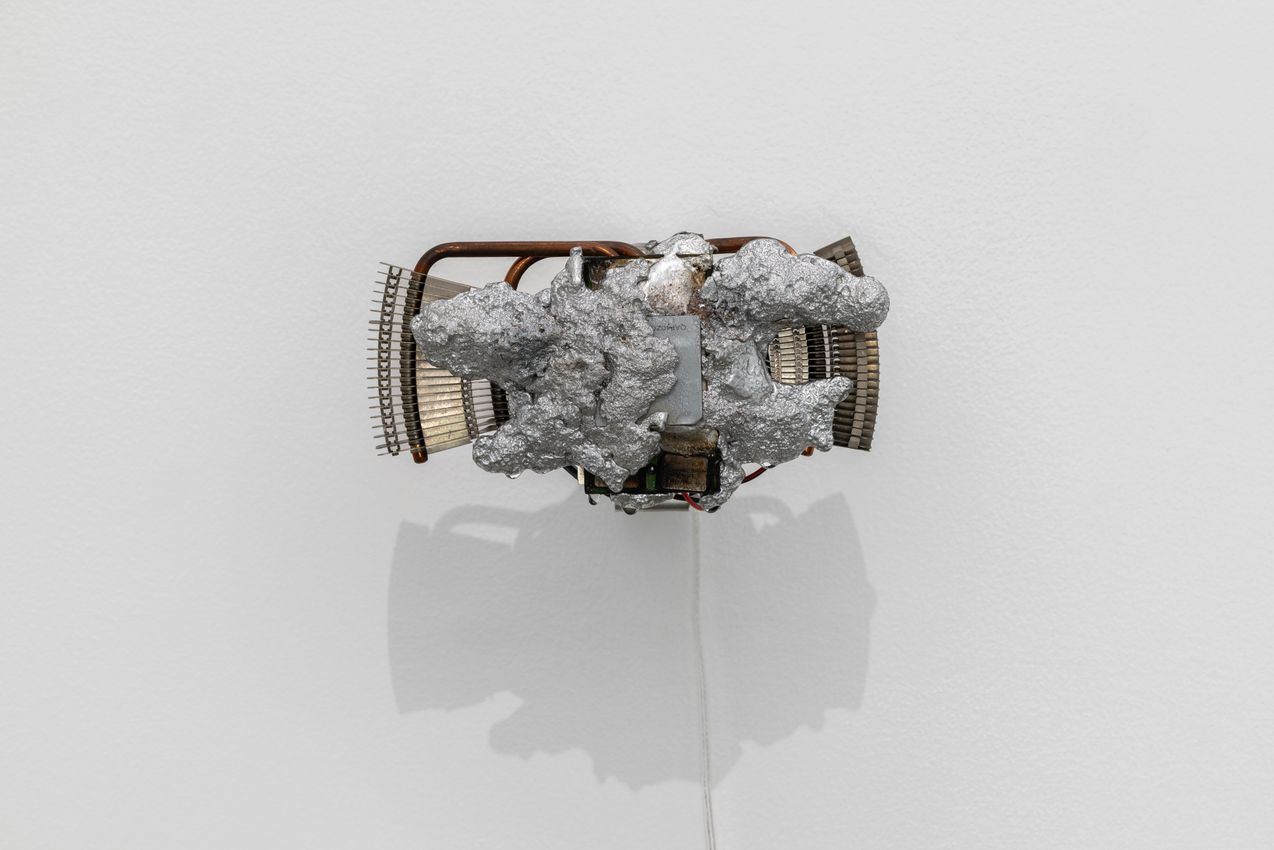
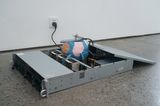
Entering the data centre, two slowly rotating rock cores are wrapped in clusters of network cables cascading from overhead cable trays. As a green film sweeps across their surfaces, the rock cores reveal primordial soup-like totems resembling cellular structures or organic markings. In the corner, a server hosts a smartphone pressing against an Earth-shaped fabric toy, running a calendar app programmed to last until the system’s temporal limit—approximately 29.2 billion years, significantly exceeding the known age of the universe. This piece alludes to the humanisation and commodification of the environment, highlighting the technological infrastructure’s consumption of geological resources. Nearby, chips encased in molten metal hint at the destructive potential inherent in technological advancement.
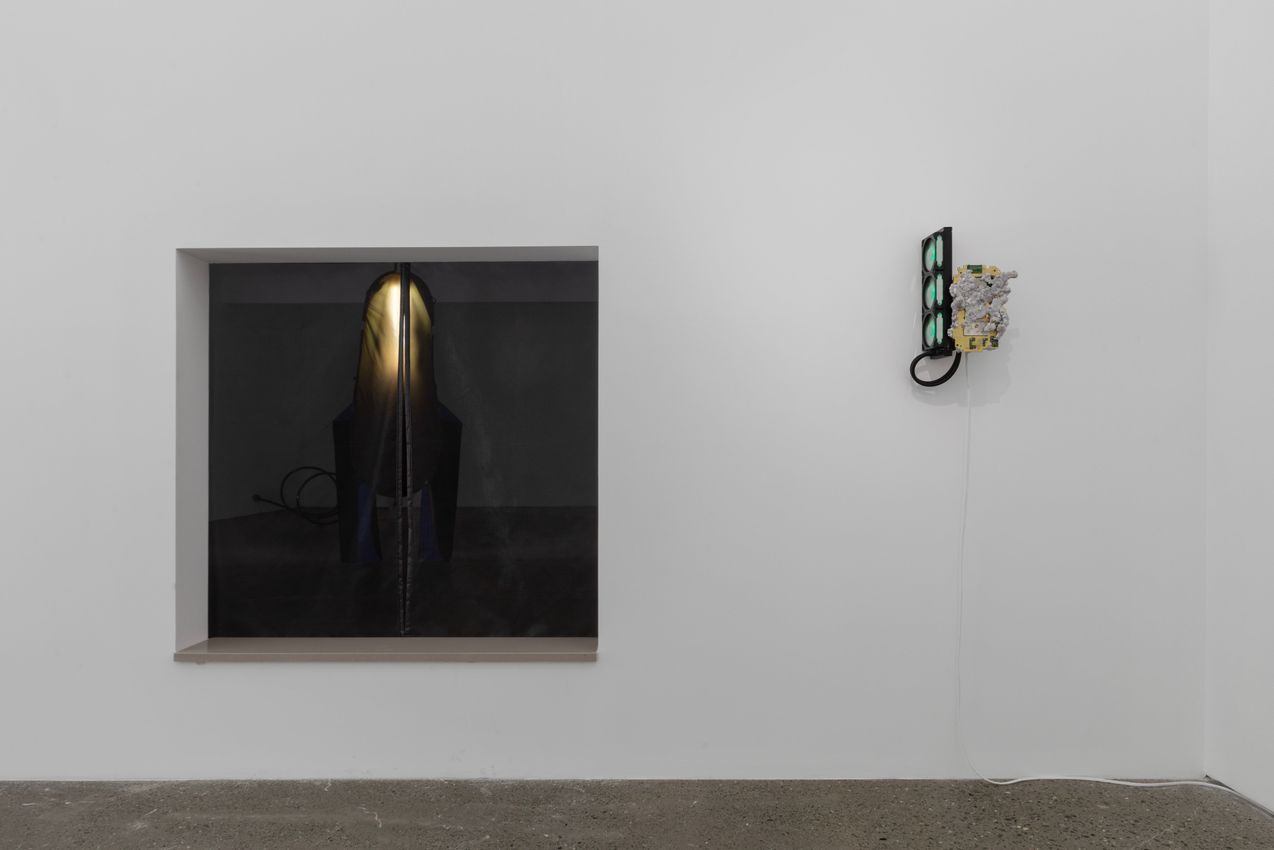
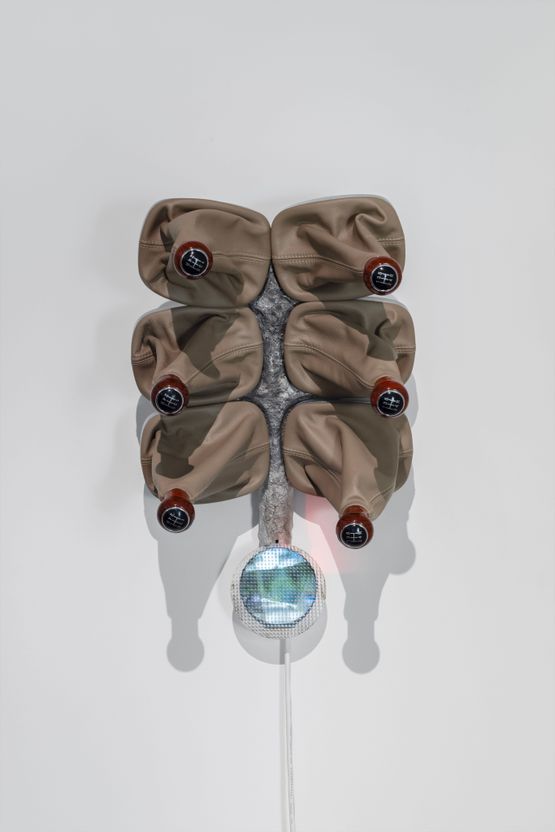
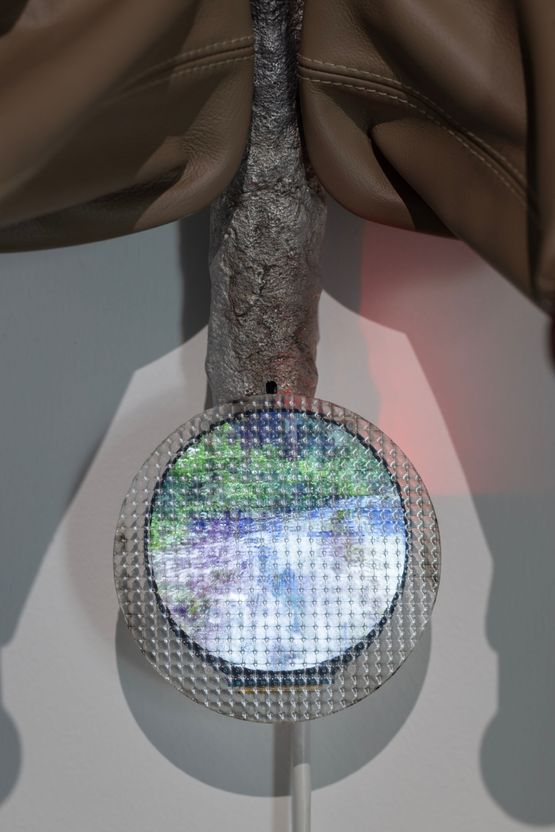
Passing through the “window” into the second scenario, viewers encounter a luminous tent installation inspired by Guo Cheng’s experiences of attracting insects with artificial lights during field research in Medog. One hypothesis about nocturnal insects being drawn to light is that they use moonlight to navigate, and artificial illumination disrupts this mechanism. Visitors approaching the installation mimic the insects’ phototactic behaviour. Works within this same area can be seen as “quasi-objects,” forming a complex network composed of contemporary technological infrastructures—roads, power generators, cables, condensers, and their byproducts. Simultaneously, these pieces demonstrate nature’s resilient mechanisms of self-regulation, which remain uncontrollable and constantly in dynamic equilibrium.
The “bug” thus transcends its definition as merely a technical flaw awaiting rectification; it also represents a living entity within actual ecosystems. Often viewed as disturbances, bugs expose the intricate ecological interactions and symbiotic relationships at the intersections of distinct realms. The relationship between data centres and natural landscapes is not easily delineated by structures such as windows. As described in the ancient Chinese text *Da Dai Li Ji* (*The Book of Rites,* compiled *by Dai De*), humans are categorised as “naked insects,” together with the winged, the furred, the scaled, and the armoured varieties of insects—a classification that encompasses all living creatures. This perspective situates humanity within a broader and deeply entangled spectrum of life.
Part of the works was commissioned by the “Creative Future” project of The Berggruen Research Center, Peking University (first exhibited in The Larva of Time, curated by Iris Long)


The Chinese transliteration for magician – ‘mó jīn shí’ has the meaning of sharpening and refining, suggests a kind of reflection and introspection, while the English word ‘magician’ itself means something fantastical and unpredictable, implying further possibilities.

A respected voice in contemporary art discourse.
Focusing on ambitious storytelling and insightful art-world commentary. Ocula Magazine publishes in-depth interviews, critical essays and timely analysis on the artists, exhibitions and ideas driving the global art world.
Learn more about Ocula Magazine
Showcasing the best of the art world.
Ocula partners with galleries from around the world to highlight their artists, artworks and exhibitions. Gallery membership is by application and invitation, with each member vetted by an independent panel.
Learn more about Ocula Membership

Specialises in the sale of major artworks.
Led by a team with deep ties to the world’s leading auction houses, galleries and collectors. Ocula’s advisory team offers bespoke services to high-net-worth clients from around the world who are looking to acquire the best of contemporary and modern art.
Learn more about our team and services