





PAMELA ROSENKRANZ
b. 1979, SwitzerlandPamela Rosenkranz is a Swiss multimedia artist internationally recognised for her conceptual practice that spans sculpture, painting, video, and installation.
Artistic Practice
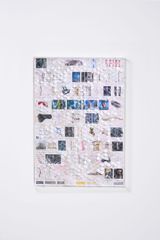
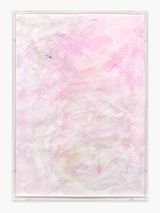
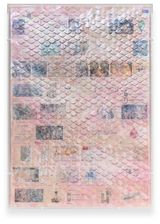
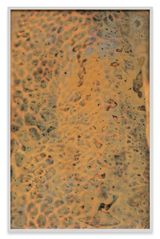
Rosenkranz’s work explores the intersections of biology, technology, and culture, reflecting on how human perception is shaped by physiological processes and environmental conditions. Through her use of unconventional materials—ranging from flesh-toned silicone to branded consumer products—Rosenkranz challenges notions of ‘naturalness’ and interrogates the cultural constructs that define humanity in the Anthropocene.
What themes does Pamela Rosenkranz explore in her work?
Rosenkranz’s art examines the interplay between human biology and cultural systems. Her works often reference neuroscience, evolutionary psychology, and speculative realism to question how human experiences are mediated by biochemical and technological processes. For instance, her 2015 Venice Biennale project Our Product used synthetic liquids to mimic skin tones and evoke the commodification of the human body.
Her installations frequently incorporate reflective surfaces, robotic elements, and readymade objects like water bottles and Amazon packaging. These materials highlight the tension between nature and artifice while addressing broader themes such as globalisation, consumerism, and environmental degradation.
How does Rosenkranz use materials in her work?
Rosenkranz employs a diverse palette of materials that include silicone, acrylics, polyethylene water bottles, and pigments resembling flesh tones or chlorophyll. Works like Healer (Anamazon) (2021), a robotic snake installation at Sprüth Magers London, exemplify her approach: combining advanced technology with cultural symbols to provoke visceral reactions rooted in evolutionary instincts.
Education and Background
Where did Pamela Rosenkranz study?
Rosenkranz earned her MFA from the Academy of Fine Arts in Bern in 2010. She also completed an independent residency at the Rijksakademie van Beeldende Kunsten in Amsterdam from 2010 to 2012. Her academic background informs her research-driven practice, which integrates insights from fields such as marketing, medicine, and philosophy.
Exhibitions and Collections
What are some of Pamela Rosenkranz’s most notable exhibitions?
Rosenkranz has exhibited in major exhibitions around the world, including at:
- Venice Biennale, when she represented Switzerland with Our Product (2015)
- Fondazione Prada for her solo exhibition Slight Agitation 2/4 (2017)
- Kunsthaus Bregenz for her exhibition House of Meme (2021) exploring viral cultural phenomena.
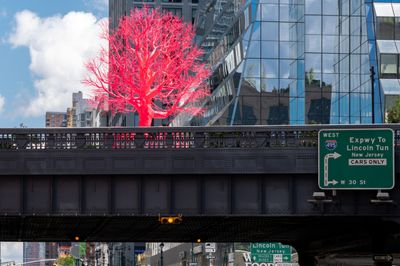
- In 2023, Rosenkranz unveiled the monumental public sculpture Old Tree for High Line Art in New York.
Rosenkranz has also participated in the 15th Lyon Biennale (2019), Okayama Art Summit (2019), and Sharjah Biennial 14 (2020).
In 2025, Rosenkranz presented her first major institutional exhibition in the Netherlands at Stedelijk Museum in Amsterdam (21 May–24 August 2025).
Which museums hold Pamela Rosenkranz’s work?
Her works are included in prominent public collections such as:
- Museum of Modern Art (MoMA), New York
- Centre Georges Pompidou, Paris
- Louisiana Museum of Modern Art, Humlebæk
- Kunsthaus Zürich
Pamela Rosenkranz’s ability to merge cutting-edge technology with philosophical inquiry positions her as a leading voice in contemporary art. Her practice continues to evolve through institutional exhibitions that challenge viewers to reconsider their relationship with nature, culture, and technology.
Ocula | 2025


















Explore and Follow Artists Shaping Contemporary Art
A respected voice in contemporary art discourse.
Focusing on ambitious storytelling and insightful art-world commentary. Ocula Magazine publishes in-depth interviews, critical essays and timely analysis on the artists, exhibitions and ideas driving the global art world.
Learn more about Ocula Magazine
Showcasing the best of the art world.
Ocula partners with galleries from around the world to highlight their artists, artworks and exhibitions. Gallery membership is by application and invitation, with each member vetted by an independent panel.
Learn more about Ocula Membership
Specialises in the sale of major artworks.
Led by a team with deep ties to the world’s leading auction houses, galleries and collectors. Ocula’s advisory team offers bespoke services to high-net-worth clients from around the world who are looking to acquire the best of contemporary and modern art.
Learn more about our team and services