German-Finnish artist Matti Braun traces the intersection of research obscurities, exquisite materiality, and conceptual art to create richly beautiful paintings and objects that address understudied and unseen narratives of cross-cultural exchange and slippage. His inquiries have generated new understandings of catalytic 20th century figures including legendary Bengali filmmaker Satyajit Ray and Senegal’s first president Léopold Sédar Senghor, as well as of the history and transmission of batik, and cultural icons including E.T., among other global sci-fi tropes. For his latest exhibition La Ku at OMR, Braun draws upon these and other threads to offer new directions in his long-standing exploration of silk and glass.
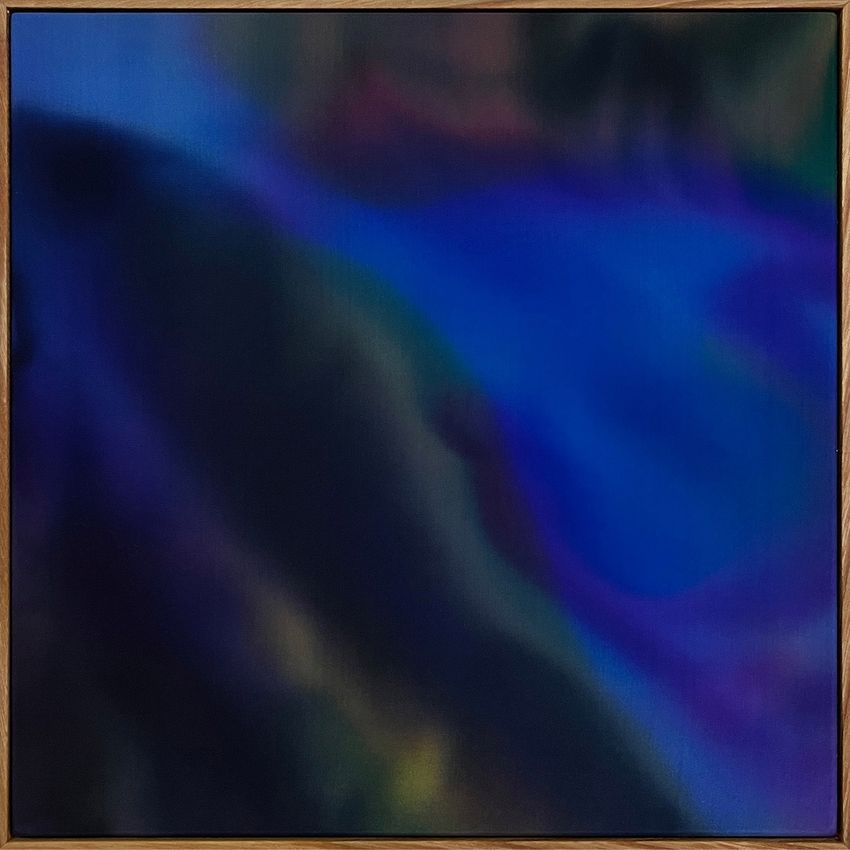
Braun thrives on polysemy and narratological misunderstandings, including in the fleeting appearance that he is simply a virtuosic abstract painter and object maker. Under this surface, Braun approaches his work scientifically, even alchemically, while valuing the poetics of grace and chance. His technical processes generate unique compositional and color constellations to reveal the potential of various grounds and mediums, evoking the oblique and rhizomatic histories that he references. He has returned time and again to glass and silk, in part for how they reflect and absorb light, and honoring their importance and ubiquity across cultures and times. Braun’s works in these materials also challenge conventional categorizations and hierarchies of painting, sculpture, and craft. The silk works are ensconced in German Elm (a departure from aluminum for the first time), inhabiting a space between two and three dimensions; and the glass orbs, produced in collaboration with a traditional Bavarian workshop, transform a silhouette traditionally held to the realm of decorative arts into conceptual abstract sculptures (though they also allude to human and alien heads and eyes, as well as to world-making). The orbs sit on circular tables made of Mexican Ash, an abundant native tree species that partially approximates endangered Elm.
Braun’s experiments with varied scales among the silk works in this exhibition show the dramatic power of the miniature and reflect on the complex relationships between the human and cosmic. These silks also reflect two different formal approaches: one marked by seamless saturated gradients and the other by bold colors layered into painterly, fluid patches. The latter structure is evocative of oil-filled “space fidgits,” a novelty children’s toy popular in the 1970s and 80s. Through the handheld memory of an often-leaking plaything, a record of the vibrant palette of a moment, we return to moon landings and long-sought independences, a metonym of the end of modernism.
–Beth Citron
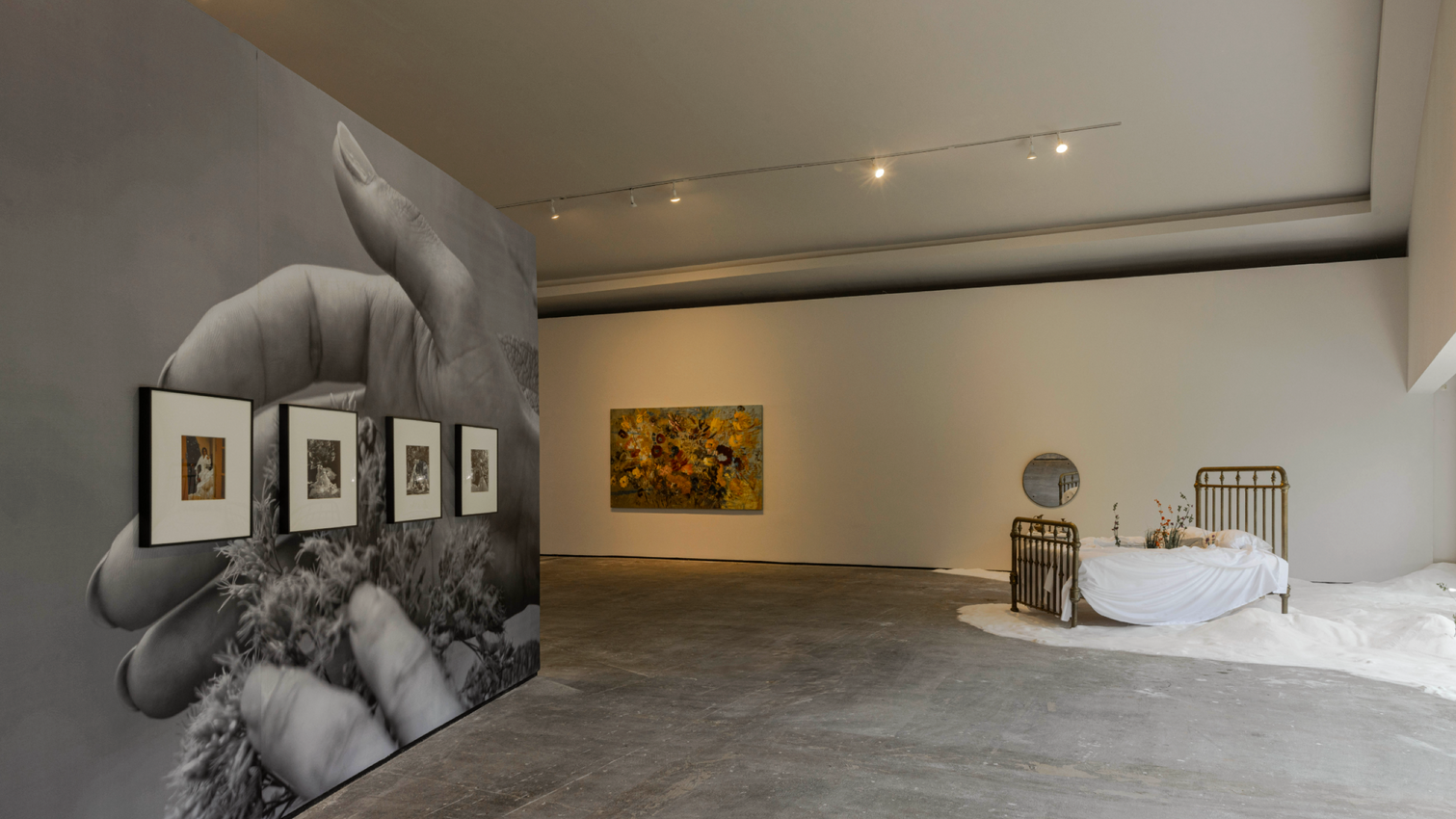
Matti Braun’s work investigates the unexpected, often little known effects of cross-cultural dynamics, making visible patterns of artistic migrations and cultural misrecognitions. The artist’s exhibitions have often been organised around a specific example of such appropriation, taking for instance an elaborate web of interdisciplinary associations spun around the Indian physicist Vikran Sarabhai that include Mahatma Gandhi, Le Corbusier, the development of the Indian space program, the Ulm School of Design and Lynda Benglis as point of departure for displays that included textile works, objects, photographs and large-scale installations. Matti Braun’s work is characterised by a constant negotiation between concrete references and general allusions, between poetic ephemerality and an uncanny sense of visceral immediacy.

OMR is a contemporary art gallery in Mexico City, founded by Patricia Ortiz Monasterio and Jaime Riestra in 1983. Over the past four decades, the gallery has fostered and developed the careers of numerous emerging and established artists throughout Latin America and globally; OMR has established itself as a pioneering Mexican contemporary art space, presenting over 400 exhibitions across all media and genres, and participating in art fairs around the world.

A respected voice in contemporary art discourse.
Focusing on ambitious storytelling and insightful art-world commentary. Ocula Magazine publishes in-depth interviews, critical essays and timely analysis on the artists, exhibitions and ideas driving the global art world.
Learn more about Ocula Magazine
Showcasing the best of the art world.
Ocula partners with galleries from around the world to highlight their artists, artworks and exhibitions. Gallery membership is by application and invitation, with each member vetted by an independent panel.
Learn more about Ocula Membership

Specialises in the sale of major artworks.
Led by a team with deep ties to the world’s leading auction houses, galleries and collectors. Ocula’s advisory team offers bespoke services to high-net-worth clients from around the world who are looking to acquire the best of contemporary and modern art.
Learn more about our team and services