



Press Release

Rao Fu’s paintings resemble a restless sea of colour. On each canvas, a new, free monologue begins, driven by the flow of paint. Embedded within the colour are deeply resonant references to tradition, evidencing the engagement of this Chinese-born artist, trained in classical Chinese landscape painting and calligraphy, with the art history of Dresden and Europe of the last four hundred years. Indeed, there is hardly a painter in East Germany who has studied German and European painting with such earnestness, marvelling at its diversity, boldness and beauty, appreciating it and appropriating it in his very own way.

Fu might well be one of the last traditionalists still eager to learn from his environment, to preserve what he has learnt and to share this knowledge with the world through his own pictorial language. Increasingly, we observe that young German artists, whether in Dresden or elsewhere, have little knowledge of, and respect for, the richness of the culture into which they were born. They prefer to devote themselves to the superficialities of the art market and the discursive doctrines shaped in universities on the East and West coast of the USA. Fu, on the other hand, continually draws on seams of tradition, cites, interprets, empathizes and shares his experiences of other painters’ works, conveying his visual impressions through dialogical arrangements of colours.

For Fu, the so-called ‘other’ does not exist. He wholeheartedly embraces the circumstances, the culture of which he is a part as a Chinese living in Germany. In his work, he adapts European art history, signalling his arrival in a sphere of cosmopolitanism that is stimulated by appropriation because it no longer differentiates between what is ‘mine’ and what is theirs’.

‘Otherisation is unavoidable, and for every One, the Other is the Heart of Darkness. The West is as much the Heart of Darkness to the Rest as. the latter is to the West,’ writes Olu Oguibe. Yet to Fu, the notion that the West is the Heart of Darkness for the rest of the world is completely alien. He liberally enjoys the European art of past centuries. And feeds off it. The vital, reciprocal practice of representation, appropriation and symbolic transformation of the real is something he clearly endorses. That is a good thing. Nobody should have to apologise for what they do under the auspices of the ‘political correctness’ that has taken hold in the West. Cultural codes are open to all artists. Fu uses them under the portent of the new ‘hybridity’ of art in Germany, a term that we should deliberately leave open.

At the same time, his work reaches beyond the Eurocentric art discourse. It enjoys international success, catering to interested audiences in Europe, Asia and the USA. The process of cultural translation at the heart of it, which produces new and unexpected results and breaks down rigid boundaries of thought, action and perception, is understood around the world. And the global attention his paintings attract retroactively booststheir aesthetic potency.

I do not see Fu’s paintings as evidential documents of cultural difference in which polarisations of the familiar and the foreign are negotiated, but rather as an immersion in European patterns, a deliberate and desired cultural proximity. Just as ‘thinking means venturing beyond’, art, if it wants to remain alive, must constantly transcend itself — an endeavour for which it can harness the fluid transition between cultures. It is the diversity of cultures that makes their encounter fertile.

Fu situates himself in a global art space that first and foremost fascinates him, but also challenges and encourages him, a space of attention that he consciously supplies on his own terms. For him, the wealth of art from around the world that can be found in German museums — especially in Dresden, where he studied at the Academy of Fine Arts (HfBK) from 2002 to 2010 and where he has lived since 2002 — is a common cultural resource.

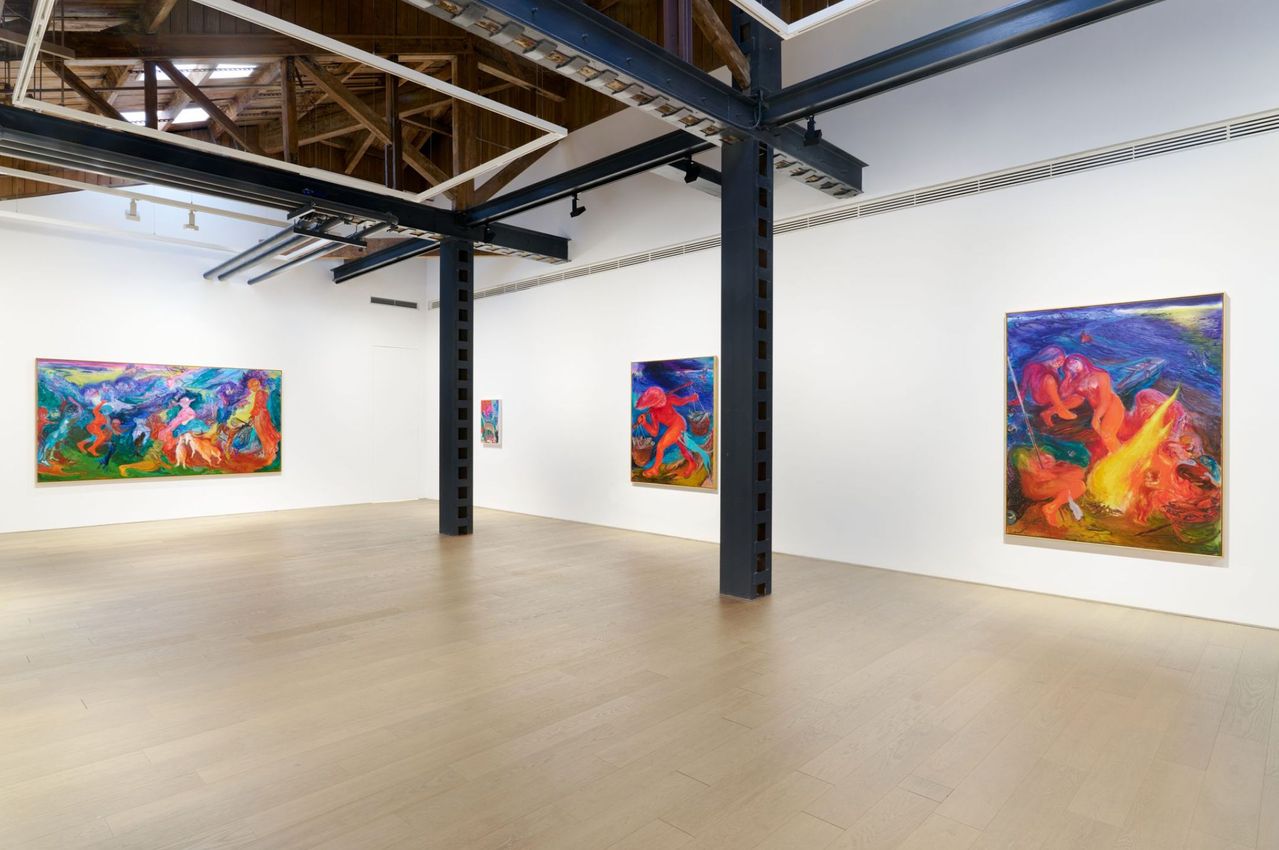
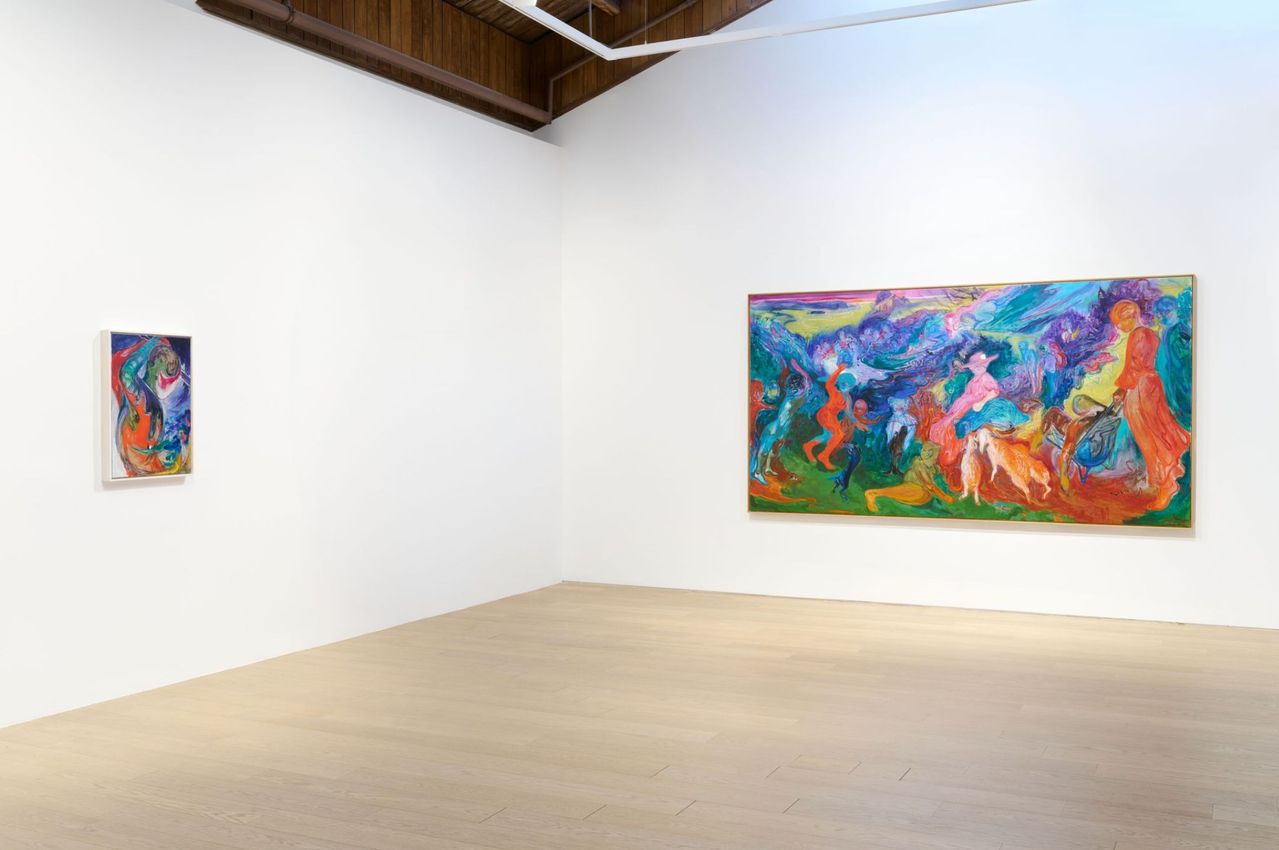
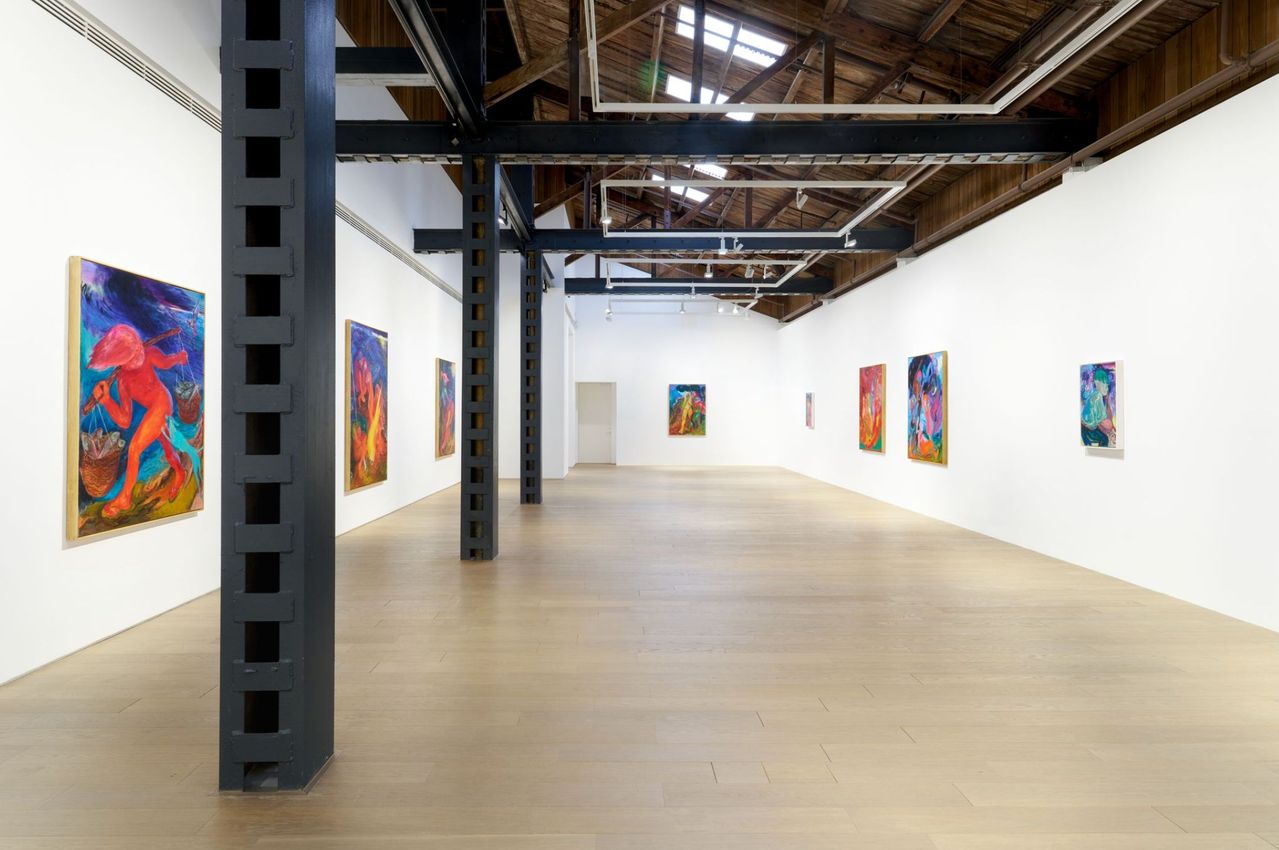
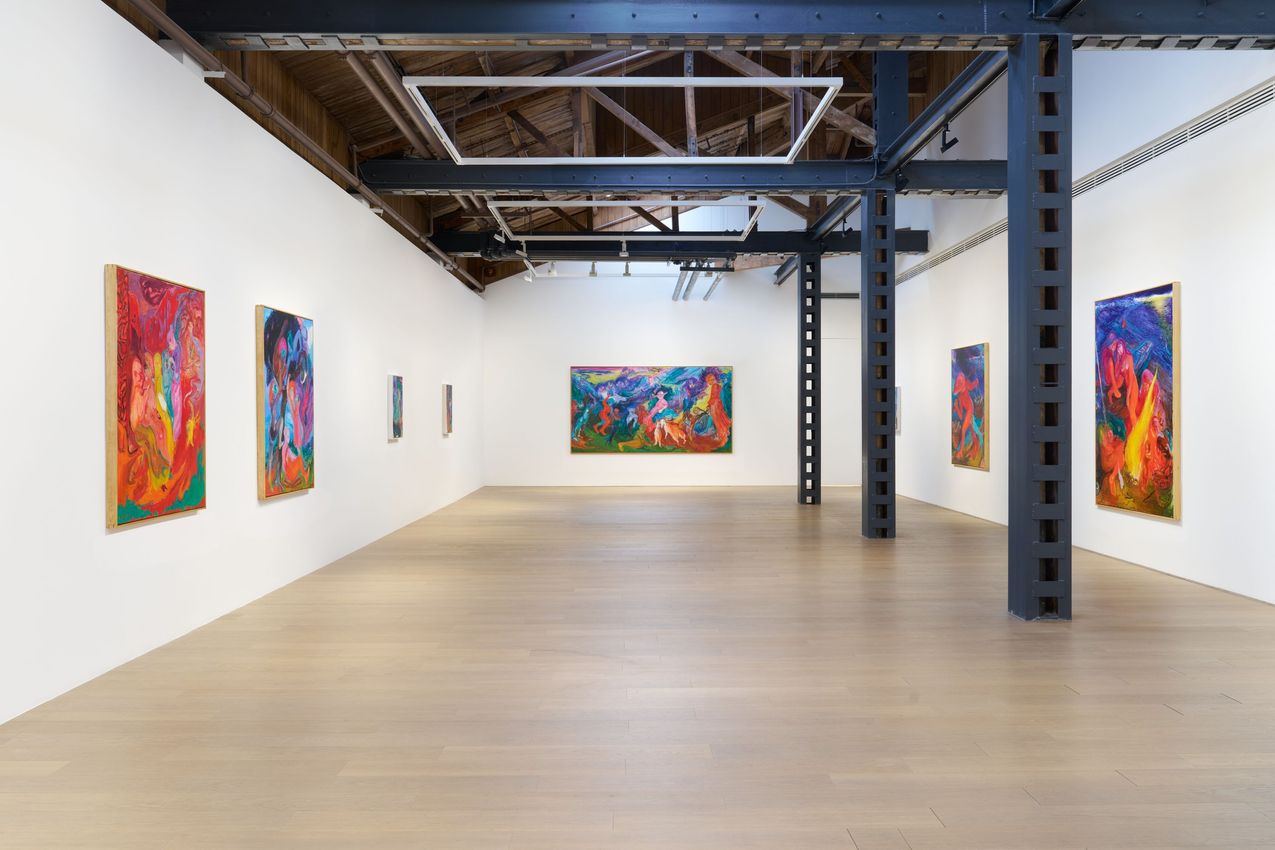
He is particularly fond of mass scenes and arrangements of figures. The European Baroque period comes to mind, but also the turn of thetwentieth century. Eloquent examples in his current production are Market (2024), Summer Night II (2024) and Wedding Banquet (2024), whichis inspired by Pieter Bruegel’s Peasant Wedding from 1567 — with the notable exception that Fu’s rendition depicts a catastrophic incident rather than a festive party. In Baroque Fantasy (2024), he similarly dramatises the pictorial atmosphere by incorporating, at the bottom left of the image, a human figure that resembles the famous allegorical personification in Albrecht Dürer’s engraving Melencolia I from 1514 (albeit reversed).

Fu’s conglomerations of figures and group constellations often seem in thrall to fatalistic behaviour. Their activism appears thwarted, enlivened only by the fluctuations of colour and form. In several chapters, Fu shows the dichotomy of desire and reality, the changes and contradictions of a vision of man and the world conditioned by history and the present. The fundamental mood pervading these scenes ranges from romanticand idyllic to melancholic. The condensation of the groups of figures reflects experiences of confinement and hopelessness. From a Germanor European perspective, one is inevitably reminded of the disheartening scenes of migration across the continent.

Europe has been grappling with this phenomenon for nearly ten years. But it is also causing political ripples elsewhere in the world. Italy wants to displace the refugees that land on its shores to an Albanian seaside resort. For the time being, the locals seem unconcerned about the deal. Great Britain wants to deport asylum seekers to Rwanda. The courts are against it, the government is trying to save its plan by all means available.In the Indonesian city of Banda Aceh, a mob recently attacked migrants in boats from Myanmar. Lately, even the German Green Party politician Katrin Göring-Eckardt, who has always fought for the rights of refugees, has called for faster procedures and a partial ban on illegal migration. The situation is coming to a head.

Of course, Fu is wise enough to refrain from making simplistic statements on so complex a situation. His paintings Market, Summer Night II and Wedding Banquet are expressions of a contemporary ethic of compassion, where feeling is infused with the necessary critical dose of common sense. As an artist, he is aware of his own powerlessness in changing the course of events, yet he also knows that remaining silent in the face of horror is not a humanly viable solution.

Fu fires up the dilemma between freedom of movement and group dynamics in enforced confinement with a fabulous intensity of colour that has become one of his trademarks. He lights up the anxiety-inducing banality of daily life with the luminosity of colours in such a way that his images seem to rejoice with hope in spite of a despairing reality. He uses colour in defensive anticipation of the terrible. His paintings do not allow for resignation.

Madame Orchid (2024), for example, is a song of praise to the power of painting, stylised like an awards ceremony. At the same time, it is French in its symbolism and self-confidently universalist in its recreation of the world through colour. Masked Knight (2024), which leans towards abstraction, is equally remarkable, a painting bursting with passion, powerful gestures and energy that seems just as connected to the Dresden powerhouse of early twentieth-century painting as to all the centrifuges of Abstract Expressionism. Fu’s images are so compressed in colour that their allure has a near-magical quality that lets them shine in all their mysterious beauty. Even a long-term study would not be able to weaken the spell they cast on the beholder.

Text by Christoph Tannert, director of Künstlerhaus Bethanien Berlin

Read More

Installation Views

About the Artist

Dresden, Germany is traditionally a city of painters. Rao Fu is the only one among them with Chinese roots. What he has implanted in Saxon Neo-expressionism is tantamount to a live cell treatment. His experimentation with painting materials and his all-encompassing range - from Chinese landscape painting to the magical triangle Munch-Doig-Daniel Richter - owes itself to pure colour experiences, and has been achieving monumental formats since 2019.

View Artist Profile

Also Exhibiting at Perrotin

About the Gallery
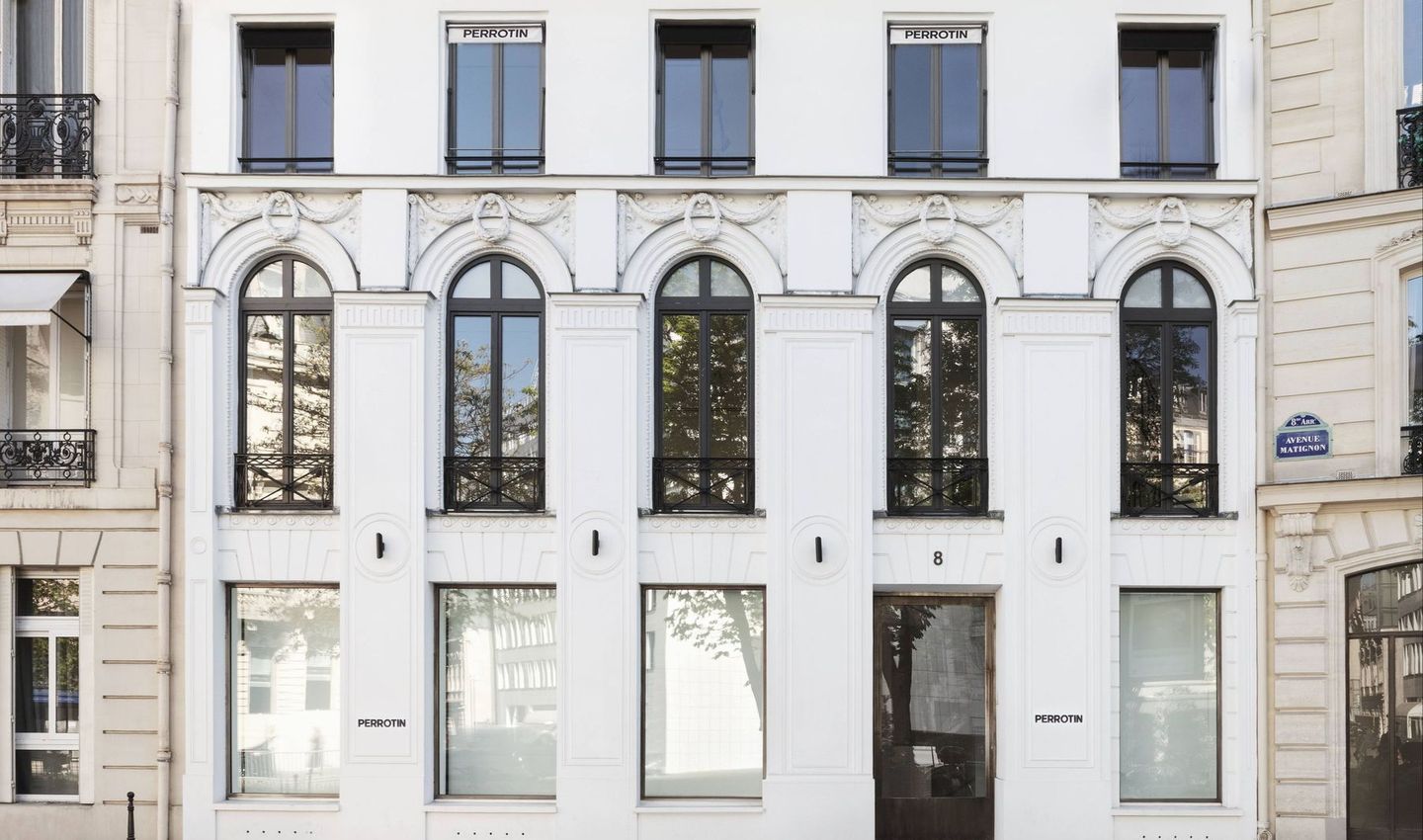
Emmanuel Perrotin founded his first gallery in 1989 at the age of 21. He has opened since then over 17 different spaces, with the aim of continuing to offer increasingly vibrant and creative environments to experience artists work. He has worked closely with his roster of artists, some since more than 25 years, to help fulfil their ambitious dreams and projects. The gallery is now based in New York, Paris, Hong Kong, Seoul, Tokyo, and participates in all the significant worldwide art fairs each year (Art Basel (Hong Kong, Miami, Basel), Frieze (London, New York), FIAC (Paris), Dallas Art Fair, Art Cologne, Art Stage Jakarta, Expo Chicago, Art021 & West Bund Art & Design, Shanghai, Zona Maco Mexico, amongst others).
View Gallery Profile
Address
3/F, 27 Huqiu Road
Huangpu District
Shanghai
China
Opening Hours
Tuesday – Saturday
11am – 7pm
(1)
Shanghai 3/F, 27 Huqiu Road, Huangpu District
Perrotin
3/F, 27 Huqiu Road, Huangpu District, Shanghai, China
+86 216 321 1234
http://www.perrotin.com

Opening hours
Tuesday – Saturday
11am – 7pm
The art world in focus