



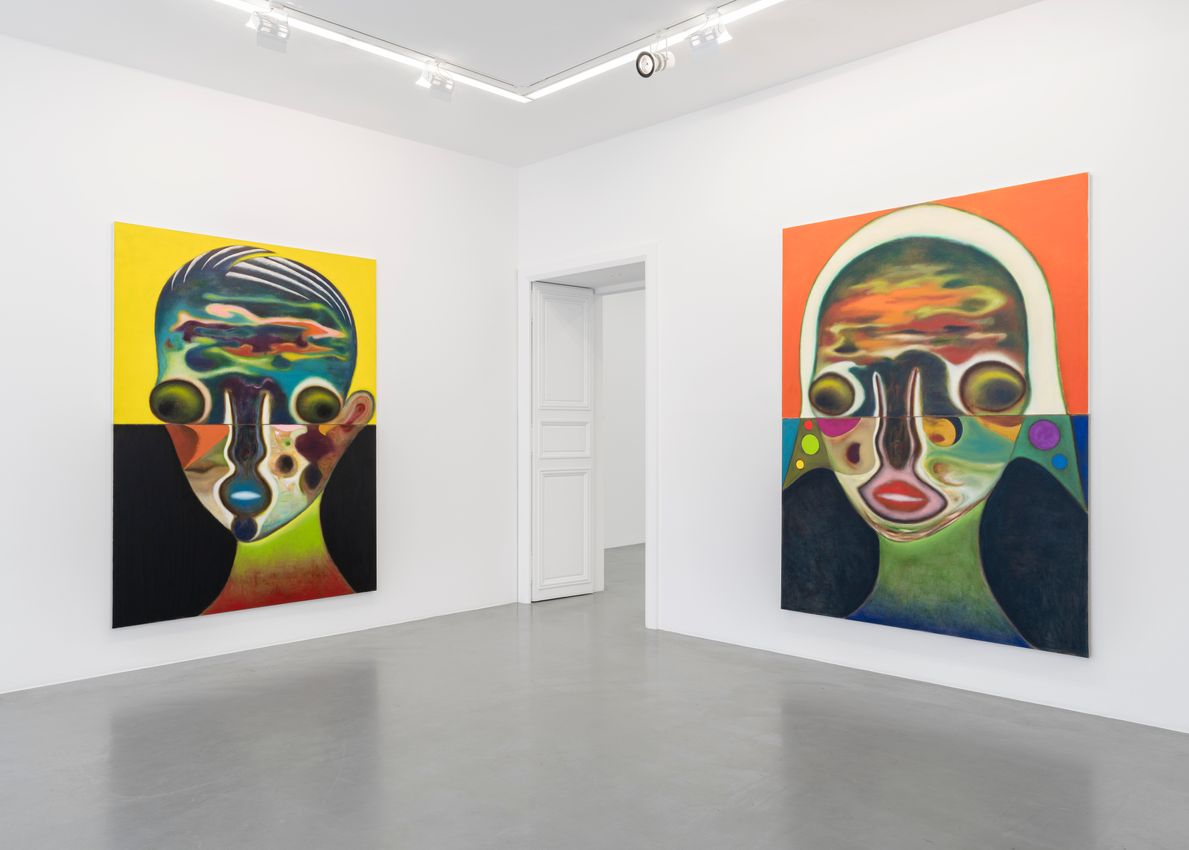
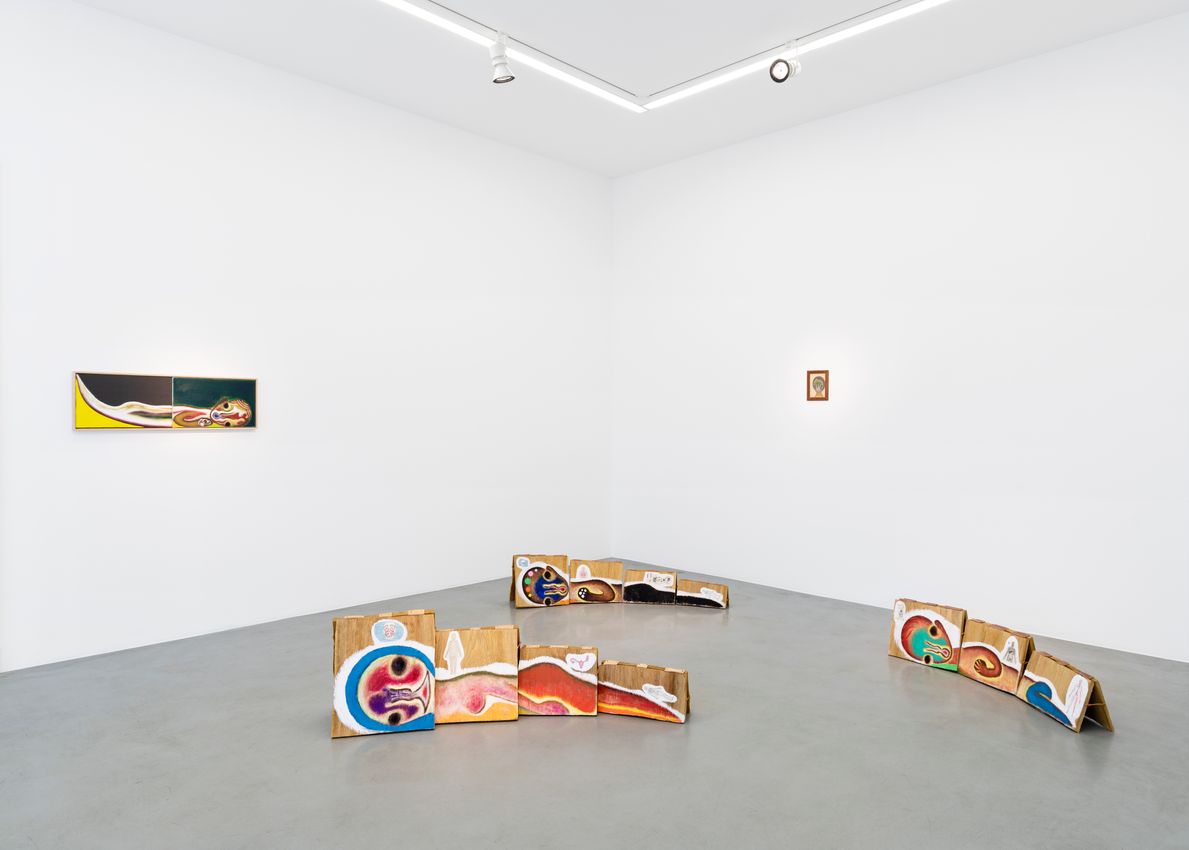
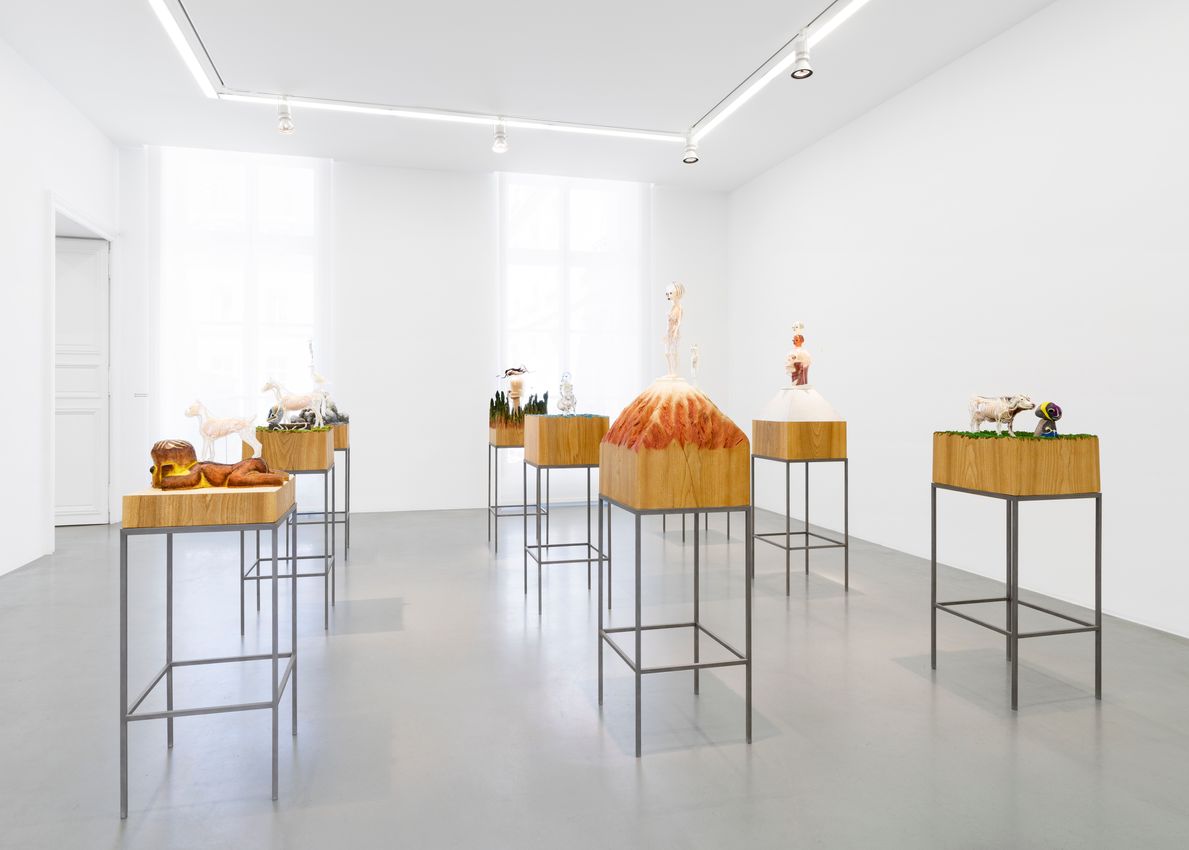
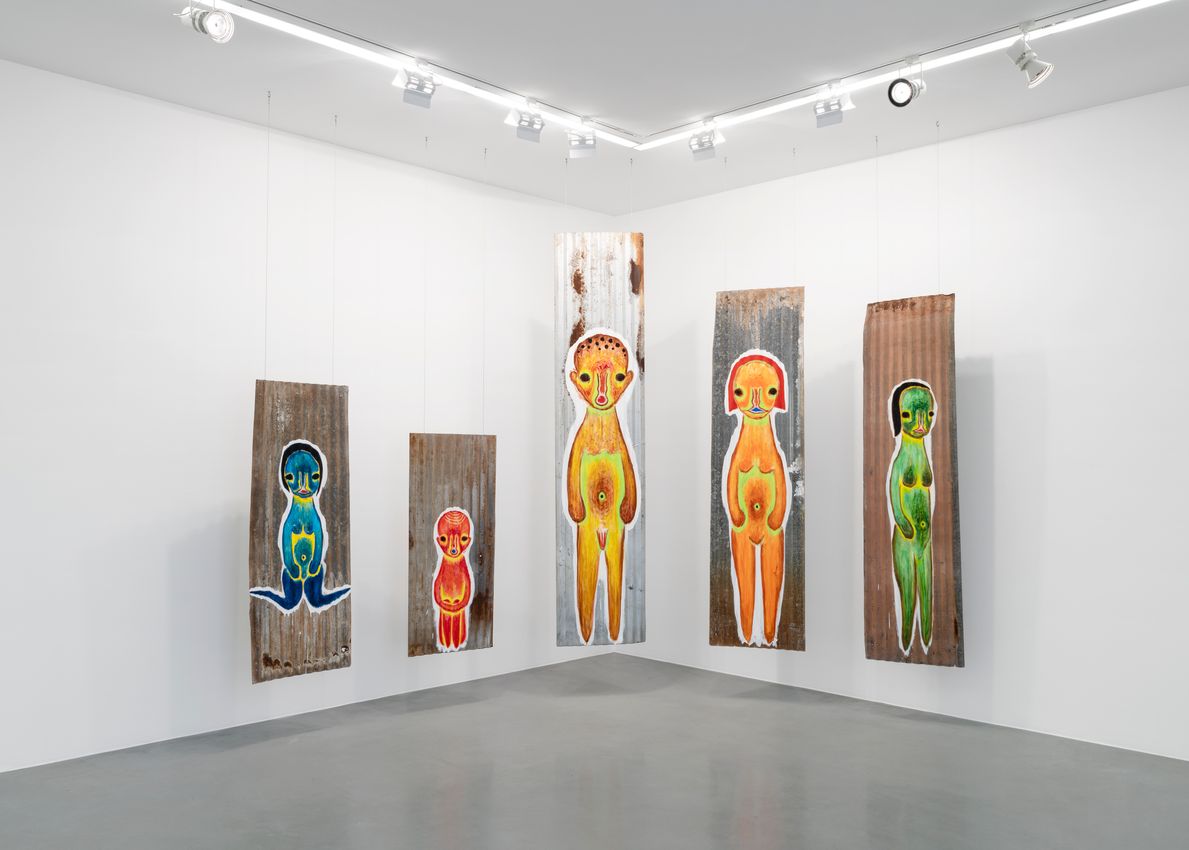
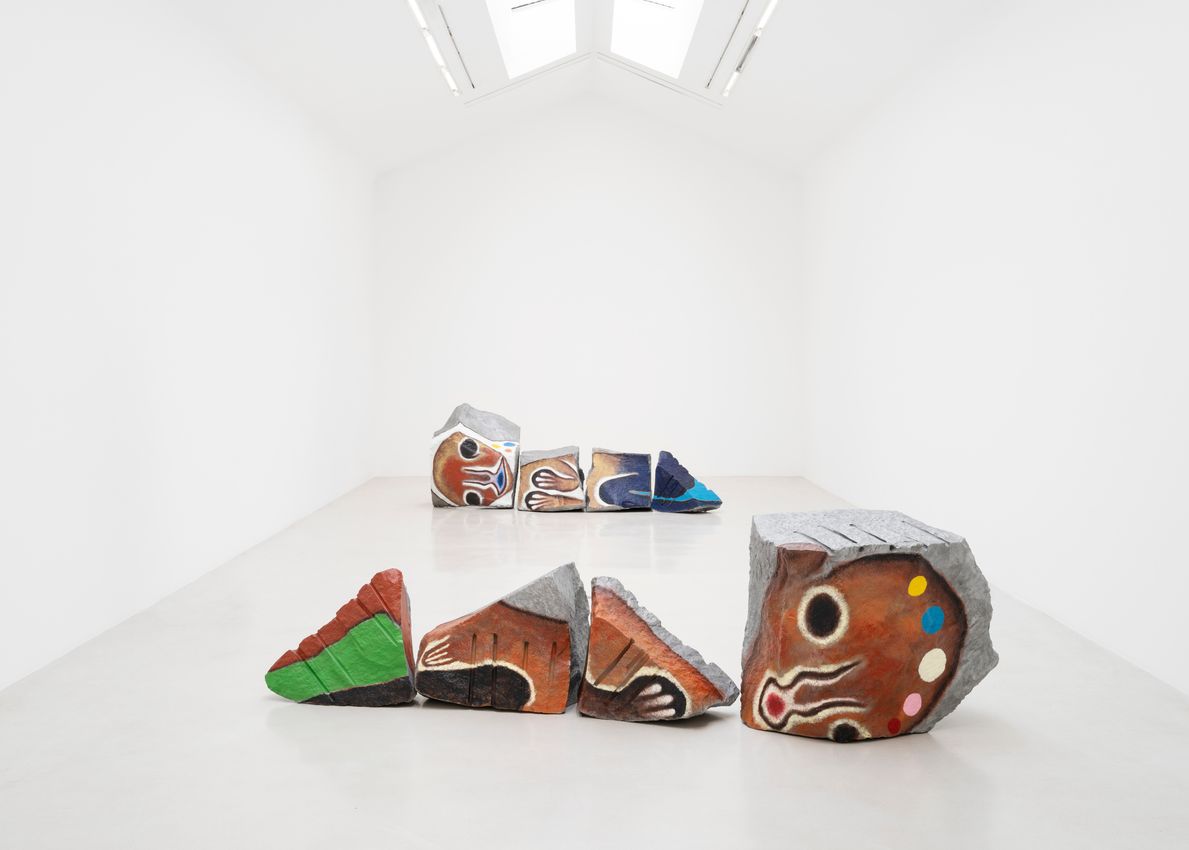
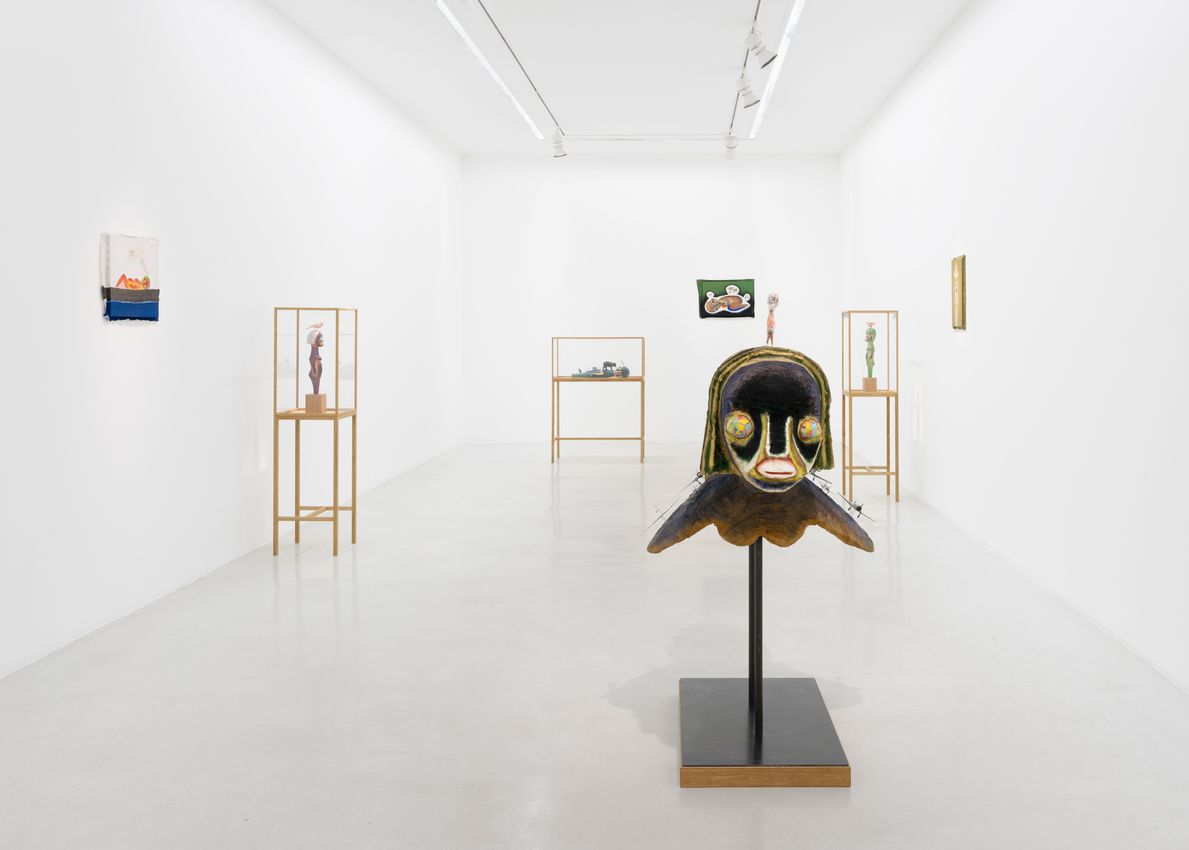
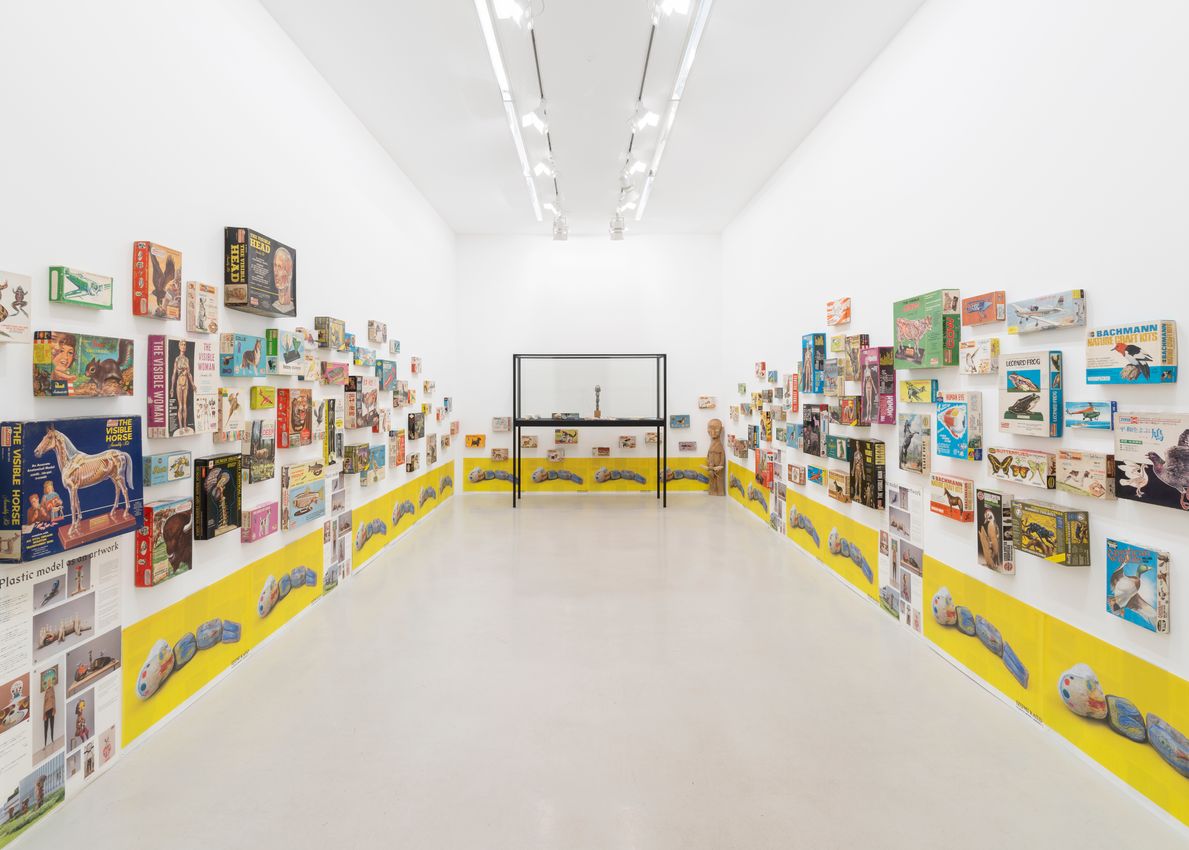
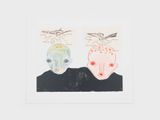
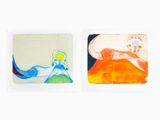
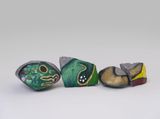
Perrotin is pleased to present Izumi Kato’s third solo exhibition at our Paris gallery. On this occasion, the artist will showcase new sculptures and paintings filled with hybrid creatures from his singular artistic universe.
For any connoisseur of Japanese art, the ambiguous phenomena that have characterised Izumi Kato’s work for more than two decades may seem familiar. Yet there is never any complete correspondence, only omnipresent echoes, the distinctive signs of a highly singular artistic universe.
Japan is a world of islands, waters, and a myriad of strange creatures.From time immemorial, everything there has been a source of proliferation, sometimes lively and joyful, sometimes frightening and morbid.The vegetation, the rocks, the mountains, the gushing streams, the volcanoes, the stones, and 100-year-old things, are all receptacles or sources of buzzing animation.
Japan is a world filled with spirits: the kami of Shintoism and older primitive religions, and the yôkais, ‘spirits, ghosts, monsters”’ terrifying or seductive, populating Japan’s landscape in their infinite variety.
Every child has feared them, every adult remembers them: they have inspired Japanese artists for centuries.
Are Izumi Kato’s beings from this earth or, as is sometimes claimed, aliens from another planet? But Japan already created this non-terrestrial world centuries ago, a realm that is infra- or supra-, rather than extra-terrestrial. Here, as is well known in Japan, strangeness resides.This also applies to Izumi Kato’s odd creatures, shamanic and disturbing, melancholic yet burlesque, close cousins of the creatures produced by the visionary, defiant, and mischievous brush of the great painter Kawanabe Kyosai (1831-1889). Once begun, this game of correspondence never ceases to shed light on Kato’s work. The distinctive appearance of his faces, with their enlarged eyes, often without pupils, the whole shaped by nose and mouth, the impression of being covered with ritual make-up, all this has numerous echoes in the fantastical prints produced in the 19th century, during the latter part of the Edo period and the Meiji era of Imperial Japan (1868-1912). Kato’s work must be considered in relation to Utagawa Kunyoshi’s prints (1797-1861), one of the masters of the genre. In the work of Kunyoshi, the yokai are startling hybrids with bulging eyes, large jaws, and strange faces that seem like theatrical masks.
But above all the yokai are ambiguous beings from a world whose creative powers seem endless. Looking at the hand- and footless limbs of Kato’s ‘characters’, one is reminded of Ichiyusai Kuniyoshi’s playful prints of ‘demon-shaped plants’ (1844–1847). Yet what setsIzumi Kato’s creatures apart from all this pleasant, swaggering bluster is their silence. His work is characterised by a seriousness absent from the other works.
Since the 2000s, Kato’s ‘untitled’ sculptures, paintings, and drawings have featured hybrid figures (their limbs and breath producing vegetal or human shoots), budding flowers (often lotuses, the Buddhist flower par excellence, a symbol of purifying transformation plunging its roots into the mud), and other beings (human heads or homunculi hanging from bodies like clusters of ganglia). In the latter case, the multiplication is truly ‘monstrous’; the lotuses don’t proliferate. But they spring from an exhalation that evokes another type of Japanese art, the He-Gassen emaki (literally “fart scroll”), some of which show _yokai _fighting in a mad battle of winds (like the ’Shinnô scroll’ in the Hyôgo History Museum). The strange small creatures that spring up like ganglia from the larger figures also recall battles against monstrous animals, like the heroic struggle against the giant tarantula Tsuchi-gumo, at the end of which thousands of human skulls emerge from the spider’s severed neck. The play of mirrors between Kato’s work andJapanese art creates limitless perspectives.
Yet its forms and spatial arrangement also produce a unique language.At times he reduces his small figures with their still-recognisable heads to disheveled beings abandoned against a wall; carved in wood, he piles them up ‘on the edge’, stacked like discarded totems, creating groups and temples without worshippers in a deconsecrated space, recalling the crises that Japan experienced under the Meiji government when Buddhist temples were attacked to promote ‘native’ Shintoism. The totemic immobility of Izumi Kato’s painted and sculpted works is strikingly melancholic. These figures are endless questions, beyond any specific place or time, as Japanese as they are ours, wherever we are. They challenge our gaze, drawing us in, interrogating what makes us mortal.
Press release courtesy Perrotin. Text: Sophie Makariou.
Izumi Kato was born in 1969, in Shimane, Japan. He graduated from the Department of Oil Painting at Musashino University in 1992. He now lives and works between Tokyo and Hong Kong. Since 2000’s, Kato has garnered attention as an innovative artist through exhibitions held in Japan and across the world. In 2007, he was invited to the 52nd Venice Biennale International Exhibition, curated by Robert Storr. Children with disturbing faces, embryos with fully developed limbs or ancestor spirits locked up in bodies with imprecise forms–the creatures summoned by Izumi Kato are as fascinating as they are enigmatic. Their anonymous silhouettes and strange faces with absent features are above all simple forms and strong colours. Their elementary representation, an oval head with two big, fathomlessly deep eyes shows no more than a crudely figured nose and mouth. Bringing to mind primitive arts, their expressions evoke totems and the animist belief that a spiritual force runs through living and mineral worlds alike. The aura that they exude seems to manifest the first movement of life while the intensity of their expression gives us access to a knowledge of man founded less on reason than on intuition. Embodying a primal, universal form of humanity, these magical beings invite viewers to identify themselves as if looking in a mirror.
Emmanuel Perrotin founded his first gallery in 1989 at the age of 21. He has opened since then over 17 different spaces, with the aim of continuing to offer increasingly vibrant and creative environments to experience artists work. He has worked closely with his roster of artists, some since more than 25 years, to help fulfil their ambitious dreams and projects.

A respected voice in contemporary art discourse.
Focusing on ambitious storytelling and insightful art-world commentary. Ocula Magazine publishes in-depth interviews, critical essays and timely analysis on the artists, exhibitions and ideas driving the global art world.
Learn more about Ocula Magazine
Showcasing the best of the art world.
Ocula partners with galleries from around the world to highlight their artists, artworks and exhibitions. Gallery membership is by application and invitation, with each member vetted by an independent panel.
Learn more about Ocula Membership

Specialises in the sale of major artworks.
Led by a team with deep ties to the world’s leading auction houses, galleries and collectors. Ocula’s advisory team offers bespoke services to high-net-worth clients from around the world who are looking to acquire the best of contemporary and modern art.
Learn more about our team and services