Press Release

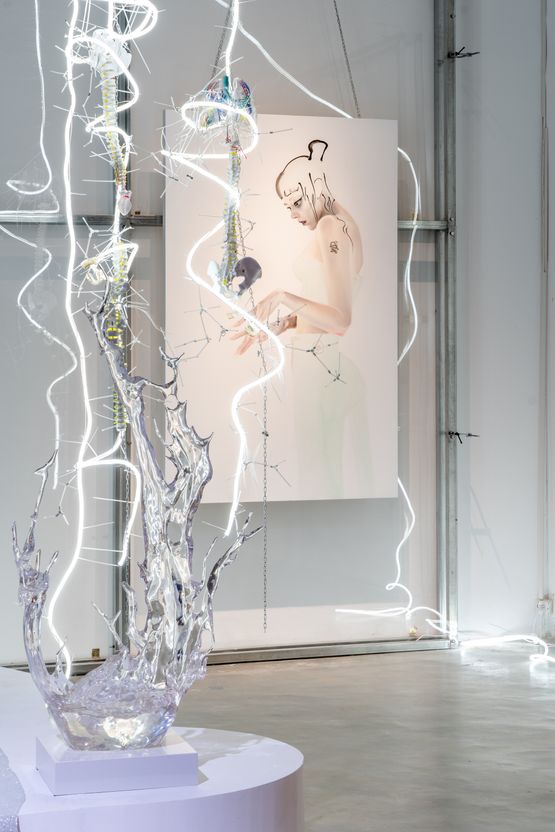
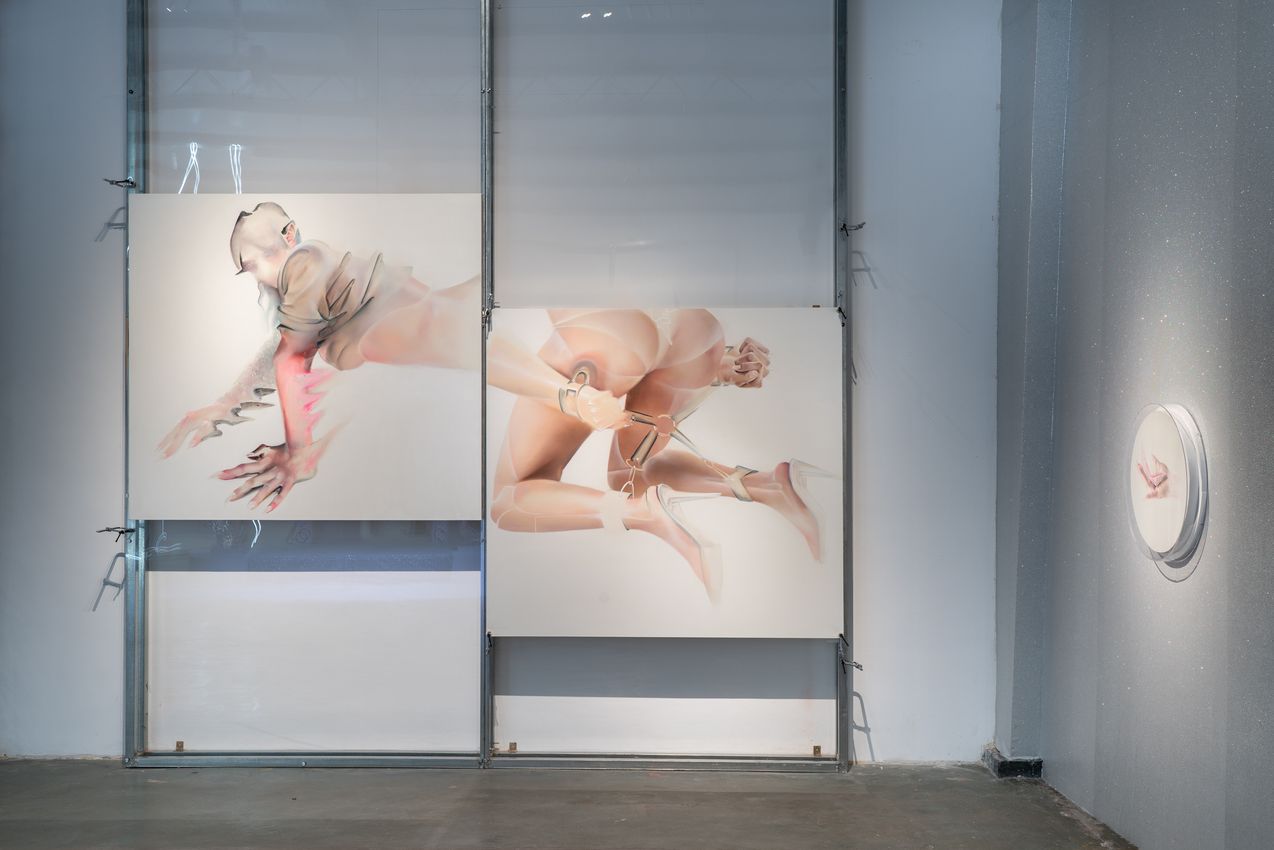
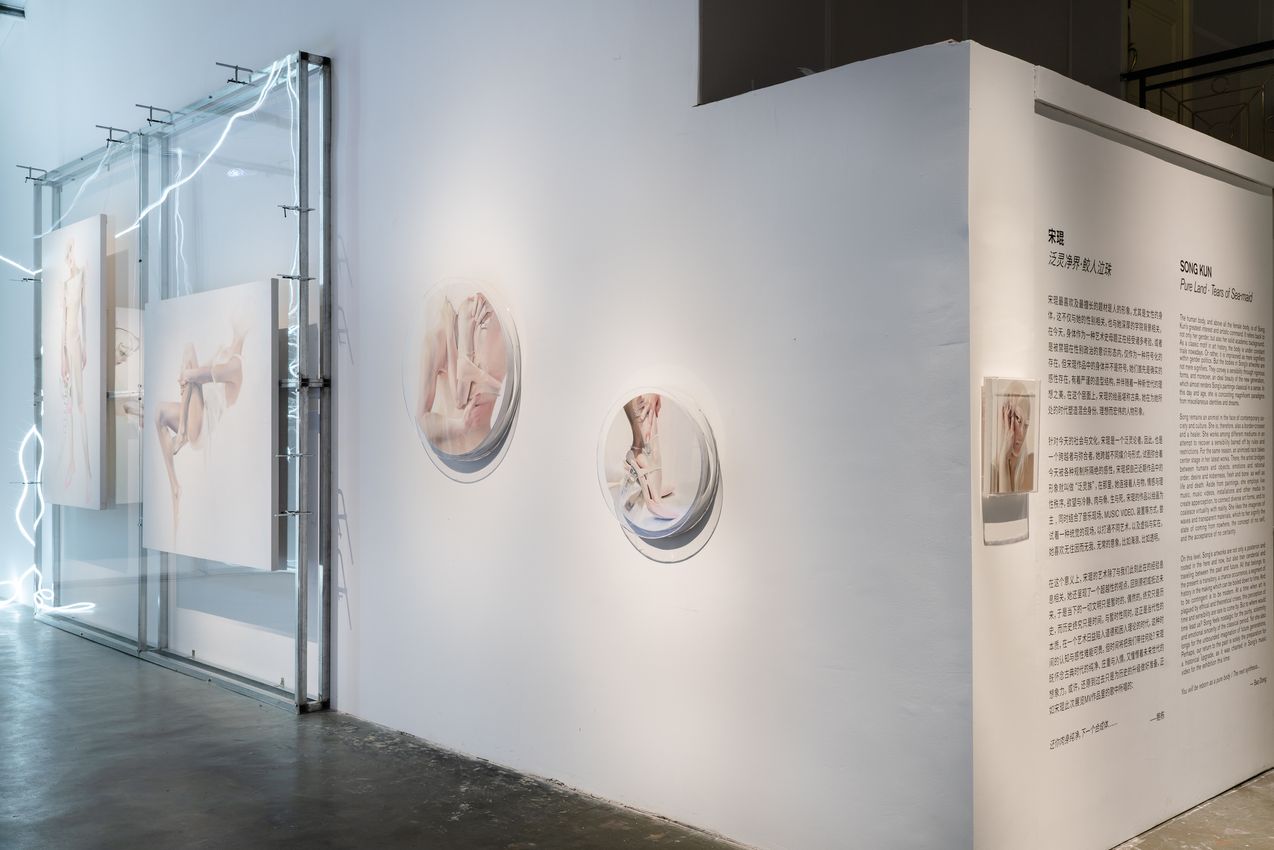
The human body, and above all the female body, is of Song Kun’s greatest interest and artistic command. It refers back to not only her gender, but also her solid academic background. As a classic motif in art history, the body is under constant trials nowadays. Or rather, it is imprisoned as mere signifiers within gender politics. But the bodies in Song’s artworks are not mere signifiers. They convey a sensibility through rigorous forms, and moreover, an ideal beauty of the new generation, which almost renders Song’s paintings classical in a sense. In this day and age, she is concocting magnificent paradigms from miscellaneous identities and dreams.

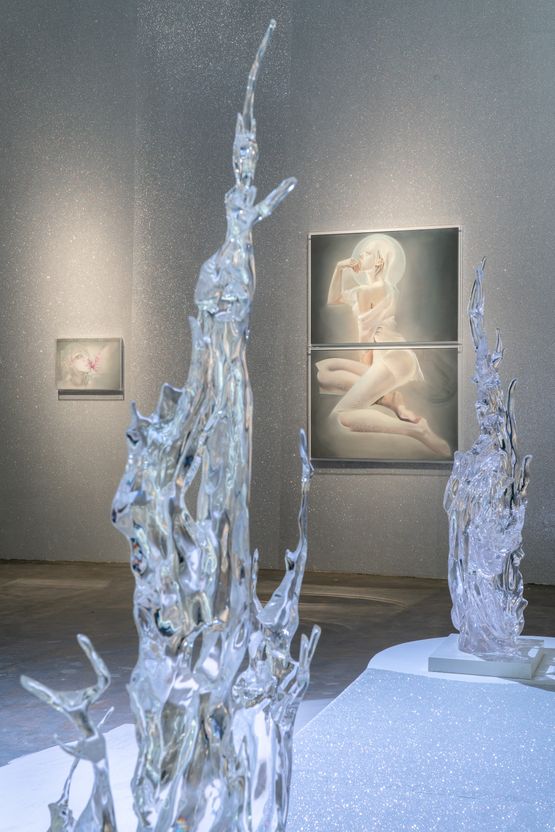
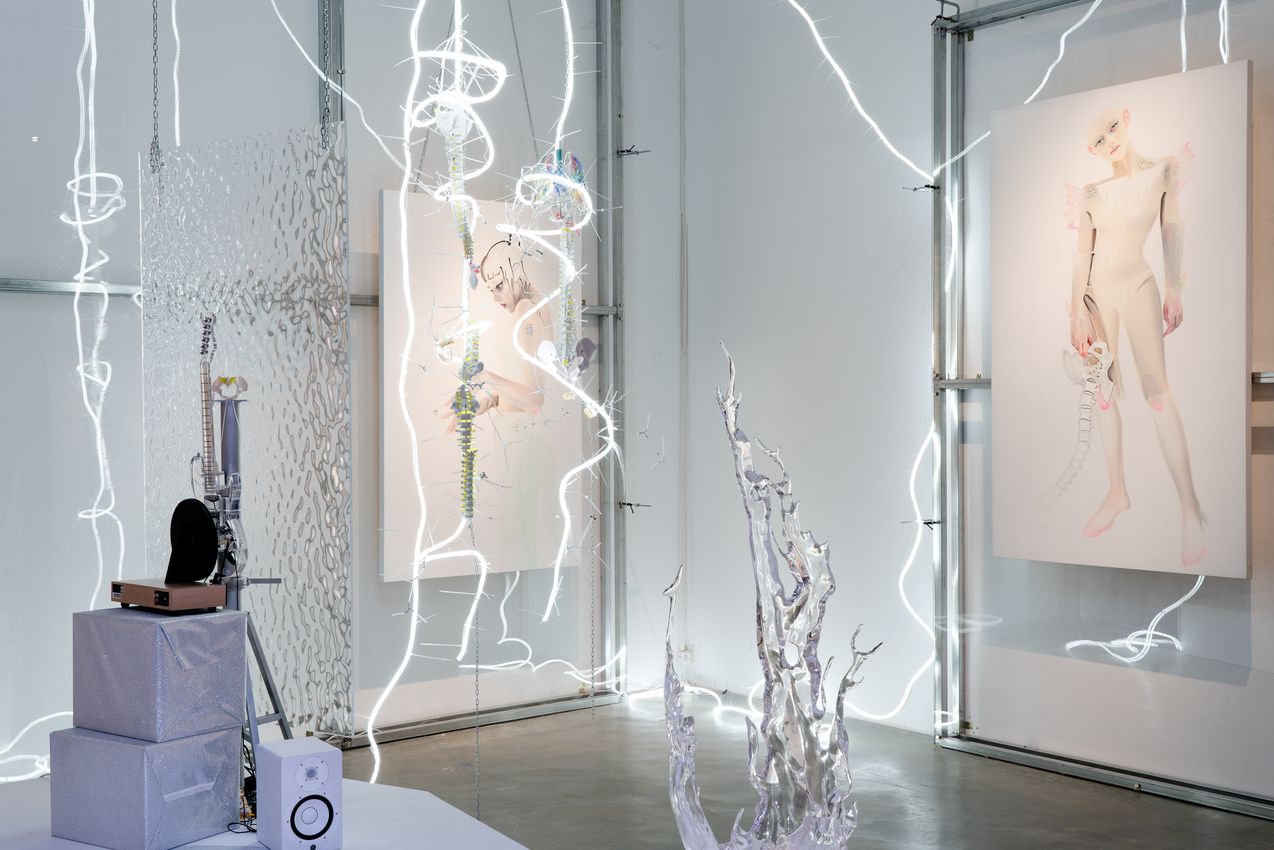
These figures and forms depict women first and foremost. As a woman, Song has an implicit understanding of womanhood. She paints herself, and paints others through herself or vice versa. Though placed under various conditions, the female bodies in her paintings are all transcending or alienated from reality. They are the fantasized bodies, the cyborg bodies, the BJD bodies and bodies in bondage. Song endows upon them a mythic sci-fi sex appeal, as well as a swift yet tangible sensibility in characterization, styling and her brushstroke.

In Song’s work, ‘women’ is not a social identity, but a continuously generated dimension beyond boundary, spanning from personal experiences to the grand narrative. Here, ‘she’ can be understood as the new sensibility prescribed by Susan Sontag. ‘From the vantage point of this new sensibility, the beauty of a machine or of the solution to a mathematical problem, of a painting by Jasper Johns, of a film by JeanLuc Godard, and of the personalities and music of the Beatles is equally accessible.’1

Of course, the times of Song is far from that of Sontag. Song is linked to the beauty of synthetic materials, of human flesh and mechanical apparatus, of ambient, emo and electronic music, of fashion, of Renaissance portraiture, Buddhism beliefs and a distinctively Chinese character. Within this remarkable beauty lies the spirit and soul of Song’s oeuvres.

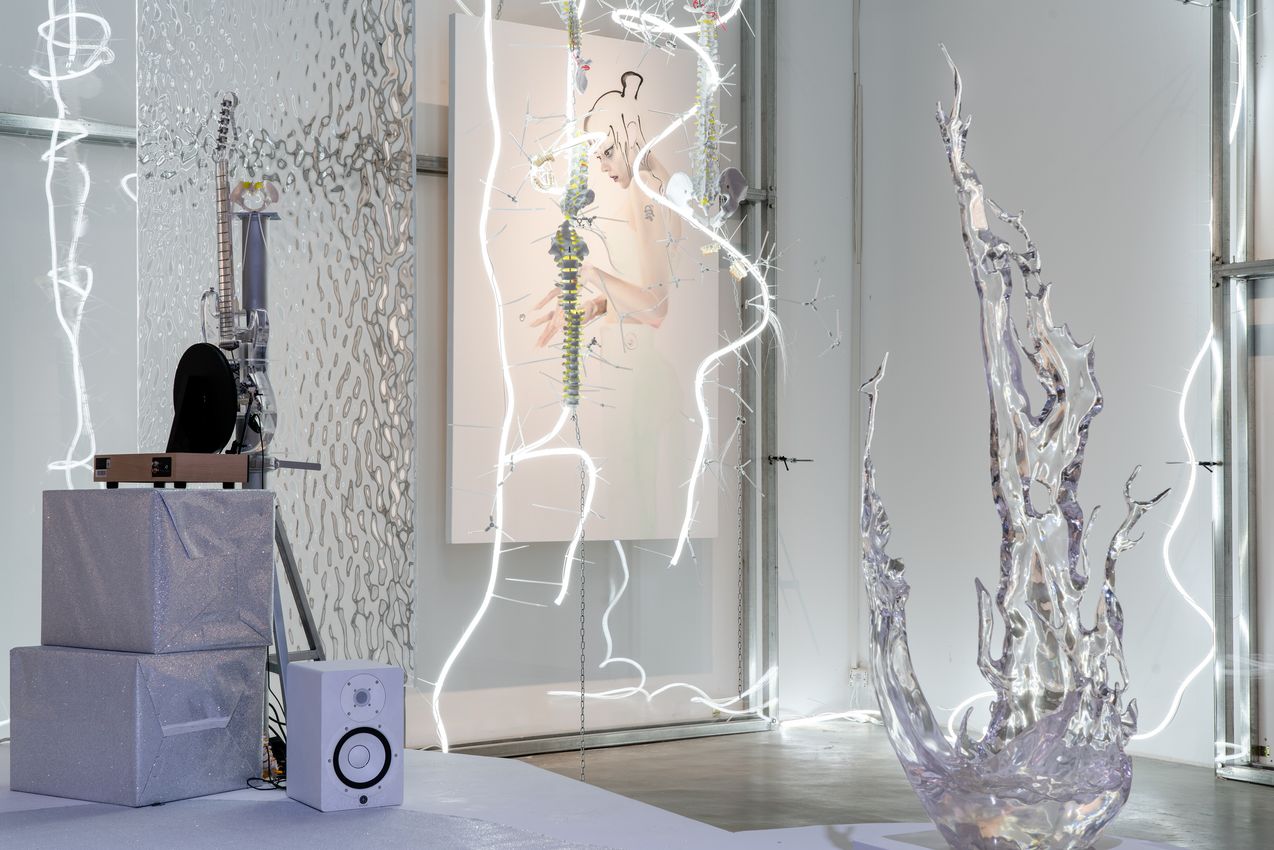
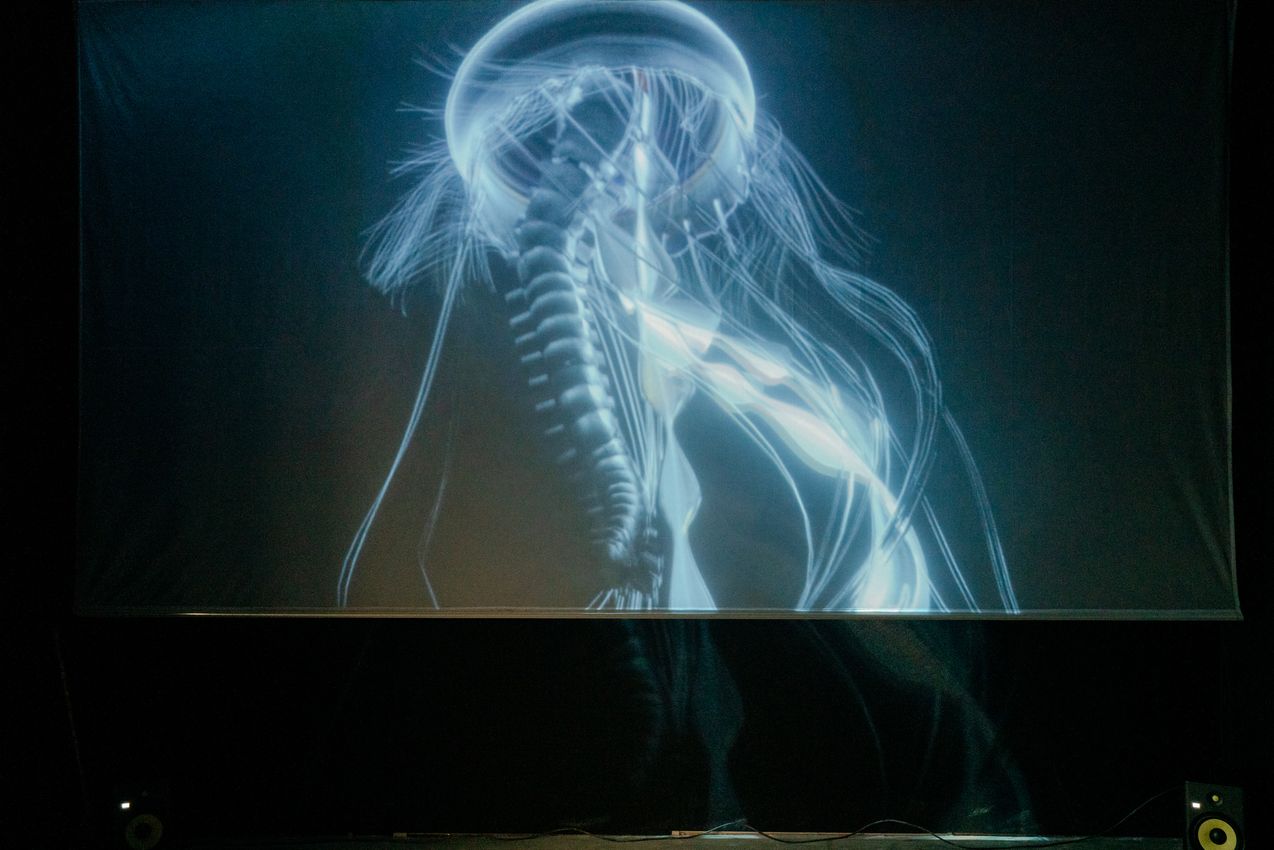
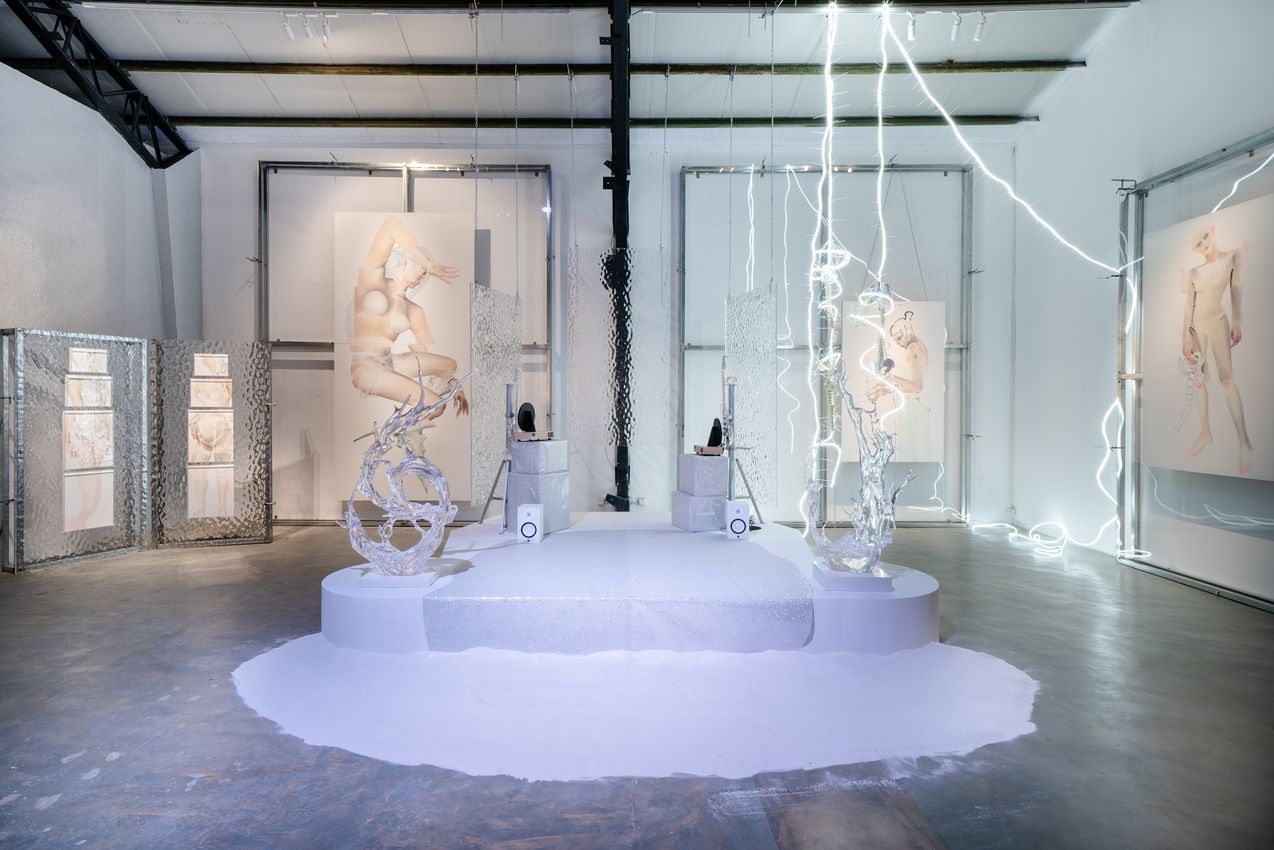
Song remains an animist in the face of contemporary society and culture. She is, therefore, also a border-crosser and a healer. She works among different mediums in an attempt to recover a sensibility barred off by rules and restrictions. For the same reason, an animized race takes centre stage in her latest works. There, the artist bridges between humans and objects, emotions and rational order, desire and soberness, flesh and bone, as well as life and death. Aside from paintings, she employs live music, music videos, installations and other media to create apperception, to connect diverse art forms, and to coalesce virtuality with reality. She likes the imageries of waves and transparent materials, which to her signify the state of coming from nowhere, the concept of no self, and the acceptance of no certainty.

On this level, Song’s artworks are not only a posteriori and rooted in the here and now, but also transcendental and travelling between the past and future. All that belongs to the present is transitory, a chance occurrence, a segment of history in the making which can be boiled down to time. And to be contingent is to be modern. At a time when art is plagued by ethical and theoretical crises, this perception of time and sensibility are rare to come by. But to where would time lead us? Song feels nostalgic for the purity, solemnity and emotional sincerity of the classical period. Yet she also longs for the unbounded imagination of future generations. Perhaps, our return to the past is solely the preparation for a historical upgrade, as it was chanted in Song’s music video for the exhibition this time:

You will be reborn as a pure body / The next synthesis...

– Bao Dong

Pure Land stems from the tradition of Animism; it also draws from the description of the pure land in Buddhism—‘the pure land world of self-luminescence that people can’t imagine’. What variations have this world become today? And how do the human spirit and body evolve in contemporary life, where traditions and nature, online media and information, industry and technology interweave with one another? I’m interested in the multi-layered experience of the human body, the organism and the robotic order. Using the ancient imagination of ‘Tears of Sea-maid’, I try to re-interpret this concept in the context of contemporary art, and invite musicians, dancers and models to collaborate on this exhibition. How can our perceptions, imaginations and emotions be truly and freely expressed? And how should the mixed identity break through narrow definitions when it comes to reality?

— Song Kun

About the artist

Born in 1977 in Inner Mongolia, China, Song Kun currently lives and works in Beijing, China. She earned her BFA and MFA from the oil painting department at the Central Academy of Fine Art (CAFA), Beijing. As one of the founding members of the N12 art group, she now lectures as a guest professor at the third studio of CAFA’s oil painting department. Song’s practice focuses on painting, while incorporating music live, video, installation and other media. In her works, she observes and captures the different figures and fleeting moments in reality and hyper-reality, she gathers up the fragments of our time, and at the same time restructure the elements. As a result, her works constitute a mythical, private spatiality that reflects the potential changes in China. In recent years, Song Kun’s artistic creation has entered a new stage, integrating contemporary subcultures with oriental religious elements in her creative outputs and experimentations. By refining and integrating elements of traditional culture and various subcultures, Song’s works generate the future body of pan-culture.

Song Kun’s works have recently been widely exhibited at international art institutions, including Beijing Exhibition Center (Beijing, China, 2021); Minsheng Art Museum (Beijing, China, 2021); SSSSTART (Shanghai, China, 2019); Long Museum (Shanghai, China, 2016); Tampa Museum of Art (Tampa, U.S., 2014); UCCA Center for Contemporary Art (Beijing, China, 2012); Hammer Museum (Los Angeles, U.S., 2007) among others. She has also been continuously participated in the Art Basel. Song Kun’s works has joined collections of Central Academy of Fine Arts Art Museum (Beijing, China); M+ Museum of Visual Culture (Hong Kong, China); Minsheng Art Museum (China); New Century Art Foundation (China); Long Museum (Shanghai, China); Star Museum (Shanghai, China); Cc Foundation (China); He Juxing collection; Qiao Zhibing collection; Francois Pinault collection in France; Giraud Pissarro Segalot collection in U.S. and Uli Sigg collection in Switzerland, among others.

*1 Sontag, Susan. One Culture and the New Sensibility. Mademoiselle, 1965.

Read More

Installation Views

About the Artist

Song Kun, who was born in Inner Mongolia in 1977, studied oil painting at the Central Academy of Fine Art in Beijing until 2002. A founding member of the N12, a group of twelve ambitious young graduates of the Central Academy of Fine Arts who have been organizing their own annual exhibitions, Song Kun was educated after the Cultural Revolution and raised in an era of accelerated urban and economic development.

View Artist Profile

Also Exhibiting at Perrotin

About the Gallery
Emmanuel Perrotin founded his first gallery in 1989 at the age of 21. He has opened since then over 17 different spaces, with the aim of continuing to offer increasingly vibrant and creative environments to experience artists work. He has worked closely with his roster of artists, some since more than 25 years, to help fulfil their ambitious dreams and projects. The gallery is now based in New York, Paris, Hong Kong, Seoul, Tokyo, and participates in all the significant worldwide art fairs each year (Art Basel (Hong Kong, Miami, Basel), Frieze (London, New York), FIAC (Paris), Dallas Art Fair, Art Cologne, Art Stage Jakarta, Expo Chicago, Art021 & West Bund Art & Design, Shanghai, Zona Maco Mexico, amongst others).
View Gallery Profile
Address
Qiao Space

Tues - Sun, 11am - 6pm

(1)
Shanghai 3/F, 27 Huqiu Road, Huangpu District
Perrotin
3/F, 27 Huqiu Road, Huangpu District, Shanghai, China
+86 216 321 1234
http://www.perrotin.com

Opening hours
Tuesday – Saturday
11am – 7pm
The art world in focus