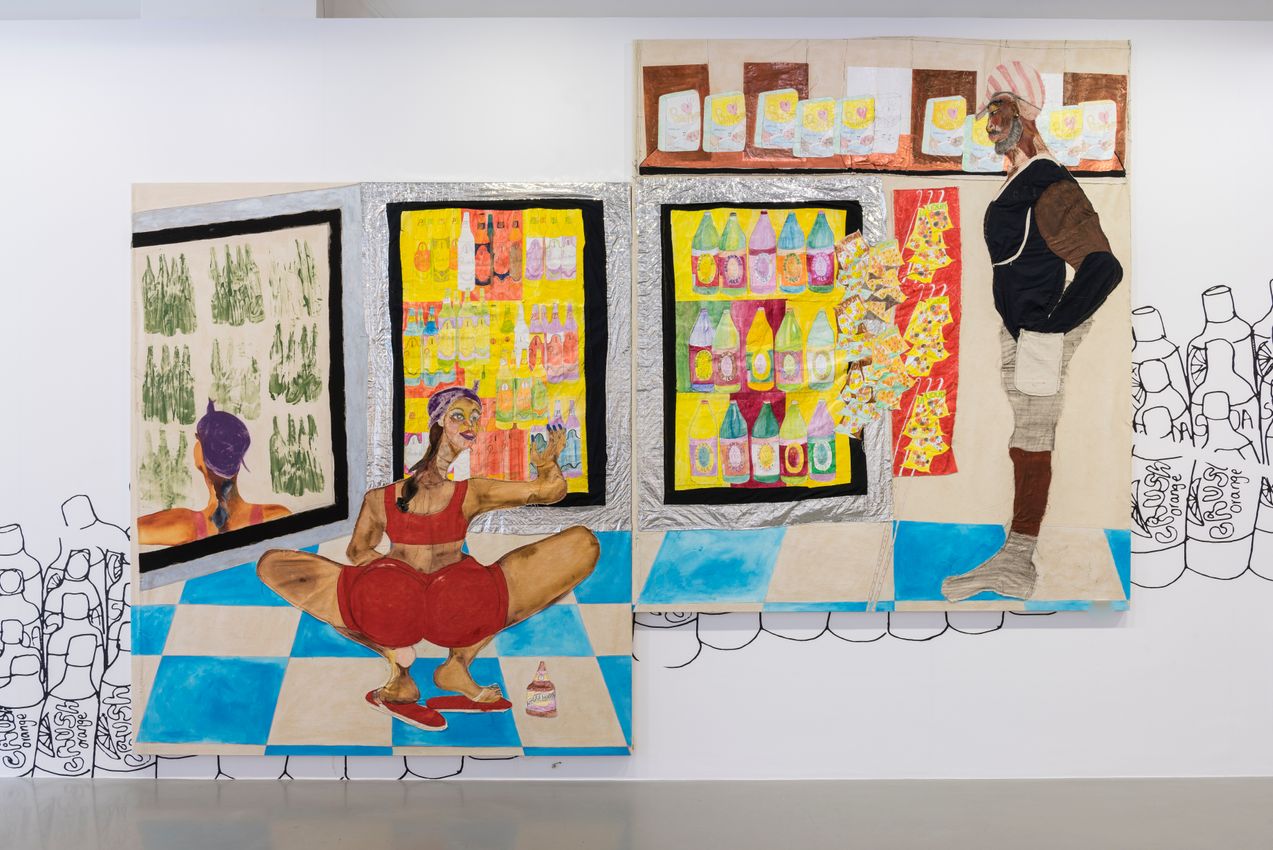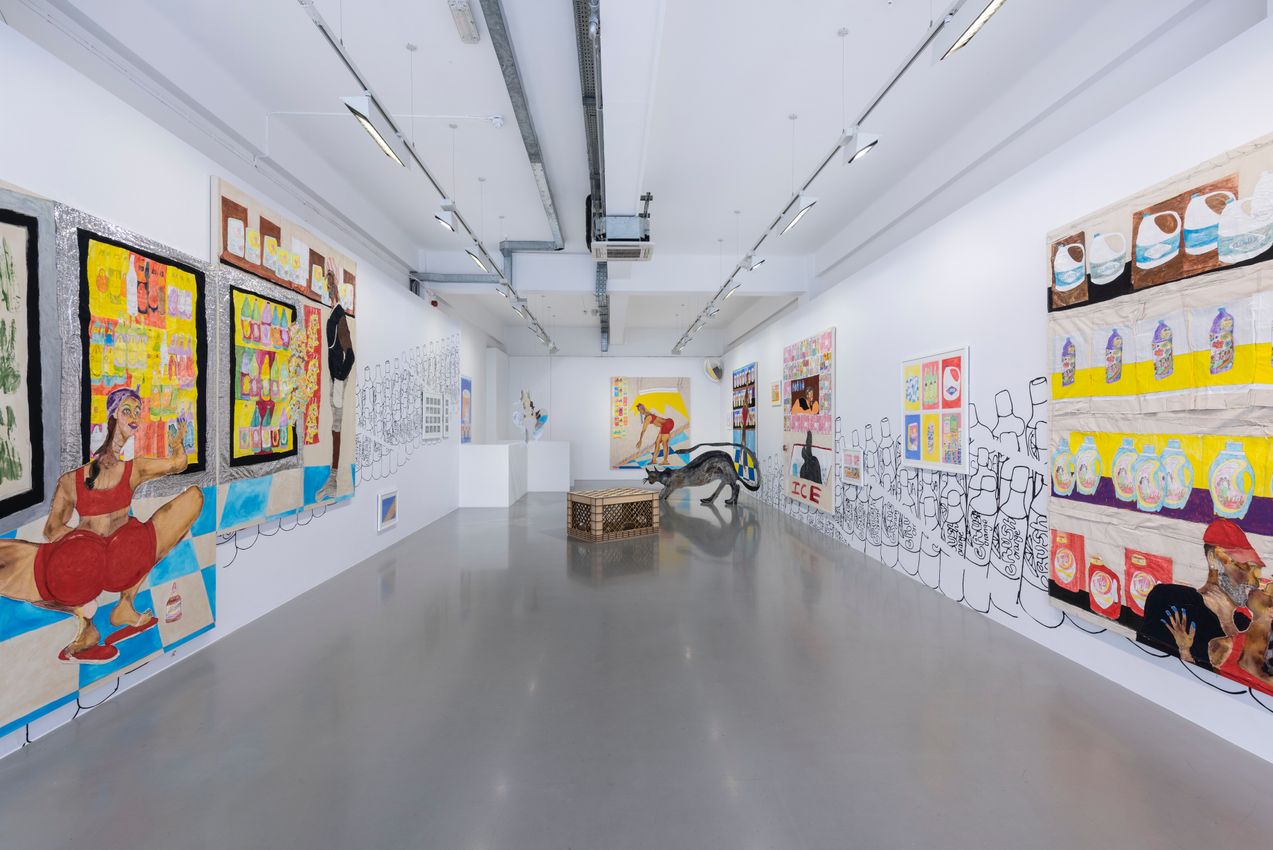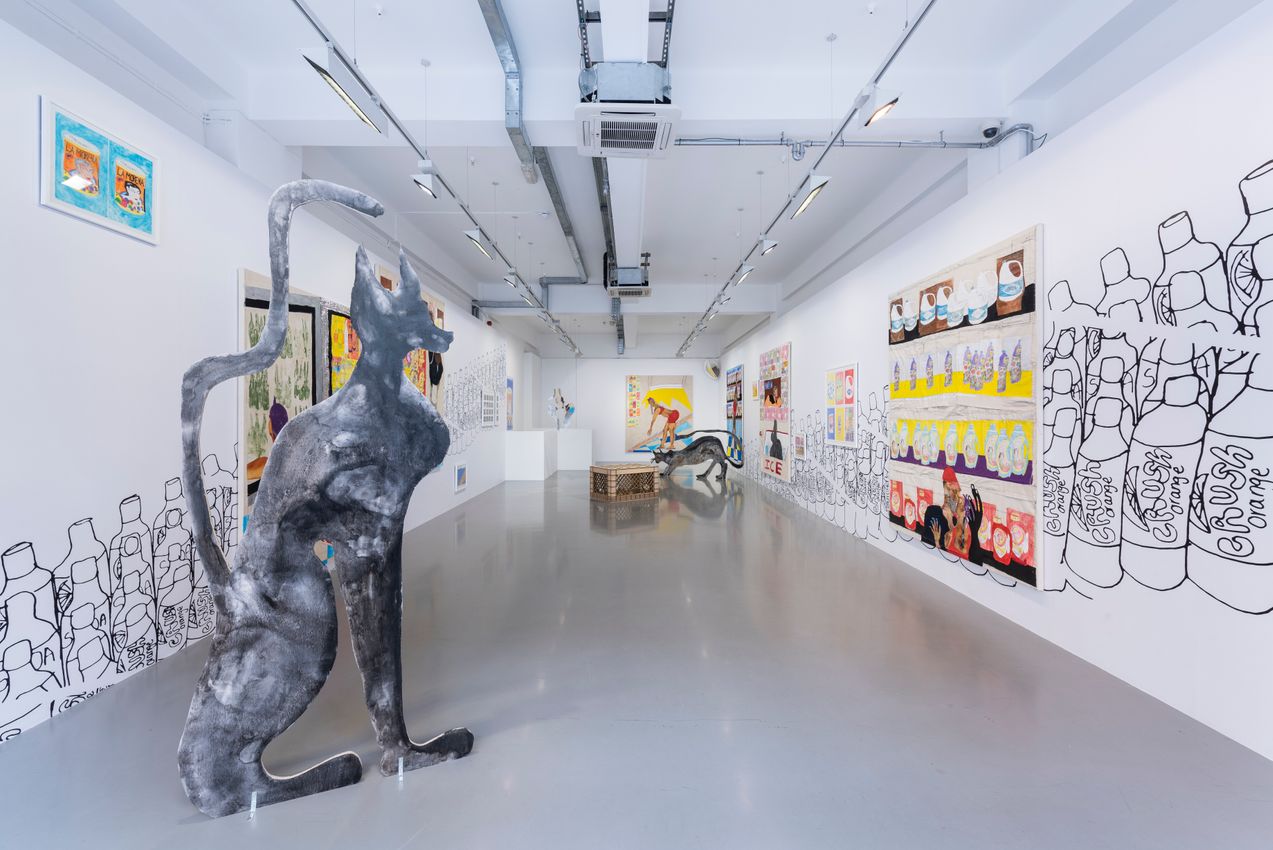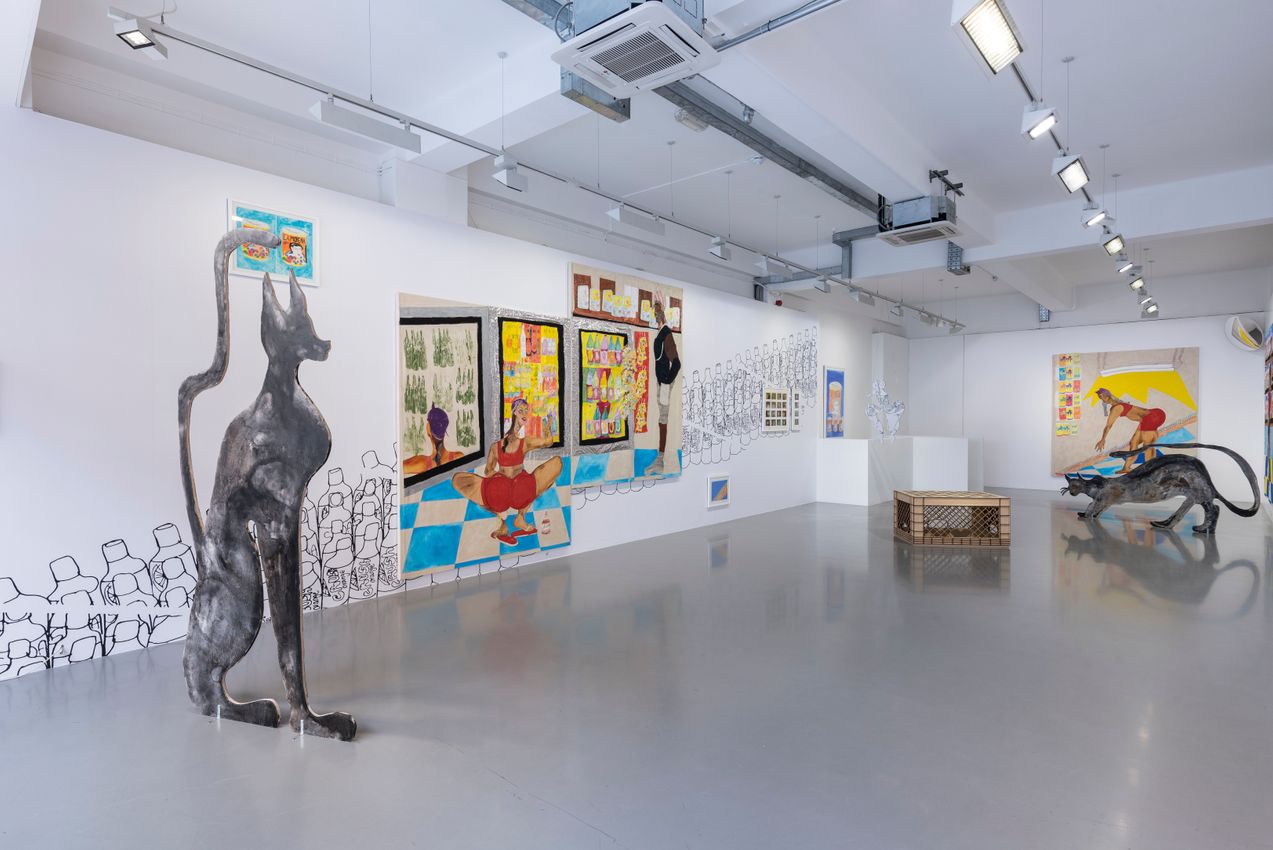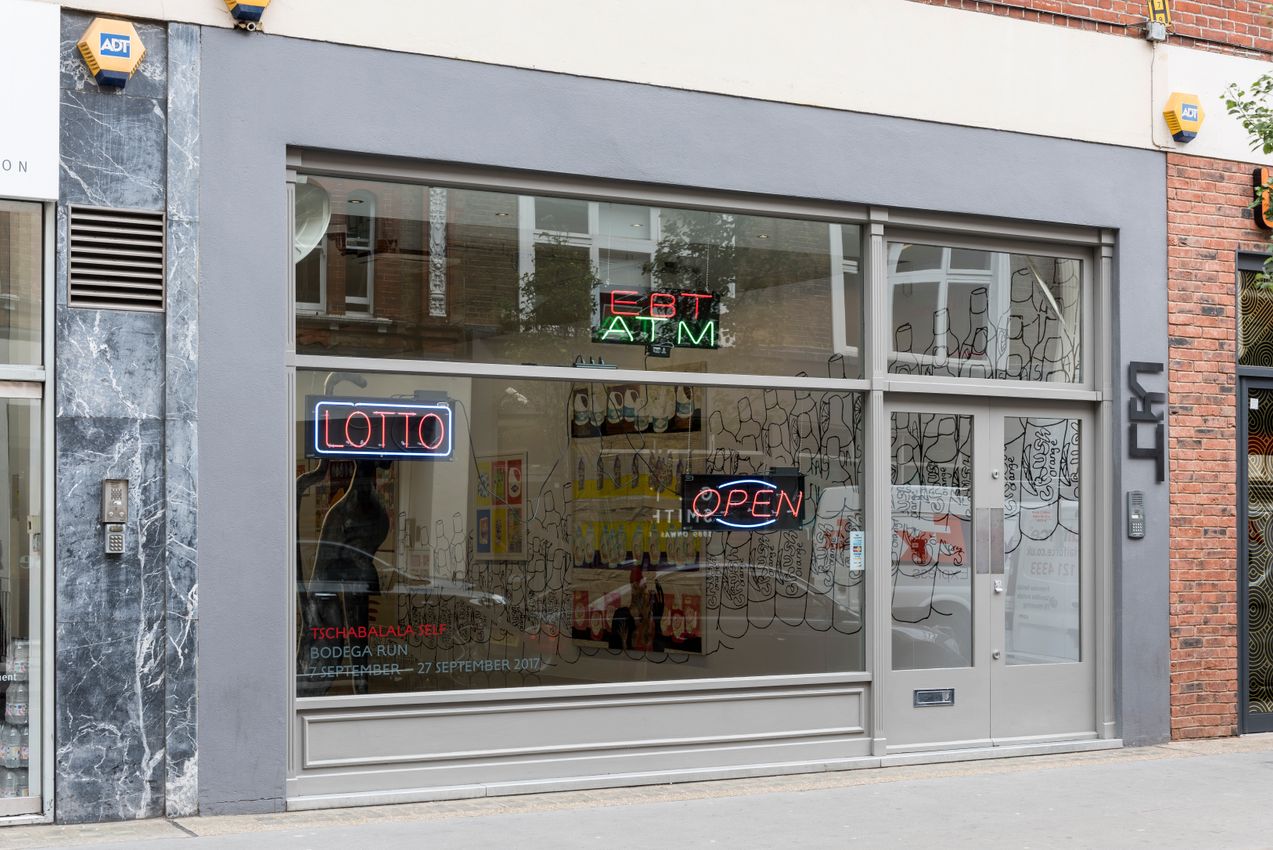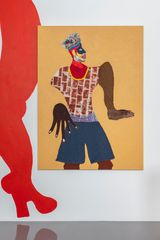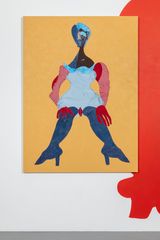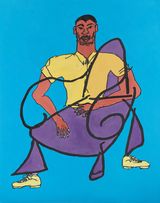



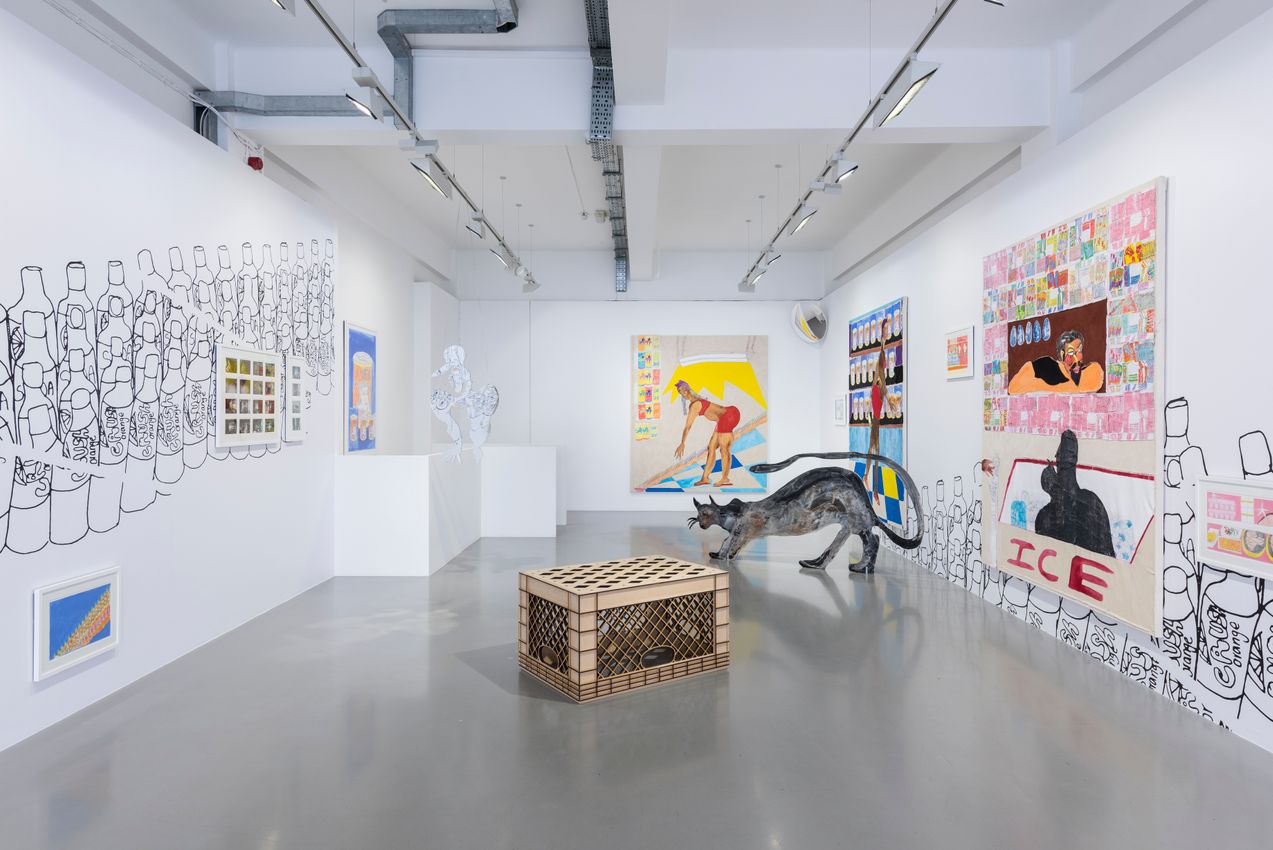
Pilar Corrias Gallery is pleased to present Tschabalala Self‘s inaugural solo exhibition, Bodega Run, which focuses on the socio-political site of the New York City bodega.
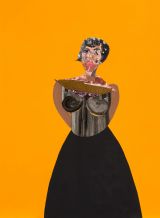
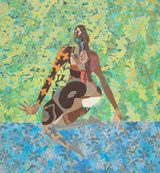
Tschabalala Self, who identifies primarily as a painter while also working across various media, explores the implicit politicisation and sexualisation of Black bodies through a self-reflexive lens. Through the depiction of characters with active histories, psychologies and desires, her practice functions as a subversion of ethno-cultural stereotyping. With Bodega Run, Self expands her approach to create dynamic, rounded and multi-dimensional characters out of the items and experiences that exist within these corner stores.
Bodegas emerged with the arrival and settlement of Puerto Ricans and Dominicans in New York and have traditionally been owned and operated by various communities of colour. The Spanish word for shop, ‘bodega’, has become a colloquialism for the small, family run corner stores seen all over the city. Found primarily in Black and Latino neighborhoods and often occupying the main intersections of these areas, the bodega has become a geographic emblem of Manhattan’s diaspora.
In Central Harlem, the area of New York City the artist was born and raised in, local bodegas are microcosms of cross-cultural exchange. With the demographic changes that have occurred across the city in recent years, bodega ownership has shifted from being Puerto Rican and Dominican to predominantly Yemeni, with these shops continuing to service primarily Black and Latino customers.
Through their practice of Islam, these new Yemeni bodega owners have a unique relationship to the Black communities who have traditionally engaged and continue to participate in these businesses. With Islam being a religion often adopted across Black diaspora as a way of reconnecting with African heritage, bodegas have become spaces for creating intersectional and inclusive connections across various cultures. The bodega’s existence, like the Black, Latino and Yemeni communities that inhabit New York City, is rooted in exclusion and therefore, has become a space for marginalised communities to organise and create their own local exchange economies.
Bodegas sell a wide selection and an often-multifarious array of products. As stores that are operated by people of colour to serve people of colour, catering to the communities they are located within, the bodega has become an articulation of its neighborhood’s identity. Self’s Bodega Run is an investigation of the social, political and economic implications of these corner stores through an exploration of the products they sell and their aesthetic organisation.
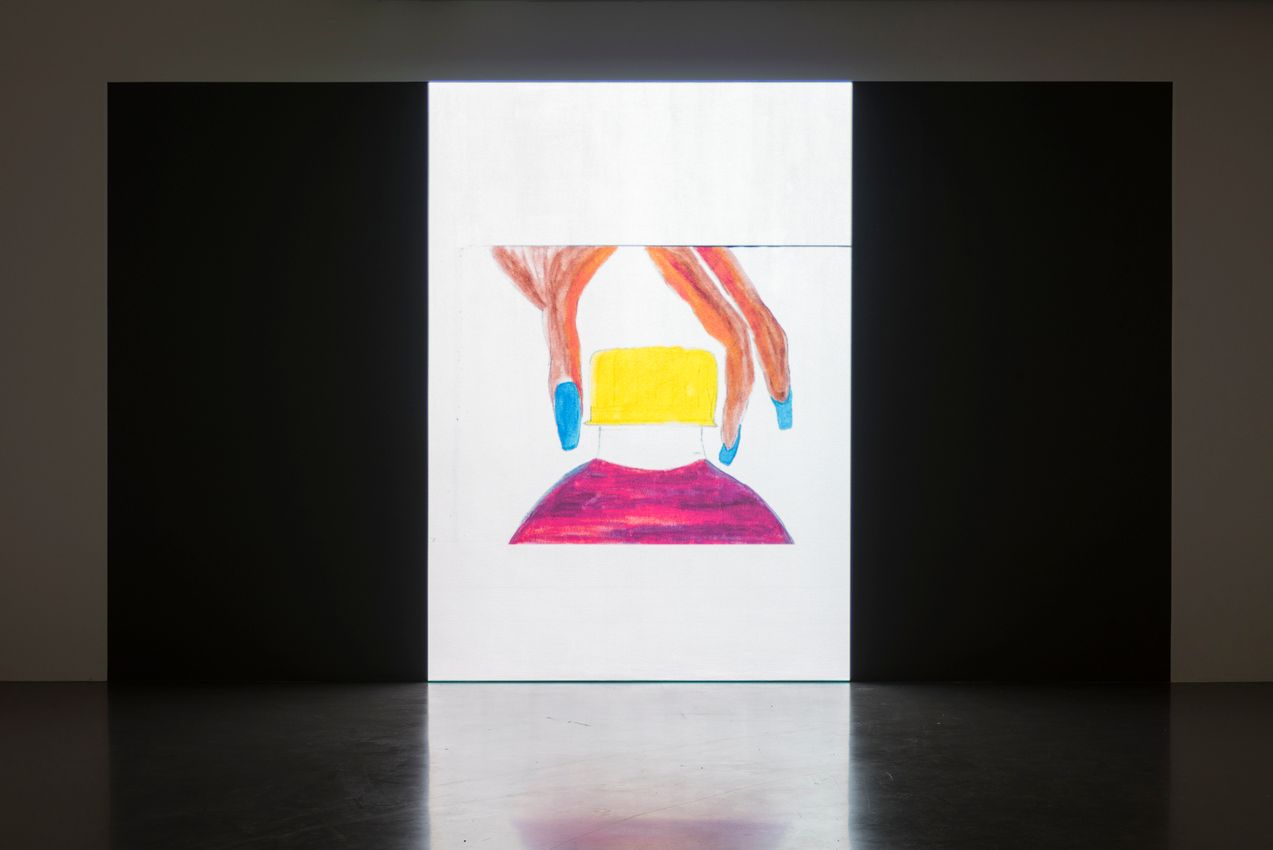
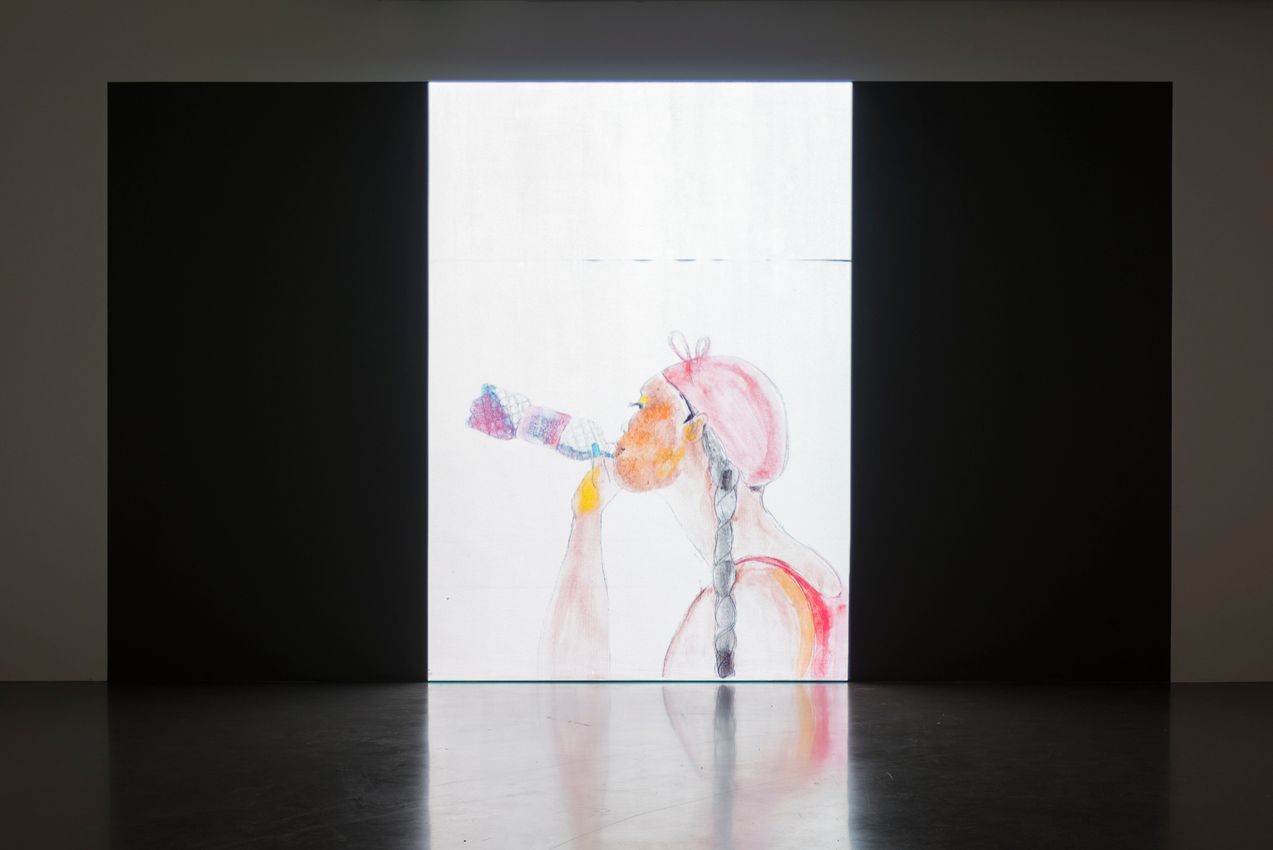
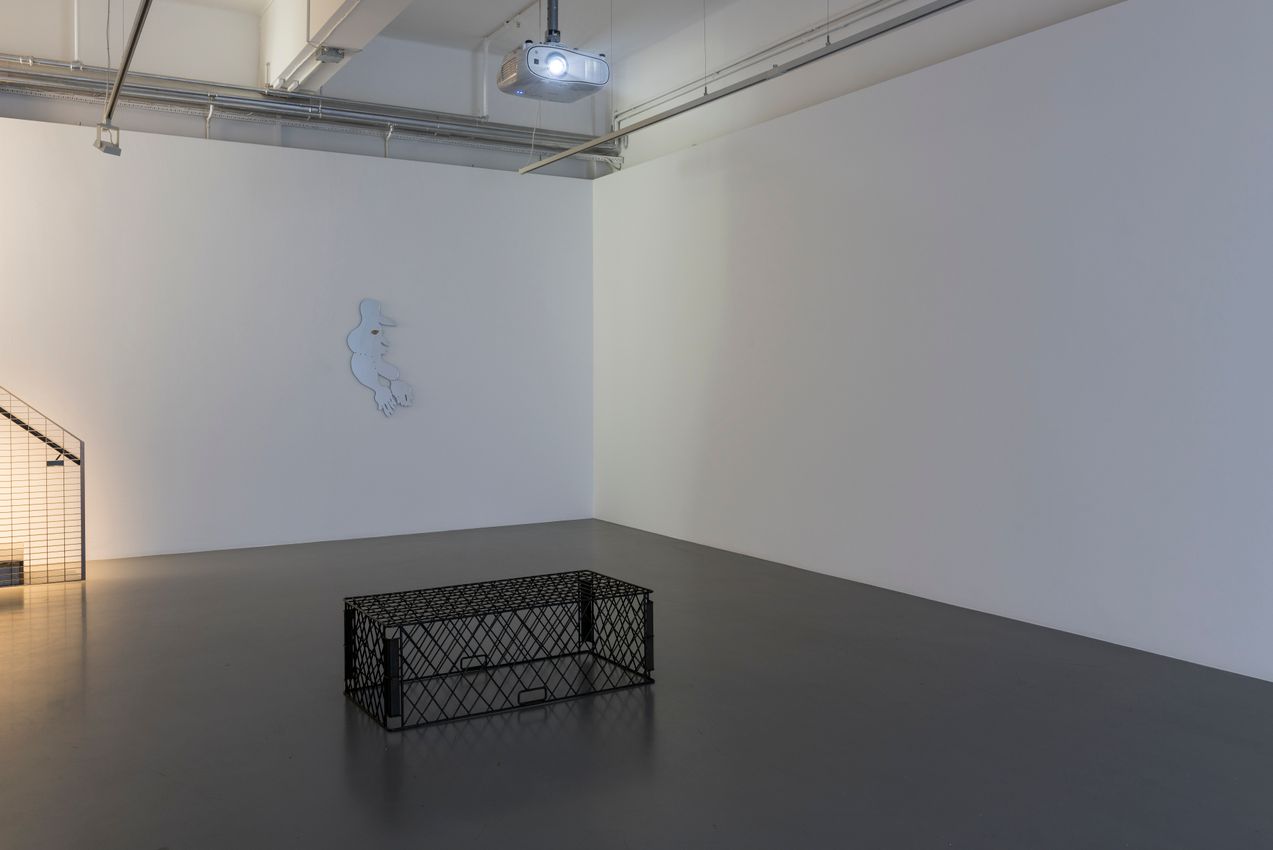
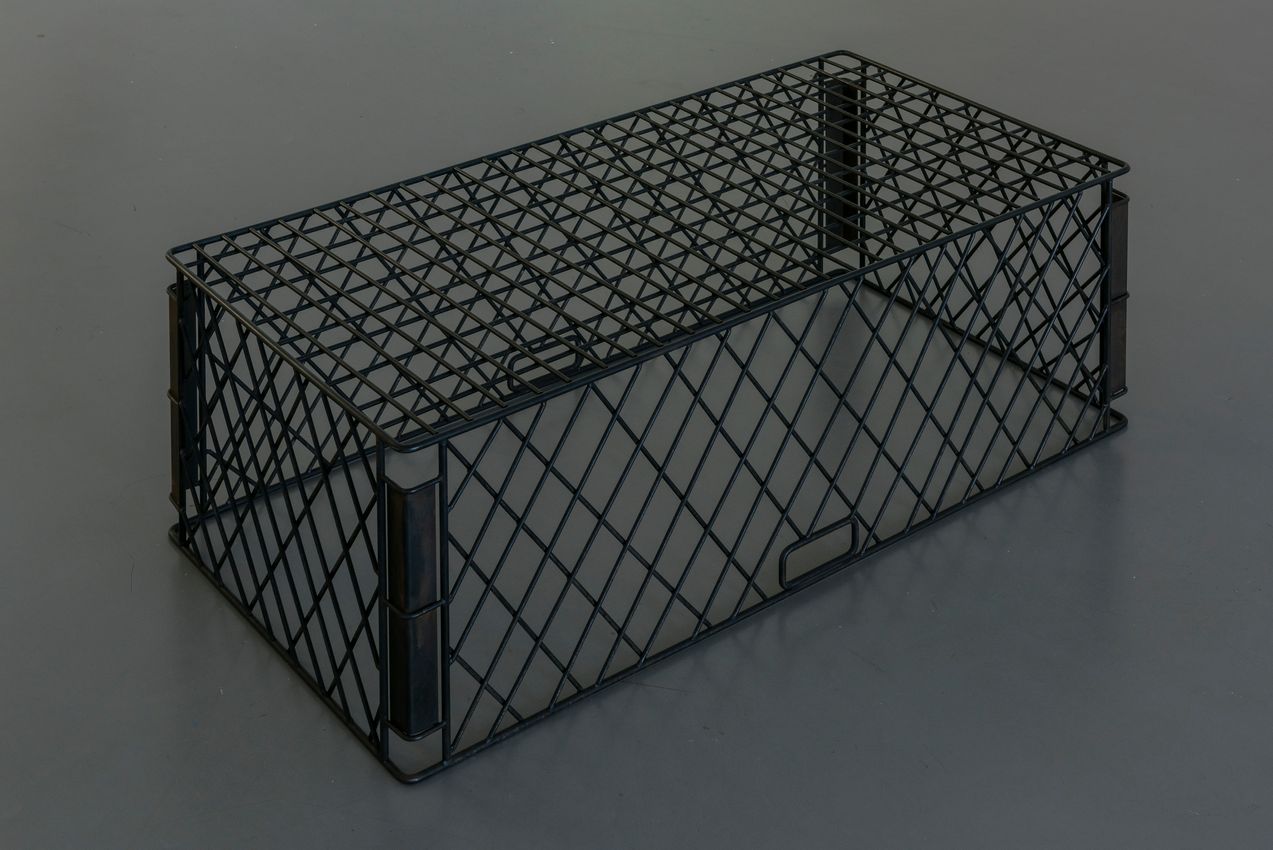
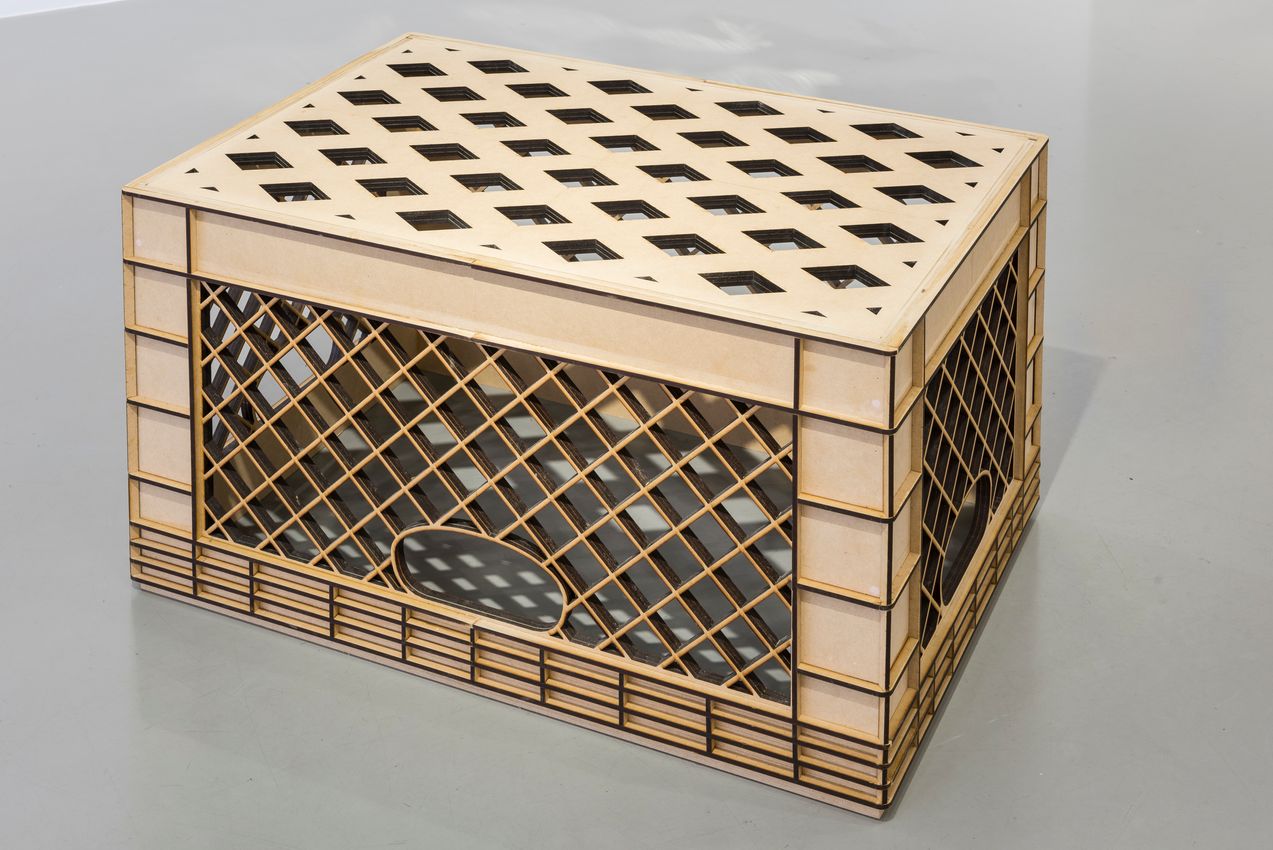
Self creates her own bodega inspired by the shops that are emblematic of her culture and upbringing. As her first foray into installation, Bodega Run, represents a new avenue for the artist, who has created wallpaper, neon readymades, animation, photographs and large scale sculptures all emblematic of bodega accoutrement. Additionally, the paintings and drawings included throughout the exhibition employ the household products and food items commonly seen and procured in bodegas, as their subjects.
Tschabalala Self (b. 1990 in Harlem, USA) lives and works in New York and New Haven. Forthcoming exhibitions include: Trigger: Gender as a Tool and a Weapon, New Museum, New York (2017). Selected current and recent exhibitions include: Tschabalala Self, Tramway, Glasgow (2017); Tschabalala Self, Parasol Unit Foundation for Contemporary Art, London (2017); Desire, Moore Building, Miami (2016); The Function, T293, Naples (2016); A Constellation, Studio Museum Harlem, Harlem (2015); Tropicana, The Cabin, Los Angeles (2015).
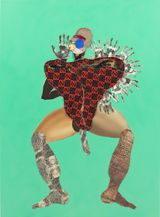
Tschabalala Self builds a singular style from the syncretic use of both painting and printmaking to explore ideas about the black female body. The artist constructs exaggerated depictions of female bodies using a combination of sewn, printed, and painted materials, traversing different artistic and craft traditions. The exaggerated biological characteristics of her figures reflect Self’s own experiences and cultural attitudes toward race and gender. ‘The fantasies and attitudes surrounding the Black female body are both accepted and rejected within my practice, and through this disorientation, new possibilities arise,’ Self has said. ‘I am attempting to provide alternative, and perhaps fictional, explanations for the voyeuristic tendencies towards the gendered and racialised body; a body which is both exalted and abject.’


A respected voice in contemporary art discourse.
Focusing on ambitious storytelling and insightful art-world commentary. Ocula Magazine publishes in-depth interviews, critical essays and timely analysis on the artists, exhibitions and ideas driving the global art world.
Learn more about Ocula Magazine
Showcasing the best of the art world.
Ocula partners with galleries from around the world to highlight their artists, artworks and exhibitions. Gallery membership is by application and invitation, with each member vetted by an independent panel.
Learn more about Ocula Membership

Specialises in the sale of major artworks.
Led by a team with deep ties to the world’s leading auction houses, galleries and collectors. Ocula’s advisory team offers bespoke services to high-net-worth clients from around the world who are looking to acquire the best of contemporary and modern art.
Learn more about our team and services