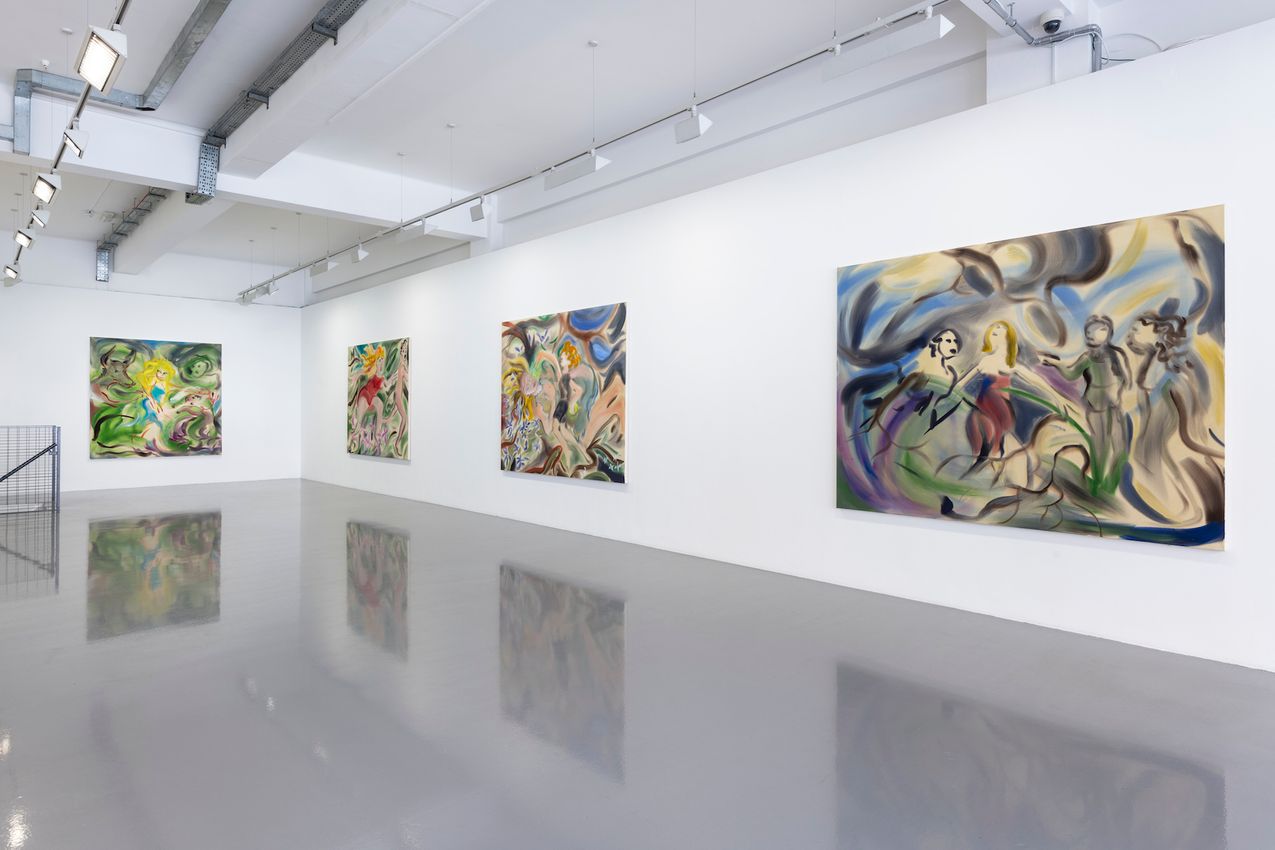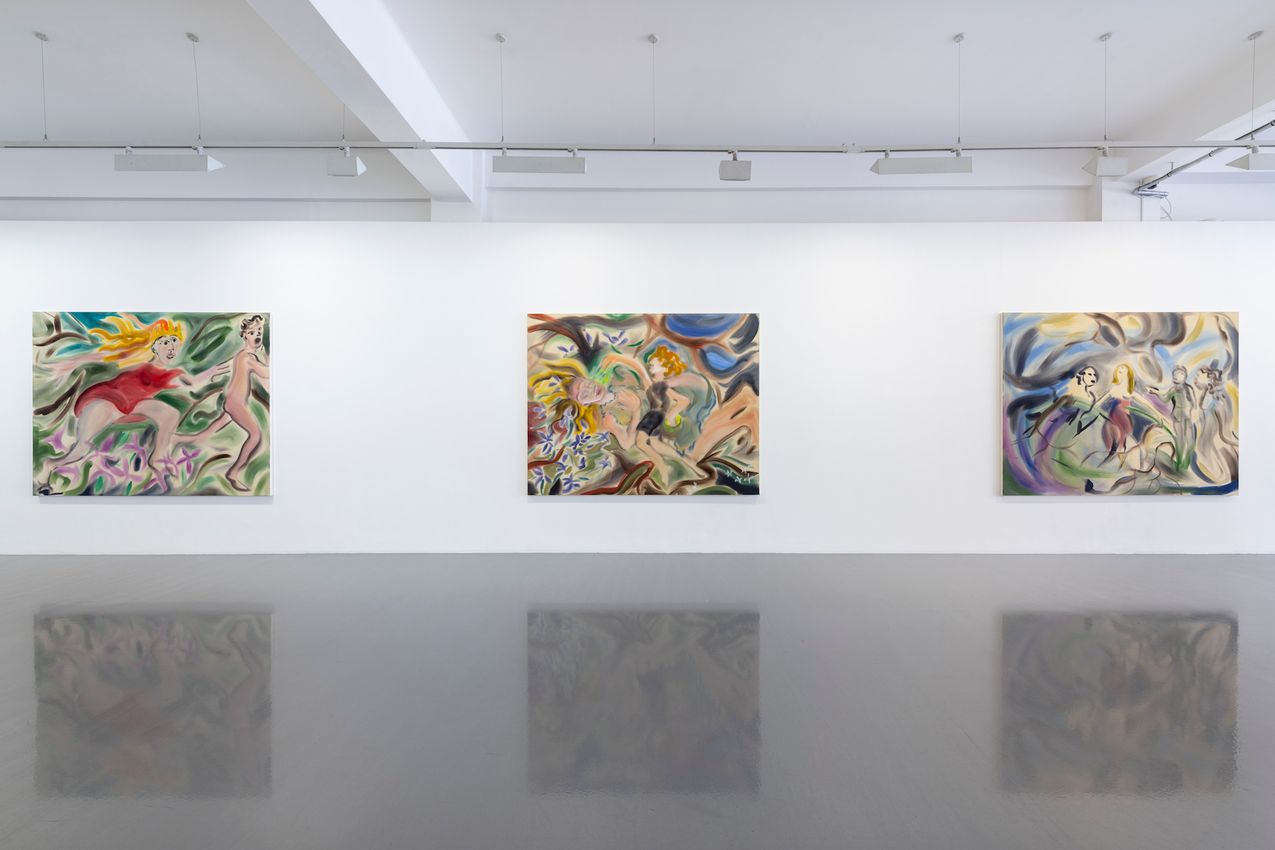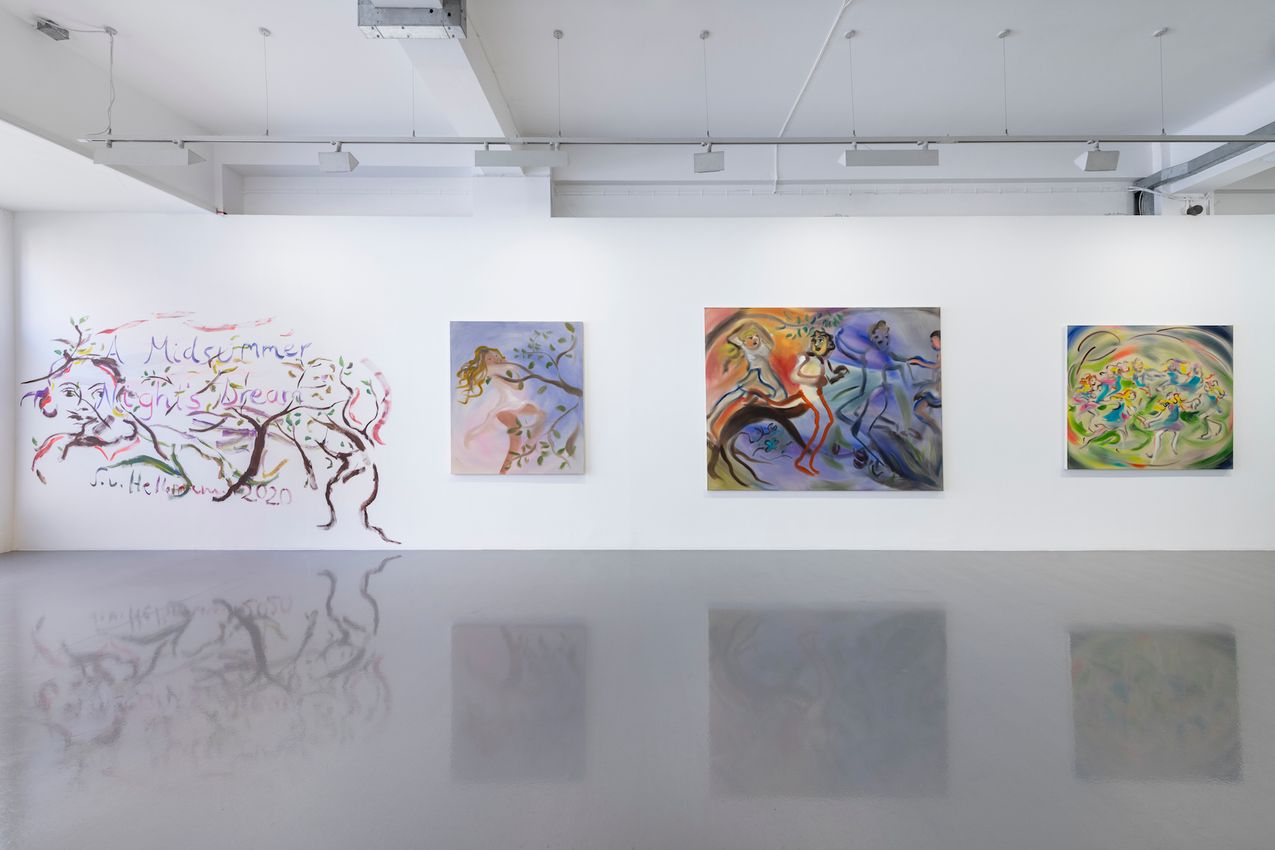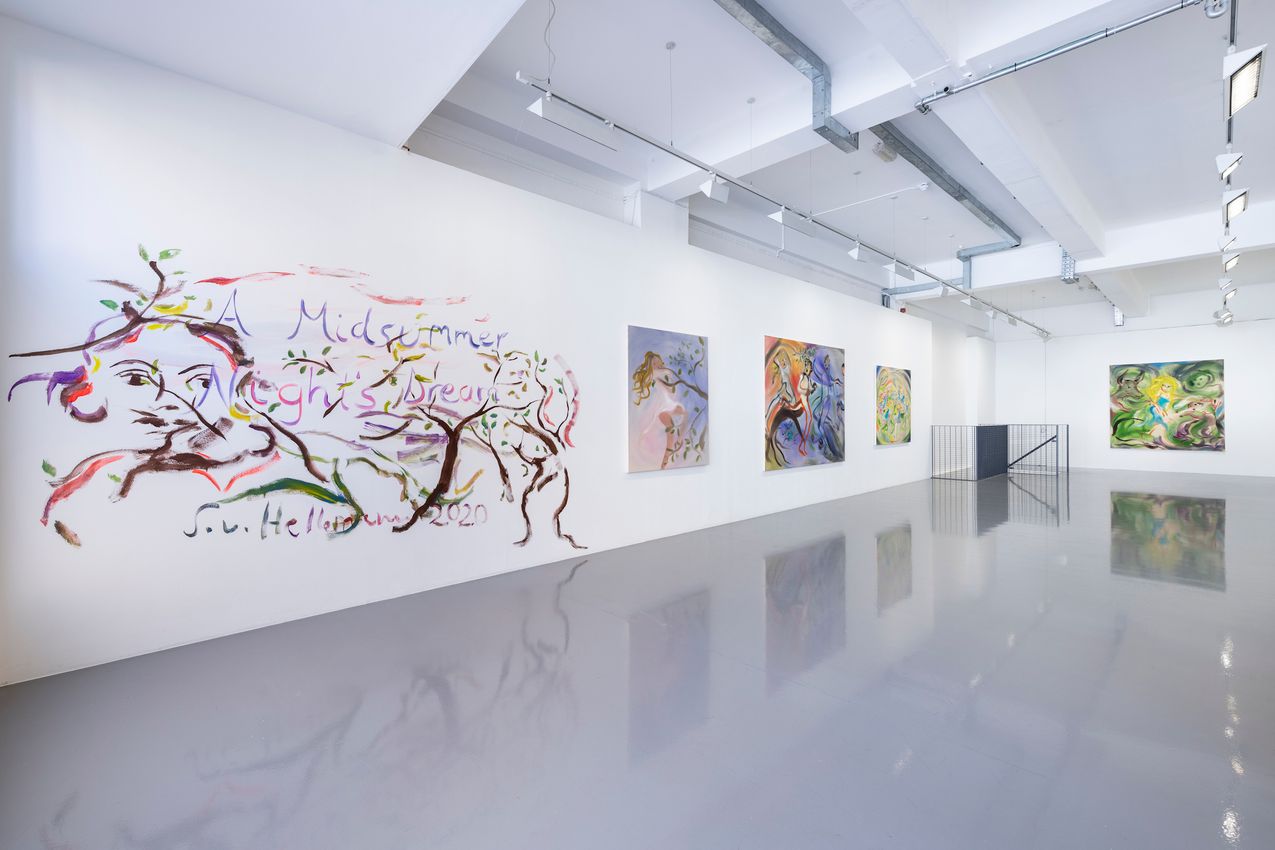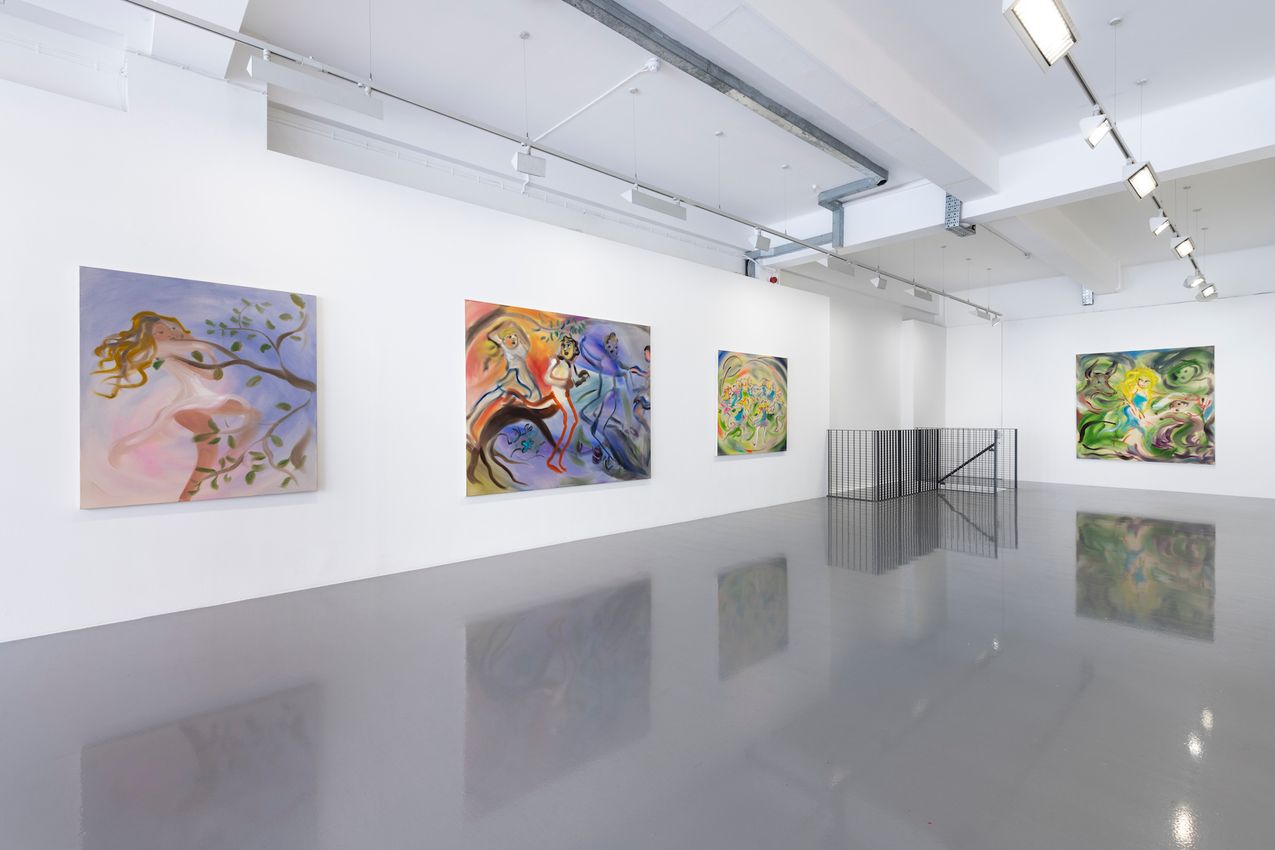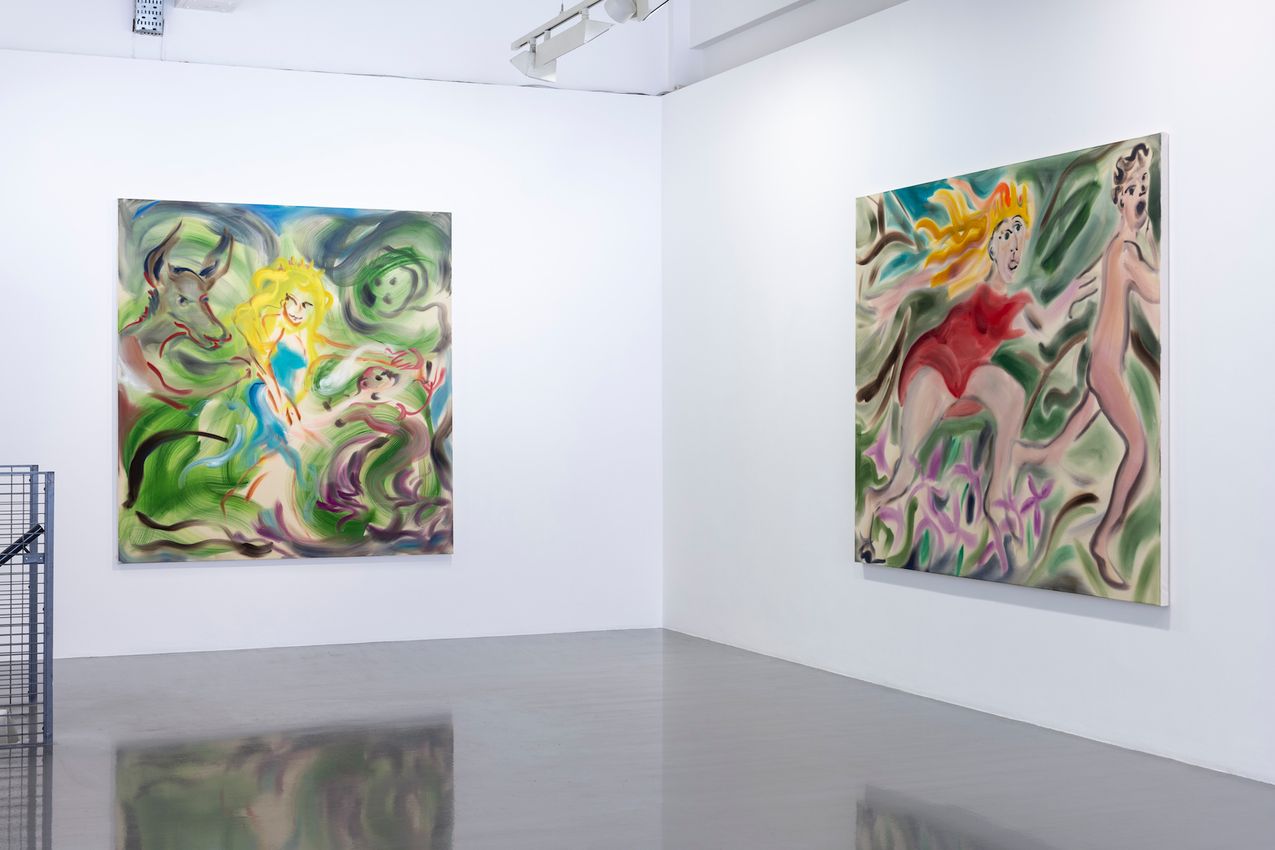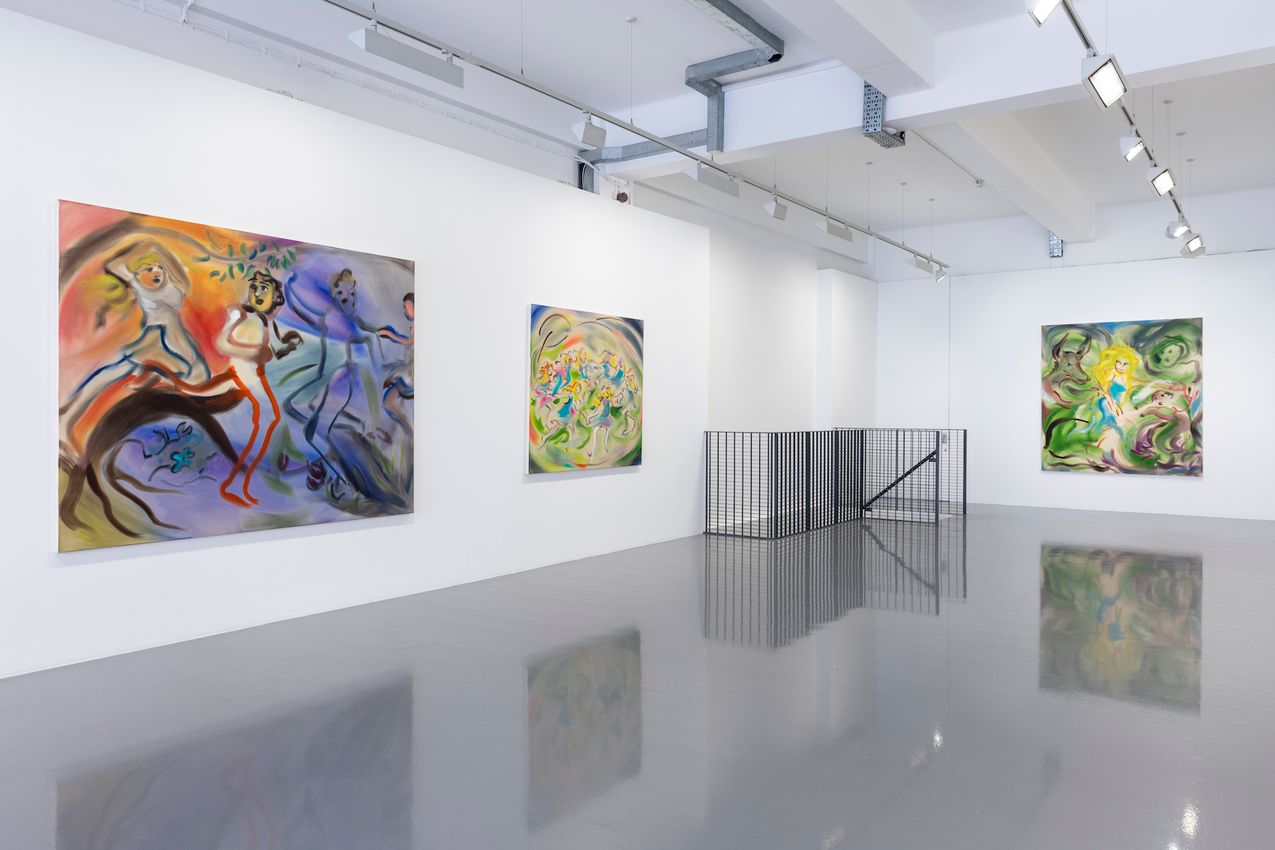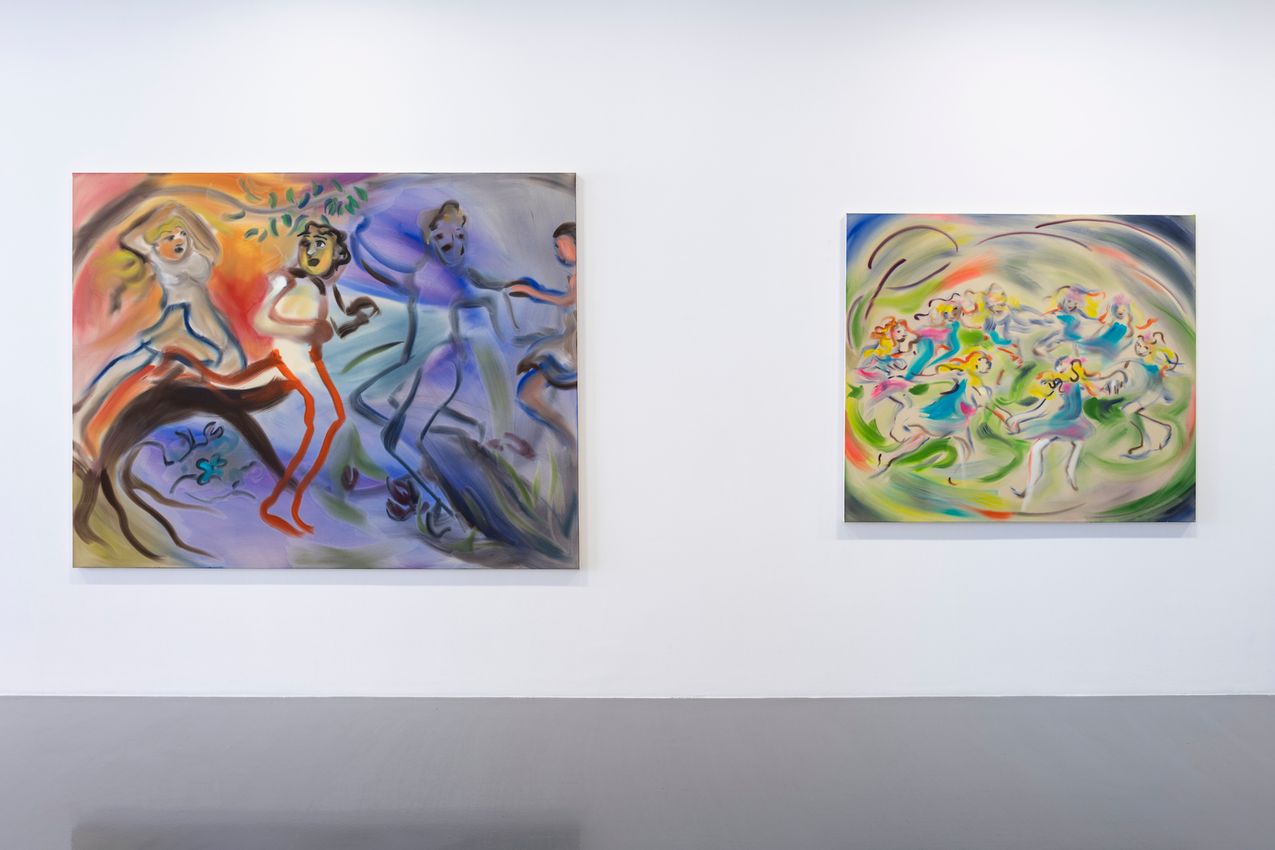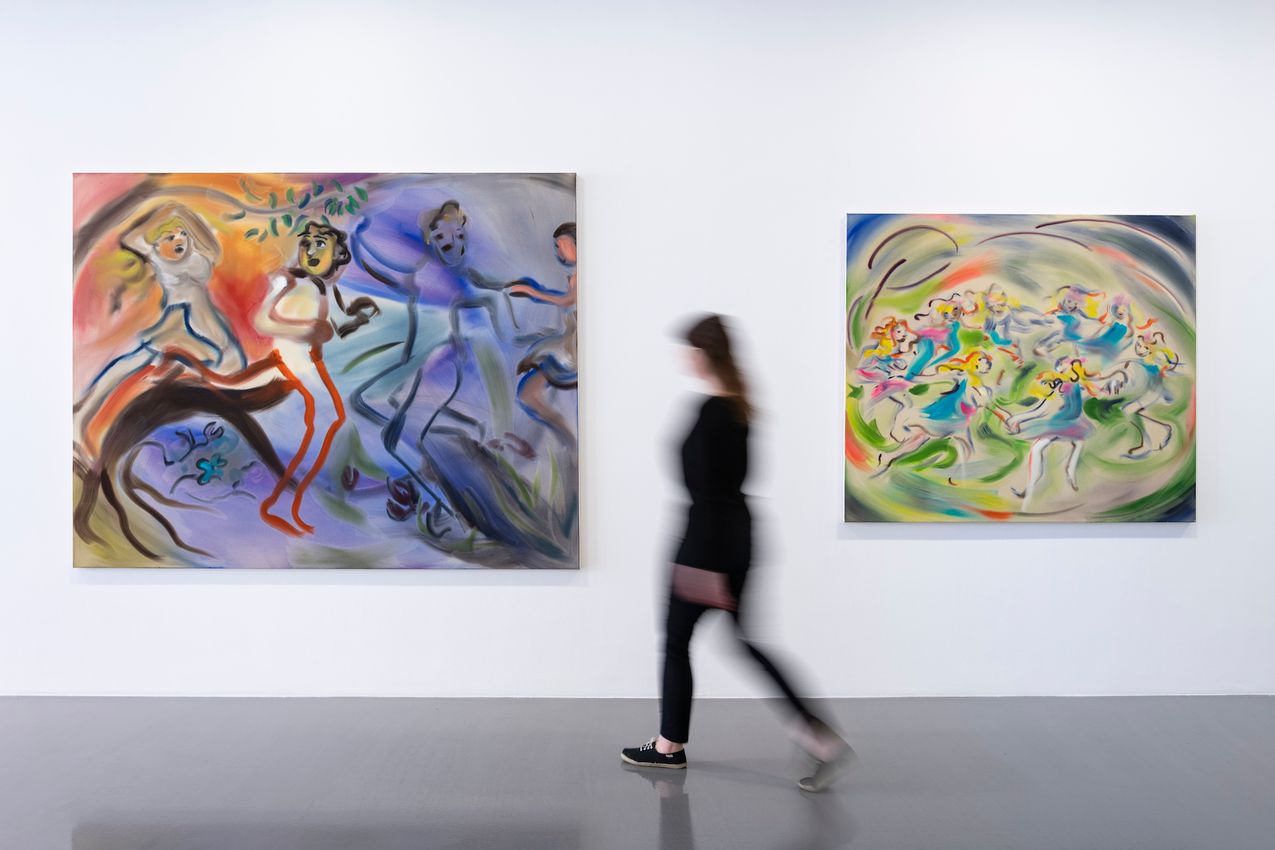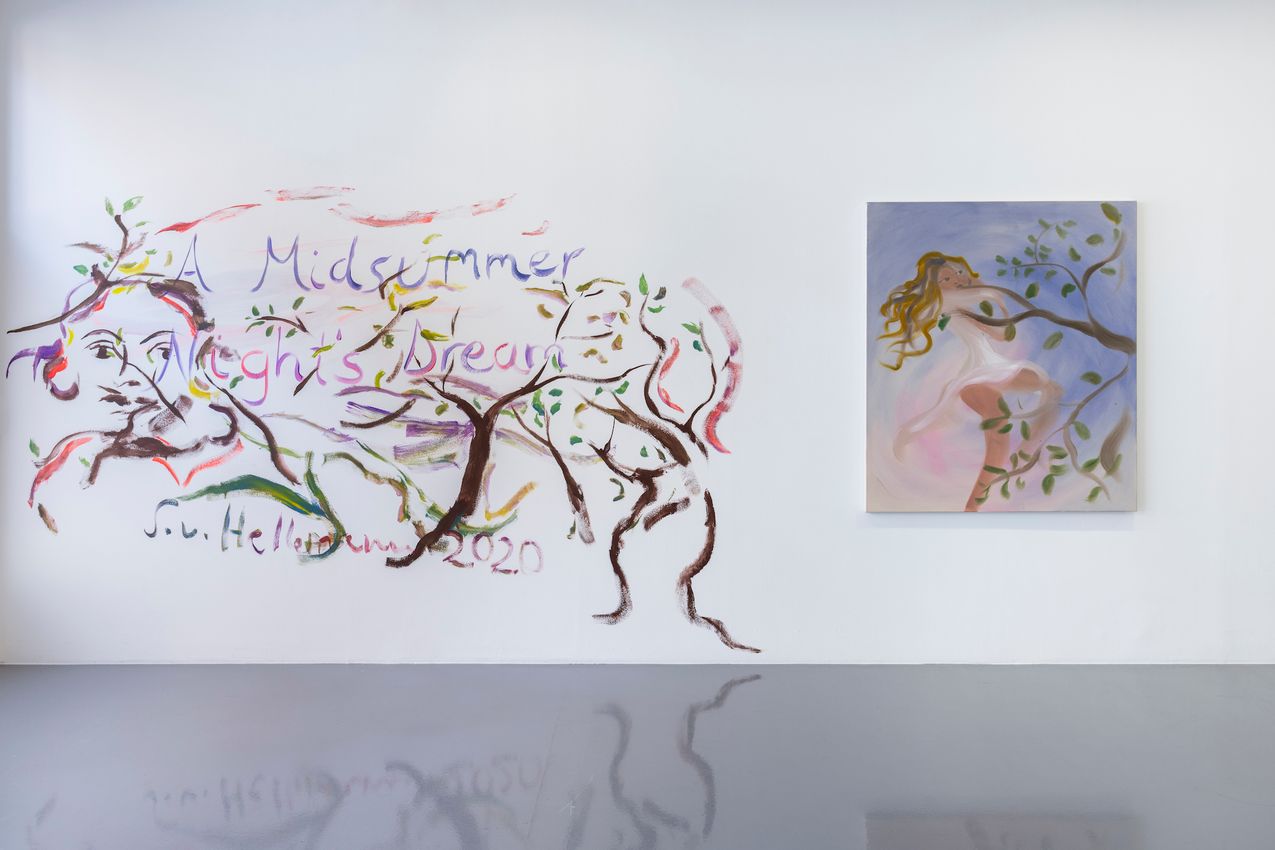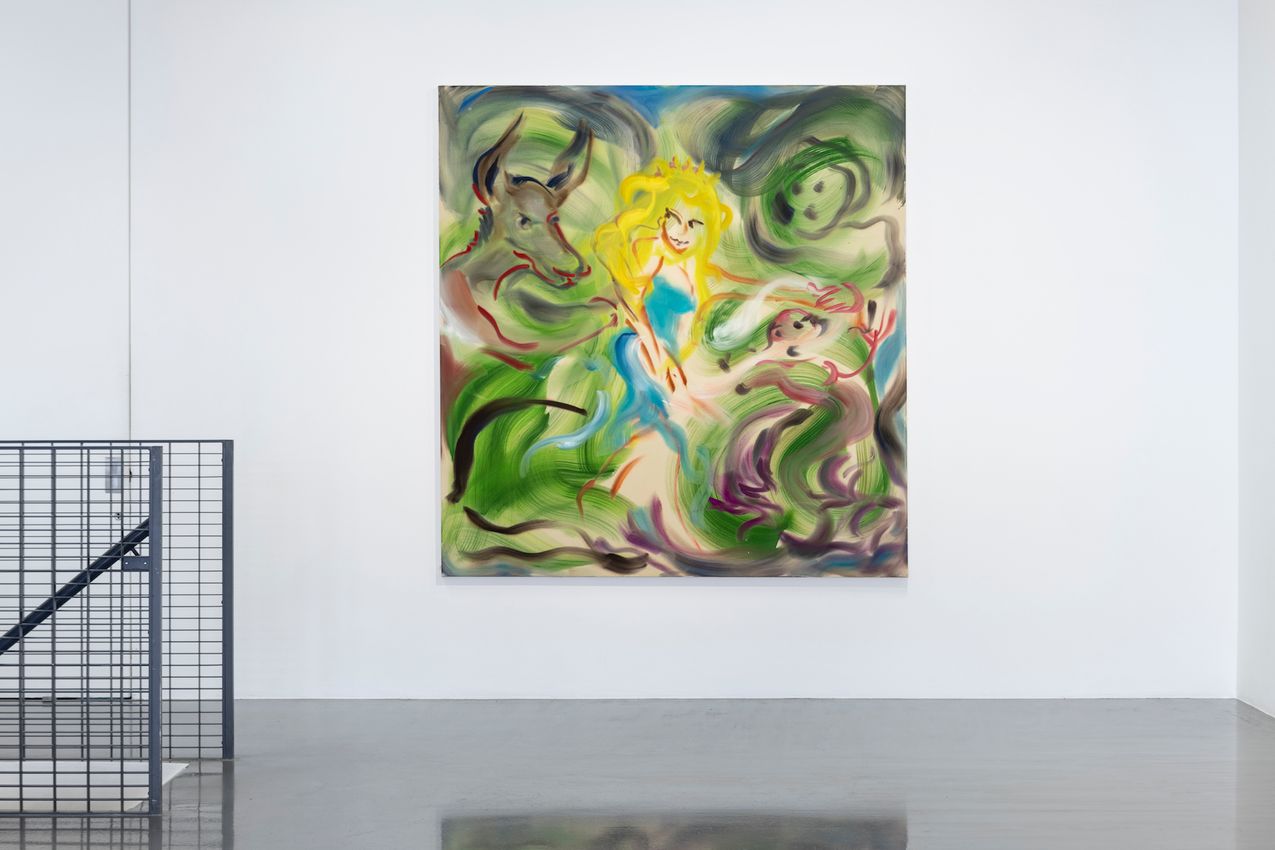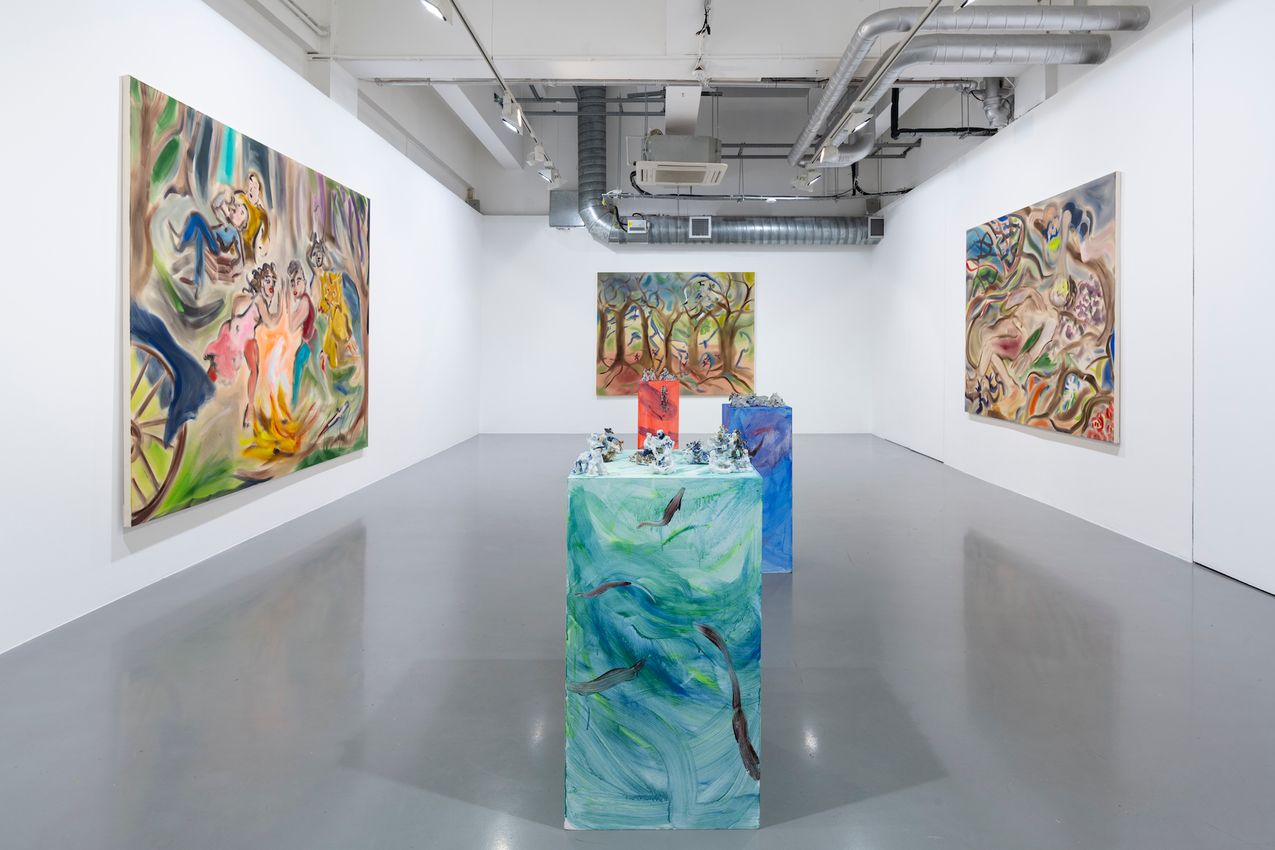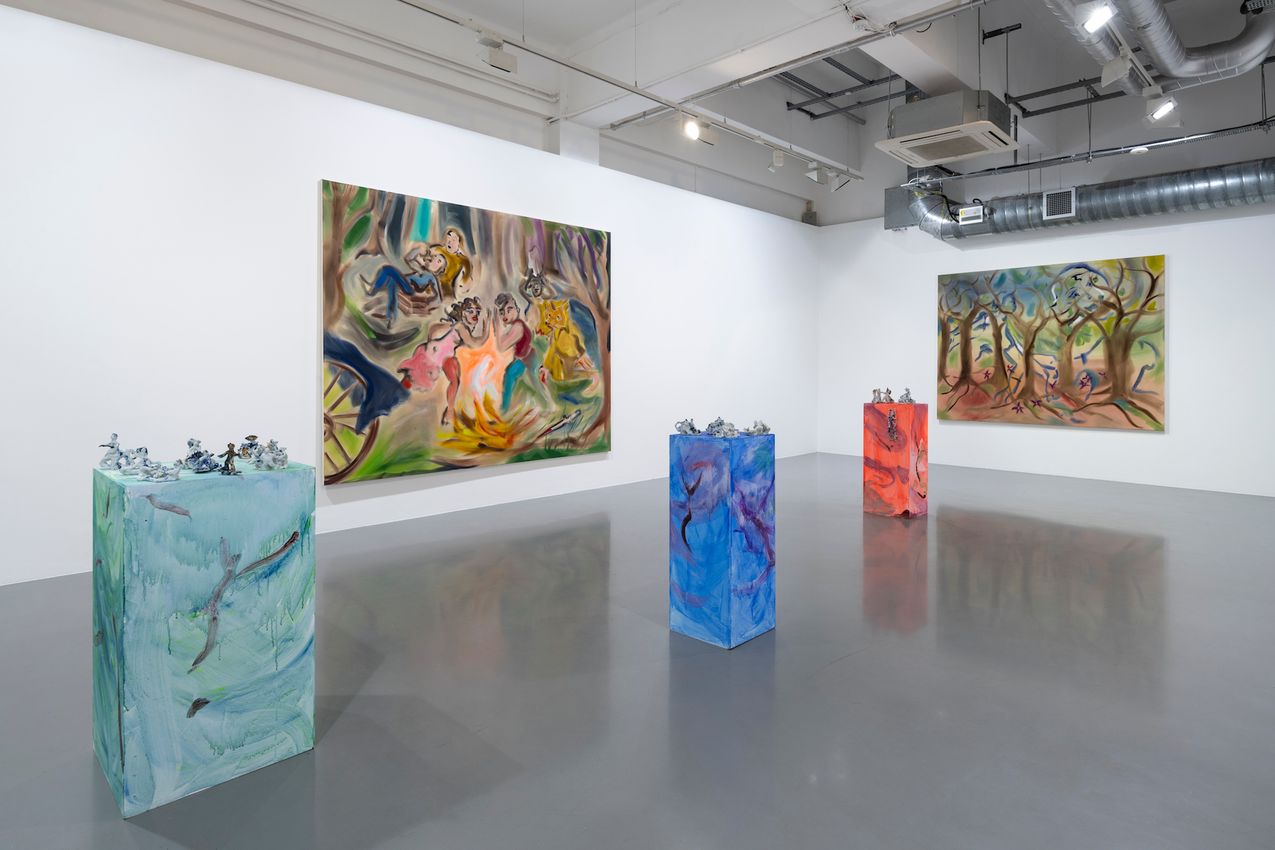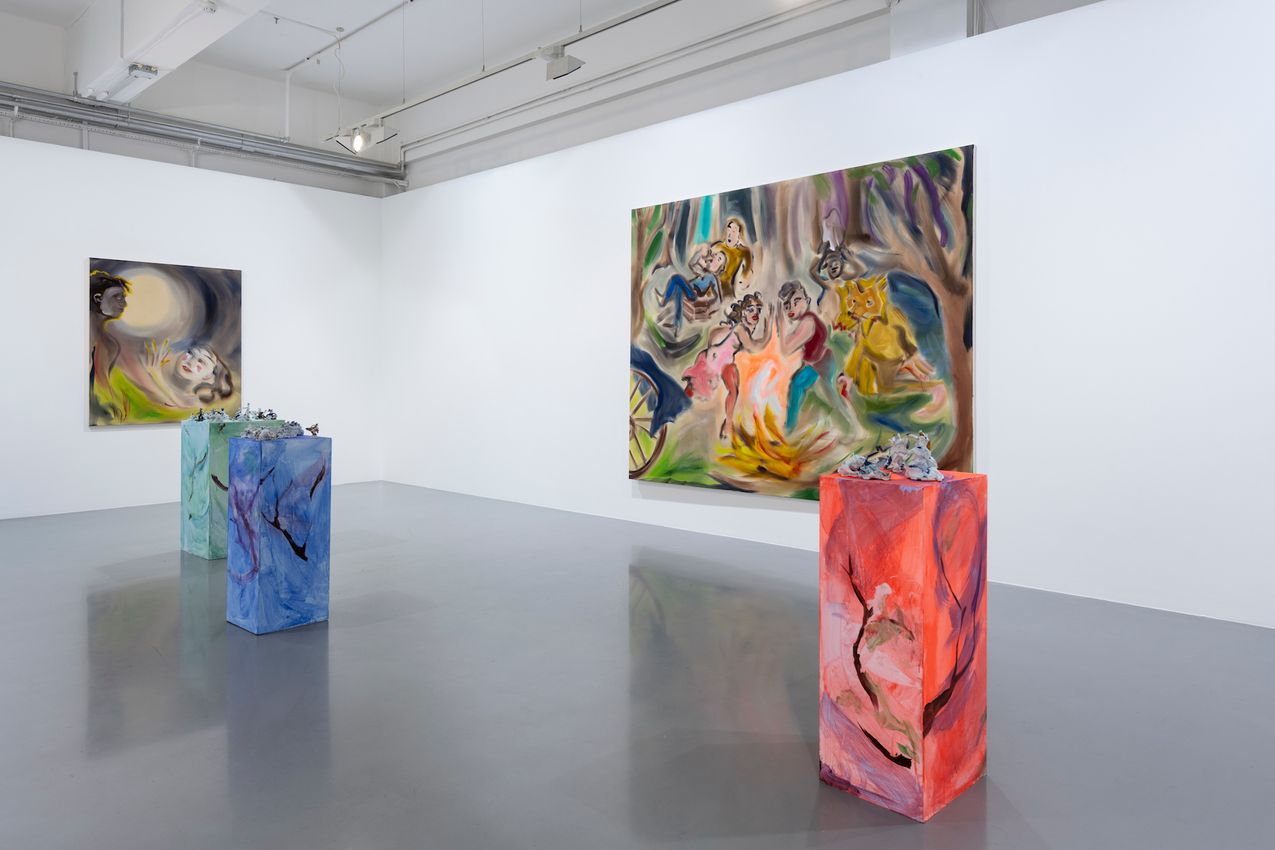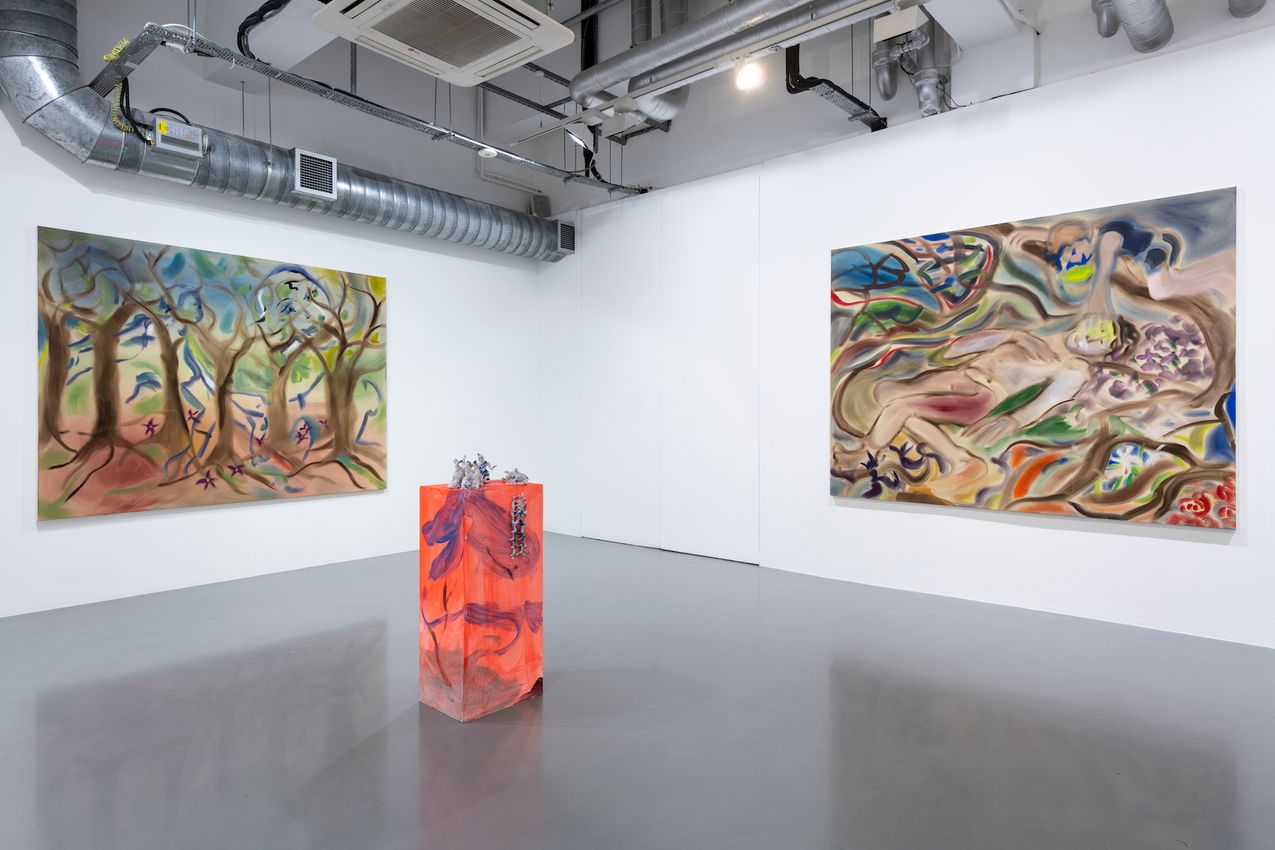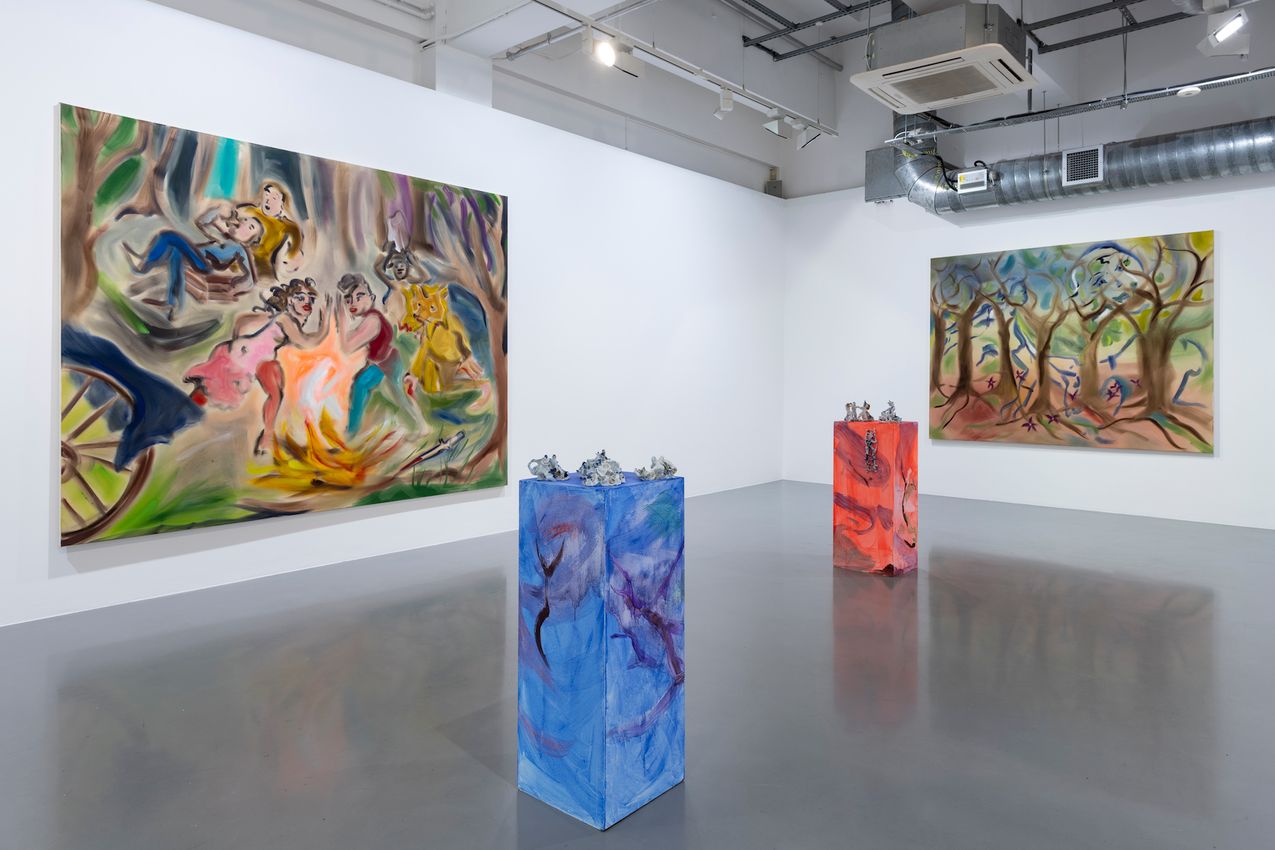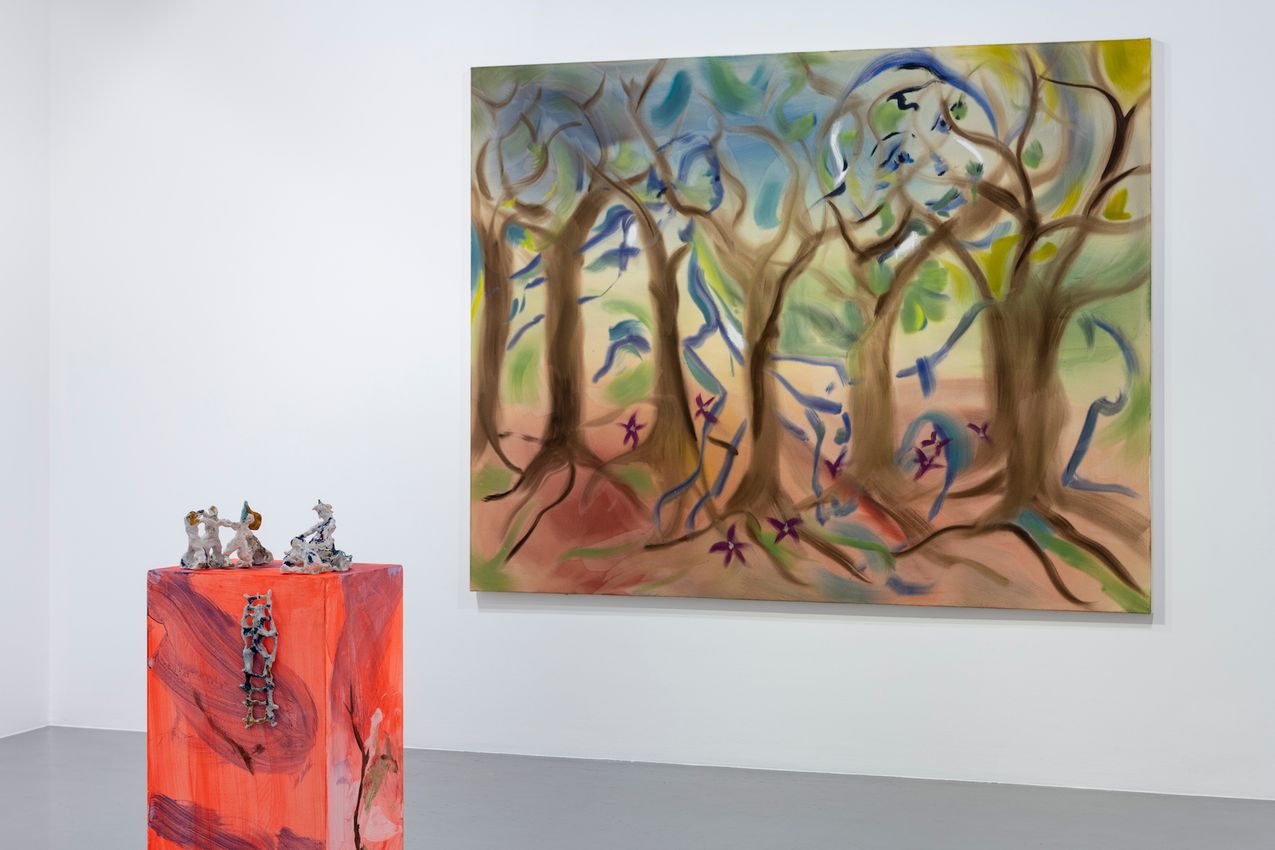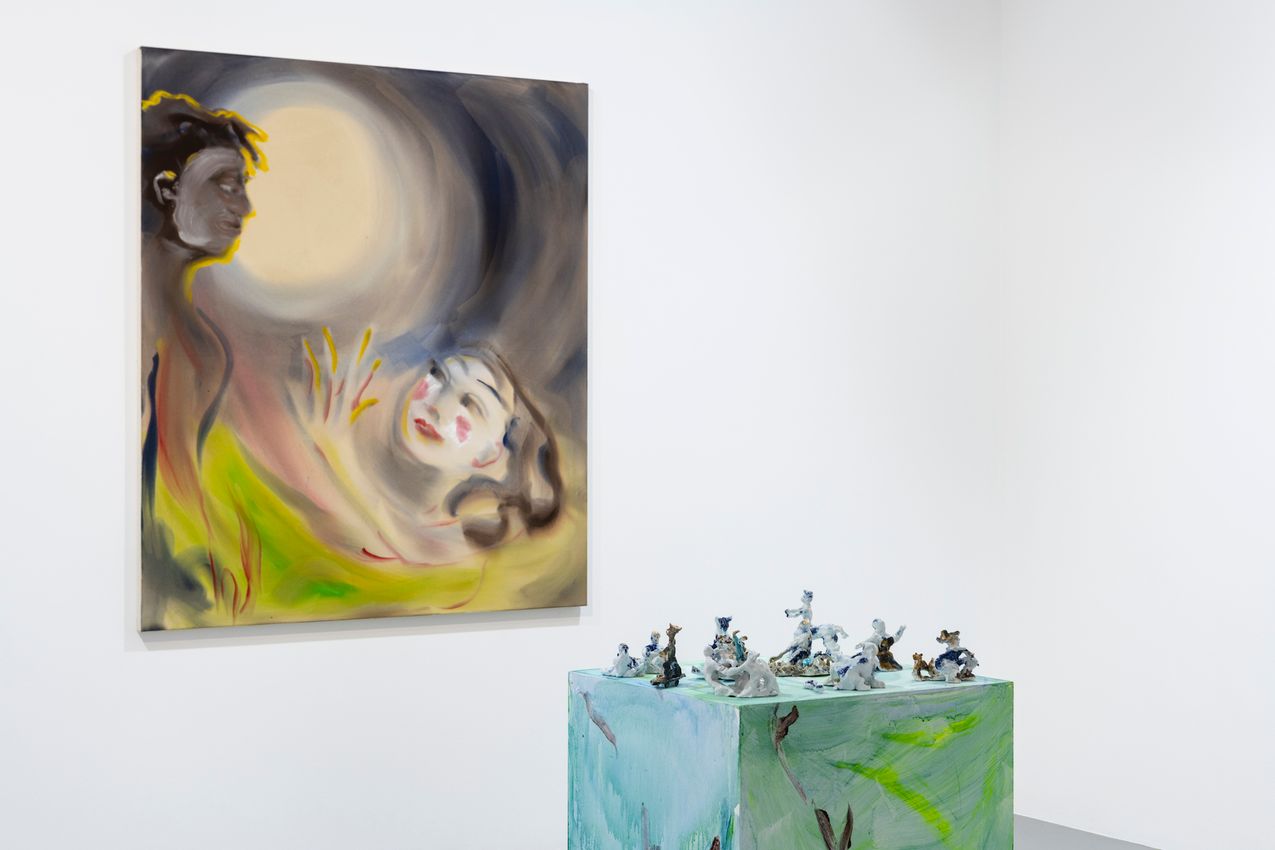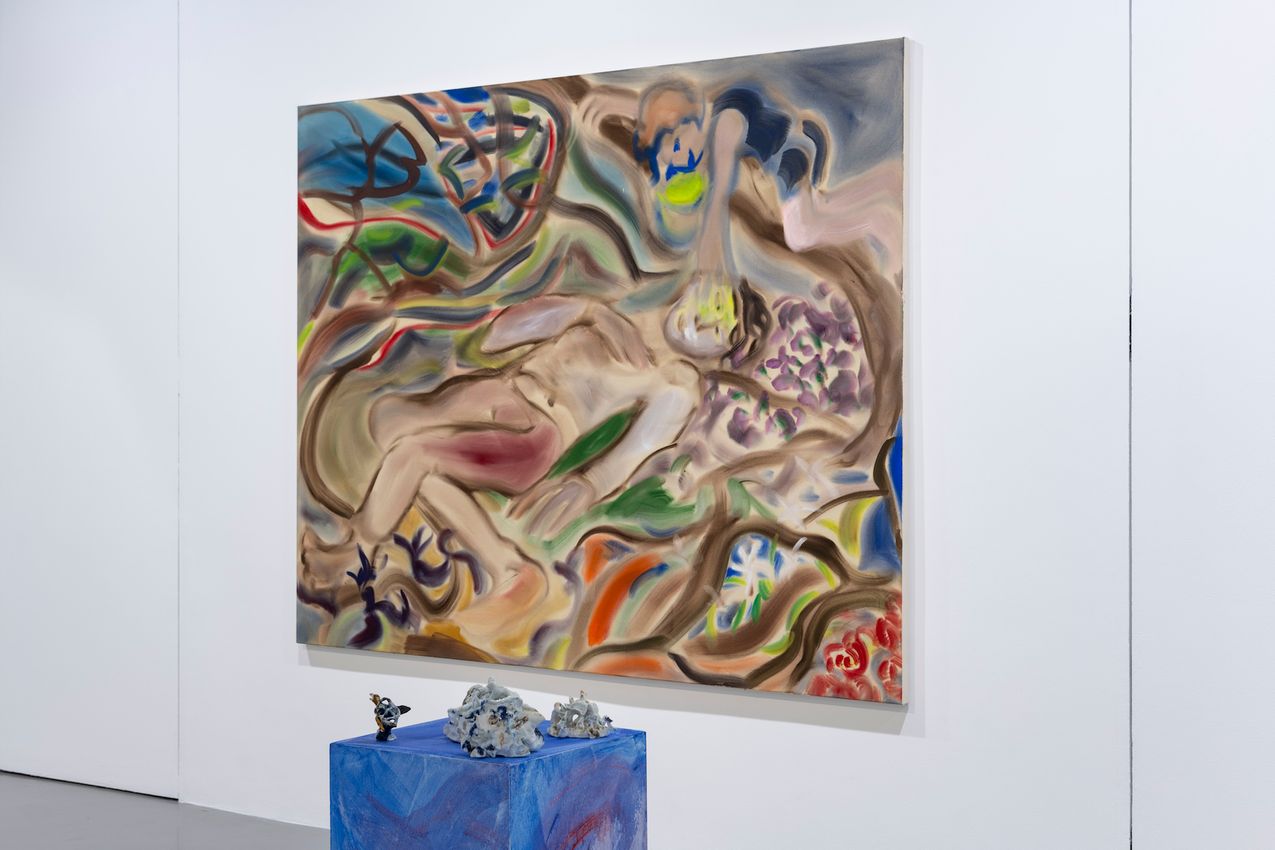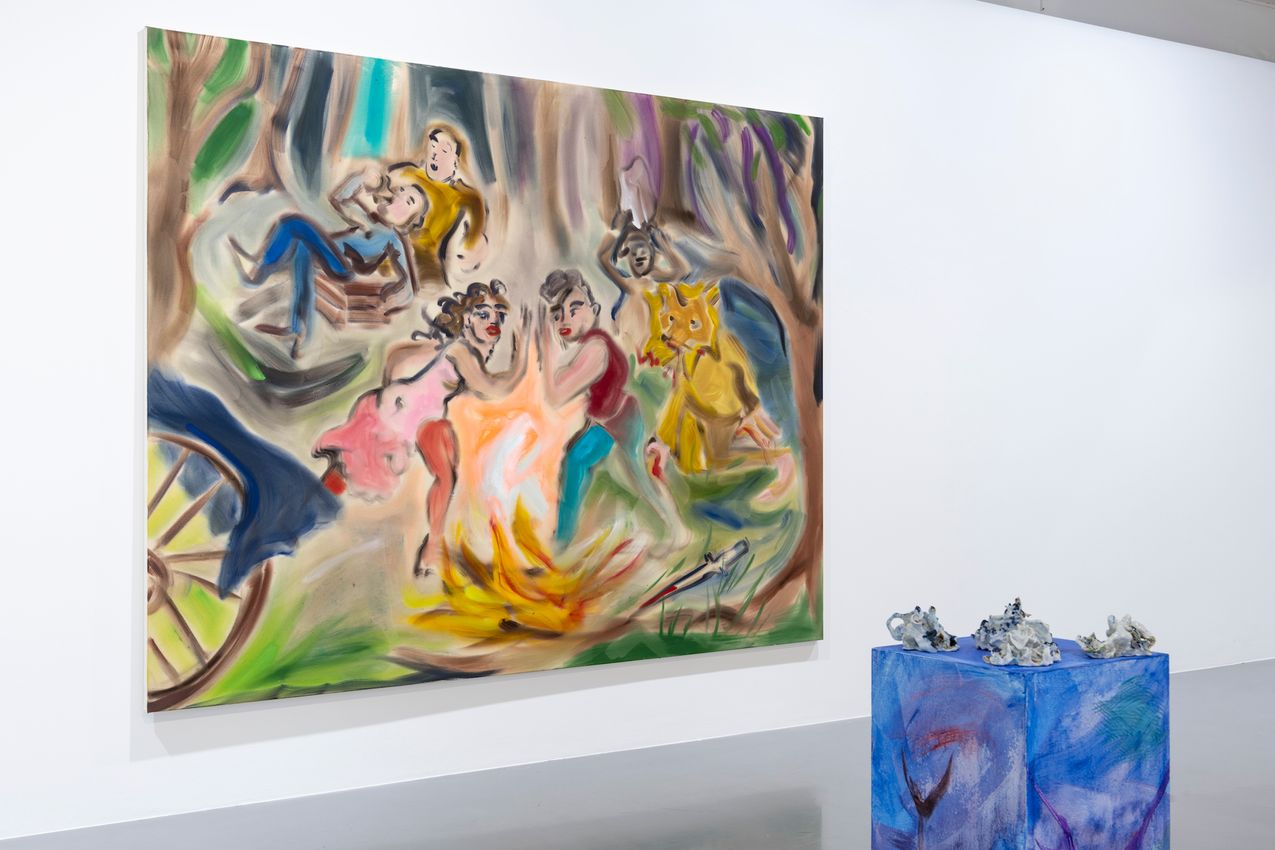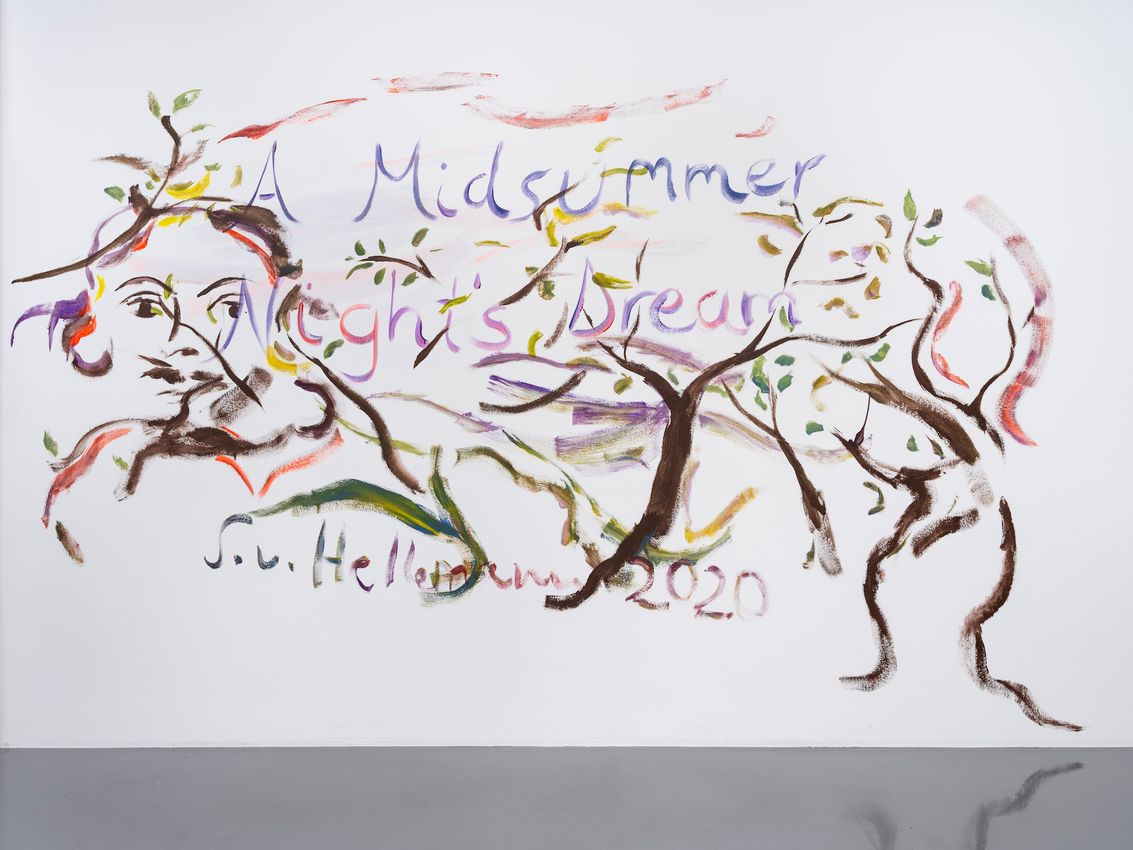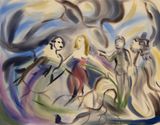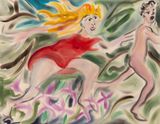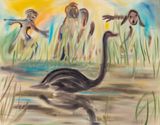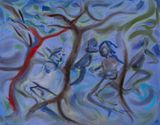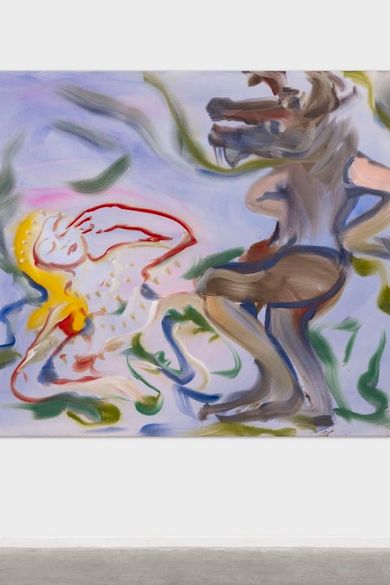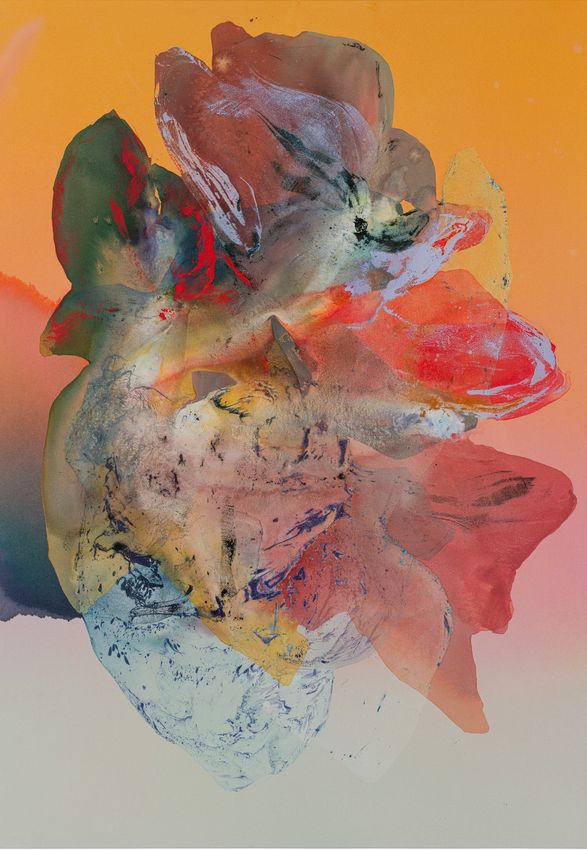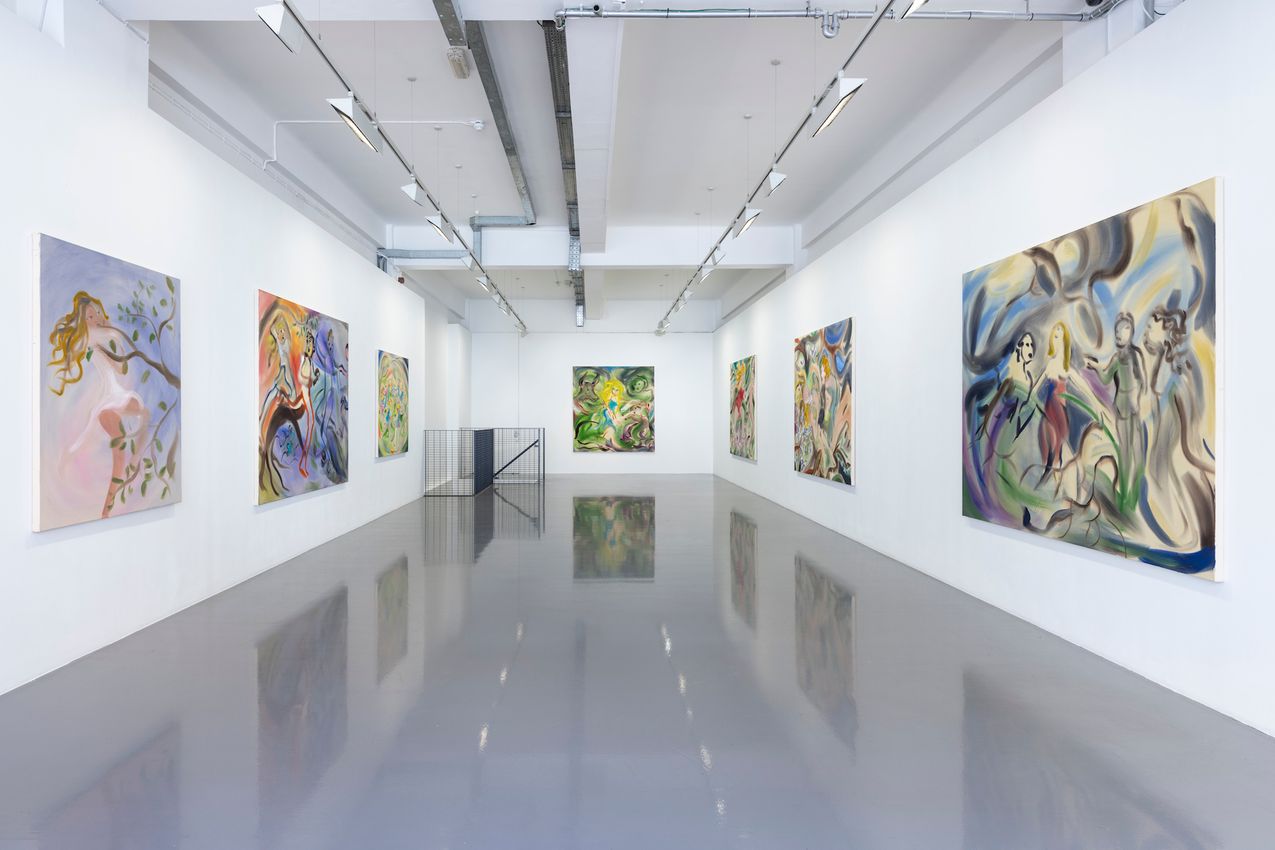
Sophie von Hellermann‘s paintings originate as projections of her imagination. A small kernel into her mind which is blown up onto a large canvas. These projections become a background for a shadow dance where something that is conjured comes into existence. In A Midsummer Night’s Dream we are invited into a series of imaginary vignettes that are inspired by the foibles of wonderment and love. The series was completed amidst the dreamlike experience of her lockdown in the English countryside. Von Hellermann felt a sense of urgency to paint during this period of global sickness and isolation and sickness The parallels between her experience of sleeping, resting and madness and Shakespeare’s play lead Von Hellermann to be inspired by the environment that surrounded her; the woods amidst the dew drops on the sweetly scented flowers, the joy of spring and summer at the same time as this period of uncertainty and death.
As with Shakespeare’s play, von Hellermann’s process confronts the struggle between reality and imagination. The dialectical problem she faces each time she paints. Applying ancient pigments in large swathing brushstrokes directly to the canvas at an accelerated pace means that once the painting is finished she is catching up to reality. Her concept of time is absent as she is determined by the hope that her projection of this future reality will come to life instantaneously. This sense of immediacy between the working of the mind and the hands imbues her work with a sense of weightlessness and fleeting romanticism that allude to the frenzy of love. Bursts of colour and evanescent movement heighten the drama within each scene, whilst the characters chase each other between frames, toying with linear time. Summer reverie reigns, entrancing us into the land of the fairies.

Sophie von Hellermann’s paintings recall the look of fables, legends, and traditional stories that are imbued with the workings of her subconscious rather than the content of existing images. Her romantic, pastel-washed canvases are often installed to suggest complex narrative threads. Von Hellermann applies pure pigment directly onto unprimed canvas, her use of broad-brushed washes imbues a sense of weightlessness to her pictures. Von Hellermann’s paintings draw upon current affairs as often and as fluidly as they borrow from the imagery of classical mythology and literature to create expansive imaginary places. In subject matter and style, von Hellermann tests imagination against reality.

A respected voice in contemporary art discourse.
Focusing on ambitious storytelling and insightful art-world commentary. Ocula Magazine publishes in-depth interviews, critical essays and timely analysis on the artists, exhibitions and ideas driving the global art world.
Learn more about Ocula Magazine
Showcasing the best of the art world.
Ocula partners with galleries from around the world to highlight their artists, artworks and exhibitions. Gallery membership is by application and invitation, with each member vetted by an independent panel.
Learn more about Ocula Membership

Specialises in the sale of major artworks.
Led by a team with deep ties to the world’s leading auction houses, galleries and collectors. Ocula’s advisory team offers bespoke services to high-net-worth clients from around the world who are looking to acquire the best of contemporary and modern art.
Learn more about our team and services