




MATT MULLICAN
b. 1951, United StatesAmerican artist Matt Mullican has spent the past several decades searching for universalities from which to make sense of the world. Interested in semiotics and the nature of perception, Mullican’s prolific four-decade output comprises drawing, performance, sculpture, painting, film, and installation.
Early Works
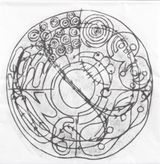
Mullican was born in Santa Monica to artists Lee Mullican and Luchita Hurtado in 1951, and studied under John Baldessari at CalArts in the early 1970s. Since then, he has been structuring his thoughts through lexicons, invented symbols, cosmological drawings, and expansive organisational charts.
Mullican is associated with the Pictures Generation, who came of age in America in the 1970s and engaged with media culture of the time. In 2009, his work was featured alongside those of his contemporaries Cindy Sherman, Sherrie Levine, Jack Goldstein, Barbara Kruger, and Richard Prince, among others, in the survey exhibition The Pictures Generation at the Metropolitan Museum of Art, New York.
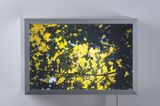
In the 1980s, Mullican began drawing elaborate maps of a fictitious city, partnering with a Hollywood IT company to render the metropolis in the virtual reality production, The Computer Project (1986–1990), and a series of light boxes, Untitled (1989).
Colour and Themes
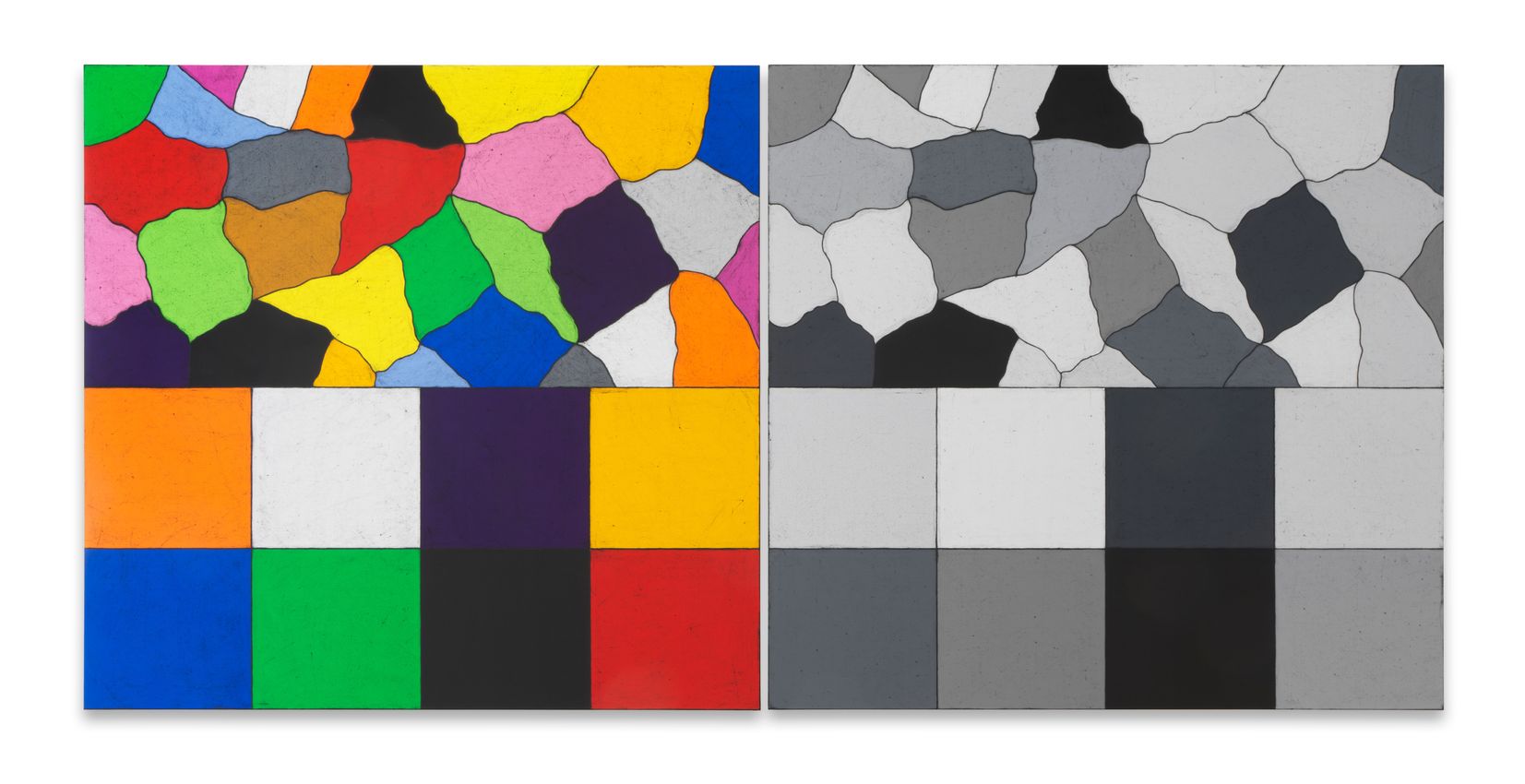
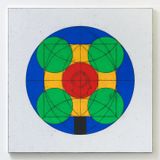
One recurring system in Mullican’s oeuvre relies on colour to denote five ‘worlds’: the material world (green), everyday life (blue), culture and science (yellow), language (black and white), and subjective experience (red). Mullican’s book, the limited edition 88 Maps (2010), collects forty years of the artist’s personal symbologies and organisational systems, structured through his base colours of red, blue, yellow, and green, One of his most well-known motifs features an ageless, genderless stick-figure alter ego dubbed ‘Glen’, whom Mullican developed to represent both himself and the generic ideal of an artist. First appearing in drawings in the 1970s, Glen still appears in Mullican’s work to this day.
Occasionally, Mullican touches upon darker themes such as death, despair, and isolation. Drawing on his interest in psychic forces, Mullican regularly engages with themes of transcendence and exploring the subconscious. In the early 1970s, he began experimenting with hypnosis as a means to gain access to his inner self, putting himself under a trance in front of an audience and keeping a ‘travel diary’ of his experiences from which to draw inspiration for later works.
Exhibitions
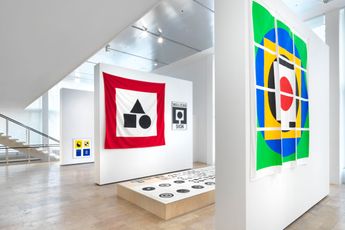
Much like his organisation of ideas, Mullican’s exhibitions are often dense and labyrinthine. The Feeling of Things, a 2018 survey at Pirelli Hangar Bicocca Museum in Milan, contained 6000 works, including enormous flags draped from the ceiling, and paintings and drawings arranged on every available surface. Similarly, Mullican’s 2019 Between Sign and Subject at de Young Museum in San Francisco included a substantial arrangement of light boxes, flags, bulletin boards, and a floor-to-ceiling collection of rubbings.
Selected solo exhibitions include Matt Mullican: Representing the Five Worlds - 50 Years of Work, Mai 36, Zurich (2020); That Person and That World, The Kitchen, New York (2016); Between, Capitain Petzel, Berlin (2016); Vom Ordnen der Welt, Haus der Kunst, Munich (2011); Combination of the Two, Karsten Schubert London (2008); Barbara Gladstone Gallery, New York (1992); Projects: Matt Mullican, Museum of Modern Art, New York (1989).
Mullican’s work has also been featured in group exhibitions including The Botanical Mind: Art, Mysticism and The Cosmic Tree, Camden Arts Centre, London (2020); Where Art Might Happen, The Early Years of CalArts, Kunsthaus Graz, Austria, and Kestnergesellschaft, Hanover, Germany (2019); Outliers and American Vanguard Art, Los Angeles County Museum of Art (2019); Skulptur Projekte, Münster, Germany (2017); The Bottom Line, SMAK, Gent (2015); Wall Works, Hamburger Bahnhof - Museum für Gegenwart, Berlin (2013); Map the 21st Century, Serpentine Gallery, London (2010).
Mullican lives and works in Berlin and New York.
Elliat Albrecht










Explore and Follow Artists Shaping Contemporary Art
A respected voice in contemporary art discourse.
Focusing on ambitious storytelling and insightful art-world commentary. Ocula Magazine publishes in-depth interviews, critical essays and timely analysis on the artists, exhibitions and ideas driving the global art world.
Learn more about Ocula Magazine
Showcasing the best of the art world.
Ocula partners with galleries from around the world to highlight their artists, artworks and exhibitions. Gallery membership is by application and invitation, with each member vetted by an independent panel.
Learn more about Ocula Membership
Specialises in the sale of major artworks.
Led by a team with deep ties to the world’s leading auction houses, galleries and collectors. Ocula’s advisory team offers bespoke services to high-net-worth clients from around the world who are looking to acquire the best of contemporary and modern art.
Learn more about our team and services