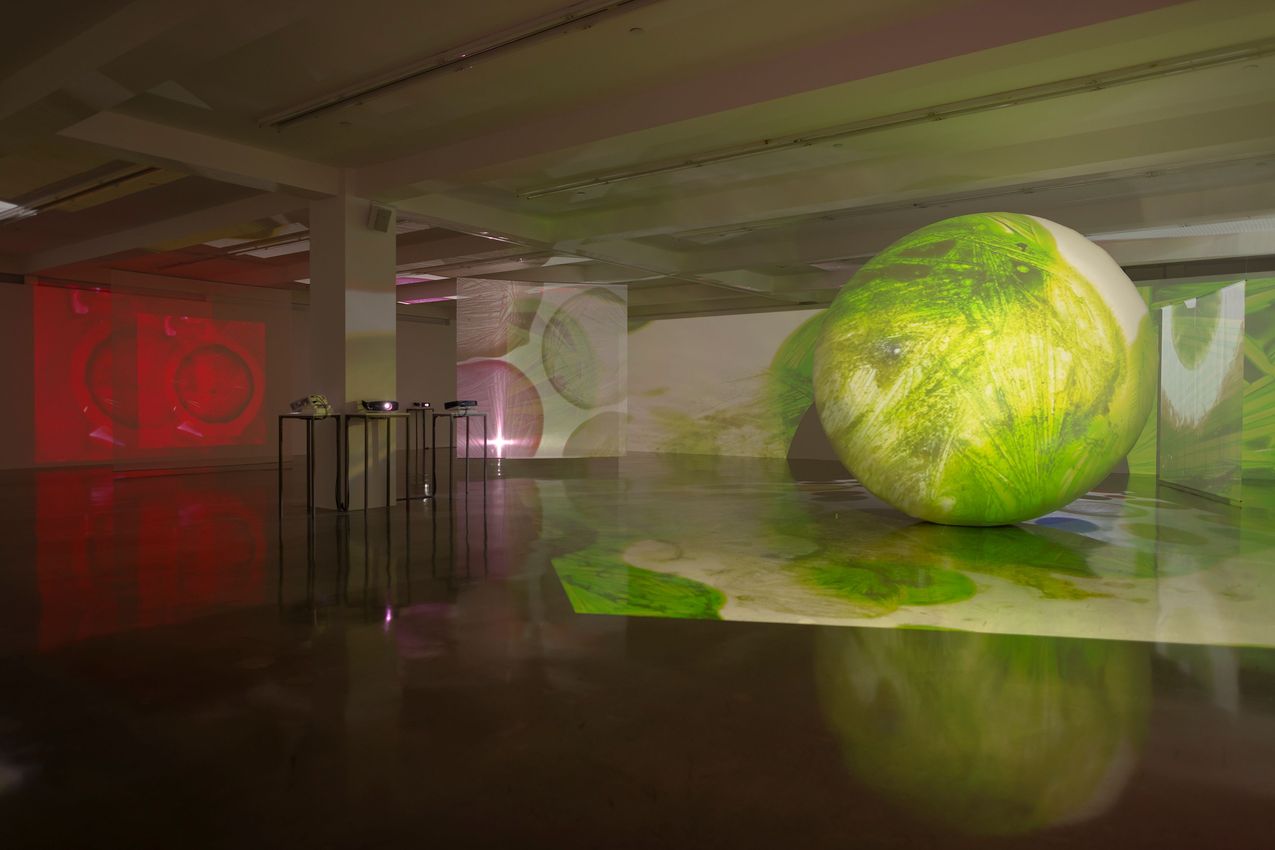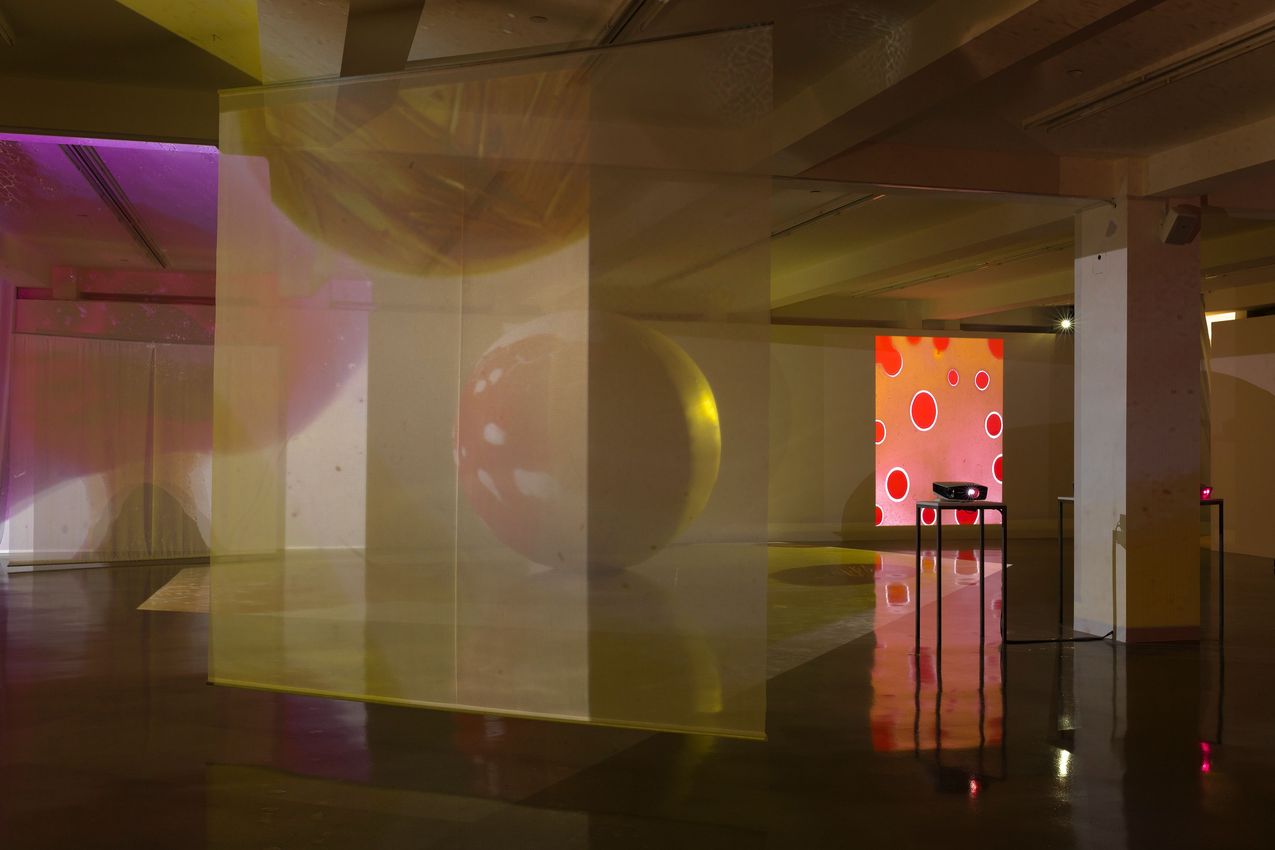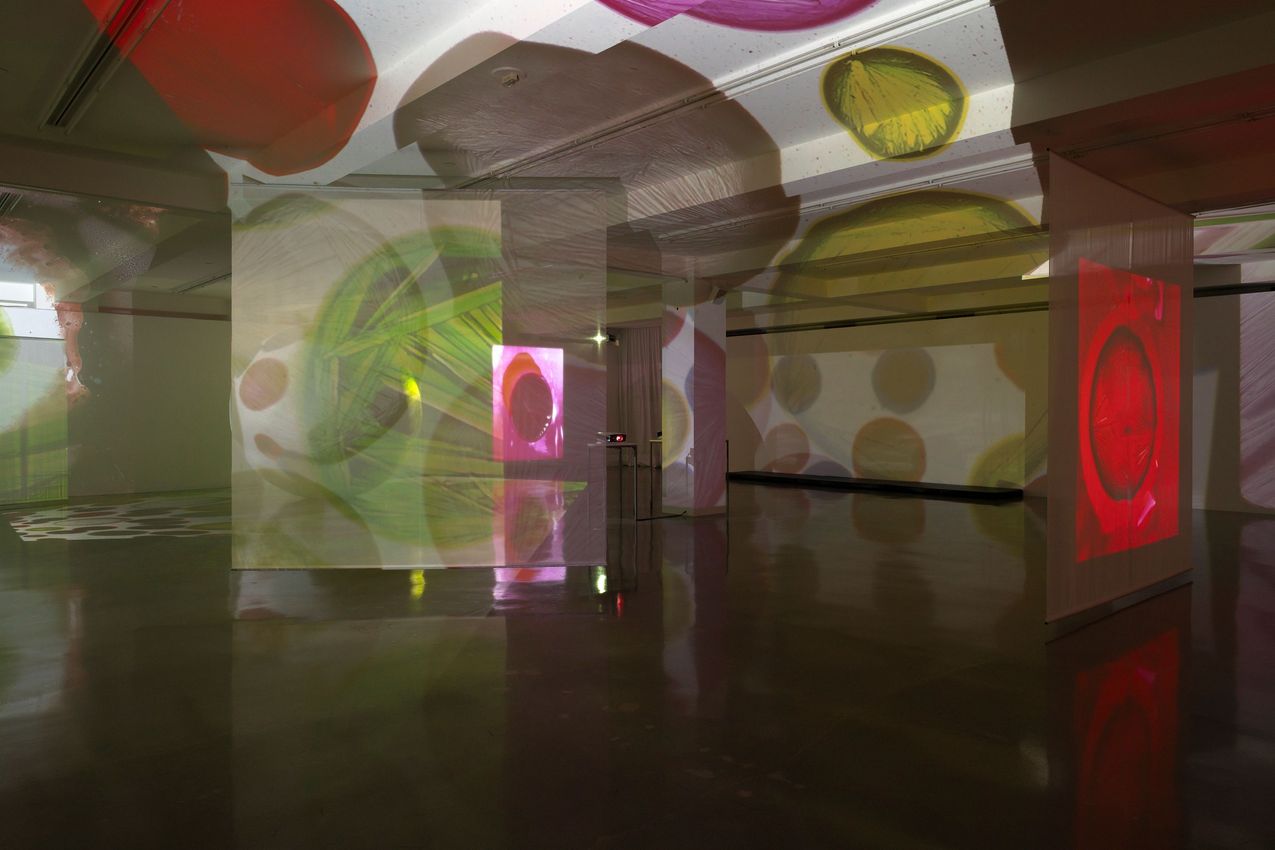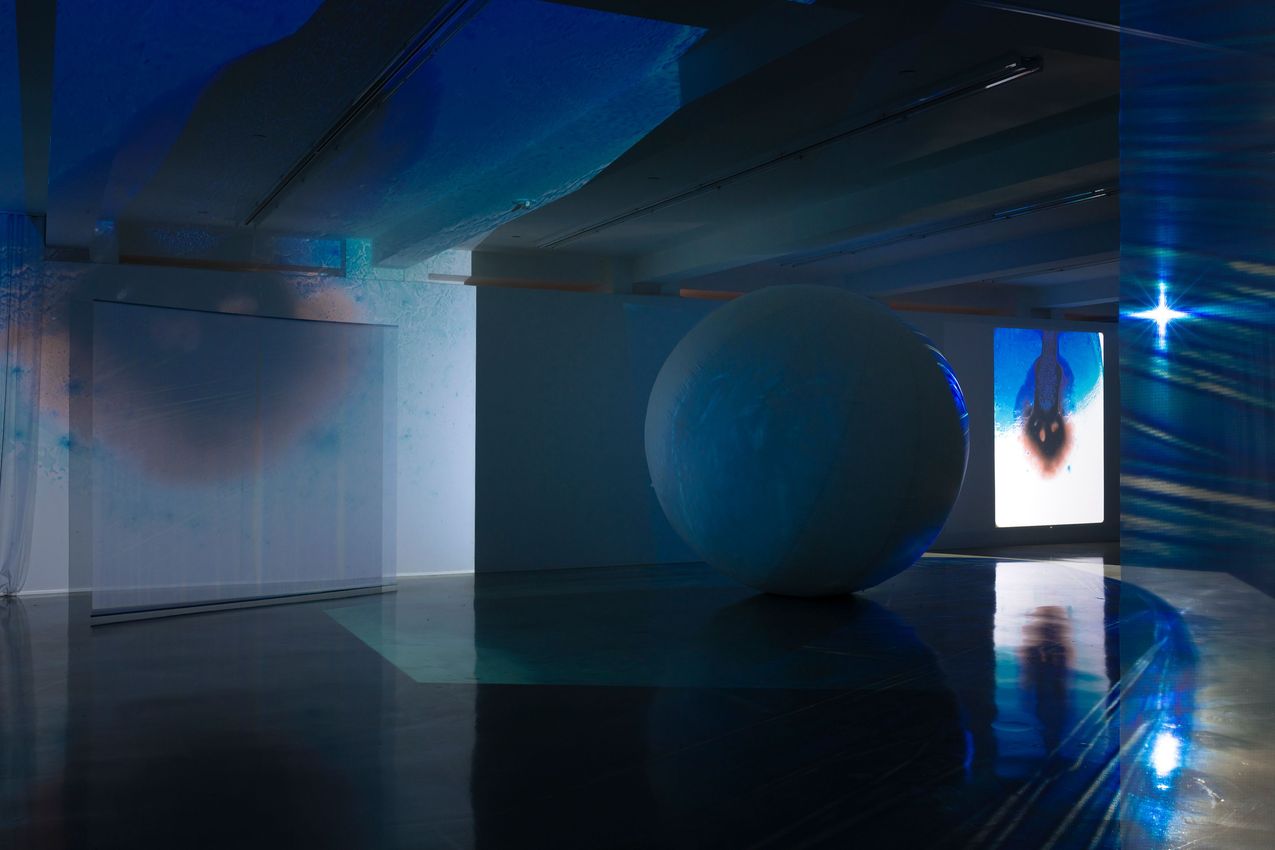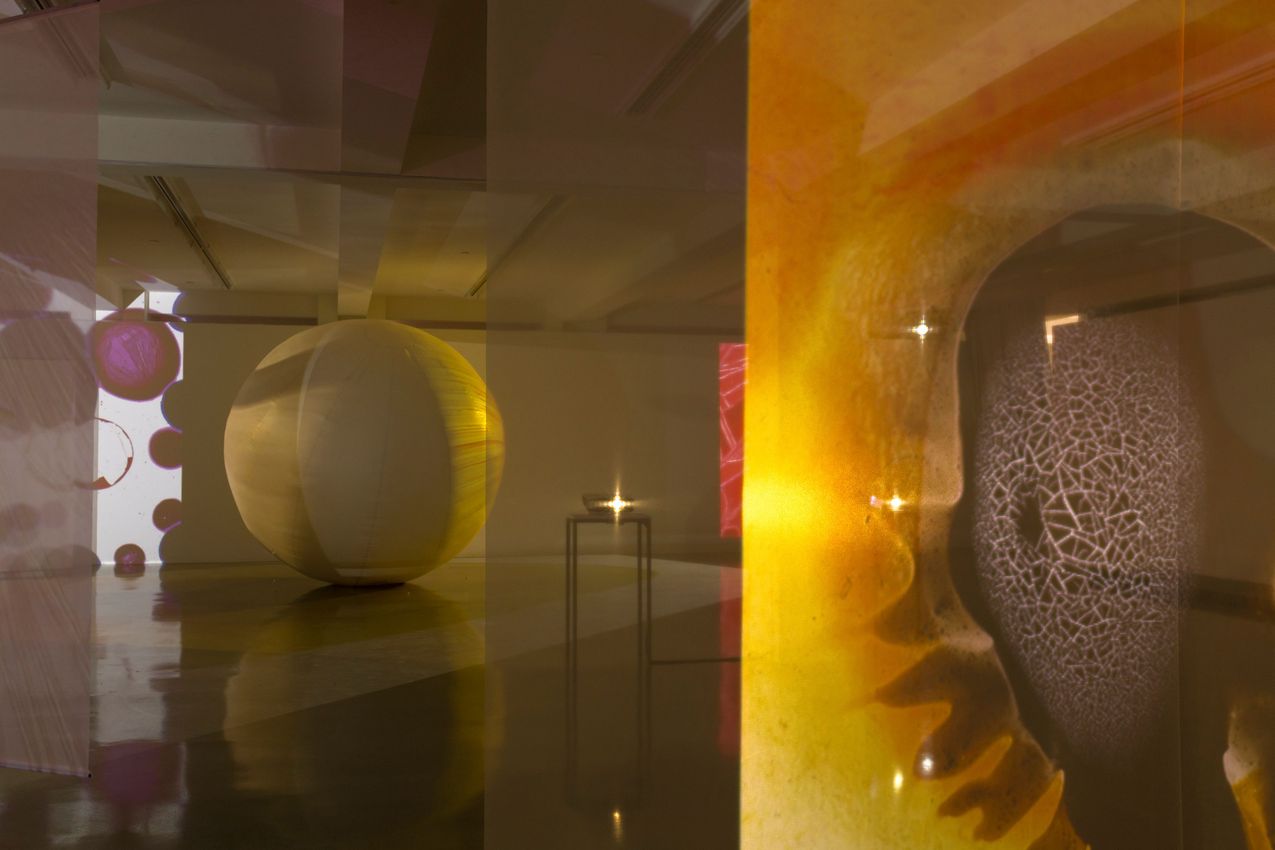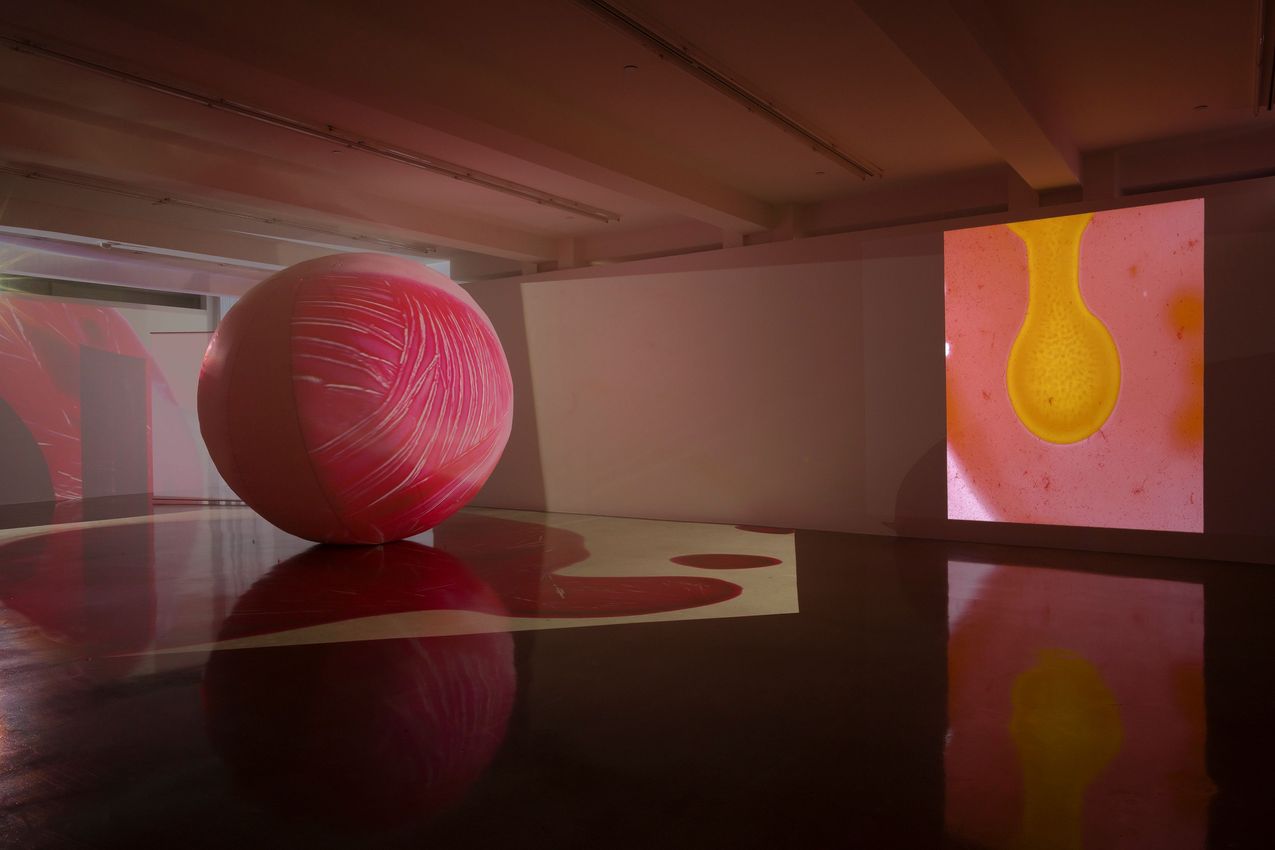
Otto Piene (1928–2014), cofounder of the ZERO group and longtime director of MIT’sinfluential Center for Advanced Visual Studies, combined art and technology in works thatcomprised light rooms, inflatable sculptures, ceramics, drawings, paintings andperformances. Colorful and dynamic, they consistently engage the viewer’s perceptionand participation. Monika Sprüth and Philomene Magers are pleased to present Piene’smonumental, immersive installation The Proliferation of the Sun (1967/2014) at the LosAngeles gallery, marking the artist’s first solo presentation on the West Coast. Featuringseven digital projections of hand-painted slides and a soundtrack of the artist’s voicedirecting them, the work envelops visitors and the gallery in shifting prismatic tones thatgenerate, in Piene’s words, a ‘poetic journey through space.’
Particularly fascinated by the medium of light, Piene spent his entire career experimentingwith it. The Proliferation of the Sun was originally conceived as a multi-slide projection andperformance in 1966–67 for the opening of Piene and Aldo Tambolini’s Black Gate Theatrein New York. Five projectionists operated Kodak carousel slide projectors, followingPiene’s scripted narration, which began by telling the performers to ‘turn your projectorson now.’ Against the backdrop of the era’s spread of nuclear weapons, the workcountered the destructive powers of war with an abstract, peaceful visual world.
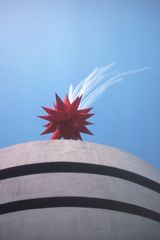
The current restaging at the gallery accords with the final iteration of The Proliferation ofthe Sun, devised by Piene as the centerpiece of his 2014 retrospective at the NeueNationalgalerie Berlin. Completed only shortly before his death, the installation isreminiscent of the original performances of the 1960s and updated with automatedprojectors showing digital copies of the original glass slides. Piene completed the work byadding 160 new slides painted especially for the Berlin staging. These were also digitizedand projected onto a large inflatable sphere, inspired by the work’s 1967 presentation atArt Intermedia gallery in Cologne. The integration of new technologies reflected Piene’skeen interest in innovation and made possible his initial imagining of the work as a largescale somatic experience. Later in 2014, during the first major survey of ZERO in a USmuseum, the reinterpretation of The Proliferation of the Sun was projected onto a balloon and suspended in the rotunda of the Solomon R. Guggenheim Museum as a tribute to thelate artist.
The slides display vividly coloured organic forms, recalling fractals, planets, and cellsreproducing under a microscope, evoking the sun’s vibrance and life-giving energy. Inbetween, perfectly round black dots resembling eclipses materialize. With increasingspeed, the images change to the droning soundtrack of the artist’s voice uttering ‘Thesun, the sun, the sun, the sun’—a sort of ritualistic chant that vibrates through the spaceand anchors audiences in the present moment. Simultaneously, we are transported backto the time of the original performances as younger Piene’s voice rings out.
As the slides end, the space becomes bathed in pure white light while Piene intones ‘white-out, white-out, white-out.’ Possibly playing on its counterpart, the blackout, whichplunged cities into darkness during wartime as lights were turned off to make targets lessvisible to the enemy, or the fade of theatre lights to mark a play’s end, Piene surprisesviewers with a bright glaring light. Making the colour white tangible, this section of theprojection taps into Western ideas of purity and emptiness and the new beginningsassociated with them, referencing ZERO’s symbolic indication of beginning at nothing.Uniting art, life, nature and technology, The Proliferation of the Sun functions as a meansof expansion, breaking down spatial boundaries and opening up space for contemplationand new forms of perception.
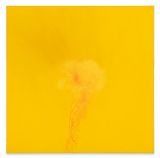
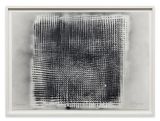
A founder of the 1960s Dusseldorf-based Group Zero, Otto Piene is best known for his paintings made with smoke and fire. Called Rauchbilder (smoke pictures), Piene applied solvent to pigmented paper and lit it on fire, developing images in the residual soot. Piene also created outdoor figures made from smoke that floated overhead—what he coined as Sky Art—including Olympic Rainbow, a project created for the ill-fated 1972 Summer Olympics in Munich. For nearly 20 years, Piene served as the director of the Center for Advanced Visual Studies at the Massachusetts Institute of Technology, and in 2008, with Heinz Mack and Mattijs Visser, he co-founded the International ZERO Foundation to archive documents, projects, and images produced by the famous Dusseldorf collective.


Sprüth Magers has expanded from its roots in Cologne (Germany) to become an international gallery dedicated to exhibiting the very best in groundbreaking modern and contemporary art. With galleries located in Berlin Mitte, London’s Mayfair and the Miracle Mile in Los Angeles–as well as an office in Cologne and an outpost in Hong Kong–Sprüth Magers retains close ties with the studios and communities of the German and American artists who form the core of its roster.

A respected voice in contemporary art discourse.
Focusing on ambitious storytelling and insightful art-world commentary. Ocula Magazine publishes in-depth interviews, critical essays and timely analysis on the artists, exhibitions and ideas driving the global art world.
Learn more about Ocula Magazine
Showcasing the best of the art world.
Ocula partners with galleries from around the world to highlight their artists, artworks and exhibitions. Gallery membership is by application and invitation, with each member vetted by an independent panel.
Learn more about Ocula Membership

Specialises in the sale of major artworks.
Led by a team with deep ties to the world’s leading auction houses, galleries and collectors. Ocula’s advisory team offers bespoke services to high-net-worth clients from around the world who are looking to acquire the best of contemporary and modern art.
Learn more about our team and services