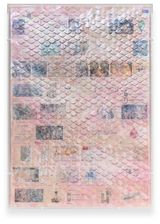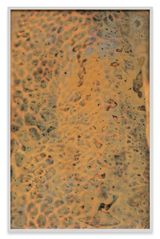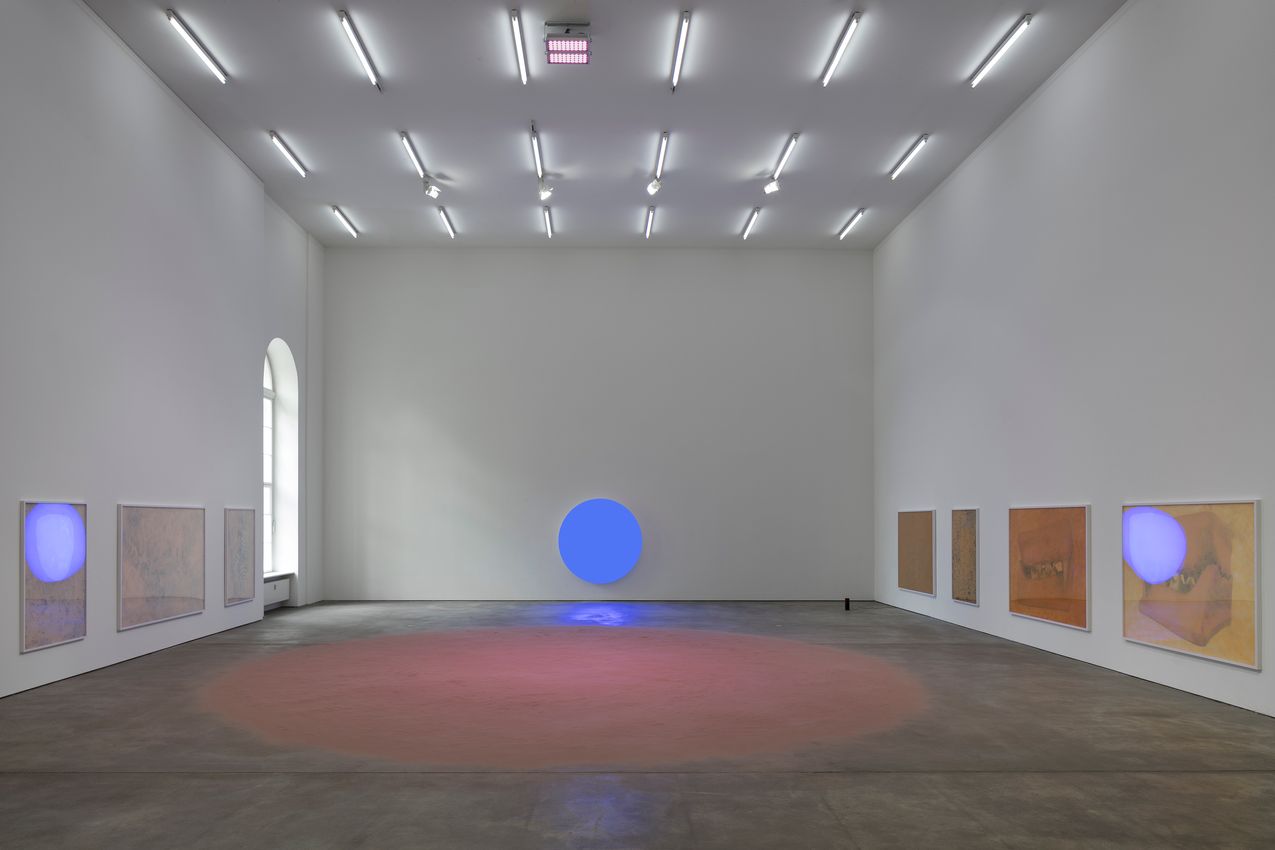
Pamela Rosenkranz investigates the meaning of human nature in the contemporary world. Her artistic research references various fields of knowledge — from medicine, religion and philosophy, to art and marketing. These references are aimed at questioning the way we see and perceive things, and at exploring the way the elements, advertising, and culture influence our identity. Working with a variety of media, sometimes in unusual pairings, that range from branded water bottles to Amazon Echo speakers, materials including pigments and pheromones, neuro-active microbes and parasites, colors and scents, she addresses the shifting meanings of the ‘natural’ and the ‘human’ in the Anthropocene age. Her persistence as to the ‘naturalness’ of seemingly unnatural materials evaporates the foundational distinction between ‘organic’ and ‘synthetic’.
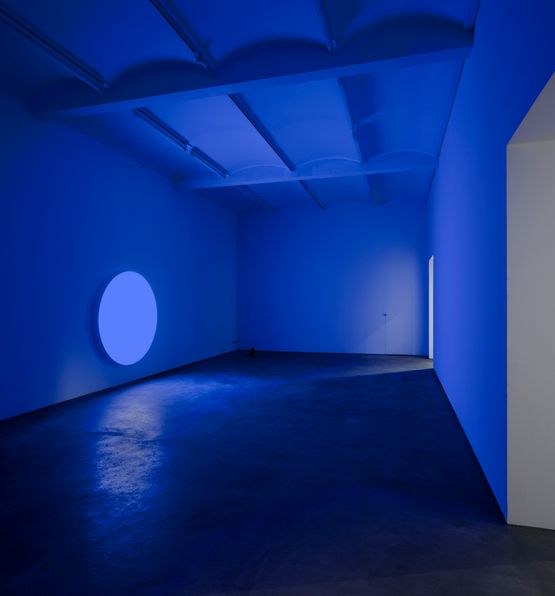
The color blue has been one of the primary factors in Rosenkranz’ investigations. The ability to perceive blue was developed at a pre-evolutionary stage when life forms existed solely underwater, and humans remain more sensitive to it than any other color. ‘Our vision, like our other sense organs, is not abstract, but is very much influenced and shaped by the long natural history of the species that preceded humankind,’ Rosenkranz notes.
Recently the artist has started working with backlit imageless screens, creating immersive environments that invoke an artificial version of the high noon sky-blue, RGB, that permeates our screens and washes ubiquitously over the Internet. It generates a simultaneously cerebral and spiritual experience, that transcends the physical quality of the color. The sensual experience is also contested by the artist’s constitutive vision: how are our existential feelings, our behaviors, our sexual attraction and, ultimately, our reception of art, altered by neuro-active matter of the ‘beyond’ that is yet to be breached?
Pamela Rosenkranz (*1979 in Uri, Switzerland) lives and works in Zurich. She completed studies at the Academy of Fine Arts, Bern (2004) and the University of Zurich (2005). In 2011 she undertook an Independent Residency at the Rijksakademie, Amsterdam. Selected solo shows include GAMeC Bergano, Bergamo (2017, upcoming); Slight Agitation 2/4, Cisterna, Fondazione Prada, Milan (2017); Our Product, Swiss Pavillion, 56th Venice Biennale, Venice (2015); Swiss Institute, New York (2011); Centre d’Art Contemporain, Geneva (2010); Swiss Institute, Venice (2009). Recent group shows and installations include Künstlerräme, K21, Dusseldorf; The Garden, ARoS Museum of Modern Art, Aarhus; Boros Collection, Berlin; Carpenter Center at Harvard, Cambridge (all 2017, upcoming); Art Unlimited, Art Basel, Basel; Wirikuta (Mexican Time-Slip), Museo Espacio, Aguascalientes, Mexico; 13th Triennale Kleinplastik Fellbach, Fellbach; Dreaming Mirrors Deaming Screens, Sprüth Magers, Berlin (all 2016); No Man’s Land, Rubell Family Collection, Miami (2015); Taipei Biennale, Taipei, Taiwan; Blue Times, Kunsthalle Wien, Vienna (both 2014); Expo 1: New York, MoMA PS1, New York; Think First, Shoot Later, Museum of Contemporary Art, Chicago (2013);How to Work (More for) Less, Kunsthalle Basel, Basel (2011); The Real Thing, Tate Britain, London (2010).
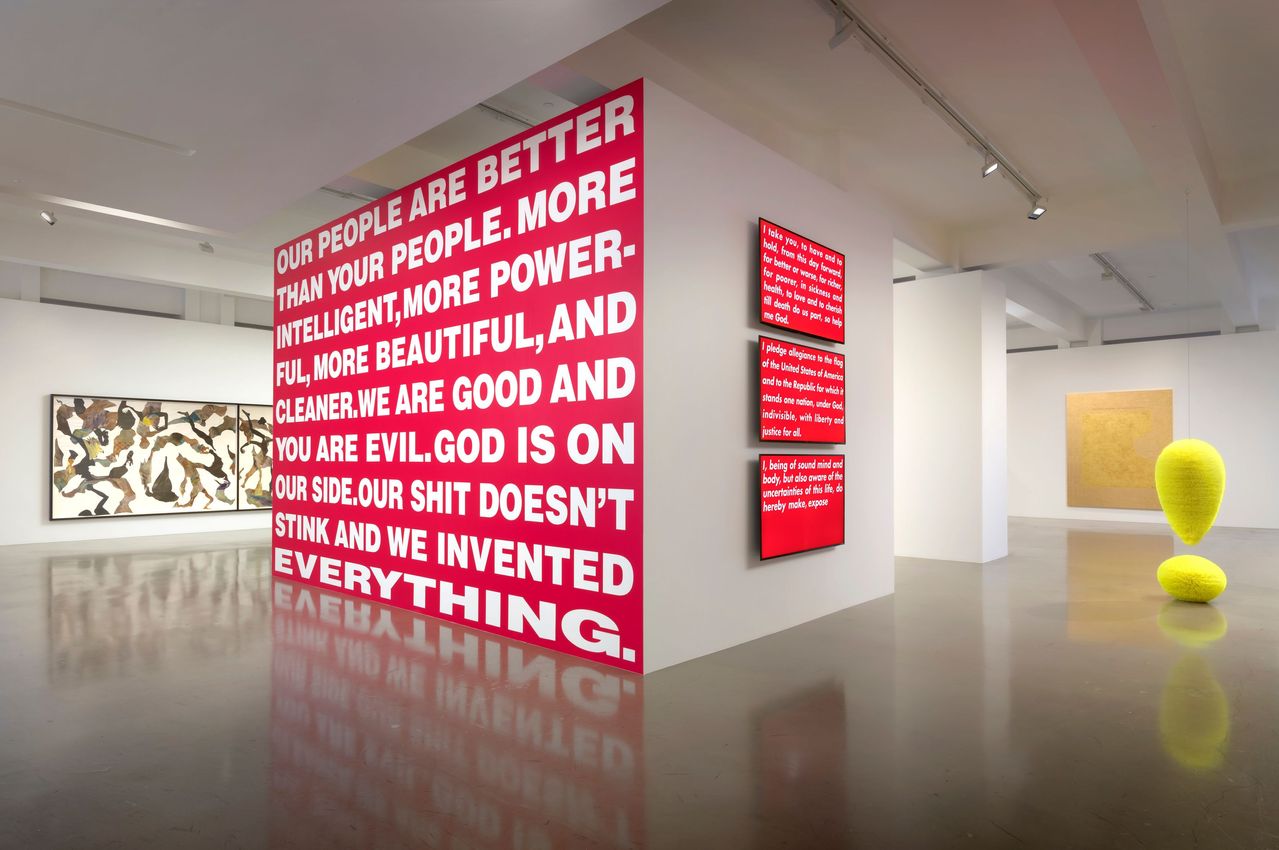
The Berlin gallery is concurrently presenting solo exhibitions by Otto Piene and Lucy Dodd.

Pamela Rosenkranz (Uri, Switzerland) lives and works in Zurich. She has held solo exhibitions at institutions including GAMeC, Bergamo (upcoming); Cisterna, Fondazione Prada, Milan (both 2017); the Swiss Pavilion at 56th International Art Exhibition, Venice Biennale (2015); Kunsthalle Basel (2012); Centre d’Art Contemporain, Geneva (2010); Swiss Institute, Venice (2009). Selected group exhibitions include The Garden, Aros Museum of Modern Art, Aarhus, (2017); Wirkuta (Mexican Time-Slip), Museo Espacio, Aguascalientes, Mexico; Dreaming Mirrors Dreaming Screens, Sprüth Magers, Berlin (all 2016); No Man’s Land: Women Artists from the Rubell Family Collection, Rubell Family Collection, Miami (2015); Inhuman, Fridericianum, Kassel (2014); Think First, Shoot Later: Photograhy from the MCA Collection, Museum of Contemporary Art, Chicago; and EXPO1: New York, MOMA PS1, New York, (both 2013).
Sprüth Magers has expanded from its roots in Cologne (Germany) to become an international gallery dedicated to exhibiting the very best in groundbreaking modern and contemporary art. With galleries located in Berlin Mitte, London’s Mayfair and the Miracle Mile in Los Angeles–as well as an office in Cologne and an outpost in Hong Kong–Sprüth Magers retains close ties with the studios and communities of the German and American artists who form the core of its roster.

A respected voice in contemporary art discourse.
Focusing on ambitious storytelling and insightful art-world commentary. Ocula Magazine publishes in-depth interviews, critical essays and timely analysis on the artists, exhibitions and ideas driving the global art world.
Learn more about Ocula Magazine
Showcasing the best of the art world.
Ocula partners with galleries from around the world to highlight their artists, artworks and exhibitions. Gallery membership is by application and invitation, with each member vetted by an independent panel.
Learn more about Ocula Membership

Specialises in the sale of major artworks.
Led by a team with deep ties to the world’s leading auction houses, galleries and collectors. Ocula’s advisory team offers bespoke services to high-net-worth clients from around the world who are looking to acquire the best of contemporary and modern art.
Learn more about our team and services