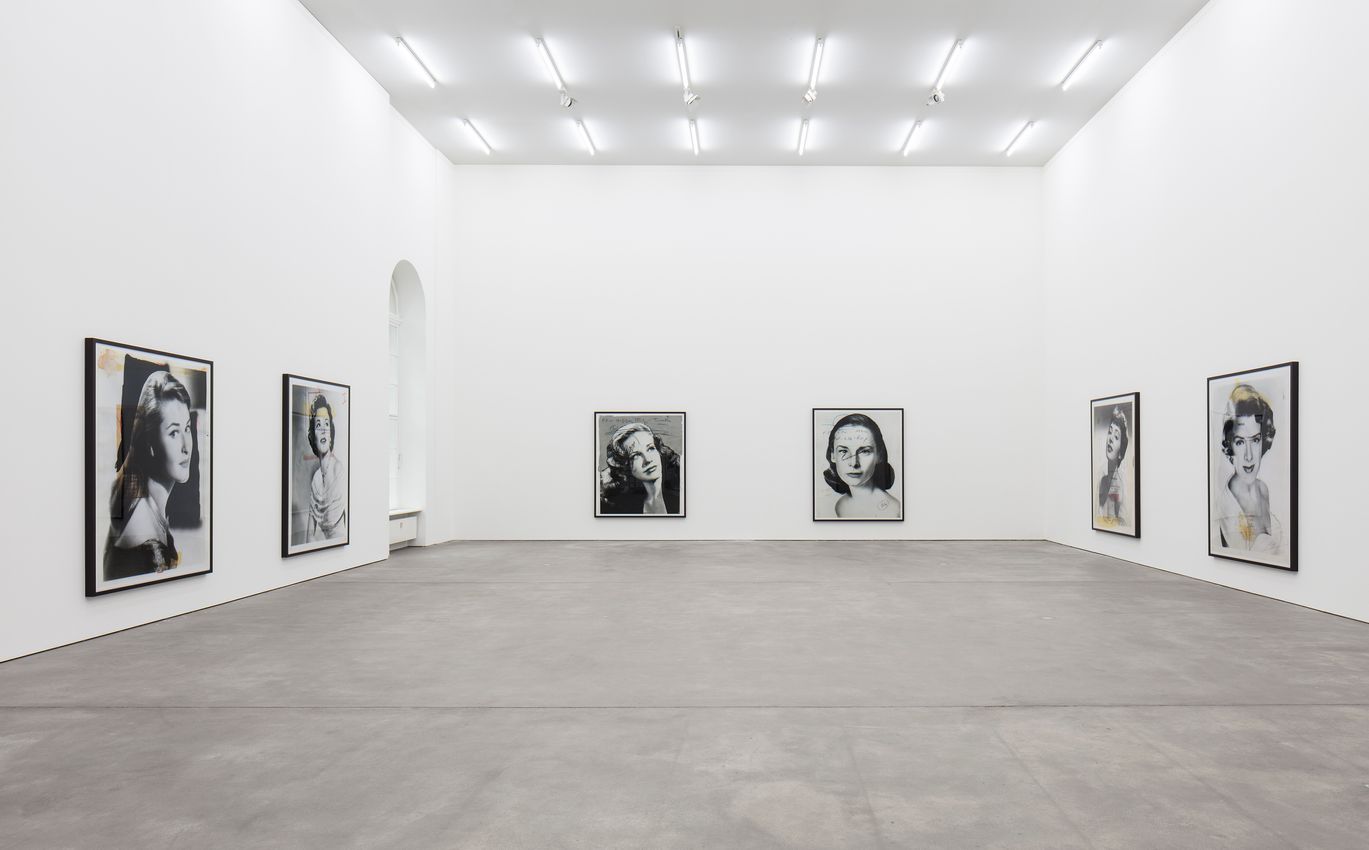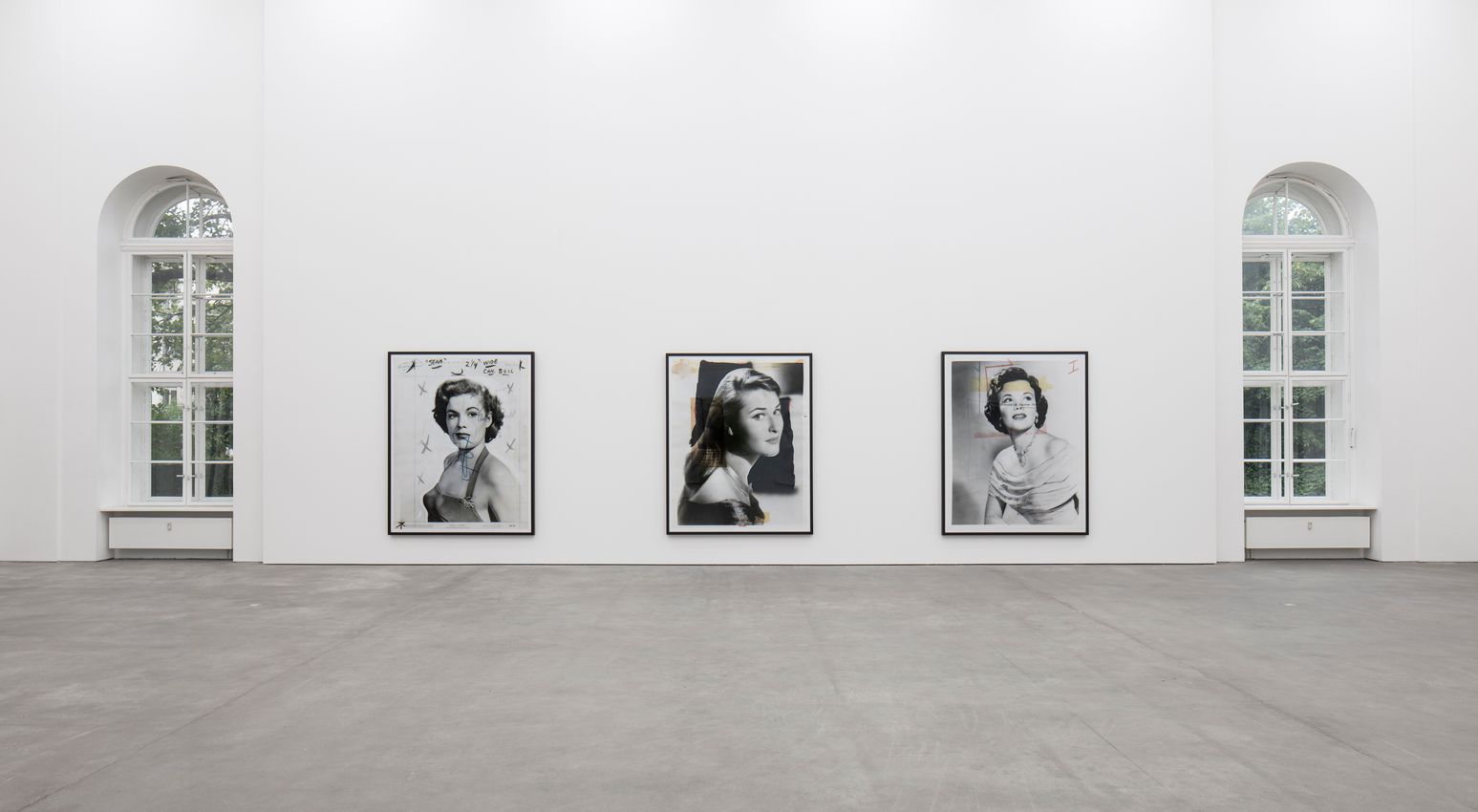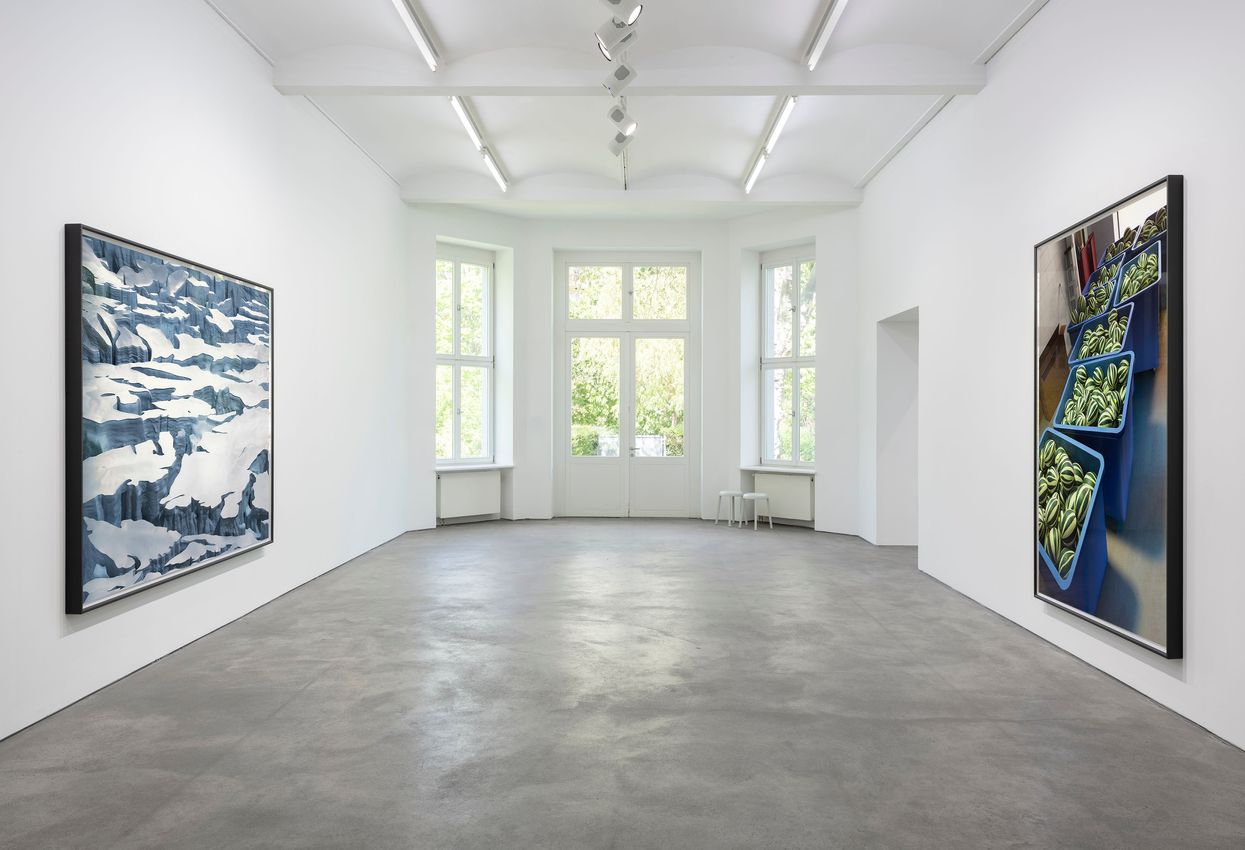
Sprüth Magers is pleased to present Thomas Ruff’s first exhibition at the gallery with works from his latest press++ series, all of which are exhibited here for the first time. In a multi-faceted practice that examines the ever-changing possibilities of photography, Ruff’s investigations into visual and cultural phenomena are indebted to an interest in how technology makes us see. This is evident in his vast array of subjects and methods, from portraiture and astronomical documentation to photograms and digital abstractions created by algorithms.
Images that have been published in American newspapers and magazines from the 1920s to 1970s are Ruff’s source material for his press++ series, images that in themselves have even more diverse archival origins; the police, NASA, press agencies and press departments of institutions, to name a few. From the 1930s onwards, most of the photographs were no longer sent by mail from the press agency to the newspapers but instead sent as a wire and were then printed out by the newspaper, therefore showing the structure of the wire transmission.
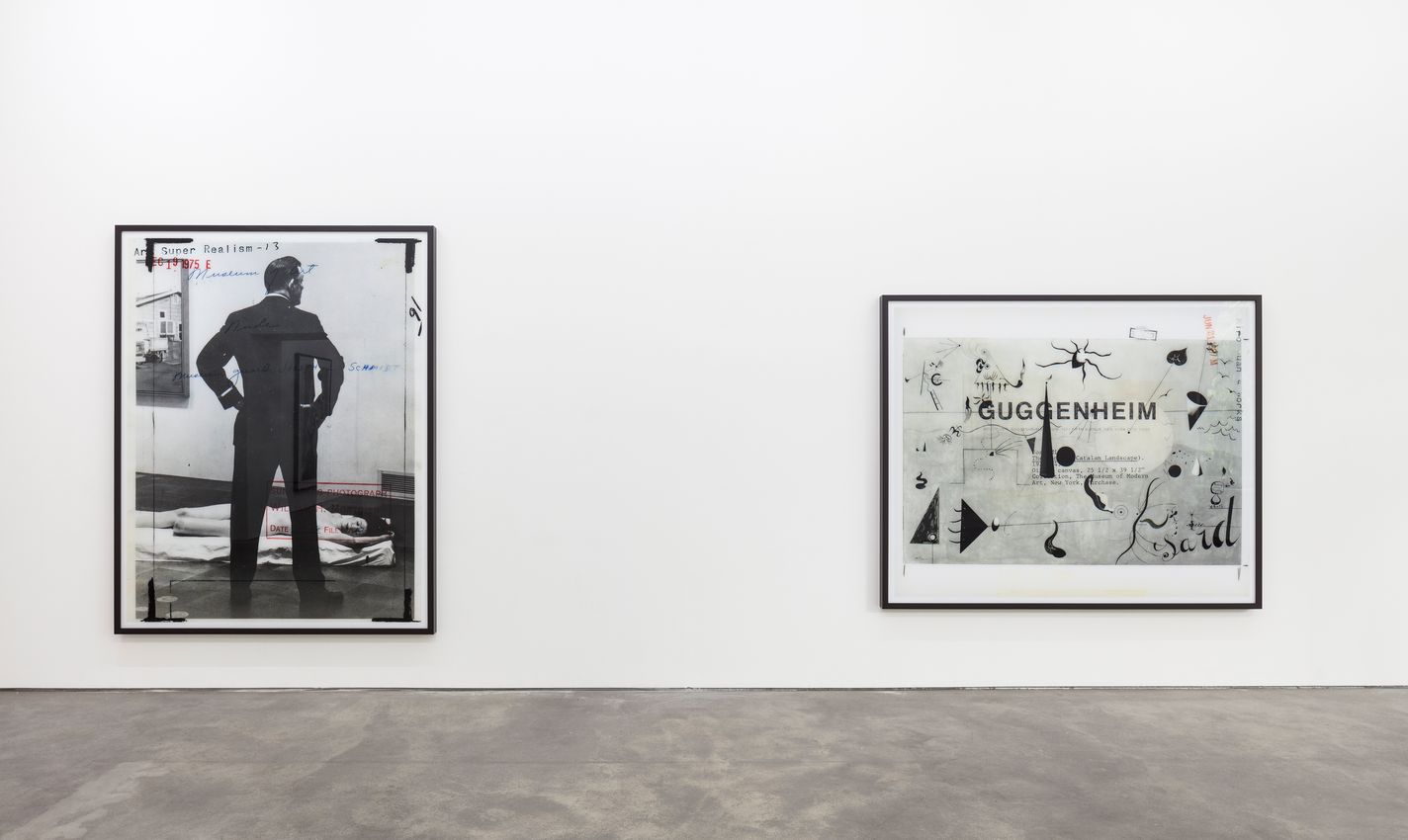
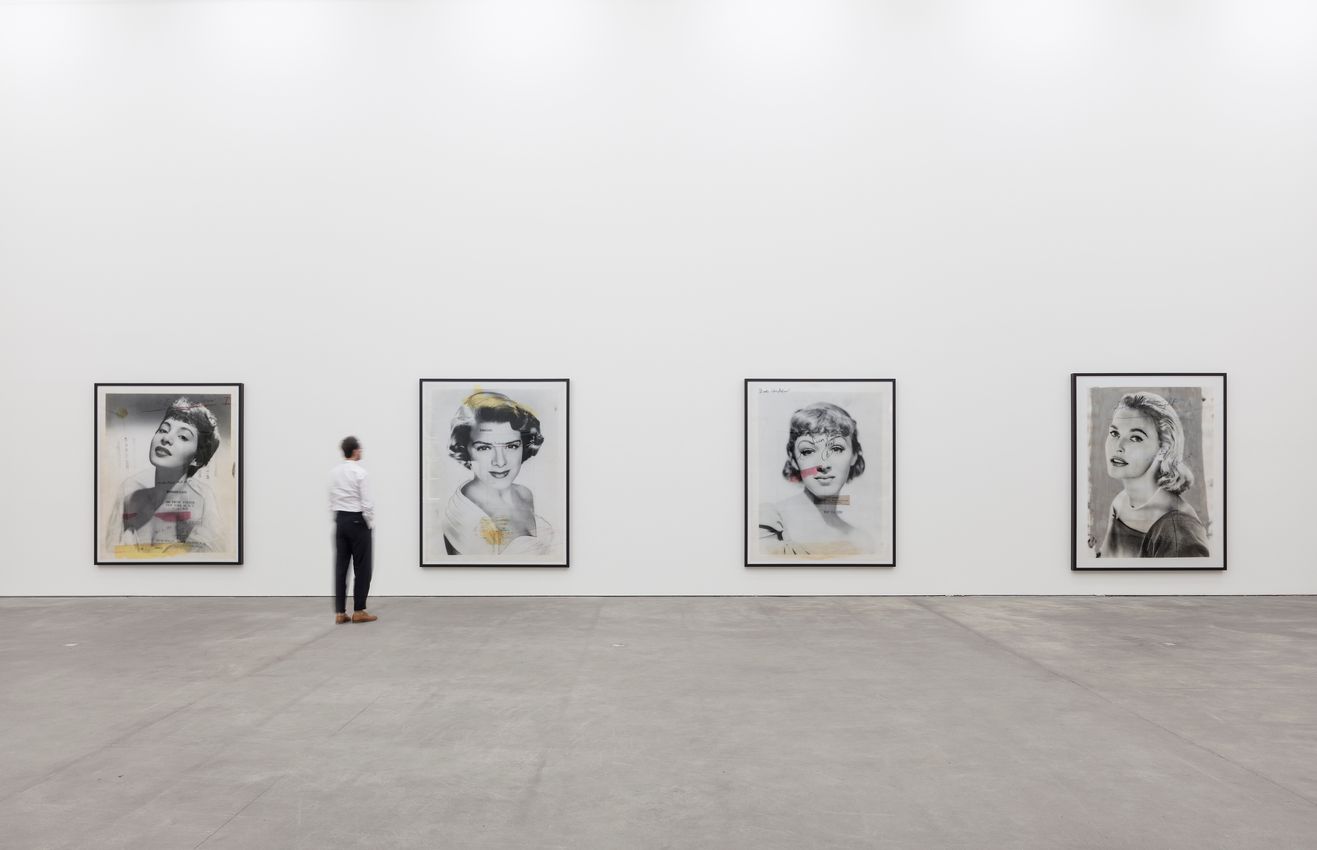
To produce these works, Ruff scans the front and back of each photograph and combines them digitally, taking into account the original image as well as crops, touch-ups, date stamps, scribbles and smudges. Each of these marks varies in line, colour, and implement used; a red stamp, an inky blue fingerprint, a biro squiggle. Ruff has commented how photo-editors at the newspapers had little respect for the photograph, significantly altering the look and meaning of the original with their retouching and comments. Despite how invisible the hand of the editor is typically made to seem, here they are placed front and centre.
The unmistakable porcelain skin and sultry glare of silver screen sirens redolent in their inimitable Hollywood glamour populate the main gallery space. The source photographs for these works are the publicity shots used by casting agencies to promote the actresses on their books, with names scrawled on the reverse to identify them; Portland Mason, Connie Russell, Rosemary Clooney. Their faces are interrupted by paint enhancing contours or attached clippings of their final published version, for example the announcement for a new play starring the actress, creating a ghostly repetition within the image. Other images are more sparse, just a handwritten name to identify the subject or a frantic tick to indicate the approval of the editor.
Another collection of works examines the images handed out by press departments of museums. A large stamp across a Joan Miró painting identifies its source as the Guggenheim, this textual addition intermingling with the artist’s own, meandering marks. The text may also detail the route of the photograph; a stamp reads ‘Please return to the Baltimore Museum of Art’, and a pencil note ‘Sunday Sun Feature Sect.’ tells us where it was published. The credibility of annotations and printed text on the image cannot always be trusted however, with a Chuck Close image labelled as Jasper Johns. Was this published incorrectly, or is this just a mix-up on file?
Changes made by editors compromise the original image but also add the relevant context and show how it has been changed for its purpose, allowing the study of the historical, political and social context in which an image is produced and how it’s meaning can be interfered with and altered. There is also a strong resemblance to the Dada photomontages of the 1920s but without the surrealistic effects and political intent of these forbearers. For Ruff, the redistribution and rearchiving of the photographic image, which has been a core premise of his practice for many years, presents a number of problems in terms of truth and integrity. In these latest works, which make their debut in the exhibition, the image comes to be considered in terms of artistic value when it is slowly severed from its source, the information contained in it as a press image ebbing away.
Thomas Ruff (*1958 in Zell am Harmersbach, Germany) lives and works in Düsseldorf. He studied at the Staatliche Kunstakademie, Düsseldorf from 1977 to 1985. Recent solo exhibitions include the the National Museum of Modern Art, Tokyo, travelled to the 21st Century Museum of Contemporary, Kanazawa, (both 2016); Art Gallery of Ontario, Toronto (2016); S.M.A.K., Gent, travelled to the Kunsthalle Düsseldorf (both 2014); and the Haus der Kunst, Munich (2012). In September 2017 a major exhibition of his work will open at the Whitechapel Gallery, London.
The Berlin gallery is concurrently presenting exhibitions by Analia Saban and Thea Djordjadze, Rosemarie Trockel.
Since the 1970s, Thomas Ruff’s photographic practice has included, but is not limited to: portraiture, domestic interiors and exteriors, manipulation of found images, astronomical documentation, photograms, digital abstractions created by algorithms, and 3D imagery. Studying under Bernd and Hilla Becher at the Kunstakademie Düsseldorf, Ruff was part of what came to be known as the ‘Düsseldorf School.’ In his iconic early series of portraits, subjects are pictured from the chest up, their blank faces are set against plain backgrounds that recall the expressionless genre of the passport photo. His photographs of interiors and exteriors reveal an egalitarian mode of representation. Grey post-war apartment blocks are presented not as failed utopian idylls but as objects of contemplation, whilst photographs of the interiors of the homes of friends and family are subject to an inscrutable eye for detail, be it a carefully placed houseplant or neatly ruched curtain. In the 1990s, found imagery became a point of interest for Ruff. His Nudes series took pornographic images from the Internet and subjected them to extreme distortion, refocusing attention on the act of looking itself rather than on the content, and referencing notions of voyeurism and exhibitionism in image production and reception. More recent work has looked to scientific archives and technologies. NASA has proved particularly influential, furnishing him with interplanetary images that he then enlarges and augments, using the latest methods of digital modelling to present abstract ribbons of computer-generated curves and maps that seemingly belong to the fields of mathematics and physics.


Sprüth Magers has expanded from its roots in Cologne (Germany) to become an international gallery dedicated to exhibiting the very best in groundbreaking modern and contemporary art. With galleries located in Berlin Mitte, London’s Mayfair and the Miracle Mile in Los Angeles–as well as an office in Cologne and an outpost in Hong Kong–Sprüth Magers retains close ties with the studios and communities of the German and American artists who form the core of its roster.

A respected voice in contemporary art discourse.
Focusing on ambitious storytelling and insightful art-world commentary. Ocula Magazine publishes in-depth interviews, critical essays and timely analysis on the artists, exhibitions and ideas driving the global art world.
Learn more about Ocula Magazine
Showcasing the best of the art world.
Ocula partners with galleries from around the world to highlight their artists, artworks and exhibitions. Gallery membership is by application and invitation, with each member vetted by an independent panel.
Learn more about Ocula Membership

Specialises in the sale of major artworks.
Led by a team with deep ties to the world’s leading auction houses, galleries and collectors. Ocula’s advisory team offers bespoke services to high-net-worth clients from around the world who are looking to acquire the best of contemporary and modern art.
Learn more about our team and services