‘Paintings owe their existence—of which we are suddenly rendered conscious—of the apparent visible and the hidden visible—which in nature, are never separated. Something visible always hides something else, equally visible. But these paintings testify immediately—and unexpectedly—to this state of things. Something goes on in the world, between that which is visible and that which the visible hides, which is visible: a sort of combat...’
— Réne Magritte1
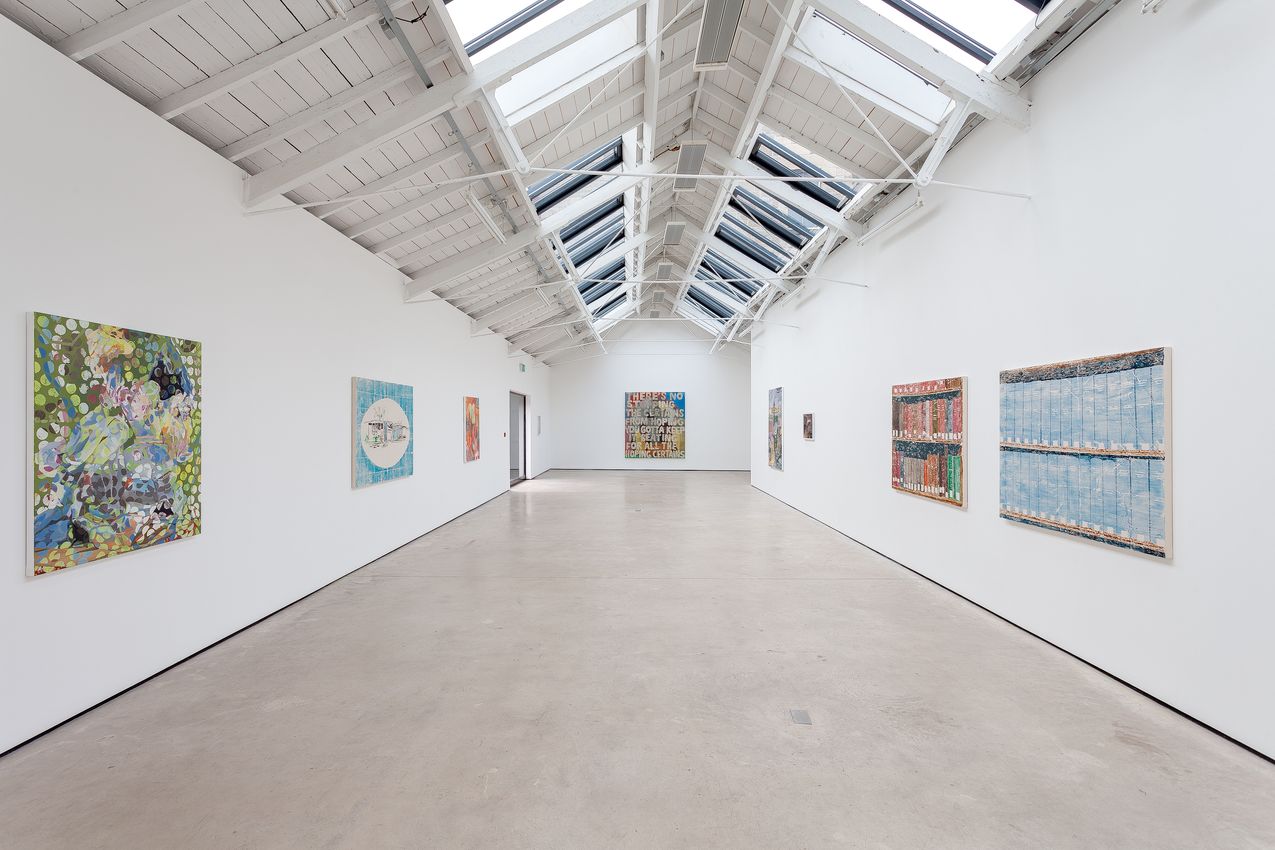
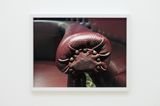
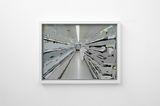
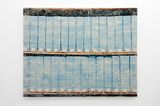
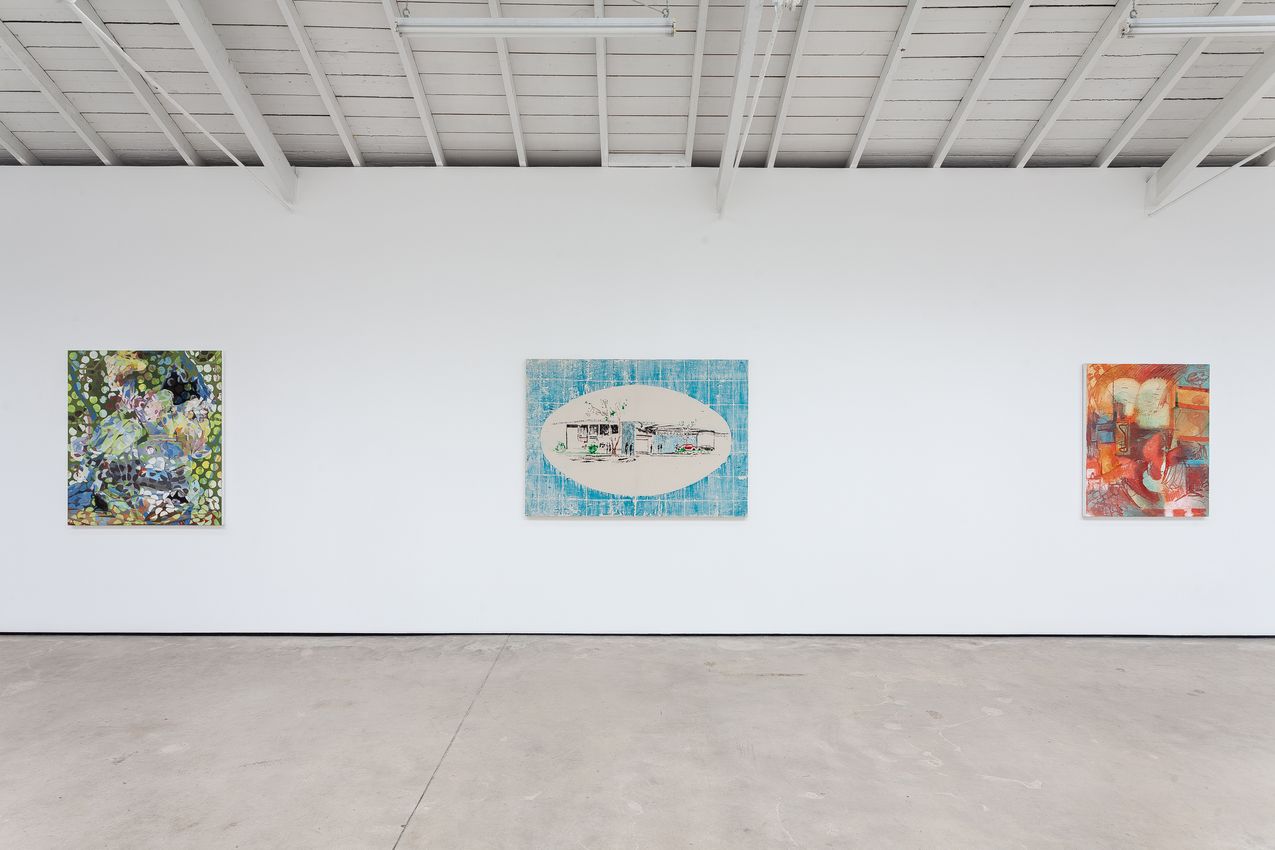
Superfare marks Pádraig Timoney’s fifth solo-exhibition with The Modern Institute. The multifaceted and at times unorthodox grouping of paintings and prints at the gallery’s Osborne Street location demonstrate a unique approach to image-making that relentlessly seeks to reinvent and reexamine, create, metaphorise, and condense.
Drawing from an evolving continuum of images, thoughts and occurrences, Timoney’s work explores painting’s potential to construct, convey and challenge. Through a multitude of different processes, Timoney’s ideas are reproduced and translated both materially and conceptually, ensuring these factors are mutually supportive. His surfaces, rendered in a multitude of (often) contradictory languages, coalesce into a body of work that self-generates new ideas, manners and abstractions.
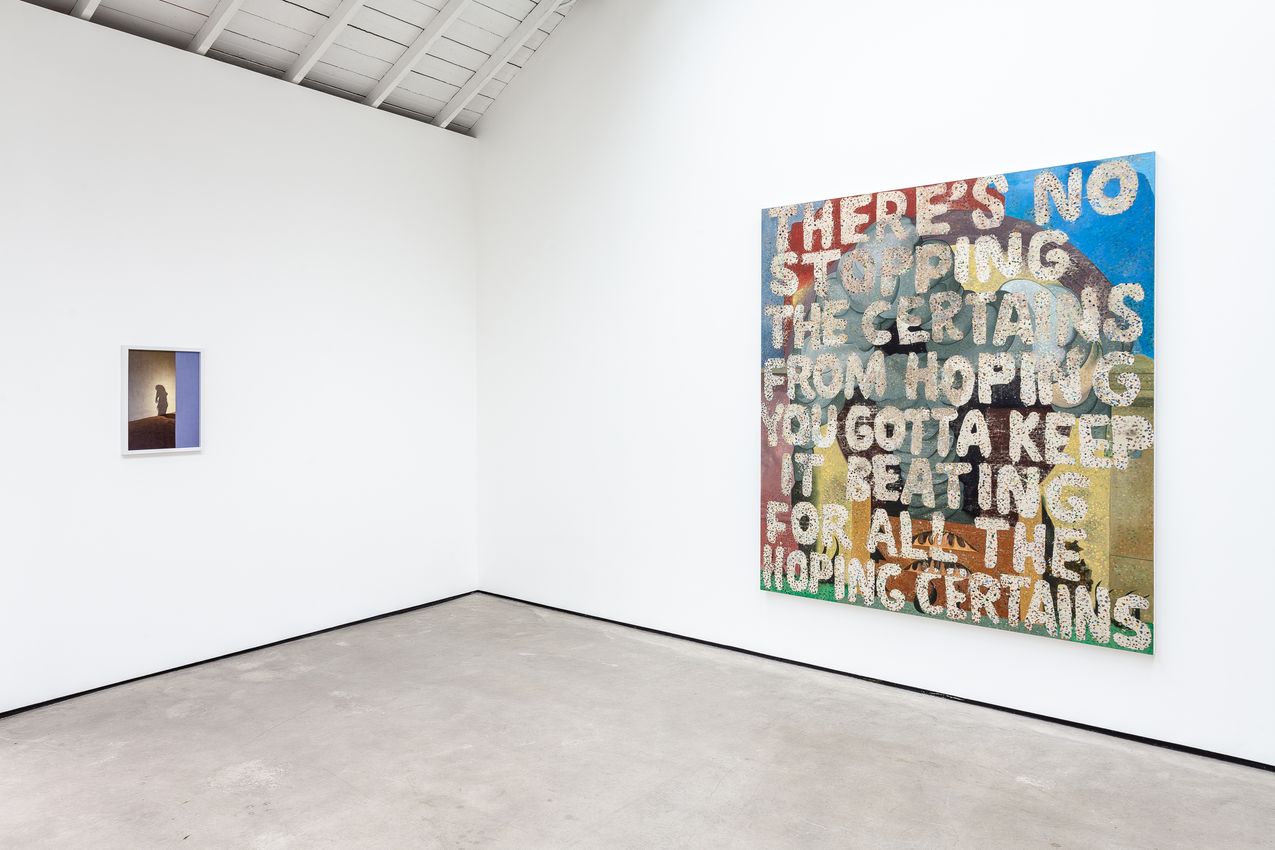
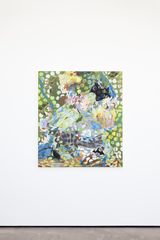
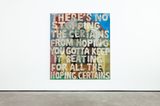
Indeed, this adaptive and inventive approach to making is evident throughout Timoney’s new body of work. In There’s No Stopping The Certains from Hoping (2020), titled from a misquoted lyric from the Ramone’s 1977 song ‘Cretin Hop’, Timoney uses photographic developer to make oil paint soluble in water enabling Timoney to reinvigorate the dried paint from previous sessions in the studio—extending the potential influence of a certain colour or palette beyond a single sitting or work. In this, the exhibition’s largest work, his reworking is perhaps most apparent as under close inspection solid foregrounded form gives way to a delicate transparent intermediary layer and pointillist underpainting beyond. Through this extended process of layering, Timoney offers pictures within pictures, displaying a fascination of that which is under but not immediately seen.
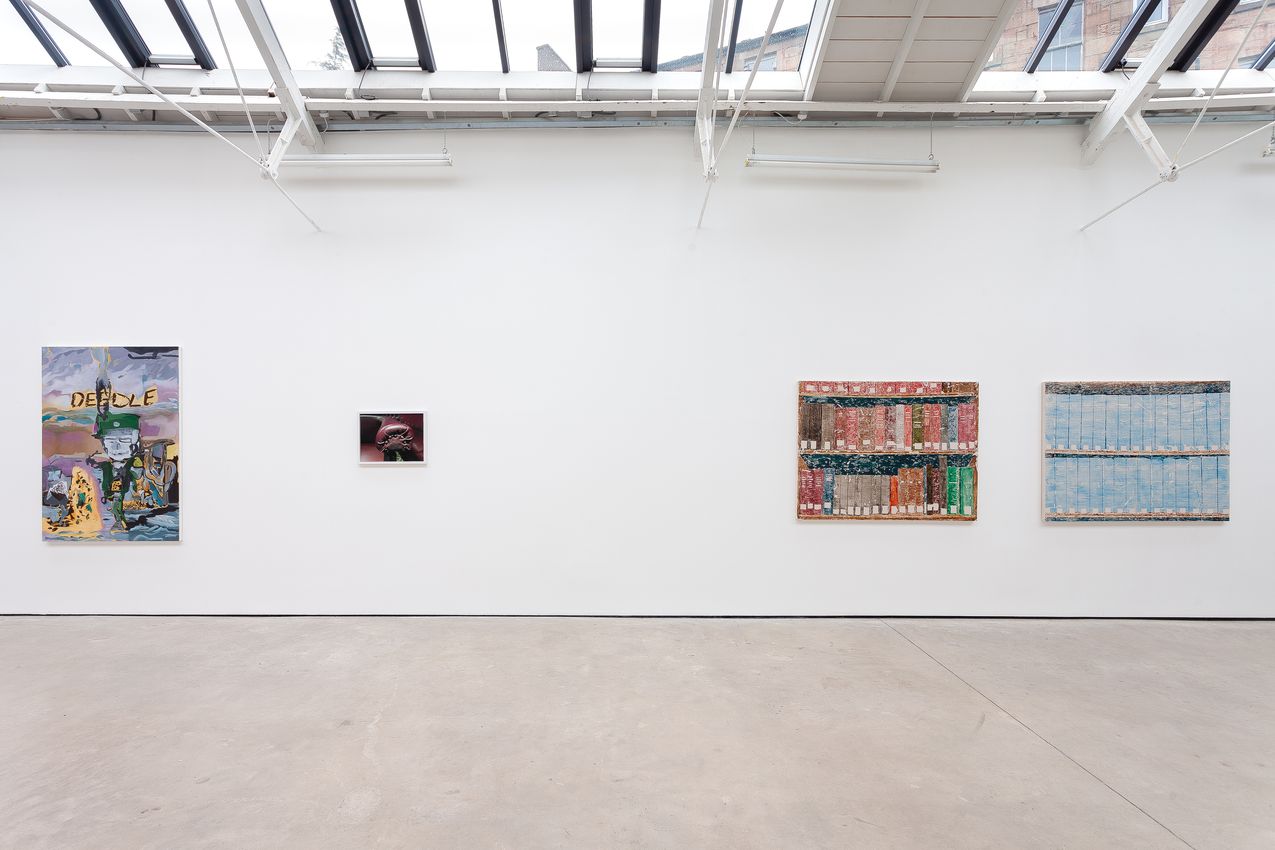
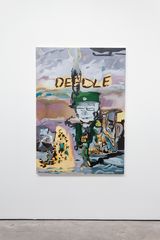
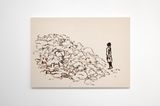
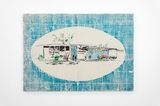
Further in the show, two works both portray a small laughing figure, uniformed and sporting an indistinguishable expression amidst a backdrop of seemingly a street on fire, however, Timoney’s depiction lacks attribution, definition or explantation. What is identifiable is the uniform, the fire, a helicopter and the word ‘DEEDLE’ above the character’s head. The smaller original study, OriginalBorderDeedle (2017), is playfully sketched in inks, acrylics and pigment, with the larger replica, realised in oil, offering a more distanced energy, a layer or step beneath the original sketch. Filangieri’s (2020), presents a further key example of Timoney’s painterly openness, the solid circular and semicircular forms, which closely match the oil drawing underneath, partially camouflaging or revealing fragments of the image beneath the surface layer. The crucial obscuring thinness of the oil layer provokes the idea of what is more fortunate—that which has been revealed or that which is imagined underneath.
In Superfare the notion of layers becomes a scattered thematic, as Timoney eagerly and relentlessly pursues the ideas that inform his work, images are constructed and reconstructed, pushed and pulled to the point of collapse only to be developed into a cohesive whole. Superfare documents a fundamental intention and on-going attention by not looking like it does at all. As Timoney himself suggests, ‘I try to find the right image for a thing that comes to mind—I don’t want yet to rationalise or describe an underlying intentionality of selecting images or whatever. I’m trying, I suppose to still make excitement for the eyes—that a practice based in historicity and the present could find some new space. That there would always be, with the hand-made, coherence, distance, dirt, all that stuff that gets in your eyes when you open them in the morning. That you know, that you recognise, that you know you recognise, that you recognise maybe with a smile. Eyes talk, eyes already being the outmost stalks of brain tissue. They see thinking. The concepts, although present, have no more weight than the material. That there are echoes off every surface—our ears already deal with all that richness without thinking too much about it. That there is still space makeable for this activity. Super-fare.’2
Pádraig Timoney (born 1968, Derry; Lives and works in New York).
Notable solo exhibitions include: Lulu, Mexico City (2018); The Scrambled Eggs Salute The Trifle, The Modern Institute, Airds Lane (2016); A lu tiempo de..., Museo Madre, Naples (2014); Fontwell Helix Feely, Raven Row, London (2013); Shepard Tone, The Modern Institute, Osborne Street, Glasgow (2012); and The Fear of All Sums-Ten Million Dice to Weigh, Void, Derry, Northern Ireland (2006).
Group shows include The Painting Show, British Council touring exhibition, Limerick City Gallery of Art, Limerick (2017) and Contemporary Art Centre, Vilnius, Lithuania (2016); Collected by Thea Westreich and Ethan Wagner, Whitney Museum of American Art, New York/ Centre Pompidou, Paris (2016); Terminal Convention at the former Cork International Airport (2011); Frequency: Mark Garry, Pádraig Timoney, Hayley Tompkins, The Hugh Lane Gallery, Dublin, Ireland (2009); Un Monde d’Imag, Frac Picardie, Beauvais, France and The British Art Show 5 (2000).
In 2014, the most extensive monograph on the artist’s practice, Microtome was published by Electa on the occasion of the artist’s mid-career retrospective at Museo Madre.
1 Réne Magritte, (cited in Patrick Waldberg, p.248, Rene Magritte, Andre de Rache pub, Brussels 1965)
2 A reference to the exhibition’s title and an accompanying painting in the show, as well as the combination of the twowords which from Italian translates to make (or do) super. This poses further a duality of ideas.


The Modern Institute was founded in Glasgow in 1997. The gallery works with internationally established and emerging artists including Martin Boyce, Jim Lambie, Richard Wright, Anne Collier, Cathy Wilkes, Simon Starling, Urs Fischer, Luke Fowler and Nicolas Party.

A respected voice in contemporary art discourse.
Focusing on ambitious storytelling and insightful art-world commentary. Ocula Magazine publishes in-depth interviews, critical essays and timely analysis on the artists, exhibitions and ideas driving the global art world.
Learn more about Ocula Magazine
Showcasing the best of the art world.
Ocula partners with galleries from around the world to highlight their artists, artworks and exhibitions. Gallery membership is by application and invitation, with each member vetted by an independent panel.
Learn more about Ocula Membership

Specialises in the sale of major artworks.
Led by a team with deep ties to the world’s leading auction houses, galleries and collectors. Ocula’s advisory team offers bespoke services to high-net-worth clients from around the world who are looking to acquire the best of contemporary and modern art.
Learn more about our team and services