



FRANZ WEST
1947-2012, AustriaFranz West transformed contemporary art by redefining sculpture as a playful, participatory experience, challenging what art could be and how viewers engage with it. Celebrated for his interactive ‘Adaptives’ and irreverent large-scale installations, West won the Golden Lion for Lifetime Achievement at the Venice Biennale in 2011 and remains one of Austria’s most influential artists. He combined an irreverent and playful approach to sculpture, furniture and collage with an interest in philosophy, literature and music.
Early Years
Born in Vienna in 1947, Franz West grew up in a city shaped by its rich artistic and intellectual traditions. His mother, Emilie, was a dentist from a middle-class Jewish family who surrounded herself with artists, and West’s early drawings—what he called ‘Mutterkunst’ (mother art)—were made to please her. He adopted her maiden name, West, in 1971.
West was largely self-taught, absorbing ideas from Vienna‘s vibrant nightlife, mass media, and the city’s many art movements. He studied briefly under Austrian artist Bruno Gironcoli and was influenced by his half-brother Otto Kobalek, an experimental writer associated with the Wiener Gruppe. West’s early years were marked by a bohemian lifestyle, frequenting coffee houses and bars, and experimenting with drugs. He lived and worked in Vienna for most of his life, drawing inspiration from the city’s atmosphere, its psychoanalytic legacy, and its tradition of experimental literature.
Franz West Artworks
Franz West’s art is defined by its invitation to touch, use, and participate—transforming the viewer from passive observer to active participant. His sculptures, installations, furniture, and collages are known for their humour, raw materials, and references to philosophy, literature, and everyday life.
Adaptives (Passstücke), 1970s–1980s
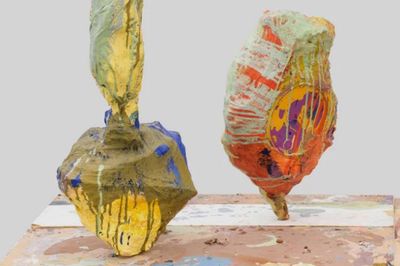
In the mid-1970s, West created his iconic ‘Passstücke’ or ‘Adaptives’—small, abstract sculptures made from papier mâché and plaster, often incorporating everyday objects like paintbrushes or radios. These were among the first interactive sculptures in 20th-century art, designed to be handled, worn, or played with by visitors. West saw them as extensions of the human body, externalising neuroses and desires. The interactive nature of these works was documented in photographs and videos, sometimes set to music.
Legitimate Sculptures and Combinations, 1980s
By the mid-1980s, West began producing larger ‘Legitimate Sculptures’—works displayed on pedestals and no longer meant to be handled, but still provoking imaginative engagement. He used papier mâché, often incorporating found objects like bottles and beds, and collaborated with writers to create texts that accompanied the works. West’s ‘Combinations’—such as Redundanz (1986) and Wegener Räume 2/6-5/6 (1988)—assembled collages, objects, and furniture into immersive installations that questioned how art is displayed and experienced.
Collaborations and Furniture, late 1980s–1990s
West frequently collaborated with artists including Sarah Lucas, Herbert Brandl, Otto Zitko, and Heimo Zobernig, exploring new approaches to colour, form, and display. He also began producing functional sculptures—chairs and divans made from scrap metal and other materials—which he described as ‘everyday Passstücke’. These works blurred the line between art and furniture, inviting viewers to sit, recline, and reflect.
Outdoor Sculptures and Late Work, 1990s–2010s
From the 1990s onwards, West produced large-scale outdoor sculptures from aluminium and fibreglass, painted in bright, sometimes garish colours inspired by children’s pyjamas. Works like Warum ist etwas und nicht nichts (1997) and Schlieren (2010) were designed as alternatives to traditional public monuments, often referencing organic forms or bodily shapes. West continued to make collages and posters, combining photography, paint, and bold typography, deliberately rejecting the refined branding of art institutions.
Select Public Commissions
- Warum ist etwas und nicht nichts (1997), outdoor sculpture, rural Austria
- Auditorium (1992), 72 divans for Documenta IX, Kassel, Germany
- Outdoor sculptures in public spaces across Europe and the United States
Select Awards and Accolades
- Golden Lion for Lifetime Achievement, Venice Biennale, 2011
- Otto Mauer Prize, 1986
- City of Vienna Prize for Fine Arts, 1988
- Wolfgang Hahn Prize, Museum Ludwig, Cologne, 1998
- Austrian Decoration for Science and Art, 2011
Exhibitions
Franz West has been the subject of both solo exhibitions and group exhibitions at important institutions. Below is a selection of important exhibitions.
Solo Exhibitions
- Franz West, Tate Modern, London, 2019
- Franz West, Centre Pompidou, Paris, 2018
- Franz West, Tate Liverpool, 2010
- Franz West, Museum moderner Kunst Stiftung Ludwig Wien, Vienna, 1996
- Franz West: Proforma, Kunsthalle Basel and Rijksmuseum Kröller-Müller, Otterlo, 1996–1997
- Franz West, Museum of Modern Art, New York, 1997
Group Exhibitions
- Documenta X, Kassel, 1997
- Carnegie International, Pittsburgh, 1995
- Documenta IX, Kassel, 1992
- Venice Biennale, Austrian Pavilion, 1990
- Skulptur Projekte Münster, 1987
- Whitney Biennial, New York
Franz West FAQs
Where can I see Franz West’s work?
Franz West’s artworks are in the collections of major museums including Tate Modern in London, Centre Pompidou in Paris, The Museum of Modern Art in New York, Museum moderner Kunst Stiftung Ludwig Wien in Vienna, and Museum Ludwig in Cologne. His outdoor sculptures are installed in public spaces across Europe and the United States.
What is Franz West best known for?
West is best known for his ‘Adaptives’—interactive sculptures designed to be handled and used by viewers—and his large, colourful outdoor sculptures that challenge the conventions of public art.
How did Franz West influence contemporary art?
West was a pioneer of participatory sculpture, making the viewer’s engagement central to the meaning of his works. He also collaborated widely with other artists and writers, and his irreverent approach to materials and display continues to inspire artists today.
What materials did Franz West use in his art?
West used papier mâché, plaster, aluminium, fibreglass, found objects, and scrap metal, often leaving surfaces rough and visibly handmade. He also incorporated everyday items such as bottles, beds, and washing machines into his works.
Are there any interesting facts about Franz West?
West’s early art was made to please his mother, and he adopted her maiden name as his surname. He was known for his bohemian lifestyle, love of Viennese coffee houses, and fascination with psychoanalysis and experimental literature. He often collaborated with artists such as Sarah Lucas, who designed pedestals and exhibition displays for his shows.
How do you pronounce Franz West’s name?
Franz West is pronounced as it appears: ‘Franz’ rhymes with ‘plans’, and ‘West’ as in the English word ‘west’.
Ocula | 2025


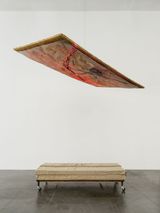
Explore Franz West's Exhibitions


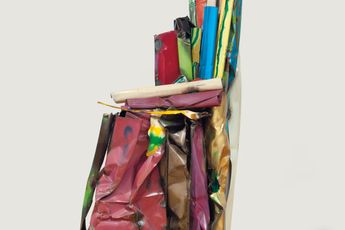












Explore and Follow Artists Shaping Contemporary Art
A respected voice in contemporary art discourse.
Focusing on ambitious storytelling and insightful art-world commentary. Ocula Magazine publishes in-depth interviews, critical essays and timely analysis on the artists, exhibitions and ideas driving the global art world.
Learn more about Ocula Magazine
Showcasing the best of the art world.
Ocula partners with galleries from around the world to highlight their artists, artworks and exhibitions. Gallery membership is by application and invitation, with each member vetted by an independent panel.
Learn more about Ocula Membership
Specialises in the sale of major artworks.
Led by a team with deep ties to the world’s leading auction houses, galleries and collectors. Ocula’s advisory team offers bespoke services to high-net-worth clients from around the world who are looking to acquire the best of contemporary and modern art.
Learn more about our team and services