



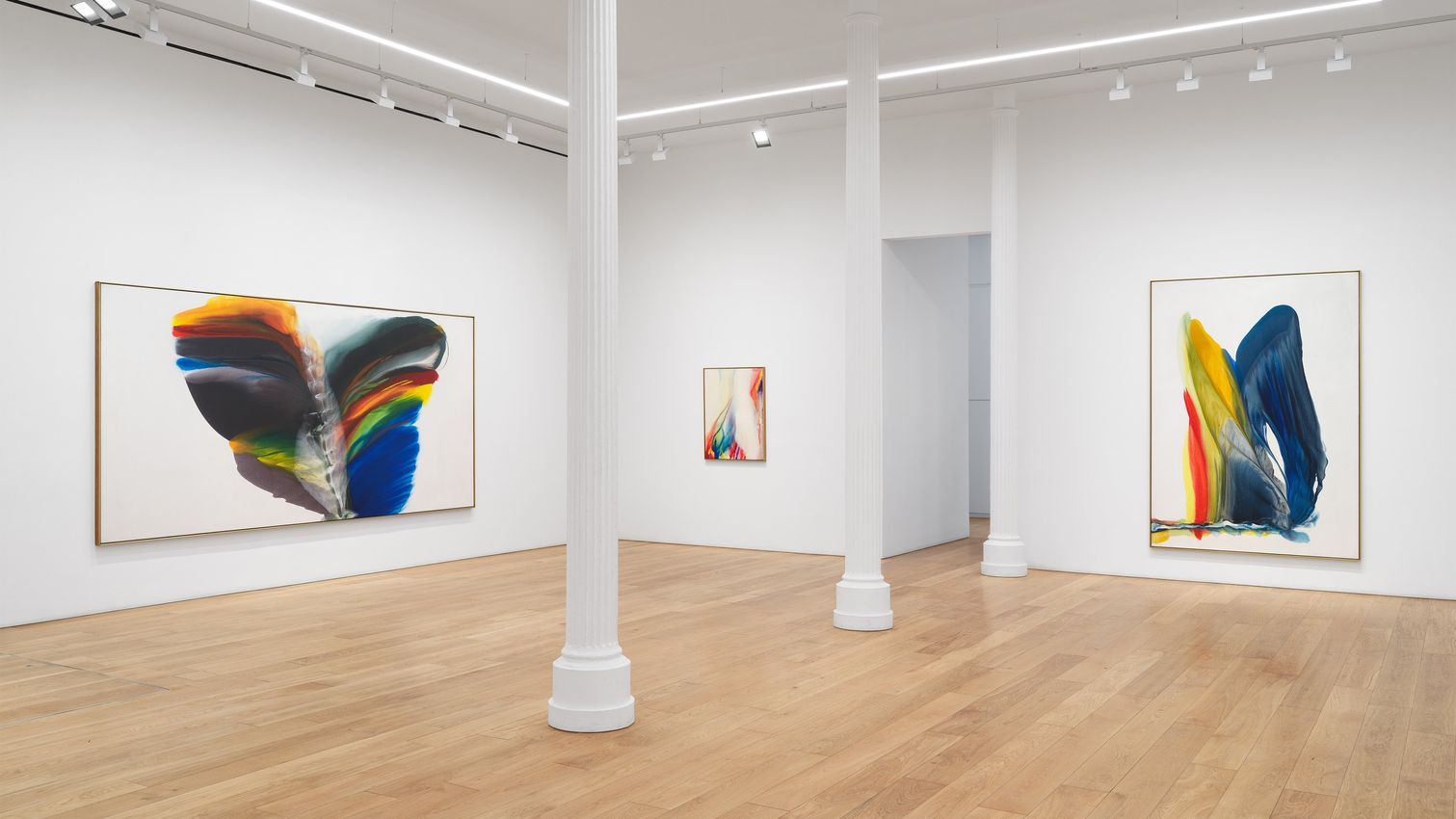
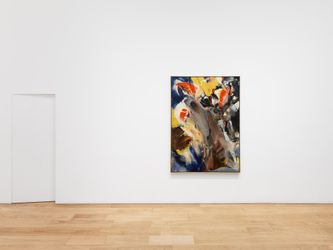
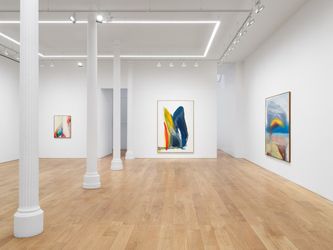
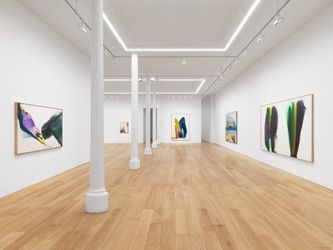
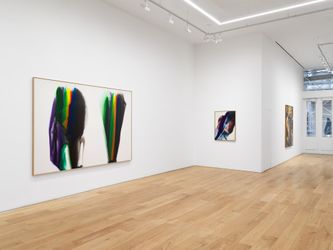
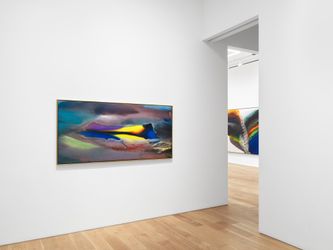
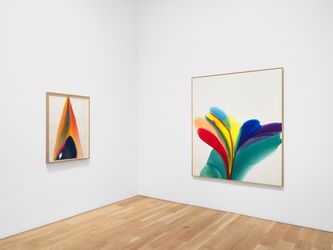
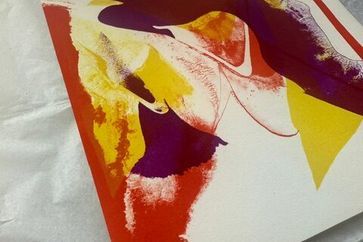
Timothy Taylor is pleased to announce an exhibition of prismatic paintings by second-generation Abstract Expressionist painter Paul Jenkins (1923-2012) in New York. Organised in collaboration with the Paul and Suzanne Jenkins Foundation, this survey presentation will feature rare oil and enamel paintings from the 1950s and select watercolours and acrylics dating from 1960s through the 1990s, offering an extensive view of the painter’s vital contributions to American abstraction. This marks Timothy Taylor’s first presentation of Jenkins’s work since announcing the gallery’s relationship with the Foundation in late 2024.
In the early 1950s, following his studies at the Art Students League in New York under Yasuo Kuniyoshi, Jenkins settled in Paris, where he developed modes of painting that privilege chance processes. Allowing paint to pool, bleed, drip, and dribble on the canvas as he manipulated the surface, he created veils of colour that evoke changing light. Inspired by the radical improvisation of Michel Tapié’s art autre, the proto-conceptualism and process-rich painting of the Gutai Art Association, and Zen Buddhism, he synthesised aspects of and departed from the work of his peers. Notably, he eradicated any evidence of his hand. At the end of the decade, he began using an ivory knife to conduct the flow of paint, bringing an element of enigmatic expression and gesture to a process invested in indeterminacy. The resulting paintings recall kaleidoscopic memories of landscapes, at once lucid and obscure.
The exhibition will include Phenomena of Air Striae from 1959, a critical moment for the artist. That year, influenced by Goethe’s colour theories and the work of Immanuel Kant, he began titling every painting Phenomena and coined the term ‘abstract phenomenist’ to describe his orientation to his work, which prioritised an engagement with flux. This rare canvas, notable for its scale and the comprehensiveness of its composition, features a tumultuous field of colour, in which licks of crimson lap through unruly striations of yellow, black, and white, like flames. A spectral umber form seems to sway at the centre of the vertical composition, as if caught in wind. Oceanic blues on the periphery lend a sense of deep space.
The year after this work was completed, Jenkins discovered that working with water-based acrylic allowed for translucency that retained a desired vividness of colour, and he converted almost exclusively to the medium, applying it to the smooth surfaces of primed canvas. The exhibition includes three paradigmatic acrylic paintings from this early period of invention with the medium and six from the 1970s. The vertical composition Phenomena Samothrace Arch (1973) centres on a cleaved form comprising mirrored shapes, one radiant blue and the other an inconstant yellow marbled with red and gray. This form, a kind of summit, rises from an aquatic horizon-the whole arrangement undulating gently against a white ground. The exuberant canvas Phenomena Rain Palace (1976)-which has been exhibited in major presentations in New York, Palm Springs, Antibes, and Haifa, among other cities-features an ephemeral, rainbowed architecture that seems to cut through clouds. Intense colours and muted hues alike generate seemingly weightless forms.
Across these luminous paintings, there is a clarity of colour and contour. Their formal vocabulary, however, is at once unknowable and tangibly evocative of astronomical, floral, and subterraneous worlds.


Paul Jenkins was an American artist known for his abstract expressionist paintings. He used unusual techniques to create bold and colourful compositions. Abandoning the paintbrush altogether, Jenkins poured paint directly onto his canvas, tilting it to encourage pigment to pool, drip and bleed. By rejecting tradition, Jenkins became an important part of the second wave of Abstract Expressionism.

A respected voice in contemporary art discourse.
Focusing on ambitious storytelling and insightful art-world commentary. Ocula Magazine publishes in-depth interviews, critical essays and timely analysis on the artists, exhibitions and ideas driving the global art world.
Learn more about Ocula Magazine
Showcasing the best of the art world.
Ocula partners with galleries from around the world to highlight their artists, artworks and exhibitions. Gallery membership is by application and invitation, with each member vetted by an independent panel.
Learn more about Ocula Membership

Specialises in the sale of major artworks.
Led by a team with deep ties to the world’s leading auction houses, galleries and collectors. Ocula’s advisory team offers bespoke services to high-net-worth clients from around the world who are looking to acquire the best of contemporary and modern art.
Learn more about our team and services