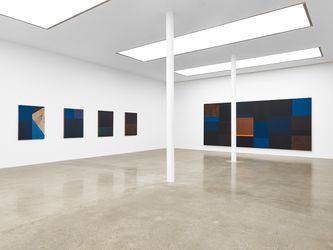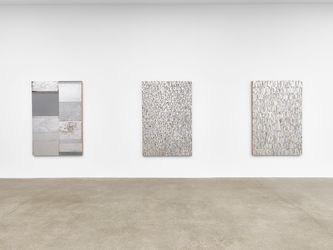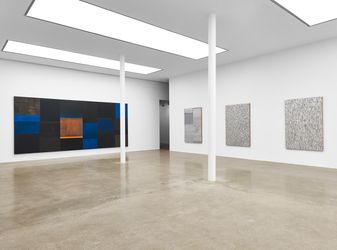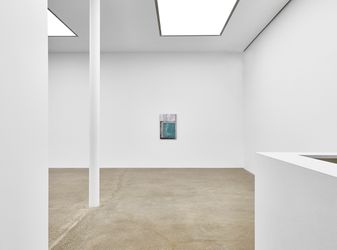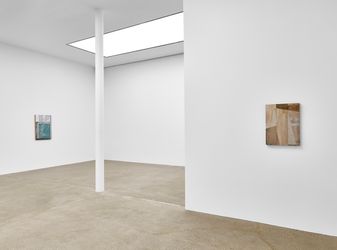




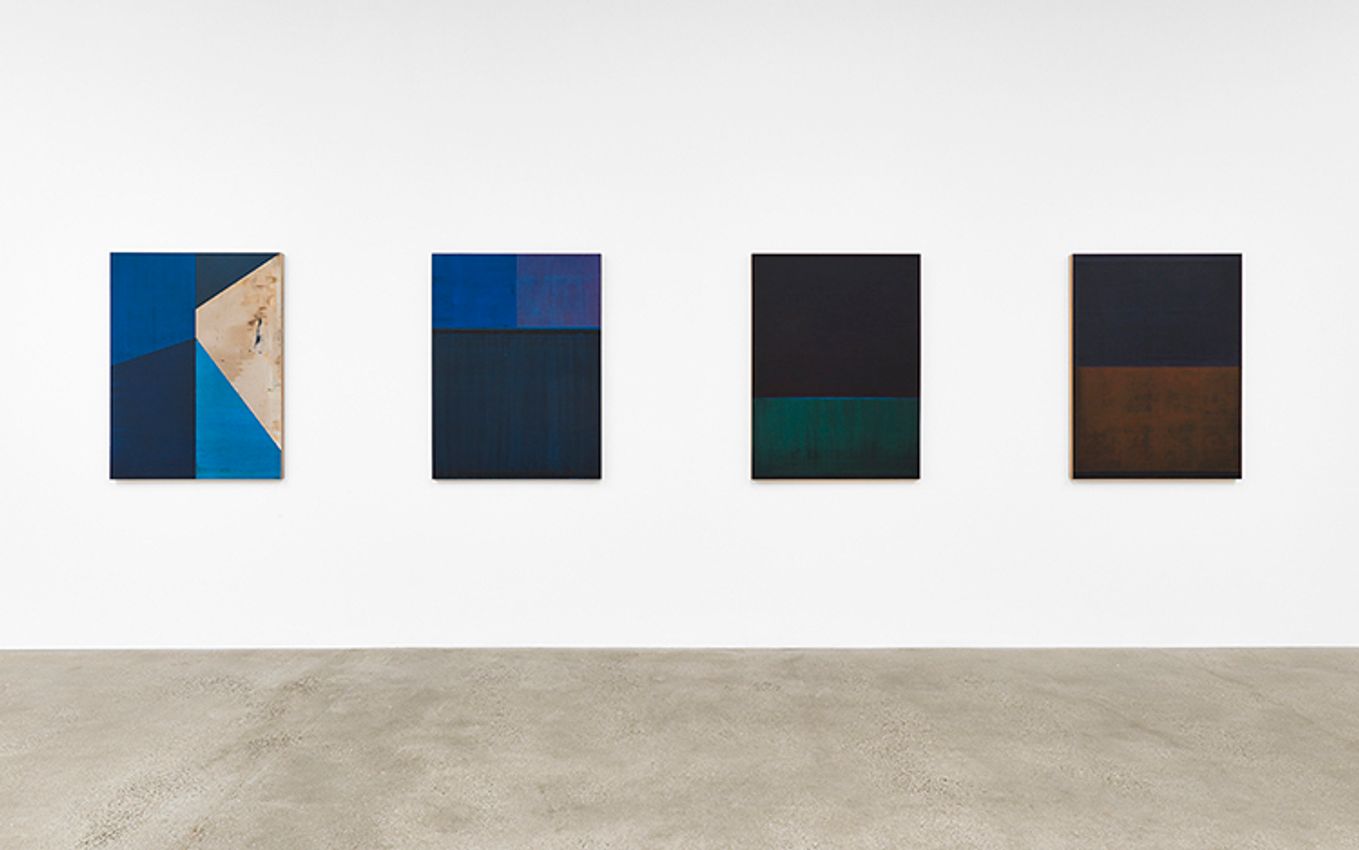
Timothy Taylor is pleased to present Gabriel de la Mora’s first European solo exhibition, which will also be the artist’s first at the gallery. The exhibition–Serial–comprises examples from three new bodies of work.
In the early 1990s, De la Mora’s architectural practice started to question function. Frustrated with the artistic license taken by clients regarding changes to his designs, De la Mora determined that architecture could never be reconciled with art, due to the necessity of its service. His subsequent art practice–spanning the last twenty years–subverts function through contemplative and systematic modes of enquiry.
For De la Mora, art is neither created nor destroyed, only transformed. The production of art is a philosophical exercise, realised through the exploration of ideas via tangible means. The artist collects materials that have been discarded after their manufactured function ceases to exist, and these form the basis of his two- and three-dimensional works. Beginning with images, De la Mora ‘de-figures’ until works become abstract; often even monochrome. On the other hand, the presence of a figure regularly exists in works that begin as abstract. Drawing from artefacts of the ‘everyday’, works serve as records of history and time.
The three series in this exhibition, along with a logical sequence of production, contain the concept of serial as a leitmotif: a series of crystals, together or separated but always joined in a repetitive gesture; and a series of movements through printing plates that generate a pictorial mark.
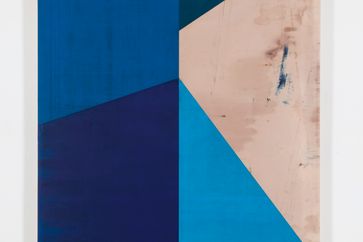
In the first two series, discarded rubber blankets and aluminium plates from a four-colour offset printing press, are repurposed as abstract paintings. Both rubber and aluminium are used together in the printing process, with the plates and blankets being reduced in format to eliminate the culpable area each time a defect is detected. Ultimately, they become unusable and are discarded.
De la Mora retrieves this residual matter and proceeds to classify each piece: by colour and format, by degree of wear, brightness and opacity. From this archive, materials are repurposed into final works that uniformly begin with a grid–that is then subverted with random disruptions and diagonals.
The works in these series explore the various possibilities of painting, where accidents and waste caused by the mass-printing process generate primary materials that are later reconfigured. Both the aluminium plates and rubber blankets are pictorial explorations, containing endless connections with many authors and art movements of Modern and contemporary painting. The strongest of these art-historical lineages is via the Duchampian logic of the ‘rectified readymade’. According to Duchamp, this form of readymade can comprise objects manufactured for some other purpose, re-presented by an artist as a work of art.
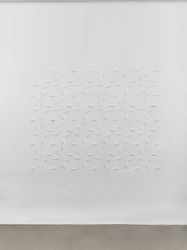
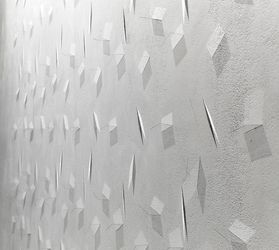
The third series, titled Crystals of Inevidence, is represented in this exhibition through a site-specific installation. Unlike other bodies of work–where information from discarded materials is used once the object had fulfilled its initial function–De la Mora’s new glass coverslips and microscope slides are rather pre-appropriated; employed as material prior to their intended functional use. The foundation of these glass compositions is based on seriality and repetition, where we find endless formal possibilities and where light and shadow play a key role.
Crystals of Inevidence was first conceived for the exhibition Lo que no vemos lo que nos mira (What we do not see what looks back at us) curated by Willy Kautz at the Museo Amparo, October 2014 – February 2015. ‘Crystals of Inevidence is a strategy to visualise emptiness, or a poetic opening onto the non-specific through an apparently meaningless object. This work encourages us to look at the non-evident (rather than the evident) through a ‘pictorial object’, that is nonetheless anti-illusionist and transparent.’ – Willy Kautz.


For Gabriel de la Mora the artwork already exists before the artist, and therefore it is not his role to either create or destroy, but merely to transform. By repurposing debris salvaged from flea markets and antique shops, de la Mora creates alchemical works that both prescribe to the object specificity set by the precedents of Minimalism and Abstraction in terms of form, and quietly engage with the figurative through their content.

A respected voice in contemporary art discourse.
Focusing on ambitious storytelling and insightful art-world commentary. Ocula Magazine publishes in-depth interviews, critical essays and timely analysis on the artists, exhibitions and ideas driving the global art world.
Learn more about Ocula Magazine
Showcasing the best of the art world.
Ocula partners with galleries from around the world to highlight their artists, artworks and exhibitions. Gallery membership is by application and invitation, with each member vetted by an independent panel.
Learn more about Ocula Membership

Specialises in the sale of major artworks.
Led by a team with deep ties to the world’s leading auction houses, galleries and collectors. Ocula’s advisory team offers bespoke services to high-net-worth clients from around the world who are looking to acquire the best of contemporary and modern art.
Learn more about our team and services