How do we create memory? In 1582, Jesuit missionary Matteo Ricci arrived in China. In addition to his missionary work, Ricci was devoted to promoting his method of memory training: the Memory Palace. He proposed three methods of creating mental palaces to aid memory: the first is a real space based on the real world, the second a fictional dwelling, and the third, an amalgamation, a memory palace that straddles reality and imagination.
This training aims to construct a comprehensive storage space for knowledge. By assigning vivid images to things and placing them in specific locations, we can accurately retrieve the correct knowledge and memories through rules or associations. The concept of the memory palace was not invented by Ricci. It can be traced back to the application of memory training advocated by the ancient Greek poet Simonides of Ceos. The memory palace is not merely a methodological theory. It also involves the human emotional experience of past memories and emotions, the empathetic experiences that blend with the real world, and how we cohabit, interpret, and enter a dialogue with these myriad fragments of memories.
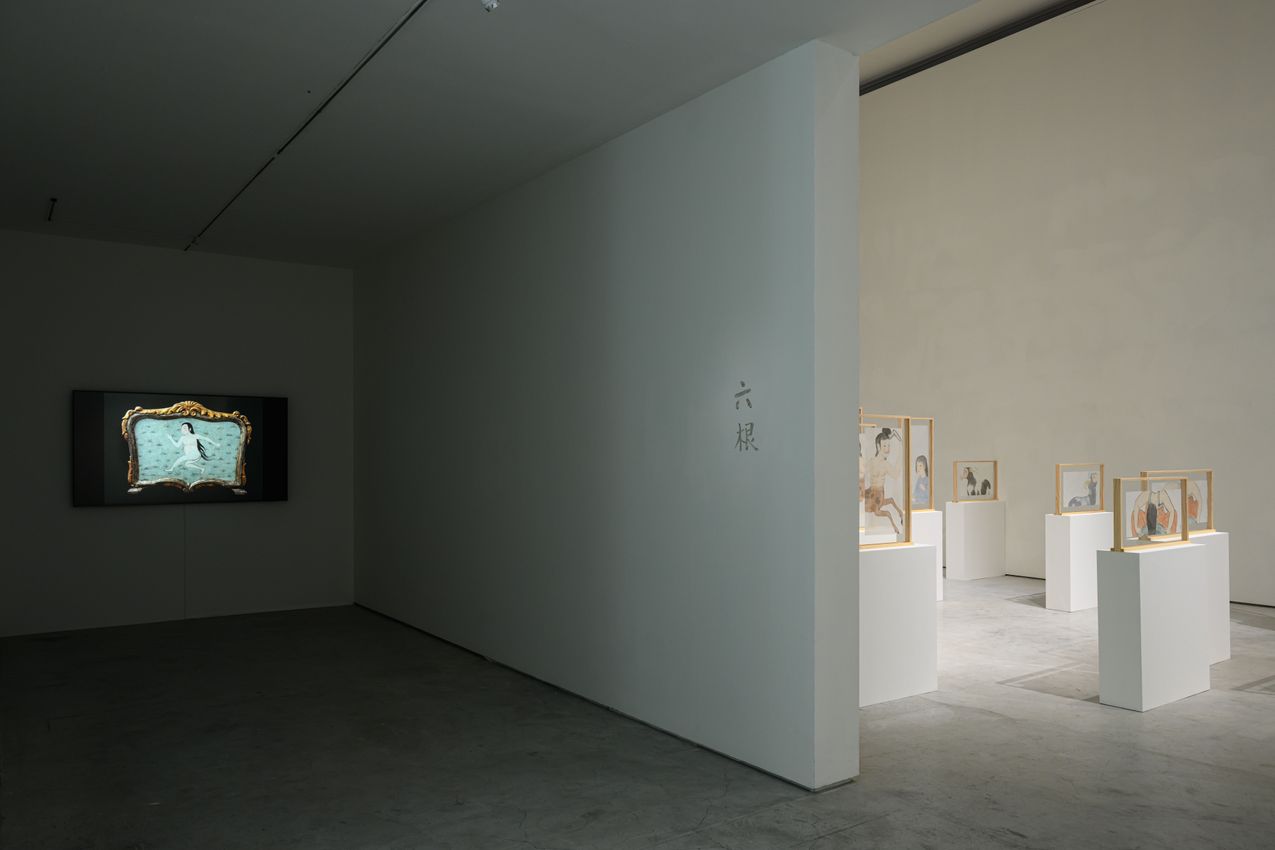
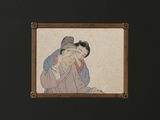
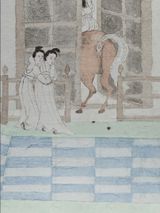
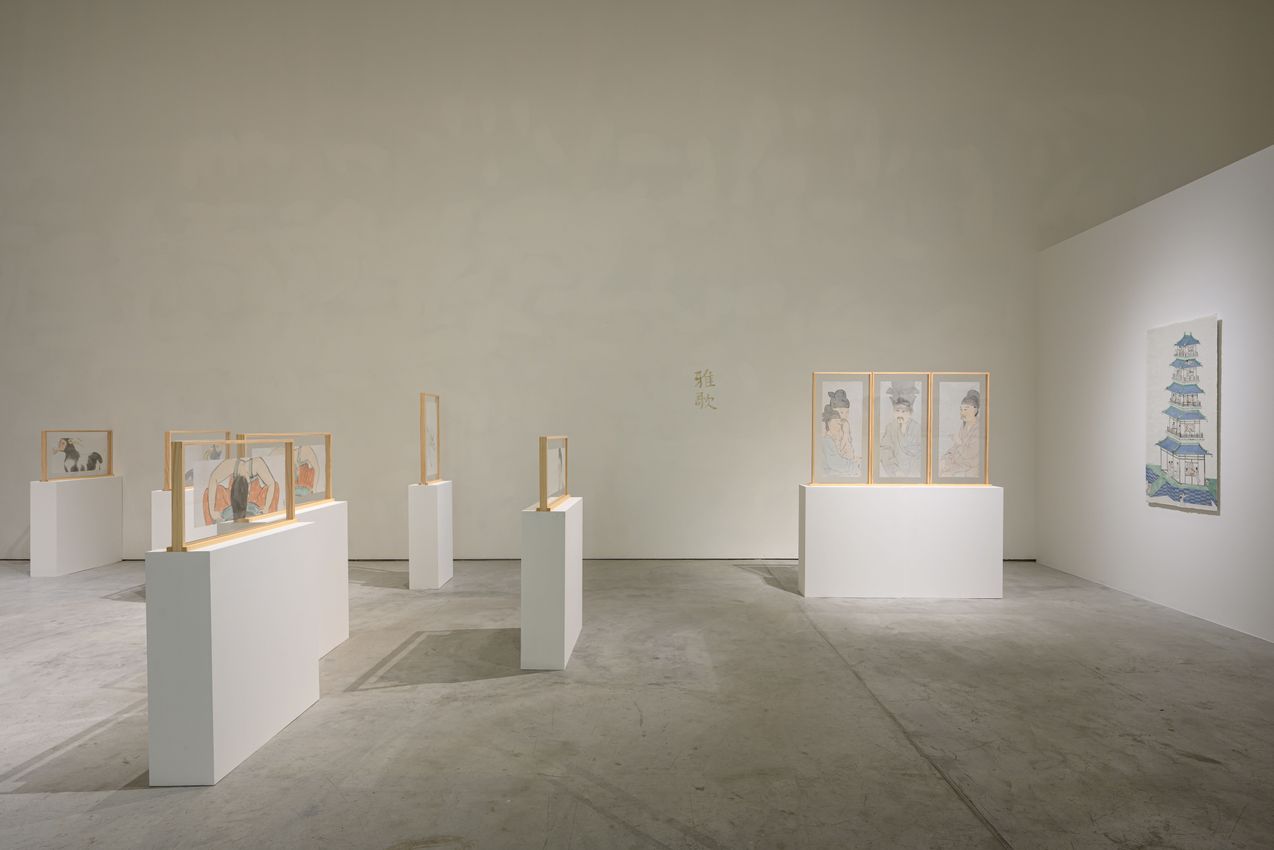
Memory Palace, Peng Wei’s solo exhibition at Tina Keng Gallery, attests to the journey on which the artist has embarked. Consisting of nearly 50 paintings and nine video works, the exhibition tells an elaborate story through several series, from A Large Room, A Room with a Story, Corridor, Tower, Peek, Song of Songs, Crown, to video series We All Need Stories. The exhibition title betokens the palace Peng has conjured and centred on women, where she gently weaves memories from a female perspective into intricate, layered narratives, allowing the viewer to follow, either stop and gaze, or have something quietly seared in their mind.
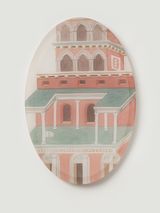
Series such as A Large Room, A Room with a Story, Corridor, and Tower often draw inspiration from ancient myths, Chinese festivals, and everyday conversations with friends. Incorporating the architecture depicted in the Dunhuang murals — windows, rooms, corridors, and towers, the artist interweaves painting and the animated image to create a magical yet realistic feminine space where she delves into issues of gender and historical cultural identity.
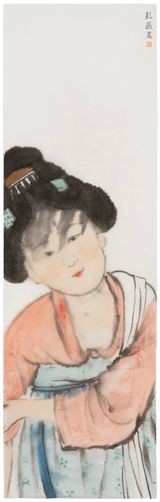
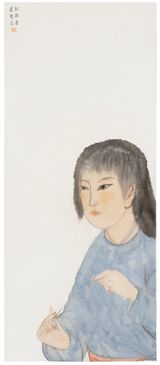
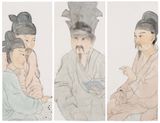
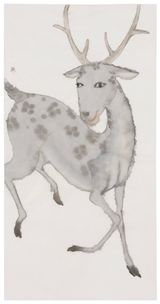
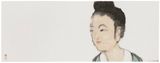
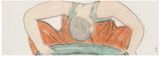
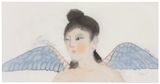
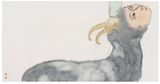
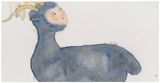
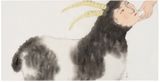
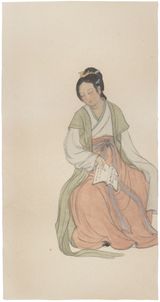
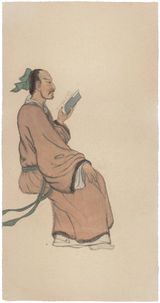
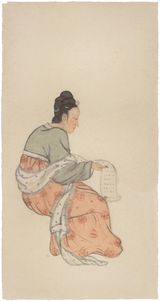
Beginning in 2016, the Song of Songs series is inspired by the symbolic imagery of ancient painting. The artist takes the figures out of their past context, and infuses them with a contemporary spirit. Rendered on transparent paper, the figures materialise in bold, modest strokes against an expanse of white space. Standing, sitting, or reclining, the characters invite interpretation with their gestures and facial expressions. With this series, Peng Wei poses a question: What is real and what is illusory when it comes to memory? Painted on scrap paper from the artist’s studio, the Once Again series instantiates remnants of the past. Old marks are concealed under new brushstrokes that coalesce into new narratives imbued with significance and dual memories.
Revolving around the female perspective, love can be portrayed in myriad ways. The series A Room with a Story aims to illustrate different characters in different spaces with their own thoughts and musings. The Crown series can be seen as the end, or the beginning, of Memory Place. The hat or crown painted in colour and ink encapsulates crystallised memory, while alluding to the way we rummage through recollections.
Memory Palace is a chronicle of Peng Wei’s artistic journey from 2016 to 2024. As a seminal contemporary artist in present-day China, she has never intended her work to be didactic or moralising. Instead, she paints through delicate brushwork a vivid portrayal of life, emotion, and fantasy seen through the eyes of a contemporary Chinese woman, meditating life in all its vicissitudes.


Seemingly shifting away from ink tradition, Peng Wei focuses her exploration in contemporary aesthetics on ink, and further transcends tradition. Her work revolves around the past of art, including the wisdom, memories, sorrows, and sense of reality found in ancient work. Rooted in traditional literati painting, her work incorporates everyday epiphanies and female reflection into elegant and delicate ink paintings, portraying the soft yet persevering spirit of Chinese literati. Peng Wei’s latest body of work ‘Calligraphy Series’ recreates memorable poems of famous poets such as Mu Xin, Great Master Hong Yi, and Gustave Flaubert, casting the ink art tradition in a contemporary light. Rooted in heritage, the artist’s contemporary brushwork steeped in quaint charm encapsulates today’s feminine aesthetics.
The Tina Keng Gallery has its roots in the Lin & Keng Gallery (1992–2009) based in Taipei, Taiwan and Beijing, China. Delving into Chinese art history, Lin & Keng was instrumental in promoting the work of Asian classical masters. The Tina Keng Gallery has continued this tradition by supporting Greater Chinese contemporary art, with a steadfast focus on nurturing Taiwanese art.

A respected voice in contemporary art discourse.
Focusing on ambitious storytelling and insightful art-world commentary. Ocula Magazine publishes in-depth interviews, critical essays and timely analysis on the artists, exhibitions and ideas driving the global art world.
Learn more about Ocula Magazine
Showcasing the best of the art world.
Ocula partners with galleries from around the world to highlight their artists, artworks and exhibitions. Gallery membership is by application and invitation, with each member vetted by an independent panel.
Learn more about Ocula Membership

Specialises in the sale of major artworks.
Led by a team with deep ties to the world’s leading auction houses, galleries and collectors. Ocula’s advisory team offers bespoke services to high-net-worth clients from around the world who are looking to acquire the best of contemporary and modern art.
Learn more about our team and services