





TSCHABALALA SELF
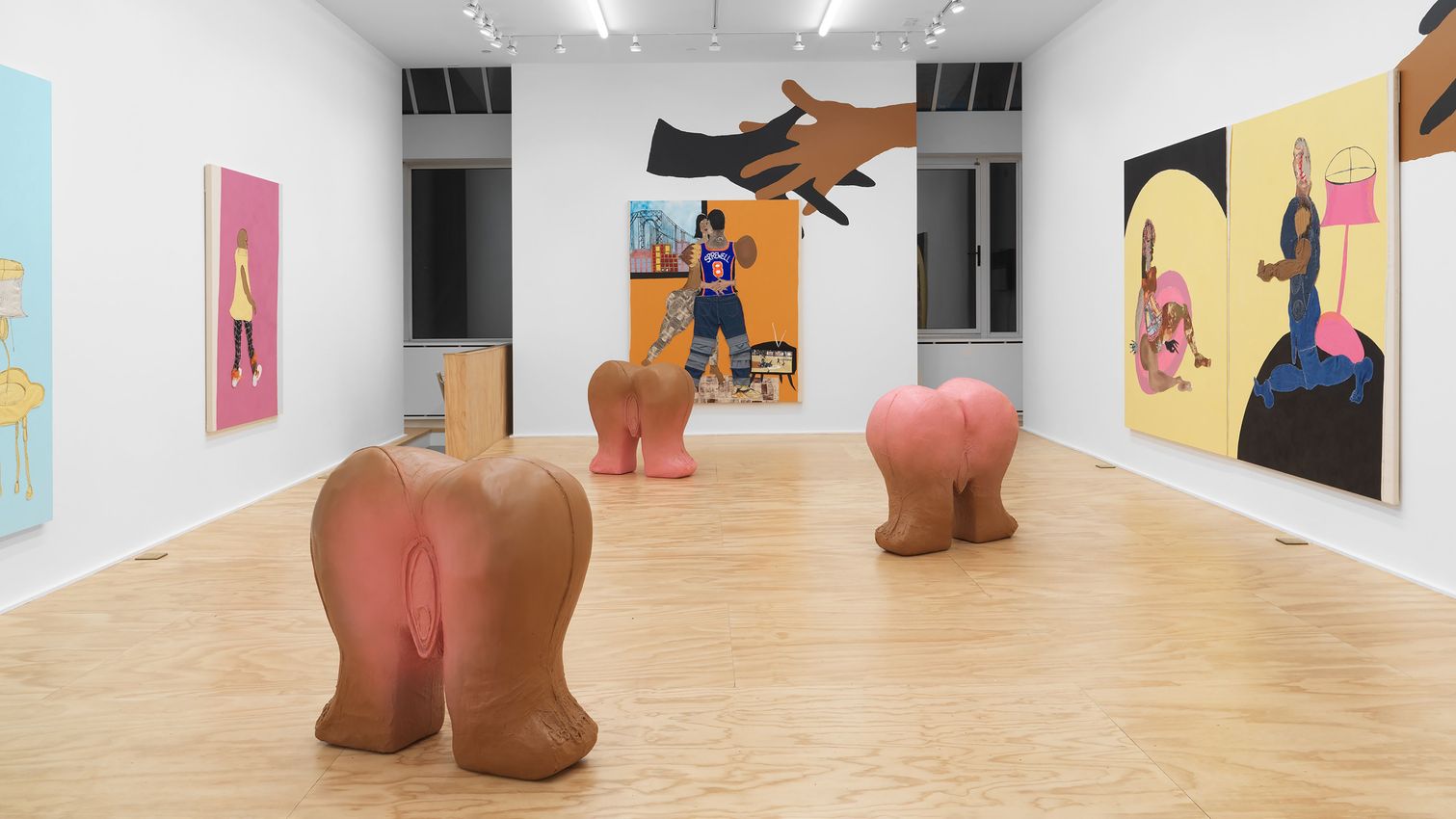
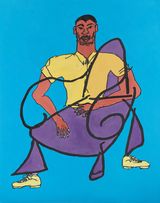
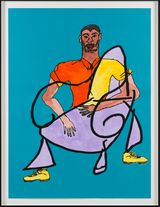
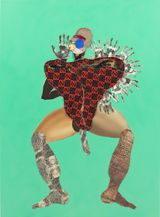
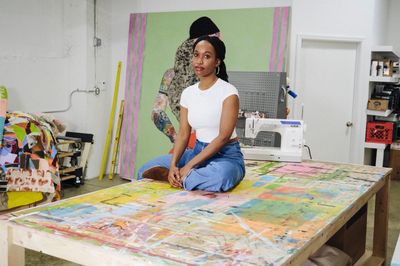
b. 1990, United StatesAmerican artist Tschabalala Self creates paintings, prints, sculptures, and animations that open up a range of topics, including attitudes towards the gendered and racialised body. Self’s depictions of the body are made up of shapes, pieced together using processes such as sewing, stitching, and printing, referencing craft and artistic traditions. Through collage and assemblage, the artist creates ‘new ways for audiences to see and perceive the body’, as she explained in her Ocula Conversation with Jareh Das.
Constructed Identity
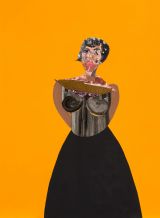
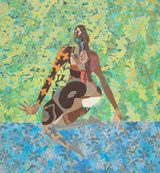
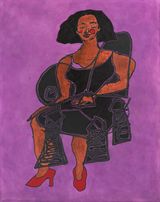
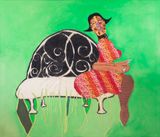
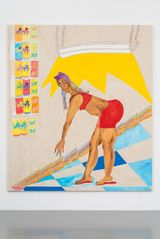
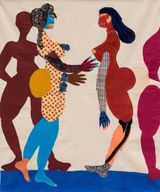
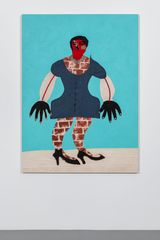
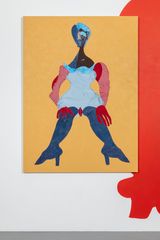
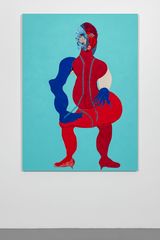
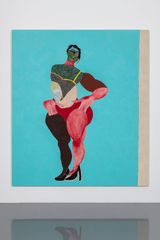
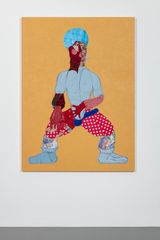
In her early works, Self began shaping a distinct visual language rooted in fragmentation, repetition, and improvisation. She created composite figures from layered materials—hand-painted textiles, stitched canvas, found fabric and bold strokes of acrylic paint—evoking both the vulnerability and resilience of Black identity. Artworks like Princess (2014) and Grown (2015) reveal Self’s use of sewn collage not only as a formal strategy, but as a metaphor for the piecing together of a personal and cultural narrative.
These works emerged during and shortly after her time at Yale School of Art, when she began investigating how cultural memory and visual language intersect with the Black body. Her figures—largely female-presenting—appear playful, confrontational, and emotionally charged. They are not naturalistic but intentionally stylised, born from imagination rather than observation. Self describes them as ‘avatars’ or archetypes drawn from collective experience, enabling a dialogue between personal storytelling and shared social context.
The ‘Bodega Run’ Series
Between 2017 and 2018, Self developed the series Bodega Run, presented in part at Pilar Corrias in London. Here, she took inspiration from the corner stores of Harlem—bodegas—as sites of mundane yet emotionally complex interactions. These everyday urban environments become stages for her protagonists, who engage in exchanges that explore gender dynamics, consumer behaviour and power.
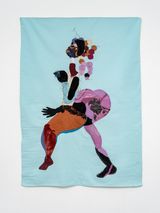
In works such as Lite (2018), Panties (2018) and Tight (2017), Self uses packaging motifs, logos, and domestic fabrics to create a layered narrative about visibility, objectification and agency. Her figures are often shown in gestures of confrontation or seduction, turning the viewer into a participant in the social script unfolding. The physicality of her media—textured fabrics, expressive brushwork, and hand-stitched outlines—emphasises the bodily presence of the characters, while complicating the boundary between high art and craft traditions.
The Bodega Run series exemplifies Self’s ability to infuse the everyday with a mythic, symbolic charge, transforming banal commercial settings into charged portraits of community, conflict and desire.
Sculptural Expansion
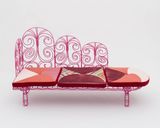
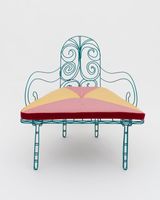
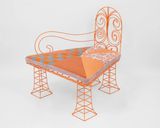
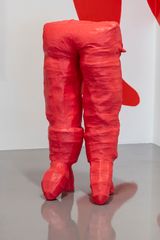
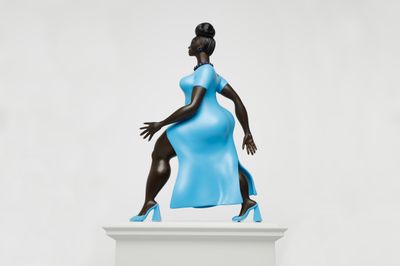
From 2019 onwards, Self’s work increasingly expanded into three dimensions, building on the tactile qualities of her paintings to create sculptural objects and installations that immerse the viewer. In Sounding Board (2021), commissioned by the Hammer Museum in Los Angeles, she presented a monumental, double-sided figure seated on a bench, inviting passers-by to interact with the work. The piece exemplified Self’s interest in public engagement and the physical encounter between viewer and artwork. The same year, she created Seated (2022), a seven-foot-tall bronze sculpture installed permanently on New York‘s High Line. The sculpture features a poised Black woman cast in repose—self-possessed, serene and monumental. It reclaims the tradition of public statuary, positioning the Black female body not as object or muse, but as subject and sovereign presence.
In these sculptural works, Self’s longstanding themes—representation, embodiment, and Black femininity—take on spatial and civic dimensions. Her forms, whether soft or cast in bronze, maintain the energy of her collage-based painting practice while engaging with the politics of scale, material, and public space in contemporary art.
Public Commissions
- Seated, a bronze sculpture permanently installed on the High Line, New York (2022)
Exhibitions
Tschabalala Self has been the subject of both solo and group exhibitions at important institutions. A selection of important exhibitions are provided below.
Solo Exhibitions
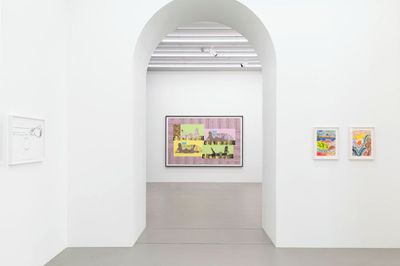
- Inside Out, Kunstmuseum St. Gallen St. Gallen (2023)
- Make Room, Le Consortium Dijon, France (2022)
- Tschabalala Self: By My Self, ICA Boston, Boston (2020). Travelled to Baltimore Museum of Art, Baltimore (2021).
- Bodega Run, Yuz Museum, Shanghai (2018). Travelled to Hammer Museum Los Angeles (2019)
Group Exhibitions
- The Culture: Hip Hop and Contemporary Art in the 21st Century, Baltimore Museum of Art, Baltimore (2023)
- What’s Going On, Rubell Museum. Washington, D.C. (2022)
- Radical Figure: Painting in the New Millennium, Whitechapel Gallery, London (2020)
- The Big Sleep 4th Biennial of Artists, Haus de Kunst. Munich, Germany (2019)
- Show Me as I Want to be Seen, Contemporary Jewish Museum, San Francisco (2019)
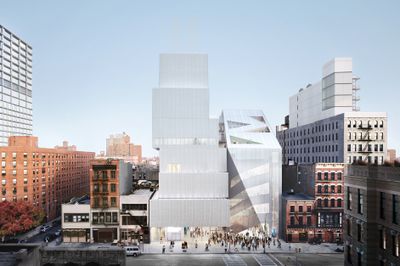
- Trigger: Gender as a Tool and a Weapon, The New Museum, New York (2017)
Website and Instagram
Tschabalala Self’s website can be found here, and Tschabalala Self’s Instagram can be found here.
Critical Reception
Self’s work has been reviewed by major art publications including Cultured, Ocula, and The New York Times. On Self’s practice, Ocula Magazine wrote: ‘Her portrayal of the Black female figure presents an untraditional view that unpacks the gaze and its attitudes towards the racialised and gendered body. By reimagining archetypal feminine features, Self introduces expressive characters that embody powerful identities and represent a shift in Black rhetoric.’
Tschabalala Self FAQs
What materials does Tschabalala Self use in her artwork?
Tschabalala Self uses a range of materials including acrylic, oil stick, fabric, thread, paper, and canvas to construct her artworks. She often incorporates found textiles—denim, upholstery, patterned cloth—through collage and sewing, merging painting with quilting and craft traditions. These tactile materials reference the body and domestic labour, while also conveying texture and personality. Her layered technique challenges distinctions between fine art and craft, making materiality central to her exploration of identity, culture, and representation in contemporary art.
What are the recurring themes in Tschabalala Self’s art?
Tschabalala Self’s work explores themes of Black identity, femininity, sexuality, and autonomy. Her vividly stylised figures assert agency and resist traditional portrayals of the Black body in Western art. Drawing from memory, community, and imagination, her subjects often navigate public and private space, desire, and power. Through repetition, exaggeration, and expressive form, Self creates a symbolic visual language that reclaims representation, challenges stereotypes, and affirms Black female presence within the broader context of contemporary art and culture.
Ocula | 2025

View Tschabalala Self's Artworks




















Explore Tschabalala Self's Exhibitions


Tschabalala Self in Ocula Magazine









Explore and Follow Artists Shaping Contemporary Art
A respected voice in contemporary art discourse.
Focusing on ambitious storytelling and insightful art-world commentary. Ocula Magazine publishes in-depth interviews, critical essays and timely analysis on the artists, exhibitions and ideas driving the global art world.
Learn more about Ocula Magazine
Showcasing the best of the art world.
Ocula partners with galleries from around the world to highlight their artists, artworks and exhibitions. Gallery membership is by application and invitation, with each member vetted by an independent panel.
Learn more about Ocula Membership
Specialises in the sale of major artworks.
Led by a team with deep ties to the world’s leading auction houses, galleries and collectors. Ocula’s advisory team offers bespoke services to high-net-worth clients from around the world who are looking to acquire the best of contemporary and modern art.
Learn more about our team and services