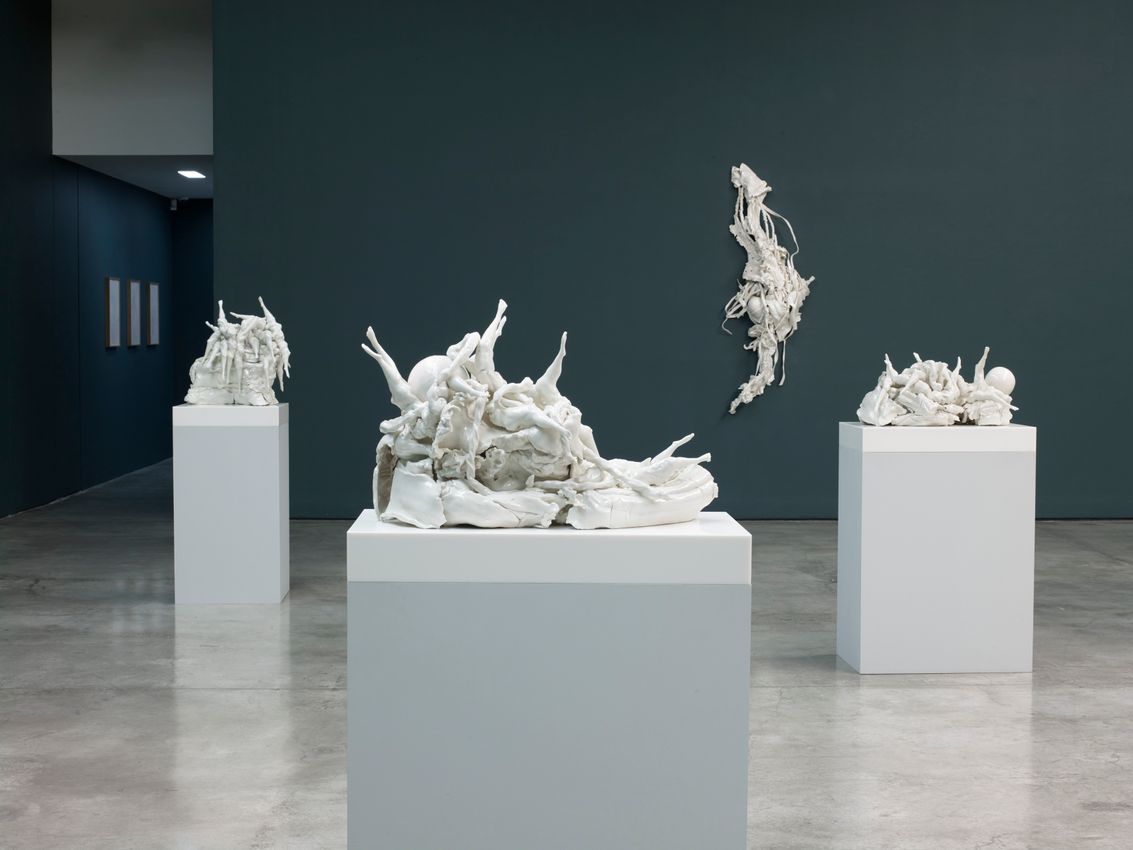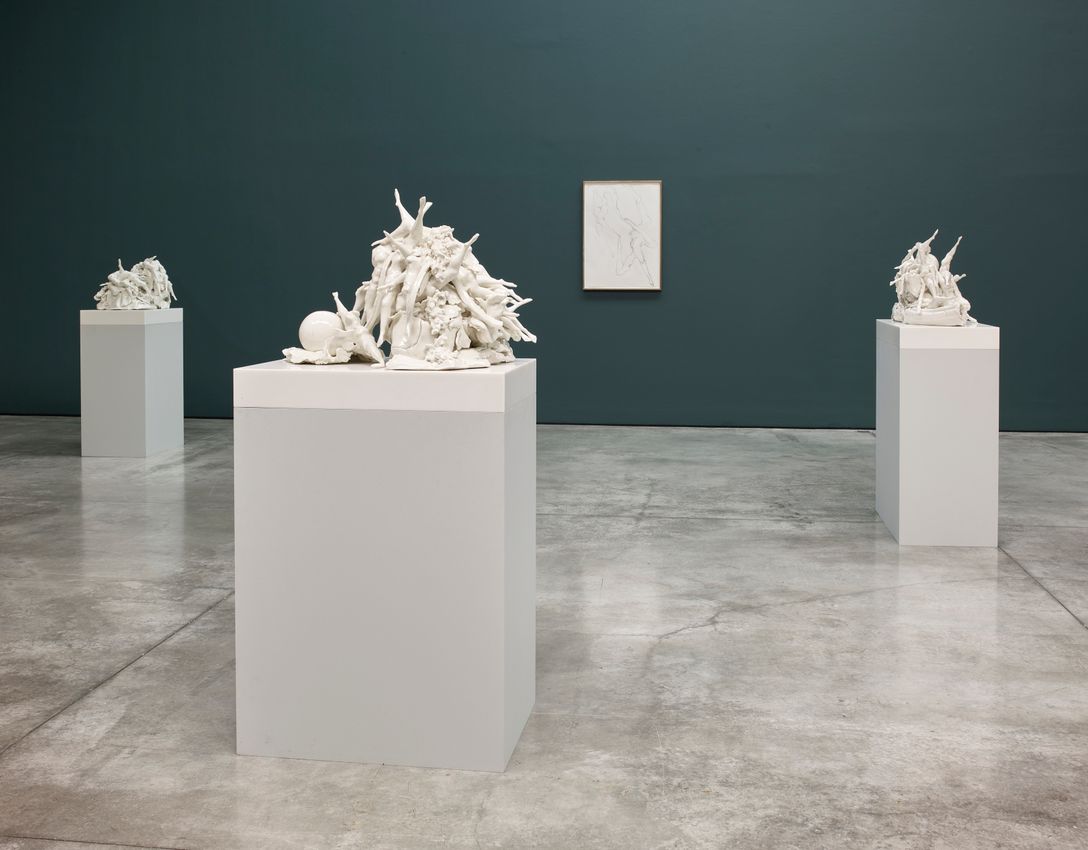
White Cube is pleased to present Raft, an exhibition by Rachel Kneebone at Mason’s Yard, London. Featuring porcelain sculptures and drawings, the works focus on themes of transformation and metamorphosis, and the material manifestation of these fluid physical and mental states.
Responding to Théodore Géricault’s essential theme of the agony of physical existence, Kneebone probes the arc of human life: birth, growth, change and death. The title of the exhibition alludes to Géricault’s monumental painting The Raft of the Medusa (1818–19). A high point of French Romanticism, the painting depicts a moment of grave crisis with desperate bodies cast adrift following the wreck of a naval frigate. Kneebone’s reference to Gericault’s painting, however, goes beyond specific iconography and instead cuts across space and time, invoking contemporary concerns such as the perils of migration, the tragedy of displaced persons, but also hope in the face of despair.
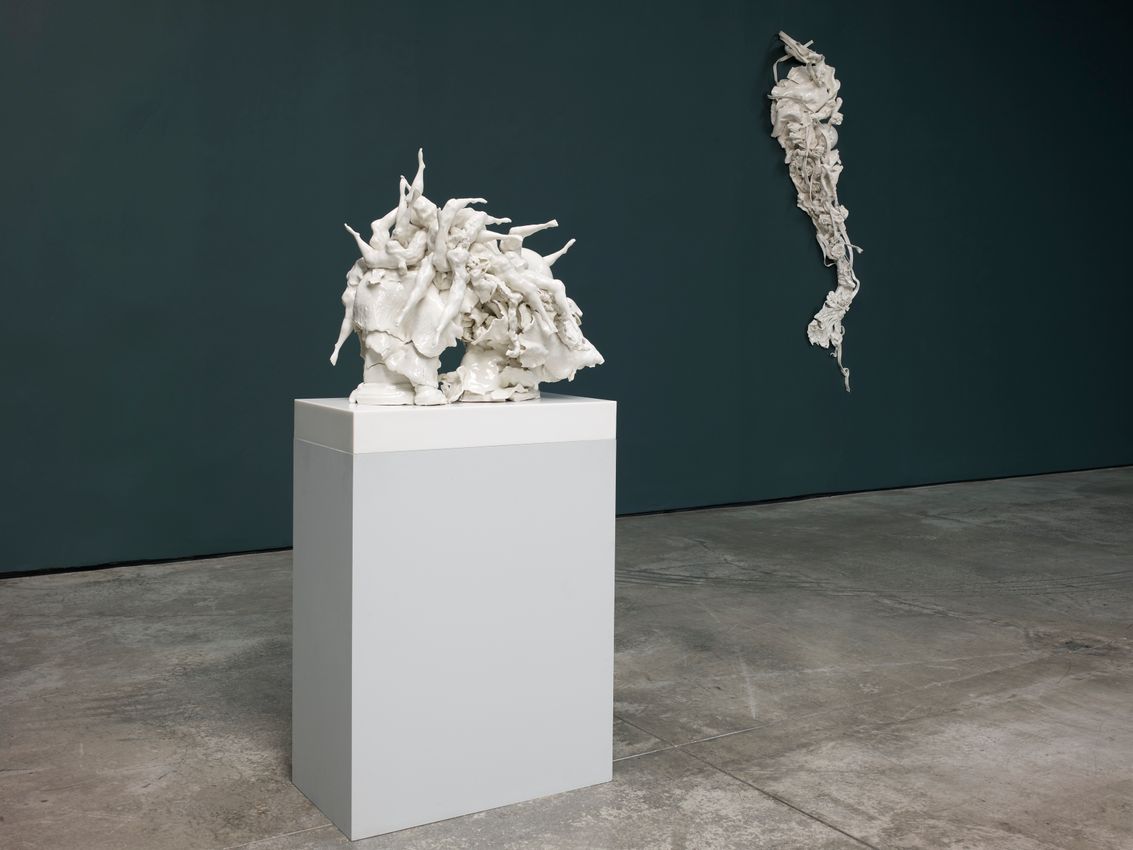
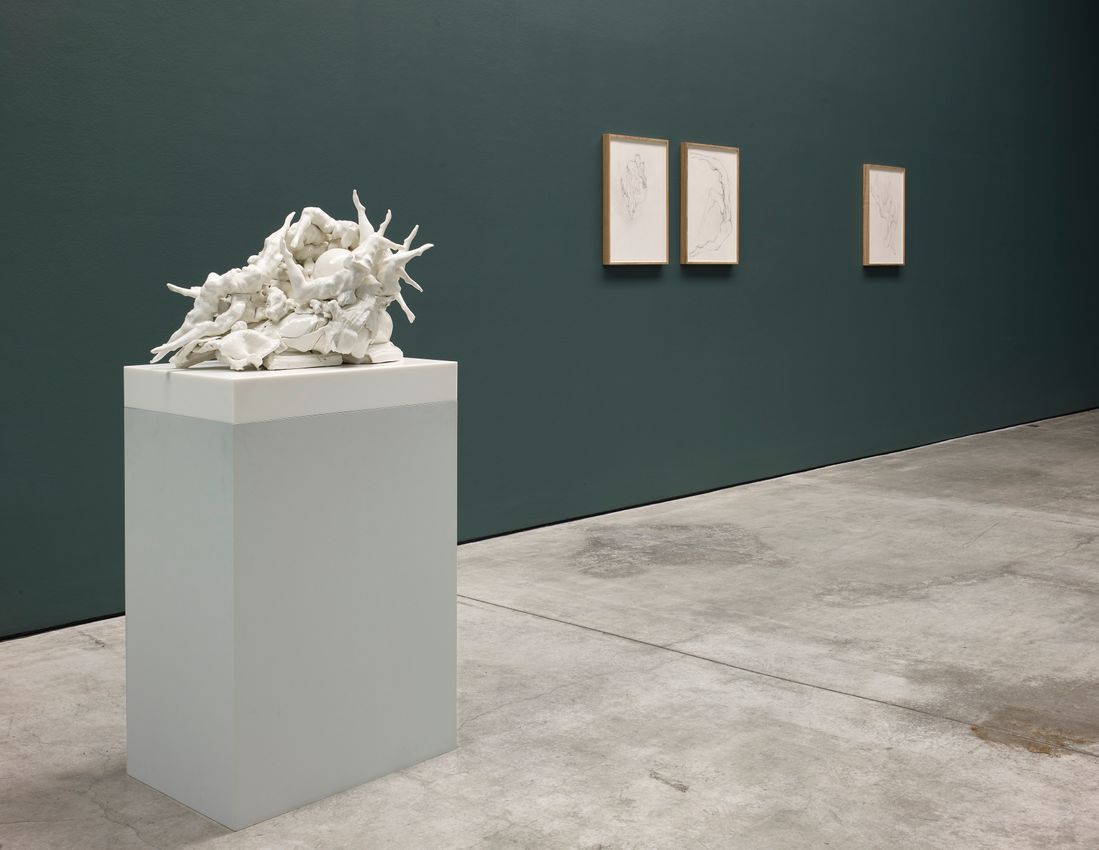
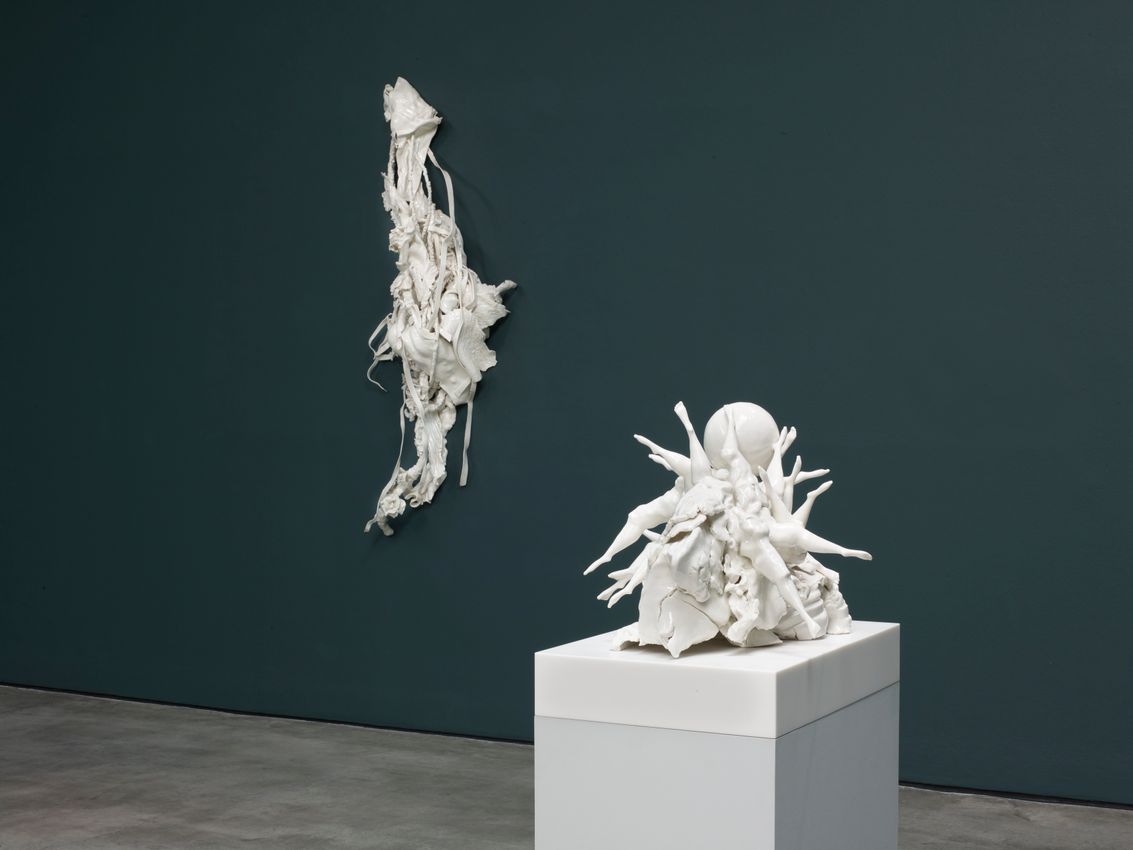
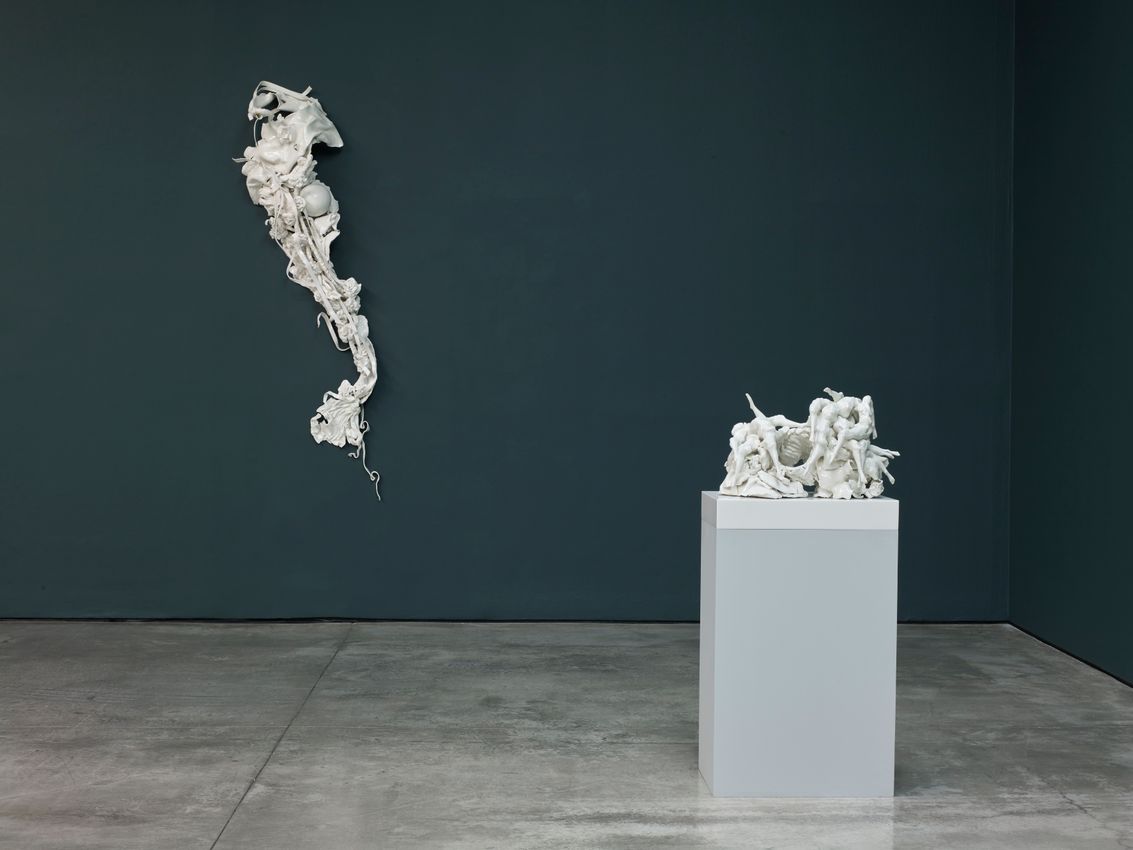
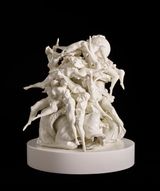
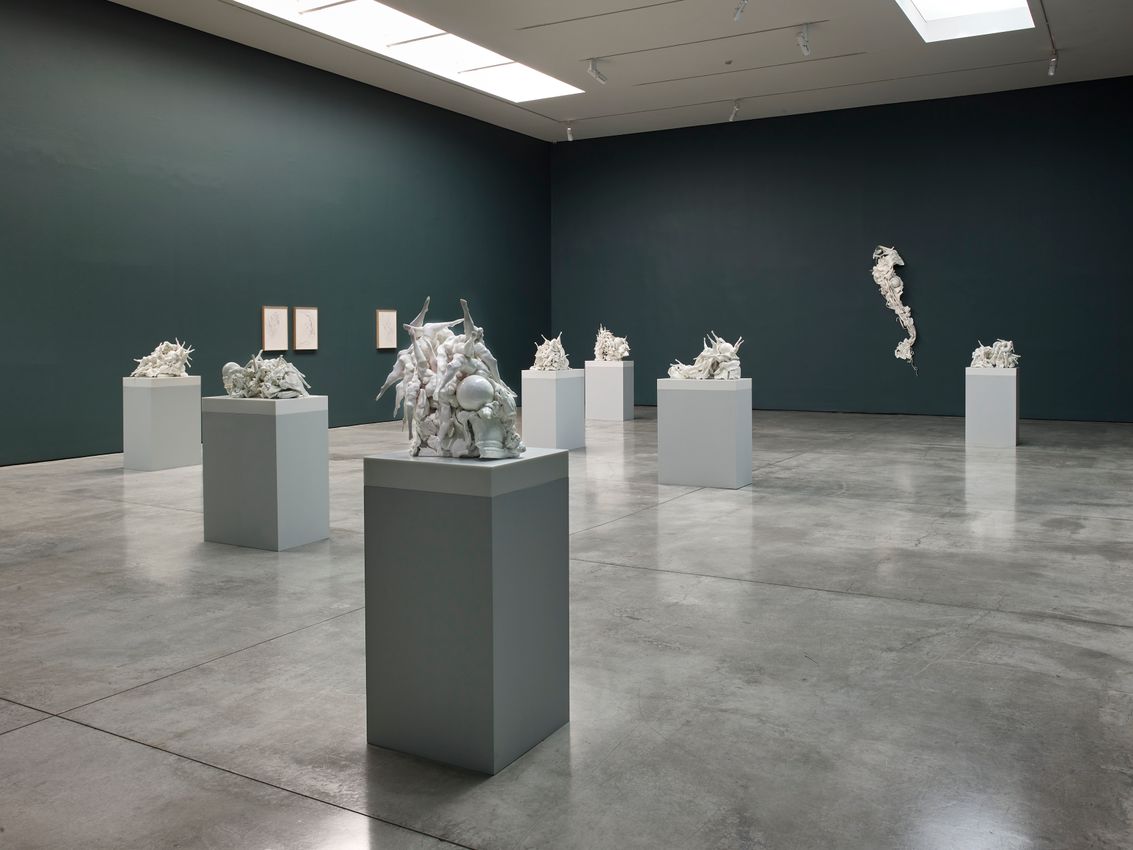
Kneebone’s work is resolved through a process of creative exchange between herself and her material, between decisive acts of modelling and the elements of chance that are bound up in working with porcelain. ‘To disregard control of the material means setting things up to unfold as they will, rather than making things happen. This enables me to work beyond my limitations,’ she has commented. In Kneebone’s sculptures, compositions emerge and dissolve into undulating masses of modelled clay. Recumbent limbs stretch out into the surrounding space in different directions, with vegetal forms interwoven and conjoined. In each, a single, smooth orb sits in contrast to these dense and intricate parts, as if anchoring the whole and forestalling collapse. While the sculptures are related through repetition of form and scale, marked compositional differences occur, these often being the outcome of the porcelain absorbing and integrating the variable tensions, splits and collapses acquired during the firing process.
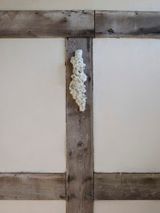
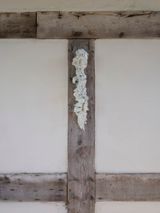
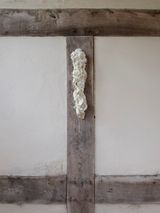
Kneebone has chosen a deep blue colour for the gallery walls so that the sculptures, framed by this dark expanse, seem to be emerging from or sinking into the mud or seabed. In this way, the new work Quill (2021) appears fluid in its essence, an assemblage of elongated tendrils winding into a sculptural relief that extends and reaches outwards across the gallery wall.
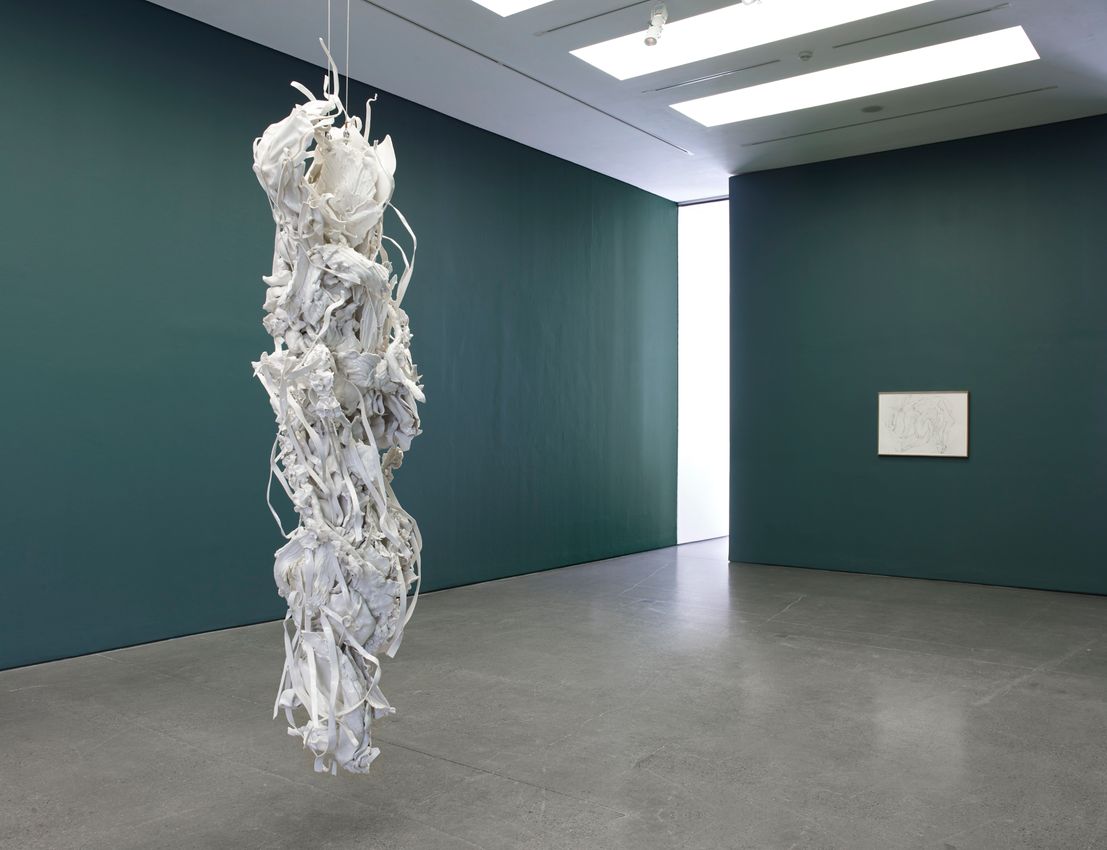
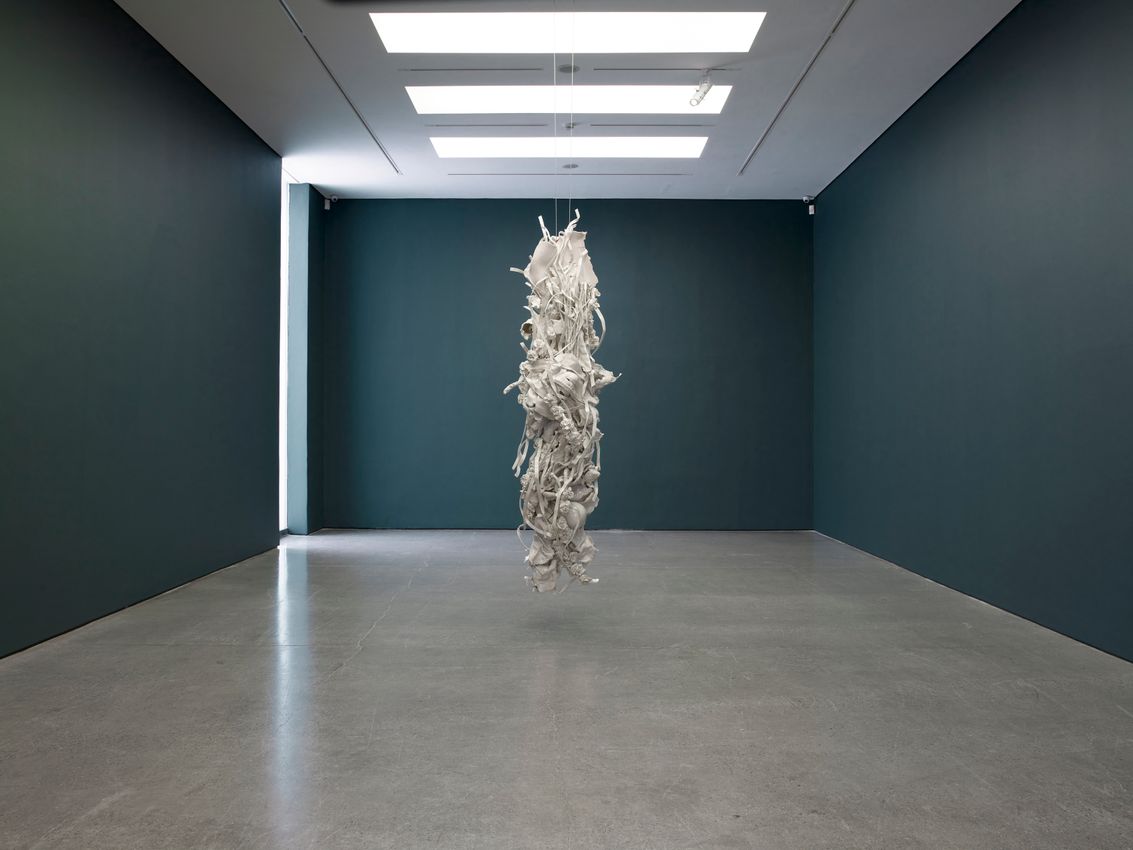
In the ground floor gallery, a single large-scale sculpture, Shell (2020) hangs suspended from the ceiling. No longer bound to wall or plinth, it exemplifies the artist’s concerns with motion, weightlessness and transformation. An assemblage of cascading interwoven forms, delicate flower wreaths extend and writhe around its core, its spools of ribbon barely holding it together. Kneebone has commented that _Shell _‘feels like a free form, or free-falling dissolve of form, almost like a vapour [...] an unfolding or an unravelling’.
As with all of her work, the forms of Shell exhibit a contradictory directionality, and in doing so, create a tension between its mass and its fractures and between light and shadow. Both rising and falling, Shell contains both ornate detail and areas of emptiness, so that the work is poised between its own internal resolution and potential dissolution.
Kneebone’s new series of drawings echo her process of making the sculptures, the building and removing of partial, connected and extended figurative lines. Raft I (2020) features a continuous wheel-like pattern of conjoined limbs, freely emerging as the artist rotates the paper while she draws. ‘It’s a shared way of looking, an active looking at and through things; line and shape and form and suggestion, hints or glimpses to follow, bring out or rub away. A movement to fuse things and create new form from a blurring or dissolve of boundaries,’ she has stated.
Rachel Kneebone’s intricate works address and question the human condition: renewal, transformation, life cycles and the experience of inhabiting the body. Kneebone’s sculptures operate in a near-subliminal space, oscillating and blurring the boundaries between the conscious and the subconscious, the real and the imagined, everything and nothing. Working in porcelain, the material properties of her work further heighten and convey an awareness of opposing states, appearing to be not only heavy, solid and strong but also light, fragmentary and soft. This fluid movement between states is reflective of the wide range of art historical and literary sources that inform the artist’s practice. As Ali Smith has written, in Kneebone’s work ‘Michelangelo meets Angela Carter, the renaissance meets the contemporary, while the future simultaneously meets, melts, alters and fuses with the renaissance.’
An international art powerhouse, White Cube was established in 1993 in London by art dealer Jay Jopling. In its space on Duke Street, it served as the early exhibition venue for many now internationally acclaimed British artists, including Tracey Emin, Gilbert & George, Rachel Kneebone and Antony Gormley, who still show with the gallery today.

A respected voice in contemporary art discourse.
Focusing on ambitious storytelling and insightful art-world commentary. Ocula Magazine publishes in-depth interviews, critical essays and timely analysis on the artists, exhibitions and ideas driving the global art world.
Learn more about Ocula Magazine
Showcasing the best of the art world.
Ocula partners with galleries from around the world to highlight their artists, artworks and exhibitions. Gallery membership is by application and invitation, with each member vetted by an independent panel.
Learn more about Ocula Membership

Specialises in the sale of major artworks.
Led by a team with deep ties to the world’s leading auction houses, galleries and collectors. Ocula’s advisory team offers bespoke services to high-net-worth clients from around the world who are looking to acquire the best of contemporary and modern art.
Learn more about our team and services